What if they turned out to be complete morons and burn down your holiday home? You wouldn't want that. Hi there, welcome again to another episode of Market Insights by Jing.
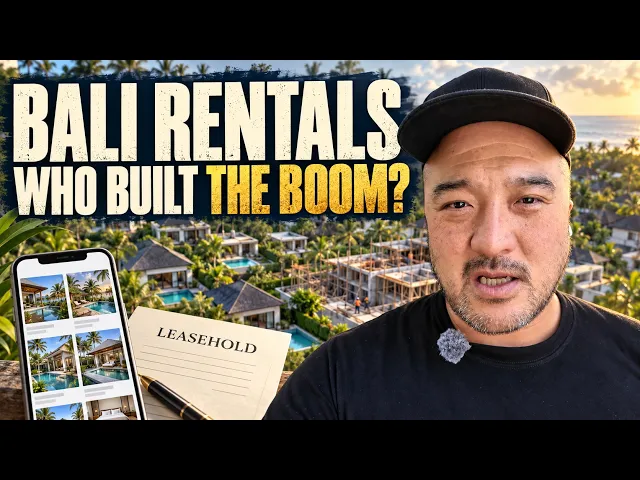
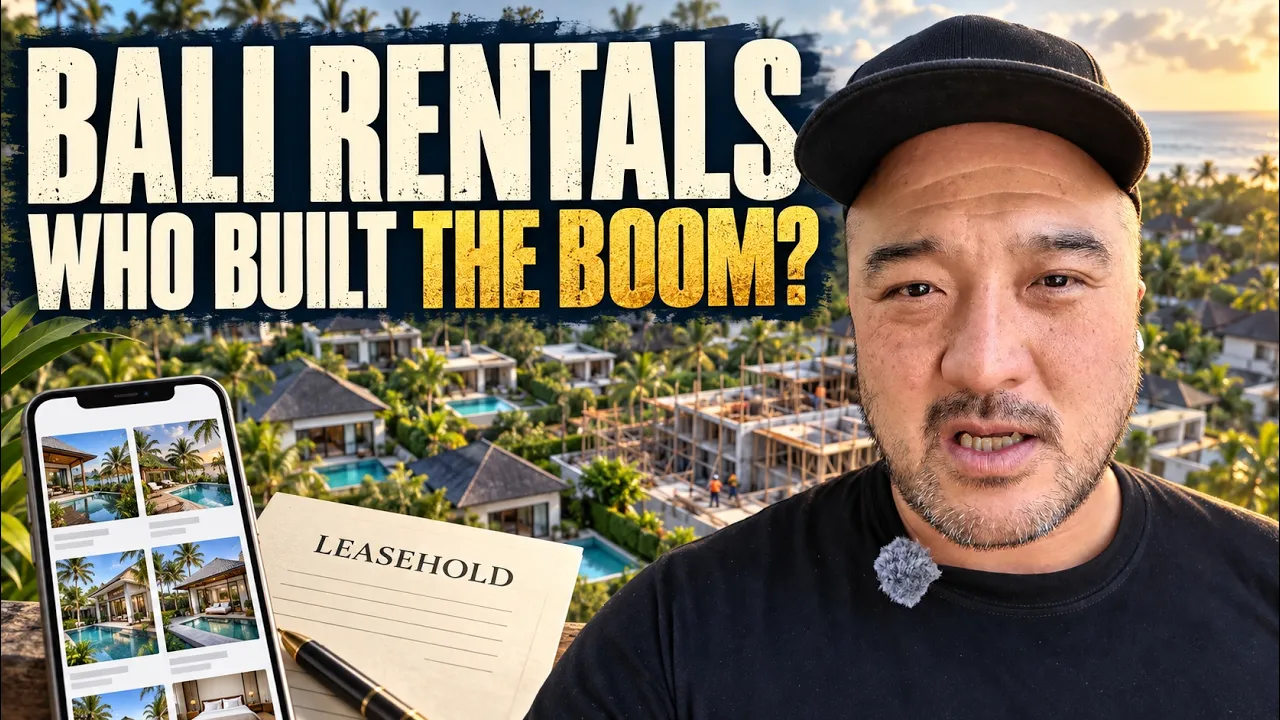
This is for the Bali Business Review and today we're going to be tackling one of the most difficult but also I think one of the questions I'm most uniquely qualified to answer. And this is a question sitting on a lot of people's minds who have a business in the real estate industry here in Bali. So whether you own a villa, a guest house, or a hotel, stay tuned and watch and understand the most complete way what's been happening over the past decade in terms of the property investment and real estate market here in Bali.
Okay, so here's the question. The question is what are the potential risks of an oversupply of short-term rentals to the property marketplace in Bali? Now, you've come to the right person and I'll tell you exactly why I think I'm uniquely qualified to answer this question.
Okay, so I have been actually living in Bali for over 20 years. I started my journey in 2005. I arrived to the island.
It was on the very very last segment of an all-Asia tour. I met who would be my future wife at a gift shop an hour before I was supposed to leave and return back to the United States. I fell in love with her, I fell in love with the Bali at all.
I'm from California originally. I studied as an electrical engineering computer science graduate from the University of California at Berkeley. So I was supposed to join Silicon Valley and become an engineer, work at a Google, a Facebook, or a new hot startup, which I actually did.
Here's my background. So I've been watching essentially the evolution of the property market industry in Bali for over about a decade and a half now, about 15 years. And so these are my background qualifications and you decide whether or not what I'm about to say actually is from a reliable witness.
Okay, so my first real active job in Bali was at Exotic. Exotic was a and still is actually one of the largest real estate companies throughout the island. Exotic's business model was a franchise model.
Dominic Gallman was the principal behind Exotic. I served under a local market manager, Michael Martin, and we ran the Exotic office in Jimbaran from 2006 until 2010. So during that time, I was very involved in selling, marketing, and speaking to clients who wanted to buy property in South Bali.
So that was a good place to be in Uluwatu before it became a boomtown. Following that, I worked in another segment of hospitality. I worked at what I would call the Apple of hospitality.
So what Apple is probably to technology, this brand, Aman, is to hospitality. They are a super, super high-end serving very high net worth individuals and they have a network of, you could almost call them like temples across the world. Their minimum rate starts around $2,000 a night.
So I served as a senior project manager in design coordination for the Aman Nusa project and used to do it for about four years. Afterwards, my fortunes became a little bit stagnant in Bali, so I wanted to come back to California. And as luck would have it, there was a small little startup called Airbnb at the time and they were looking for somebody to run Indonesia for them.
I applied and after about, oh, a dozen interviews leading up all the way up to the sea level, I got the job and became the market manager of Airbnb for Indonesia. All right, now why is that important? Because basically, I would say that the proliferation of short-term rentals, I had something probably to do with the impact of that particular industry.
I'll tell you why and I'll go over the history and I'll go over what was happening before. Let's go back in time to about 2010. So what did the property market look like at that point?
Most people who owned property had no intentions to really rent it out. If you were owning property in Bali, it was what I would call you wanted a show horse. You wanted to have a like a yacht or a Lamborghini.
You wanted to have this thing that you could actually show off to your friends and host dinner parties at and make yourself feel very like you've crossed the finish line, so to speak. And I understand that feeling. I worked with very wealthy people and so that was the primary motivation for actually owning a property in Bali.
So at that point, most of the purchases were fairly focused on luxury. So really top-notch architecture, fashionable districts and locations, and all the very, very lavish amenities placed inside. And it was a boom time.
It was a boom time because many people who were, let's say, before the first Asian financial crisis or the overall financial crisis, were doing fairly well. So they had all this disposable income. They enjoyed coming to Bali.
They like going to Kudeta. They like partying up in Seminyak. And so they decided that, why not, since I'm coming here so often, I'll just buy a piece of real estate and just stay here.
So at that point, before 2010, there was not a very strong short-term rental market. Now, there was hotels and the hotels were dominant in their, I would say, ability to gather the majority of the tourism market. But for people who purchased properties, it was mainly for personal use.
Now, the first generation property management companies were mainly fee-based. They would essentially take a fee and they would add a bit of a commission on top of renting out the properties to short -term guests. But for the majority part, what you would be looking at is essentially a property manager simply just to maintain and make sure that the property was available for you as an owner whenever you came back to Bali to enjoy it as a personal indulgence.
So that was the property market back then. So at that point, the majority of owners insisted and they needed a freehold title on their particular properties. And the reason is obvious because if I'm going to spend half a million up to even more to buy a property, I want to own it.
Now, this changed after Airbnb came onto the marketplace, and I'll explain a little bit why. So the short-term marketplace, let's go back in history, around 2010 had already begun its infancy. But it wasn't until there was a legal innovation that really captured this particular momentum.
So what had happened was this. There was a market failure in the freehold market. And so why did that happen?
So basically, because there was a lack of transparent data or transactional prices that happened for each particular property, rumors then became the number one information for what was the actual transacted price for land and property actually being purchased. I know this because I worked in a real estate agency for over four years, and we had a dilemma. Any time a particular client wanted to list or sell their property with us as an agent, they would consult with us about the price, and then we would give a fair market estimation of which they would almost never really listen to.
They would then trust a tip that they got from a driver, from a friend at a cocktail party, from whomever, under whatever circumstance, and they would then benchmark our fair estimate against that particular rumor that they had heard. Now, rare is the person who actually would listen to what a real estate agent tells them in terms of what their price for a property should be. I had a background in engineering and data, so I probably knew based on facts and evidence and scientific reasoning what I was talking about, but there was probably a lot of other real estate agents that just took a number out of the hat anyways.
So there was no real trust between the seller of a property and the real estate agent, so then we reached a dilemma. What would that particular real estate agent do? They would just simply list the property at whatever price the seller would actually ask for, because if they didn't, then of course the seller would just take their business over to the next real estate agent and find somebody who was willing to essentially give that particular price that the seller wanted.
So over time, what would have happened in the freehold market was the market got more and more noisy. You would see more objects into the websites and into these databases, and they would price themselves out over time. There was actually no essential urgency to transact, but there was no clear value in some of the prices.
I know this because one of my clients was actually the managing director of Macquire Bank in Australia. He came, he took a look at our records and database, and we spoke for about two hours, and he said he still couldn't figure out how the market actually worked. If he watches this today, he probably would know why now.
The history of all the transactions in Indonesia are not recorded or documented in any particular authoritative way, and this is why I also sometimes am skeptical about government data, and I choose to actually use my internet skills to actually find out how to get the real numbers behind things. Okay, so that leads us now to this particular conception for a moment when the short term rentals is going to begin. So the freehold market of transacting property for luxury segments of property had already begun seeing decline due to a lack of liquidity.
Nobody was essentially buying because the sale prices were so high, but the people selling had no urgency, so it was basically a stalemate, and that remained as a really uncomfortable position. I remember that was one of the main reasons I decided to get out of the real estate market because it was just so hard to sell any more property after a while. The market had essentially priced itself out.
So what happened next was this innovation. Airbnb essentially came onto the marketplace sometime around the 2011s, 2012s. It was completely organic.
Before I became the market manager for Airbnb, there was already a community that had found the website, started putting their own properties on the website, and what Airbnb did was pretty clever. The Airbnb era offered free photography to all hosts who wanted to list their properties on the platform. They don't continue this service anymore, but it was a really good way to seed culture.
So if you took a look back in 2010s and everything about, let's say, properties that were trying to achieve short-term rentals, you noticed that there was three primary inefficiencies. Number one was bad photos. So if you're going to, let's say, try to market your property and you put some crappy flip phone pictures on a Facebook site, then it doesn't really engender much confidence for somebody who is looking to rent your property short-term would feel for that particular property.
The second obstacle was the distribution. So the distribution at that point was either through Facebook or some social media groups or through a website. This distribution is massively inefficient and also potentially risky for people who are, I guess, they're risking their holiday, which they get once a year, to a unreliable or unbranded vendor.
So you could somewhat then use content strategy to upgrade your particular position on search engine ranking, but that doesn't necessarily mean that the end user necessarily got the good experience. So there was no feedback mechanism in the ranking of, let's say, somebody looking for a website for a villa and the actual experience that they would receive. More platforms came out that recorded reviews and changed that particular section.
So there was a problem with distribution and there was a broken feedback cycle such that the person purchasing was not able to give essentially a review and so therefore the properties that maybe did well on short-term rentals did not actually very good quality service. The third problem with short-term rentals was essentially the lack, I think, of an active real trust between the people who wanted to rent and the people who wanted to buy based on the first two factors. You just didn't really have any confidence that, let's say, if you had a high-end property that your guests would respect the property.
What if they turned out to be complete morons and burn down your holiday home? You wouldn't want that. So Airbnb essentially solved all these three problems by creating a very, I think the word is a walled garden.
Apple does this for the App Store, all the major platforms like Amazon do this too. What they do is they offer a controlled experience to their users such that there is a fixed cancellation policy, there's recourse if the transaction doesn't go the way you want, and there's also a way for the best users to build up a reputation both as guests but also as hosts. So that was a really powerful innovation that activated the proliferation of the term rental marketplace.
So then what happened was this. Now that you have a platform like Airbnb and simultaneously Booking. com, Agoda all came on the scene too as well and offered also short-term rental experiences, there were a few platforms before.
I remember there was Flipkey, there was VRBO, but none of them had what I would call the correct culture or the premium feel that Airbnb was actually bringing on to the marketplace. Okay, so now we're getting into a new cycle now. The new cycle of short-term rentals seems to be rising and right at that time there was a shift.
There was a shift in the way that you could actually own property in Bali and it went from the freehold model to the leasehold model. I'll be publishing more episodes about how these models differ from each other, but fundamentally what had happened was now the leasehold model started becoming more and more attractive. The fundamental difference between freehold and leasehold was freehold is like any traditional property that you own.
It's under your name or your nominee's name, but a leasehold is not under your name. You do not actually have the underlying rights to that land. What you do is you lease the land for usually a quarter century, so about 20 to 25 years with an extension, and you then enter into a particular time lease of that particular land.
But here's the trick. The leasehold model, what it revealed was that you're wholesale buying time. So you could literally look at the daily rates if you were a clever investor at the time and realize I built a two -bedroom villa in this particular location.
I could maybe at worst get $125 a day, at best get $300 a day for my short-term rental here in Canggu. Then you'd calculate what the cost of the land is for that particular property and you realize on a leasehold the land per day works out to be ridiculous. It's about five to ten dollars a day.
So literally you can 20-fold to 30 -fold the time that you've purchased in bulk and then retail it out for about 30 to 40 times more. So clever investors at this point discovered, wow, that's actually not such a bad deal. So they went ahead and they aggressively leased land.
And a lot of this actually started in my particular area where Bukit Bista was founded. It started in the Bukit area. So after my time at Airbnb, one of the things I focused on was optimizing performance for short-term rentals because I'd seen the data, I'd seen the facts, and I knew that a few key players in the marketplace could truly do the majority part of the business.
When I was managing Airbnb, the top three hosts did something close to about 30 to 40 percent of all the business in the marketplace. That's staggering. Three people out of hundreds did about a third of all the business.
So you could see how this particular cycle on the internet favors those who really know their shit. So what happened later was the leasal structure started taking off and more and more people, I guess investors coming from abroad, were comfortable choosing the lease. And now the climate slightly changed.
Now the climate essentially became one in which the direction was more for, okay, how can I lease the time and gain a high return on investment? Not so much, how can I buy a luxury product that can show off to my friends? This is a shift in the mindset of the foreign investor and also the Jakarta or domestic investor coming to Bali for this particular zeitgeist has shifted now.
So then what happened next was this. The developers who were working on these particular projects saw that now the market is unlocked. Now they can go about and start selling property again.
And the Balinese landowners at the time were happy to finally get some income again. They had been essentially locked out of the market for a while because of lack of liquidity on the previous freehold model. So now they were happy to see that they would get up to $20,000, $30 ,000, $40,000 let's say for a 20 -year lease.
And they were delighted to see that particular return come back. And best of yet, they didn't have to actually sell their property. They could actually just lease it out and they would keep the land under their family heritage, which is nice, right?
That way your grandchildren and your future descendants are taken care of too as well. So then the leasehold model really took off. Developers jumped on this right away.
They found out that essentially they could take leased land and resell it, but now sell it as an investment product. This made everyone happy. Everyone was delighted because remember there was a lockout on the previous market.
There was a market failure, so there was no transactions. So that means notaries were not getting any business. Visa agents weren't getting any business.
The government wasn't selling any permits, any licenses. There was no activity. So the market had been essentially stalled for up to about four years in fact, plus the two years of COVID.
So this wasn't very good. And when the activation happened, everyone was so delighted to see this happen that all brakes were taken off. I mentioned in a previous episode about regulation and why there was essentially deregulation in Bali during this time.
Because all of a sudden now, anybody could become a participant and owner in the hospitality industry. You have to look at the history of Bali where local population, the best that they could ever hope for their children's children was to work in a hotel. And that's not a great job.
Essentially hotel labor is you have one or two or maybe a small handful of senior managers and everyone else works a pretty low paying job. This particular transformation was seen as a complete social revolution and everybody got on board. Notaries were the first to essentially see some of the benefit followed by developers.
The government, of course, saw a proliferation of these licenses and transactions. They were happy. This was also back in Jokowi's presidential era.
And so no problems with that. This was all full steam ahead. Real estate agents and marketers.
Now they had a new pie on their particular plate. So traditionally real estate agents and marketers would sell a property based on its appeal. I know because I worked in real estate for four years.
The way you sell real estate is the same way that you would sell fashion. You get somebody to fall in love with the actual design, the lifestyle, the whole thing that is accessible with this particular purchase. And that is an emotional decision.
But coming through and seeing the takeoff on short-term rentals what happened was that marketing agencies would start promising ROI, return on investment. This became now a primary driver for investors based on a return rather than actually the lifestyle benefits that come with purchasing a property. Property managers then all of a sudden start evolving too.
I know because we started the first second generation property management company. All first generation property management companies had fixed fees and they would take a small cut of the overall revenue that the property produced because it was so difficult to actually produce revenue. Second generation property management companies got rid of the fixed fees because essentially you could become a partner with the owner by doing the marketing very well.
The marketing is always one of the hardest things to do in Bali because you're facing so much competition. You're facing competition with hotels and you're facing competition with short-term rentals. You're facing competition with people staying with friends and other particular accommodation options.
Bali has many places and many channels in which to find a quality accommodation. So the marketing part became a very pivotal and also a very focal point and owners were willing to share a portion of the revenue to their property management companies in order to attain higher and higher rankings. So this was all good for everybody except the large hospitality operators.
After the short-term rental boom started taking off what you saw was a decline in the number of new hotels being built. So any particular hotel owner does a calculation and this is important. This is very critical to understand how hotel ownership structure is practiced in Indonesia.
As I said before in a previous episode which I hope they can link over here. The ownership structure of hotels in Indonesia is probably surprising to those who are uninitiated to it. What typically happens is that a local investor from typically Jakarta some other big industrial city in Indonesia they will buy the land.
They will then build and pay for the construction. They will then hire a team and then they will invite a management company to supervise this particular asset that they've created. So whenever you see a hotel that mentions Four Seasons or Intercon or Novotel or Hyatt or Marriott or Movenpick in general the actual owner of that hotel is a local oligarch in Indonesia.
Somebody who has a lot of excess rupiahs from selling palm oil, coal, timber, indomie and they've essentially invested in a piece of Bali through a rupiah deposit. But they've invited an international brand such as the ones I just mentioned to actually manage and market their particular property. Now here's the thing.
So every year that we've seen essentially after Airbnb the hotel industry has gotten slightly weaker and the reason for is not because hotels are bad or anything. It's just because this fundamental investment structure. So if I'm an owner am I more likely to have a better investment result from diversifying my let's say 10 million dollars that I want to invest in Bali.
Should I invest in 10 locations 1 million a piece or one location 10 million for a super hotel. It really depends then on how much opportunity is in the market. Now if all the greatest beachfront land close to the airport have all been purchased then now your risk of investing in a single location inviting a large hotel management company to manage it significantly goes up because what if that location is a fluke and what about the change in the location over time.
As you can probably guess with all the small problems that small property owners face when they invest in Bali you can imagine how much larger those problems are for people who are large property investors like such as hotel owners and such. Okay so basically what happened was no more money went into significantly growing the hotel industry all the money went into now short-term small rentals. How do I know this because all you have to do is actually this you can inspect this yourself and you can take a look at a map of Bali.
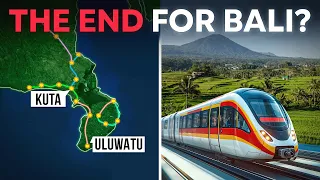
You can see that as Bali evolved over time it's only moved upwards to the coastline up through the west. The evolution of Bali has always been starting from the beach over here and it moves over in inland. Okay so the thing that you can do to just quickly check and verify what I say is this you can go onto a map a google map okay and all you need to do is to look at how many large hotels have actually been built in Canggu versus the Airbnbs and then compare that with Seminyak compare that with Kuta compare that with Nusa Dua.
Nusa Dua came first and it was all hotels no Airbnbs. Kuta came next and was pretty much all hotels very few Airbnbs the only Airbnbs were from post space that hotels had not actually captured yet. Seminyak is much fewer hotels many more villas many more Airbnbs and Canggu, as you go further west is almost all Airbnbs and very few hotels.
Okay so these are the three four parties that were involved in this particular boom of the short-term rental story. I'm going to follow up later for another episode we've almost reached 25 minutes and please watch the next episode where we'll talk more about how this particular evolution of the short -term rental industry then now affects you as a property owner. What can you expect if you are let's say a villa owner in Seminyak?
What can you expect if you own a resort in Canggu? What can you expect if you have a I don't know a bamboo house in Ubud? Every particular owner category is going to be affected differently by the changes in the marketplace and we look forward to catching you on the next episode.
Now I want to get some also feedback from our viewers and thank you so much for writing comments and following and subscribing to our channel here we really want to capture and engage with our audience we really want to hear what you have to say too as well and I know you're watching because I see the YouTube analytics that what's going up and to the right but I also want to hear your voice I want to be able to dialogue I want to be able to be helpful and answer difficult questions because I think with guided investment with the correct advice I'm looking out for myself too as well I've seen market failure happen so many times in Bali due to a incorrect perception about facts versus myth there's a lot of myth out there so this is my sincere attempt to actually correct the situation so that everybody can thrive long term in Bali. All right this is Jing again for our market insights on the Bali business review we look forward to catching you on the next time if you haven't done so already please subscribe and comment and we'll catch you on the next episode where we'll go more in depth into how the potential risks of oversupply in the short-term rental space affects the property marketplace in Bali.