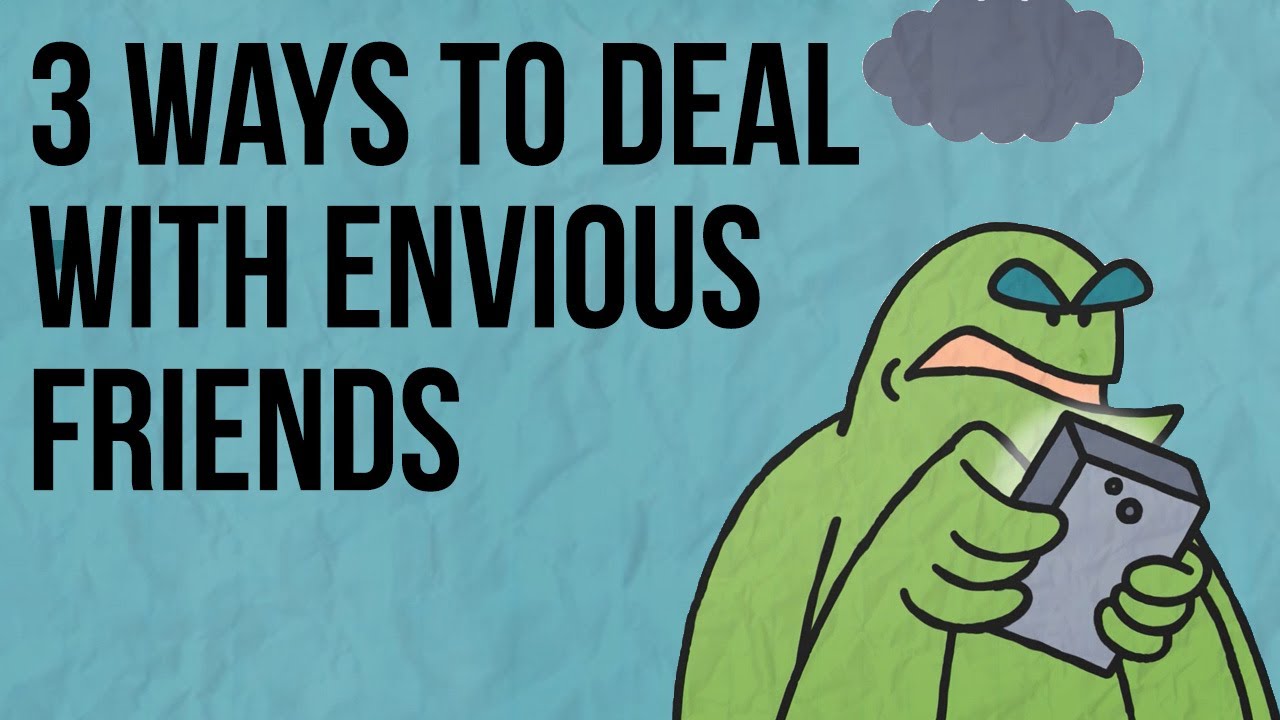
[Music] well people who are envious and you know i trace it to some to childhood there's a great writer melanie klein a psychoanalyst who said that there are children who are envious children they're greedy envious children they they envy the attention that other siblings are getting right and they go through life becoming enviers but they have people like that have learned over the years to disguise their envy they have to disguise it in some way because if they show it it'll turn people off and they'll have you know they'll be very limited in what they
can get in life so these are masters at disguising the signs of their envy so they'll do things like that they'll tell you give you advice that is meant to kind of confuse you or throw you off or lead you down the wrong path you know on and on um there are other you know there are myriad disguises that that env enviers have and i try and show all of them i mean one thing that i think is really critical is that um i talk a lot in this book about nonverbal communication because i think
it's a huge area in social interactions that we normally don't pay attention to people give off a lot of information by their body language by their looks by their tone of voice and enviers often can be unmasked by their micro expressions by their tone of voice they may be praising you and saying something good but their tone of voice is kind of cold and it's made to make you wonder whether there's there's something else going on or you'll detect so i have an example here of a way to test some test this whether you're dealing
with an envier if you say tell them some good news about yourself you'll see a flash of disappointment in their eyes it'll only last like half a second and they'll quickly cover it over or if you say something bad that has happened to you you'll see a slight smile that crosses their face you know or people who gossip a lot that's another kind of disguise of envy you know they're saying bad things about other people and we all love gossip and it's kind of juicy and fun right but it's a way to disguise the fact
that they really envy the people that they're trying to bring down it since envy right how does one handle that how does one deal with that handle one's own envy or from other people no no no forget about other people so first let's address my own you have to be first willing to be honest with yourself and to want to change this part of your character but you know look at these sort of strong moments in your life where you really hated somebody and maybe you acted on it or you said something kind of insulting
to a person we've all done that and you will tell yourself originally they they triggered it by their actions i want you to go back and start seeing what might have been a different scenario where you might have felt a pang of envy so as you say even with the con artists who con people there's a degree of god damn that guy got away with it that's pretty neat it's pretty interesting you know there's always usually a root of that even with somebody that you hate or really despise for some reason that there's a little
spark of envy where you kind of admire the fact that they got away with something that you couldn't get away with so you got to dig back and look at the actual causes of it but look at those moments in your life in which you felt a very powerful negative emotion towards a person and try and see if step going kind of reverse engineering it you can go back to the moment and see the original sense of envy that you might have had keep this in mind um an ancient rider going back like the 7th
century bc hessiat said the potter envies the potter the rider envies the rider and what it means is you're going to envy people who are in the same situation or boat as you i don't envy my carpenter who got a great new job working on a house because i'm terrible with my hands i could care less i'm happy for him but a writer who's suddenly 55 on amazon while i'm at 77 i'm gonna feel envy for so look at the people in your profession you're probably your dislike of that fellow artist or that other podcaster
99 sure that it comes from a place of envy yeah right so those those are those are kind of signs of it and then from there from that place and that degree of honesty i give you tips and strategies for how to alter that envy into something another dynamic so for instance you're always envying people who have more than you who are doing better than you but there's billions of people on this planet who are doing a lot worse than you right um the opposite of envy is gratitude where you feel grateful for what you
had as opposed to envying what other people have and without getting too pollyanish about it you can always feel great grateful for the fact that you're alive that you're healthy that you've got your brains and your wits about you that you've got a decent job that you have some people in your life why don't you look at the people who have a lot less than you and instead of feeling envy for those who are better why don't you feel grateful for what you have people are not nearly as happy as and successful as you think
they are they only present those happy moments on bali in their on their facebook feed they're not showing the angry little bitter fight that they have with their girlfriend two hours before in which she left you know saying wait you [ __ ] i'm leaving you kind of thing they're they're doctoring their image that they present to show the best parts of their life i talk in the book about how you know we always envy really wealthy people and who was the wealthiest person in the world in the 1960s was aristotle onassis and i read
about him in this jackie jacqueline kennedy biography he was the most miserable man on the planet he was so [ __ ] insecure he was just a nightmare to deal with so if his billions couldn't buy him just an ounce of happiness and these people that you envy are not this are aren't really worth envying right they're not really as happy as you think they are yeah