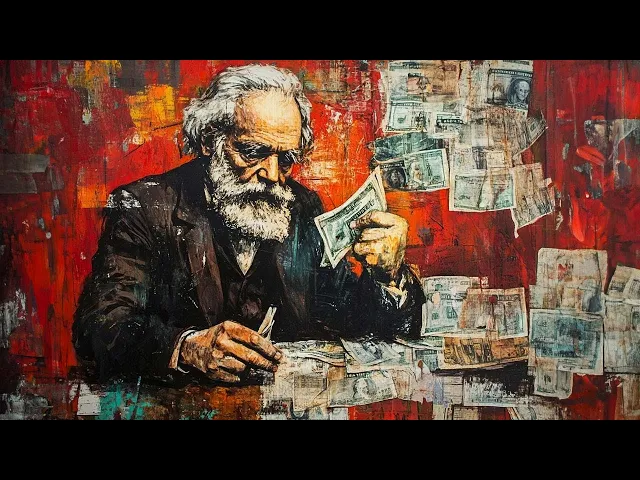
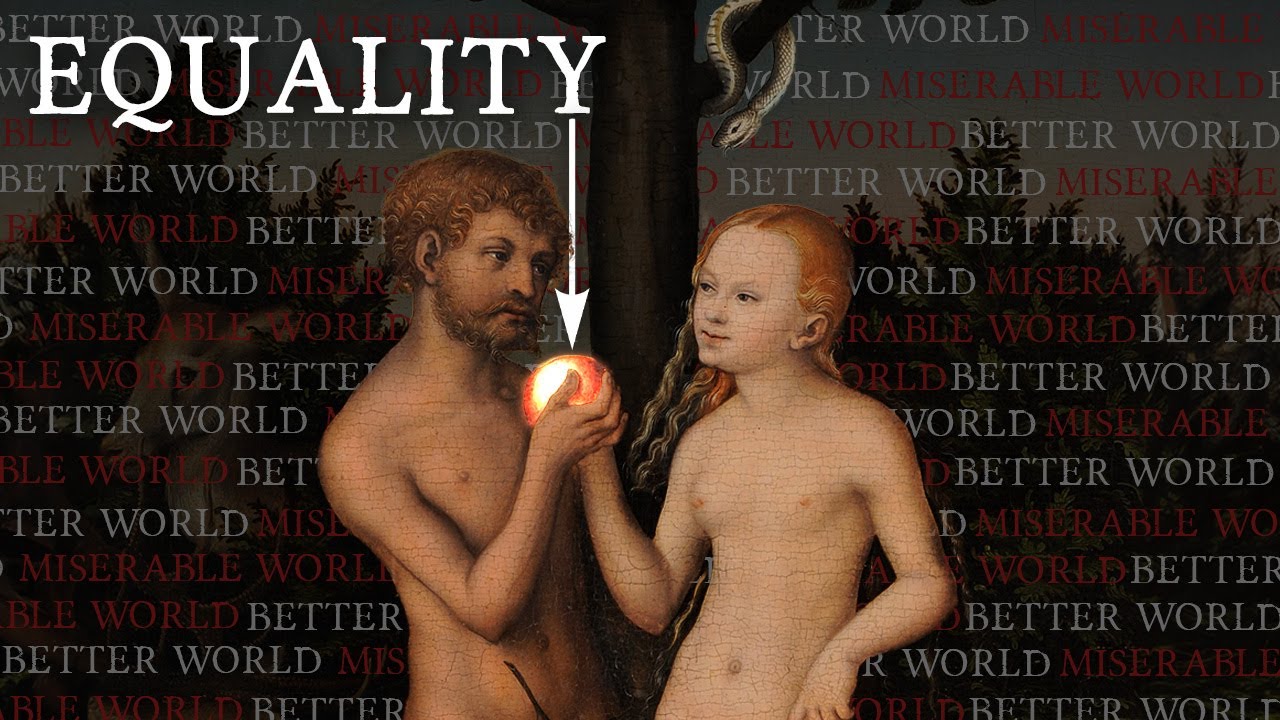
before I studied Marx I thought his vision of a communist Society was a wholesome communal sort of world that had done away with all the evils of capitalism I thought it was a utopian Vision following in the footsteps of French philosophers like monang and rouso and their idea of the noble savage the idea that humans in a state of nature are wonderful but we are corrupted by society and culture or as rouso put it man is born free but is everywhere in chains but I was wrong this isn't Marx's Vision at all maybe it's the
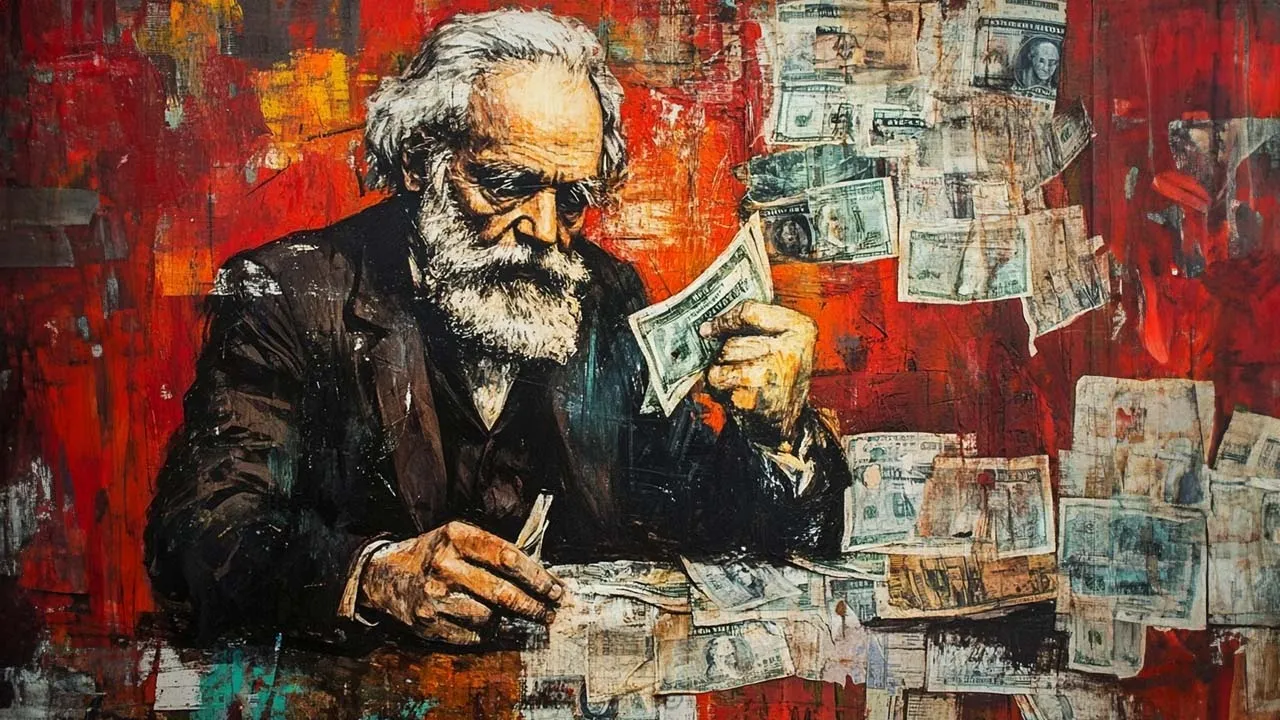
vision of some Marxist but this shouldn't be confused with the views of the man himself Marx's views are much stranger and more vague but also much more interesting if this harmony with nature vision is like the fantasy genre then Marx's vision is a bit more sci-fi his vision of Communism isn't a regression from capitalism but a diving in and digesting a fulfillment and Transcendence of capitalism and that is much more interesting from 1859 onwards Marx lived in Exile in London having been cast out of Continental Europe for his radical agitating the Marx's lived in a
state of utter poverty which was so bad they lost three kids to the conditions they were living in there were overdue debts and whenever they had visitors they had to take everything that was wasn't nailed down to the pawn shop just to save face it was a time of immense lack and stress what sustained Marx through this time was his faith it wasn't a faith in one of the big world religions but in communism you see Marx wasn't just agitating for a revolution that he wanted to happen or that should happen rather he believed it
was inevitable he believed it was fate over the next 30 Years in Exile Marx and his lifetime collaborator angles made no fewer than 40 predictions of imminent Revolution as the years wore on this hope began to fade though it was never totally extinguished this marxian Faith derived from the core influence behind Marx's thinking the source of his whole dialectical worldview that Source was George vilhelm Hegel and he was the most influential philosopher of the 19th century and the greatest systematizer in the long tradition of philosophy all the other Giants of 19th century philosophy had a
lot to say about Hegel schopenhauer hated the man calling him a flat-headed charlatan kir guard's existentialist Faith was a reaction against the dominance of hegelian thought in Denmark n felt his first book the birth of tragedy was too hegelian and then there's Marx of all these names Marx has the most ambivalent relationship with Hegel he found hegel's emphasis on spirit as the guiding force of History to be utter nonsense he was far from keen on hegel's politics or worldview but he adored and fully adopted the hegelian methodology this methodology was called dialectics and it's not
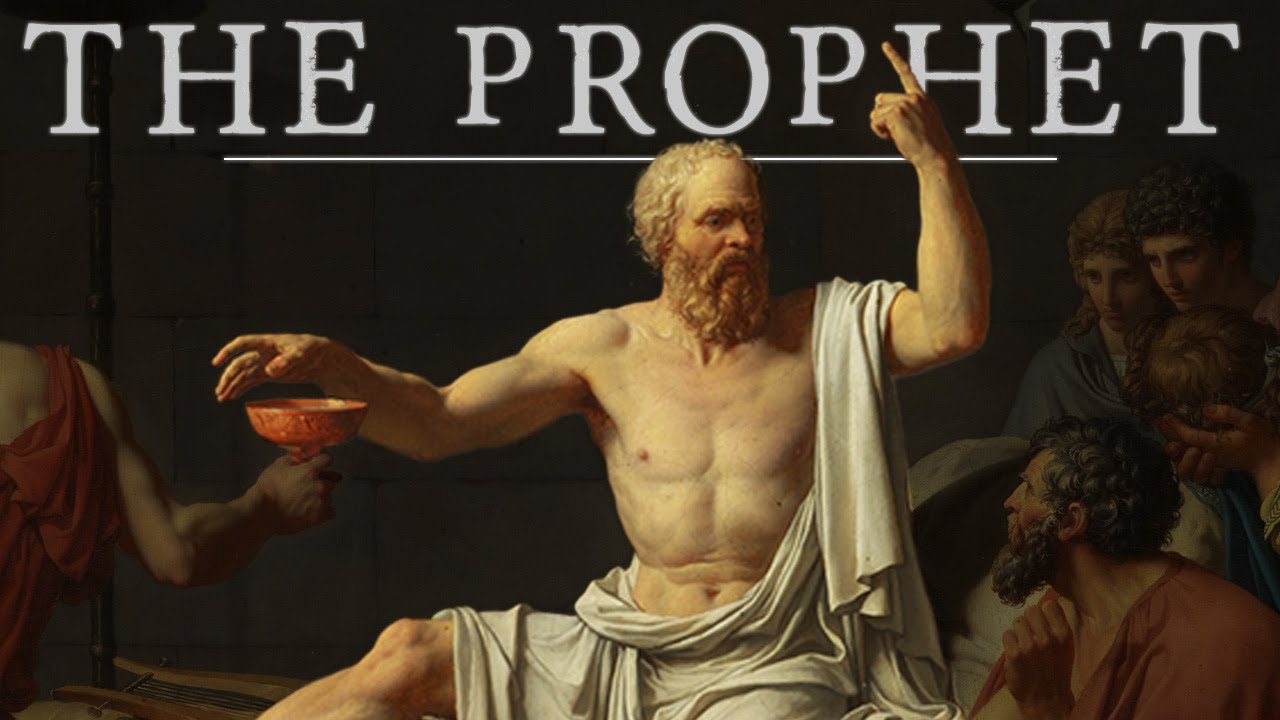
to be confused with the dialectics of Plato and Socrates that ancient dialectics was the belief that truth could emerge from the point and Counterpoint of two conversational Partners sparring dialectics for Hegel and for Marx was a much grander occurrence than mere conversation for them it was the canvas of History it was the developmental pattern of human civilization this hegelian dialectics saw history as comparable to an acorn or a caterpillar they believed there's a natural pattern that guides the transformations of history there are a set of forces within the acorn that lead it inevitably in the
direction of the oak just as there are developmental forces at work in the caterpillar that lead to its Transformations into a butterfly each believed that they had found the master pattern Hegel believed he had found it in the realm of spirit but Marx didn't go for any of that instead he was a materialist and he could see the developmental pattern of history in the evolution of our material conditions this view of Marx is called dialectical materialism the material conditions that Marx believed were key were in the economic sphere he saw history as one long story
of class struggle in the same mold as hegel's Master Slave dialectic this tension between different classes in history is what has driven the evolution of society's modes of production from the Primitive communism of hunting Gathering tribal peoples to the slavery of the ancient world into the feudalism of the medieval and now into the modern era of capitalism these Transformations were as inevitable for Marx as the acorn becoming the Oak and the caterp are becoming a butterfly history is a dialectical process that is to say a developmental process and as Mark thought we are very close
to a whole new transformation just as slavery gave way to feudalism and feudalism gave way to capitalism so it is inevitable that capitalism will give way to the next stage of society's Evolution Marx called this stage communism this faith in the dialectical Arc of history is the reason that Mark and Engles had such faith that the Revolution was coming any day now it's what sustained Marx through the arduous years of Exile and it's also the reason why he loved capitalism in a move that would appall many of his adoring fans today Marx was full of
praise for Great Britain in his essay the British rule in India he wrote that the British Empire was the unconscious tool of history and while he wasn't mad about the horrendous atrocities they committed he concluded the essay with the following then whatever bitterness the spectacle of the crumbling of an ancient world may have for our personal feelings we have the right in point of History to exclaim with G should this torture then torment us since it brings us greater pleasure were not through the rule of Timor Souls devoured without measure he expressed similar sentiments about
the European colonization of the Americas for Marks it was no more possible for these people to skip to the end of History than it was for caterpillar to spontaneously turn into a butterfly before water hits the transformational point of 100° C it has to heat up and so in order for communism to become possible capitalism is necessary it is a desirable force of History communism is only possible on the foundation of capitalism for most of his life Marx was immovable on this point but when there was no sign of a revolution in Europe and the
Russians came courting him asking if there was really no hope of Revolution in feudalistic Russia his position softened but this is a departure from Decades of his own theorizing in the name of what seems to have been opportunism in the end I'm sure marxists would agree today that he was wrong to do so given how leninism and stalinism played out and so for the marks we have in all of his writings we see that without the industrialization of capitalism there is no communism and that's because this new stage in history isn't a return to the
Primitive communism that rouso adors so much but instead a whole new mode of production built on the foundation of the capitalists hence why he writes in The Communist Manifesto that the Bourgeois has subjected the country to the rule of the towns it has created enormous cities has greatly increased the urban population as compared with the rural and has thus rescued a considerable part of the population from the idiocy of rural life just as it has made the country dependent on the towns so it has made Barbarian and semi Barbarian countries dependent on the Civilized ones
nations of peasants and nations of Bourgeois the East and the West he also expressed great admiration for what capitalism has done the Bourgeois during its rule of scarce 100 years has created more massive and more colossal productive forces than have all preceding Generations together subjection of Nature's forces to man Machinery application of chemistry to Industry and agriculture steam navigation Railways electric telegraphs clearing of whole continents for cultivation canalization of rivers whole populations conjured out of the ground what earlier Century had even a prese sentiment that such productive forces slumbered in the lap of social labor
and so despite being known as the most Ardent enemy of capitalism Marx was in fact its weirdest lover his vision of Communism was all built on the foundation of capitalism capitalism was so incredibly productive that it made possible a world where we no longer have to struggle to survive but we can develop fully as humans and truly flourish and from there who knows communism was not the end of history for Marx merely its next stage what might await Beyond communism only the dialectical weave of History could tell the pattern of unfolding that saw the acorn
of primitive communism matur thus far into capitalism and now communism unfortunately predicting the pattern of history is a labor Frau with difficulty as the subsequent history of capitalism and Marxism amply attests to that's everything for this episode of the living philosophy I'd like to thank David pilibosian Sasha Canon and all the other patrons for their amazing support of the channel if you like to get access to bonus content like book clubs long form interviews with creators and experts live stream monthly q&as or if you just want to support the channel and get your name into
credits like these wonderful people then you can head over to patreon as ever if you have any thoughts insights or feedback I'd love to hear from you down in the comments otherwise I should see you next time thank you for watching