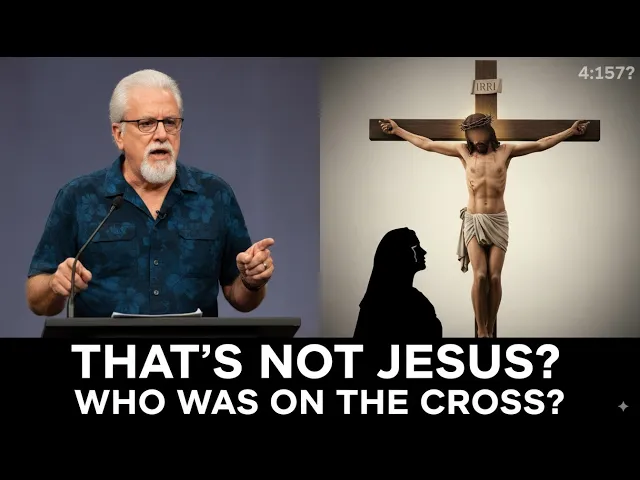
And what's more in chapter 3:55 God is saying to Isa I will cause you to die that's the word in he and in Arabic mut means person means to die mean you I will cause you to die it is as clear as day in Arabic the only problem is every translation you read now has changed that to I will cause you to sleep but any Arab speaker knows is always die that does not mean sleep in Arabic. And they've had to change it since the 1930s because of the pressure from the governments saying we cannot have God Jesus dying. We cannot have Jesus dying because that's an internal contradiction between chapter 3:55 and chapter 4 verse 157.
Oo, I'm so glad we don't do that with our Bible. Both Greek historians that were debating this in 52 AD. That's just a little about 20 years after Christ's death.
They were talking about that death. They mentioned that when Christ died, the sun went dark and the earth shook. So here's Greek historians that had no reason to admit or certainly to support the Christian record.
And yet they are admitting that Jesus did die. >> You have Thalis of Flegen. Then you have Tacitus.
Tacitus is a Roman historian. Tacitus did not like Christians. No, he didn't.
He had nothing good to say about Christians in his annals. But what's fascinating, he does talk about the death of Jesus. In fact, the question I always ask my Muslim friends is can you find me one historian, just one from the first, second, third, fourth, fifth, sixth up until the seventh century that denied the crucifixion of Jesus.
And what about the mother of Jesus? She had known Jesus for 33 years. A mother knows her own son.
And I don't hear anywhere in the reference there or anything that mother that Jesus or Mary had any doubt that that was her son on the cross. And what about the man on the cross? Wouldn't he have said something?
You got the wrong man. I'm not him. Help me.
No. Look and see what he said. Look at what he said on the cross.
Father, forgive them for they know not what they do. if he allows another one to take his place, doesn't die on the cross, but then three days later goes into the upper room, introduces himself to the disciples as if he was hit, claiming to be the man who died and rose again. A week later, even when Thomas questioned him, he showed the holes in his hands and the holes in his feet.
What kind of prophet lies like that? If Allah took the image of another man and put Jesus's image on him and let that man die in Jesus's place and then told no one about it and for 600 years told nobody about it. What kind of God is that?
That's a deceitful God. That is not the God of the Bible. What if the Quran contradicts itself on the most important event in human history?
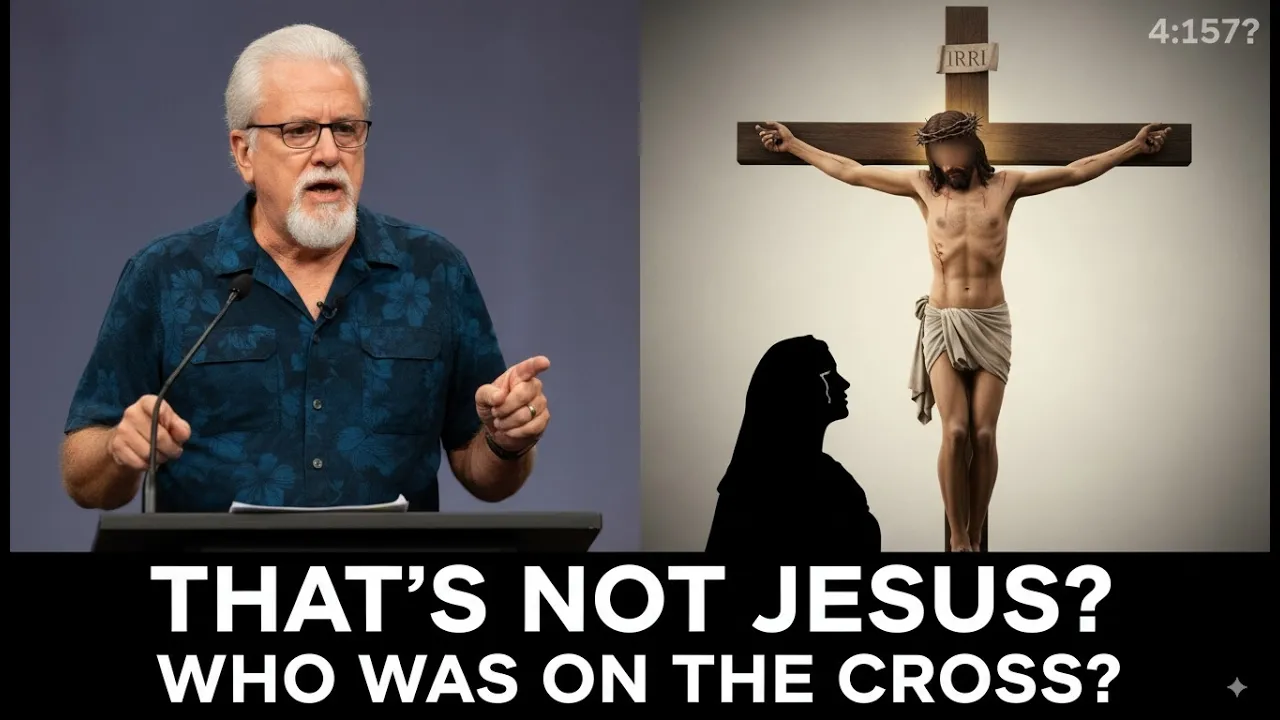
In today's video, Dr J. Smith tackles one of the most controversial claims in Islam that Jesus was never crucified. But what happens when you actually examine the Arabic text, the historical record, and the eyewitnesses?
You'll hear how the Quran says one thing in one verse and something entirely different in another. You'll see why every early historian confirms the crucifixion, and you'll be challenged to think deeply about the character of God himself. Is God a deceiver or a redeemer?
Stick around. You may never look at the crucifixion debate the same way again. The crucifixion.
If you look at the Quran, it's very clear that there is no crucifixion. In chapter 4, verse 157, no crucifixion. For they killed him not.
They thought it was so. Another was given his image. And truly he was not crucified.
That's what it says in chapter 4 157. So what are we going to do with that? Let me give you five answers real quickly.
Five things you can say quickly about that verse. First of all, you can look at another verse. Chapter 19:33.
In chapter 19, by the way, are we being filmed for this? This is all being filmed. So, if anybody I do speak fast, so just put your pens down.
You can get the film afterwards and you can go speed it down like my or just put it down so it's really nice and slow. That's what my Korean students always do. And I have a beautiful baritone.
I wish I could speak like that, but that you can go ahead and slow it down and then just pick up all these verses as we go through. So there in chapter 19:33, Jesus Isa is his name. He's there as a little baby and he's there in the crib and he says to the crowd who's asking him where he came from.
He said, "Blessed be me the day I was born, the day I die, and the day I rise again. " So there is Jesus referring to his birth, death, and resurrection. That confronts chapter 4 verse 157, doesn't it?
It's a contradiction. Muslims cannot understand that. So what they do is they try to say, "Oh yeah, well he's talking about the future.
" Well, of course he's talking about the future. He's a baby. That's not happened yet.
He is going to die in 33 years. They would like to say this is a future rendering when he comes back another time. There's nothing in the verse to help them with that.
You can see they have to impose on the text to get that out of it. And what's more in chapter 355, God is saying to Isa, I will cause you to die. Mutawa, that's the word in in Arabic.
Mut means person means to die mean you. I will cause you to die. It is as clear as day in Arabic.
The only problem is every translation you read now has changed that to I will cause you to sleep. But any Arab speaker knows is always die. That does not mean sleep in Arabic.
And they've had to change it since the 1930s because of the pressure from the governments saying we cannot have God Jesus dying. We cannot have Jesus dying because that's an internal contradiction between chapter 3 verse 55 and chapter 4 verse 157. Woo.
I'm so glad we don't do that with our Bible. Can you imagine us changing the text, changing the changing the verses so that we can get our theology correct? Thank goodness.
I'm and we're not talking about translations here because the Arabic still retains. is still there. Mutalophika is still there in my Bible right here.
Now you'll see that there will be other questions about Jesus Christ. But let's stick with this crucifixion. That's the first problem.
Internal contradiction between chapter 4, chapter 19 in chapter 3. Number two, the second problem with the crucifixion. If Jesus did not die, what are you going to do with the historical the historical um uh the historical record?
The historical record is very clear. Every historian from that period did know that Jesus died. Just take a look at the three greatest historians that we look at when we look at the person of Jesus Christ.
Thalus and Flegen, they're both uh they're both Greek historians that were debating this in 52 AD. That's just a little about 20 years after Christ's death. They were talking about that death.
They mentioned that when Christ died, the sun went dark and the earth shook. So here's Greek historians that had no reason to admit or certainly to support the Christian record. And yet they are admitting that Jesus did die.
You have Thalus at Flegen. Then you have Tacitus. Tacitus is a Roman historian.
Tacitus did not like Christians. No, he didn't. He had nothing good to say about Christians in his annals.
But what's fascinating he does talk about the death of Jesus and he mentions that the day that Jesus he mentions not only that Jesus died, but he mentions that it happened under the authority of Pontius Pilate during the reign of Tiberius. That's why we know it was in 33 AD because of Tacitus. Josephus, a Jewish historian, talks about the death of Jesus and curiously mentions the the fact that Christians thought he rose again.
That's the only non-biblical record we have for the resurrection. So here you have Greek, Roman, and Hebrew or Jewish historians all supporting the death of Jesus. In fact, the question I always ask my Muslim friends is, can you find me one historian?
Just one from the first, second, third, fourth, fifth, sixth up until the seventh century that denied the crucifixion of Jesus. Not one. The only reference to the fact that Jesus did not die is in chapter 4 157 in the Quran from the seventh or as we're going to find out probably 8th or 9th century.
And you then understand why not only do you have internal contradictions, you has have historical contradiction. What about the eyewitness account? Who was at the foot of the cross?
Weren't there eyewitnesses there? Yeah, there was. John was there, wasn't he?
John was the favorite disciple of Jesus. John had been with Jesus for three years. He was at the foot of the cross.
Jesus spoke to him. Would not John have known who his Christ was? Would he have not known who the man on the cross was?
Absolutely. Don't you think he would have said something if was it was another man? And what about the mother of Jesus?
She had known Jesus for 33 years. A mother knows her own son. And I don't hear anywhere in the reference there or anything that mother that Jesus or Mary had any doubt that that was her son on the cross.
And what about the man on the cross? Wouldn't he have said something? You got the wrong man.
I'm not him. Help me. No.
Look and see what he said. Look at what he said on the cross. Father, forgive them for they know not what they do.
Into your hands I commend my spirit. That does not sound like the wrong man. That does not like sound like the man who is not guilty.
That sounds like I'm sorry, that's not the right word. He was not guilty to begin with. You're correct.
But it does not sound like the man who was duped. He willingly went to the cross. He knew that he was to be on the cross and that's why he was going home to be with his father.
But he had something to do first. before he went home. Then we get to the fourth problem and that is Jesus himself.
What are you going to do with Issa if he allows another one to take his place? Doesn't die on the cross, but then three days later goes into the upper room, introduces himself to the disciples as if he was it, claiming to be the man who died and rose again. A week later, even when Thomas questioned him, he showed the holes in his hands and the holes in his feet.
What kind of prophet lies like that? Not my Jesus. My Jesus doesn't lie like that.
They've got the wrong Jesus. They think that that's that's the historical record. And then fifthly, and this is the hardest one for Muslims to know what to do with, and this is the moral argument somewhat like the the fourth one.
If Allah took the image of another man and put Jesus's image on him and let that man die in Jesus's place and then told no one about it and for 600 years told nobody about it. What kind of God is that? That's a deceitful God.
That is not the God of the Bible. I don't see anywhere in the Bible where a God is deceitful. Do you?
Not my God. They've got the wrong God and it looks like they've got Allah because that's the God of the Quran. Take a look and see how much that Jesus that God re deceives.
In fact, that's quite normal for Allah to do. In fact, it says in the Quran that God doesn't is above deception. There are a number of references.
I could give them to you right here where God is deceitful. Chapter 3:54, chapter 8 verse 30, chapter 10 verse 21, chapter 3 verse 28. All of these are the deceitfulness of God.
The deceitfulness of God, the deceitfulness of Allah, that Allah is above deceit. He cannot be held accountable to the same standard that we are held accountable because he is God alone. Which suggests that we're talking about two different gods, aren't we?
The God of the Quran is not the God of the Bible. The God of the Quran has nothing to do with the God of the Bible. And I never I never want to hear people say that we share the same God.
I will have nothing to do with that God. And the reason why I'm coming down so hard on the crucifixion is because the crucifixion is what the Muslims attack us with. They don't attack they don't confront us with the resurrection because they don't believe that there was any resurrection.
If God didn't if Jesus didn't die, of course, he didn't rise again. He was always alive. So, we've got to deal with the crucifixion.
I know you've been told that we sp must spend all our time with the resurrection, but that's with atheists and that's with humanists. With Muslims, you've got to confront the crucifixion. So just use these five points against them.
>> In this powerful session, Dr J. Smith takes us into the heart of one of the biggest theological divides between Islam and Christianity, the crucifixion of Jesus. While the Quran boldly denies it happened, Dr Smith brings forward five undeniable arguments that challenge this claim.
Starting with the Quran itself, he reveals how Surah 355 uses the Arabic word mutoa, which clearly means caused to die. Yet, modern translations have altered this to sleep, a linguistic coverup driven by political pressure, not scholarship. He then walks us through ancient historians, eyewitnesses, and even Mary, the mother of Jesus, to ask, could all of them have been wrong?
But it's not just about history. This video raises a deeper moral question. If God deceived the world by placing another man on the cross and hiding the truth for 600 years, what does that say about his character?
This isn't just a debate over doctrine. It's a conversation about truth, integrity, and the nature of the God we worship.