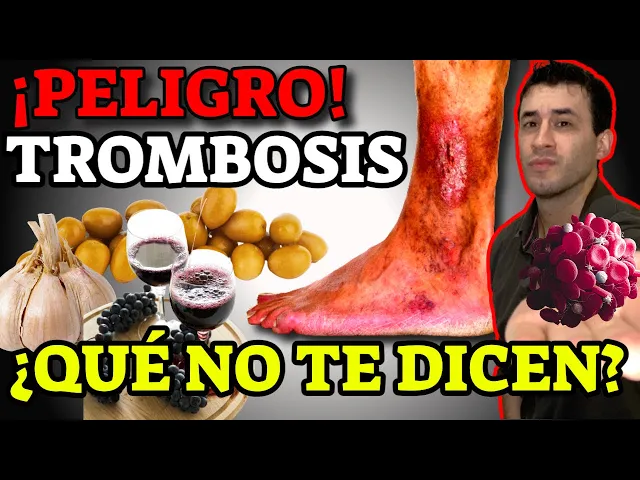
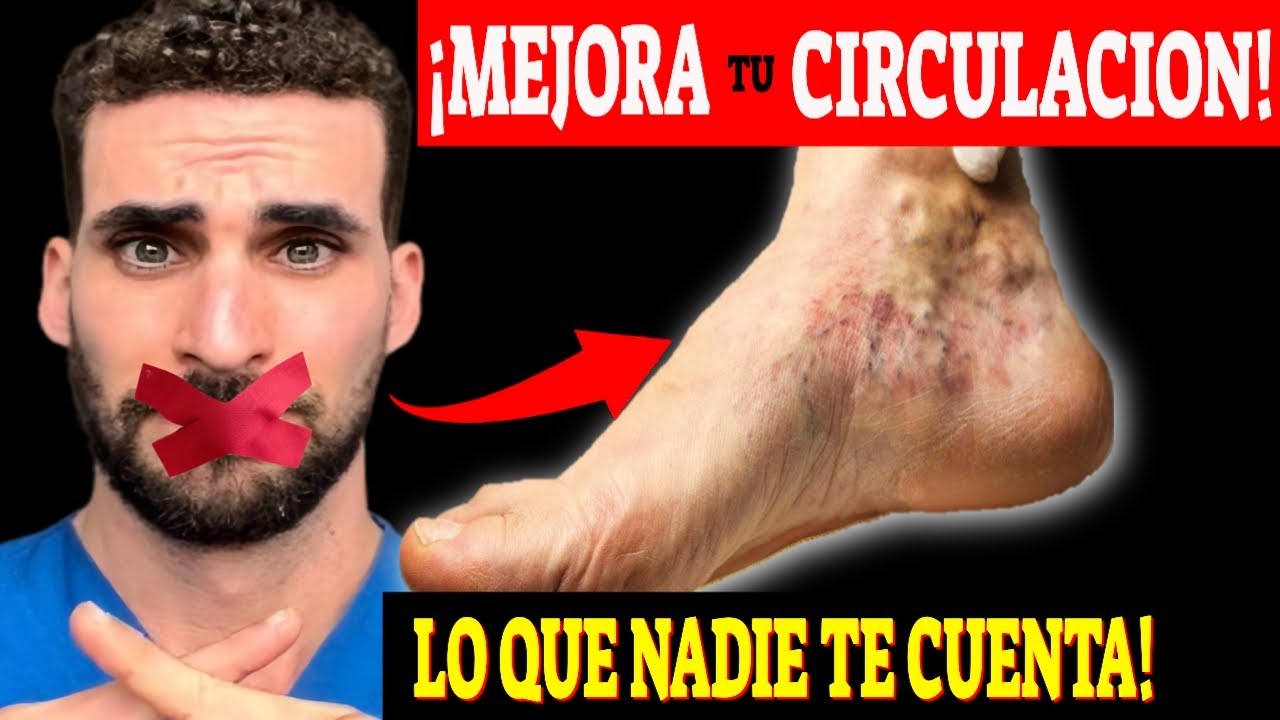
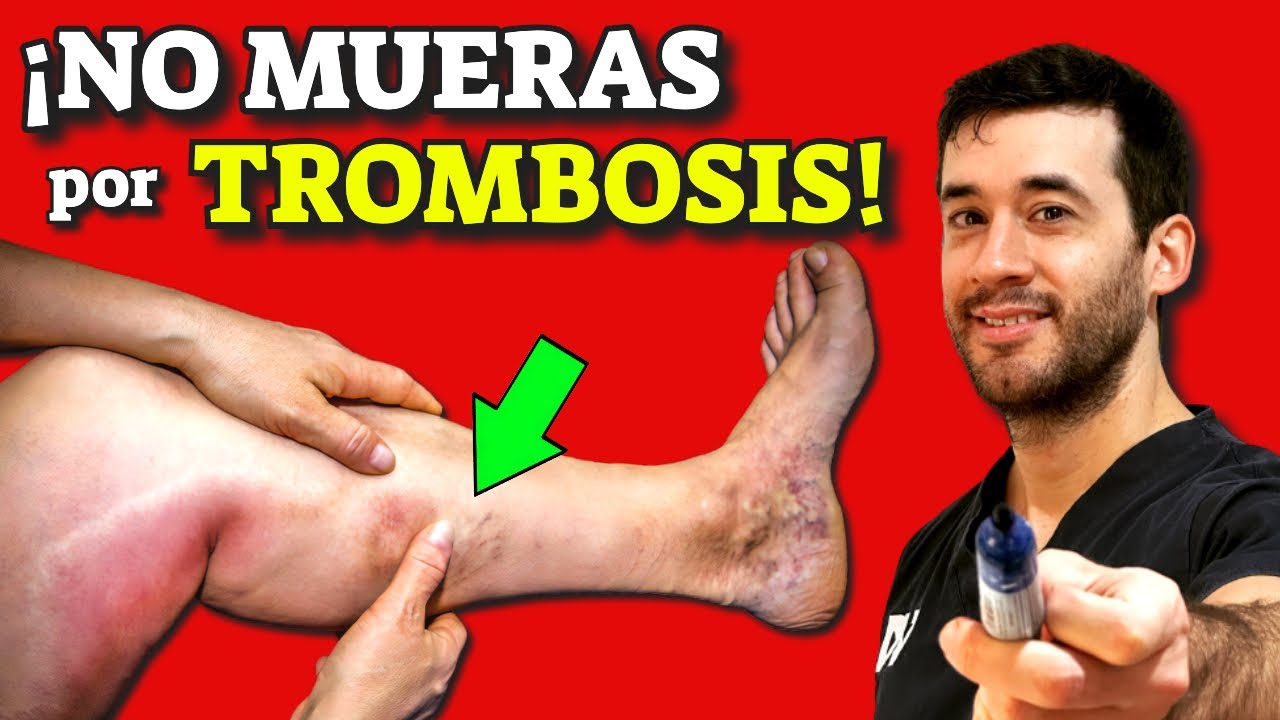
Thrombosis and clot formation. Can it be prevented? Are there measures or natural foods that help prevent these episodes?
Red wine might help. Hello everyone, I am Dr Veller and today I want to talk to you precisely about this. We will be looking at this class in a simple and summarized way.
What is deep vein thrombosis? Why happens? Who happens?
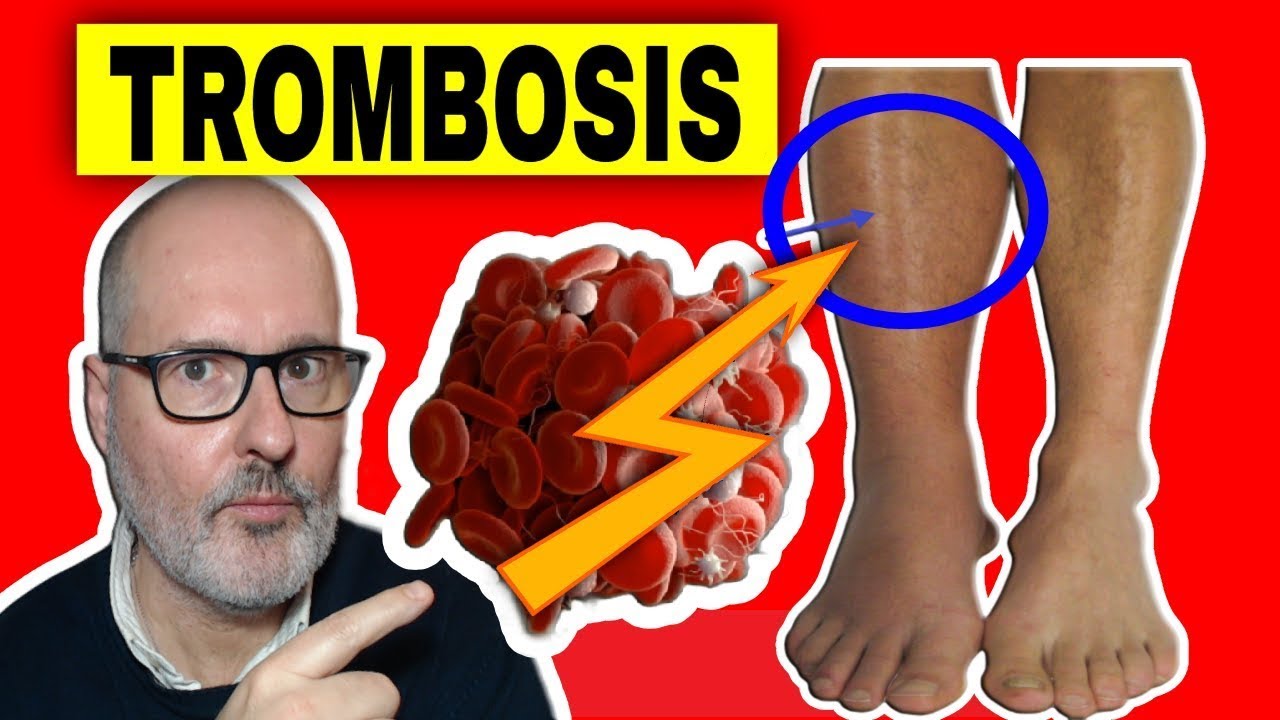
And mainly of the measures that we can do in our house to prevent this from occurring. First, what is thrombosis? It is a condition in which a thrombus, a clot in practical terms , forms in one of our blood vessels.
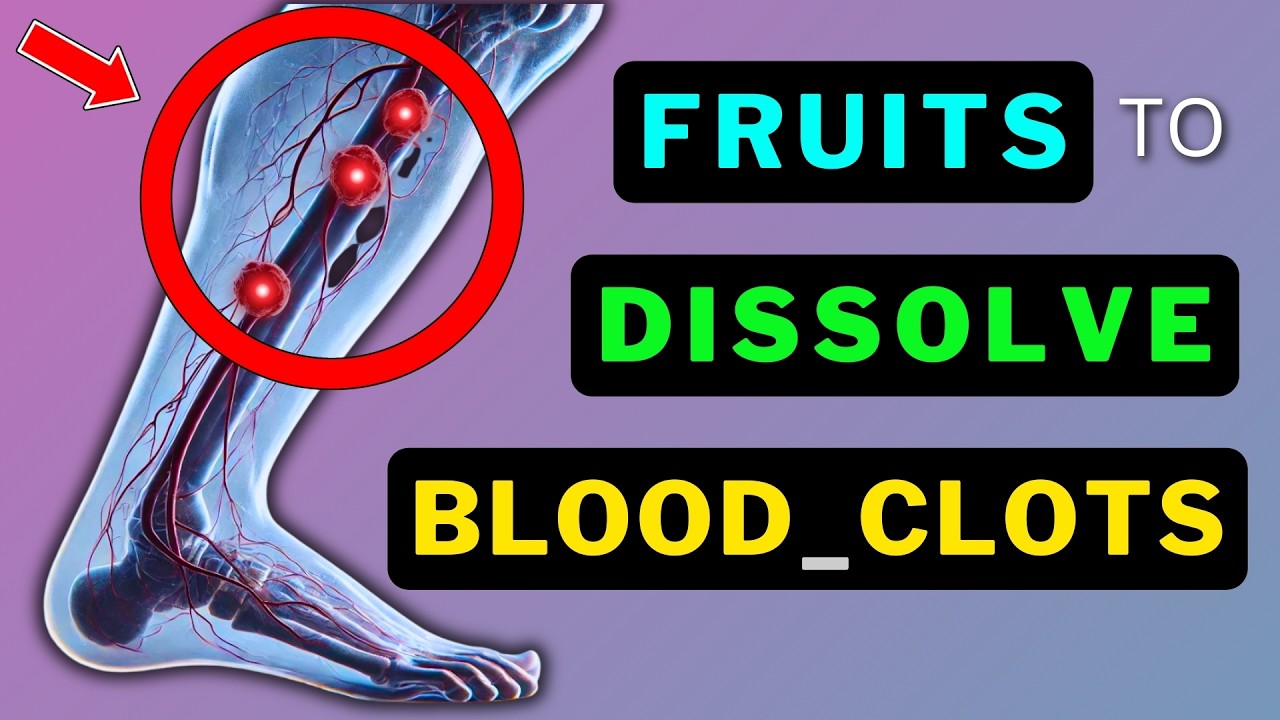
It generally occurs in the veins the deep veins of the lower limbs. It can occur at the level of the calf, at the level of the knee, at the level of the thigh, even higher at the level of the pelvis. That is why it is called deep vein thrombosis, because it occurs in veins that are located deep within our muscles or organs.
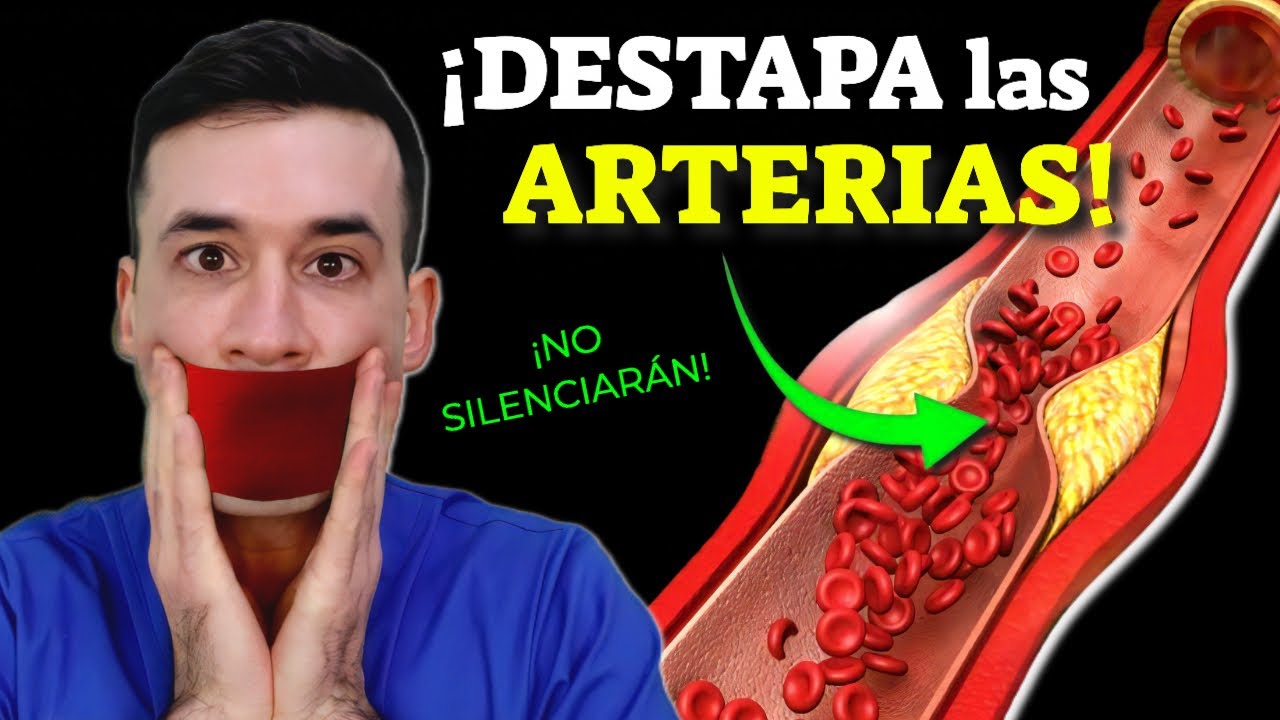
What the clot does is limit blood flow, the blood that should be draining from here. For example, it finds an obstruction. Literally, if we see in greater detail this vein that is here, a thrombus forms.
This thrombus is attached to the wall and often completely occludes the blood vessel. Then all the blood that would have to be drained, to go to the rest of the blood vessels, begins to accumulate and begins to swell. For example, our legs start to hurt, start to look red and we start to have all those signs or symptoms.
Although this is the most common form, thrombosis can occur anywhere in our body. There are people, for example, who have thrombosis in the vessels that are close to the heart or who have thrombosis in the vessels of the arms or in the vessels of the abdomen, near the liver, and so on. And here there are two main problems, the first of which we are going to suppose this thrombus located in the vein of our leg if it grows too much, it can compromise the walls of the blood vessels.
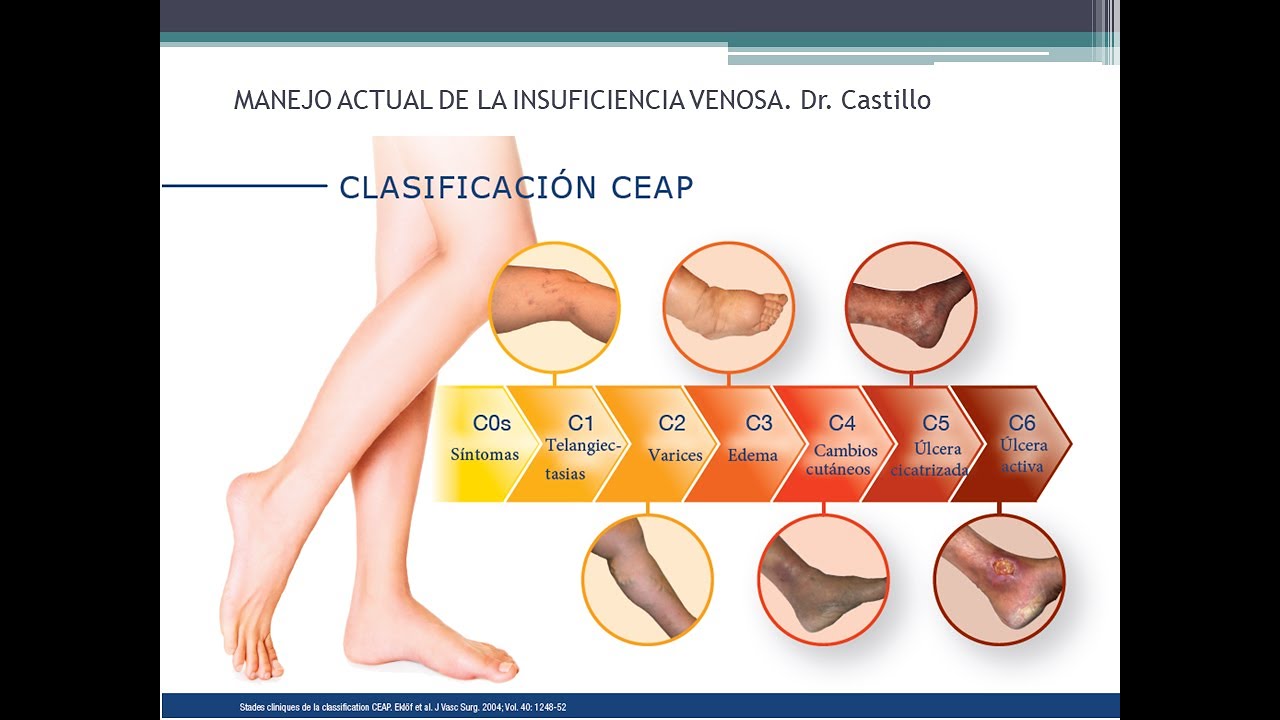
We know that we have valves in our veins. The valves what they do is allow the flow to be directed only upwards, that when the blood wants to return, these valves prevent it. Now, if we have a thrombosis here, the inflammation of the vein wall can lead to a condition that we call chronic venous insufficiency.
Why? Why a wall dysfunction and valves occurs. Then over time that person is not treated or if the episode reoccurs or if it is very serious, it may be left with this sequela, leaving for example chronic swelling of that lower limb or the place where the thrombosis occurs .
Now the other problem is this that I am going to tell you here, which is much more serious. The thrombus can rupture if a piece breaks, what we call an embolus is formed. The embolus is simply a piece of the thrombus that is now able to travel through our circulation.
Notice, it goes through our circulation and the problem is that it can go where, to the lungs, it passes through the heart and the heart goes to our lungs, causing what we call thrombus, lung embolism. This is a condition that sadly occurs in more than a million people per year, at least the United States is now increasing much more by the COVID 19 sadly and that kills more than 100,000 people a year. It causes 100,000 deaths a year.
And this pathology in some cases can be prevented. That is why it is important that we know what those prevention methods are. Why does thrombosis occur?
Well, I am going to summarize you with one word that I am going to explain to you simply by the loss of balance. In our body, they all have to be kept in perfect harmony, balance, what we doctors call homeostasis, the clot or thrombus is formed when the blood, which should be liquid for some reason, becomes semi-solid. A part of the blood became partially solid and caused a blockage of a blood vessel.
In our body there are anticoagulant substances and substances that are pro-coagulants and the blood remains liquid thanks to this balance. Now, if for some reason we cut ourselves, for example, in that place where the injury occurred, the substances that are pro-coagulants will begin to predominate, forming the thrombus. Now, when the injury is repaired, the anticoagulants increase and the thrombus dissolves.
Now, sometimes for different conditions, the individual begins to have excessively these pro-coagulant substances. These clots or thrombi do not dissolve. And that's when the problem begins.
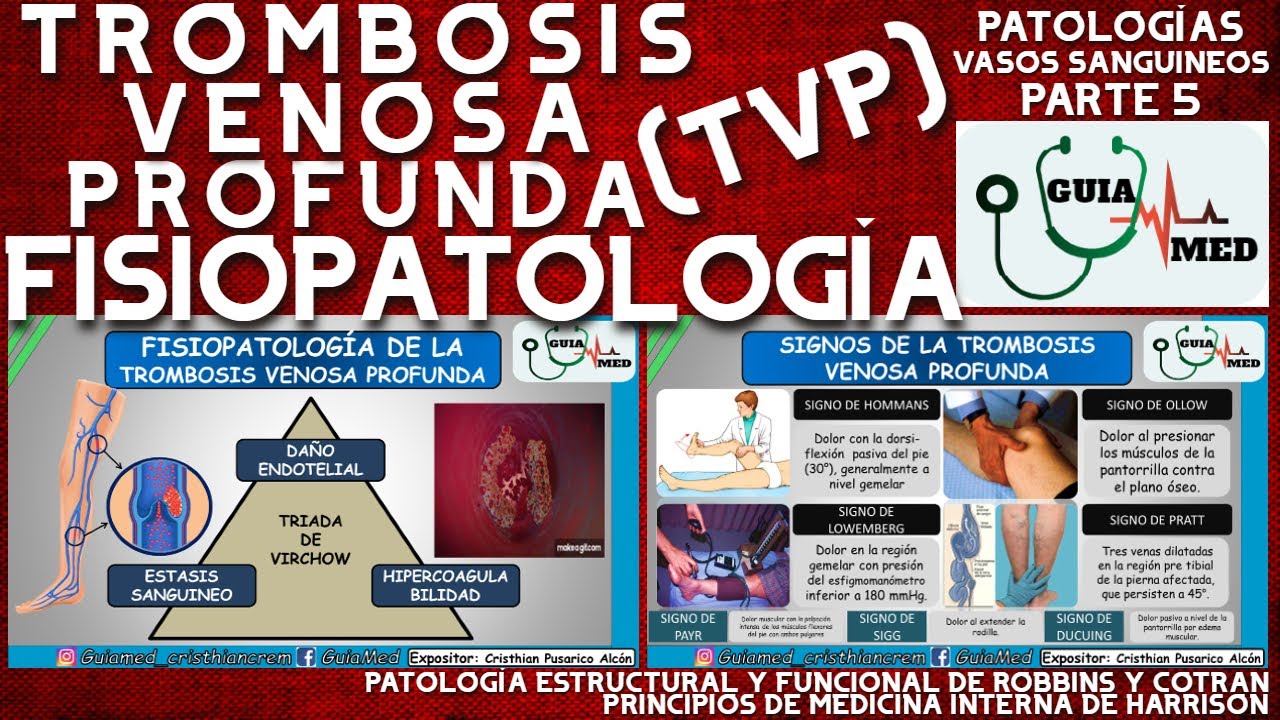
Why is this happening? Virchow, a German pathologist described three conditions that favor the formation of thrombi in our body, and this is where it all comes together. Notice, Virchow said that for thrombosis to occur there must be these three things.
Endothelial injury, that is, an injury to one of our blood vessels for any reason. For example, a cut, a trauma, an infection, hypercoagulable states, that is, a predisposition to which we can thrombi. What am I going to tell you what they are.
And on the other hand, the slowing of blood flow. Based on all this, we are going to see who can get thrombi. And notice how Virchow has to do with this.
We can summarize the risk factors as modifiable those that we can modify or not modifiable. There are some that remain in the middle that we say, are difficult to modify or sometimes impossible. Modifiable risk factors have to do with lifestyle.
And that is where we have to focus to carry out prevention. For example, obesity, sedentary lifestyle. A sedentary lifestyle causes immobilization.
Immobilization favors blood slowing and the hypercoagulable state causing the formation of thrombi, immobilization, for example, from working for a long time sitting cross-legged or prolonged trips, more than 4 hours by plane by car also favors the formation of thrombi, another type of immobilization that is a bit more difficult to modify, when we are admitted for any reason, for surgery, for example, especially orthopedic surgeries, for a fracture or hip replacement, knee replacement. In short, COVID 19 also increases the risk of thrombi among the risk factors that remain in the middle, let's say, which may or may not be modifiable depending on the cases we have some types of cancer treatment with chemotherapy. Many times this obviously cannot be modified because the patient has it and needs treatment, but if there are ways to prevent the occurrence of thrombosis, the use of certain medications would be a modifiable factor.
Contraceptives, for example, especially if we are taking contraceptives and smoke at the same time. As non-modifiable risk factors, that is, in which we sadly have no way to change them. Age over 65 years.
Pregnancy also increases the risk of thrombus kidney problems , such as nephrotic syndrome. Having had a previous episode of thrombosis or lung embolism, having a fracture at that time also greatly increases our risk of thrombi, heart problems such as heart failure. Although it can be treated, it is associated with increased thrombus formation, also due to slowed blood flow and endothelial damage, hypercoagulable states, and so on.
Now, if you had an episode of thrombosis and you don't have any of those risk factors, you probably have a thrombophilia. Thrombophilias are the hypercoagulable states par excellence, they are conditions or pathologies that greatly increase the risk of having thrombosis. Here there are pathologies that are genetic.
For example, we inherit a faulty clotting factor that promotes thrombus formation, or we inherit, say, a lack of an anticoagulant factor. Thrombophilias can also be acquired. In other words, diseases that we develop throughout our lives, such as the anti-phospholipid antibody syndrome.
Those are topics from another video. What I want you to do here is that when faced with an episode of thrombosis, we must always ask ourselves why it occurs. Because the treatment will depend on that, on that the prevention of future episodes will depend .
what are the signs and symptoms? Well, you have to think that you are going to have signs or symptoms in the place where the thrombosis is forming or you may have a symptom of a complication. In other words, if a piece came off, an embolus formed and caused a thrombus embolism, for example.
In the first case, if you had a thrombus here in your leg, what are you going to have? You will have swelling, edema of the lower limb below the thrombosis site. Many times the whole leg swells, it can be red, you can have what we call erythema.
Obviously this can hurt. Your calf hurts when you get up. This is not normal.
Your thigh hurts. A sudden pain of sudden appearance appears quickly an hour ago you did not have it, and now, suddenly, you have it. You may have a slight fever.
low-grade fever too, this can occur. Now if you have a lung embolism, sudden chest pain, shortness of breath. Cough, coughing up blood What we call hemoptysis.
When you take a deep breath it gives you a stitch in your chest. It could be a sign of thrombosis as well. I had told you that most of the time deep vein thrombosis occurs in the deep venous system of our muscles and our organs.
Now, many other times, thrombosis can occur in the most superficial veins. At that time we will have localized pain in a vein. We are probably going to be able to palpate, touch that vein like a hardened cord, usually near the knee on the thigh.
This hard cord may be red, it may be a little swollen as well. Now these thrombi generally do not cause the problems like lung embolism, unlike deep vein thrombosis. How is the diagnosis made?
Well, the first thing is clinical suspicion . The doctor, surely after examining you, will ask you for a series of tests. He can ask you for the famous D-dimer, a Doppler ultrasound to see if you have a deep vein thrombosis and if he suspects a lung embolism, he can ask you for other tests, such as a lung angio-tomography or other specific tests.
The important thing is that in addition to making the diagnosis of thrombosis, they make a diagnosis of why this happened and those risk factors are investigated and treated. And in the event that you do not have obvious risk factors, both modifiable and non-modifiable, go back to look for the famous thrombophilias that can be genetic or acquired. We are already getting to the prevention part, but before in relation to the treatment, generally the treatment is done with anticoagulants.
There are many types. It does not depend so much on the clot and if the specific patient. Don José with a thrombus is not the same as Dona María with a thrombus.
The patients are different. So the treatment options that we are going to offer are also different and have to be adjusted to each one of them. Treatment generally lasts between 3 months to a year, but can last longer, especially if the cause is unknown or if you have recurring episodes .
We are now going to talk about prevention and how can we modify this famous Virchow triad ? I'm going to tell you everything we can do to improve our circulation. On the one hand, we have more complex cases where it is very difficult to carry out this prevention.
For example, a patient with some types of cancer, pancreatic cancer who is undergoing chemotherapy. In these cases, perhaps the measures that we can do to avoid the formation of thrombi are insufficient and we really need to use anticoagulants, medications. In other cases, such as patients who are admitted for different pathologies and cannot be mobilized, compression stockings, elastic compression stockings or pneumatic compression devices that inflate and deflate from time to time can be put on them to improve pressure.
circulation. In other cases they use anticoagulants in a preventive prophylactic way heparin or enoxaparin, for example, the patient who is hospitalized for COVIT or who is hospitalized before surgery or after surgery, these types of drugs can be used to prevent. Now, if you are at home or are going to travel, what can you do?
Well, obviously if you are smoking, try to stop smoking or at least smoke less, or if you cannot or do not want to stop smoking, at least if you are going to travel by bus or plane for more than four or five hours, no you smoke before the flight. Now, if you are in a job that does not allow you to get up, you have to sit a lot or. Or if you are going to travel, what is recommended is to try to get up every two hours, walk, take a turn or if you cannot do it, exercise in the place where you are, the legs, the calves, raise, flex and extend the knee, doing calf exercises.
As many times as you think necessary while you are there so as not to spend a long time without exercising these muscles. That improves circulation. Avoid sitting cross-legged for long periods of time.
If you cross your legs, you compress the blood vessels in your knee, for example. And this can slow down the blood flow below and promote the formation of thrombi. Change position periodically.
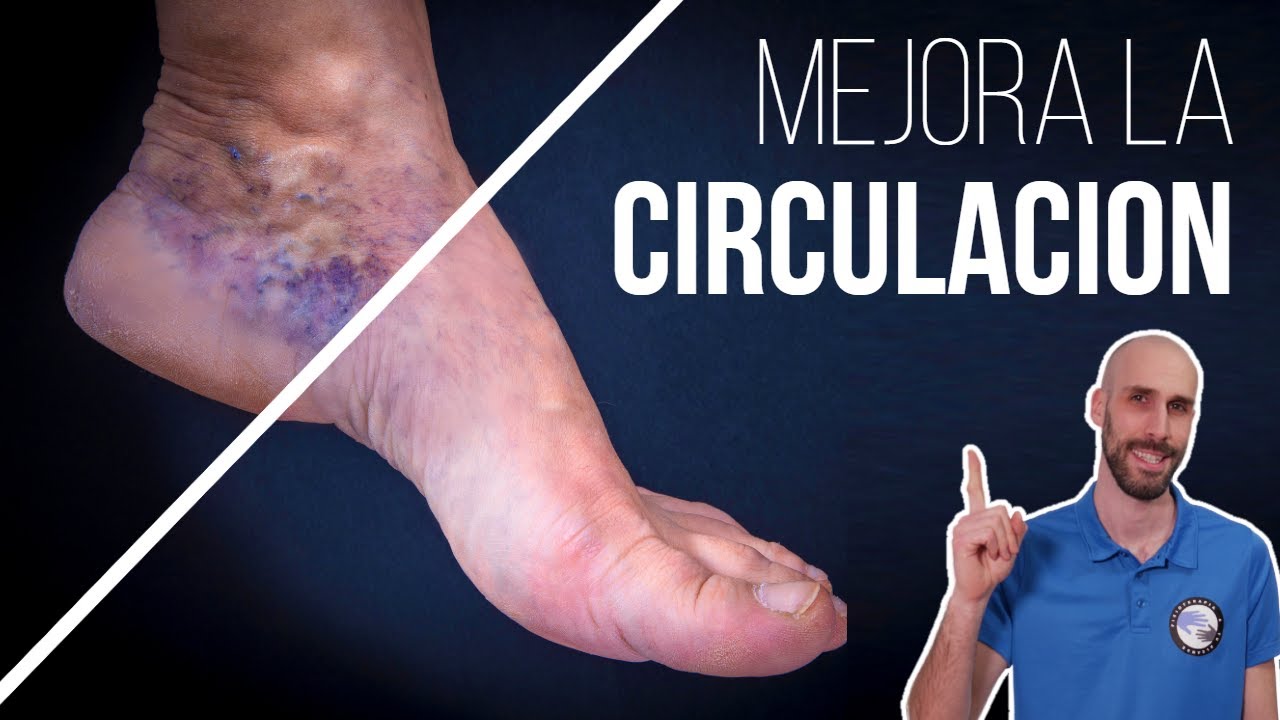
On the other hand, if you have a chronic circulation problem, chronic swelling in the lower limbs, what you can do is use elastic stockings compression stockings, those that fit up to the knee. If you are going to travel, avoid sedatives, avoid sleep aids, or avoid alcohol. This can compromise your ability to change positions or get up or exercise.
One very important thing is to be up to date with your medical check-up. If you have any pathology, ideally, hypertension and diabetes have to be well controlled . You have to be up to date with cancer screening for your age, this is very important.
With regard to food, is there any that really prevents the formation of thrombi? Well, there is no specific food that is capable of doing it. Now, a combination of a healthy diet with a good lifestyle is able to prevent or at least minimize the formation of these thrombi.
What is recommended is to keep the body hydrated. In other words, avoid dehydration as much as possible. Dehydration favors the formation of blood clots, maintaining a balanced diet rich in fruits, vegetables, antioxidants.
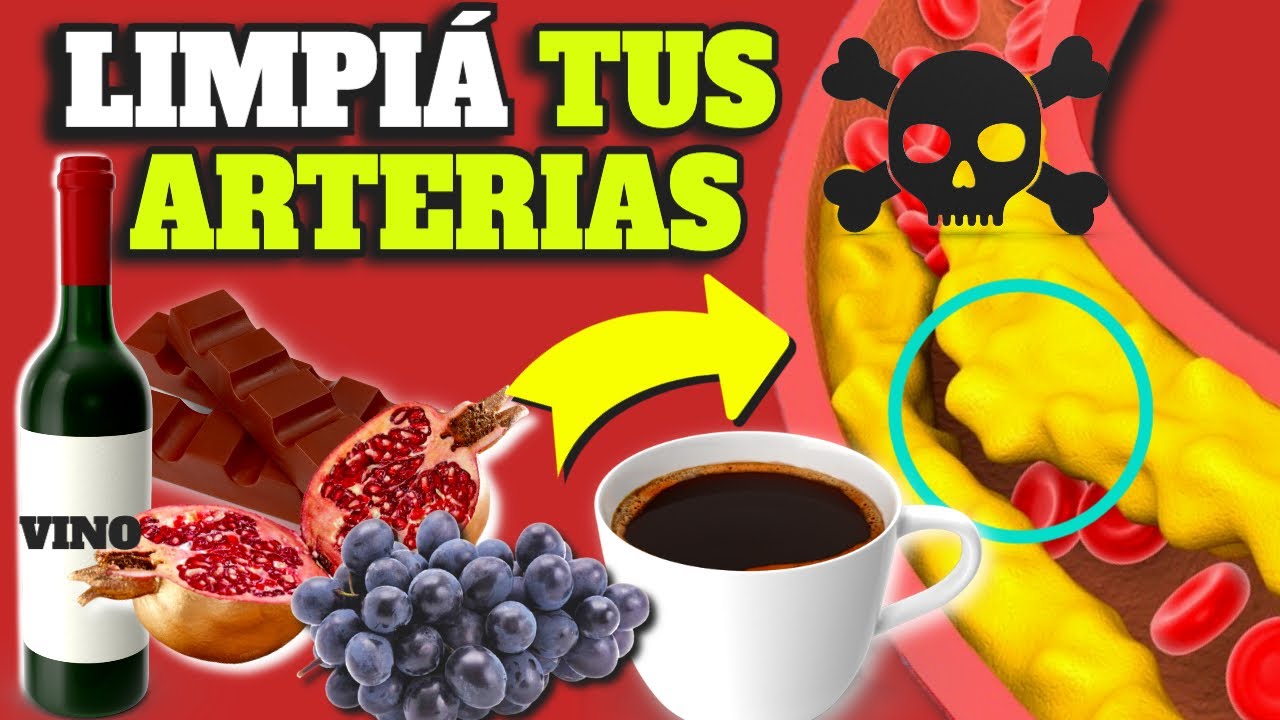
In relation to water, what we recommend is that women drink two and a half liters and men 3 liters per day. In short, between 2 and 3 liters per day a little more maybe if you exercise, always carry a bottle of water with you. Red wine helps prevent the formation of blood clots.
Well, one or two measures per day 150 300 ml of red wine in people who do not have contraindications and other associated health problems that do not allow you to drink is associated with a decrease in cardiovascular risk. In other words, it would have protective factors in the heart because they have antioxidants. These antioxidants could also help prevent thrombus formation, improving hypercoagulable states.
On the other hand, some specialists argue that alcohol consumption, even in low doses, increases the risk of cancer, breast cancer, colorectal cancer, esophageal cancer, and so on. So it is very important that this question is answered by your doctor who knows you best. The decision must be individualized.
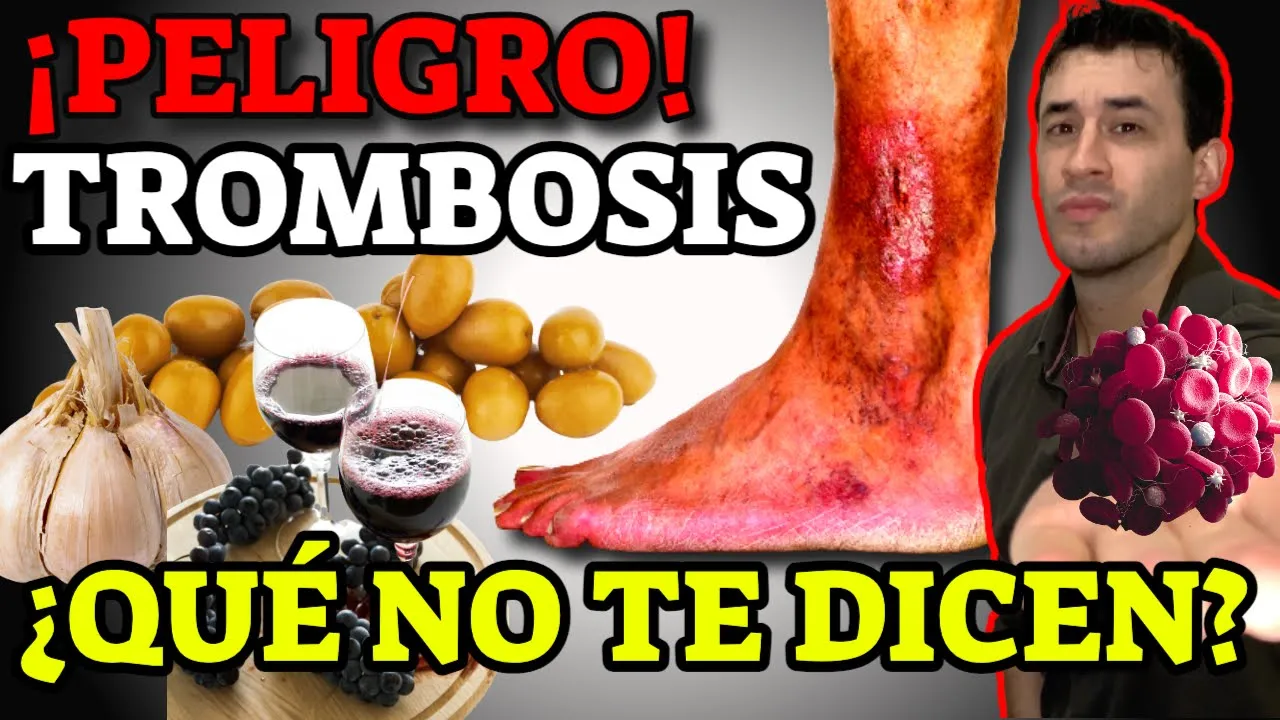
What I suggest is, for example, to replace wine that has alcohol with grape juice, which also has antioxidant properties and it has been shown that drinking grape juice, one glass per day, for example, reduces the formation of blood clots, grape juice improves the function of our platelets. Another very important natural food that you will surely like garlic a lot. For example, garlic has properties that help improve hypercoagulability states, especially when we crush them.
This is how the studies were made that demonstrated the benefits of garlic and crushed garlic, cooked for 3 minutes in the oven or boiled or even eaten raw, avoiding unhealthy fats, those trans fats. This is also very important. Consuming high amounts of these fats or different sugars increases hypercube states and coagulates ability.
Why? Because they generate inflammation in our body. So avoid junk food as much as possible.
Refrigerants, sodas that have a lot of sugar content. On the other hand, there are good fats, such as olive oil, especially that which is extra virgin, which could have properties that help a lot to improve hypercoagulability states, helping to prevent the formation of thrombi in the studies carried out, I leave everything in the description of the video. The consumption of olive oil in the salad at least once a week decreased the formation of thrombi in the patients.
Well, these are all the measures that could prevent thrombus formation. I hope you liked the video . It was informative and that you can share with all your family and friends.
Leave me your comment. Your specific question, put your like, subscribe to our channel and activate notifications. See you very soon with much more material, bye bye.