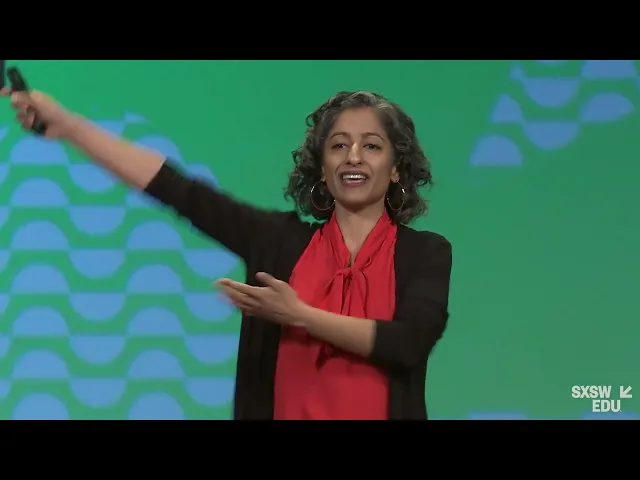
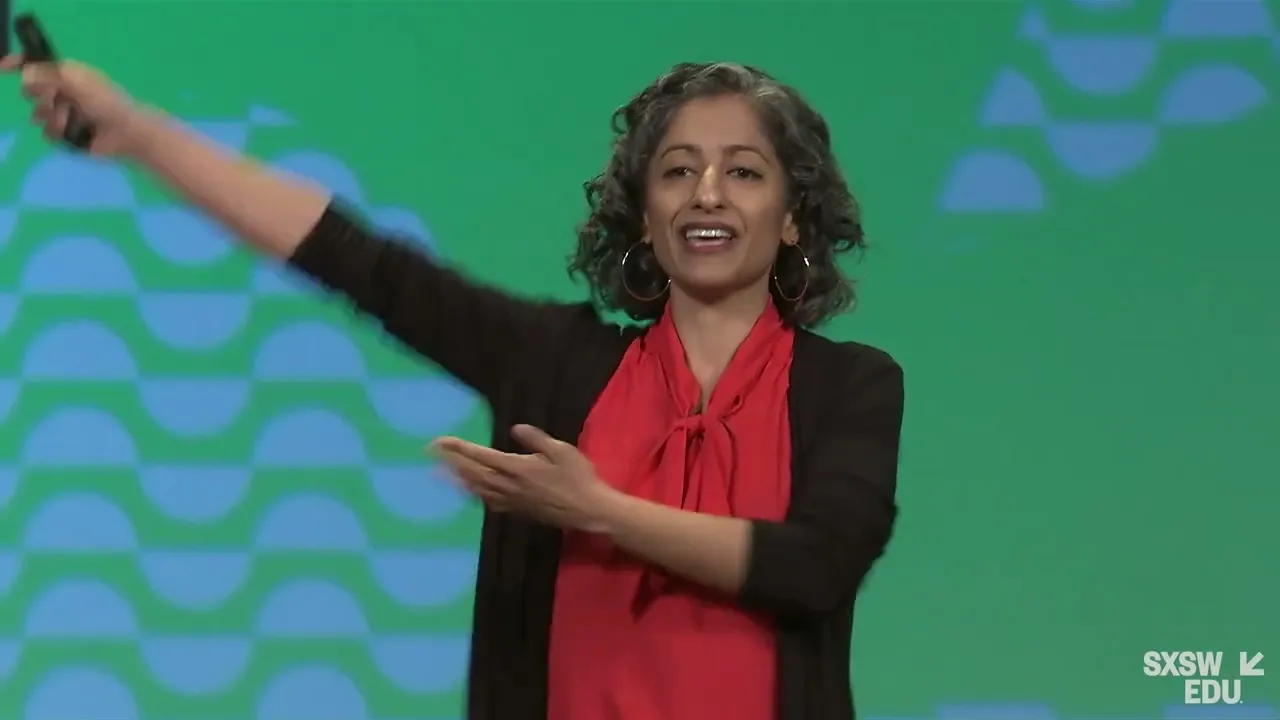
good morning friends welcome to south by southwest edu and oh my goodness it is awesome to see all y'all here thank you thank you thank you i'm ron reed with south by southwest edu and on behalf of south by southwest and especially the spectacular team at south by southwest edu thank you all so much for being here i didn't imagine the moment to be quite so moving like it's been a while right so again we appreciate it we last gathered for the opening keynote of south by southwest edu three years ago in 2019 in this room the past few years have been difficult for all of us for you and your families uh for your colleagues and your learners and certainly for us here at south by southwest as i shared last year welcoming you to our online program in 2021 um we've missed you austin has missed you uh and it's clear you've missed one another the the energy to gather together again is palpable and exciting and we couldn't be more pleased thank you again for being here as always we thank you for lending your voice to this year's south by southwest edu our community fueled program this season is super rich it includes almost a thousand speakers more than 400 different learning experiences including sessions and workshops mentors and roundtables performances competitions and our edu expo downstairs parties and socials are occurring all across town including this evening's opening party at the speak easy at 4th and congress that begins at 7 30 pm the south by edu conference and festival is back and we couldn't be more excited thank you all for being here i've i've promised the opening speaker that i won't take too much of her time but a few more quick highlights before beginning today's program tomorrow's keynote uh will be fascinating when culture wars come to school same time same room we'll look forward to seeing you also uh tomorrow from 6 to 8 p. m please join us for the international women's day celebration at antone's which is one of austin's classic music clubs right on 5th street a comment about our coveted protocols and protections we're very fortunate in austin to be at stage 2 which is a tremendous improvement from where we have been for many many many months we've committed to each of you and indeed all of our registrants across south by southwest edu 2022 that this would be a masked event this only works if we all respect one another so please please wear your mask practice kindness and and know it will be reciprocated another quick comment in terms of particulars and that involves q a which will be facilitated by slido both via our mobile app for those of you in the room and for those of you at home are joining us through our online program you can do it through the online schedule by clicking the engage button that's how will fuel your interaction with today's speaker and other speakers across the event is the south by edu team worked uh on this year's event and reflected on our collective work um we're reminded each and every day of the critical role that education plays in society as we explored the drivers uh that move the education community to action we identified four themes that unify much of our thinking and work at south by southwest edu and those themes are power resilience boundless curiosity and humanity certainly it's boundless curiosity that brings us all together today and resilience is something we've learned we all share permit me a special shout out again to the south by edu team who has worked tirelessly to put this event together and has been an inspiration to me for the last two years i can't thank them and of course when i think of resilience forgive me i think of the brave people of ukraine um i just want to say our hearts go out to all of you who may have family fighting for that country our next theme humanity is at the heart of our collective work it's what drives us all again we couldn't be happier to see you and spend the next several days together learning from one another making new friends and colleagues collaborating to extend and drive our impact and frankly having some fun along the way the final theme we associate with south by southwest edu is power education is power and as i look across this room and think about the south by edu community it's mighty powerful indeed it provides an appropriate segue as i introduce our opening keynote speaker author of the book powerful teaching the work this community does is indeed powerful your ability to empower your learners and one another is really inspiring great teaching is both an art and a science so it's a treat to see if we can expand our collective proficiencies armed with the insights from our first speaker today please help me give a really warm south by southwest edu welcome to educator cognitive psychologist and author and the opening speaker for south by southwest edu dr puja agarwal thank you thank you thank you hello and welcome to south by southwest edu i'm a teacher so we're going to start with a warm-up yeah i've got a trivia question for us i'm going to show you the question there are three options mentally pick your option and then we're going to take a good old-fashioned vote with the raise of your hand okay so the trivia question is this how many bones are in the human body is it a 124 b 186 or c 206 206. so pick your thought the option and let's just take a vote i'd like you to close your eyes we're not influenced we're not cheating go ahead and close your eyes if you would say the number of bones in the human body is a 124 raise your hand please if it is 186 b raise your hand please and if it is 206 206 raise your hand please thank you so i would say we did pretty well about 70 got this correct the correct answer is 206 we have each of us about 206 bones in our body i once was corrected by a teacher that this is in the adult human body right when we're born it's different so thank you science teachers as we're getting going i wanted to let you know that all of today's research and resources are available at this website retrievalpractice.
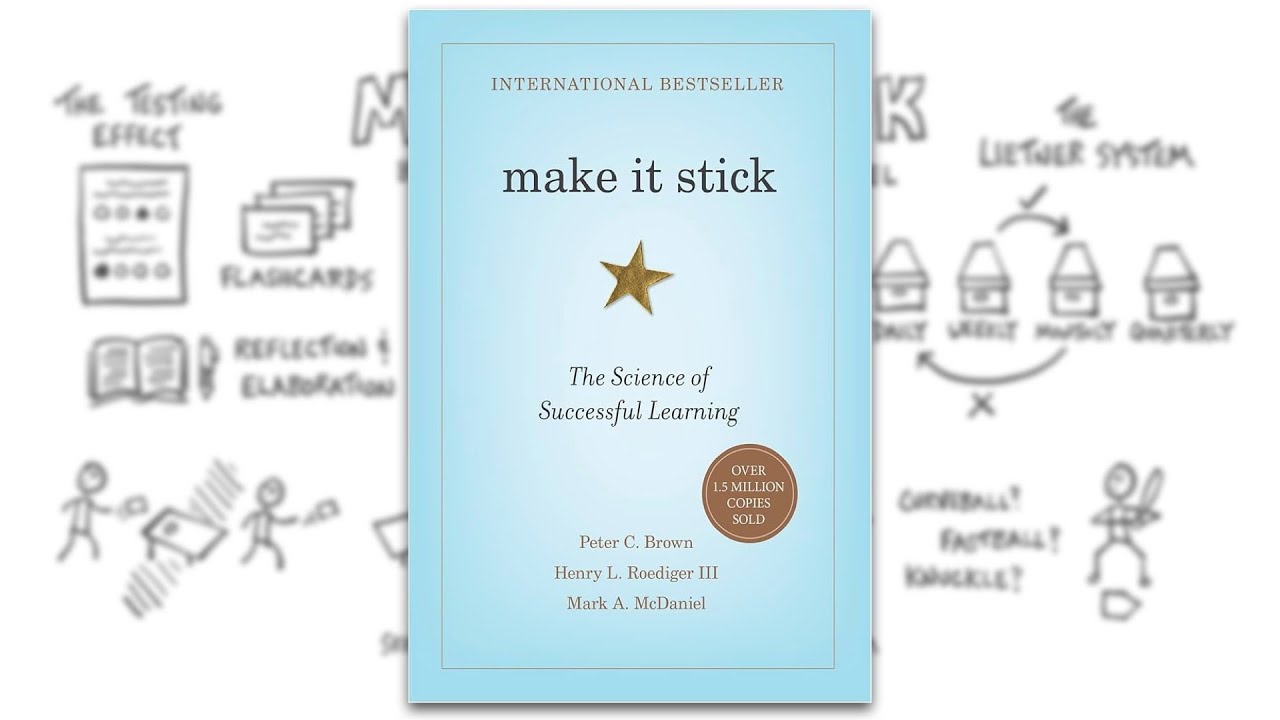
org s x s w so i've got downloads there announcements about my book signings today and tomorrow and i've got key takeaways from the keynote this morning so here's a challenge for you i'd like you to not take notes oh okay that's scary don't take notes okay don't take notes so please put away your paper and pens your ipads your devices you won't need to take notes i'll provide you with that opportunity in a few minutes great so i am a scientist i'm a cognitive scientist i've been conducting research on how students learn for 15 years i'm also a teacher i started my career in k-12 and currently as a college professor i teach about 85 students every semester now a few years ago this is what my classroom looked like we were in person these are my college students i teach at the berkeley college of music in boston i do not teach music i'm not a musician i teach psychology and neuroscience with music students and i love it especially because my students are from all around the world even in this photo i've got students from madagascar australia peru spain canada the united states china and korea it's incredibly diverse and i love teaching science at a music school more recently my classroom looked like this so i taught on zoom for a year and a half like many of us here in the room and today my classroom looks like this at the start of the school year in the fall we moved to in person with masks so i hope this paints a picture of the context of what education looks like today next i'd like you to think back to your educational experience picture yourself in maybe your favorite class in college or in high school also a class that you had to study really hard for okay so remember think back i'm thinking about my greek mythology class in college i really had to study for those exams okay so think about when you had a study for this class maybe you started studying you became maybe discouraged a little bored right studying is not that much fun then maybe you started getting really discouraged i am just not going to do well i'm studying but this isn't going to go well and then you get really anxious what's going to happen i'm going to bomb the exam the next day on the exam you do really well hooray you did really well in that exam so studying and cramming rereading your notes and your textbook and staying up all night pulling an all-nighter it paid off and then what happens the next day oh you forget it all isn't that fun no that is so frustrating it's all gone you spent all that time studying and oops you've forgotten it all i don't remember much from my greek mythology class okay this is frustrating for our students they've invested time and energy with us and this is frustrating for us how many times do we have to re-teach a student says well i didn't learn that last year we're like yes you did yes you did and then we have to reteach so this forgetting process is frustrating and my question today is this why do students forget why does this keep happening typically as teachers as educators we focus on getting information into students heads and this takes a lot of typical forms there's teaching we've got lessons there are activities in the classroom we want to help students learn and this first stage of learning in a very simplistic memory model is what we call encoding it's getting information into students heads when they study that's what they're doing they're reading their textbook or their notes so it's getting information inside of our heads within coding and then we hope that information sticks the difference based on a hundred years of research is that we go from the encoding stage to storage what we know is where the magic happens with learning is when we focus on getting information out of students heads so it's a little bit of a switch we often focus on getting information into students heads let's focus on getting information out of their heads so even now when you thought back to your college experience when i asked you that trivia question that's pulling information out when you talk to a friend about the podcast you just listened to that's getting information out and that boosts students long term learning that's it that's pretty simple pretty straightforward so this is what we call retrieval practice it's retrieving that information pulling it out mentally traveling and then we want our students to practice this retrieval a simple example is from my music students my students have to practice their instruments they can't cram the night before a high stakes gig they practice their instruments and in our classroom we need to help our students practice their knowledge as well think about your own classroom even when you start a meeting how often do we start by reviewing information all right class here's what we did yesterday here's what we did in class last week that's reviewing great that's getting information into students heads one of the simplest ways to focus on getting information out of students heads with retrieval is to just ask them what did we do in class yesterday instead of telling them here's what we did just ask them you can provide 30 seconds for students to write this down before you then give feedback and say yes that is what we talked about so it doesn't take any more than just switching from how we begin our classes i'm going to dive into some strategies again i'm a teacher what does this mean when i go back and see my classes on monday so here's one of the simplest strategies for retrieval practice we call a brain dump in the scientific literature we call this free recall this is literally asking students to write down everything they can remember so um my co-author petrie spain of our book powerful teaching she writes about how she has her sixth grade history students do a brain dump at the end of their unit on ancient egypt write down everything you can remember and these sixth graders are so excited about seeing what they know and retrieving it and pulling it out of their head so a braindom could take a long time could take a short amount of time very flexible a more simple sort of brain dump a more simple strategy for retrieval practice is just two things ask students to retrieve two things so with my students i ask them what are two things you remember from our unit on childhood development that's it pretty straightforward what are two things you remember from the unit on anatomy it's just retrieving two things and the reason why retrieval practice boosts students long term learning is because of this mental struggle we call it a desirable difficulty it's a difficulty but it's desirable just like my students practicing their instrument so another retrieval example as i've mentioned is to ask students what did you learn in class today this could be an exit ticket right after class an added mental struggle is to ask students what do we do in class yesterday that added mental struggle is what we call spacing and it's really fun for students so as a parent you might ask your child what did you learn in school today and they say nothing right but if you ask a kid what did you learn in school yesterday did i say today what'd you learn in school today what'd you learn in school yesterday now they're challenged and you might see some eyes light up instead of just what did you learn in school today well it's so fresh that there's not really anything exciting to tell you about it so ask your students what did you learn in class yesterday another popular activity if you could if you use think pair share can you raise your hand please yeah very popular right we give students a prom to think about how this concept relates to your everyday life then they pair up with each other and then they share with class here's a picture of my students engaging in think pair share what you don't see in this photograph is the think step and so often we skip the think step that's where retrieval practice happens when you're doing think pair share don't skip the think step so simple to switch from getting information in to getting it out i want to point out that you know your content best we know from a lot of research that retrieval practice is flexible for all content areas so whether you teach math or science or language arts you are a teacher with flexibility and creativity so this is where you customize retrieval practice for your content area so let's say mathematics has a lot of retrieval already those are practice problems but instead of having students we use the phrase when i was a kid plug and chug instead of having students just kind of go through addition problems and then subtraction problems mix up similar problems to add that mental struggle it's a technique we call interleaving if you're teaching in science again you can ask students for two things even if you're teaching language arts have students retrieve the difference between when they use a colon and a semicolon or have them retrieve an example of each one so retrieval practice very flexible for your content area okay i'm a skeptic some of you might be skeptics so here's what retrieval practice is not does it require more prep no we don't want more prep that's not fun that's not easy does it require more class time no retrieval practice can take two seconds as students walk into the classroom and exit ticket as they walk out i know we all have so much content we want to cover it does not have to take more class time does it take more grading no it doesn't grading is not something that someone says i love grading we don't want more of that i don't want more of that so retrieval practice does not require more grading in fact i'll talk a little bit more about how you don't have to grade it at all is retrieval practice the same thing as testing no no no no it is not the same thing as more testing and here's why because retrieval practice is a learning strategy not an assessment strategy during summative assessments students are retrieving they're pulling information out but we want to highlight that retrieval this comfort with practicing their instrument practicing their knowledge that's a learning strategy that research demonstrates boosts our students long-term learning isn't this cool you already do it right you already do it all the time in classrooms on tech tools so i'm not asking you to throw out the baby with the bathwater we don't need to do that i'm not asking you to completely change your course design or the way you grade students i like to keep it simple so here's an example of keeping it simple how many bones are in the human body 206 okay that took two seconds moving on so uh are you ready for my favorite research-based tool for retrieval practice yeah cool it's a pencil pretty easy keeping it simple here a large proportion of research on retrieval practice was literally with paper and pencil so you can have students just write down their brain dump you don't need anything fancy i'm also a big fan of index cards students can pick them up as they walk in or i can hand them out because then if i just want to pause class you know it's kind of dragging a little bit and we just want to engage in some retrieval then students already have the index cards to write on i don't have to ask them to take out paper then they open their backpacks then they're trying to figure out if they can borrow paper and then they rip out the paper and then there's all that gross fringe we don't like that so with index cards you can hand them out you can collect them you can shuffle them you can then hand them back to different students you can keep them simple easy tool tech tools obviously include a lot of retrieval practice you already do this maybe you use kahoot for example i'm a big fan of flipgrid where students post selfie-like videos to me that's much more engaging is retrieval practice to be honest than a discussion board on canvas so tech tools use retrieval practice all the time at home our students can do retrieval practice as part of homework so i do have students read their book before class but then i asked them to retrieve so my students kind of have many homework mini quizzes that are all on google forms and they're each worth about two percent of students grades very low stakes not a midterm or final i don't have a midterm or a final in my class low stakes google forms and i talk to my students at the beginning this semester about how they're going to forget that's how learning works is we also forget so on the google forms i ask students what do you remember from class last week what do you remember from the unit about childhood development and with google forms students can take their time 40 percent of my students are english language learners and a number of them have shared with me that the google forms are so helpful because they can take their time at home to think and retrieve i also embed feedback a very important component of retrieval practice so once students submit they can see my feedback and then we can have a rich discussion in class the next day that's so much fun for me and so much fun for my students also it takes me less than 30 seconds to grade each student's google form that's pretty cool yeah even though they are writing a lot and i can see that they're writing a lot i pick out examples to share in class so that's how i do some of my grading and assignments in class if you're teaching remotely retrieval practice is flexible let's say as an entry ticket students get into a routine of typing in one thing they remember from the last class into the chat so by the time we kind of have those stragglers joining the zoom they can already see a list of cool stuff from your last class or you can do that as an exit ticket of course you can put students in breakout groups work on some collaborative retrieval and then come back together or think pair share but make sure students think before they pair and share here's some additional research-based tips to help you with retrieval practice but keep it simple again so we know that there is no optimal timing for retrieval practice in general delayed a little bit is more effective for learning there's also no optimal amount so i say you do you you keep it simple so however often you can provide this however many times you can provide this anytime is better than none research also demonstrates that any question type improves student learning so whether it's an open-ended brain dump it's multiple choice it's short answer those all benefit students as well and keep it quick just like the trivia fact it can be really quick and keep it low stakes or like i said you don't have to grade it at all i love when i have students retrieving class on paper and then they walk up to me at the end of class and they start handing me the paper and i'm like i just like to stand there i just wait and then they say well well aren't you going to take this don't you need to grade it i'm like no that's for you those are your notes you can keep them or you can toss them but thanks for retrieving in class so let's give ourselves permission to not grade at all with our retrieval it's so ingrained in our system every time students retrieve we don't have to grade it so keep it simple just like you know your content best you know your students best so whether you teach early childhood k-12 college you provide professional development to adult learners you teach graduate students this is all flexible for your students even for early childhood you could have students retrieve and then indicate how they're feeling about that retrieval with a smiley face or a sad face very straightforward you know your students the best in terms of the science of learning so i'm just going to share a few additional findings one is that i want to mention again that researchers have spent more than a hundred years looking at the benefits of retrieval practice there are mentions about it from ancient philosophers centuries ago most of that hundred years of research was conducted in laboratory settings we have college students come into a lab we sit them down in front of a computer they look at words they retrieve and then we give them a test of their memory later what all of that laboratory research shows is that retrieval practice boosts learning so we've got a century of data and research demonstrating this simple technique improves learning we also know from laboratory research that retrieval practice improves complex higher order learning oftentimes i get the question well this sounds like it's for names dates facts vocabulary words but you can ask students complex questions and benefit their transfer of knowledge so one example is in my cognitive psychology class i teach students about a basic memory principle called the serial position effect and in the serial position effect we as humans tend to remember the beginning of things and we remember the end of things but not the stuff in the middle so one of my favorite movies is the princess bride and i can tell you the opening scene and i can tell you the last scene and i love this stuff in the middle but i can't necessarily tell you all of that now in terms of higher order learning when my students learn about the serial position effect i ask them tell me an example from your own life i don't review what the serial position effect is they have to retrieve that in order to get to a real life example so then they will share a very simple idea which is when they learn music they tend to learn the beginning of songs and the end of songs but not in the middle so we know from research that students should kind of mix it up what we call interleaving so that's an example where again i'm not telling students about this concept i'm not reviewing it i'm not defining it i don't ask them to memorize it but i can ask complex questions to help them apply it and transfer that knowledge okay so that's laboratory research what does that look like in real classrooms my colleagues and i spent more than 10 years conducting research in middle school and high school classrooms near st louis missouri and over those 10 years we compared teachers lessons with quick quizzes at the time they were clicker quizzes before kahoot and our students participated in teacher lessons with like a four minute clicker quiz or without so even research-wise we didn't change the teachers curriculum or their lessons it was just literally four minutes on this clicker quiz or not we played around with a bunch of other things but over 10 years we found that even those quick quizzes raised students grades from a c to an a level and we measured students learning even nine months later at the end of the school year and we found that students remembered information from the beginning of the school year in september october much more effectively when their teachers had provided retrieval practice we also know from research in the same 10 years we asked about 2 000 students again middle school in high school we asked them does retrieval practice make you more anxious kind of going back to this idea that retrieval practice is not testing but does it make you more anxious 75 percent of our students said no retrieval practice reduces anxiety they know what they know they know what they don't know we call that metacognition they're prepared for an exam they know what's going to happen and they've learned a bunch so retrieval practice reduces student anxiety much more recently my colleagues and i conducted a literature review so we looked at all of the research on retrieval practice conducted in authentic classrooms we screened almost 2 000 abstracts in the literature we coded them we had lots of spreadsheets for scientists you can actually get that on my website at retrievalpractice. org and we found that retrieval practice benefited students around the world k-12 high school college graduate school and it really solidified our understanding that retrieval practice boosts learning regardless of content area regardless of the age of student regardless of the timing or the feedback or the question type so retrieval practice is powerful and it's the simple switch that we can keep in one minute or less in our classrooms in terms of what happens next in the science of learning i'm very excited about two things in particular one is that we need research with more diverse students and two in order to make that happen we need more collaborations with people like you so please help us we need your help to make this happen and i'm so excited to see where this field goes next now we're going to take a moment to think and retrieve so this is your turn to now retrieve your notes so i'm serious take out your paper and your pencils your ipad cell phones maybe you've got a google doc so take a minute i'm literally going to stand here silent and let you retrieve what is something you've learned so far another retrieval question i like is what is something you want to remember 10 years from now if i send you an email i come knock on your door what's something you want to remember 10 years from now so take a moment and retrieve one thing you've learned it looks like you're all taking an exam but you're just retrieving and while you're retrieving i'll go ahead and put this up again the research resources free downloads are available at retrievalpractice.