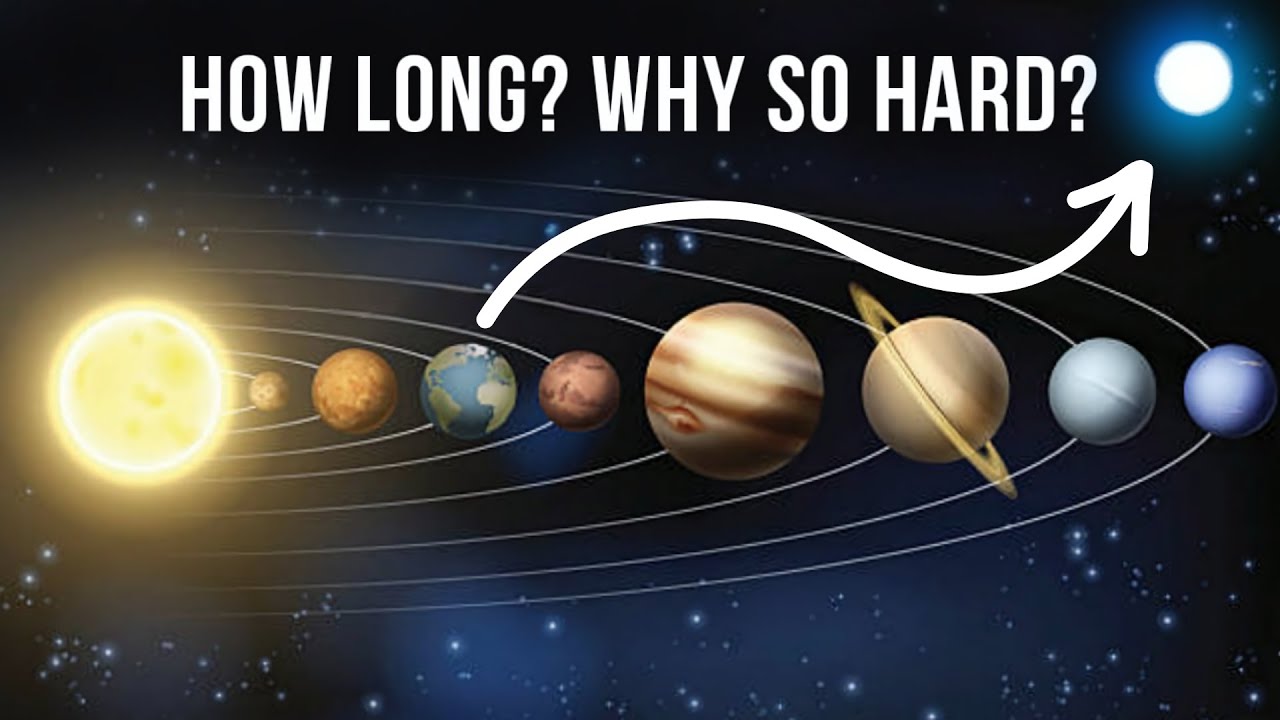
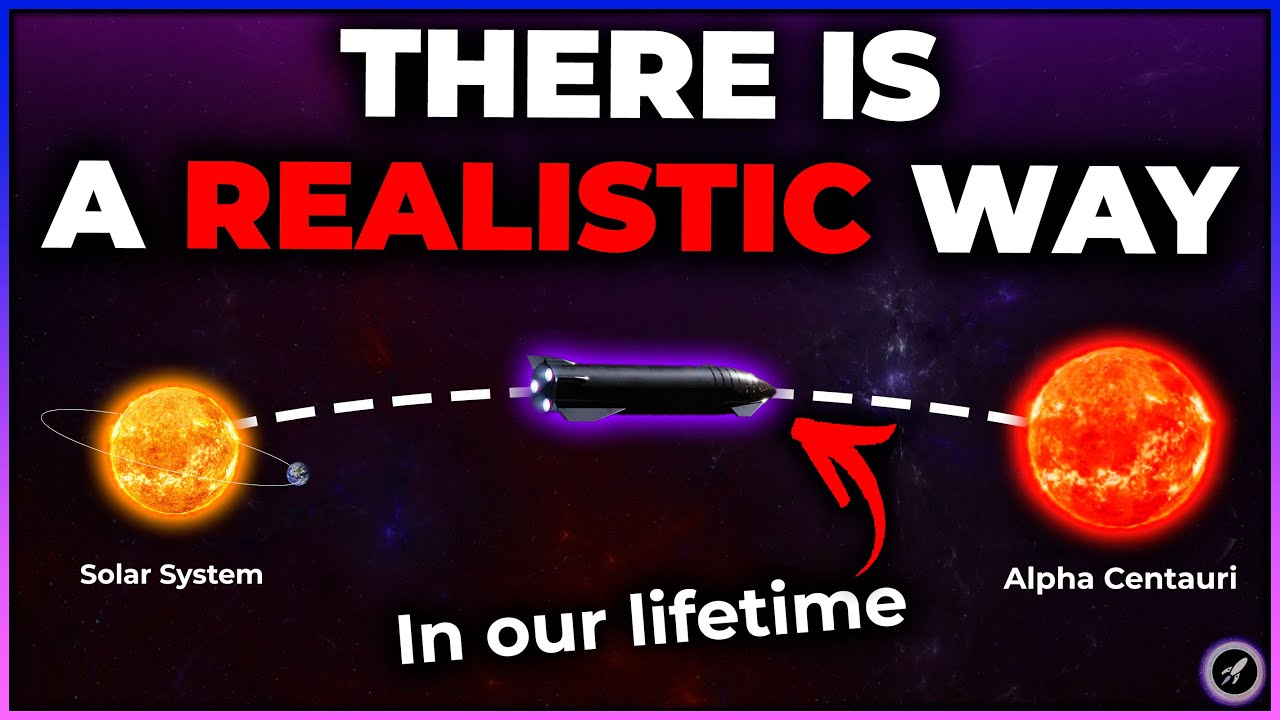
Believe me, We will never travel among stars! The distance separating us from Proxima Centauri, the closest star to Earth, is 266,000 times greater than the distance separating us from the Sun, and 103 million times greater than the distance we had to travel to conquer the Moon. Impressive, isn't it?
Even a ray of light, moving at the maximum speed allowed by the laws of physics, takes 4. 3 years to reach us from Proxima, while less than 8 and a half minutes are enough to fill the space that separates us from the Sun. In these numbers, in their relentless inevitability, is enclosed the problem of interstellar travel.
If we take into account the size of our Galaxy (about 100. 000 light-years diameter) and the size of the observable Universe (more than 12 billion light-years), considering the question of the trips in the cosmos can only leave us a deep sense of inadequacy. To realize our current technological paucity, we need only reflect on the fact that the Voyager 1 probe, currently the fastest interstellar object manufactured by Man, is moving away from the Sun at a speed of 17 kilometers per second, and will take something like 75000 years to reach Proxima.
. . It is clear that the traditional chemical fuel rockets, although helped by the "gravity assist" of Jupiter and Saturn, are totally inadequate for such distances and a drastic technological leap is necessary.
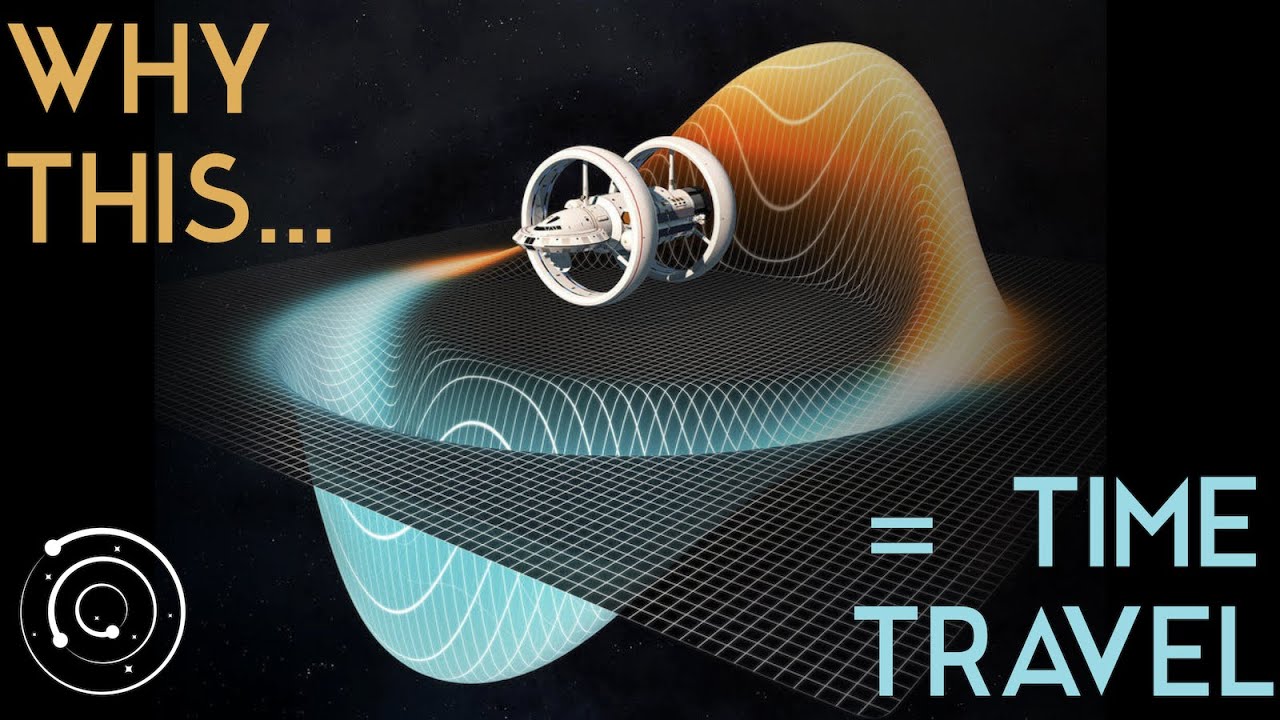
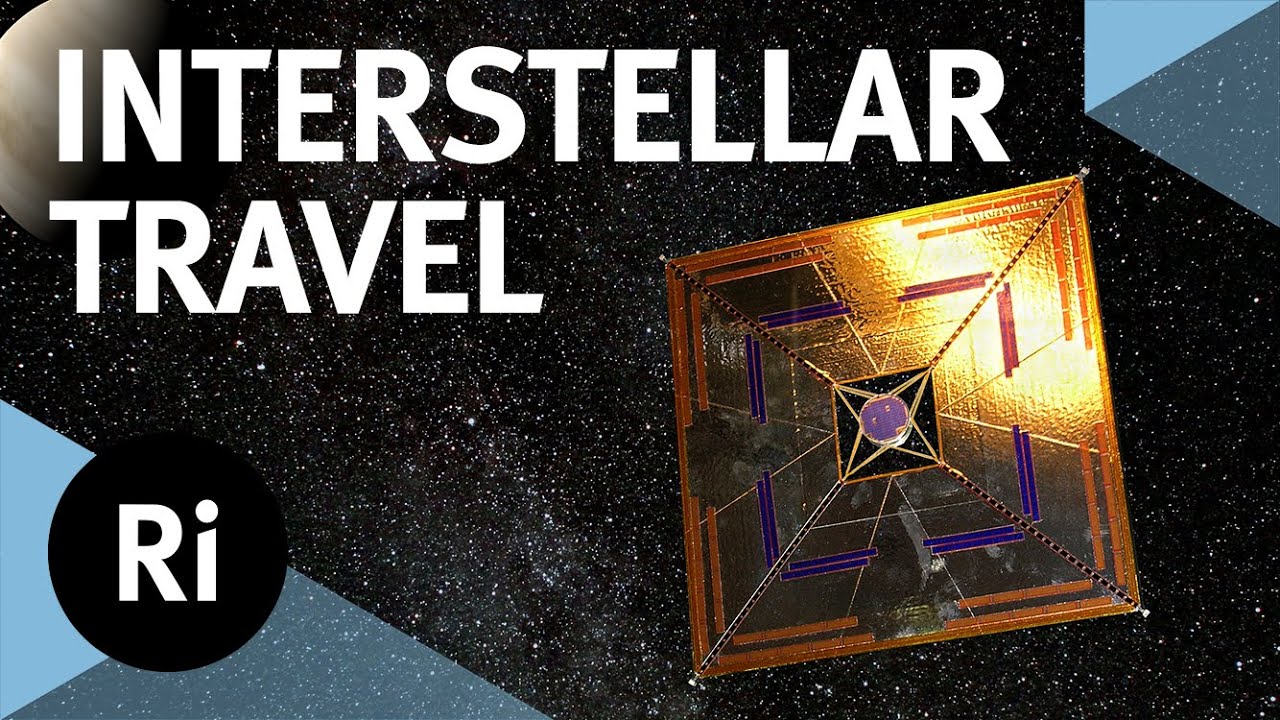
In this regard, the ideas proposed are many: from rockets that exploit nuclear fission and fusion, to those powered by matter-antimatter annihilation, through huge sails pushed by light. These solutions are only theorized and would require decades of development and enormous technological and economic efforts to materialize. For a distant future (and all to be verified), there are those who have proposed the exploitation of "warp engines" (which exist only in our dreams) or "wormholes" (so far only imagined): fanciful solutions that start from the hypothesis of general relativity brought to the extreme, and that could ensure movements at speeds greater than light.
But unfortunately, it is not a matter of building bigger, better, and faster spaceships. . .
it is not just a matter of waiting for science and technology to take their course. . .
As we will see in a moment, there is an impossibility dictated by physics that slows down, if not prevents, our plans for free and fast navigation in the Galaxy. For interstellar travel to become attractive to human beings, and to trigger that cocktail of aspiration, ambition, curiosity, and competition that motivates our greatest endeavors, it would be necessary to significantly increase the speed. But this is absolutely impossible for several reasons.
And this impossibility is also demonstrated by the implicit conclusions of the famous Fermi Paradox. Follow me, then, and then tell me if I'm wrong “Roll intro” As Albert Einstein first pointed out in 1905 in his Special Theory of Relativity, no object with mass can exceed the speed of light. Einstein established this limit based on considerations that seemed (and still seem) to clash with the "common sense" with which we are accustomed to evaluate the physical phenomena of our daily life.
. . but this does not change the fact that the limit has been verified in many experiments, and that concerning matter and the universe we know there is no longer the slightest reason to doubt its existence.
Einstein has in fact demonstrated that the energy "E" of any object is related to its mass "m" according to the famous equation E=mc2, where "c" is the speed of light, equal in vacuum to 299. 792,458 km per second. This relationship says, among other things, that energy and mass are two equivalent entities, that can transform into each other.
And this is exactly what happens when we accelerate an object (even if we do not realize it): the energy that we give to it goes in very small part to increase its mass. As the speed increases, however, we need more and more energy to further increase the speed, and this happens because more and more energy is transformed into mass. In practice, the closer you get to the speed of light, the more massive and immovable the object becomes.
If it traveled at 99. 9% of the speed of light, for example, an 80 kg man would have a mass of about two tons. .
. So, to try to give more thrust to the object or the spaceship to make it overcome the "barrier" of 300. 000 km/s would have only resulted to increase exponentially its mass, leaving the speed practically unchanged.
This is why speed "c" can be approached but never reached. The bodies with mass, in short, are opposed to being accelerated to speeds close to those of light, and the more you approach this speed, the more difficult it becomes to accelerate them further. And anyway, even if you could with some magic device instantly reach the speed of light, to get to Proxima Centauri would still take 4.
3 years! This means that even traveling at the maximum speed attainable in our universe, our species could succeed at most to make a few rounds of exploration around the Sun, but could not certainly establish a network of trade routes over the entire extent of the Galaxy! If you are here watching this video, it means you are passionately curious about human spaceflight and the mysteries of the universe.
We constantly strive to make videos that excite a curious person like you, so subscribe now and be sure to press the bell notification so you never miss out on the updates about the cosmos. But let's not be defeated so quickly. Maybe we are missing something.
. . Yes.
. . because mass is not the only quantity that varies with speed.
. . Another factor to consider in space travel at relativistic speeds is in fact time dilation.
Contrary to what classical physics postulates, time does not flow uniformly for all observers, but the slower the observer who measures a given event approaches the speed of light! Leaving aside the physical and mathematical explanation, we have to trust the fact - absolutely verified - that onboard a spaceship that leaves the Earth accelerating up to relativistic speed, time always passes slower than the one of the planet it has just left. Imagine a spaceship traveling at 95% of the speed of light to a planet 9.
5 light-years away. A stationary observer on Earth would measure the journey time as distance divided by speed or 9. 5/0.
95 = 10 years. The spaceship crewmembers, on the other hand, experience time dilation and thus perceive the trip as taking only 3. 12 years.
In other words, between leaving Earth and reaching their destination, the crewmembers age a little over three years, while 10 years have passed for people back on Earth. And this time lag comes from a very simple formula, also able to predict, for example, that if a spaceship accelerates up to 50% of c, then for its crew the time will pass 1. 15 times slower than the Earth's one, while at 75% of c, the time will seem to pass 1.
5 times slower. If then the speed reaches 99% of c, time on board will flow 7 times slower. And so on.
. . At 99.
99% of c, time will flow 70 times slower; and if the speed reaches 99. 9999999% of c, then onboard the spaceship time will flow 22300 times slower, until, at 100% of c, it will seem to. .
. stop altogether! These numbers, which to some extent could lead to optimism about the possibility of moving at will in the Galaxy, reveal something shocking,.
. . They tell us in practice that for an observer moving with his spaceship around 100% of the speed of light, his journey to any destination - whether 100 light years or 100 thousand light years away - will be practically instantaneous!
Don't believe it? Here then is a resounding example. : We want to go from Earth to the Andromeda Galaxy, which is about 2.
5 million light years away from us. If the trip was conducted with an acceleration capable of bringing the ship at a speed equal to 99. 99% of c, it would obviously last about 2.
5 million years . . .
but in reality, onboard the ship . . .
the perceived duration would be only . . .
35000 years! Not only that. .
. Increasing the speed by nothing (just 30 km per second), it would reach 99. 999999999 % of the speed of light.
. . and then Andromeda could be reached in just over 11 years!
Amazing, isn't it? If it could really be done, then yes we could achieve the much-vaunted Star Trek scenario, where spaceships travel with ease from one point to another in the Galaxy! So does time dilation solve the problem?
Well. . .
unfortunately not. As we have seen before, to accelerate a mass up to make it touch the speed of light would eventually need virtually infinite energy. No currently known form of propulsion could give us this gift.
And even if the energy problem would be somehow solved by methods that we are absolutely unable to predict, there is also the fact that a spaceship traveling at a speed very close to the speed of light would put itself in a particularly dangerous position. Space in fact is not empty. On the contrary, it is full of stray atoms, that sometimes come together in more complex forms such as gas and dust of interstellar clouds, galaxies, stars, and planets, while at other times remain only lonely atoms traveling to nowhere and that probably will not collide with another atom for who knows how many thousands of years.
But one thing is the probability of a collision between two hydrogen atoms in a cubic centimeter of space, another matter is the certainty of the huge stream of particles that will collide with the spacecraft during its travel. Particles are almost harmless at low speeds, but with the acceleration are transformed into a deadly shower of projectiles and ionizing radiation with high penetrating power, able to seriously damage the hull and make it dangerously radioactive for the occupants. The particles, intercepted at close to the speed of light, would acquire such great energy to become lethal for any form of life on board, Not to mention that at that speed it could be enough to cross a thin nebular veil to cause the complete destruction of the ship.
. . Some scientists think that the interstellar matter alone will be a sufficient factor to prevent a spaceship from reaching speeds greater than one-tenth that of light: which as we have seen are by no means sufficient to sustain a network of large-scale trade and exploration routes.
Even if all these difficulties were overcome, another problem would remain, absolutely insurmountable: time dilation would in fact cut all bridges between the traveling spaceship and the planet of origin! The astronauts would leave with the awareness of never seeing their families, their relatives, their friends again unless they did not bring them with them or did not have them at all; on their return, on the other hand, they would find a society profoundly different from the one they left. But not only: such a method of travel could not allow the existence of interstellar institutions, such as the United Federation of Planets, which are based only on trade and cultural exchanges between different races, and which assume a homogeneous level of technological and social progress: homogeneity that is not compatible with the time required for interstellar travel so conceived.
In fact, what could push a commercial enterprise of the future to send its goods to the other side of the Galaxy, knowing that it will never see or communicate with the spaceship to which it has entrusted its cargo? Every spaceship that ventures into the realm of Einsteinian Relativity will in practice become a world unto itself: without a homeland and without a past. What would be the point of that?
And in fact, this will be a scenario that will never be realized. Enrico Fermi tells us this, with the logic of his famous paradox. .
. The Italian physicist asked himself: if extraterrestrials really exist, why are they not already here? A question that can be answered with a simple consideration: the universe as we know it exists for about 13 billion years, and according to what happened to our species, it takes 5 billion for a planet of a solar-type star to generate intelligent life.
This means that millions of civilizations have evolved before ours, and have had whole eons to develop technology that could take them to space travel. Their absence is the demonstration that to move between stars at the speed of light is a feat beyond the possibilities of any civilization; and that therefore the answer to give to Fermi is this: if they are not here, it does not mean that extraterrestrials do not exist, but simply that physics does not provide solutions capable of canceling distances: neither warp engines nor space-time tunnels. Nothing at all.
We will be forced, like all the other inhabitants of the Galaxy, to remain confined forever in the garden of the house, and to be satisfied with some laborious exploratory wanderings towards the two or three nearest stars. And that's it.