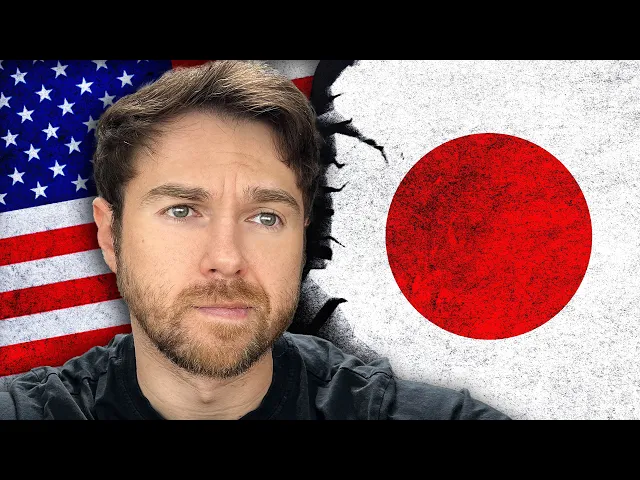
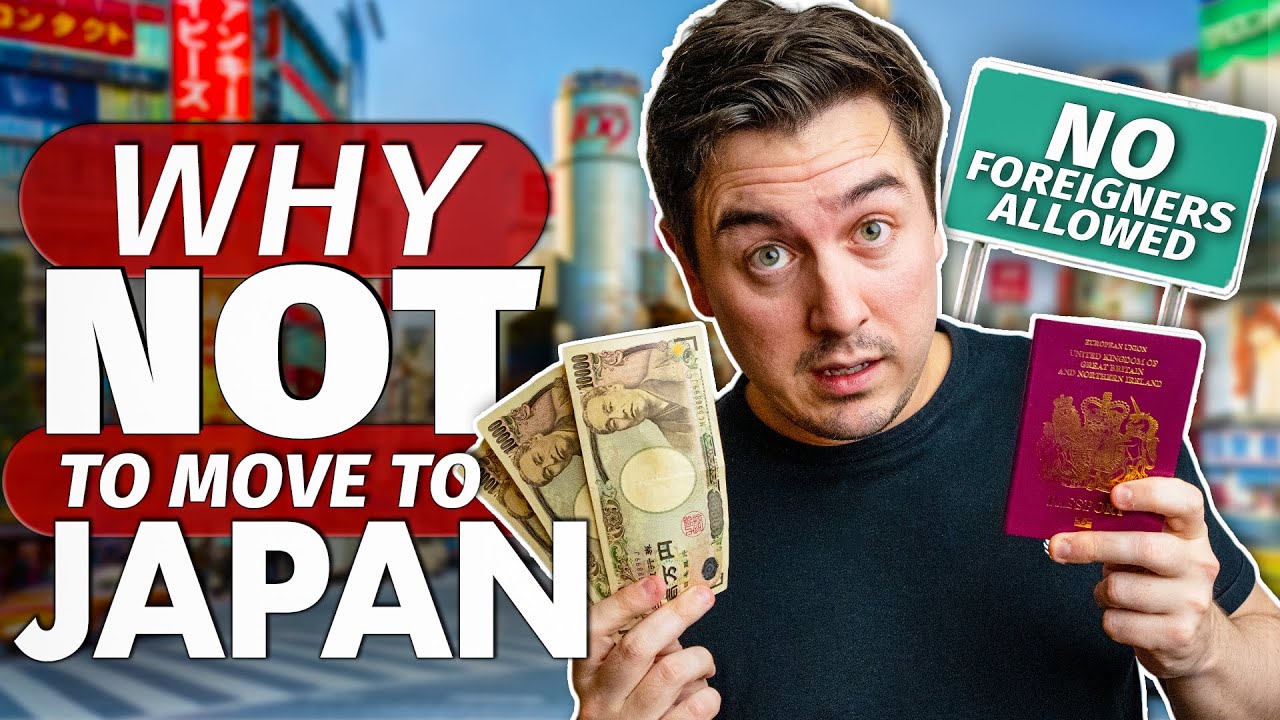
the Japanese yen is now trading at a 38-year low against the US dollar that's why the number of Americans coming to Japan has skyrocketed with more than 900,000 people coming in the first 5 months of 2024 alone a 17.4% increase from last year that's also why you might be seeing Japan everywhere on social media right now the weakened Yen has made Japan an even more attractive place to visit because $1 will now get you roughly 160 Yen and the last time that was the case was around May of 1986 or almost 40 years ago everyone
is trying to get a piece of Japan right now but what's interesting is that not that long ago in the80s it was Japan that was buying the United States some of the things Japan bought included the famous Pebble Beach Golf Resort in California the Firestone Tire Company Japan's Sony Corporation was able to buy CBS records columia pictures MGM United Artists the IC Chrysler Building in New York City and Universal Studios Japan's economy got so big that people started to worry Japanese investors were buying too much of everything Japan got really close to overtaking the US
economy and how they were able to do all that is a super interesting story one of the things that made this possible is land values in Japan started to explode a small office space in the district of Ginza for example sold for 1.5 million million for 1 square meter and that works out to a little over [Music] $139,000 per square foot just for comparison last year the US national average was about $23 a square foot but a more apples to apples comparison would be an area in San Francisco which right now is valued at $5,450
a square foot which is outrageous but still a far cry away from $139,000 that also meant the Imperial Palace in Tokyo was hypothetically worth about $852 billion which at the time was worth more than the entire real estate of California it was said that Japan's land value and the office spaces in it in the most expensive District the District of Ginza were valued at $5.1 trillion which was about the size of Japan's entire GDP in 1989 and remember that's for a country that's 26 times smaller than the United States and that's just real estate Japan's
stock market was worth more than the entire value of US real estate times 4 the Japanese economy was on such a role that in the year 1995 the Chicago Tribune wrote Japan may still surpass the United States to become a leading economic power by the year 2 000 and that's not that long ago but that didn't end up happening instead what happened was arguably one of the biggest bubbles to ever pop in economic history so in today's video I want to show you how Japan almost took over the entire world why they didn't and how
the Yen has been collapsing over the last few decades and what we can learn from it and how all of this affects us so with that said let's get into it hi my name is Andre J hope you're doing well come for the finance and stay for macroeconomic history so understand Japan and the decline of the Yen we have to rewind and talk about how Japan became so powerful because after World War II Japan experienced something people call the economic miracle and how the world saw Japan changed a lot in the 1950s for example if
someone picked something up and they saw it was made in Japan they would have automatically assumed it was bad quality and you probably knew that but maybe you forgot unless you recently watched Back to the Future No Wonder this C fail it says Made in Japan what do you mean doc all the best stuff is made in Japan unbelievable that's because Japan made a lot of progress by the time of Marty's 1985 and that was thanks to Tak Henry Saku ultra low interest rates between the 1950s to the 1980s Japan's economy grew like crazy and
Japan became an extremely wealthy country Japan invested into its own growth focusing on creating high tech like VCRs the Walkman companies like Sony Honda and all their super reliable cars started to transform the global economy everyone wanted to own a product from Japan by the 1980s made in Japan was associated with highquality cuttingedge technology that was actually affordable and one of the biggest reasons for this change in perception is because the Central Bank of Japan was strategically keeping the Yen weak a weak Yen made Japanese Goods cheaper for other countries to buy and When stronger
currencies were buying Japanese companies could convert those foreign profits like US dollars for a lot more Yen and that created a lot of wealth especially for the companies making all that stuff and that's why the Japanese stock market went way up which also resulted in Full Employment and good wage increases Japan's economy was on a roll but then the president of the US Ronald Reagan Ronald Reagan the actor Ronald Reagan decided to devalue the dollar in order to make the us more competitive as well and that was the birth of something called The Plaza Accord
because Jesus also had a Honda for he did not speak of his own accord just kidding seeing if you're still awake now the G5 Nations which included Japan the United States the UK France and Germany all got together to agree to this Plaza Accord and the goal was to devalue the US dollar and one of the ways they did that was by forcing Japan tend to deregulate in order to stimulate private sector growth now whenever you hear the word deregulation just remember that investers will probably be printing 10d soon AKA they're going to make a
lot of money but it can also mean that if people are not careful it's one of the special ingredients for creating an economic bubble because what deregulation eventually did was it made the Yen so strong that it made Japan less competitive on the international market Market their products became more expensive in relation to other currencies so Japan started to make less money and that created recessionary pressures for Japan So to avoid a possible recession Japan focused on strengthening its domestic economy in other words they wanted to make sure that people had an opportunity to make
more money at home since they were making less money overseas and the way they did that was by increasing the marketability of Securities by creating as many investors as possible and the way they did that was by adopting what's called a loose monetary policy and expanding credit Japan made it really cheap to borrow money by dropping the discount rate from 5% in 1985 to 2 1/2% by 1987 the amount of money in the system as measured by M3 went up by 141% from 1980 to 1990 and with all this money in the system and easy
access to cheap credit and low interest rates meant people started to leverage or borrow money so that they could invest and that's what created a giant bubble I realize it's kind of complicated so if I put you to sleep here's a visual analogy of what the plaza Accord really did the Japan hey look what I found more pancakes let's speed it up pancake pancake eat little buddy eat eat [Music] eat you get the idea it created a peak for Japan's economy if you wanted to make money fast you had to invest your money in the
market and it was in the market where you could not lose let me just show you how thick some of these pancakes were because from the year 1981 to 1991 whenever a company would launch or IPO the first day's average returns in that 10year span was 32% remember the stock market today like right now returns anywhere between 7 to 10% per year on average not 32% every time a company IPOs for 10 years straight so people started buying blindly in 1987 for example literally blindly as many as 10 million people applied to buy shares in
a telecom stock before even knowing what the valuation would have been that stock went up 200 times price to earnings ratio and was valued at $376 billion which at the time meant that one company was worth more than Germany's and Hong Kong's entire stock markets combined stock prices started to go up three times faster than corporate profits some stocks started to trade between 100 to 400 times price to earnings ratios but then it all reached a peak in 1989 the Japanese stock market hit 225 times PE on average and that's really high when you remember
a healthy PE should be 10 times less than what it was by comparison the highest the US market ever reached during the financial crisis was roughly half of that the Japanese stock market got so big it was worth about half of the world's entire stock market about $4 trillion and the interesting part about it was that it wasn't just a bubble created by ordinary people and their greed it was huge contributed by corporations that adopted a mentality economists like to call Tina which stands for there is no alternative it means companies were making more money
from the capital gains on their real estate and stock Holdings than they were from their actual business and that forced a lot of them to continue borrowing and buying more it's estimated that about 38% of real estate was bought by corporations and by 1980 about 2/3 of the entire stock market was owned by corporations and because the plaza Accord focused on deregulation a lot of the speculation that fueled all of this growth was funded by these unregulated shadow Banks So eventually the party had to come to an end and when the property values collapsed when
the stock market bubble popped in the early 1990s the Central Bank of Japan had to step in and stop the bleeding and the way they did that was by slashing interest rates to nearly zero the bank of Japan started to inject money into its failing Banks which created zombie companies that could not repay their debt and they had no money for capital investment and the reason Japan didn't let them fail is because they didn't want businesses to close and for people to lose their jobs so they continued to pump money into the economy but it
was too little too late the trust was lost and this period of time became known as The Lost decade now if you look at Japan's stock market you'll see that it actually lasted for three it was three loss decades because it wasn't until recently that Japan's stock market recovered to the same level that it was way back in 1989 money was leaving Japan because there was no reason to park your money in a stock market that wasn't performing and the safe option which was the bond market wasn't that attractive either because interest rates were still
extremely low at the same time this was happening though China's economy was starting to do some crazy things China was starting to allow companies to relocate production to their factories and that made Japan's economy even worse that's because China is a lot more competitive in terms of labor cost it's a lot lower than anywhere in the world and although some companies from Japan took advantage of this cheaper Chinese labor it still wasn't enough between 1990 and 2003 212,000 companies went bankrupt in the same period the stock Market dropped by 80% land prices in the major
cities fell by up to [Music] 84% when all was said and done it's estimated that the Lost decades cost Japan 17 million jobs and that created Financial inst ility and depression among the Japanese population the Lost Decades of Japan created something called stagflation which is where you have inflation or Rising prices while everything else is stagnant or it stays still like people's incomes so to stimulate the economy the bank of Japan dropped interest rates to near zero to stimulate borrowing and spending but that didn't end up saving Japan instead this period of stagflation extended into
the 2000s and it forced the Central Bank of Japan to do something that was even more extreme in 2016 the Central Bank of Japan dropped the key interest rate to negative NE .1% now hold on a minute negative interest rates does that mean that people then get paid to take out a loan no but that'd be cool though instead the negative interest rate was targeted directly at the commercial Banks of Japan the idea was if it cost a bank money to hold their customer deposits every month they would want to hold as least amount of
money as possible it was a way of not just encouraging but forcing those Banks to lend out that money as much as possible it was a way for the papa Bank the Central Bank of Japan to tell the baby Banks the commercial banks that hey we have to artificially stimulate borrowing and spending quantitative easing is the more technical word for it in economics and the bank of Japan wasn't the only one doing it before the bank of Japan adopted negative interest rates in 2016 it was the Danish Central Bank that set negative rates in 2012
then the European Central Bank did it in 2014 to fight against deflation and then later that year the Swiss National Bank did it to prevent excessive appreciation of the Swiss frank and then in 2015 Sweden's Central Bank did it to boost inflation and economic growth but here's the thing it still didn't really work because Japan has one major problem their aging population Japan has one of the highest life expectancy rates in the world and one of the lowest birth rates in the world Japan has one of the fastest declining populations in the world from the
current 124 million the number is expected to drop below 100 million by 2056 by 2,100 the population will likely be half of what it is now according to the world economic Forum as many as one in 10 people in Japan are over the age of 80 Japan's Workforce is getting smaller that puts a strain on its economic growth because the more old people you have that are not working it means higher health care and pension costs and that makes it harder for the bank of Japan to justify increasing interest rates when the population is already
having a hard time that's why rates were negative for 8 years straight the bank of Japan just raised interest rates in 2024 which was the first rate increase in 17 long years well the bank of Japan the boj is Raising interest rates for the first time in 177 years today making it the last major Central Bank to exit the world's negative raid policy the question is how does all of this tie into the collapsing Yen and the strength of the US dollar so typically the Yen goes up in value when people are worried of a
recession happening but so far we've seen the opposite because the US economy has been really strong even though we have high interest rates which has also had the effect of attracting a lot of money into the US economy which has helped boost the strength of the US dollar and weakened the Yen Japan right now is criticized for not doing enough to convince people to park their money in the Yen since rates are still close to basically zero which means there's no incentive to and according to Sachs the outlook for the yen is weak for at
least a little while longer just remember that how strong a money or a currency is depends a lot on the central bank's interest rate the more expensive it is to borrow money the more valuable it tends to be and the cheaper it is to borrow it the less valuable it tends to be right now the US dollar is pretty expensive to borrow at 52% whereas the yen is really cheap but looking back at history history my personal question is what were the lessons that we learned what could we have done different to prevent the Lost
Decades of Japan and it turns out there's actually three lessons that economists have learned that could have maybe prevented or lessened the effects of it first the bank of Japan should have adopted a tighter monetary policy sooner meaning they should have been afraid to increase interest rates and make it more expensive for corporations to speculate on real estate the way they did two if Japan had stronger regulatory oversight over its financial institutions it would have really lessened the sketchy lending practices of Shadow Banks and if they restructured the npls or non-performing loans of the banks
that failed they would have really restored the confidence of investors to start borrowing and investing money again and three if Japan's economy wasn't so initially dependent on exports from the beginning if it was a little more Diversified towards the domestic side of things then the strength or the weakness of the Yen maybe wouldn't have mattered as much to the Japanese economy so those three things could have probably lessened or even prevented the effects of the L decade now if you made it this far into the video here's my personal opinion of the weaker Yen and
how it all affects us I visited Japan earlier this year and without any kind of expectation it became my favorite place that I've ever been to especially Tokyo and Kyoto I just love the food the culture and the people everything was clean Super were respectful I felt safe and it was just incredible I'm super excited to actually go back probably sometime in October and to top it off everything was insanely cheap because of how strong the US dollar is against the Yen so if you're planning on traveling overseas right now is arguably the best time
in 38 years to visit Japan so if you do plan on going please be respectful stay safe have fun and as always I hope you have a wonderful rest of your day smash the like button subscribe if you haven't already don't forget to to grab your free stocks links are down below go track them automatically with a spreadsheet link Down Below in my patreon thank you so much for watching this video I'd love to see you back here next week I'll see you soon bye-bye