You're experiencing erectile dysfunction at the crucial moment, and it doesn't make sense in 2025 for you to suffer with this alone, searching for solutions online, medications, or even professionals who aren't the most qualified to care for you. In this video, you'll understand the causes of your erectile dysfunction, what treatments are available, and the last treatment I'll mention here will make it impossible for you not to have an erection and penetration. So, stay until the end to understand and know what's best for you.
Let's go to the video. My name is Mateus Ferreira Amaral. I am a urologist specializing in male sexual health .
To schedule an appointment with me, the link is in the description and the QR code is on the screen. Inability to have or maintain an erection. That's the definition of erectile dysfunction.
"Oh, doctor, I don't have erectile dysfunction. I think I don't have it because I get an erection. I just lose it halfway through.
" That's erectile dysfunction. Period. It's at a different level, a different degree than that of a patient who doesn't have any degree of erection, nothing.
[ __ ] doctor, nothing. I went there to have intercourse with my wife or with someone, you know, with a man, with my husband, and I didn't get any erection. We're talking about a more severe erectile dysfunction.
I lost it in the middle of the moderate stage. I noticed that my erection is of worse quality, but I haven't lost it yet. This is very mild, right?
I don't even know if it can be classified as erectile dysfunction, but it's quite possible that you're at this stage. I'm noticing a worse quality of my erection, but I can still get one. Okay?
The fact is that regardless of the level you're at, the causes are well defined. There's a cause that I won't even mention much here, which is very specific to that patient who had their prostate removed. So, he had surgery to remove the prostate and then you had nerve damage next to the prostate.
This nerve damage led to erectile dysfunction. This is very specific to those who had surgery. So, for you, in general, there are three causes for it to happen.
The first one is vascular. You have a diseased blood vessel, meaning less blood is reaching the penis. Those of you who have been following me for a while already understand that an erection depends on blood reaching the penis.
You have a blood vessel, actually two cavernous arteries that carry blood to the penis. If these arteries are clogged by a plaque of fat, calcification, due to age, diabetes, or smoking, less blood will reach the penis, and you won't have a quality erection. So, vascular causes are one of the main causes, the main cause after 45, after 50 years of age, because the aging of that vessel begins, and due to the aging of the vessel itself, it loses its capacity for compliance and dilation, resulting in less blood reaching the penis, and that's the famous erectile dysfunction.
Hormonal causes also play a role. It's a hormonal issue; your testosterone starts to drop, right? Around 40, around 30, studies differ a little.
From 30 onwards, testosterone production starts to decrease by 1% per year. And later on, usually around 50, but nowadays it's happening earlier, in your 40s and 50s, you start with low testosterone due to testicular failure or sometimes even a deregulated axis, right? Sleep deprivation, anxiety, depression, sedentary lifestyle, all deregulate the axis.
Your pituitary gland stops stimulating your testicles, and testosterone drops. So, your testosterone can drop either due to testicular failure or a deregulated axis. I see both types of cases a lot here.
The fact is, testosterone drops. When testosterone drops, you lose, first and foremost, your sex drive, libido, libido, right? And without libido, you don't have the desire, you don't have a quality erection, your penis becomes limp.
So, you lack desire, the woman approached you, you tried too hard, but you couldn't get it. Okay? Hormonal cause.
And the last cause is psychogenic. Man, this has increased a lot, guys. In fact, nowadays it's the cause I see most often, it's electrogenic dysfunction, in other words, it's in the head, right?
And it's very much linked to performance anxiety. What is that? For some reason, look how it starts.
For some other reason, you were tired, you never had this before. Or, okay, your wife approached you, your husband approached you, you weren't. .
. Well, it didn't go well, he couldn't get a satisfactory erection. And from then on you start thinking, man, next time I have to do well, next time I can't fail.
Your wife, your husband approached you, the foreplay started, and you're already thinking about your penis. You're not thinking about anything else, the smell, the hug, the kiss, nothing, nothing. You're only thinking about whether your penis is hard, whether it's not hard, whether it's going to work, whether it's not going to work.
You're going to pick up your partner to take them to a motel, and you're already thinking about your penis. You're not thinking about anything else, you're only thinking about yours. This hyperfocus on the penis is linked to adrenaline discharge, so your adrenaline starts to get very high.
Adrenaline, tachycardia, peripheral vasoconstriction. It takes blood from your hand, your foot, your penis, sends blood to your heart, to your muscles. So, the adrenaline is preparing you to run, to escape, right?
So, adrenaline, performance anxiety—I usually say, folks, that for many men these three causes come together, right? So this patient sometimes has erectile dysfunction that started due to a vascular cause, then, well, his head isn't good anymore, performance anxiety, he's over 50, his testicles aren't the same anymore. So, it's often multifactorial.
The fact is that the treatments are also very well defined and have a high success rate. That's why you can't keep having erectile dysfunction. It doesn't make sense, right?
And before I talk about treatment, I need you to like the video, right? Subscribe to the channel. Leave your comment.
It's good to leave your comment here. It's an area where you can comment calmly. Everyone is suffering from the same thing.
You'll see here in the comments a lot of people with the same thing as you, and that makes you feel more at ease. So the comments are important for everyone to help each other. The treatments for dysfunction are well defined, folks.
I'm going to separate it by cause. I'll start with the hormonal cause, which is one that requires more specific treatment. When you identified the underlying electro-hormonal dysfunction, how did you identify that?
You measured testosterone, you measured the entire hormonal axis, and if possible, you have a history of that patient's testosterone levels. So you noticed that testosterone levels are falling, you noticed whether or not their hormonal axis is regulated, right? If they have testicular failure or a dysregulated axis, and then you'll propose treatment.
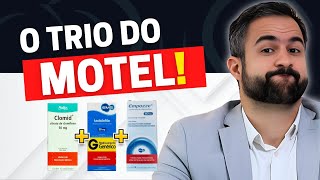
If it's testicular failure, the testicle isn't functioning, you can see that in the lab, you'll replace testosterone. If you have a dysregulated axis, you'll regulate the person's axis. So you have clomiphene citrate, which is the main weapon for this.
You have anastrazole, for that patient who has a high aromatization rate, converting a lot of testosterone into estradiol, you have HCG, so you have ways here to stimulate the testicle itself, to regulate the axis and everything else. You have other ways to replace testosterone. So you're going to treat this guy, this guy will gradually regain his physical disposition, libido, sex drive, then erectile function, you'll monitor him and you'll see that he'll function well.
So, hormone replacement or testicular stimulation, when properly indicated, will treat this patient. Now, for that patient with psychogenic and vascular causes, although the causes are very different from each other, the treatment is rigorously the same, right? Except for the psychogenic aspect, you can refer them to a sex therapist, the intervention treatment, right, when you intervene, is the same.
First line, oral medication. So we'll offer oral vasodilators, tadalafil, cildenafil, laryngeals, citrulline. So you have several synthetic steroids like phosphate-binding agonists, tadalafil, coudinafil, which is Cialis, Viagra.
You also have lanolin, cetyltroline, which are amino acids that boost the effect of these medications used in isolation; the satisfaction, right, the success isn't so good, but together with these drugs they do have very good success. Then we go to the question of dosage, folks. So you have a daily use strategy, okay?
For tadalafil, 5 to 20 mg daily. You have the. .
. On-demand strategy. If I give 25 to 100 mg of dextrose one hour before, okay?
Or 20 mg of lafil two hours before. So you can adjust it along with the amino acids. You can combine the two strategies, take it daily and take it on demand.
So you have to test doses, right? You're going to test everything you can within this first line of oral treatment. You've reached the maximum dose, or the patient has already come here taking the maximum dose and it's not working.
Why doesn't it work? Why might toalfil not be working for you if you only have anxiety, only performance anxiety? That adrenaline you're releasing in that situation, it's so high, the vasoconstriction power is so high that you can't, the adrenaline, the vasoconstriction, it wins over the vasodilation of Viagra or Ceales that you're taking, and then you have erectile dysfunction even while taking the medication.
And the vascular treatment might not work because the artery is so blocked, right, that blood might not be reaching the penis, and you still have erectile dysfunction even while taking the medication. The second most commonly used treatment is intracavernous injection. Intracavernous injection, injection into the penis.
When we say, "The guy's going to do that, [ __ ] injection into the penis, I'm not going to do that, man. It doesn't work for me. " It's not exactly straightforward, right?
It has its pitfalls, right? It has its adjustments, but it's a straightforward treatment with a high success rate. Remember that with that first line of treatment, you resolve 90% of patients, right?
The 10% that you don't resolve, you go to the second line of treatment. And intracavernous injection can resolve 95% of cases. Trimix, which is the combination of three vasodilators, papaverine, phentolamine, and prostaglandin, has a very high success rate.
You just have to find your dose. There are two ways to do this. You have the injection with the insulin needle, the insulin syringe that you'll draw from the vial that the pharmacy will send you, and you'll inject it into the base of the penis, on the side of the base of the penis.
You insert the needle all the way, inject it, and that's it. It doesn't hurt, it doesn't hurt. It's a very easy injection, right?
A little prick, very, very, very, very. You'll administer the number of units that you decide with your doctor. There are some things you need to understand.
You'll determine your own dose. So, let's start with 10 units, which means 0. 1 ml.
20 units, 0. 2 ml. You have to decide together with your doctor.
Deciding on the dose is important, and you need to have the antidote with you, because if you have an erection lasting more than 3 hours, that constitutes a pre-erection, right? A sustained, painful erection lasting more than 3 hours can cause damage to your corpora cavernosa. And then you can suffer damage because of that.
You go, break the ampoule of the antidote, aspirate it, and apply it to the other side at the base of the penis. Thank God, the antidote works very well. If you applied 0.
2 and had a pre-erection and had to use an antidote, next time you'll go to 0. 1 or 0. 15.
So you keep decreasing. Then you had an erection for an hour and a half, [ __ ] that's great. An hour and a half is great.
Then it's over, you understand? The intracavernous injection is an excellent type of treatment. You also have the application pens that look like those insulin injection pens, right?
Basically, the ampoule is already inside, you decide the dose here on the pen and you apply it to the side, the same side of the penis, you make this application movement and it's applied, you understand? So it makes it more comfortable, more discreet. The application is also very good, sometimes it's out of stock, but it's a good, a good form of treatment.
So, I talked about the intracavernous injection. Still within the second line of treatment, you have the intraurethral gel. It comes in a specific pen, right?
You put the intraurethral gel on the glans, in the urethra, and you apply it to the pump up here. 5 to 10 pumps, half an hour before intercourse. Problems with the gel.
The gel has a success rate of around 65% of cases that go well, and it's expensive. The pen costs R$1,000, it has 100 pumps, meaning if you use 10, you'll have 10 sexual encounters, basically. So it's considered an expensive treatment with a low success rate.
I don't like to use it anymore, honestly. I don't like to prescribe it anymore because, for many, well, the guy will. .
. Making the investment, man, it's not going to work. You know that when you have erectile dysfunction, every misstep you take is bad, it impacts your mental state.
So I don't really like to use it in practice, but there are patients who use it, there are patients who say, "Hey, doctor, I want to try it, I don't want injections, I want to try it," okay, let's play it together. Nothing worked, you didn't adapt, you had too many side effects, unbearable headaches, I can't use it, I didn't adapt to the intracavernous injection, or none of that worked. The last stage of treatment is, in fact, the penile prosthesis implant.
And as I told you way back, here we're talking about a 100% solution. You won't have erection problems anymore in your life. You'll remove this burden from your life when we talk about a penile prosthesis.
Ah, doctor, but it's surgery, yes, we're talking about a much more invasive treatment, operating room, we're going to put two rods, two cylinders, one on each side of your penis. This prosthesis can be the malleable or semi-rigid type, so your penis is always rigid, you can bend it, you can wear pants, wear shorts. At the beach you'll wear tight swim trunks, put your penis to the side and wear shorts.
You won't just wear swim trunks because otherwise it will show. But you can live comfortably with the penile prosthesis. It will always be ready for you to have an erection.
The prosthesis is placed to the size of your penis, so it doesn't increase the size of the penis, and if done correctly, right? By releasing fibrosis and everything else, you maintain the same size. You don't end up decreasing the size of the penis in most cases.
So you don't increase the size of the penis. Ah, doctor, but will I have any swelling of the penis or will I destroy my corpus cavernosum? You create a tunnel in your corpus cavernosum, but you have the corpus cavernosum on the periphery of the prosthesis, right?
The prosthesis is in the middle. If you have any basal vascularization, it will swell with blood during periods of pleasure. Yes, most patients report penile engorgement.
If the guy already has a completely deteriorated vascular system, he 's already 72 years old, diabetic, a smoker, unable to achieve any degree of erection, getting a prosthesis will mean he'll still be unable to achieve any degree of erection, but he'll be able to penetrate whenever he wants, as many times as he wants, whenever he wants, and without much of this. Many people complain because treatments, in a way, take away the spontaneity of sex, right? Stopping to get an injection, stopping to take medication, stopping for this, for that, you lose a bit of spontaneity, which is something the prosthesis gives back to you – the spontaneity of sex.
Besides the semi-rigid prosthesis, you have the inflatable prosthesis, which is the one with two inflatable parts, right? In the penis, you have a reservoir that goes around the abdomen and a device that goes around the scrotum, which you activate to inflate the prosthesis when you want to have intercourse. So you inflate the prosthesis, have intercourse, and when intercourse is over, you deflate the prosthesis, and if you want to continue, you continue.
If you want to stop, you stop. So you give the patient back this power of decision; you maintain penile sensitivity, you maintain pleasure, you maintain orgasm, you ejaculate, you give pleasure to your partner. It's an excellent form of treatment, an excellent way to give the patient back their sex life.
I made a video using some models, to make it easier for you to visualize how it works and everything else. I'll leave it here for you, and until next time.