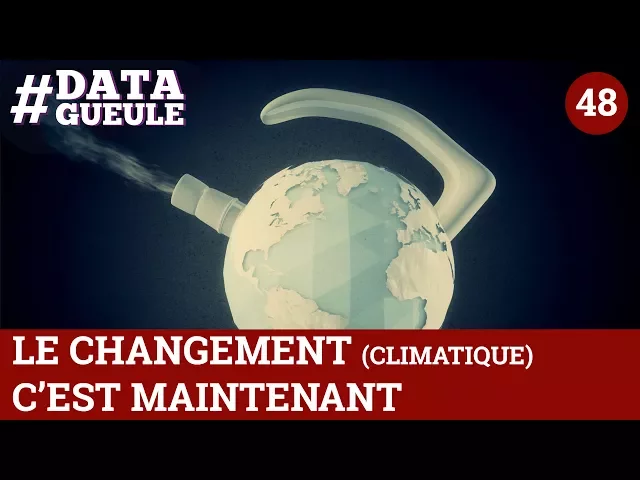
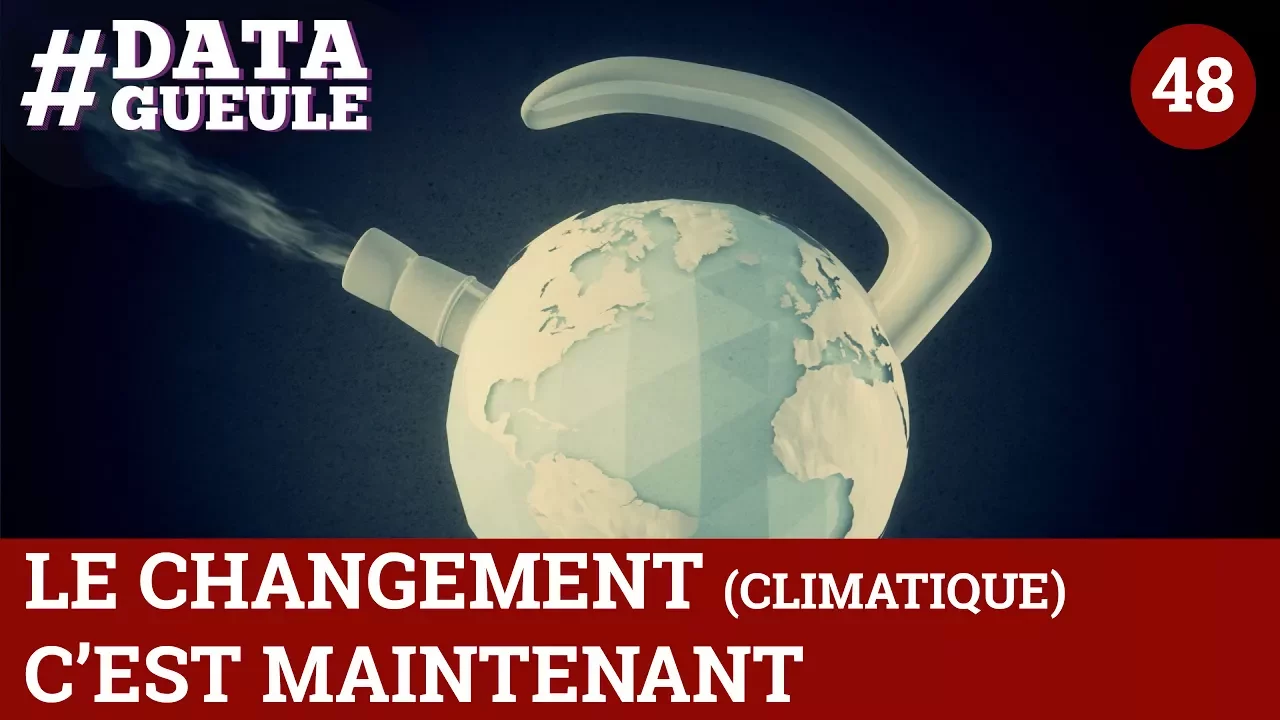
When the kettle whistles, the water is hot. Hello. A rise of 2°celsius from now on, until 2100.
This is our limit. 2 small degrees compared to the average temperatures collected since the first modern measurement in 1880. Except that, between 1880 and 2012, the average temperatures already increased of 0,85°c.
Indeed, the time for change is now. We still have a credit of approximately 1,15°c And, for once, growth is not an issue. Temperatures are searing.
60% of the temperature rise, since 1880, is condensed in the last 40 years. Since 1875, the Artic heated twice as fast as the rest of the planet, with a growth of 1°c. life is unfair.
Henceforth, every year, monthly maximum temperature records are being beaten three times more often than if the climate was stable. Our dear 21st century already holds 13 out of 14 of the hottest years ever recorded. In Australia, since 2013, the meteorological office (Met office) had to add a new colour.
This fluorescent purple is now representing temperatures above 50°c And this “slight” fever pitch deeply affects the Earth. There are spectacular data, such as the natural disasters. Since the 1960, natural disasters occurrences intensified more than threefold.
Moreover, there are day-to-day issues Between 1960 and 2013, wheat production dropped by 2%, and corn production dropped by 1,2% Less food for a booming population. This could be a serious issue. .
Temperature rise is also a problem for our energy production. In France, 61% of our freshwater pumping is used to cool down our nuclear plants. Yet, when superficial water is warming up, so does the plant.
During the 2003 heat wave, 17 nuclear reactors had to be stopped or slowed down. That is 4 GigaWatt of electricity lost, 3. 5% of the total French energetical production.
Summer 2009, new heat wave, and this time 8GW of energy lost. But let’s dive to cool down. Between 1901 and 2010 the average sea level rose of about 20 cm (7.
8 inches). Just like the temperature rise, the phenomena is speeding up. Whereas the normal rise was of 1.
7mm (0. 07 in. ) per year since the 1900’s between 1993 and 2010 the rate almost doubled, jumping to 3.
2mm/year (0. 13 in. /year).
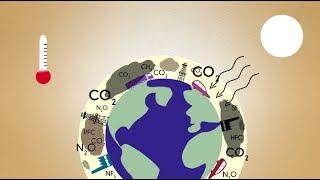
And the planet is a genuine joker. Let’s imagine we stopped all of the earth greenhouse gases release in 3 seconds. 3 2 1 Now The rise in temperature would only slow down in 10 years.
. . Minimum.
The oceans (which captures most of the warming) would continue releasing to the surface the accumulated heat. The temperature of the deep waters could continue rising up for centuries, even millenniums. And since hot water dilates, the sea rising wouldn’t stop.
Don’t count on the forests to change things! The overabundance of CO2 in the atmosphere causes the trees to overdose. Since the mid 80’s, in this big lung that is the Amazonian forest, tree’s mortality rate rose of 1/3.
Globally, between 1959 and 2012 the absorption rate of the natural carbon sinks (the oceans and forests), dropped by a third. Today, the question is not to dodge the environmental peril like a hole on the road but to adapt by finding more adequate ways. Say hello to climate change !
Because it’s already here.