Scott you started an e-commerce company in the dotom era what would be your advice to Founders building in the hottest sector right now specifically AI the Market's frothy if you have a good idea and it has anything to do with AI you're going to be able to raise a ton of capital and Capital's cheap take advantage of it raise a [ __ ] ton of capital but don't don't make the mistake of believing that because you raised a lot of capital and that you're supposed to your company is worth a lot that it's actually worth
that take a real disciplined approach to spending whenever I've raised a ton of capital cheaply that company often times struggled your ability to raise Capital says something about your business but it's not the full story so if the Market's right access the market raise as much as you can over raise but at the same time call on a different side of your brain and throw nickels around like their manhole covers and you know spend money but be really judicious because uh just because you can raise a lot of money doesn't doesn't mean your company deserves
it what was your approach to spending when you were building red on I've always been very Scrappy we were very Pennywise and probably pound foolish and then we raised I don't know 20 30 and then 60 million from Sequoia and Western Presidio and all these brand name VCS and we started spending money like drunk Sailors I don't think you know it just there's a cycle here you're in something hot every VC is going to try and encourage you to go faster until you run out of money at which point they'll come in and cram you
down so I would resist the temptation to spend aggressively it's really nice to have a lot of money in the bank if you find a a customer acquisition channel that is really paying off then yeah put the hammer down and hire people and you know make some Investments but I I just can't tell you how many times I have seen people who because they access a ton of capital they think they should spend it and they think that they're going to be able to get a good return on it because keep in mind when you're
raising a lot of capital it means other entrepreneurs are raising a lot of capital which means customer acquisition costs are going up the price for employees is going up so I think it's just better to air on the side of not spending enough as opposed to spending too much now a lot of people disagree with me when capital's cheap you know make some mistakes spill some Capital that's fine I'm on the board of a couple of these companies right now they're just spending too much money and everyone's in consensual hallucination that because the category is
hot it means that you know we should spend aggressively I'm like spend aggressively when there's metrics that justify it so anyways raise as much as you can but spend as if you're probably not going to be able to raise [Music] again welcome to first time Founders it's been 18 months since chat GPT launched and the Market's still going crazy for AI at the same time though workers are anxious from lawyers to accountants to writers to artists AI threatens to replace them in fact onethird of American professionals fear that AI companies will make their job obsolete
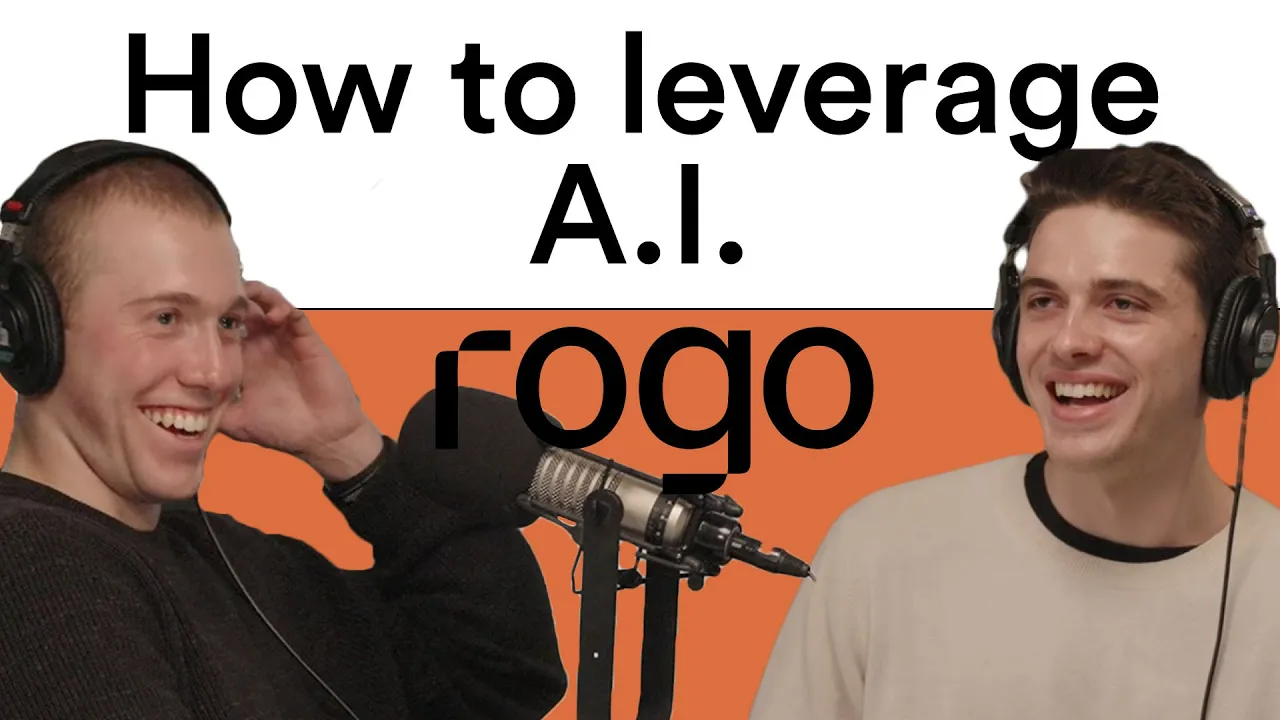
my next guest might have started one of those companies after working 100 hour weeks in Investment Banking he realized that much of the work he was doing could be done by AI so 3 years ago he built one his AI model can analyze earnings assess transcripts create decks in essence it's your own personal analyst and even more remarkable some of the biggest banks in the world are already using it this is my conversation with Gabe stangle founder and CEO of rogo welcome how you feeling good thank you for having me this is your first podcast
right it's my first podcast ever and you recently had a Business Insider profile do you feel um kind of famous now you know it's getting to me it's getting to me um we'll see we should be clear I've been friends with you for about I think six maybe seven years um and I've been looking for the right moment to do this and I think now is the right time I mean you just announced a $7 million seed round you've officially launched commercially you're now serving some of the biggest hedge funds and some of the biggest
banks in the world and your company is now doing what I think a lot of Bankers speculated and feared it might do and that is it's it's doing their job just as an example I use rogo and I'll ask it to compare the price to earnings multiples of the biggest social media companies and it pulls it right up you could ask it what are CEOs saying about Ai and their implementation of AI at XYZ company it pulls it up and it will deliver the answers with footnotes from SEC filings from uh investor presentations transcripts Etc
so I just want to start with the question that I think most of Wall Street would want to ask you you which is is AI going to replace Bankers no um I think Bankers would actually be happy if if it could replace a lot of the PowerPoint and Excel work that they do but the reality is it's we're a long way away from from Full automation um and we're a helpful tool we make people smarter we make Gathering materials quicker we make putting together Powerpoints and research memos a little bit more efficient we're not replacing
anyone are you sure that a banker should believe you when you make that statement I mean tell me more about why you're not replacing anyone because it feels we're reping we're not replacing people right I mean even in recent history five years ago before covid I mean you probably had Investment Banking analysts after staying up all night creating a pitch deck they would go print it out buy the books deliver the books to their managing director and partner's apartments that would take a few hours no one's doing that anymore because everything's virtual it's not like
these Bankers are working less right they're just filling up their time doing smarter more interesting things when I was was a banker I spent a lot of time doing very interesting thoughtful work at Lazard and and that's why I loved it and then there was occasionally work that was not so thoughtful and not so interesting and we're helping get rid of that I mean there's a lot of examples throughout history of automation you know creating jobs right if you look at the ATM example that folks like Ezra Klein bring up often of when ATMs got
invented actually what happened was there were more bank tellers than ever over the coming three decades because Banks became more efficient to operate commercial branches and so they expanded I mean I think what you'll see in Investment Banking and in investing RIT large is it's going to become more efficient to operate these businesses and they'll want to expand give us an example I mean you were a banker and you said that there are some services that you were doing that were here here's a great example you you cover a certain subset of companies uh when
they release earnings you just want to write a quick update for everyone on your team saying you know what did they hit what did they miss what are they saying about m&a are they interested in m&a what are people in the space saying what's the analyst reactions that can take a few hours to write that can get automated and now what you can spend your time doing is being thoughtful about okay so what does this earnings mean for us should we engage should we present new client new acquisition opportunities to them instead of spending a
lot of time synthesizing publicly available information and putting in a little email another example is just like benchmarking right every growth Equity VC investor needs to know like what is great net revenue retention look like at snowflake at procore at all sorts of businesses what they're doing right now is having an analyst Benchmark that on a quarterly basis so that they can reference it in podcasts and reference it in ic memos and so on that shouldn't be done by hand anymore either so what kind of work do you think Bankers will be doing if they're
not doing all the things that you just described what kinds of opportunities would you say this opens up look I mean it's why do people use m&a bankers and just to to set the stage a little bit what is an m&a Banker right like an m&a Banker is not making Investments for anyone they're advising ing CEOs on when they want to sell their company or buy another company they're offering real thoughtful advice and that's the work they'll continue to do and when you're offering really thoughtful advice you have to have evidence to back it up
materials to back it up rogo helps make Gathering that evidence a lot easier prosecute more deals advise more companies offer smarter insights and offer maybe more products right if you were just offering m&a advisory as a service before maybe now that's easier for you to do with your team of 100 and you can also offer some consultation Style work that Mackenzie does too or some geop geopolitical advisory work as well and the opportunity to expand your service and enrich it is now kind of endless do you think that that's going to be the case across
all Industries I mean one thing that I was just reading about before this interview one of the most popular books of the late ' 90s was this book called the end of work um and it basically just predicted that robots would leave us with nothing productive to do um and this has happened sort of throughout history I mean there's this other stat in 2014 half of tech workers said new technologies would be net job destroyers um I remember back in 2020 when I was listening to Andrew Yang on this podcast he was saying that every
job is going to be destroyed by robots um in reality there are currently more jobs than ever unemployment is at a record low it sounds like you think that this is going to continue in banking but what do you think about AI as it affects the entire world I mean I I so interesting you bring that up my brother who you know as well who's much smarter than both of us brought this up to me this weekend much smarter much smarter significantly smart significantly smarter than mostly you mainly talking about you um he brought up
the point that a hundred years ago Economist said hey if we experience the type of economic growth we're expecting the work week is going to go from 40 hours to 15 hours you're not going to need all that incremental productivity and what have we seen the average work week in the US has gone from like 44 hours to 41 you know it's declined a little bit but people are still working they're still doing a lot they're still coming to work every day even if it's virtually now I can't really imagine a world in which AI
changes that so much that seems like a cultural phenomenon rather than like a productivity phenomenon and then the other thing that's really interesting about like AI automating away jobs is it's not just this thing where hey if they're capable of doing it they'll do it there's a lot of work that you know doctors do that nurses are capable of doing but doctors have to do it legally doctors are the ones responsible for doing it we will legislate what it has to be done by humans and what doesn't right now autonomous driving could probably take all
cab drivers jobs today we're stopping it and that's because we want it to reach you know a degree of safety and accuracy that we're more comfortable with than we are with humans and so what you're going to see is before these jobs get automated they're going to be done a million times better than AI than by humans and by that point we're going to want them to do it and there'll be more jobs created but it's not going to be like that so let's talk about the product itself it's basically a chatbot that answers Quest
any questions that you have about Finance it's very similar to chat gbt in that way it's basically chat GPT but for finance I think that goes for basically every AI startup that I'm looking at right now every AI startup is chat GPT for XYZ why not just use chat GPT I think there's two parts of that question one is what is the interface for the work you want to do is it chat or is it something else and the other is like the domain specificity of what we do I'm going to start with the latter
chat GPT in a lot of ways is a pretty smart 15-year-old kid who has generic accomplishments and and can do basic math can do basic reading has reading comprehension skills and so on would you rather have a generic 15-year-old or a 15-year-old who has maybe studied Finance for the last four years and then also comes to work every day with a big textbook book of all SEC filings all earnings calls and then reads Bloomberg on a daily basis right what is the context they have and what do they know how to do rogo is like
chat GPT in a lot of ways and it's dissimilar in many more ways we have so much data that chat GPT doesn't have and not only do we train on that data but how do you have data that that chat gbt doesn't have sorry we pay for it and we integrate it right we have a you've used the product it's a different product than chat gbt in some ways it's clunkier we cite everything we allude to we have millions and millions of documents that you can pick from when you query and for a normal consumer
who might just be looking up how long to bake chocolate chip cookies for it's probably a worse experience for an investment banking analyst for a hedge fund PM for you know the CEO of a private Equity Firm it has everything they want and all the data they want and we go out and we form data Partnerships and we purchase data from other folks whether that's Market data whether it's SEC filings directly from the federal government through Edgar whether it's earnings transcripts through providers you know they all sorts of providers fax at SP global affinitive we
have all this data that we integrate and then on top of that we integrate a firm's data themselves and so we can have all your IC memos all your historical pitch decks all your historical Excel models too within rogo and you can ask questions about them and not just individual questions like hey summarize you know why we think that chewy is going to grow 20% next year you can say look over all the models we've had for chewy over the last 10 years and tell me what assumptions we got right and which ones we got
wrong that's not something chat gbt is even close to being able to do and it's because we focus on ingesting financial data and citing it in all of our answers are you concerned at all that AI is becoming too powerful I'm I'm sure you get this question all the time but this is the ultimate AI Doomer question what are your thoughts about AI dorismar ISM yeah I was actually getting I was getting dinner with my dad a while ago maybe a year and a half ago and I fully panicked I was like Dad AI is
coming you don't understand because you don't understand how technology works but it's coming and it's scary and I'm not sure why I'm scared but I'm just I'm just viscerally scared it feels like a disrupting thing because of the work that you were doing or because of the conversations people were having just all of the above right like I mean it's something that lives in the collective consciousness of folks in in our world is this idea of AI right people have read science fiction they've gone to the movie they've seen Terminator it's a scary thing to
think about I am not that scared anymore and I'm not that scared for a number of reasons one is artificial general intelligence just feels farther off to me than I think it felt a year ago yeah and even if it wasn't that far off I've you know adjusted the way I think about what AGI is actually going to provide and I'm excited for it but I mean it's it's that's above my pay r i want to talk about your your career so you you were working in investment banking for about two years and then you
decided to start a company why yeah I always wanted to start a company um I think that's you know a result of of overconfidence and and not wanting to work for for other people but I mean even back when I was I think a sophomore in college you know a buddy of mine and me tried to create a a pitch deck preparation tool for investment bankers back then and we actually went into the credit s offices and met with like a you know someone who led North American Investment Banking and obviously we were kind of
laughing out of there we couldn't do anything but it's been on they like who literally who let you in here like don't worry about it um but I've been thinking about it for a while and I mean I I loved my time at Lazard and I learned so much and I had amazing mentors and I thought that llms and generative AI was going to change everything and I wanted to be able to work on it in the way that I thought was going to be most productive and interesting and I love to build things like
I am interested in creating products every day and thinking about the buttons to put in and the interactions and what it should look like and that's what I'm passionate about I remember when you started this company you barely used the word AI I mean I it was I I you told me it was a it was a what what did you call it a natural natural language interface for financial data which just doesn't I mean we were so scared of using AI as like a buzz word and mind you when we started rogo it was
pre-chat gbt and actually we Proto type rogo using very anachronistic NLP natural language processing techniques called like context free grammars but when we were starting rogo we didn't want to feel like we were just you know tying into some buzzwordy Trend and we were you know hopping on the back of this big shift I mean we wanted to seem legit I think that was a mistake you should use these terms they're powerful terms and like we are an AI tool why were we doing all this you know verbal gymnastics to not say AI because we
were like kind of self-conscious and like thought we were like holier than thou that was dumb but it worked I mean you you raised $2 million in your preed round and now here you are you're at a million dollars in Revenue I mean what do you think your investors liked about you I'm sure it made you appear I think speci the deck the deck is worth it's a whole another episode of this just to look at how bad that deck is it is one of the worst fundraising decks of all time uh Kevin Ryan let
our preed Kevin Ryan is an enormously successful entrepreneur he's a Titan of New York City VC and Entrepreneurship started mongodb guilt Business Insider Zola and so on I think Kevin just thought these guys know Finance these guys know technology I'm going to bet on them I'm going to bet that they can build a tool that actually disrupts financial services and I think that's what it was and what do you think you did right that made him believe that you were the guys to do it because I'm sure there are thousands of startup guys around the
country saying I'm going to build the AI for finance AI whatever it is you kind of hit the jackpot you're now the AI for finance guy what do you think he actually saw in you I mean at at Lazard I had a really interesting role I was working on both m&a work Financial Services work but also on their data groups team this team called ldag lzard data analytics group led by uh David Wang is super smart and so I got to see what it was like to work at the intersection of technology and financial services
at a firm with very cuttingedge technology and data science and AI capability and I think that was an incredbly unique background and that was only possible because you know I'd been I'd been I'd come there after having worked in software engineering and quantitative trading and writing my thesis at Princeton on AI for econometrics analysis and financial statistics I think that the story made sense to Kevin and when you're a guy like Kevin you're looking for a story that makes sense right you you want to believe that Gabe stangle is going to change financial services that
he's going to be the next Bloomberg you want to you want to fit the pieces to that narrative and I think the pieces were there and I was just tremendously lucky I mean John my co-founder and I were just and Tomas were just incredibly lucky to have all been in the right place at the right time interested in the right things and you know having said the right words and meeting the right people how have you convinced yourself of that story because the story that you describe is a pretty big one and the expectations are
high and you mention this sense of overconfidence did you need to convince yourself that that story was true do you believe that that story is true early on frankly when we raised money when we raised that first $2 million I thought to myself you know this this might not be the thing that makes me enormously successful but it's going to set me up well right like I'm going to do this thing I'm going to do it as well as I can and then I'm going to have a lot of opportunities afterwards that really shifted over
the past year shifted to the idea that no no this is going to be my big thing this is going to be my life's work this is the best opportunity I have to create a massive company that's valuable not just to the people that invest in us and myself but to the people and the clients we serve and it's going to be enormously valuable to our customers and I think that thinking has changed in part because of what we've been building and what we've been able to accomplish and you know the trends in generative AI
r large and I think it's a it's not that often you find yourself at the center of this changing dynamic system in Tech where there's a new technology that's enabling so much rapid growth and you're situated selling to a clientele that has the most appetite for increases in efficiency and increases in intelligence than anyone on Earth and I think we have a tremendous opportunity and that did change um and frankly it wasn't that I had to like sit down and convince myself hey Gabe you're going to be able to do this it was like as
more pieces of evidence accumulated my thinking changed um and I wish I could be really thoughtful about like how I thought about it at the time and how I thought about it now but I think frankly like as things e and flow and you're more successful and less successful you make products that work better you work that work worse the thesis develops would you say that you're sort of throughout your entrepreneurial career so far you've been shooting from the hip in a way that's that's kind of the way it sounds is you go out and
you just try as many things as possible I mean it sounds like you haven't actually overthought I mean the journey too much look the reason that original precede deck is so bad is cu it's very overthought one page has a million graphs and charts and a million things on it and it's not that we weren't thoughtful it's that all that thoughtfulness was was wrong or you know it was on the wrong thesis or using the wrong assumptions um we try to be enormously thoughtful and then we try to change our minds very often I mean
you have to try a lot of things and see what sticks and run with it and know how to capitalize on opportunity I mean we've tried all sorts of things right we've iterated on all sorts of Technologies whether it's quering structured data unstructured data internal data you know presenting it in one way or the other the way that we actually synthesize insights from a product and Tech perspective you have to be incredibly Nimble and dynamic and then from a selling perspective it's the same thing too I mean figuring out what your message is when you
go to market and sell to a hedge fund that's just as much IP as the technology figuring out what words resonate and what convinces someone to open their checkbook that's ip2 and the only way to figure it out is to be really Dynam and you know oh that hedge fund didn't like this language but this use case resonated let's tweak oh you know this use case didn't resonate this time why is that let's tweak it and so on and so it's not firing from the hip but it's just being very Nimble we'll be right [Music]
back we're back with firsttime Founders has there ever been a time where it didn't work out the pitch didn't work the product you got a bad review on the product and you thought what am I doing has there ever been a time I mean it only happens 50 times a day where some why didn't this work you know what five times a day we get an email being like the login didn't even work you know there's so much that's in flux and then there's early on when John and I were going on and pitching hedge
funds pre the chat GPT craze I mean AI sounded like snake oil it didn't sound like the future we got laughed out of rooms we would work so hard to get a single meeting with a fund and then they would just be like why the [ __ ] would we want this and not Bloomberg what are you talking about and we'd be like well you know it's the future it's going to change everything they'd be like let's see the product we be like don't worry about it like it's coming when you pay like of course
we got laughed out of rooms I mean I remember not even that long ago uh a little less than a year ago I we were so pessimistic about what we were building not because we didn't believe in the technology and not because we didn't believe in you know RIT llarge the trend of what we were doing or our team it was just like it was a low moment and I think you have a lot of lows and a lot of highs when you're building a company and and you know when you say entrepreneurial journey I
cringe a little bit right like because you're starting I'm just starting right I am I am like a baby compared to guys who have really done it guys and girls who have really done it I mean we are so early Innings and yet it it has been hard and interesting and ups and downs and so on one founder said on this podcast that the biggest obstacle in building a company is the desire to quit and that actually your job as a Founder is to just figure out as many ways as possible to minimize the probability
that you're going to just give up and quit um I'm wondering if you agree and if so what kinds of What kinds of steps what kinds of action have you taken to make sure that actually you don't quit yeah so there's actually I think Jack Alman Altman had a great tweet about this which was at the in the preed world before product Market fit The Limited finite resource is not money it's a Founders willpower because especially those early days before there's people saying we love your product we love what you're building like you were just
taking a beating every day going out there painting this vision and being told you're an idiot stop I don't care I don't care I don't care and it's really that finite willpower and I think you know the best way to mitigate that is to achieve product Market fit and iterate as fast as possible until you can figure something out I think if you go 5 years without creating a product that people like quitting is inevitable it's really really hard to just keep marching uphill it's a sufficient I think in terms of like at this point
now that things are going well how do I make sure I keep my foot on the gas I'm trying to figure it out I mean there was a the some of the Benchmark guys did a did a podcast with Patrick oanes um Peter Fenton uh and Victor their new partner and they were talking about how there's three drivers for what Founders do one's generative right you want to create a new product the second is competitive you want to beat others you want to be the richest you want to be the best product so on and
the third is like the pleasure Instinct right like you just want to accumulate material goods and then like enjoy them and they seem to think that the biggest risk was losing touch with the generative and focusing too much on the on the pleasurable and and Victor on the podcast who sorted a really successful game company was talking about how early on in his and he's a billion times more successful than I am and you just just so much more successful he was talking about how the his first few years he he only spent 1% of
what he made and that was to to mitigate him you know getting brought into the dark side and and losing focus and I think as a Founder you have to figure out what are the ways you keep yourself focused and you keep yourself sharp and you keep yourself excited about what you're doing um and what are some of those do you have any specific strategies that you take to do that I Pace a lot and listen to like EDM music to get excited I mean you just have to you have to just stay really excited
about what you're doing and that's easy when things are going well and when things aren't going well you know it's good to have a good support system around you and family and friends who care about you and folks you can hang out with and unplug and realize you know no one else really gives a [ __ ] the way you do right I can think I have the worst meeting worst day ever the reality is no one else on Earth cares as much as I do right and that's a good thing that's a benefit for
me that means I can go harder than anyone else possibly could on making this thing a reality but it also means that I feel the pain more than anyone else too and it's it's good to be reminded that you know no one else feels the pain the way you do what is your approach to management at this point I mean you're you're a very young guy and you've got 16 employees soon to be I think 50 is your goal by the end of the year 18 now we we two people start today there we go
yeah what's been your approach to management how do you motivate your team and how do you I mean lead I'm trying to be become a good manager it I think it's very hard you know everything I'm doing I'm trying to get better at it right now it feels like I'm an F on everything technical leadership you know managerial leadership sales and so on and I'm just trying to get to you know C+ range um and being a manager is a big part of that goal for me I think right now I I have really really
smart autonomous folks that I trust and so I don't have to do that much management I trust everyone on my team to know how to prioritize and know to get things done and so it's eliminated a lot of my management burden it sounds like having extremely talented people is why is what's making job people is people are everything I mean I couldn't you know would I rather lose our five biggest customers or our five best people five biggest customers hands down right now because the people are who building the product building all the processes that
will allow us to scale everything else you know es and flows in the near term the people are who actually are like transmitting Knowledge from one person to another building our technology iterating with high velocity I mean I think people are so much more important than I thought going in I want to talk about challenges and how you deal with them I'm wondering what if if you can point to a specific time building this company that's you identify as the biggest personal challenge that you faced there was a moment where nothing was working and and
we've been working on this for a while right we've been pushing this vision of AI for finance before anyone in finance gave a [ __ ] about what we were doing and we've been working on it and there was a time when before we were picking up traction before people were seeing the value before we even knew how to how to speak eloquently about what we were building and that's probably why people couldn't see the value we had nothing and it I was fatalistic I I wanted to give up I felt trapped I felt like
there was nothing I could do to salvage what we were doing I was here a steward of capital I'd been given all this money to not just take care of but then to create something and return value and I just saw no way to to do anything and I felt like I was in this box unable to get out and obviously in retrospect that was wrong and actually the next day we pivoted slightly at what we were doing we were looking at structured Data before and then we started looking at unstructured data um which really
for you know the the unano in gen means stock going from analyzing things like stock prices to analyzing things like 10ks and it started working a lot better from a sales perspective and the great part was we were actually able to leverage our pre-existing work in technology to a huge degree that gave us a huge leg up but I literally wanted to quit that day before I was so ready to be done I had a full panic attack I called my co-founder I was like dude what like what what are we doing wrong you know
I don't think we're dumb I don't think we're working on things that aren't valuable I actually think we're more sophisticated in the way we're building and thinking about this than so many people why is nothing going right how did you get out of it what did you do I mean you you the specifically the structured versus unstructured data point but what did you do mentally mentally to continue I mean I I one I went home early and just like I was like I need to get out of here and I I pace and listen to
EDM music so I did that quickly um and then I went home and I just decided you know we're going to run 10 more experiments on sales on technology on figuring out what wording works and we're going to give it you know three more months and if it's still not working you know it's probably a problem with the market it's probably not a problem with the technology it's probably a problem with me and at that point like maybe it's time to wrap it up and I should just be an investment banker rather than trying to
be a technologist right and we started running more experiments with more rapidity and something worked I guess that's sort of the question is identifying what is that moment when I should actually pack up and leave I actually yeah I think that if you are a smart person working in an interesting space where there's a lot of commercial opportunity the one thing you shouldn't do is is stop trying right like there's something that's going to work and you just need to keep trying until you figure it out but it's hard and that's the jack outman point
about you know how much how much grit do you have how much tenacity to not quit before you get to that point in pmf where oh you know it's obvious I'm on to something yeah until then you have no evidence and all the evidence at that point points to the contrary it points to that you're wrong and dumb and no one wants what you're building and you're everything is incorrect that's hard how much of building a successful company do you think is the grit aspect that we've been talking about versus I in ability I just
need to clarify for for everyone listening I am nowhere close to yet having built a successful company so like this is all you know this is all fun and wishy-washy like we are still so far from being a successful company and that's for many many reasons we've created as someone who aspires to you're on your way hopefully what am I trying to why what do I think is important or what what do I think will be important I mean I don't know I'm trying to figure it out do you view yourself as talented genuinely um
I mean I think I'm like you know of of normal to you know High Intelligence I can work on problems I'm interested in things I'm really curious and I'm passionate about the technology and how it works and how it can work for people the reason I ask is because I think a lot of this is about the ability to walk into a room with important people in your case you're talking with CEOs of Banks and believing that you have a right to be in the room and I think with a belief in your own abilities
and your and your own talents I'm sure that's a lot easier and I wonder to what extent do you feel that you deserve to be in the room when you walk in there yeah I mean look I think there's there's a lot of people who are smarter than me with better ideas um who could be more impressive in that room and I've been lucky to be at this cross paths this intersection of being born with an enormous amount of privilege and then being born as someone who can take advantage of those opportunities and you know
prosecute them so what advice would you give to a Founder who's trying to start those meetings who trying to oh reach out to people so it's I think one one part of it is you know being born with privilege and connectivity I mean I also I probably send 40 cold emails DMS Twitter DMS things a day that get ghosted or people literally you know tell me to [ __ ] off every day to all sorts of people um and I've been doing that for years and I think you just you just have to reach out
I mean if you send a hundred emails to a 100 different you know let's call it managing Partners at a hedge fund one is going to respond once that one responds you can say to the other 99 hey I just chatted with you know Joe Schmo at this hedge fund he mentioned this is that interesting to you and then it can Avalanche and compound right but you need to reach out to people yourself you need to create that connectivity and and I've done that as well but that's I mean that's vital you have a a
co-founder John Willet who you started the company with and he is the COO or president okay how has that relationship developed because I know that you were you were friends in college you joint wrote a thesis together in college and now you started this company what have been some of the learnings from starting a company with a friend yeah so he was one of my best friends he was simultaneously the funniest guy I knew and the smartest and so when it came time to write a thesis I was like I'm going to get John to
write this with me because he's going to do most of the work he's way smarter than I am and he's the funniest dude ever um John and I do not hang out socially for even an hour a month anymore I mean we spend so much time together for work and we work in the office 6 days a week basically you know 9 to n um I really don't want to see John when I'm leaving work and I'm getting dinner with friends um and I enormously love him and think he's one of the funniest guys ever
we just have a work relationship now has that surprised you no I don't think I had robust expectations going in I think that I think that it would be weirder if I finished a a long work week and the first thing I wanted to do was like hang out with John I think that would be more concerning in a lot of ways um and we have a great relationship we're still best friends and Incredibly Close and now it just has a whole new dimension that I've never had in any other relationship before and so I'm
learning to navigate what that looks like too how have you managed stress in your relationship with him because you know you're working with him all day every day he's just he's just so stoic and patient and great and so I can afford to be less so less great more anxious more you know erasable and and given to anger and anxiety because he's there as a stabilizing Force right I think that if he were less sort of you know composed and rational and stoic we would have a harder Dynamic um but I think he knows oh
you know Gabe's getting upset that this this PowerPoint page had a typo I know he's just you know in a bad mood um and so it's actually fine yeah one of the things that Scott talks about a lot is the value of stoicism and his line that I really like is nothing is ever as good or as bad as it seems but it sounds like from your perspective there might be some value to your anxiety you know checking that the deck has one typo and freaking out about it why it's not stoic but it results
in the in the mistake being fixed I'm wondering if you have any thoughts on perhaps if there's value in not being stoic as a Founder yeah yeah I mean I am I am not a stoic guy by no means am I a stoic guy I am a high highs and a low lows guy yeah and I think that helps me be very passionate and diligent about what I'm doing I am a perfectionist in a lot of ways I'm low patient in a lot of ways and at the end of the day I am just so
so interested in making a product that's enormously valuable and just fantastic for the people we serve and that means I need to be nitpicky and low lows and high highs and I need need to be so proud of when it works well and I need to be so embarrassed and disappointed when it doesn't so that I have the drive to then make it better I think it's a superpower in one way and then in the other way it is you know it it can grade on you if you're if you're constantly having low lows and
high highs it feels like you're on a roller coaster if you could give one piece of advice to yourself when you were starting the company and this is kind of another way of saying what do you regret most about um when you started the company but what's what's the number one piece of advice you would have given to yourself I think the number one piece of advice I would I would make is you know don't neglect the things that you were enjoying outside of work just because it feels like work is overwhelming and I was
actually on the phone with Kevin Ryan recently and he gave me really great advice he said Gabe look if there were five more of you at rogo you would all be busy all the time so the reality is you're actually only ever going to be able to do 20% of what you need to do and so the the way to handle that is not to you know be so regretful that you can't do more there's not five more of you or you can't work around the clock what you have to do is accept it and
be like okay I'm only ever going to be able to do 20% of all the work I need to do and I need to make time in my life for other things otherwise I'm going to burn now mhm and I think that you know it's it's nice to still see friends and to play basketball and to do all sorts of things that I think can be neglected when you're so heads down and have you made any conscious changes after he talks about that we should schedule a weekly tennis lesson I would like to do that
that would be one good step yeah so good to see you Gabe stangle is the founder and CEO of rogo Gabe thanks for coming on

![ROUNDTABLE I | Applications of Machine Learning and AI in Banking and Capital Markets [#RF24]](https://img.youtube.com/vi/S78dGJswhaA/maxresdefault.jpg)