Storytelling is the most powerful tool to make your business go viral. If you want to attract clients and grow your brand, you just absolutely need to master it. Hi, I'm Brendan Kane and over the past two decades, I've helped creators go from zero to millions of followers and worked with names such as Taylor Swift, MTV, and Rihanna.
I've also built frameworks that have been leveraged to generate over 60 billion views across platforms. My own system helped me gain a million followers in just 30 days, and now I teach it to others. Now, I'm sure you've seen videos promising a fast track to success or some kind of secret method.
Well, this isn't it. Today, I'm going to show you one method that consistently works across any niche, budget, or skill level. And what makes this gold is that anyone can do this once they understand how it works.
But before you can even begin telling a story, there's something you need to be aware of. a mistake that so many creators make on the journey to going viral and it all comes down to one piece of advice and that is to create content for a specific niche audience. Now following this might be their number one reason for struggling to create viral content.
So we can't just rely on targeting audience avatars or buyer personas anymore. Platforms they don't just hand out free reach. Even your own followers are seeing content from hundreds and sometimes thousands of other creators.
When you open your favorite app, algorithms are choosing from over 150,000 pieces of content to fill your feed. Unless your content hold attention, it just doesn't matter who you're trying to reach. You have to earn that view every single time.
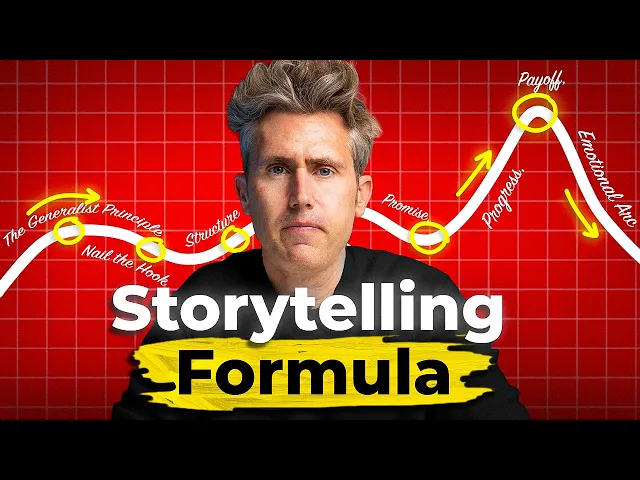
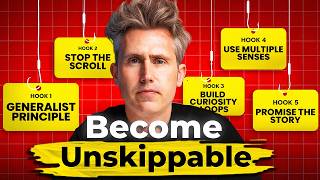
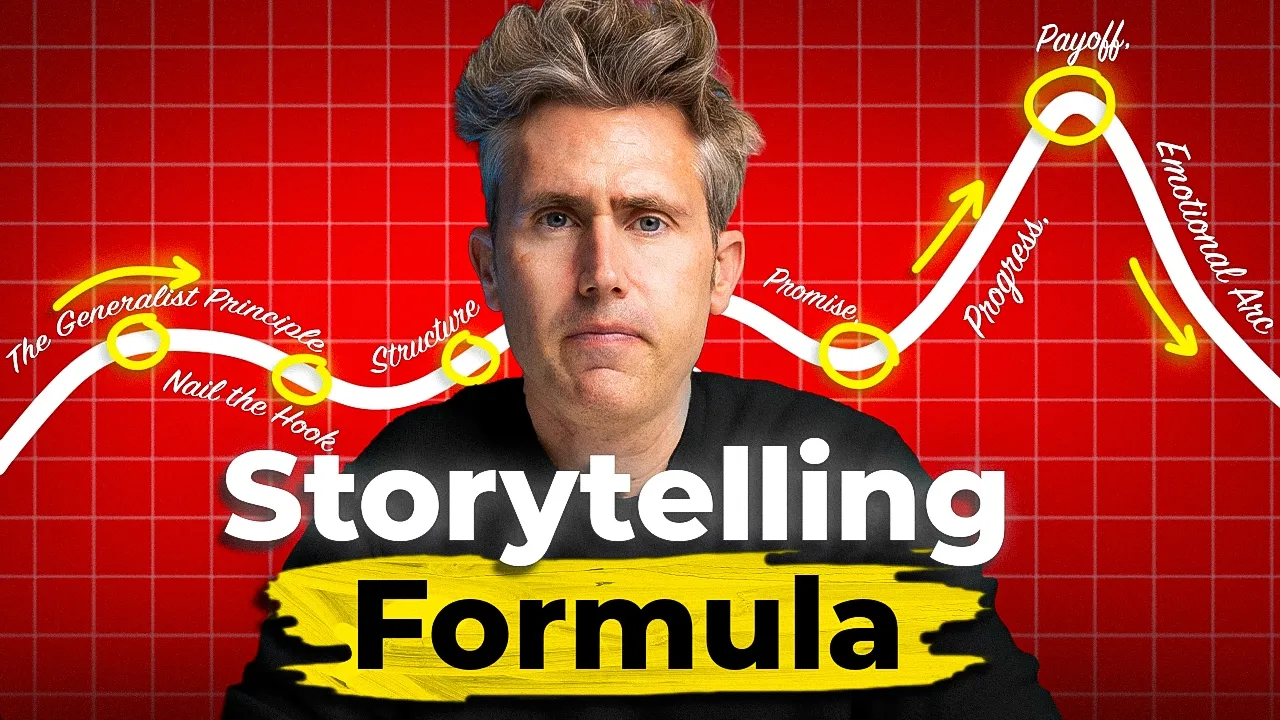
Instead, focus on what we at Hookpoint call the generalist principle. Most people end up niching too hard. They define an ultra specific target audience and create content only that narrow group would appreciate.
And while that sounds strategic, it usually backfires. platforms. They don't just push content to your followers, they also push it to strangers.
If your video only makes sense to a tiny group, it just won't travel. You're not giving the algorithm a chance to do its job. You end up becoming the inside joke that just nobody gets, and that it kills reach.
The goal isn't to go broad for the sake of it. It's to create content with clear, universal entry points. Something that still speaks to your niche audience, but also makes sense to someone who's never heard of you before.
So to truly go viral, your story must resonate beyond your niche audience. And this is where the general's principle comes in. This all comes down to framing.
You want to take your niche subject and present it in a way that the widest possible audience can relate to. In other words, make niche content universal. You don't lose your expertise or niche appeal.
You layer it underneath a broader theme. When we started working with Tanner Leatherstein, a small business owner and leather craftsman, he was creating videos specifically for people who are interested in leather. But his first video went viral when he discovered a format called, "Is it worth it?
" This showed Tanner breaking apart items bought from famous fashion brands and breaking down how much it would have taken the company to make and whether it was worth the money you pay for it. This opens up the question to a broader audience. His first video hit 1.
9 million views because people would tune in to find out if the biggest brands were lying to them. So start with a concept that speaks to your niche and then ask yourself, how can I connect this to something more familiar or relevant to a wider audience? That's what creators like Dr Mike does when he reacts to Grey's Anatomy.
He's not just talking about medicine. He's tapping into a show that millions already care about, then asking, "Is this actually accurate? " Each of these examples take niche expertise and ties it to a broader curiosity gap.
They hook viewers in by triggering a question that they already want answered. Now, a recent study on curiosity and consumer behavior backs this up. When people feel a knowledge gap, they're far more likely to keep watching to resolve it.
So, don't just think about what you want to say. Also, think about what your viewers already wondering and then build your hook from there. Remember, it wasn't the fact that Tanner was a leather craftsman.
It was because the audience were wondering if they had been ripped off. And that is what got people interested in watching. It's all about creating that compelling hook.
But what separates a good hook from a bad one? Think of the hook as the gateway into your content. We live in a scrollhappy world.
If your hook doesn't stop someone in their tracks as they're scrolling within the first one to three seconds, well, the rest of your story, it might as well not exist. So, how do you actually craft a magnetic hook? Well, we just talked about the power of curiosity, but that's only one half of a strong hook.
Now, there are two core ways to pull someone into your content. Number one is curiosity, and then number two is the promise of value. So, let's start with curiosity.
This is all about creating what's called a curiosity gap. The space between what your audience knows and what they want to know. Now, great storytellers keep that gap open just long enough to keep people watching without frustrating them.
Now, in practice, this means hinting at the payoff without giving it away too soon. So, for example, you might say, "By the end of this video, you'll know that one framework that can help your content go viral. " That line tells the viewer there's something valuable coming, just not yet.
That uncertainty keeps them watching. Now, author Lee Child, best known for the Jack Reacher book series, uses this technique in every single novel that he writes. He poses a gripping question in the opening pages and withholds the answer until the very end.
That underlying mystery drives the entire story forward. You also see the same technique in Steven Bartlett's content. He may open with office versus remote, where do you stand?
Or every successful person I know does this. Now, these hooks don't just state facts. They create questions in your mind.
What does every successful person do? Where do I stand on that issue? Now you're a part of the conversation.
Another master of this is Jenny Hoyos. In one of her YouTube shorts, she opens with McDonald's banned this item, so I made it at home. She follows that with a quick tease of the ending, raising the stakes even further.
And that's all within just 5 seconds. Next, let's look at a second way to hook your viewer, the promise of value. At the beginning of any piece of content, you must set expectations for the payoff.
It can be explicit or implicit, but it needs to be there. If you fail to set up a promise, viewers might enjoy the ride for a bit, but then wonder, why are they actually watching? So, make the stakes and rewards clear early on.
Take a Mangazi's viral YouTube video for example. He opens up by saying, "Here's how I made $1 million by the age of 18. " That one line instantly tells the viewer what they'll get if they stick around.
There's no guesswork, just a clear, highstakes payoff. Now, when you lead with a compelling promise like that, you give your audience a reason to invest their attention. Without it, even a great piece of content can fall flat.
At Hookpoint, we've generated a five-step method which allows us to create viral hooks. It goes like this. First, we study what's working.
I always begin by studying content in and outside my industry that has massive high engagement. I'm searching for videos or posts with millions of views or likes. The idea is to identify content that has already hooked the audience successfully.
This datadriven approach is about understanding the patterns behind viral content before I even create anything myself. Why reinvent the wheel if you can learn from what's out there already? Next, I look at qualitative elements.
We're talking things like tone, pacing, the presence of a question. Now, let's say that many viral clips in a niche use a mythbusting hook like you've been told X, but here's why that's wrong. If that element works, I'll consider using a similar approach.
Once I have a bunch of examples, I analyze them to find common threads. For instance, maybe I notice a lot of top performing videos that start with a shocking statistic or a personal confession or a big what if. Now, it's time for the third step, brainstorming my own ideas for hooks.
By using those successful elements as inspiration, I consider my audience and the message I like to present and consider how I can package it with a hook that fits one of these proven elements. For example, if I'm in the fitness industry and I saw that question hooks do well, I might craft a hook like this. What if I told you that 90% of your workouts are wasting time?
Or a bold statement hook like this. This is the reason your glutes aren't growing. Try this instead.
The key is that I'm not guessing blindly. I'm ideating based on the elements I know work. Once I've generated at least 20 solid ideas, then I move on to step four, which is choosing the single idea that I'm going to produce.
Now, it's important not to muddle your content with multiple big ideas or hooks at once. One hook, one piece of content. Finally, we test and learn.
Once the content is out or even in a small scale test group, we review the performance. Did the hook do its job? Now, the primary metric here is the audience retention in the first 3 seconds.
We rinse and repeat this process to ensure that we're delivering a great hook. This covers the first few seconds, but how do you keep the audience watching right through to the end of the video? Now that you've got your audience's attention, well, how do you actually keep it and deliver a satisfying story?
The answer to this lies in the structure. While we might not know it, us humans crave structure in stories. We've been consuming that for so long that our brains are literally wired to look for patterns and progressions.
When a story flows logically from one beat to the next, it feels rewarding. When it's disjointed or aimless, we feel uneasy or bored. So, what is the structure that works?
Now, I want you to think about your favorite movie or novel. Almost all of them follow the same version of the three-act structure. In act one, we establish the world, the characters, and inciting incident, which is the problem or the goal.
Then in act two, we see rising action, conflicts, challenges, twists. The stakes get higher. This is the progress and the struggle.
And then in act three, we get the climax and the resolution. the problem is resolved and we get the answers to all of our questions. This structure has been around since as long as we can remember.
That's because it resonates with the way that we as human beings process stories. The brain finds comfort in this progression. Setup, struggle, resolution.
It gives us a sense of rhythm and completion. Hollywood screenwriters often break down the three acts into even more granular beats. Now, there's a famous book called Save the Cat by Blake Snyder, which maps out 15 specific beats from opening image to finale.
Then, there's also Dan Harmon's story circle, a simplified eight-step story structure used in everything from sitcoms to viral videos. It goes something like this. A character, they're in a zone of comfort, but they really want something.
Then they enter an unfamiliar situation, adapt to it, get what they wanted, pay a significant price, return to comfort, having changed. Now, these aren't just steps for fiction. They're powerful for content, too.
When your video follows summer beats, setup, tension, change, payoff. It keeps viewers engaged from start to finish. It's not about being cinematic.
It's about telling a story that moves. Now, a lot of social media and business content ignores story structure and it shows. Ever watched a webinar or a video that just seems to ramble on or a piece of content that seems to go into circles?
You end up confused or zoning out, right? Well, that's because our brains are subconsciously waiting for the structure that isn't there. Even in a 60-second Instagram reel, structure matters.
In fact, shorter content needs structure even more because you have no time for tangents or fluff. Now, the good news is that structure it can be simple. Now, at Hookpoint, we've developed our own storytelling structure, which I'm going to break down for you using Dylan Pa's viral video.
Africa is splitting apart. He starts with a visual and verbal hook, showing us a mysterious crack in the ground with people around it while saying out loud that there is an apocalyptic vibe about what is going on. This prompts audiences to ask questions as to how the two connect because the apocalyptic event implies that well, we're all going to be affected.
But he doesn't leave people hanging for long because the next step is to provide context and bring us back to the beginning of the story, which Dylan does perfectly by telling us that scientists believe that Africa might be splitting apart. He gives even further context on the fact that this has been happening for millions of years. Then he moves on to the next point which is throwing in a second hook or twist that introduces us to a new part of the story.
In this case, he mentions that in millions of years of time, this could create an entirely new ocean. At this point, the audience will still be wondering why all of this is happening. That's when Dylan moves on to the fourth stage of the story by revealing the answer and explaining the science behind why this is happening.
To finish up, he tells us the exact rate it is supposed to be splitting and ends with a tongue-in-cheek line that suggests that it's a lot more than it sounds, leaving the audiences with something to discuss. The story is built on real world facts, but it follows a dramatic arc that makes it impossible to click away. That is the power of using storytelling beats, even in educational or news content.
Even if you didn't consciously realize it, your brain just experience a full story cycle. You feel the satisfaction as the viewer of seeing a problem resolved and a question answered. So, how can you use this in your own content?
Well, you can be as detailed in your plan as you like, but it's really important that your video contains these three sections. First, you need the setup. Hook them in and introduce the situation or question.
Now, we've already been through this in detail if you're making short form, but in long form, this section can be used to build upon that problem and increase the tension. Next, you'll have to show the journey. This is where you deliver on the hook's promise bit by bit, introducing obstacles or insights.
Then, keep things moving and related with no random off-topic digressions. Finally, you want to have a moment of payoff. Answering the burning question, reveal the outcome, give the lesson learned, or the result achieved.
But if you want to get even more granular with your storytelling, you're going to have to understand the most important rhythm in storytelling. We've got the attention with a hook. And we've structured our story with solid beats.
Now, we need to talk about momentum. So, how do you keep your story engaging every second along the way? Well, this is about ensuring that there is no dead air, no dull moments.
There's a famous quote by Kurt Vonagget that I absolutely love. It says every sentence must do one of two things. Reveal character or advance the action.
Now, Vonagget was talking about writing fiction, but it absolutely applies to any form of storytelling. In our context, every sentence and every shot should either add information, give insight, or move the story forward. If it's not doing that, consider cutting it.
I know it's brutal, but it's necessary in an age of short attention spans. So, think of your content as a tightly wound coil, always springing forward. The moment it slackens, viewers, they slip away.
Now, best-selling author and record-breaking Kickstart campaigner Brandon Sanderson likes to understand what the purpose of each of his scenes are. He likes to know what payoffs he will be presenting and then go back to ensure that he is offering a decent payoff. But the journey in between needs to feel like progress.
YouTube script writer George Blackman often points out that we shouldn't starve the audience of payoffs. He likes to break down content in many payoffs, progressing through one curiosity gap at a time as he makes his way towards what he calls the grand payoff. To connect this with a bit of science, Stuart Firestein, a neuroscientist, has a great perspective on the value of questions.
He said in science every answer should raise new, smarter questions. that science never solves a problem without creating 10 more. In his words, the answers that really count are the ones that generate new questions because it's really the questions that it's about.
I find this so relevant to storytelling. When your story answers a question, it should spark the next curiosity that keeps audiences engaged and thinking. It's the questions that drive their interest forward, not just the answers.
We enjoy getting an answer, but what truly keeps us watching is wanting to get the next answer, which means we should always be planting the next question as we deliver an answer. So, how can you ensure that your content hits the right beats during every second of the video? Look through your script or your edit and ask yourself, does it do any of the following three things?
Number one, promising. This doesn't just happen at the start. You make big promises at the beginning, but also throughout your content.
You can make smaller promises or reminders as the story progresses. Now, these are little hooks and setups that keep people interested. It's like planting a mini mystery or objective constantly.
Number two, progressing. In the middle of your story, you need to show that things are moving along. If it's a narrative, the character should be taking action, overcoming a mini challenge, or learning something.
If it's informational, you should be building on top of your points, not repeating yourself. Both visually or narratively, something should be changing. Even a simple progress indicator can signal to the brain that the story is advancing.
Progress gives a sense of momentum that things are happening and we're headed toward that promised payoff. And number three, paying off. These are the moments of revelation or reward.
Crucially, you shouldn't just have one payoff at the end. Scatter a few along the way. For example, in a video about five tips, each tip is a payoff of its own.
You promise value and then you deliver one valuable tip at a time. Or in a story, perhaps there are multiple reveals. One piece of information creates another question, which when answered creates the next question, all leading up to that final moment.
But once you've mastered all of this, it's time to add in the heart of great storytelling. This is the element that truly separates forgettable content from unforgettable content. In business especially, it's something that we sometimes shy away from thinking that we should be all professionalism and facts.
Well, that's a mistake because in order to truly connect your content with the audience, you need to elicit an emotion within them. Emotion is the fuel behind the structure that we discussed. It's what truly gives your story power.
But why is emotion such a critical factor? Well, when you tell a story that resonates emotionally, you aren't just conveying information. you're actually lighting up the listener's brain in a unique way.
Research has shown that when we hear a compelling story, our brains release oxytocin, often called the empathy or trust hormone. Oxytocin makes us feel connected to the people in the story and the storyteller. It's the same chemical that bonds mothers to babies.
In a story context, it bonds your audience to you. Additionally, neuroscientists have found that listening to narratives can cause a listener's brain patterns to synchronize with the storytellers. In other words, a great emotional story literally gets the audience's brain in sync with your brain.
If you describe a frightening situation, the parts of their brain that process fear light up. If your story has a joyful triumph, their brain's reward centers activate. Now, when I say emotional arc, I mean the journey of feelings that guide your audience through from the beginning of the story till the end of it.
Just like a plot has a shape, so does the emotional experience. Great storytellers are very intentional about this. When crafting your business story, aligning it with a clear emotional arc can significantly enhance its impact.
Take Ryan Tran's ventures into the candy industry with Joyide as an example. Instead of shoving the brand into your face, he has inserted moments in his video that integrate perfectly with the story itself. Now, as the viewer has already connected to Ryan through the content, the second he starts describing his emotions behind the chance to eat one of his joy ride sweets, he makes you tempted to buy some as well.
Now, this doesn't feel like marketing as it's a part of something much bigger, and as a result, it is far more effective. Now, just like Ryan, you must also make a deliberate choice about emotional beats. One of the simplest emotional arcs is triumph over adversity.
It's timeless. You start with a challenge or pain so the audience feels worry or empathy and end with success or solution so the audience feels relief and triumph. That contrast makes the ending emotion much more potent because it sets up the initial emotion.
So if you want the audience to feel inspired, show them some despair first so that inspiration at the end is earned and meaningful. In practice, whatever emotion you want them to feel by the end of the story, have them feel the opposite at the start. So to ensure an emotional arc, I often outline it like this.
At the start of my story, I want the audience to feel X. Midway, I want them to feel Y. And at the end, I want them to feel Z.
For example, X equals shocked. Y equals intrigued or empathetic. Z equals motivated.
Then I craft the content to hit those marks. So, you might even explicitly say these things that cue emotions such as, "I was devastated," or "This terrified me. " Then later, "I couldn't believe what happened next.
It was like a miracle. " Finally, it goes to show that if you persevere, you can overcome anything. By planning it, you're more likely to actually convey it.
But beware of trying to fake it. Authenticity is key. The emotions, they have to be genuine.
Audiences can sniff out force sentiment. So, even if you're adding storytelling flare, make sure it's rooted in truth. One technique I found useful is to focus on personal anecdotes or analogies that carry emotional weight.
Data is important, but wrap that data in a human story. Instead of 25% of our clients see X result, maybe share one of the clients personal stories with ups and downs. People extrapolate the data themselves because the story of that one client, it just felt real to them.
By mastering the emotional arc, you will then transform your stories from fleeting to timeless. And once you've nailed this, you are ready to unlock some of the greatest virality secrets I have found that will explode your business this year. Now, you can find them in this 29minute presentation where I dive deep into some of the best things that I have found to work in my 20- yearlong career.