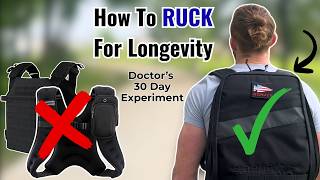
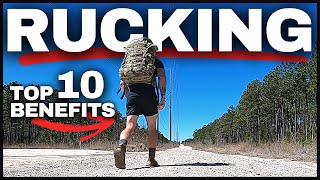
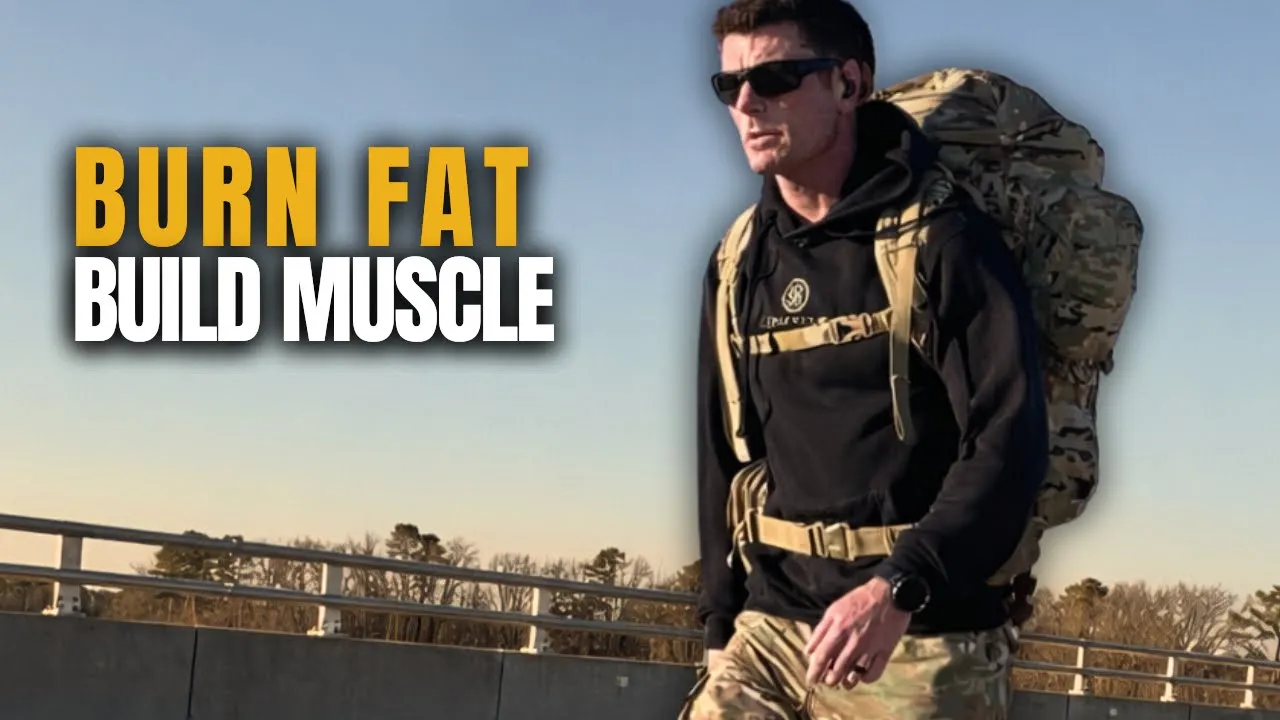
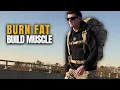
rucking or getting in some mileage with some additional weight strapped to your back. Maybe you're using a weighted vest so it's the weight's a little more dispersed evenly, not just on your back. Doesn't really matter how you're doing it, but you're getting in some mileage and you're doing it with some extra weight strapped to you somehow.
That's rucking. This is not a new thing. This is not a new concept.
Human beings have been rucking ever since the dawn of time. Ever since we were able to stand on two legs and have our arms free to be able to carry things, we have been doing just that. That's really what makes a human being so much different from a lot of other uh you know animals out there is that we're able to move and carry a substantial load at the same time.
And we can do it for a pretty uh long distance. We can do it for a long time. We have excellent endurance.
You got to think back to the times of even hunter gatherers. You know, the hunters that were going out, they would stalk their prey. They'd run down their prey.
A lot of times they'd do it until the prey just gave out. And we were able to keep going. They'd kill their prey, and then they'd have to get their prey back to where they're going to prepare it and eat it.
They have to carry it back. It's the same thing with gatherers. They'd go out, they'd gather a whole bunch of food stuffs, and they'd carry it back to where they were going.
Back in the day, you know, mothers, they used to carry their babies everywhere they went. Now in modern times, we've gotten a little more laxidasical about carrying things. We have strollers, we have cars to get us around.
We have scooters. We have all these things to make it a lot easier for us so that we're not having to carry any weight with us unless we want to essentially, right? To me, in my belief, I think that's one of the reasons why humans are losing a lot of endurance, are losing a lot of bone density.
Testosterone levels are going down. They're losing strength, and they're getting fatter. And all that is because we're just not carrying as much weight as we used to.
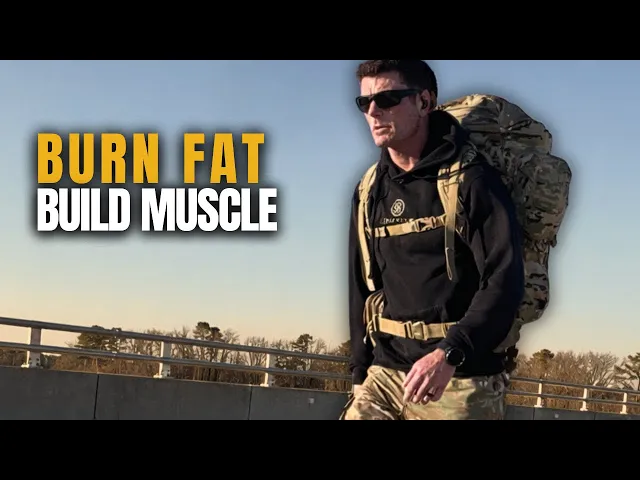
And so, that's why rooking is a perfect exercise for really anybody to do that is able to do it. As long as you don't have some sort of lifelong injury that prevents you from moving around, you can do this. Rucking is one of the best exercises you can do to burn fat and build muscle mass.
Believe it or not, you're probably wondering, "Well, I understand the burning fat thing because you're going out there. If I was just walking or running, I'd be burning fat. " So, of course, if I have a little bit extra weight, I'm going to burn fat.
You're going to burn more fat with some extra weight on you as as opposed to if you were just walking or even running or jogging. but it absolutely builds muscle as well. This is because the added weight that you're carrying is adding resistance to your muscular system as you're out there getting in your mileage.
It's making your legs work harder. It's making your core work harder. It's making your shoulders work harder, your back work harder.
A lot of parts of your body are actually getting a good strength workout in at the same time as you're getting in some good cardio. I'm not saying that rucking itself is going to replace uh hypertrophy training in the gym. I'm definitely not saying that.
You're definitely going to see more strength gain if you're out there banging steel. But if you're somebody who is worried about losing any already acquired muscle mass, maybe you're a gym person and you don't want to get out there and get in cardio cuz you're worried you're going to lose your gains, even though it doesn't quite work like that automatically. Rucking is one of the best things you can do to help yourself burn a little extra fat but sustain those gains that you have.
And if you're somebody who's a little bit more on the skinny side and you're looking to to build up some extra strength, some extra some extra muscle, some more endurance, rucking is going to be perfect for you. And I'm not just making this up, guys. This is backed by research.
There's tons of studies out there. There was one study uh more recently where they sent out like a dozen guys out to go backpack in the Arctic cuz they wanted to see how much fat they would lose, how much muscle they would lose. They went out there for I don't know, it was like a week or so.
Came back and of course they lost a whole bunch of weight, but the majority of the weight was fat loss and they actually sustained more muscle than what was expected. And traditionally that wouldn't have happened. If you would have sent somebody out there to do a whole bunch of running with no extra weight on their back for the same amount of time, same amount of incline, same weather conditions, all the same thing, they would have absolutely burned more muscle.
They would have definitely burned fat as well, but they would have burned more muscle as opposed to as if they were using some sort of resistance to tell their bodies to sustain the muscle that they already had because they're going to need it so they can carry the weight. You might have heard before in the past from others, especially some, you know, old broken down veterans, that rucking just destroys you. It's bad for your knees.
It's bad for your back. It does nothing but cause injuries. That's absolutely not the case.
It's a completely uh misguided statement. It is true that rucking can cause injuries just like anything else. Just like any other exercise you can think of, there there is a risk of injury.
It's especially true if you're not performing the exercise correctly and safely. And with rucking, the most important thing to do is to start light and really never go too heavy. The problem that we see is with especially soldiers, you know, they get thrown into this exercise of rucking pretty much from day one and they're carrying way more weight than they ever have in in the past.
And so they're just breaking their bodies down because they weren't ready to take on that weight in the first place and they didn't build up to it. What if you had somebody who had never performed a deadlift before in their life? Maybe they're not even strength training, you know, maybe this is like the first strength training exercise they've ever done.
And they get up to the bar and and the trainer has loaded it up with 400 lb and they said, "Do this deadlift or else. " Like, they have to do it. So, they do the deadlift to the best of their ability.
And maybe they somehow miraculously pull it off, but they've probably done it with very bad form and they've probably pulled something. Hopefully, they didn't break something, right? But that wouldn't be like the best case scenario.
That's exactly the same with rucking. You don't want to go out there and strap 100 lbs on your back for the first time. you're just begging for injuries doing that.
So, this is what you really should be doing if you're just starting out rocking or if you've been rocking and you've noticed that it just kind of hurts more than it should. The best thing you could do is just start light. Start lighter than you even think you have to.
That way, you can become accustomed to this activity. You kind of know what you're working with. You know what's going to hurt you and what's not going to hurt you.
And when I say light, I mean start off, doesn't matter what your weight is. Start off with like 10 lbs. Just go out there and put in a few miles and see how it feels.
You'll be able to adjust the ruck to yourself. You'll be able to see if you need to get some better footwear or not. And you'll be able to feel if there's any pains that are showing up anywhere, if you're flaring up, if you're getting swollen anywhere that you know you might need to dial down the mileage.
But if it's perfect for you and you're like, "Dude, that was way too easy. " Then amp up the weight. Amp up the mileage.
Just do it in increments just like you would with strength training, just like you would with running, just like you would with anything else so that you're doing it safely and you don't get injured. And if you really are just looking for a hard number, this is sort of like the golden rule. And that is don't rock with anything more than a third of your body weight.
That should be more than enough of a starting point for you. Honestly, I still think that could be a little high for a lot of people out there, especially those who have never rubbed before. I would say go a little lower than that.
But, you know, if you have some endurance experience, I'd say you're more than safe starting off with that sort of weight. So, if you're looking for an exercise that's going to help you burn fat and gain muscle at the same time, or at least preserve muscle, this is the one. If you like the video, make sure to hit like to let me know that you like the video.
Make sure you subscribe. Cost you nothing. Helps me out tremendously.
Besides that, I've got nothing else for you. And I'll see you on the next one.