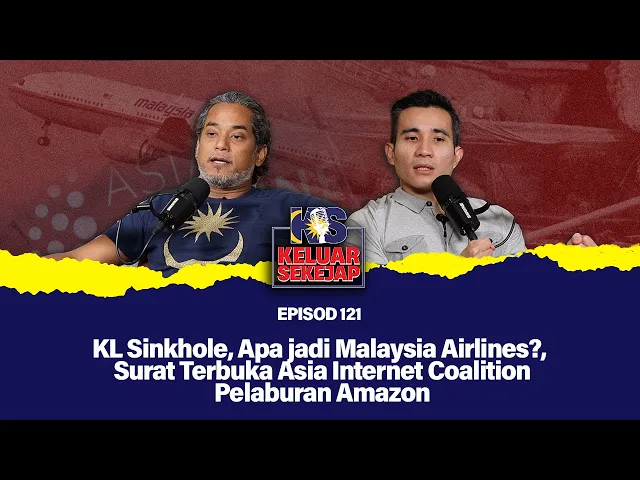
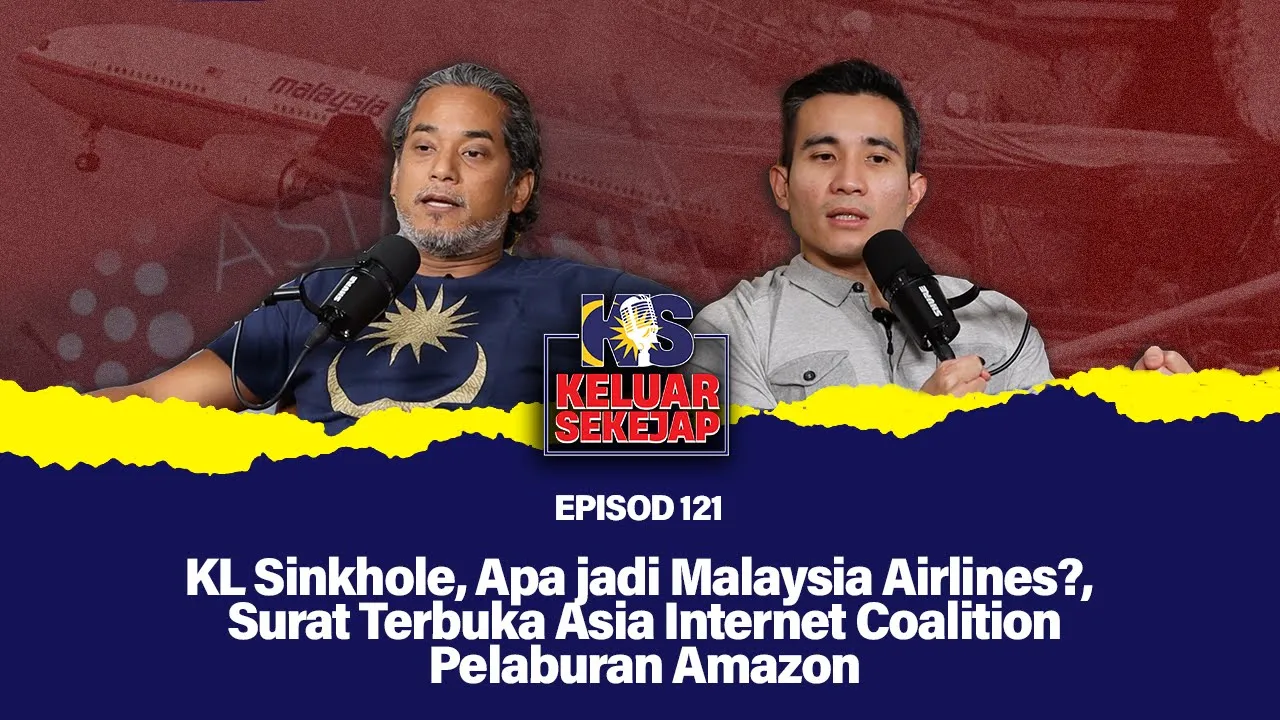
Whenever something bad happens in Malaysia, I always like to look at the media coverage in Singapore. Why did KJ do that? Because KJ knows what KJ will encounter. Why do you look for something that will piss you off? Because I'm competitive, and if given the opportunity, it's destined that one day I will become the Prime Minister of Malaysia. Merdeka, merdeka, merdeka Welcome to Episode 121 Recorded on Independence Day, National Day. Shahril, Happy National Day. Happy National Day, KJ. What are Shahril's views and feelings about our country's National Day this year? There must be some reflection.
Now, at this point in my life, not quite forty yet, but almost, and as a father, this Independence Day has a slightly different meaning, KJ. Because I'm trying to instill the stories and values of our national independence in my daughter, who's only six years old. So, she's just starting to grasp the concept of a nation-state, things like that. I think she can learn that at school, But it's also good that it comes from her parents first. So, before I am a father, we just thought of Independence Day as self-reflection. Now, there's perhaps a different responsibility
for me. Yes, and has Shahril taken your daughter anywhere this year? I didn't take her out today, but this is the second year she's sat in front of the TV and watched. I'm quite strict about TV. I don't really let my daughter watch it. But there are certain dates, of course. Her birthday and Independence Day are two days she automatically gets to watch TV. Because I want her to watch the parade. And one day, God willing, I will take her. God willing. Last year, I took Raif to the National Day parade in Putrajaya. And this
is my youngest son. He also had a special experience that day. Every Independence Day, Shahril, I try to think about the identity and origins of our country. I'm an amateur historian. I didn't study history at university, but I like history. And we'll discuss this later. Some of the comments on the last episode with Dato' Sri Ismail Sabri said, "Why discuss old things? Just move on." But that means you may not love or appreciate history. That's why I like history. I like to look back at history and to find the origins of our country's identity. And
for our country, Shahril, the 31st of August, 1957, marked the independence of the Malay Peninsula. And independence was declared by the late Tunku Abdul Rahman. I like to look at the lyrics of the national anthems of sovereign countries to understand the origins and, you might say, the DNA of a country. And when we look at the lyrics of "Negaraku," which is the national anthem, the Malaysian national anthem, And at that time, the anthem of the Federation of Malaya, which line or verse is your favorite, Shahril? Our anthem is special because it's not long compared to
other countries. Sometimes when we watch the Olympics, there are some long ones, right? Our national anthem is compact and simple. "The land where my blood was spilled"? Yes, I thought you would say that because "the land where my blood spills" is visceral. It means the land where my blood is spilled is the most deeply felt. And then it follows up with "the people living united and advancing." Aspirational. We are united, and we will progress. It ends with "our king safe on the throne." If you look at that, it encapsulates where we place our king. Our
king doesn't rule, but he reigns because we have the rule of law. So, but my favorite is "the blessing of God's grace." Because—I want to explain why, Shahril. Because as I get older, like Shahril said, as we get older, of course, we prioritize progress. But there's a reason why those lyrics were chosen and written. That sentence, "God's blessed grace"— it means the grace of happiness is bestowed by God. God can bestow anything. He can grace you with anything. But He specifically graces us with happiness. Meaning—and this relates to economic development, Shahril, and you know this,
right?— economic development now has moved beyond just the material, beyond just GDP, to contentment and well-being. If we look at Bhutan, for instance, they don't talk about GDP anymore. They talk about Gross National Happiness. And the aspiration of the United States is also life, liberty, and the pursuit of happiness. So, I always go back to that verse, that God has bestowed happiness upon us. And how do we find a way to ensure that happiness is maintained? The pleasure of happiness is maintained and also enhanced by our efforts. So, coming back to the DNA of our
country. The DNA of our country, actually, because Tunku Abdul Rahman, may he rest in peace, he always said, "I want to be the happiest prime minister." And we don't really understand what it means to be the happiest prime minister. Are they jolly people, who like to enjoy themselves and so on? But I think he meant more than that. I think he meant that the progress and also the unity that exists in this country must contribute not only to material success, but also to a heightened success— happiness, spirituality. And that's contained in, you know, arguably the
most important song of our country. I don't know, Shahril. Do you have any reflections on that? Hmm, this is a very meaningful reflection, KJ. I'm not a history expert either. And if I had to choose my favorite academic discipline, KJ, I think you know this, it's probably sociology. That's my bachelor's and master's major. And in sociology, it's not just about trying to tell how KJ tells the origins and so on, but deeper than that, we look at how the matter is accepted by the community. And if I can add a bit of— not that I
want to put a downer on what you just said, KJ, but it's worthwhile to extend this discussion. That, in Malaysia, the version that KJ presented earlier is one version. But perhaps what's more important for us to discuss briefly is how Malaysia's DNA is contested. Contested? What's the Malay word for that? It's not about competing, but it's never truly agreed upon. And that, in my view, is the problem or weakness of our national identity. Because KJ can share that version, and I think that's a very impressive and acceptable version. But there will be other parties who
say, "I don't know that version." Because the DNA of Malaysia varies according to each individual's perspective. And the other day, we'll talk a bit more about 'KS Lagi'. We have a new product. I have part of this KS recording. I brought on Tan Sri Nazir Razak. I think I can talk about it because I put it on my Instagram story. We went to the Tun Razak Memorial, KJ. And I listened to his— that was his perspective as the son of Prime Minister No. 2, a member of the independence generation, About the version and DNA of
Malaysia from his point of view. And maybe the issue, KJ, as I've mentioned, is that Malaysia doesn't have the courage to truly emphasize what DNA needs to be agreed upon by everyone. So what happens is that we become a country of compromise. And we try to avoid discussing things that are difficult, that are contested, that may be sensitive. And we avoid them, so it becomes a country of compromise, and the effect is, the implication is— we can maintain unity, we can maintain harmony God willing, Alhamdulillah. But the downside is we don't have a national myth
that everyone embraces. KJ used the United States as an example. "Life, liberty, and the pursuit of happiness," and maybe its cousin's version is the American dream. Supposedly, only in the United States can anyone come and achieve success. That's not even true. And if you look at the statistics and data, I don't think that's true at all. Other places are easier. But that's the myth they hold onto. And what other myth and DNA of the United States. They don't like the government, or a government that's too controlling. So, they don't like taxes. Even though they might
be at the bottom in terms of socioeconomics, They don't really like an overbearing, overtaxing state, right? That's the DNA of the United States. Although it can be debated whether it's good or bad, that's what the vast majority believe. In Malaysia, I can't explain what its DNA actually is. Hmm. Because everyone will say something different. If we tell people something, then they'll believe that's the DNA. I don't think so. And that's something that future generations may have to think about: how to break this dominance of compromise and move towards something more aspirational, more courageous, Something clearer
about what we truly want for Malaysia, and we ask all Malaysians to try to adhere to that identity or DNA. Is it compassion? Is it merit? Is it? What is it? I don't know if we've ever answered that question. Yes, I think Shahril's reflection is very interesting. And I know that Shahril is always expressing the situation in our country. It's not just a question of historical DNA, but also the current political situation, by using the statement or the term "compromise." As if we're forced to settle for something that might not be optimal. But maybe I
want to respond with an idea, Shahril. And maybe this idea isn't enough for Shahril's aspirations. Maybe this idea isn't comparable to the "shining city on the hill," as Americans think of their country. But maybe our DNA isn't compromise, but accommodation. And maybe the effort that Shahril mentioned earlier, which is truly introspective, searching for the other Malaysian history, the alternative views of history in Malaysia, can be made. But if we dig too much, maybe it will reveal a scar that's too deep. And maybe that's what we've become. You know, sometimes in the pursuit of happiness, we
acknowledge trauma. But sometimes in the pursuit of happiness, we also move away from the trauma. And we assume that, okay, there may be differences in terms of historical perspectives and so on. But if we continue to think about that, dwell on that, it won't lead to anything positive. Maybe. So, I mean, there are many ways of looking at this. I'm not saying your way is wrong and my way is right, or my way is right and your way is wrong. But maybe that's our DNA too. And I think it's still instructive for each of us
to try to maintain this happiness or pursue this happiness as a more comprehensive goal, one that's more well-rounded than just material gain. And maybe the last document where we ever tried to do this was the Rukun Negara. But it might need to be updated. I'm not saying the Rukun Negara is outdated or irrelevant. But it's a reflection of today's reality. How many people know about the Rukun Negara? How many people truly live by it? But Shahril, you know, documents like the Rukun Negara, even the national anthem for that matter, these are all documents, or these
are all creations that emerge from the political process. The political process and its terms are written by those who are in charge at that point in time. A national ideology like the Rukun Negara is written within the context of a specific political moment after 1969. I'm worried, Shahril, that maybe now, with the fractured political situation, those who are, as Shahril said, compromised, who don't have a dominant narrative and are polarized—very highly polarized— it's quite difficult for our country to agree on a document or a narrative Or a new vision. Even Wawasan 2020, which could arguably
be considered a document or an aspiration that was almost there. I mean, let's face it. Give credit to the late Tan Sri Noordin Sopiee, who actually wrote it, who wrote Vision 2020, which was announced by Tun Mahathir. That came closest to the Rukun Negara, but even that was contested. You know, it was contested, especially by the opposition and all that. So, that's it. I don't know whether we can land, as a country, on something in the future. Many successive prime ministers have tried it. Najib's TN50, right? So, in fact, you know, even the Madani narrative,
in some ways, is an effort towards writing a new narrative. Maybe, like KJ said, when it's brought about by the political process and political parties, it will always have limitations in that regard. And we don't have a space, or a civil society space that's wide enough to produce this kind of thing. In the end, civil society will meet with politicians and ask for endorsements. Or this civil society is only focused on the elite. The same people. The same people and a rather narrow issue. Maybe that's something to think about. And I think, lastly, I'll have—I
think in the comments— we need to elevate the national language. So that will be—I can guess that will be among the comments in this episode. Fair. I think that's one of the components, but it's not enough. I'm pretty sure that even if everyone speaks the same language, it doesn't necessarily mean we can dream the same thing, aspire to the same thing. So, that aspiration needs to be established one day. But we hope that the listeners and viewers KS, stay happy. And we hope that we will continue to enjoy the blessings of happiness Bestowed by God.
Yes. We want to comment a little about the last episode, which featured the former Prime Minister of Malaysia, Dato' Sri Ismail Sabri Yaakob. It received a warm, great, fantastic reception. It was one of the fastest episodes, according to Isa, our editor. One of the fastest episodes, a sprint. What are your thoughts on the feedback, Shahril? Because I know you were worried after recording the episode. You said it was a softball episode. What kind of ball is a softball, Bobby? A soft ball? I'm asking you about softball. A soft ball. A ball, okay. Softball. So, softball
means easy. Easy questions. This means that Shahril and KJ didn't challenge Ismail Sabri. But I don't think so, Shahril. Because we want to have hard-hitting conversations in certain interviews. For example, with whom do we talk tough? We're tough with Wan Fahysal. Maybe with Saifuddin Nasution we're tough. But there are certain things that we—it's not softball. But we want to extract. We want to extract. We want to extract. Like with Abang Jo, Ismail Sabri. We know if we get tough, he'll clam up. He'll get defensive. So, we had to juggle a little. What's your view, Shahril?
I was quite pleasantly surprised. Positively surprised. That Dato' Sri Ismail Sabri was more open in the interview. Maybe what KJ said is fair. The way we asked questions is because we know him. It makes it easier for him to reveal his feelings and also… I didn't expect that. Besides being worried about the softball aspect, I was also worried it would be, frankly, a rather boring episode. Before we did. Before we did the interview, I was worried that maybe Dato' Mail would just give standard, safe answers. I think he was braver than I might have imagined.
So, I was wrong there. More important than those things, I think it's also interesting, and why it got such good momentum, KJ, is that it was able to reveal the scenario of a Prime Minister under pressure, which people outside of politics and political circles may not know much about. I got some comments from even politicians of other parties who whatsapped me He said, I knew UMNO was having a difficult time, but I didn't know it was that bad. So I said, "Yes, I mean, one day I'll sit down and talk to you about it." But
many people don't know how serious the tension was between... What does he thinks about UMNO? He thinks it's just, you know, a show, or UMNO being on one side and covering for each other. But I said, "No, no, no. The split was very real." And it's also a reflection of my time in the Prime Minister's Office and as the Chief of Information in UMNO. So it was... you joked and said I was a reptile. But the more serious point, KJ, is that was a very difficult time for me. Because – not because of split loyalties
– because I really tried to achieve a successful outcome where the split wouldn't have to happen. And everyone could win. All win. And everyone wins. If not everyone, at least everyone in the party wins. But another reflection, if I'm honest with myself, is I think that was the moment, KJ, when it was very difficult to know what the right thing to do. Whether it was the EPF withdrawal that I rejected, even though Dato' Sri Najib wanted it, even though the Youth Leader wanted it. So I knew the party was going to criticize me. There were
moments I stood up for what I believed in. But there were also times when I gave in. And there were many things that the party did, or individuals did, that I didn't quite agree with. And maybe I didn't have the full courage. Giving in means giving up. Giving in means giving up. There was a time when I gave up. So I think back to why I gave up. And maybe I gave in, KJ, if I'm honest, because I didn't want to be rejected by those who would nominate me as a candidate in the election. So
I was driven both by sincere motivations and unholy motivations. And that is the truth about being a politician. There's no sincerity, or rather, not all politicians just want to do things that benefit themselves. He also has sincerity. I think I do have sincerity. But there's also an element of self-preservation. And maybe in 10 years, I'll look back and ask, "Was that the right thing to do?" "Was that not brave enough? Was I brave too late?" So all these are difficult questions that only I can answer. Other people can comment, but it's my answer to myself,
which I'm still processing. So that episode reopened that process, that episode. I read something my friend wrote. This is the mother of our intern, Maris Alina. She wrote, "This was one of the most difficult episodes to watch." She couldn't look straight. She had to take breaks. Because she was too emotional in the episode. And I'm the same too. I understand what she's saying. Because many people wrote that the episode was interesting because of the untold story, the behind-the-scenes look. Because Dato' Mail had never said this before. That was the first time he said it. And
I think he's holding back a lot too. Yes, he's holding back a lot. He's holding back a lot because he's still the head of the division, still in the UMNO leadership, and wants to maintain his relationship former Prime Minister of Malaysia. He is the former Prime Minister of Malaysia. So there's a lot he's holding on to. But you were there, I was there. We know how big the dilemma was, how torn he was as a person and as a leader. He knew what was right. He knew what should be done to restore UMNO's confidence, to
rebuild UMNO, and so on, for the stability of the country. But he was also torn by his loyalty to the party. You know, I think he was pained to say he was loyal to the president, loyal to the party. So, when he had to do what he did at the end of the day, I don't think it's fair because he was the one who was brought to that point of dilemma, to the horns of the dilemma, and he chose the party. And then, at the end of the day, it cost him everything. You know, he
sacrificed everything, and he lost everything. As we said in the episode, he could have done it. He already had the knife; he could have stabbed, he could have gone for it. He chose not to do it. He said it was because of loyalty, you know, and we accept that at face value. And finally, you know, having reached the level of Prime Minister, he lost everything. And because of that, he has already faced an effort from the winner – the winner of the last election – to erase him from Malaysian history. You're talking about the winner
within UMNO, right? Within UMNO and also UMNO's allies in the current government. I don't think there's been a kind word said to Ismail Sabri or about Ismail Sabri. Mainly, mainly. And when we... They haven't really gone after him the way they've gone after Tan Sri Muhyiddin? No, no, but there's no acknowledgment, no recognition. In fact, I received the same message from Shahril. With Shahril, from Kian Ming, who said this episode is good because many people don't know how important Ismail Sabri's role was in stabilizing politics by trying to establish a confidence and supply agreement or
a joint agreement with the opposition at that time. So, maybe, I think on a different level, I look at what happened to Pak Lah as well, and I don't want that to happen to Ismail Sabri. That's why, that's why I think that episode is Quite important for us to establish as a historical marker. At least it's an effort from KS to convey a perspective on history that may be different from the dominant narrative today. And let the audience decide for themselves which one is accurate, or which hybrid to accept. But I think Mail is clever
too. I think he came prepared with that killer line. At the end? No, the killer line wasn't that. "It's better for people to remember me as a good person than a bad person." I think he had that prepared. Do you think so? Or do you think it was spontaneous? Because out of all the things he said, that's the sentence that came up in the comments that got the most votes. I see, okay. One favorite line. So, one thing about Dato' Mail is, like you said, his poker face. We don't even know if it's spontaneous or
if he planned it. And that might be his style of politics. You don't know. People joke that he's an accidental prime minister. But how accidental was it? You know, you don't know how accidental it was. Maybe he planned it for a long time, and we were just negligent. So that's one of his characteristics. It looks like he stumbled upon things, but we've also seen, we've seen certain things that indicate he has a bit more of a killer instinct than he appears to. Absolutely. So, if you haven't watched or listened to the episode with Malaysia's 9th
Prime Minister, Dato' Sri Ismail Sabri, Shahril and I highly recommend that you listen. Even though it's long, it's something that's never been mentioned or known by the public. Shahril, before we go to a break and start with the discussion of current issues, maybe you want to talk a little about our new development, which is the second platform that we'll launch in maybe a month or two, which is KS Lagi. I heard you've already started recording KS Lagi. KS Lagi is a lifestyle media platform, or a non-political platform from KS. And this doesn't really feature K
and S together. We do things on our own, but with guests and other personalities, and we're in the process of recording right now and editing so that when we launch later, there will be some videos Ready for everyone to watch. Maybe you want to talk a little about it because I haven't done anything yet. You've already made two or three videos, right? I've made two videos. I've made two recordings with two guests. We don't need to reveal the format of the recording – let it be a surprise when it launches – but the two guests
I've recorded with are Tan Sri Nazir and Datuk Kamarul Muhamed. Datuk Kamarul is the founder of Aerodyne. Aerodyne is a Malaysian company that we're proud of – a drone and data company. And both of them shared the more casual side of their lives. But there were also some serious discussions, KJ, especially with Tan Sri Nazir. There are topics about his family which I'm sure will go viral or be seen by many. So, two episodes have been recorded, but we haven't decided when to upload them yet, and they're in the production process. KS Lagi is different
from podcasts. Our podcasts are more or less recorded directly and can be uploaded the next day. But for KS Lagi, it's more produced content, right, KJ? So I'm sure you also have a plan. Do you want to share a little hint about who you want to chat with and what kind of personality they have? Yes, I'm also in the process of inviting some personalities to interview. Maybe Shahril has taken steps to approach the corporate world first. Maybe I went to the world of sports because the Olympics just ended. ...and also the personalities from that world.
And there may be more to highlight, but we have to be mindful because we don't want this to get too serious. I was also intrigued by what Shahril mentioned earlier: Tan Sri Nazir is the son of the late Tun Abdul Razak. So maybe the hint Shahril gave is that the story that will go viral is about... Burger King, BK, Tan Sri Nazir's older brother, right? Is there something there? Maybe. You could say, "I couldn't possibly comment." We look forward to the story about Burger King. Okay, let's take a short break and we'll be right back.
Welcome back to episode 121 of KS, recorded on National Day, Independence Day, August 31st. We hope that you all have organized celebrations or have spent time with your families to commemorate our nation, our nation's happiness, our nation's progress, and our nation's unity on Independence Day in 2024. AIC. AIC was once known as Anwar Ibrahim Club. I'm not sure if Shahril still remembers AIC. Yes, yes. During the Reformasi era, there was AIC, the Anwar Ibrahim Club. Black, right? Orange and black shirts, AIC. there was an AIC at the university. But now, Anwar no longer needs AIC
because he has become PMX. So, AIC was taken over by a new entity. Who is this AIC? Asia Internet Coalition. Okay, who is it? A trade association, basically a lobby group. Co-founded by eBay, Google, Nokia, Skype, and Yahoo. In 2010, a long time ago. AIC lobbies government agencies, addressing public policy issues to facilitate the development of the internet economy in the Asia Pacific region. That may be its formal description, but basically, it's a lobby group for the interests of these companies. And we hope that the interests of these companies, for the most part, are also
the Interests of the digital economy for Malaysia. Maybe Shahril can explain because Shahril involved in this world now. What is the role and business of a lobby group? What do they do? What is this lobby group? Is it a group that hangs out in the lobby of a hotel? Maybe that's the origin of the term "lobby group." I guess so, right? They're in the lounge. In the lounge to try to influence policymakers. That's why it's called a lobby group, perhaps. Maybe if we're wrong, people can correct us. But I think these groups come in different
forms. There are some like AIC. There's also the Chamber of Commerce that sometimes represents companies from a specific country or from a region. There are also local associations. We have a formal National Chamber of Commerce. That is also broken down by race. We have DPMM. Dewan perniagaan Melayu Malaysia Chinese Chamber. Before people get angry at political parties based on race, first ask how the Chamber of Commerce can be based on race. So, there's that. Are they doing pro-bono work? They must pay their staff. So, where does the income come from? Their income comes from the
members of the industry. By becoming members of the group. So, AIC will get money from Google. They will get fees. There are many associations like this. The reason we want to discuss the AIC issue today Is because it is related to the issue that we in Keluar Sekejap have already discussed previously. That is the government's plan to require social media companies to apply for a license and be regulated more strictly under Malaysian law. So, these social media companies are members of AIC. So, AIC wrote an open letter. First, they wrote an open letter that seemed
vulnerable on August 23rd. Then there is a second version on August 26th. They said there's a third version as well. So, two or three versions, The issue is that they have released an open letter that is displayed on their website That rejects and criticizes the plan. Their second issue is the essence of this letter, which we will discuss later. In the first version, many companies were signatories to this letter, including Grab. So, the story is that after this letter came out criticizing the government's plan, rejecting the government's plan, Grab suddenly released a statement saying that
they weren't even consulted for the writing of this open letter. Then the second version came out where only a few companies remained. Who are those companies? Only six companies remain in the second version. Google, Meta, Facebook, Amazon, Apple, LinkedIn, and X. X, Twitter. So, only these six companies, these Western companies, are members of this written letter. So, this AIC statement has received a strong response from SKMM, from the Minister of Communications, who basically said that the implementation will continue to ensure that the government's proactive measures protect the interests and safety of users. Because, like we
discussed KJ, government's rationale, which we can discuss it after this because there are many issues of cybercrime, the issue of crimes against children, the issue of incitement that may need to be regulated more strictly. The social media side, AIC, said, "Let's discuss it with us first, and don't make this licensing requirement because it constrains innovation in the digital economy." So, basically, that's the story, KJ. What do you think? Are the points they raise fair, or do we have to support the government? Yes, I have been following the issue related to the Asia Internet Coalition very
closely, and I found that the response from the Malaysian Communications and Multimedia Commission is Very accurate, and we need to support the Commission. With the Minister too? With the Minister as well? With the Minister as well. Today, I am the spokesperson for the government's spokesperson. It's the best. And maybe my way of being a spokesperson is better than his. But it's okay. But I support the stance of Fahmi and also the MCMC because I don't like it when we seem to be bullied by the lobby group of these giant companies. Are KJ's feelings related to
KJ's experience with the GEG and the Tobacco lobby group? Of course. At that time, how did I face the Tobacco companies, BAT, Philip Morris, Japan Tobacco, who had already directly lobbied government I was health minister at the time, and also members of parliament, to protect their livelihoods, which endanger public health. In this regard, Shahril, I think it's the same. I feel dissatisfied because the Malaysian Communications and Multimedia Commission has also stated that an engagement session was held in May, and a public consultation is being planned. And before anything, there is a very firm stance from
the AIC, as if this will harm Malaysia's aspirations in the digital economy. And when a lobby group representing these giant Companies speaks up, of course, it will have an impact on our country. And I am very, very concerned because I don't like that they are trying to wash their hands of responsibility. As if, okay, basically what the AIC is proposing is that there is no need for the government to regulate these companies or social media platforms because they consider themselves to be a neutral field for conveying information. Come on. We know you are not a
neutral field. We know you have a black box algorithm that we all don't even know how it works. And with that algorithm, this increases polarization and hatred. This further increases the addiction of young people and children to screens and devices, and so on, because they are always served with what they want to see. Those of you who have very extreme political views will continue to be served with the same views Until we become a polarized country. So in terms of being a neutral field, which always gives the widest possible space to this diverse information, I
think you are lying. Social media companies are lying if you are saying that it's a neutral space. And we can see right now how polarizing X is. There are some figures in X, Shahril, who have only recently taken action against those who have written things that I can, let's say, it's not just racist, but very, very extreme; that make some specific races or religions a target. And you know, the social media companies belatedly take action or don't take action at all. The second thing I want to convey is the issue of self-regulation. I don't think
it works. This self-regulation. We regulate ourselves. That's what they're asking for. So they're asking the government not to regulate; they will regulate themselves. We know how many scams, how much sexual harassment, how many personal attacks, How much doxing has happened on social media, and there is absolutely no action taken. We have seen how when self-regulation is implemented, it seems that it is only focused on politics, but other things are not addressed at all. So for me, in terms of self-regulation, regarding scams, regarding child abuse, regarding things related to public health, or related to cyberbullying, you've
not done enough. It's not good enough. So, major tech companies, I don't trust you. And that's why I think it's right on time. I don't like government overreach, but in this case, the government has done the right thing, which is to start discussions toward establishing a regulatory framework for social media. Because I don't believe that technology companies, especially these Western ones, will design an effort or a self-regulation framework that is adequate or sufficient for Malaysia. Yes, thank you, KJ, for the very clear view. I think for our discussion, it goes back to what we think
social media is. Do we think social media is just a platform, or is it an active player in shaping a narrative, shaping a certain point of view? And what KJ explained is KJ's position, and I think many parties agree, that it is not simply a neutral platform. It looks neutral, but because it has a black box algorithm that we can't understand, it ends up that what you see looks neutral to you, but you've entered an echo chamber. There is an echo chamber; that is what we enter. It was an innocent thing at first. About football,
we only look at football or our particular interests. But when it comes to politics, it can lead to a more polarized tendency. But it goes back to what you think social media is. And if it's a question of balance, if we think it's still very much a platform, then I think it's a fair question to ask, even if we're cynical about this AIC, how much responsibility should platforms hold in relation to human-made content – user-generated content? So, user-generated content. I think that's what I read in the letter that I was interested in. I mean, it's
a fair question, KJ, right? For example, how far does the government want to go and say that you, as a platform provider, need to be responsible For messages in iMessage or in FB Messenger, which are private messages? Or is it only in the public sphere that you need to regulate and you are held accountable? So yes, I know where you're coming from and of course we're very cynical. Big companies, these big tech companies, of course, have a lot of power, MNCs. So, intuitively, we want to be defensive. But I think it's a fair question, KJ.
You know, how much responsibility should we place on the platform provider? Yes, I think that will be answered in the consultation session. But don't dismiss this before anything and say, "Oh, the government has no room to regulate us. We will regulate ourselves." Because we've known for several years that the self-regulation supposedly done by these social media companies is not enough. So the extent to which the government intervenes, like the example Shahril mentioned earlier, whether it's a private message, even extending to private messages and so on, that will be addressed in the consultation process. I personally
think that we should regulate things in the public domain. Public domain. This means even if it is user-generated. We can't say that just because something is user-generated, it doesn't need to be regulated. Because nowadays, most news comes from user-generated content. They will quote, they will paste, and they will comment. And that is considered news now. We know because we are in the business ourselves, right? We are user-generated content too, in KS and in our comments. So we also have to be responsible. And as content creators and platforms—especially the platforms that provide the platform— where the
platform is driven by an algorithm that we don't know, that we don't understand. I think if we don't send a notice to them that there are countries like Malaysia that want the government to play a regulatory role, then I think it's going to be, It is out of control now, but it will be even more out of control in the future. Another thing that is necessary in the negotiation process is, let's say you are responsible, but what is the timeframe when you are told to take down a post? What is the timeframe, right? Who is
going to tell you? Who has the right to tell you? Is it the government alone or an independent body? In my opinion, KJ, to avoid government overreach, if possible, some sort of neutral party, an independent commission. An independent commission that is not political, not affiliated with a political party, could give instructions, for example, and determine how long They have to comply or if there is room for the platform provider to respond and so on. These are all the details. But it has to be quick, Shahril, because with this, I always say that if something has
been posted, it has gone viral, it's too late. Because it is very difficult for us to delete things that have gone viral in the private space, through narrowcasting. They will take it, they will screenshot it, they will send it via WhatsApp or private message. When the original post is deleted, it's too late, right? So, even 5 minutes late is late, but 5 minutes is better than 5 hours. If we take a silly analogy, like VAR, they will do it there too. The referee will not wait until the day after tomorrow to use VAR, they will
do it right there. They have to act quickly. And I believe that with technology, effort, resources, and so on, there is no reason that something incorrect or a scam cannot be taken down quickly. That's what we are asking for. I just want to remind the government again, we agree, at least I agree with this effort. But don't let this also become a Trojan horse to efforts to suppress fair political comment. That's what we're worried about. I think you have to sequence it as well, KJ. Start with things we can all agree on. Online scams, cyberbullying,
child pornography—we all agree on these, we have that list. We all have that list. Then, we move on to the next things, which is maybe like sedition. Earlier, we discussed sedition, race hate, inciting hatred, or trying to encourage hatred against any race or religion. That is more subjective, but we have to have... And there is already a lot of work done by content forums and so on. We can have some standards. And if we see that something is not taken down, then the government has to take action against that platform. Because right now, we don't
have any leverage against these kinds of platforms. Then, you know, again, I don't want to frame this discussion in the context of a conflict of civilizations, but again, I don't like it. I don't like when we seem to be lectured by these Western companies. And this, again, is when my anti-colonialist feelings emerge. Where I don't like this. You know, you are saying, "Don't touch us, we are fair, we know what we are doing, we are neutral." Come on, you're not. We all know you're not. Okay, we'll take a break for a while, and we'll be
back with the last segment. Welcome back to the last segment of Episode 121, Keluar Sekejap. Earlier, we discussed AIC, and among the signatories of the latest open letter to the government is Amazon, Which rejected the licensing framework. But Amazon isn't just the company that wrote this letter that does work that might be considered social media; it is also a provider of cloud services. What is that in Malay? Cloud services. Cloud services Amazon Web Services, an Amazon.com Inc. company, announced a major investment. This is good news for Malaysia. The investment amounts to 6.2 billion USD, equivalent
to 29.2 billion ringgit, until 2038, as part of a long-term commitment. This investment accompanies the AWS Asia Pacific (Malaysia) region, providing startup developers, entrepreneurs, and enterprises in Malaysia greater choice in running applications and serving end users from local AWS data centers. So it's basically cloud services data centers and is expected to contribute about 12.1 billion USD to Malaysia's gross domestic product, supporting more than 3,500 full-time equivalent jobs every year until 2038. So, a big investment, KJ, that I want to... Or rather, a big investment—I don't want to say another big success— a big investment confirmed
by Amazon. I want to take the opportunity to briefly mention that I think KJ also has an opinion on these things, about this data center issue. From what I've been informed, and maybe KJ has heard this too, I think 60 to almost 70 data centers have already been announced or approved for construction. It will take some time. What's interesting about these data centers is they're attracting not only Amazon, not only Microsoft and Western companies, but also many Chinese companies. Chinese companies that either come in as Chinese companies or change their "bin" Because of the difference,
or rather, the tension in the current global economy between the United States and China, many services from these Chinese companies that can't be exported or used will be restricted in their construction, use, access to chips, and so on from the United States. In order to avoid these sanctions, one of their attempts is to change their company's location to Malaysia, to make it a joint venture or a Malaysian company And be based in Malaysia, then it can access a wider market. So, this is one of the developments for those who may not have been following where
Malaysia and Southeast Asia are very, very lucky for this short period. We don't know how long this period will be. It could be 2 years, it could be 5 years, it could be 10 years, where there are a lot of companies from China that have to reallocate their services and investments, and many European companies based in China that once again need to reallocate their resources and investment dollars to countries like Malaysia. And I had a conversation with a leading economist in Singapore recently, KJ, and the question is how a country like Malaysia wants to use
this opportunity so that it's not a one-off, and instead allows this short period to be used as a catalyst for more permanent competitiveness in the long term. So not just reallocation and then it's over, but we use this opportunity to build our human capital, our indigenous capabilities, our local talent so that even when this period is over, we still have the strength that can still attract people. So that's just a quick reaction, not only about Amazon, but about data centers in general. Yes, that's right. I always use this analogy when talking about data centers Or
the explosion in the establishment of data centers in Malaysia today. Will the establishment of these data centers follow the manufacturing factory model of the 1980s? What does that mean? That is, okay, the industrial explosion that began in the 1980s has contributed a lot to economic development, the existence of vendor companies, including local companies that are also involved in the manufacturing sector. We can't deny that, that's its success. But from another perspective, Shahril, we have to accept the fact that the value we get from the manufacturing sector isn't entirely retained in Malaysia. Much of it isn't
permanent. For example, if an MNC opens a factory in Malaysia – this is the 80s, 90s – it will get pioneer status, meaning it doesn't have to pay taxes for 10 years. It may get land at a cheap price in a duty-free zone or in a free trade zone, and so on. It will return the profit to its country of origin. I think it's rare for these companies to list local companies or local subsidiaries in Malaysia. I don't think so. Maybe one or two. But most of them won't list their Malaysian business in Malaysia. That
means they'll send the profit back to the United States, Japan, or anywhere. Maybe they're locally incorporated just to manage staff. Yes, staff, trading, and so on, as a condition of being here. for them to list their companies, I think no Especially technology companies, which are numerous here. I think there might not be any MNCs that list. They never list their subsidiaries here, although they're making a lot of money here. Sure. So, and maybe in the early 80s, 90s, they employed a lot of Malaysians because at that time, you know, factory jobs were considered lucrative. But
over time, many of these MNC companies No longer employ Malaysians. They employ foreign workers because Malaysians have become too expensive. We have high expectations; we don't want to work in factories. So, at the end of the day, yes, we don't deny that the manufacturing sector and this industrialization, especially the manufacturing boom, have contributed a lot to our country. But in terms of its value, much of it goes out and doesn't stay here. I don't want data centers to become the same thing, Shahril. You know what I mean, right? Yes, that's true. It means they set
up a data center here, they take advantage of our cheap electricity. They take on token employement initially. But in the end, we are just a site. Like before, we were just a factory; now we are just a site. So, the downstream activities, what comes from the data center, the ecosystem, and so on, must be embraced as well. And let's not repeat – it's not a mistake because there are good things – but maybe a shortcoming from the manufacturing boom of the 80s and 90s. Absolutely. I think KJ is right. And one way we can avoid
this is to use this time to build our AI engineering capacity, for example. Of course, because what are you going to use the AI power for? The existing servers aren't going to serve Singapore, are they? That's right. We have to make sure our engineers are skilled. They have the capability; I believe it's there. But with exposure and opportunity, they can become a group that provides one of the ways to avoid what happened in the past, as mentioned earlier. Yes, the issue raised by Shahril is a segway, which I think is very, very good, for us
to discuss the last two issues. Heavy issues, too. I'm sorry. This episode of KS has a lot of heavy issues, but I think it's also good that sometimes we talk about policy issues, fundamental issues. This is about, this issue is different. Two different issues, but I can summarize these two issues as issues related to reputational risk, or maybe, in the world of lobbying that Shahril is currently involved in, it's about reputational risk to a country. Because simply put, Shahril, Malaysia is doing great right now. We're the best. Why are we the best? We are the
best because we have the world's attention with what's happening, like the example I mentioned earlier: the China-US tension is escalating, so they're looking for the best place, and we are the best. And this "best" status comes from external factors and also internal sources. Credit where credit is due: there are several steps taken by the government, and so on, the current government and the previous government, that have pulled us out of COVID and put Malaysia in the best condition. So, "best" means we see investment coming to our country. But not just investment, but we have become
a destination not just for investment, but are seen as a destination for people to come, not just to build data centers, but to consider Malaysia as a base for their businesses. I'm sure you've seen a lot of this. Yes. Many people have already started saying, our competitors – the ones I think are the most natural, even if they don't consider us as their competitors, but we consider them as our competitors – is our southern neighbor, Singapore. Yes, and many have started complaining because Singapore has become too expensive. Yes, if we look at it in terms
of real estate prices, the cost of living, and so on, it has really started to feel unaffordable. I have a friend, Shahril, a friend from school. He can be considered wealthy, Someone who manages his family office. He has a lot of money, and he's been living in Singapore all this time. Married, three children. Last month, he moved to Malaysia. He has moved to Malaysia. Brought his children, brought his family, his wife, and he is now based in Malaysia, and he left Singapore. And we've heard of many people's interest. There is. People's interest in coming to
KL. I have a Singaporean friend. What's even more surprising is that he's Singaporean. I think KJ's friend – is he Singaporean or Malaysian? He's Australian, but he's been living in Singapore for a long time. He used to be a Singaporean PR. The one I want to mention was actually born in Singapore, lives in Singapore. He hasn't moved to Malaysia yet, but he said, "I want to make Malaysia my VC base, my Venture Capital (VC) base. Even though I'm Singaporean, I want to spend three days every week in Malaysia." So, even in the world of private
investment, there's already a trend like that. Because in terms of lifestyle, in terms of restaurants, entertainment venues, and so on, these people like to play golf, and golf here is cheaper than in Singapore. Padel, pickleball – these trendy things, what Shahril is doing. All available in a stylish and convenient manner. Because many people come to see the pickleball court, the padel court. How difficult is it to get planning permission in Singapore? And he was very impressed. So, whether we realize it or not, maybe by accident, KL has become the place to be. So, coming to
the issue of reputational risk, This reputational risk is what I want to mention. There are some things that carry greater reputational risk than others in representing the country. Among the things that carry significant reputational risk, Shahril, is, firstly, your capital city. Because many things are focused on the national capital. And the second is the thing that becomes the first point of contact between you and that particular country. So, in this case, I want to discuss Kuala Lumpur and, secondly, Malaysia Airlines, or Malaysian Airlines. Both have been in the news for the wrong reasons Since maybe
a week ago. And if we don't manage the reputational risk of these two things – your capital city and also the window to the world, that is, your airline, your airport, and so on – then it will have a disproportionate or unusual effect on our already strong reputation. Because Malaysia is doing well right now. Kuala Lumpur, Shahril. First of all, we sympathize with what has happened recently, where Mrs. Vijaya Lakshmi from India, a tourist from India, on August 23, fell into a sinkhole On Jalan Masjid India. And she has been missing until today. As of
today, the day of this recording, August 31, she has not been found. And a large-scale operation has already been carried out, a rescue operation that has involved the Fire Department, DBKL, and various other agencies that have gone down to the underground area. to expand the search to try to find or locate Miss Vijaya Lakshmi. Shahril, when this happens, I don't want to say there's schadenfreude or anything like that. [schadenfreude : pleasure derived by someone from another person's misfortune] But whenever something bad happens in Malaysia, I always like to look at the media coverage in Singapore.
Why did KJ do that? Because KJ knows what KJ will encounter. Why do you look something that will piss you off? Because I'm competitive, and if given the opportunity, it's destined that one day I will become the Prime Minister of Malaysia. I really want to compete with, this is my rival. If we're Nadal, this is our Federer, and I want to try for a win-win situation. A win-win, because I think we cannot live without each other. But in certain areas, we compete, and I know what I will find. So, when this sinkhole happened, it was
the top story in the Straits Times Singapore, the top story on Channel News Asia: Sinkhole in Malaysia. Not only was it the top story, it also had commentary. Why is this happening? Is KL safe? And they asked, could this happen in Singapore? Of course not. So, that's the reputational risk. I'm not saying that Singapore enjoys seeing what's happening here, but that's their DNA. I think Singaporeans like it. Sharp elbows. Why is it a top story for me? Besides perhaps what I'm hinting at, it's because the people of Singapore, maybe not our friends, I don't know,
but many Singaporeans like to see stories about Malaysia that make Malaysia sound like a third-world country. When it comes to crime in Johor or things like this, as I said, it affects our reputation. It becomes something they like to consume. They enjoy it. Yes, but I don't rule out a more strategic possibility because we linked it to the first point earlier, where Malaysia is now seen as a great place. Many people have started to consider Malaysia as a competitive place to do business compared to Singapore, which is very expensive. So when this issue arises, they
will highlight this. That, okay, Malaysia might look nice, but actually it's still a third-world country with sinkholes. That's the point. I understand what you're saying, KJ. Just to finish up this particular point about Singapore, in my view, and I think KJ also sees this, there will always be a segment in society and perhaps even within Singapore's leadership that will view Malaysia with cynicism. We hope we can find those who are more willing to cooperate: SEZs and so on. But I think there's always a section within Singapore's leadership class that will always see Malaysia as a
rival. I've also heard that there are efforts to slow down this SEZ. Because it's considered that maybe it benefits Malaysia more, especially the SFZ, KJ. The financial zone. I think people can see this SEZ as a win-win. When it comes to the SFZ, in my view, Singapore don't touch certain things Don't touch their port. Don't touch Changi as the airport hub. And don't touch the financial zone or the financial hub. This is considered an existential issue. If they don't have these three things, what do they have? So, you can see the rational to this. So,
coming back to it, I don't want to talk about... Because many people have asked us to discuss Kuala Lumpur being built on limestone formations and so on. Lately, everyone on social media is a certified geologist. I don't want to contribute to that discussion. We'll leave that to qualified geologists to discuss, not Wikipedia Warriors. Not Wikipedia Warriors. There are many Wikipedia Warriors in Malaysia. ...what percentage of Kuala Lumpur is built on limestone or not. Because there's already a report, and we can include in our show notes several reports or a report that was written a few
years ago about the probability of sinkholes in Kuala Lumpur. They made a map. I just want to say that... When something like this happens, it's not just about search and rescue. It's not just a local matter. But it has an outsized impact on the situation I mentioned earlier where Malaysia is becoming a great place. And our competitors will try, intentionally and unintentionally, to use this to say that actually, they're not that great. You know, so we have to be very careful. I saw the statement made by Dato' Maimunah, the new mayor of Kuala Lumpur. This
was her first challenge. And I thought her statement was fair. She said that Kuala Lumpur is still safe and that there are no studies or evidence stating it's unsafe. It's just optically, you know, unfortunate for her because the day after she made the statement, another sinkhole appeared in Masjid India. So, I think it's very important for the department and the task force that was established... We can be cynical about the task force, but honestly, as someone who's been a minister, What do you do in cases like this? You have to have a task force. You
know, you can't just talk. So, a task force to conduct an in-depth study on the security and safety of the land under Kuala Lumpur and to educate the community about which areas are safe or to inform the community about the efforts and studies that will be made, and I believe need to be made, using the latest technology to assess the current state of the land in Kuala Lumpur. Because I think, you know, we're going to position Malaysia as the next big thing, and if we want to position Kuala Lumpur as the emerging megacity of Asia,
then I think we have to ensure basic things like this are implemented. Because people will make analogies, Shahril. We saw last month that Indonesia has moved to a new capital. So, among the comments I saw on social media from these overnight geologists, they said, "Oh, Kuala Lumpur is sinking, Jakarta is sinking," without any evidence or anything. Anything else to add on that? No, not on the sinkhole. We also want to discuss, for example, the second issue that's in the same group or family of discussions about reputational risk. One is KL, the second is our airline,
right? Yes, the second is Malaysia Airlines, which has been... I was just in Singapore, Shahril, in our competitor's country. We are always there to learn. A love-hate relationship. A love-hate relationship. And I'm not sure if you've experienced any flight disruptions or not recently? I also went to Singapore, but I didn't fly MAS. Do you have a private jet, Shahril? I don't have a private jet. I took another airline, so that's not the case. But I also want to talk about the airport later because my disruption was at KLIA. The queue at KLIA is very long,
but that's okay, we'll talk about it later. First, let's talk about Malaysia Airlines. So, recently, Malaysia Airlines has been facing some not-so-good news, not the best, because there have been many flight disruptions. Tomorrow KJ, I'm going to Europe through Doha, and my flight will be on MAS. My flight from Singapore was delayed for an hour. There are some cases where flights have been cancelled altogether. And this is very, I can say it's very unfortunate, because last year, 2023, the parent company, MAG, reported a net profit for the first time—RM766 million—after several years of MAG, which
is the parent company of Malaysia Airlines, reporting losses. And last year was also the second year of operating profit. That means they had a profit not only on the bottom line but also at the operating level. But it's been affected because, as I mentioned earlier, there will be, there have already been disruptions, and the Group Managing Director of MAG, Datuk Captain Izham Ismail, has said that there Will be a cut in flight frequency, especially to 13 international destinations, until the end of the year, and this will affect thousands, tens of thousands, if I'm not mistaken,
of passengers affected by the issue. Of course, this issue will have a negative impact on Malaysia Airlines, which has had to bear long-standing legacies such as MH370 and MH17. And just when its reputation had started to be restored with the successful settlement of its financial problems and the first profit recorded last year, it's been hit with another chapter Of problems. But I have tried to research this because I want to be fair to Malaysia Airlines. Anyway, like I said, the airline of a country is a window to that country. That is the first point of
contact. Even if someone doesn't come to Malaysia, they might choose this airline instead of flying somewhere else. They wouldn't even need to come to Malaysia. For example, many people from Australia fly Malaysia Airlines to London. And the airline reflects on our country. The problem, Shahril, is that Malaysia Airlines, unfortunately, is a victim of global circumstances, a victim of its legacy, and perhaps a victim of unintentional decisions. These are the three things I think we need to address. And the actions taken by Malaysia Airlines to reduce the frequency of their flights – I don't blame them,
actually, because this is to maintain safety. The core of the problem is that we are actually facing problems with the supply chain, problems with our engines, and problems with our aging fleet, or Our airplanes that are old and decrepit. When they are decrepit, they require more frequent maintenance. And also a problem with a lack of manpower, or a lack of certified engineers to work on aircraft. Shahril, you know that now, if I'm not mistaken, eight of the planes in the Malaysia Airlines fleet have been grounded and cannot fly. Among the reasons are engine problems, engineering
problems, and so on. So, five of Our Boeing 738s – not the MAX, but the 738. Two of our A330s and one of our A350s are grounded. And some people say, "Yes, it's a global problem because of the supply chain. OEMs can't send spare parts for us to replace parts or engines that we have to overhaul." They're not being sent back by Pratt & Whitney, not being sent back by CFM, and so on. But this also affects other airlines that aren't experiencing problems like Malaysia Airlines. But the problem is, Shahril, we don't have as many
planes as other companies. Malaysia Airlines wasn't given the capacity it wanted a while ago by its parent company. And we had to rely on a fleet that wasn't optimal in terms of size, a fleet that wasn't optimal in terms of its age. And when this happened, it wasn't only because of the aging fleet, but also because of the supply chain. Many OEMs don't have parts. Many of the raw materials for parts come from Ukraine, for example, which has been disrupted by the war, and so on. The waiting time to get spare parts is affected. The
waiting time for us to get the new planes that we've ordered is not going according to schedule. As a result, our capacity has been significantly affected. And when our capacity is significantly affected, I'll give you an example. Aircraft on ground cases – the number of cases in 2023 averaged four per month. This year, Shahril, it's averaged 21 per month. That's an increase of about 130%. Aircraft are on the ground because of these issues. And I haven't even touched on the manpower issue that I want to mention later. But what are your thoughts, Shahril, on this
problem? Maybe this is the price we're paying now to speed up financial recovery. That's one of the factors we need to address, KJ. When we say a company is profitable, we need to understand why it's profitable. And I'm not denying that it's due to better management and so on, But maybe other factors, like KJ mentioned – in terms of engineering strength, in terms of fleet size, and so on – maybe those contributed. Similarly, with other GLC companies, we always have to look deeper. Don't just look at the headlines. And maybe this is one of the
things we've learned about Malaysia Airlines. I agree with everything KJ said: that this is a window into Malaysia's reputation. So, MAS – or Malaysia Airlines – its reputation is very important. However, KJ's earlier point was legacy. This company – Malaysia Airlines – has had problems for a long time. Even before MH370 and MH17, it's unfortunately been plagued by so many problems. And maybe KJ will touch on the decision by its parent company, Khazanah, to make a decision that may have inadvertently contributed to the shortage of engineers. But I think we also have to acknowledge how
much support Khazanah has provided over the years to cover MAS. Throughout different administrations, throughout different management teams, they've had to carry this asset and this company. Even when it wasn't commercially the best thing for them, but this is a legacy, a strategic asset, and a matter of national reputation. So that's why. Yes, there's no denying that all this time there has been strong support from the government, from its parent company, Khazanah. Because – I don't want to say that Malaysia Airlines is too big to fail, but it's too important to fail. There are countries that
have adopted the philosophy that they don't need a national airline. But once you have one, you have to defend it, I think. That's the difference. Well, I mean, there are some countries that have sold theirs off, actually. It's a flag carrier, normally, but it's no longer owned by the country. I'm personally open to that kind of arrangement. But, you know, I think public sentiment in Malaysia wouldn't allow us to sell our flag carrier or to not have a flag carrier. At least not now. Yes, I think having a flag carrier is a must, but let's
see about the ownership. By the way, that's a different question. So, when you have this flag carrier, it's too important to fail. So, at any cost. At any cost. Then, that became the guiding principle or philosophy behind the decisions of Khazanah and the government all this time. We've bailed it out, we've saved it, we've changed management, many times. Because, like I said, this is a symbol. This is our window to the world. This is us. One of the things that defines us to the world. The problem now is when we face problems again. What can
be done? So, of course, Malaysia Airlines has long-term mitigation strategies. It wants to examine the supply chain and diversify the MROs that can service its planes. They will try, of course, to migrate the fleet from old airplanes to new airplanes – the A330, 900neo, and the 737-8 MAX, for example. This is happening, even if there are delays. So, we know there's a long-term transition to improve this. However, the turbulence is still there. And one thing I want to mention is the unintended consequences That Shahril raised earlier regarding the support given by Khazanah to Malaysia Airlines.
But we're not blaming anyone for this. But maybe it's something unintended, and maybe our listeners and viewers will gain a better understanding of the moving parts within an economy. So, a few years ago, we identified MRO – maintenance, repair, and overhaul – as a lucrative sector in the field of aviation engineering. So, we're trying to encourage the companies that repair these airplanes to establish themselves or be based in Malaysia. So, among the companies we're trying to attract to come here is SIAEC, which is the Singaporean MRO company. Singapore Airlines has an MRO company. So, Khazanah
has given them a concession to operate from two hangars in Subang. So, when that happens, it's not just that decision because the MRO competition isn't just from one company but from various companies. So, the unintended consequence is the loss of aircraft engineer licenses from Malaysia Airlines itself, MAG. Because when there's competition, they will poach our talent. We don't want to blame anyone, but this is an unintended consequence. When we identify, in silo thinking, that MRO is good, we have to attract MRO companies to set up their businesses in Malaysia, to repair airplanes in Malaysia. But
the talent pool is the same. Producing more licensed aircraft engineers doesn't happen overnight; it takes a long time. So, when a company like SIA comes, of course, what do you think will happen? They will offer higher salaries because their income is in Singapore dollars. So, of course, they can offer higher salaries, and as a result, I think more than 70 engineers from MAG – Malaysia Airlines Group – who used to do this in-house maintenance work have already resigned or served their notice. ...and this has had a significant impact on Malaysia Airlines. There are many things
they can no longer do in-house, and now they're forced to outsource. This will lead to higher costs because doing it in-house is cheaper, while outsourcing will be more expensive. So, Shahril, maybe you want to comment a bit on this unintended consequence. I mean, this is how the economy works, but when we have a strategic objective to weigh against the financial concerns of FDI, this is what can happen sometimes. Yes, I think it's like many things in company and corporate management – it's about balancing. Those who made this decision may have a solid and accurate rationale,
but when it comes to an effect like this, we have to see what can be done and give it time. I think we should commend the Ministry of Transport and the Civil Aviation Authority of Malaysia (CAAM). We read that they conducted an audit of the Malaysia Airlines Group (MAG) to investigate the causes of the recent cancellations, delays, and operational issues. I understand that CAAM is not compromising because Malaysia Airlines' performance is not a matter of safety, God willing. It's a matter of punctuality and other operational aspects. I was informed that the on-time performance for MH
is now below 60%. So, it's similar to your point about grounded aircraft and so on, right? So, punctuality is the key issue here. I think, even on our platform, KJ, we don't want to scare people. Regarding safety, God willing, we understand that it's safe. But why is it safe? Because when there's any risk, they ground the aircraft. Well, I want to commend MAS Captain Datuk Izham because I think he took a hit. He had to make a decision: whether to operate at the same rate and frequency and compromise safety or take the hit and say,
"Look, we have to ground some planes. We have to reduce the frequency" "We have to cut the frequency to prioritize safety above all else." I think he made the right decision there, even though it will affect the bottom line. I think Malaysia Airlines was projected to make a profit for the second year, but with this, I think it's possibly a loss. There is a mitigating factor right now because our currency is strengthening, and the price of oil is Decreasing. So, there's a bit of a mitigating factor that can help. But in terms of operations, I
think it's tough for them now. It means less revenue. So, I think Malaysia Airlines did the right thing, even though there's a short-term reputational impact. But long-term, I think – so we go back to reputation risk – I think long-term, it's good. Just on CAAM and Anthony Loke, I want to say one thing. I think the audit is okay. We think it needed to be done, and that is CAAM's job. But there's one thing I don't quite like. CAAM has made a decision, announced by Transport Minister Anthony Loke, regarding the Air Operator Certificate (AOC). This
Air Operator Certificate is a certificate issued to every airline company. The validity period, the validity period of the AOC for MAS used to be three years; now it's one year. Okay. I think this is an overreaction. I don't think it's reached the level where the Air Operating Certificate's validity needs to be shortened. Basically, the message you're sending to the market is that even the regulator doesn't trust Malaysia Airlines. But doesn't it also look good, KJ, that even though it's a Malaysian company, we, as regulators, are strict? No, I think you have to balance it. I
think the audit can be strict, but when making a big decision like this, it sends a signal. Okay, you want to send a signal that we are safety-first, regulators are strict, and all that. That could have been done through a more stringent audit process rather than going straight from three years to one. Because this reduction from three years to one will have an ongoing impact on Malaysia Airlines That is separate from the current problems they face. Because customers are going to start thinking, "Oh, this airline only has a one- year validity period." So, they're going
to start thinking, "Am I going to buy a ticket for next year?" And did you know that 27% of Malaysia Airlines' revenue comes from codeshare partners? So, codeshare partners will think twice, too. They'll think two, three times, even. "Their own regulator doesn't trust them." So, I think they could have been a bit softer, not to say they shouldn't be strict, but strict in a way that doesn't create such a negative impression for the outside world. You know, again, this comes down to balance. The audit process could have been tightened, But the three-year validity maintained, perhaps
with an annual review. An annual review, rather than reducing the validity period to one year. The reason I'm worried about the decision made by CAAM is that it will exacerbate Malaysia Airlines' problems. They've already been hit with supply chain problems, engine problems, and manpower problems. Now, suddenly, they're hit with a problem of confidence, a crisis of confidence among customers and their partners. I mean, it's a judgment call. That's my view. If I were the transport minister, I wouldn't have done that. I think that's a fair point, but I also understand the... Well, that's politics now,
leadership – not just politics – leadership. You need to be seen doing something, right? So maybe this is one way Anthony Loke wants to be seen doing something. That's the problem, Shahril. I mean, if we're only being performative and we don't fully consider the implications of our actions and decisions... I guess maybe they hope that the market will see it and think, "Oh, they'll definitely renew it, right?" "Malaysia wouldn't not renew Malaysia Airlines, right?" So, maybe that's the judgment call. Basically, we send a strong signal, but people know that it will be renewed. Yes, but
we hope for the best for Malaysia Airlines. It's always our first choice. Yes, I fly with them as much as I can, even if it's a little more expensive. Always our first choice. And we hope that all these mitigation measures can be implemented effectively. I understand there have been some issues with customer refunds and so on. Apparently, that's all being sorted out. I mean, you know, on that note, do better, Malaysia Airlines, and we hope you improve. I hope my flight isn't delayed tomorrow. Okay, all the best on your journey, wherever you're going. And once
again, we at KS would like to wish a Happy National Day, a Happy Independence Day to all our viewers and loyal listeners of Keluar Sekejap.