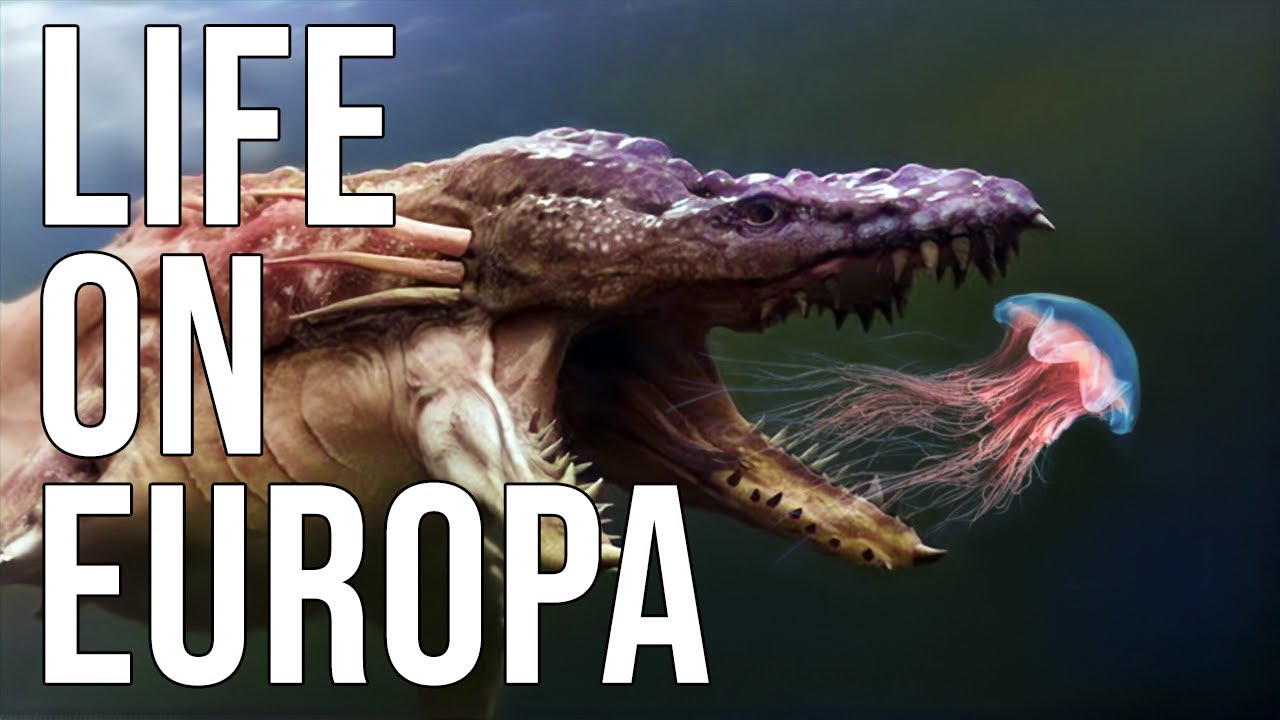
foreign [Music] Jupiter the largest planet in the solar system is a total of 80 known moons all of which are fascinating in their own way but arguably the most interesting of them all is one of the Galilean moons the mysterious icy world named Europa crisscrossing Europa are vast cracks and discolored streaks that combine to create a complex yet beautiful world and when looked at even closer many more strange features can be seen such as europa's mysterious Freckles but what are these strange freckle-like features and what is causing the chaotic fractures that weave across europa's Frozen
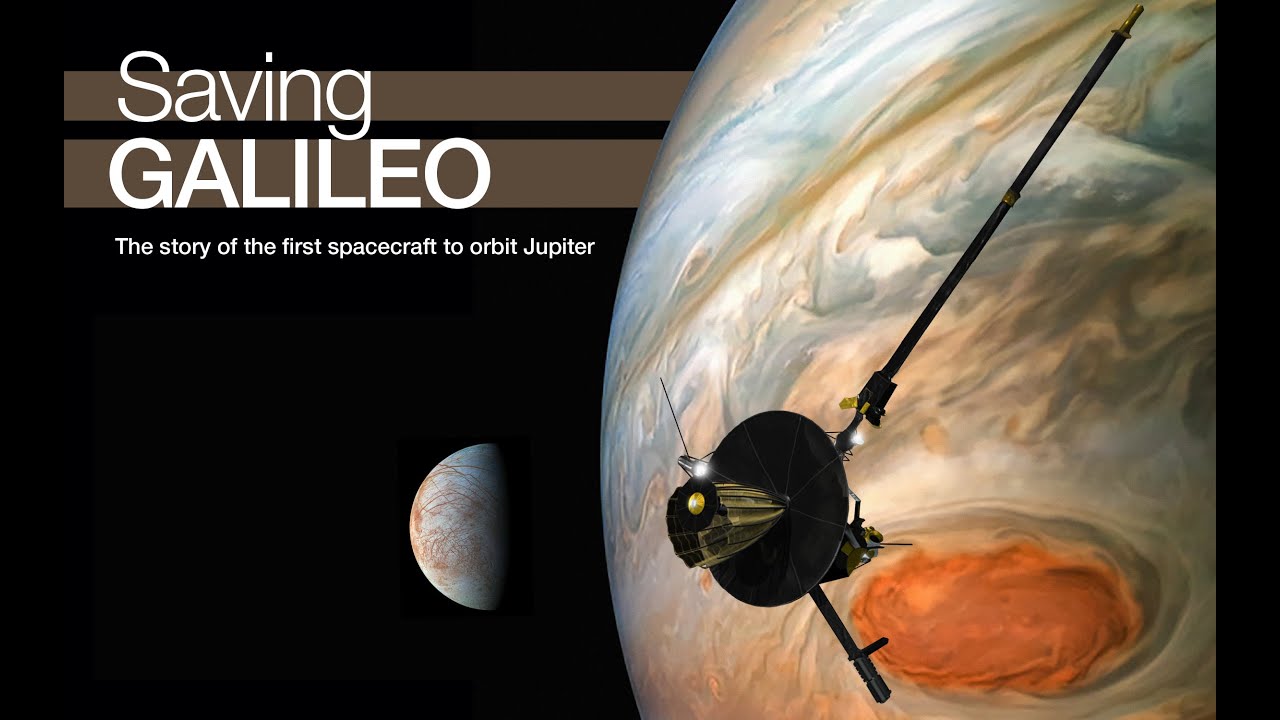
landscape [Music] a total of six spacecraft have visited Europa up close photographing the stunning Moon as they passed by but most of what we know about it comes from several years of observations made by NASA's Galileo spacecraft Galileo arrived at Jupiter in 1995 and successfully orbited the gas giant for almost eight years it performed many close flybys of all of Jupiter's major moons photographing them in all their Glory as these incredible images reveal but it was the images and data collected about Europa that were the most tantalizing in fact the information was so intriguing that
the mission was extended to make a total of 12 close flybys of the icy Moon despite its fractured and discolored appearance scientists discovered that it is the smoothest solid object in the solar system its highest peaks for example are only a few hundred meters tall and large craters are rare this smoothness means that the surface of Europa is fairly young probably only tens of millions of years old rather than billions like most other moons somehow the ice is being resurfaced on Europa and smoothed out faster than on many other worlds the question of why that
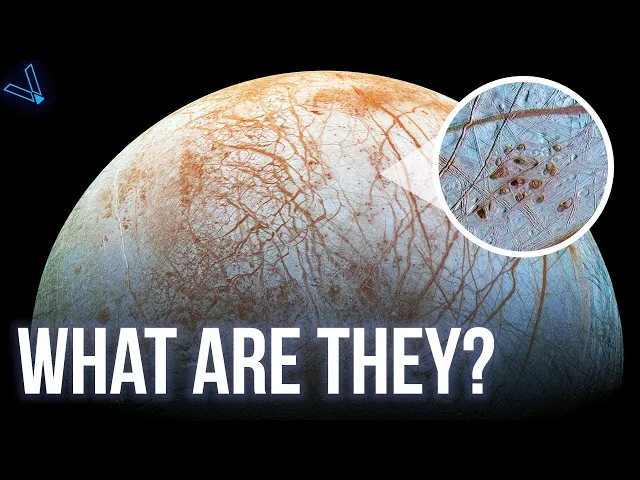
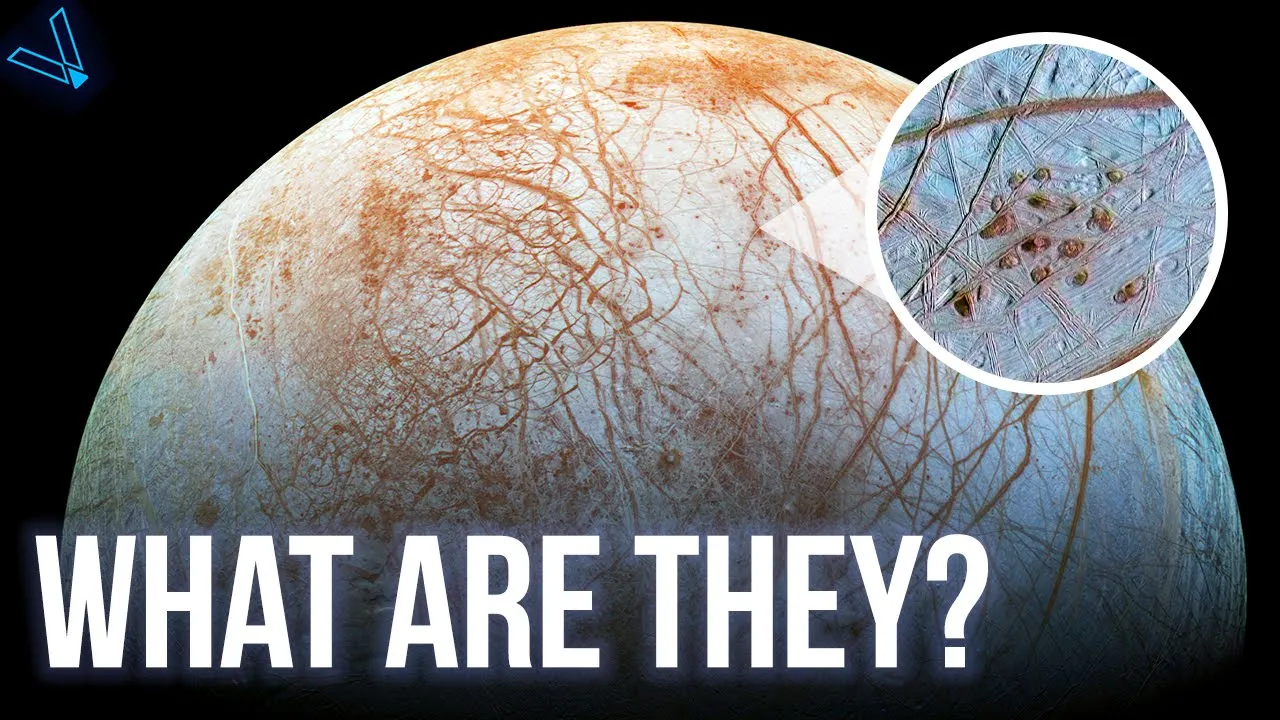
happens has not been definitively answered yet but it probably has something to do with what's going on below europa's mysterious surface take this image captured by the Galileo spacecraft for example several strange spots or freckle-like features can clearly be seen scattered across its frozen landscape the spots visible in this image are about six miles across which is about 10 kilometers across and many are smooth domes some are jumbled pits and some seem to have a reddish brown hue they are called lenticuli which is the Latin term for freckles and the similar size and shape of
these spots suggest that warmer ice is rising up through the colder ice of the outer crust of Europa much like magma Chambers in Earth's crust this process would be similar to that of a lava lamp for example the smooth dark spots may have formed when the warmer Rising ice erupted through the surface while the jumbled up rough lenticuli could be formed from small cracked fragments of the crust embedded in the dark ice from below appearing like icebergs in a frozen sea whereas if you look closely the tops of the dome-like structures are very similar to
the surface around them suggesting that they were formed when the crust was pushed up but did not rupture like the darker spots in this area recent Studies have found that these mysterious features May sit above vast Lakes of liquid water that are entirely encased within the icy outer shell of Europa this cracked outer shell is estimated to be made mostly of water ice Frozen as hard as granite and is approximately 15 miles thick which is about 25 kilometers thick but where is this liquid water coming from well it turns out that these Lakes may not
be the only bodies of water Europa is concealing because below this icy shell scientists have also found evidence of a global salty ocean europa's most striking feature is its dark crisscrossing linear fractures and ridges that stretch around the Moon called lineii which is Latin for lines what caused these cracks is still a mystery but they are likely weak points within its ice crust which are being affected by Jupiter's immense gravity along with the other Galilean moons the icy Moon gets stretched and released by The tug of Jupiter's powerful grasp in an endless cycle as Europa
orbits the giant planet this squeezing in and out is a process called tidal flexing which may be causing these colossal fractures and ridges the tidal flexing may also be creating enough heat inside Europa to maintain a global liquid ocean beneath its frozen surface as you can see the cracks aren't deep gaping voids but instead appear to be filled in with dark material suggesting that some of them may have also been caused at least partly by the ocean below scientists found that the patterns of some of the longest lineari did not fit predicted patterns of fractures
that should be created by tidal flexing as Europa orbits Jupiter they determined that the patterns would fit very well however if europa's surface could move independently and was not locked to the rest of the Interior as would be the case if a layer of liquid existed between the crust and the moon's Rocky mantle for example another piece of evidence for europa's secret ocean is measurements that Galileo made during its multiple flybys Galileo detected that Jupiter's powerful magnetic field was being disrupted in the space around Europa strongly implying that a special type of magnetic field was
being created deep within the icy Moon And scientists think that the most likely cause for this mysterious magnetic signature is a global salty ocean and what's fascinating is that we may have already seen the water from the secret ocean escaping into space astronomers using the Hubble Space Telescope have imaged what could be water vapor plumes erupting off the surface of the icy Moon as seen in this incredible image if this is water plumes then it increases the possibility that future missions to Europa may be able to sample its ocean without having to drill through the
hard ice so what are these mysterious freckle-like features found on europa's Surface well they are strong evidence that below its frozen crust large pockets of water exist and along with even more evidence those Pockets may be sitting above a concealed Global salty ocean that contains possibly two to three times as much water as all the water on Earth and what's really exciting about this potential Discovery is that scientists think that europa's subsurface ocean could be the best place to look for life beyond Earth because of Jupiter and the other Galilean moons tugging on Europa its
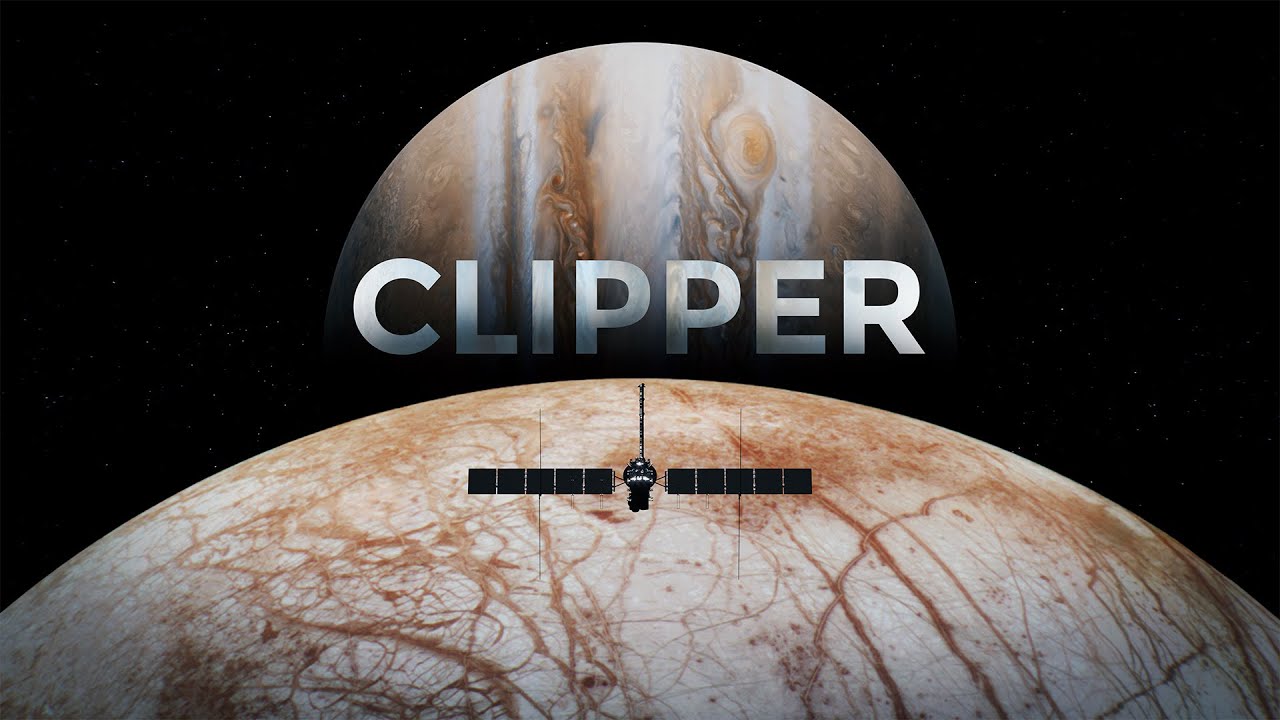
sea floor could be heated by constant tidal flexing driving hydrothermal activity similar to the undersea volcanoes in Earth's oceans for example it is possible that with the correct ingredients for the chemistry of life under the ice of Europa it could be habitable with all this tantalizing evidence Europa is one of the most exciting places in the solar system to explore and we have two future missions to look forward to the first is NASA's Europa Clipper spacecraft which will perform dozens of close flybys investigating whether the icy Moon could have the right conditions suitable for Life
the spacecraft will pass the moon as low as just 16 miles which is just 26 kilometers above the surface Soaring Over different locations during each flyby estimated to launch in October 2024 we haven't got long to wait for this mission to get started but we do have to wait a while until we start seeing the results because Europa Clipper won't arrive at Jupiter until April 2030. the second mission we can look forward to is isa's juice spacecraft or Jupiter's icy Moon Explorer juice is designed to observe Jupiter and three of its large moons Ganymede Callisto
and Europa incredibly Issa plans to enter juice into an orbit around Ganymede towards the end of the mission becoming the first spacecraft to orbit a moon other than the moon of Earth the spacecraft will launch in April 2023 and arrive at Jupiter in July 2031 so again we have a few years to wait yet but both missions will bring brand new views of this mysterious moon and possibly confirm that it does have a global salty ocean beneath its ice that could support Life as We Know It the early 2030s is going to be an exciting
time for space exploration [Music] I really hope you enjoyed this video if you did then please tap the like button and subscribe there's loads more to watch thank you all so much for watching and I'll see you all next time [Music]