Okay, so you should be coming from part five of this series. These videos are a part of a topical series and should be watched from the beginning in order if you're going to understand what is being presented. So please, if you have not started from part one, stop this video and start back from the beginning.
Okay, so in part five, we went into the reason why this series is so important. They have made it known that there is an agenda against Christians that will lead the majority into the doctrines of Lucifer, which will be brought out into the open when the world enters its period of change. The goal of this series is to bring many out of that agenda or at least plant a seed for others who are not ready to receive it now but may understand more when they are tested.
But now that I'm done laying the foundation of this topic, it's time to go through the evidence. It's time that I go through the history of Christianity and break this topic down as thoroughly as I can. I'm going to pump these videos out and break them up so that they're easily digestible.
If you watch them all in order, I'm sure by the end you will grow in your understanding of what it is I'm presenting. You see, everyone calls themselves a Christian, and they are in the religion of Christianity. However, Christianity is not a religion found in the Scriptures at all.
For instance, if you were to read the Bible in a cave without ever coming in contact with another person, you would not say that you are in the religion of Christianity just by reading the Bible. That's because that word is not in the Bible at all. This religion has been spread around the world for almost 2,000 years, and the history of how it was spread is not known by the majority.
For the most part, people just assume that it's biblical because Christians read from the Bible, but it's not biblical. It's not true. What I want to do is provide enough history so that you can make an informed decision about the religion you have accepted.
You see, I'm not in a religion; I am in a relationship with our Father, the Most High Yahweh, that He has given me through believing in His Son, whom He sent—Yahusha Hamashiach. I am living through the actual Covenant that He made with His people, and I am living in expectation of His promises. This is not a religion; this is my life, my lifestyle.
I am a natural branch of Yasharel that is trying to prepare other natural and wild branches. Wild branches are the Gentiles. I am preparing all who truly love our Father to be ready for His kingdom because it is coming.
In order to be ready, it is important that we come out of lies. Knowing history is a big part of breaking out of the lies because this is why they've been hiding things from us and why they don't educate us on these things. So that's what we're going to do right now.
Now, before I get into this history, I want to make sure that I review the conclusions that I have been making so that there is no confusion as this history is given. I want these conclusions to be on your mind so that as every part of this history is shared, you realize that this history is proving my overall point about Christianity. Let me review the overall points.
The first one: Christianity is a religion of tears that Satan planted in the same field where the Messiah planted His good seed. The second one: It is not a doctrine of service to our Father, but a doctrine of abusing grace, editing covenants, rejecting the way our Father actually chose to reach humanity, and making it only about the way Christians want to receive Him. The third one: Christianity does not provide the love, the obedience, and the reverence for our Father that He desires and deserves.
And number four: Christianity does not prepare those who follow it for what our Father truly plans to do for His people in the last days. The overall conclusion that I want you to remember is that after the true Messiah came and spread His good seed, Satan then came in and took certain parts from the truth about the Messiah, mixed it with his false seed, and spread it. He used the Gentiles that he was already directing for thousands of years, who worshiped him through paganism, to create the religion of Christianity.
He used the Gentiles of Rome and Greece to create a new religion, taking the authority of the biblical faith and declaring that it was all about them now, and no longer about the Covenant Yahweh had with His people, Yasharel. Over the centuries, they not only spread the religion of Christianity to the rest of the world with a "get down, lay down" approach, but they also controlled and oppressed Yahweh's chosen people, ensuring that they were never in the position to inherit the Kingdom Yahweh has always promised. We are now coming close to the end of their overall agenda, where the world will come together and worship Satan and his seed.
This also means that our Father's kingdom is set to come after. So, Hallelujah! With this, His people who truly love Him must wake up, come out of the lies, and attach themselves to our Father's true word, His true promises.
They must reject the religions of men. Christianity is a religion of tears that only looks biblical because people are not reading their whole Bible and applying it; they follow doctrines of. .
. Men more than they ever follow our Father and His word, and this is what I will be proving in this history. So let's get to it.
In order to understand Christianity, we must go back in time before the label of "Christian" became a thing. What we're going to do is go back to the times of the actual truth first, so you can see where the separation happened. Now listen, this really should be known by every person that calls themselves a Christian: we have the Bible, and it is important; but there is a period of 2,000 years of how we all call ourselves Christians now, and this history is pretty much ignored by the majority.
Do you think that that's by accident? No, of course not. You are told you are following a religion that is biblical, but if you knew their history and what these people built this religion on, it would really make you question if it really is biblical.
This is why we don't know the history. This is not something hard to research either, so I'm going to give you the books I have read and sources I will be using so that you can do your own research. The first, most important source is the Bible, but as you know, like I said, this history after is not given in the scriptures, but this is always the most important source, and I will always refer back to it.
The first two sources are *The Antiquities of the Jews* and *The War of the Jews*, both by Josephus; *The History of the Church* by Eusebius; *The Dictionary of Early Christian Beliefs* from David Burkot; and the only resource that may be hard for you to get on your own is the *Encyclopedia Britannica*. My edition comes from 1965, and so the information on their botanical website online today is not as thorough as my encyclopedia is. But these are the main books my history is coming from.
Most of these books you can get on Amazon yourself, so those are the sources. You can look this all up yourself. So enough of that setup.
Let's get to it. Where we will start is at the end of the Book of Acts. Paul made it to Rome to plead his case to Caesar, and what happens after Acts becomes a little less detailed biblically.
You see, much of the history after this point in Acts is not told in a direct manner through the rest of the New Testament; there becomes a void in history, and that's where the beginning of the confusion starts to grow. So let's set the stage and understand what the world looked like at the end of the Book of Acts. Paul was set to plead his case to Caesar, who was Nero at the time; this was around the year 62 AD.
So please place this timestamp in your head. At the end of the Book of Acts, what did things look like in 62 AD? Well, the first major thing to know is that the Roman Empire was still the major power in the world; much of the known world was under the control of the Roman government.
Now, the Yahudim, who the world called Jews, were still a nation of people, and they were in the land called Judea. Many people today refer to it as Palestine, but it was not Palestine at that time. Now listen, I want to make this clear: there is a possibility that the lands they were actually in and the maps they have given us are all lies.
I don't dispute this, but in order to be thorough, I'm going off their maps in the narrative. If you understand the amount of lies that they’re telling us and you are bothered that I'm using their maps, please extend me a little grace. I'm doing the best I can with the resources I have today.
People call the land Palestine, but at this time, it was known as Judea. The land was Judea, and the City of Jerusalem was a part of this land. At this period in 62 AD, the Yahudim still had their Temple, and many who rejected Yahusha as the Messiah were still using the Temple for animal sacrifices for atonement.
Also, please know that there were many Yahudim scattered throughout the Roman Empire, specifically throughout this region, which was called Asia Minor. These Yahudim assimilated with Greece and adopted many of the practices of Greece during the period of Hellenization. They were of the dispersion of Greeks, like mentioned in John 7.
Look, then Yahusha said to them, "I shall be with you a little while longer, and then I go to him who sent me. You will seek me and not find me, and where I am you cannot come. " Then the Yudin said among themselves, "Where does he intend to go that we shall not find him?
Does he intend to go to the dispersion among the Greeks and teach the Greeks? What is this thing that he said, ‘You will seek me and not find me, and where I am you cannot come? ’" That's John 7:33-36.
You see, Yahusha was saying he's going back to heaven with His Father, but they thought He meant He was going amongst the dispersion of Yahudim that were amongst the Greeks. You see, these Yahudim were scattered amongst the Roman world, but they were not considered Yahudim because they sold out; they were often referred to as Greeks because they assimilated. This is why, when Paul was spreading the message of the Messiah, he was not going to the pagan temples; he went to the synagogues.
Back to Paul: because of him and the other apostles' belief in Yahusha, the message was spreading amongst the Roman Empire, and many assemblies were being set up due to Paul's many missionary journeys. The belief in Yahusha was growing and spreading. The new believers in "The Way" were not initially persecuted by Rome; rather, in the beginning, it was the Yahudim who dealt more harshly with them than Rome did.
This was because of Rome's claim of commitment to justice and peace. However, over time, belief in Yahusha began to spread, and hearing about this man who rose from the dead began to be accepted by the Gentiles. The label of "Christians" began to be used, as we know from Acts 11:26, where in Antioch the disciples were first called Christians.
The label of "Christians" was not something accepted by the disciples and the apostles at this time; it was how the others who were mocking this new faith called these new believers. Reading the book of Acts, the apostles never call themselves this term; they call themselves disciples and say they follow "The Way. " The term "Christians" was derogatory but later grew as a label that became accepted.
Now, I will get into this more, but let me continue with an understanding about the apostles. As time continued, their movements grew, and the apostles began to be persecuted. When we delve into Paul's other letters, we understand that he was arrested again, but this time his situation was entirely different.
At his preliminary hearing, he realized that he would not be released; he would soon be convicted of a crime against the state and face death. With only Luke available to him, he felt lonely for more companionship and wanted to see Timothy one more time before he died. So, he wrote his final letter to Timothy, asking him to come at once.
In the letter, he expressed his final thoughts just in case Timothy did not arrive in time. We do not know whether Timothy came. Chapter 4 of Second Timothy gives much detail about this situation.
You see, sometimes we read the Bible and do not pay attention to the author and the circumstances. When we do this, we miss certain details that can elevate our understanding. Second Timothy is a very powerful letter; it was a letter to Timothy from Paul offering final instructions regarding the life of a believer in Messiah.
The summary of Second Timothy is that leaders of the faith in Messiah are to be unashamed of the gospel and to carry on faithfully with the message about our Messiah Yahusha that has been entrusted to us. The first and second Epistles of Peter are also said to have been written during Nero's persecution. The First Epistle of Peter was written to the believers in Asia Minor to encourage them, to explain why suffering occurs, and to remind them of their eternal reward at the end of our earthly life.
He emphasized that those who follow Messiah can expect suffering as a natural part of a life dedicated to Him. He exhorted them to live righteous and holy lives. His Second Epistle, written before his expected death, was composed to combat false doctrine that was being spread throughout Rome.
The faith that Peter had faithfully preached was not just a matter of philosophy; it was a matter of eternal life and death. However, there were those who were peddling their own propaganda and falsehoods that contradicted the truth, bringing us to the core of early Christianity. I'm not going to go too fast; Peter had to confront these falsehoods to ensure they would not be mistaken for the truth.
He reminded them not to give up expecting the return of Yahusha. The Epistle of Jude is very similar to the Second Epistle of Peter. All four of these letters show a separation from the Yahudim and primarily deal with the assembly of believers in Yahusha.
These believers were labeled as Christians by Nero. So, it's important to understand all this history; at this time, it was not the Yahudim who were being persecuted but the Yahudim who believed in the Messiah. They were first persecuted by their own people and then by Rome because they were being labeled as troublemakers for bringing the Gentiles of Rome into this strange religion.
I will elaborate on this further, so bear with me for a moment. At this time, they were just labeled as Christians, but this was not the label used among the apostles who spread their faith; it was how outsiders viewed them. It is also important to understand how this word "Christian" was accepted.
Let me finish with the actual spreading of the true faith. Again, the Yahudim who rejected Yahusha did not initially face persecution, and there was a growing separation between them and the followers of the Messiah. Eventually, they did face persecution and were removed from their land.
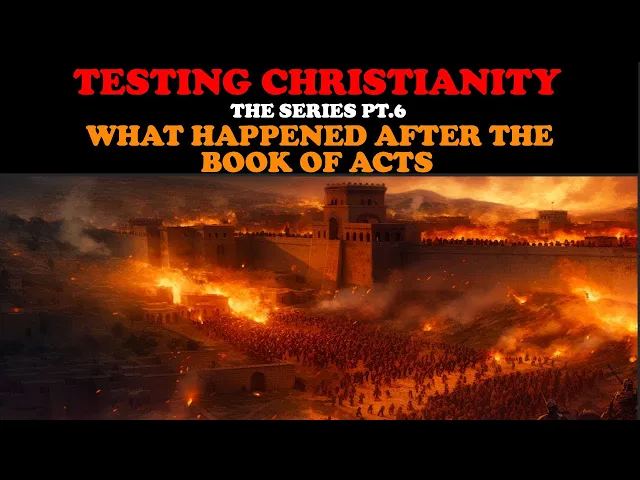
The event that finalized this was the Yahudim War, which resulted in the destruction of the temple, the end of animal sacrifices, and the scattering of the Yahudim. We know that Yahusha prophesied about the destruction of the temple in Matthew 24:1-2. It says, "Then Yahusha went out and departed from the temple, and His disciples came up to show Him the buildings of the temple.
And Yahusha said to them, 'Do you not see all these things? Assuredly, I say to you, not one stone shall be left here upon another that shall not be thrown down. '" You see, the fulfillment of this is not described in the New Testament, but if we review history, we will know that it was fulfilled.
This history is important because what happened to the temple is intertwined with what happened to the Yahudim. As I mentioned earlier, one of my sources of history is from Flavius Josephus. He was a Yahudim and a Roman citizen who was known as a historian of his time.
He wrote "Antiquities of the Jews. " And the Jewish War, Josephus—whose original name was Ysep ben Mihu—was said to have originally written this work in Hebrew so that the Yahudim in other regions could read it. Josephus, though, later translated it into Greek with the help of others.
In the book The Jewish Wars, as it's called today, he shows how this prophecy of Yahusha came true: not one stone of the building was left standing after the war of 70 AD. The events of 66 to 73 AD brought untold suffering to thousands of Yahudim. The Roman governor appointed over Judea in 64 AD was Jessus Florus.
He was said to be a corrupt and cruel man; after he raided the treasury of the temple in Jerusalem, the resentment of the Yahudim was at a boiling point. The Pharisees joined forces with a rejuvenated Zealot movement, organizing a revolt. Herod Agrippa II, the Edomite ruler of Judea—you remember him; he was the one that Paul appeared before years earlier in Acts chapter 26—urged the Yahudim to be at peace, but he was rejected.
He stayed loyal to Rome, not to the Yahudim. A rebel leader named Mahim led a band of men to capture the Roman military fortress at Masada, near the Dead Sea. Then, using the weapons from Masada, he went on to capture the Roman garrison in Jerusalem, next to the temple.
Anahim was killed in 66 AD. What happened, though, was that the early success of the rebels caused a revolutionary fever to spread throughout Judea. Many expected a complete victory as in the days of the Maccabean Revolt more than two centuries earlier.
Victory seemed to be guaranteed in November 66 AD when the rebel Yahudim defeated a Roman legion sent from Syria. However, this revolt was not led by the power of Yah. Rome proved to be more powerful than Judea.
They arrived in Galilee in early 67 AD and began taking it down. The Roman general Vespasian and his forces began consolidating their gains and approached Jerusalem. The war was briefly interrupted by Nero's apparent suicide; Nero was declared an enemy of the people and was sentenced to be put to death, so he killed himself.
Before this happened, there was civil unrest in Rome. After his death, Vespasian resumed his military offensive in Judea in June of 69 AD and took all of Judea except Jerusalem. He was then proclaimed Emperor and left Judea to go back and take control of the complete Roman Empire.
This time period is known as the Year of the Four Emperors. In the spring of 70 AD, Vespasian sent his son Titus to crush the Yahudim. Titus had several Roman legions at his disposal.
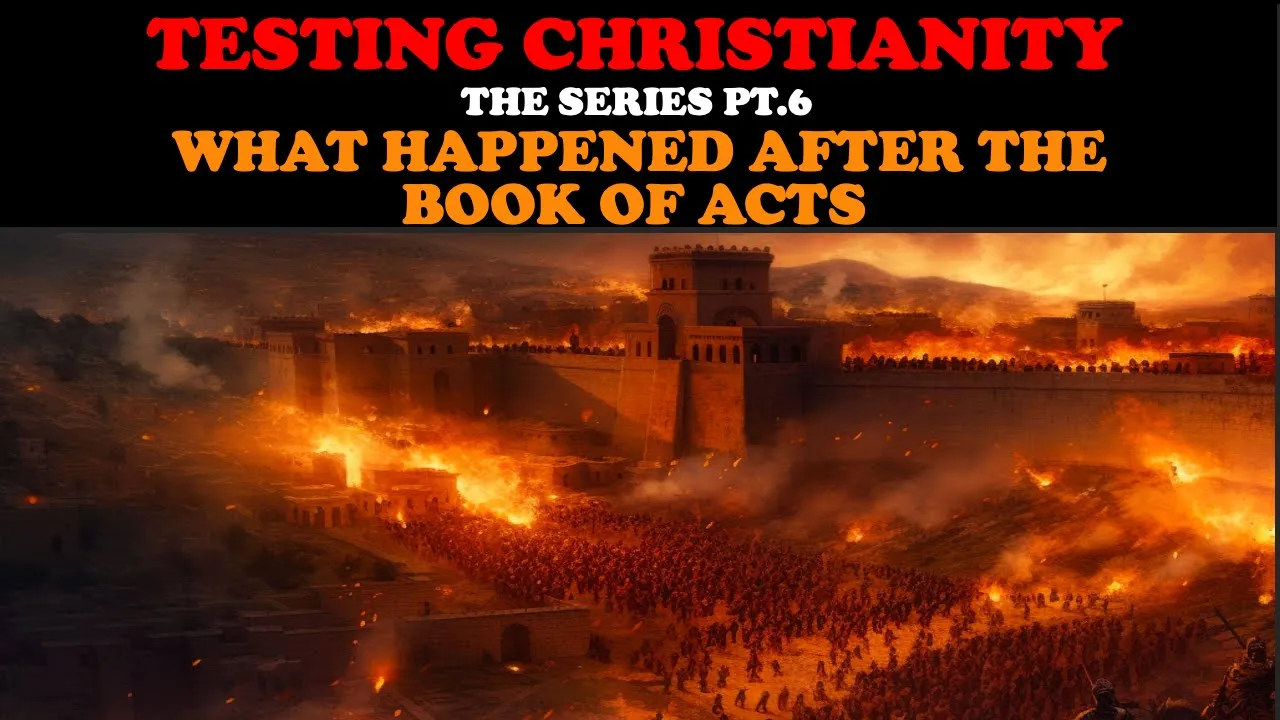
His troops laid siege to Jerusalem in April; the Yahudim were able to endure five months. The last animal sacrifice was offered on the great altar of the temple on August 6th, and the temple was burned on August 28th, 70 AD. The destruction of the entire city soon followed, as it was made into heaps of rubble.
By the end of September, it is reported that after the fire cooled, the Roman troops literally pried apart the stonework of the temple in order to retrieve the gold that had melted between the cracks. This was a fulfillment of Yahusha's prophecy in Matthew 24: no stone left upon another. The Romans then proceeded to subdue the three remaining rebel fortresses; the last one, Masada, fell in May of 73 AD after its defenders committed mass suicide.
The Romans ruled Judea with an iron fist, treating it as occupied hostile territory. After the loss of the temple, everything changed for the Yahudim. They had no way to properly worship Yahweh.
The Sadducees and the priesthood disappeared as factors in society. The Pharisees dominated the belief in a new Sanhedrin, which is an assembly of appointed rabbis that was established, and they mainly functioned as an institution to study the scriptures. The synagogues continued to be the institution by which the religion of the Yahudim was sustained.
There was no tolerance of the movement of believers in Messiah any longer, though. The Yahudim were without a temple, and by rejecting the message of Yahusha, they had become a people without His heart and soul. Many of the Yahudim fled south, away from the Roman Empire.
Their history became bleaker and worse as the centuries continued, all the way until the present day. Now, when you understand all this history, it's important that I clarify that none of this history is in reference to the current occupants of the land of Israel today. This is not about them.
What happened to the Yahudim is all a confirmation of the curses found in Deuteronomy chapter 28. Now listen: after the first Yahudim revolt, that was not the complete end to the turbulence for the Hebrews, but it was a major turning point for them. Before that time, the Hebrews were allowed by Rome to be their own sect of religion and worship their God without interference.
If you understand that, that's how Yahusha was able to put forth His ministry. Even though Rome was in control of Judea, they were given control of their own people. But after the first Yahudim revolt, that all changed.
They never again enjoyed the support they had from Rome, and because of this, there was consistent fighting and rebellion against Rome by the Hebrews. If you want to research this on your own, you can look for the Jewish wars during the time period of 66 AD to 136 AD. You see, the Hebrews' revolts developed into full-scale fighting, and in the year 132 AD, we have what is called the Second Yahudim Revolt or the Second Jewish Revolt.
Tineius Rufus was the Roman governor of Judea at that time, and Jerusalem. Was still in ruins after the first Jewish Revolt that led to the destruction of the Temple. Emperor Hadrian, at that time, wanted to rebuild Jerusalem as a Roman colony.
He wanted to assimilate Jerusalem with Rome's already traditional pagan culture, so he dealt harshly with the Hebrews that still lingered there. He placed many restrictions on their way of life, banning circumcisions. This led to a revolt by the Hebrews, led by Simon bar Oka.
They were crushed by the Romans, and Emperor Hadrian wiped the province of Judea off the Roman map, renaming it Syria Palestina. He renamed Jerusalem Aelia Capitolina after himself and rebuilt it as a typical Roman town, and this is why we know it as Palestine today. It would be this way until the 7th century when the Arabs conquered the city.
Either way, the Hebrews were not even allowed in the city except for one day a year, which is regarded as the saddest day in the Yahudim calendar. And so, this is what happened to the Yahudim who persecuted and crucified the Messiah sent to them. It's important to know this history because this history was used against them amongst the Christians.
Now, going back to understanding the spread of the truth of the way, it was spread amongst the apostles who were later persecuted, and they were all killed. James, the brother of Yahusha, who became the leader in Jerusalem, was stoned by the Yahud. Peter and Paul were both said to be executed under Nero; according to Eusebius, Paul was beheaded and Peter was crucified, but he requested to be crucified upside down so that he was not killed in the same manner as our Messiah.
It was after these deaths that the hands of the faith of the way were placed into the control of the Gentiles, and this is where everything takes a turn. Now, this history does not do much for the conclusions I have made, but it is extremely important to understand foundationally. If you're going to understand the history that comes after, you need to understand what happened to the Yahudim that rejected Yahusha.
You need to understand that when the way was first being spread, it was through the apostles, and they did not label it under the term "Christianity. " However, the Gentiles who were against the movement began to call them Christians. What matters is who took this label and carried it forward into what we know as Christianity today.
That's what matters; it's not just that they called them Christians, but who later took this label and what it came to be. That's what we're going to discuss in the next video. We will discuss the actual beginning of Christianity because the beginning of Christianity is not the beginning of the way—that's what we'll discuss next.
In the meantime, please remember that Christianity is a religion that, on the surface, seems biblical, but when you dig deep into the doctrines, it is not a doctrine of service to our Father, but a doctrine of abusing grace, editing covenants, rejecting the way our Father actually chose to reach humanity, and making it only about the way Christians want to receive Him. It lacks the love, obedience, and reverence for our Father that He deserves, and in the end, it does not prepare those who follow it to be ready for what our Father plans to do in the last days. If you desire to be ready for our Father and His plan for us, you must come out of this religion of tears and come to our Father in truth.
Please move to part seven in this playlist and understand who took on the label of being a Christian. Click the link to the next video; let's talk some more. Be blessed.
Hallelujah! Praise Yah! Okay, thanks again for watching.
If this has blessed you, please like this and share this video with your family and your friends. This video series is highly important for those trying to be ready for our Father. This is part six of the series; click the link or just move on to the next video in the playlist.
As always, I want to thank all who donate and contribute to this ministry. This series would not be possible without your support. I thank you sincerely.
Be blessed. Okay, thanks again, everyone, for watching. See you in part seven.
I love you all!