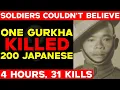
May 12, 1945. A muddy trench in the Burmese jungle. Three Girka riflemen crouched in darkness, listening to the sounds of at least 200 Japanese soldiers creeping through the undergrowth toward their position.
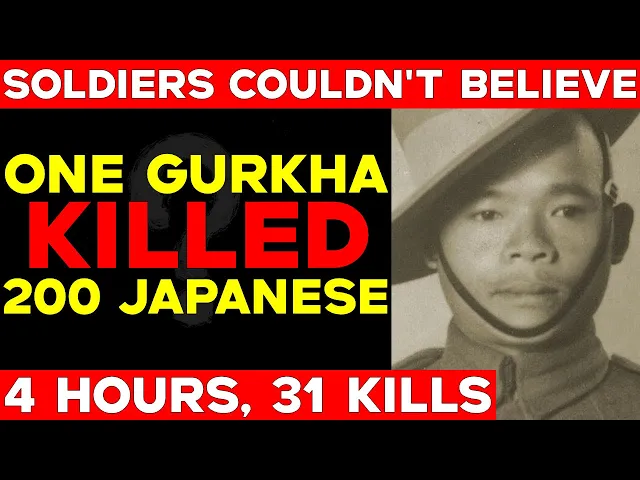
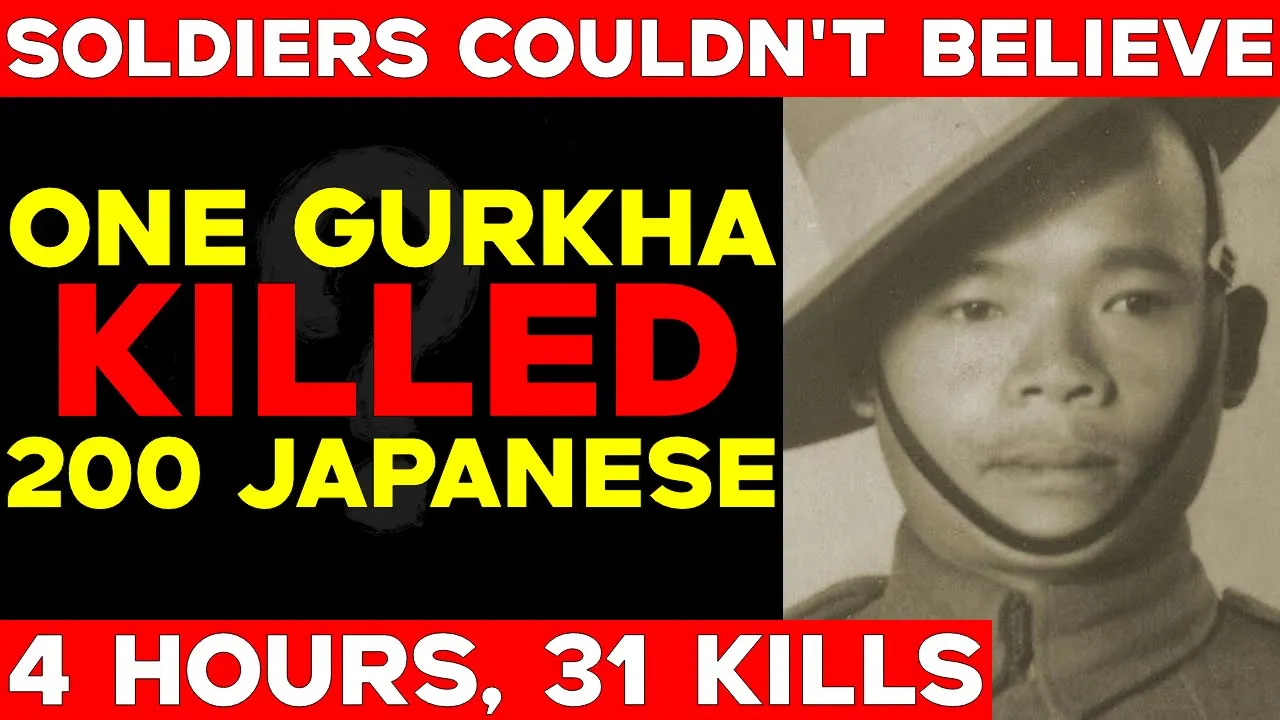
Rifleman Lachiman Garang, 27 years old, 4' 11 in tall, gripped his Lee Enfield rifle and waited. His post was the most forward position of the entire British defensive line, the key to the whole perimeter. If it fell, the Japanese would roll up the flank and slaughter two companies of surrounded girkas.
At 1:20 in the morning, the grenades started falling. Gurang watched the first one arc through the darkness and land just outside his trench. He scooped it up, threw it back.
The explosion lit up the jungle for a split second, revealing dozens of Japanese soldiers rushing his position. Another grenade fell inside the trench. Garung grabbed it, hurled it at the attackers.
It detonated in midair. A third grenade landed at his feet. He reached down, picked it up, and this one exploded in his hand.
The blast tore off the fingers of his right hand. Shrapnel ripped into his face, destroying his right eye. Burns covered his arm, chest, and legs.
The other two girkas in the trench were wounded by the same explosion, and 200 Japanese soldiers were charging straight at them, screaming, firing, throwing more grenades. Garung was bleeding, half blind, missing most of his right hand. Any rational soldier would surrender or die.
Lachiman Gurang grabbed his rifle with his left hand and started killing. For the next four hours, he held that trench alone, firing, reloading, firing again, one-handed, screaming at the Japanese to come and fight a Girka. When dawn broke and the Japanese finally retreated, 31 enemy bodies lay in front of his position.
31 soldiers killed by one man with one hand. A man who, according to every rule of warfare, should have been dead in the first minute of combat. This is the untold story of the most incredible one-man stand in World War II history.
From the mountain village in Nepal where a boy joined the British army to escape poverty to the Burma campaign where the Imperial Japanese Army learned what happened when you attacked a Girka who refused to die. From the moment a grenade destroyed his hand to the 4 hours of hell that earned him the Victoria Cross. Discover how one rifleman proved that courage doesn't require two hands.
It just requires refusing to quit. Nepal, December 1917. Lachiman Garun was born in Dakani, a tiny village in the hills west of Catmandeue.
His father farmed a small plot of land, barely enough to feed the family. Life in the Nepalese mountains meant poverty, hard work, and few opportunities. Young men had two choices.
farm like their fathers or join the British Indian army as girkas, the legendary soldiers from Nepal who had served Britain since 1815. The Girkas had a reputation that terrified enemies across the British Empire. Fearless, disciplined, armed with the curved kukri knife that every Girka carried and knew how to use with devastating effect.
British commanders valued them above almost any other infantry. German soldiers in both world wars learned to dread facing Girka regiments. So did Japanese troops in Burma.
The Girka motto was simple. Better to die than be a coward. Garun grew up hearing stories of Girka heroes.
Men from villages like his who had earned medals fighting for Britain in India, Afghanistan, France. The army offered steady pay, respect, a way out of subsistence farming. But joining required passing a brutal selection process and meeting the minimum height requirement, 5t tall.
Garung stood 4' 11 in shorter than the requirement. Under normal circumstances, he would have been rejected, but circumstances in 1940 were not normal. In December of that year, Garung walked to the British recruitment station.
World War II was expanding rapidly. Germany controlled most of Europe. Japan was preparing to sweep through Asia.
Britain needed soldiers desperately. The height requirements were quietly relaxed. Gurang was accepted.
He was 23 years old. He joined the fourth battalion, eighth Girka rifles, one of the most storied regiments in the British Indian Army. The story of how he came to enlist has been told many ways over the years.
One version says his father sent him to the village store to buy cigarettes. He met a friend who was enlisting. They went to the recruitment station together.
Gang never came home with the cigarettes. He disappeared into the army. Five years later, he returned, missing an eye and most of his right hand.
His father got the story instead of cigarettes. Whether that tale is true or embellished, the facts are clear. Gang enlisted in December 1940.
He completed training, learned to handle the Lee Enfield rifle, mastered the tactics of jungle warfare, absorbed the Girka code, aggression in attack, stubbornness in defense, never surrender, never retreat unless ordered. Fight to the last man and the last round. These weren't just words.
They were the core of Girka identity. By 1944, Gurang's battalion was deployed to Burma. The Burma campaign was one of the most brutal theaters of World War II.
Dense jungle, monsoon rains, diseases like malaria and dysentery that killed as many soldiers as combat, and the Imperial Japanese Army, which had conquered most of Southeast Asia in 1942 and showed no mercy to enemies or prisoners. Japanese soldiers had orders to fight to the death. They expected their opponents to do the same.
Surrender was disgrace. Capture meant torture. The British and Indian forces had been slowly pushing the Japanese back through Burma since 1944.
Operation Extended Capital aimed to recapture central Burma and cut off Japanese supply lines. The eighth Girka rifles were part of this offensive. They fought through swamps, across rivers, and up jungle covered hills.
Every advance meant ambushes, snipers, and fanatical Japanese defenders who would rather dive and retreat. By May 1945, the Japanese position in Burma was collapsing. Allied forces had crossed the Irati River.
They were pushing toward Rangon, but the Japanese weren't beaten yet. Scattered units were trying to break out of encirclement, retreating south. Desperate, dangerous, willing to attack anything in their path to escape the closing trap.
On May 9th, the fourth battalion of the eighth Girka rifles was ordered to block the Japanese withdrawal routes near the village of Tongda. The terrain was dense jungle with a few muddy trails. The monsoon rains had started.
Everything was wet, slippery, miserable. The Girkas dug defensive positions and waited. Intelligence reported Japanese forces were moving through the area.
No one knew exactly how many. No one knew when they would attack, just that they were coming. Garang's company, Sea Company, was positioned on a reverse slope.
Trenches dug into the hillside, overlapping fields of fire. Standard defensive tactics, but the jungle limited visibility to a few dozen yards in most directions. The Japanese could get close before being spotted.
They were experts at infiltration, moving silently, attacking at night, overrunning positions before defenders could react. The Girkas had fought them before. They knew what to expect.
Violence, speed, grenades, close combat with bayonets and knives. Garung section was assigned to the most forward post. Three men in a trench about 100 yardds ahead of the main British line.
Their job was simple and suicidal. provide early warning. Slow down any Japanese attack.
Give the rest of the company time to respond. It was the most dangerous position in the entire defensive perimeter, the first to be hit, the hardest to reinforce, the most likely to be overrun. Gurong and two other Girkas occupied that forward trench.
They improved the position as much as possible, deepened the trench, piled sandbags, cleared fields of fire, placed ammunition within easy reach. Gurong also placed his cookery knife on the parapet of the trench within arms reach. If the Japanese got that close, he would need it.
That curved blade had killed enemies for generations of girkas. He wasn't going to be different. On the night of May 12th, the Japanese came.
Not a probe, not a patrol, a full assault. At least 200 soldiers hitting sea company's position with everything they had. grenades, machine guns, rifles, screaming charges designed to panic defenders and break through the perimeter.
The entire attack was aimed at one section of the line, Gurong's section, his trench, the key to the whole position. At 1:20 in the morning, Naik Debbasing Buddha, Gurong's section commander, had just gotten all his men to stand too in their trenches when the grenades started falling. Japanese soldiers were creeping close under cover of darkness, throwing grenades to soften up the defenses before the main assault.
Buddha watched from his trench a few yards behind Gurong's position. He saw a grenade land near Gurong's trench, saw Gurung scoop it up, and hurl it back at the enemy. The explosion lit up the jungle, revealed dozens of Japanese soldiers rushing forward.
Seconds later, another grenade fell inside Gurum's trench. He grabbed it, threw it out. It exploded in the air.
Japanese soldiers were screaming, firing, getting closer. A third grenade arked through the darkness and landed right at Gurong's feet. He bent down, picked it up, and it detonated before he could throw it.
The blast was catastrophic. The grenade exploded in his right hand, tore off his fingers, mangled his palm. Shrapnel ripped into his face, destroying his right eye.
Burns covered his right arm, chest, face. Fragments hit his legs. The force of the explosion threw him backward.
Blood poured from dozens of wounds. The other two Girkas in the trench were hit by the same blast. All three men wounded.
And 200 Japanese soldiers were seconds away from overrunning the position. The two other Girkas in the trench were badly wounded, unable to fight, bleeding, disoriented. The Japanese assault was seconds away from overwhelming the position.
Any other soldier would have abandoned the trench, fallen back to the main line, sought medical attention. Survival instinct would have demanded it. But Lachiman Gurong didn't retreat.
He didn't even hesitate. He grabbed his rifle with his left hand. The Lee Enfield was designed to be fired right-handed.
The bolt action required the right hand to cycle rounds. Gurong's right hand was destroyed. a mangled mess of blood and bone.
It no longer worked. So, he improvised. He braced the rifle against his left hip, worked the bolt with his left hand, aimed with his one remaining eye, and started firing at the shadows rushing toward him through the darkness.
The Japanese soldiers expected to find dead or dying defenders. They expected to overrun the trench in seconds. What they found instead was a Girka rifleman who was shooting back accurately, rapidly, killing the lead attackers, screaming at them in Gkali, telling them to come and fight, challenging them, refusing to die.
The shock of it stopped the Japanese advance cold for precious seconds, long enough for Gurong to kill several more soldiers, long enough for confusion to ripple through the Japanese ranks. The attackers adjusted. More grenades fell into and around Gurong's trench.
He couldn't throw them back anymore. His right hand was useless. He pressed himself against the trench wall, let the explosions wash over him, took more shrapnel wounds, more burns, kept firing.
The Japanese tried rushing the position. Gurong shot them down one after another. The bodies piled up in front of his trench.
The dead became obstacles that slowed the living. From his position behind Gurong, Nike Devasing Burough watched in disbelief. He had seen combat before.
He had seen Girka's fight with incredible courage. But this was something beyond normal courage. This was a wounded man who should have been incapacitated, fighting with the effectiveness of a full strength squad.
Bora tried to send men forward to reinforce Gorang's position. The Japanese fire was too intense. Anyone who tried to reach that forward trench would be cut down before covering half the distance.
So Gang fought alone, one man, one eye, one hand, against 200 Japanese soldiers who were determined to break through his position. The physical challenges were almost incomprehensible. The Lee Enfield rifle weighed 9 lb.
Operating the bolt action one-handed while aiming and firing required strength, coordination, and practice that Gurang had never trained for. He learned it in real time under fire while bleeding from dozens of wounds while half blind while Japanese soldiers tried to kill him every second. The pain must have been excruciating.
The destroyed hand, the ruined eye, the shrapnel embedded in his body, the burns. Combat injuries produce shock. Blood loss causes weakness.
Most soldiers would have passed out from the trauma. Gurung stayed conscious through sheer willpower. He had a job.
Hold the trench. Stop the Japanese. Protect his brothers in arms.
Everything else was secondary, including his own survival. The Japanese couldn't understand what was happening. They outnumbered the defenders at least 50 to1.
They were attacking the weakest point in the British line. They had surprise and momentum. And one wounded Girka was stopping their entire assault.
Officers tried to rally their men, push forward, overrun that cursed trench. Every attempt met the same result. Rifle fire, dead soldiers, a voice screaming defiance from that forward position.
Come and fight the Girkas. The attackers changed tactics. They tried flanking the trench.
Gorang shifted his fire, covered the approaches. The jungle terrain limited the angles of attack. The narrow front meant the Japanese couldn't bring overwhelming force to bear all at once.
They had to approach through killing zones and Gung covered everyone. The battlefield was pitch black except when explosions briefly lit up the carnage. Gurung was firing at muzzle flashes, at sounds, at shadows, hitting targets he could barely see with a rifle he could barely operate.
His section commander later tried to describe what he witnessed. He said Gurang fought like a demon, like something beyond human. Every few seconds, another Japanese soldier would fall.
The enemy couldn't locate exactly where Garung was firing from. The muzzle flash of his rifle moved as he shifted position within his trench. The Japanese fired wildly at where they thought he was.
Most of their rounds missed. Garang's rounds didn't miss. He was a trained rifleman.
Even one-handed and half blind, he was more accurate than soldiers who could see and had both hands. Time became meaningless. The battle was a continuous roar of gunfire, explosions, and screaming.
Garang fired until his rifle was empty. Reloaded with his left hand, a process that normally required two hands and took seconds. One-handed, it took longer.
Every second of reloading was a second the Japanese could advance. Gang learned to reload faster, fumbled cartridges in the darkness, loaded them by feel, got the rifle back into action, started firing again. The process repeated hundreds of times through the night.
The Japanese threw more grenades. Garang couldn't avoid them all. More shrapnel wounds, more pain.
He kept fighting. Blood loss was weakening him. His vision was failing from shock and injury.
He could feel himself fading. But the Japanese were still attacking. If he stopped fighting, they would break through.
His brothers would die. The thought was unacceptable. He fired another round and another and another.
Ammunition became critical. Gung had started the battle with a basic load of rifle rounds. 50 in his pouches, 10 in his rifle.
He was firing steadily. Each shot had to count. He couldn't waste rounds.
But he also couldn't let the Japanese close the distance. It was a razor's edge calculation. Shoot enough to keep them at bay.
Conserve enough to keep fighting until dawn or reinforcements arrived. He had no idea how much ammunition he had left. He just kept firing until the rifle was empty, then reloaded, then fired again.
Around 3:00 in the morning, the intensity of the Japanese attack increased. This wasn't desperation. This was a coordinated push.
Officers had rallied their men for one more attempt to break through. They came at Gurung's position from multiple angles, throwing grenades, firing machine guns, rushing forward, accepting casualties, determined to overrun that single defended position that had stopped them for over an hour. Gurang met them with the same response, rifle fire.
Controlled, accurate, relentless. He was operating on pure instinct now, training so deeply ingrained that his body executed the motions without conscious thought. Aim, fire.
Cycle bolt, aim, fire. His left hand moved automatically. His eye tracked targets.
His rifle spoke again and again. Japanese soldiers fell. The assault broke against his trench like a wave against a cliff.
By 4 in the morning, the Japanese attacks were losing momentum. The officers couldn't rally their men for another push. Too many casualties.
Too many bodies in front of that cursed trench. too much fear of the unseen demon who wouldn't die and wouldn't stop killing. The attackers pulled back, regrouped, tried to figure out what to do.
They still outnumbered the defenders massively, but mass didn't matter if they couldn't bring it to bear. And bringing it to bear meant advancing through Gurang's killing zone. No one wanted to be the next soldier to die in front of that trench.
Gurung used the lull to take stock. He was barely conscious. Blood loss and shock were taking their toll.
His right hand hung useless. His right eye was destroyed. Shrapnel wounds covered his body.
Every movement brought fresh agony. He had no idea how many rounds he had left. He felt for cartridges in his pouches.
Not many. Maybe enough for one more attack. Maybe not.
He didn't think about medical attention. Didn't think about evacuation. Just watched the darkness.
Waited for the next assault. kept his rifle ready. Behind him, the rest of sea company was holding their positions.
They could hear the battle at Gurong's trench. They tried to provide supporting fire, but the darkness and jungle limited what they could do. Nike Bura reported the situation to his company commander.
One rifleman holding the forward post alone, heavily wounded, still fighting, stopping an entire Japanese assault. The commander didn't believe it at first. Then he listened to the pattern of fire.
Single rifle shots, controlled, precise, coming from that forward position. Still holding, still fighting. Reinforcements couldn't reach Gurong.
The Japanese controlled the ground between his trench and the main line. Any relief attempt would be wiped out. So Gurong stayed alone, outnumbered, wounded, running out of ammunition, but still holding.
The Japanese had committed their entire force to breaking through this one point. They had failed. One man had stopped them.
A man who, by every rational assessment, should have been dead in the first minutes of combat. As dawn approached, the Japanese tried one final assault. This was desperation.
They needed to break through before daylight, before Allied aircraft could spot them, before reinforcements arrived. They gathered their remaining strength, charged Gurang's position one more time, screaming, firing everything they had, accepting that many would die, believing that sheer numbers would finally overwhelm that single defender. Lachiman Gurang met them with his last rounds of ammunition.
He fired until the rifle was empty. Then he grabbed his cookery knife, the curved blade that every Girka carried. If the Japanese reached his trench, he would kill them with steel.
one-handed, half blind, bleeding out. He would fight with the knife until they killed him or he killed them all. Better to die than be a coward.
But the Japanese assault broke before reaching his trench. The final charge faltered. Attackers fell.
The survivors pulled back into the jungle. Dawn was breaking. The darkness that had concealed them was fading.
Staying meant being caught in the open. Being slaughtered by Allied aircraft and artillery, the Japanese withdrew, melted back into the jungle, left their dead behind, retreated from a position they should have overrun in minutes. As the sun rose on May 13th, Nike Debbasing Bura and other Girkas rushed forward to Gurang's trench.
They expected to find him dead. No one could survive that long under such intense attack while so badly wounded. But Lachiman Gurang was alive, barely sitting in his trench surrounded by empty shell casings, his rifle in his lap, his kukri knife on the parapet within reach.
His right hand destroyed, his right eye gone, blood everywhere. He was still conscious, still watching the jungle, still ready to fight if the Japanese came back. Bura and the others pulled him from the trench, gave him water, applied field dressings to his wounds.
The damage was catastrophic. His right hand would never function again. His right eye was gone.
Shrapnel wounds covered his body. Burns needed treatment. He had lost massive amounts of blood.
But he was alive and his trench had held. The Japanese had failed to break through. The entire Sea Company perimeter was intact because one rifleman had refused to let them pass.
Medical evacuation came quickly. Gurung was carried to the rear. Field surgeons worked on him for hours.
They saved his life but couldn't save his hand or eye. The hand was amputated. Just a stump remained where his right hand had been.
The right eye was permanently blind. Shrapnel fragments were removed from his body. Burns were treated.
He would survive, but he would never be the same. While Gurang was being evacuated, other Girkas examined the battlefield around his trench. What they found astonished them.
31 dead Japanese soldiers lay within a few yards of his position. 31 confirmed kills, all shot by one man with one hand in 4 hours of continuous combat. The physical evidence told the story better than words.
Blood trails showed where wounded Japanese had been dragged away. Equipment scattered across the ground indicated many more casualties beyond the confirmed dead. Gurang had single-handedly stopped an assault by at least 200 soldiers.
The recommendation for the Victoria Cross was immediate. Nake Debbasing Bora wrote a detailed report of what he had witnessed. The company commander endorsed it.
Battalion command forwarded it up the chain. This was the kind of action that defined heroism. One man holding an impossible position against overwhelming odds.
Fighting despite catastrophic wounds, never retreating, never surrendering, saving his entire company through sheer willpower and skill. If any action deserved the highest decoration for valor, this was it. The Victoria Cross citation was approved and published in the London Gazette on August 9th, 1945, just days before the war ended.
The citation read in part, "Rifleman Lachaman Gurang was manning the most forward post of his platoon, which bore the brunt of an attack by at least 200 of the Japanese enemy. Twice he hurled back grenades which had fallen on his trench. But the third exploded in his right hand, blowing off his fingers, shattering his arm and severely wounding him in the face, body, and right leg.
His two comrades were also badly wounded. But the rifleman, now alone and disregarding his wounds, loaded and fired his rifle with his left hand for 4 hours, calmly waiting for each attack, which he met with fire at point blank range. Afterwards, when the wounded were counted, it is reported that there were 31 dead Japanese around his position, which he had killed with only one arm.
The citation didn't capture the full horror of what Gurang endured. 4 hours of continuous combat, bleeding, half blind, in agony, operating a rifle one-handed in complete darkness, fighting an enemy that outnumbered him 50 to1. No support, no reinforcement, no retreat, just duty and courage and the Girka code.
Better to die than be a coward. Garung recovered in military hospitals. The war ended while he was still being treated.
Japan surrendered in August. The Burma campaign was over. Garung would never see combat again.
His fighting days were finished. But his life was far from over. He returned to Nepal, to his village, to his family, missing an eye and a hand, carrying the Victoria Cross, the highest military decoration in the British Commonwealth.
Only 13 Girkas have ever received it. Garung was one of them. Life after the war was difficult.
He couldn't farm effectively with one hand. The British government provided a small pension for Victoria Cross recipients. It wasn't much.
Garung struggled financially for years. He married, had children, tried to build a normal life. But he was famous in Nepal.
The one-handed girka who had killed 31 Japanese soldiers. People treated him with immense respect. Children learned his story in school.
He became a living symbol of Girka courage. In 1995, 50 years after his action at Tongda, Garung was invited to London for Victoria Cross commemorations. He traveled to Britain, met with other VC recipients, was honored by Queen Elizabeth II, attended ceremonies at the Imperial War Museum.
People wanted to hear his story. Wanted to understand how he had done what he did. Gung's answers were always simple.
I was a Girka. I had my duty. I did what needed doing.
He lived in Nepal for the rest of his life. The British government eventually increased pensions for Girka veterans. Garung received better support in his later years.
He became an advocate for Girka welfare, spoke about the need to care for aging veterans, reminded people that soldiers from Nepal had served Britain faithfully for generations and deserved respect and support. His voice carried weight. He was a living legend, a Victoria crossholder, someone who had proven courage beyond any doubt.
Lachiman Gurong died on December 12th, 2010. He was 92 years old. His death was mourned across Nepal and Britain.
News organizations covered his passing. Military units honored his memory. He was cremated according to Hindu tradition.
His Victoria Cross medal was preserved for future generations. The story of his one-man stand was told again in obituaries and remembrances. How one rifleman had done what should have been impossible.
How courage and duty had overcome injury and odds. how a Girka had shown the world what better to die than be a coward actually meant. His legacy endures in multiple ways.
The eighth Girka rifles, now part of the Indian army, teach his story to every new recruit. Young Girkas learn about Lachiman Garung the same way Garung learned about heroes from earlier generations. The cycle continues.
The Girka Museum in Winchester, England, displays information about Gong's action. Visitors can read his Victoria Cross citation, see photographs of him, understand what he accomplished on that night in May 1945. But perhaps the most important legacy is what his story represents.
Lachiman Gurong was not superhuman. He was 5t tall in a world that preferred taller soldiers. He came from a poor farming family in Nepal.
He had no special advantages, no elite training, no advanced weapons. What he had was duty, courage, the willingness to stand his ground when every instinct screamed at him to run. The refusal to quit when quitting would have been entirely justified.
The Japanese soldiers who attacked his position that night were not cowards. They were experienced fighters. They had conquered most of Asia.
They fought with fanatical determination. They outnumbered Gurong massively. They had every tactical advantage except one.
They didn't have a girka in their way. And that one girka refused to let them pass. Refused to die.
Refused to fail his duty. The Japanese couldn't understand it, couldn't overcome it, couldn't break through. 200 soldiers stopped by one wounded man who simply would not quit.
Modern soldiers study Gurang's action in militarymies, trying to understand the psychology of it, trying to quantify the factors that allowed him to accomplish what he did. The truth is simpler than the analysis. Gurang was trained.
He was brave. He was committed to his brothers in arms. When the moment came, he did what Girkas have always done.
He fought. He didn't calculate odds or consider alternatives. He had a job.
Hold the trench. He held it. Everything else was irrelevant.
The physical challenges alone should have stopped him. Operating a bolt-action rifle one-handed requires both hands. Loading requires both hands.
Aiming accurately with one eye in pitch darkness is nearly impossible. Staying conscious with catastrophic injuries and blood loss defies medical expectations. Gurang did all of it, not because he was invulnerable, but because he accepted no alternative.
The trench would hold because he was in it. The Japanese would not pass because he would not let them. Simple as that.
There's a temptation to view actions like Gurangs as aberrations, impossible feats that normal soldiers couldn't replicate. But Gurang would reject that interpretation. He considered himself an ordinary girka doing his duty.
Nothing special, nothing superhuman, just a rifleman who refused to quit. His message to future generations was clear. Courage isn't the absence of fear.
It's fighting despite fear. Duty isn't following orders when it's easy. It's doing your job when it's impossible.
Honor isn't winning. It's refusing to lose. The trench where Lachiman Gurang made his stand no longer exists.
The Burmese jungle has reclaimed that hillside. The battlefield is gone. The physical evidence eroded by time and weather.
But the story remains. Passed down through Girka regiments, taught to new soldiers, remembered by historians, celebrated by a grateful Britain and Nepal. 31 dead Japanese soldiers.
4 hours of hell. One hand, one eye. One girker who simply would not die.
When people ask how he did it, the answer is both simple and profound. He was a girka. Better to die than be a coward.
On May 13th, 1945, Lachiman Garung proved that maxim wasn't just words. It was reality. It was duty.
It was who he was. The Japanese learned that lesson the hardest way possible. and the world learned what one man with one hand could accomplish when he simply refused to quit.
If this story moved you, we'd be honored if you'd like this video. Stories like these take days of research to bring to light. Your support helps us uncover more forgotten heroes from World War II.
Subscribe and turn on notifications so you never miss another incredible story from the greatest generation. We want to hear from you in the comments below. Tell us where you're watching from, your country and city.
Many of you served in the military or had fathers and grandfathers who fought in this war. Did you know someone who served with Girka regiments? Have you heard similar stories of soldiers who fought against impossible odds?
Share your memories and thoughts below. Thank you for watching. Thank you for remembering these stories.
Lachiman Garung deserved more than a brief mention in history books. He deserved to be remembered as the warrior he was.