[Music] If you were a fish, would you have managed to survive in the great Deavonian Panthalosa ocean? And if you were a terrestrial insect, what landscape would you have encountered during this period? Remember, we recently left Earth in the Saluran. At this point in our planet's history, there's a great paradox between what's happening in the oceans and on Land. In the water, everything seems to grow and enrich. More and more ecosystems have sprung up in the four corners of the ocean. New species have made their grand entrance, while others have managed to diversify. But on
the mainland, no life yet seems possible. But that's all about to change. Dear traveler, welcome. We're continuing Our incredible exploration of the Earth's history. And today, we're off to Deonian times more than 416 million years ago to the heart of the first land plants. But before you set off on your next adventure, don't forget to like the video and subscribe to the channel so you don't miss a thing. Thanks and have a great trip. [Music] In the course of our history, since the Appearance of the first living organisms on the planet, there have been several
major episodes of radiation that can be classified into two broad categories. Evolutionary radiation distinguishes the intense appearance of new species, particularly after an ecological crisis, leading to a major extinction. Our planet has already experienced five mass extinctions and other minor ones. Adaptive radiation occurs when new species colonize new ecological niches. You'll see that during the Deonian period, we'll have the opportunity to witness this type of radiation, particularly in the case of fish. For the moment, life is flourishing in the ocean. On the mainland, it's a very different story. The spectacle before our eyes is one
of desolation, and with good reason, life still hasn't made it this far. However, on closer inspection, life is Not entirely non-existent on the mainland. It exists, but only on the coast. In the middle of the continent, there's nothing but rock and dust. 430 million years ago, the land was rocky. Here and there, near wet spots, greenery colonized the soil and rock. The atmosphere was a little more pleasant to bear, but ultraviolet rays still managed to partially infiltrate. So, life was much more comfortable underwater. This is the Earth as we left it some 419 million years
ago. This is where we'll dock and begin our journey in the Deonian, known as the Golden Age of Fish. You'll understand why by the end of this journey. But first, let's take a look at the key changes that took place during the Deonian period before finding out what Led fish to occupy such a prominent place in the ocean. The Deonian period began around 419 million years ago and spans 60 million years. It ended around 359 million years ago. This long Devonian period is subdivided into three subperiods. Lower Deavonian, Middle Deonian, and Upper Deonian. To be
even more precise, these subsections have themselves been Subdivided into smaller periods. In the lower Devonian, we find the Lovian, then the Pragian and Imian. In the middle Deonian, the Ephilian and Givitan, and in the upper Deonian, the Frazzian and Feminian. Rodrik Mkosen was the first to name this geological period. The Deonian takes its name from Devon, now in the United Kingdom. But as you'd expect, these present-day Territories didn't occupy the same spaces and positions a few hundred million years ago. Let's begin our journey into the Deonian era with a brief overview of our planet from
the sky. The map in front of you shows you the importance of the ocean on our planet. It covers a large part of the planet. This was already the case in Deonian times when the panthalosa ocean covered a very large part of our planet. However, the layout of the continents and oceans was significantly different. In the middle of the panthalosa ocean, we can see the continent Loratia. This is a very young continent formed in the curan. The much larger Proto Gondondana continent can also be seen to the south of the hemisphere. The latter occupied most
of the southern hemisphere until the Earth's activities forced it to move. It is now slowly sliding northwards and to the north lies Laratia. The two inevitably collide. The collision and the new proximity of the continents will result in a new configuration of our planet and its land masses. These were the beginnings of the formation of pangia, a single continent which took place a little later in the Carboniferous period. In addition to creating pangia, this Collision closed the central ocean and raised imposing persinian mountain ranges from the Appalachian to the Celisian massith. As far as geography
and climate are concerned, there's another important point to know about the Deonian period. Here we have a view of the earth at the very beginning of the Deonian. If you look at the continents and the earth from all angles, you can see that there were no major ice caps. This means that the climate was rather mild all over the globe. Average temperatures were around 25 to 30° C. During the Deonian period, plate movements brought certain land masses closer to the South Pole. The absence of ice caps was therefore short-lived. As you can see, a few
are appearing here and there near the poles. This phenomenon is accompanied by some major climatic changes. As you can Imagine, bearing in mind that the position of the continents is still quite close to the poles compared with today. The continent is therefore cooling. But it's not just the ice caps that have an impact on climate. Plants also play a major role. As you'll be able to see for yourself in a few minutes, plants developed a great deal during the Deonian period. Remember, the saluran heralded the Beginnings of their colonization. New plants could be seen along
the coasts and coastlines. Everywhere else, life still seemed impossible. [Music] In the middle Deonian plants finally managed to reach deeper inland. A variety of plant species appeared on the continent along with significant radiation. This expansion is a good thing for life On Earth of course, but it is not without consequences for the climate. Plants absorb large quantities of CO2 from which they draw their energy. As CO2 levels fall, the air also cools. This is not a polar climate over the entire surface of the Earth. There is talk of a general cooling, but all things considered,
temperatures remain mild and clement, a far cry from a global ice age. As nothing is ever immutable and fixed In the upper Deavonian, temperatures this time rose by a few degrees. Once again, we'll have the opportunity during our trip to understand the origins of this phenomenon. For the moment, we'll be out at sea in the middle of the Panthalosa. You've been able to witness the Earth's many changes in their entirety. But now it's time for you to immerse yourself and observe the impact of each of these events from the inside at the very Places where
they were investigated alongside the species that witnessed them. Millions of years ago, life hatched in the ocean. So, it's a fitting way to honor it by choosing the blue immensity as the starting point for our journey. You'll see that many changes have taken place here. Here we are underwater. What kind of aquatic monster lived here hundreds of millions of years ago? Look, it seems quiet here. Life seems to take its time. It's gentle and peaceful. Among the corals and algae, we can make out a few small marine organisms. They may look different from the shellfish
we know, but they're not so different after all. Both are foraging for food on the ocean floor. Here they find everything they need to survive. Food and shelter from predators. What's not to marvel at? Since the Cambrian, the ocean landscape has greatly diversified. The marine ecosystem is rich and varied. Many species depend on each other to maintain the balance of life. It's easy to see how nature has succeeded in establishing itself over the long term. Animals and plants live together in harmony. This was already the case during the previous period, but the richness of the
ecosystem was Not as great. Remember during the Saluran there were no major extinctions. In other words, for over 20 million years, animals have lived peacefully in the water. This period of calm favors the development and radiation of certain species. Let's take a closer look [Music] here. were on the shallows just a few hundred meters from the coast. The coral Reefs we left in the Saluran are now very present and above all much more extensive. Some large reefs extend over millions of square kilm. It's a real little corner of paradise where aquatic animal life can flourish.
Ecosystems are more extensive and include sponges, kryinoids and brachopods, a few trilobytes and of course seeopod mollisks which we saw explode and diversify during the Saluran. At the beginning of the deonian we find species that are wellknown from the previous period but these had developed and occupied a wider more extensive territory. The uniformly warm climate of the early period favored the development of reefs. Animal builders such as stromataporoids, tabulate corals, and tetracoral corals all played their part in extending the territory of small marine organisms. Like little architects of the seas, they build shelters where many
different species can live. Despite their differences, they all have one thing in common, their ecological niche. Even today, reefs play a fundamental role in the marine ecosystem. They provide shelter and a constantly renewed food supply. As you can imagine, such beauty is fragile, but everyone seems to have Found their place in this cycle of underwater life. A few brachopods can be seen here. During the Deavonian period, they underwent considerable differentiation. And there is also a small lepida here. Lepidocaris is an arthropod of the brachopod class, not to be confused with the brachopods we've just seen.
Brachopods are animals with a balve shell. Brachopods are a class of crustaceians. Today this class includes shrimps and the order anastracha which is most closely related to leidocaris. [Music] Leidoaris lived in the lower deonian. Their habitat also included charis a family of freshwater green algae. Paleontologists have been able to study numerous fossils discovered in what are now known as the Riny CH deposits. The richness of this deposit is exceptional. Many of the fossil specimens were in good condition and some were complete enough to support hypotheses. The Riney shirt contains exceptionally wellpreserved plants, fungi, lychans, and
animal matter. Thanks in particular to the volcanic deposit. We'll have the opportunity to return to this fossiliferous deposit on other occasions. For now, let's take a closer look at the leido caris. These are very small animals. The body is 3 mm long, but has 23 body segments and 19 pairs of appendages. They have no carropace. Lepedo caris is one of the earliest preserved freshwater crustaceans. In its day, it was undoubtedly one of the first links in the food chain of its ecosystem. As we continue our journey through these oceanic lands, we may be lucky enough
to encounter another type of crustaceian That holds a similar place in the ecosystems food chain. Here it is. Msodakia. The mid is another small crustaceian, a pelagic crustation of the mya order. It too looks like a small shrimp like a mid. Its size is less than 3 cm or 1 in. Adult females all have a brood pouch. This is why they are often nicknamed a possum shrimp. Larae are reared in this pouch. As adults, mids are omnivorous filter Feeders feeding on algae, debris, and zuoplankton. That other little crustation moving just in front of you is
a nahakaris dwartsy. The nahacaris genus can take many forms. long and slender, short and robust with a deep rounded carrapase or long and narrow. The carrapase is usually fused to the head. The mandible resembles that of seratiois while the maxill resemble those of Leptorachens. It was a nectoenthic carnivore meaning it swam and evolved on the seabed. Let's go a step further. As you can imagine, crustaceans aren't the only species to be found in this part of the world. There are many other species to discover. Here are a few of them. Right there, Gianites. Gianites first
appeared at the beginning of the Deonian period. This brand new sephopod mollisk of the order ammonoidia Is still in the early stages of evolution and diversification. The golden age of these little animals was in the carbonifpherous and lasted well into the perian. Nevertheless, their timid appearance at the beginning of the deonian marked a new enrichment of the marine ecosystem and a diversification of its population. It would have been a shame to pass by without stopping. These are beautiful marine specimens. Like other animals of this type that we've come across on our travels, Ghanianites are no
exception to the rule. These mollisks have an attractive shell that protects their soft body. If this Gianite will allow us, we'll take advantage of its presence to talk shells. This shell is made up of several chambers. Unlike other animals of this type, these chambers are separated in a zigzag pattern. The largest of these chambers is inhabited by the mollisk, while the others allow the animal to manage its movements and stability in the water. In fact, it can swim, so to speak, in the open sea. Not very well, I grant you, but it's an ability worth
highlighting all the same. The Gianite also has two well-developed eyes and tentacles. Tentacles are one of the criteria defining the order of seeopods. These invertebrate animals have eight arms equipped with suction cups. These arms enable the Ghanianite to feed. But what kind of food? The mystery remains. Scientists have been able to study a few specimens of these Ghanianites, but unfortunately time is against us and very few fossils are sufficiently preserved to detect stomach residues. These residues are however precious clues and essential evidence for the Development of genuine hypotheses. However, while we don't really know what
he ate, we do know what he didn't eat. The Ghanianite lacks a calcified jaw comparable to that of ammonites, another member of the Ammonoidia group. The absence of a calcified jaw suggests that it could not have fed on shellfish or hardshelled animals. A few fossils of these animals can still be found in southeastern Morocco. It's already time to leave this young Sephopod to discover a new oceanic zone and explore other marine regions. On our way right in front of you are pelagic grapelites. They were still present at the beginning of the Deonian but were unable
to adapt beyond this period and disappeared. A few benthic grapelites managed to survive for a few more million years as some fossils dating back to the Carboniferous period have been studied. [Music] As you scan the seabed with your eyes, you should catch a glimpse of an animal known as a sea scorpion. You won't be able to miss it. It's imposing in size. here. Most of the small marine organisms we've seen have to be wary of the presence of this predator. It's quite ferocious and a very good hunter. It's called the uriperid and the one moving
around here is undoubtedly a member of the terraotus genus. It's one of the largest known to date, But also one of the largest arthropods of all time alongside the giant centipede arthropura. It was a carnivore feeding in particular on bronto scorpio and sephilaspus. Euripids were formidable predators because they were perfectly equipped to become the greatest marine hunters of their time. Many marine animals with tails can only move them horizontally. In sea scorpions, the tail was Vertically inflexible, but horizontally mobile. Sea scorpions could therefore bend their tails and propel themselves towards their targets. According to the
researchers, [Music] they attacked and killed their prey with lateral attacks using their tooththed tails. This was revealed by the study of a fossilized specimen, Sllammonia Acumanata. Uripids have been numerous and highly diversified over the millennia. But this great diversification will not be enough to preserve this species from what lies ahead. The arrival of a new kind of predator will upset the habits and ecological niche of the uriperid, an environment in which this scorpion has been king until now. In fact, it was the alpha predator. In Other words, it was at the very top of the
chain and feared nothing and nobody. Not surprisingly, given his many hunting skills, but the golden age of the Euripid was the Saluran, the Deonian is the age of the fish. Soon it, too, will learn to hide. How does it feel to be hunted by the enemy? How does one manage to fight for survival every minute, every moment without exhausting oneself? Fear was an unfamiliar feeling to him. But he will have to tame this feeling and learn to protect himself, act strategically, know how to camouflage himself, and react quickly in the event of danger if he
is to survive. A few million years from now in the Carboniferous period in particular, uripids such as Adelofalamus puree will be able to breathe in the open air even though they are mainly aquatic specimens. But for the time being, it's not he who Should be watching his back and being the most vigilant, but this nautaloid. [Music] Let's take advantage of this encounter to learn more about this species. Nautiloids are tetrabrank animals, i.e. they have four gills and their body is entirely protected by a shell. Nautiloids were scavengers and opportunistic predators with a powerful beak that
enabled them to eat crustaceans and shellfish. For example, This beak is called rancolyte. During the orivvician period, orthoseras were top predators at the top of the food chain. But like uripids in the deonian, the hunter became the prey of new predators. During the curion, pismoseras developed a somewhat unusual morphology. The coil is not entirely planal. This gave rise to the nautilloids orthoconeses and crytoic cones with long elongated or self-curling forms [Music] in the Deonian. This group experienced one of its greatest periods of diversification. The vast majority of the nautilloid fauna was still composed of orthoconees
and crytoones. Among these, the genera, Spyroseras, crytoseras, backites, and isorthoseris are among the best known and most frequently found at this time. Some gyro cones also developed during The deonian. Examples include the genera, troaseras, and tenniseras. Other species such as trilabites are wellknown as they were already present in earlier periods, but you should know that they won't be able to survive much longer. Trilobytes decline with each new geological period. In the Deonian, some managed to survive for a while longer. They appeared in the Cambrian and lasted until the Perian, a period spanning almost 250 million
years, which in itself is quite an achievement. Chicops Fernandina is one of the trilobytes that were still widely present in the ocean during the Deonian. They have a trump card that perhaps allows them to make a place for themselves in the ocean. Do you have any idea what that might be? Look at his body. Does anything stand out? No. Then I'll put you on the right track. Direct your gaze to its eyes. Like many trilabites, chicops for anandini has an astonishing feature. Its eyes, made up of numerous facets, are also very large. They provide 360°
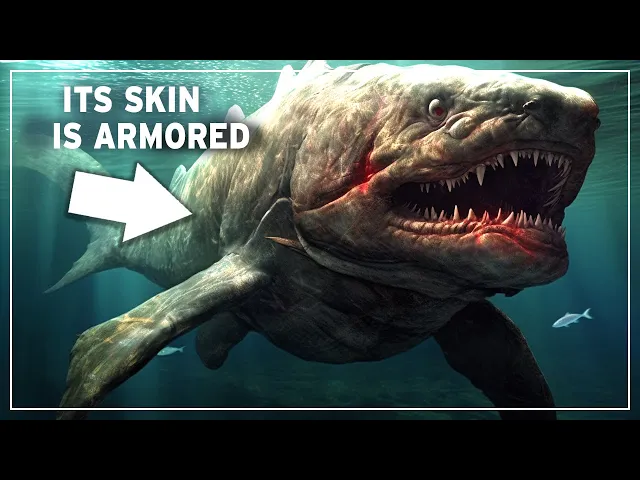
vision. Quite an advantage when searching for small prey on the seabed, don't you think? So far, we've seen plenty of marine animals of all shapes and sizes, but nothing that could compete with Uriperids. Yet remember I told you that this one had lost its place as alpha predator. A much bigger, fiercer, and better equipped animal is now roaming this ocean. Do you have any idea who it is? What form it might take? What species group it belongs to? How big it is? You've probably heard of him. A fearsome predator. It's a fish. It's the donostas.
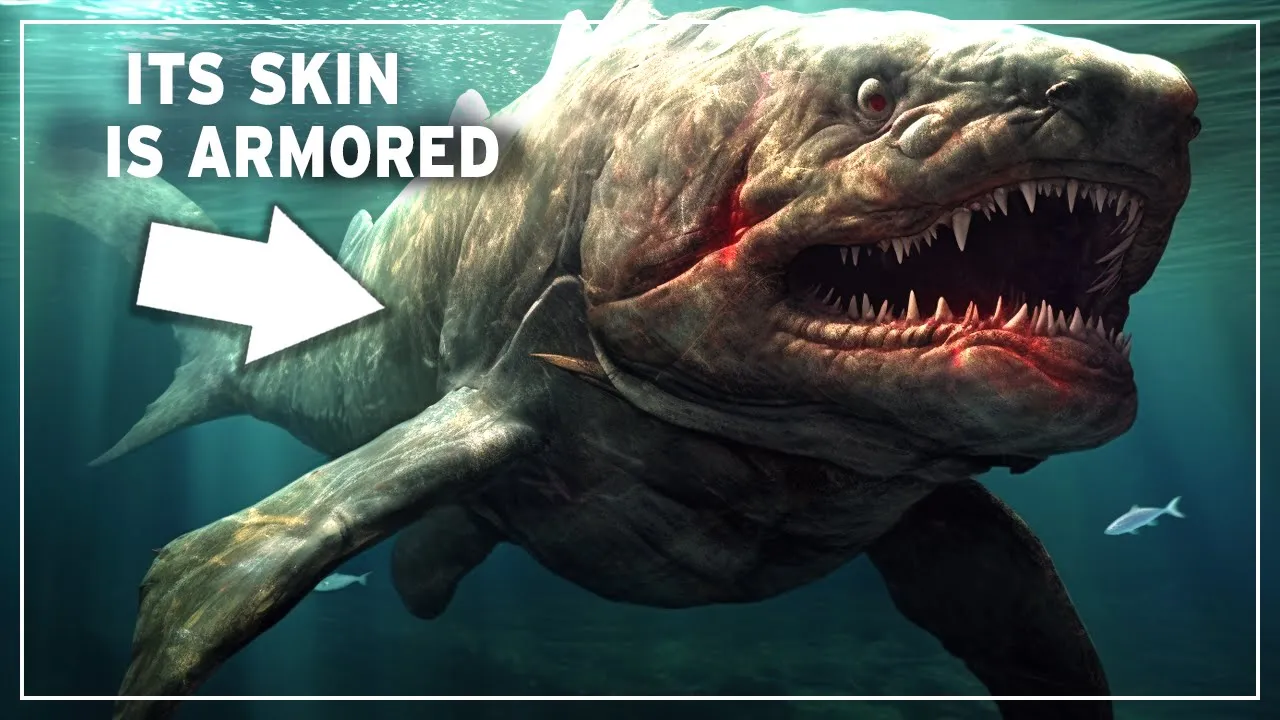
[Music] Dunlioius is an extinct genus of large placaderms that live during the upper deonian. Numerous fossils have been discovered in North America, Poland, Belgium, and Morocco. The genus comprises around 10 species, some of which are among the largest known plaaderms. According to some studies, scientists estimate that the bony plates on the heads of the Largest specimens could be up to 4 cm thick or 1.6 in. An infallible armor if I do say so myself. Its body length is also estimated to be close to 10 m or 33 ft. Although other more recent analyses have revised
these estimates downwards to around 4 m, it's still an imposing fish. In any case, it remains the largest Deavonian predator on Earth. Its teeth, or rather spiky toothlike Bony plates, are an infallible hunting weapon. We speak of protodents. They are the first fruits, if you like, of real teeth. While they bear no resemblance to what one might imagine when talking about dentic, don't doubt their power. Primitive dentition doesn't mean less dangerous. In fact, the Dunlioius teeth were formidably efficient. They formed a beak capable of cutting through anything that came into its mouth, including bones and
armor. Its jaw also had a wide opening angle and closed like a guillotine on its prey. No one could escape. Duncloius became the terror of the Devonian seas. This encounter is a great opportunity to look back at the changes in fish. It's time for us to discover the extent of Radiation in these animals and how it led to a veritable revolution in all the world's waters. Whether at sea or on land, in fish, arthropods or plants, there will be a deonian before and a deonian after. From the depths to the surface, fish reign supreme. Over
time, they have become fearsome and dangerous predators. The atmosphere is heavy, not very reassuring. The apparent calm never lasts long. These little animals know this better than anyone. Even the biggest are not safe, for the predators we've just been talking about are monstrous or gigantic, sometimes both, and bloodthirsty. If things have changed and fish have come to dominate the ocean, it's because they've evolved. They have adapted and conquered new ecological niches, much to the dismay of their prey. This wasn't the case before. Fish used To live on the seabed and feed on the ground. These
are what we call benthic fish. To better understand the new fish issue, you need to know that there are several zones in the ocean. We differentiate between them because what characterizes them clearly separates one from the other. In fact, they each constitute a distinct ecological niche. In the ocean, for example, we distinguish between the pelagic zone, The benthic zone, and the fatic zone. The fatic zone or epipelagic zone is the region of the ocean that rests on the continental shelf. It extends from the surface to a depth of 200 m or 660 ft. The word
epipelagic comes from the Greek words epi meaning at the surface and pelagic meaning of the sea. This zone is also called the fatic zone because it is here that the sun's rays can penetrate the water sufficiently for photosynthesis to take place. The maximum depth for this zone in clear open ocean waters is 200 m or 660 ft. Beyond this depth the zone is referred to as pelagic. This is the upper part of the water column i.e. the zone between the bottom and the surface of the water. It lies just below the fatic zone. Depending on
the stage, depth and characteristics of the ladder, different pelagic zones are defined, mesopelagic, Baipelagic, abyssopelagic, and finally the hallel zone which corresponds to the oceanic trenches. The benthic zone corresponds to the seabed. At different levels and depths, animals take advantage of the seabed on the continental slope, the continental glacus, the shelf, or the abyssal plane. Up until now, the vast majority of fish, particularly ostricaderms, have occupied Almost exclusively the benthic zone, i.e. the seabed. So far, we've been dealing with benthic fish that feed by scraping the seabed in search of food. As well as being
perfect prey for uriperids, the famous sea scorpions, these fish live in a very specific part of the ocean. But that's about to change. These fish will no longer occupy only the benthic zone, but will conquer the pelagic zone Higher up and take full advantage of this freshly acquired water column. [Music] The great radiation of fish is one of the most important upheavalss of the Deonian period. The morphology of this animal group underwent numerous changes. These changes were already taking place at the very end of the saluran if you remember correctly. But it was in the
Deonian that everything really began for these Species. It's only during this pivotal period that we can truly appreciate the benefits of these evolutions. Ostricaderms which were very present in the saluran are now increasingly giving way to pladerm fish in the deonian. The latter are seeking to establish themselves in the marine world. Although plaaderms are quite different from their ostracian cousins, they have nevertheless preserved some of their Main characteristics, notably their famous external armor. But they are also now equipped with jaws. As you may have gathered from your discovery of Dunlioius, there are two main groups.
Firstly, jawless fish known as agnathenans and secondly jawed fish known as nathos. If the arrival of jaws in fish is such a revolution, it's because it changes not only the way they eat but also where they live. These are no longer the benthic fish of the shallows but jawed fish that are moving upwards. They leave the benthic zone to colonize the pelagic zone of the ocean. These fish have articulated jaws, but also what look like the first teeth. As you already know, these are not yet teeth in the strict sense of the word, but rather
bony outgrowths. Sharp and solid, they still do the job perfectly as you only have to see Dunlioas hunting to realize. Personally, I wouldn't put my fingers in them. But that's not all. They also have specially designed fins dedicated to swimming. This allows the fish to move with greater ease, precision, and speed. Now armed with pseudodents, they can also defend themselves. It's a gamecher. The cards have been reshuffled. They go from being prey to predators. [Music] They start hunting for food. Dunlioas took full advantage of their new position in the ocean throughout the Deonian period, as
you've just seen. But as you can imagine, it's far from the only one. [Music] Drepenaspis, an Agna fish, still occupied the ocean at the beginning of the Devonian period. By studying this species, you'll see the marked difference between Agnathens and Nathones. Unlike the other heterroristans they resemble, Dreanaspus does not have its mouth facing downwards but towards the water. Yet it remains a burrowing animal, a benthic fish in short. Like many of its relatives, this Agnathan has an armored body that protects it from many predators. It's a rather distinctive species of fish, easily identifiable by its
flattened shape and heavily armored body. Its appearance is similar to that of today's stingrays since it also has small widely spaced eyes. In addition to not having a jaw, the great characteristic of this type of fish is that it has no internal skeleton, but a carropase made of bony plates and very robust scales. Despite this apparent strength, like other members of his group, he won't make it to the next geological period. [Music] Jawless fish appeared several million years ago, but during the upper deonian nathos expanded at the expense of jawless fish. Many species in this
group such as the anaspids, peladants, gellypids and ostekens disappeared during the upper deonian. Jawfish on the other hand took advantage of the windfall. They developed and diversified enormously. In the history of vertebrates, nathosomes appeared as early as the upper orvician, 445 million years ago, but remained extremely rare until the very end of the curion or the beginning of the Deonian around 420 to 410 million years ago. They show a remarkable evolutionary radiation with the emergence of plaaderms, condrithians and osticians. [Music] Jawed fish form a very large group called nathos. The latter gave rise to the
cartilagene fishes like sharks known as condrithians. These later gave rise to sharks, but also to rays such as the magnificent manta ray, renowned for its size and singular beauty. The nathos include a very large group, the osticians. This group includes bony fish. Then come the actonopterigians and sarcopterigians. [Music] The large ostician group expanded considerably during the deonian period precisely through the expansion of these two subgroups. The actonopterigians and sarcopterigans. In the first the actonopterigians you can see much more developed fins. These are the fishes with raised fins, in other words, with bones. This means greater
speed and ease of movement in the water. On the other hand, fish with fleshy fins, the sarcopterigians, are much less so. This isn't a bad thing, however, since it's undoubtedly what gave rise to the crossopterians, a group that later gave rise to the tetropods. As a reminder, tetropods are vertebrate animals whose skeletons usually comprise two pairs of locomoter limbs and a neck And whose breathing is normally pulmonary. Dinosaurs are descended from them just like us humans. But let's return to the deonian and our two emerging fish groups. It's the appearance of the actonop terigians and
sarcopterigians that interests us here. Ostician fish i.e. bony fish with raid or fleshy fins. After them we'll come back to the condrithians a new group that appeared In the deonian period. [Music] The actinopterigian osticians or rayfinned fish are rather talented fish in the open sea. Meet kerolpus. Do you notice that it's more at ease in the water than the agnathan fish we saw? This kolpus seems better adapted to swimming faster, longer, and optimizing its trajectories. Reaching lengths of up to 50 cm. Kerolpus display a range of physical characteristics that will make Actonopterigians so successful. There
are of course the ray fins that give the group its name. But there are also large eye sockets that suggest good eyesight, a very useful hunting skill. With their wide open jaws equipped with a series of sharp teeth, CarolPus were undoubtedly efficient predators. Their preferred hunting grounds were mainly estuaries. [Music] If you look at its body, you'll already have noticed that it was strong and slender, perfectly designed for fast, sustained swimming. In other words, add to that its keen eyesight, and you have a strong case for predation. However, just because it is a predator doesn't
mean it can't also be prey. To find out more about the lifestyle of extinct animals, scientists have a number of methods and tools at their Disposal. In particular, they study coprolytes. These are fragments of hardened calcified fecal matter that take on the appearance of small stones. In other words, fossilized excrement. In these excrements, scientists are sometimes able to detect traces of their meals and therefore of their probable diet. Kerolpus scales have been found in coprolytes. This means that kerolpus were in a position to prey. They also sometimes devoured each other as shown by a Keralpus
fossil with one of its smaller relatives in its abdomen. Competition must have been fierce in the Keralpus family. Only the strongest, fastest, and most strategic survived. So the life of this predator is not a smooth one. Nevertheless, Kerpus' modus aparondi is a revolution in the world of fish. The study of its skull bones revealed that the great amplitude with which it could open its mouth must have enabled it to swallow prey up to 2/3 its own length. Agnathens, Aenthodians, as well as young sarcopterigians and pladaderms could all have been on its menu. Let's hope his
appetite isn't too ferocious. Let's leave him to his hunting and discover the second group that awaits us Now, the Sarcopterians. We have much to learn from them. [Music] Sarcopterigians are also osticians, but the main difference between them and Actonopterians is in their fins, which are fleshfinned rather than rayfinned. But this is far from the only difference. Their main characteristic, or at least the one we'll be focusing on here, is their lungs. Yes, they were the first fish to be equipped with gills. But that's not all. They're also able to breathe a small gulp of pure
air at the surface. Another striking fact about their morphology is their similarity to tetropods. But don't jump to conclusions. They are not yet tetropods, although they come close. We call them tetropottomorphs. Let's start with the first of these, the Eustanopteron. The Eustanopteron is one of the best known members of the sarcopterigians. In fact, it is the one that most closely resembles tetropods. It has the same cranial bone pattern as ichthosta and aanthastega which are also very close to future tetropods. Eustanopteron like other fish of the tetropotamorpha class has internal nostrils called kone A feature found
only in terrestrial animals and sarcopterigians. It also has the teeth of primitive tetropods. We can see here that evolution and evolutionary radiation are beginning to play their part. Physical and metabolic changes are taking place within this family. Another important feature is that like other sarcopterigians, Eustanopteron has a two-part skull which Pivots at half the intercranial articulation. But Eustthanopteron is so popular for another of its peculiarities. Its endoskeleton features a humorris, ulna, and radius on the front fin and a femur, tibia, and fibula on the rear fin. These names ring a bell, don't they? These characteristics
are found in tetropods, vertebrates with two pairs of locomot limbs. Through recent studies, we now know that this feature of the eustanopteron skeleton is in fact a general characteristic of the fins of fossilized sarcopterigians and not a particularity of eustopteron. This revelation leads to a new conclusion. Tetropods probably evolve from the latter. But another point remains to be clarified. Why did Oikians evolve into Sarcoptericians? Fish with such a skeleton and primitive lungs. If we've managed to understand the impact of teeth on fish, leading to the conquest of new marine territories, we now need to understand
why some of them adopted new adaptations to life on land. [Music] During the Deonian, hot and dry seasons were very harsh, causing major complications for many aquatic species. When lake levels dropped, fish found themselves with little oxygen and probably died of enoxia before the area dried out completely. This situation exerted a selective pressure that only fish like the Eustanperon were prepared to withstand. Eustanperon can move episodically on land as it has rudimentary lungs. Tetropotamore fish have benefited from a number of adaptations that enhance their Ability to get out of the water even if we are
still in the early stages of a possible terrestrial life. This is the case of useperon but also of panderthus bralepus tictalic aanthastega and ichthastega. Let's go and meet some of them to better understand this transition from an aquatic to a terrestrial world. Oh, look out. It's a hineria swimming toward them. A little further on, more tetropottomorphs await us. Here's a colacanth. He's got some amazing abilities. You'll see the colacanth group appeared during the Deonian period 410 million years ago and unlike others it has survived to the present day. Incredibly it has evolved very little in
over 300 million years. Kacanths live between 100 and 400 m or 330 and,300 m deep on the western and Eastern margins of the Indian Ocean today. In September 2015, a Franco Brazilian scientific team published a discovery about colacantss in the British journal Nature Communications. The study of a sample of this prehistoriclooking and endangered fish at the European Synretron radiation facility revealed the presence of a hidden nonfunctional lung. It is thought to act as a Fat-filled stabilizer, enabling it to evolve at depths of up to 800 m. They also have a thickwalled gas pocket. They use
it when close to the surface in both fresh and salt water. He seems to have a lot more to tell us about the mysteries surrounding his species. Unfortunately, time is against us. The colacanth population is very small and the species is now in serious danger Of extinction despite their great longevity. The previous study carried out in 1977 estimated the lifespan of colacantss at between 20 and 25 years. Their longevity can be estimated from the striations on their scales. It's a bit like tree rings. Each stripe has its own year. This is how in 1977 the
first analysis results came in and the estimate was around 25 years. But in 1977, Technical resources were more limited than they are today. Today, polarized microscopes offer far more accurate results. The fossils were examined from scratch to detect new elements and perhaps confirm or refute hypothesis. Scientists now believe that colacantss can live for up to a hundred years. This would also explain their long gestation period. This is a rare occurrence and probably One of the longest among marine animals. How long do you think it could last? In humpback whales, gestation lasts 11 months. In killer
whales between 15 and 18 months. In colacantss on the other hand it lasts almost 5 years. Although some members of the colacanthus genus are our contemporaries they are not as resilient and immune to extinction as we might think. Species with very long life cycles are more sensitive to natural disturbances And human action. due to the very low replacement rate of older generations by younger ones. It's not the only Devonian fish species still around in the 21st century. How would you like to meet another of its contemporaries? [Music] We're talking about the dipest. They too are
rather peculiar aquatic animals endowed with extraordinary abilities. Their name means double breathing because in addition to gills, all dipnoi have one or more functional lungs for air breathing. Like other members of the sarcopterigians, lungfish have primitive lungs. They also have all the characteristics of tetropods. These include an elongated pectoral fin with numerous mess, rostal tubules, posterior ramifications In the posterior dorsal fins and an infraorbital sensory canal following the premaxillary suture. Lungfish live in slowmoving stagnant waters with dense vegetation. They have primitive lungs which are very useful depending on the season. Like the previous fish, when
drought sets in, they are ready to survive. During periods of drought, oxygen can be scarce in the waters of their various habitats. Their lungs and pseudo locomotion are therefore an extra chance for them to get through this delicate season. This is true of today's lungfish. But we can imagine that today's lungfish still share many features with those of yesterday. So they too would be able to surface regularly once or twice an hour to breathe air. But it's not these characteristics, however interesting they may be to Observe, that I'd like to share with you here. Some
contemporary specimens are quite surprising and still amaze scientists and fish lovers alike. In summer, Neo seratodotus fosteri, the Australian lungfish, insists. In other words, it digs a burrow in the mud out of the water at the start of the dry season. And that's not all. It also secretes a mucus that encloses it in a cocoon where it can remain for several Years if the drought persists. Such survival skills are nothing short of extraordinary. The very essence of a fish is to be an aquatic animal in its own right. And yet it is capable of silting
up, forming a protective cocoon out of the water and surviving drought. What's more, according to recent discoveries, the cocoon is a living tissue with antimicrobial properties. In other words, the cocoon could be Defined as an external immune system. Let's take a look at Goganas. Gaganasis is unlike the last two members we saw an extinct species. However, like them, Gaganas shares some characteristics with fish and tetropods. We mentioned the importance of reefs and marine ecosystems. Here we have a privileged witness to this key element for many species. Many of them depended on these reefs. This is
also the case for Gaganassis. This fish lived in what was a 1,400 km coral reef surrounding northwestern Australia off Kimberly. Its skeleton shows certain tetropod characteristics, notably its fins, which show the precursors of the forearm bones, the radius and ulna. Cladistics, the study of evolutionary transformations and characters, has shown that this fish-like appearance is closer to terrestrial vertebrates than To rayfinned fish. And not far from gagas is another sarcopterigian, dipus. Dipus is a medium-sized fish about 35 cm or 14 in. It bears some resemblance to the modern Australian lungfish we met earlier. It too has
no swim bladder or gas bladder. Yet this bladder plays a vital role in many fish. It looks like a thinwalled bag and is filled with gas. It determines the depth at which the fish floats in the water, enabling it to move to the depth it wants by adjusting the density of the sack to that of the water in which it lives. But let's not linger too long as I'd like to take a closer look at our next fish before it swims away. This is Osteolpus. He's probably the smallest member we've encountered so far. Yet, it's
a Devonian sarcopterigian. Close to the base of the tetropod family tree, too. It had a distinctive feature that set it apart from other members of the sarcopterigian group. It measured around 20 cm or 8 in and was covered with large square scales. And it's precisely these scales that should attract our attention. They're quite distinctive. They are covered by a thin layer of spongy bone material called cosmine. In this layer of cosmine, there are Channels connected to sensory cells deeper in the skin. Fossil studies don't yet allow us to say for sure, but it seems that
these sensory cells may have given this fish the ability to detect vibrations in the water. As you can see, each of the specimens we have encountered, despite their common group affiliation, have developed very distinct survival or hunting skills depending on their needs and living Environment. Let's take a look at Panderthus. Panduricfus has a skull externally similar to that of a tetropod, but the cranium has retained the intraranial articulation. It conforms entirely to the generalized pattern of lobefinned fishes and shares no obvious derive features with tetropods. Despite its catfish-like appearance, it also has primitive lungs. This
is already a great asset when it comes to trying to get out on land from time to time, but it's the fins that are of particular interest to us. Its pectoral fins are prototypes of tetropod limbs, being fleshy and bony. They're fingerless and not very articulated, but it's one of the very first of its kind to use them to get around on land. This was no easy task for him. However, His pelvic fins are still very primitive. They don't allow him to lean on the ground, which is essential for locomotion. We can take advantage of
this encounter to examine the question of locomotion in these species. According to scientists, locomotion can be seen as a kind of transition if you like from swimming to walking in tetropods, I.e. with propulsion from the hind limbs. Here we can see that propulsion is achieved by leaning on the front limbs and undulating the rest of the body. It's a little unusual in terms of aesthetics, but it works. We're looking at one of the few vertebrates capable of moving with its limbs out of the water. It's a small step for this sarcopterigian, but a big one
for the tetropods to come. [Music] Finally, I'd like to introduce you to Elus Dogg Watson. It's vaguely reminiscent of the alligator with its massive flattened triangular skull. It is built to seize and crush prey. It was studied recently in 2021 to be more precise. Indeed, this marine specimen has always raised questions. The only problem was that to answer it, scientists needed material that could be Analyzed, and that was sorely lacking. The fossils found were too incomplete to support certain hypotheses. In August 2010, employees of Quebec's Park National Demea stumbled across remains buried in a stratum
of sedimentary rock in the Essuminic Formation, a major fossil site. As new discoveries were made and new technologies mastered, scientists were finally able to study these fossils from A different angle. From then on, they went from surprise to surprise with its strong pectoral and pelvic fins, elongated body covered with scales and gills. The animal resembles a fish. Logically, therefore, we classify it in this group. However, it turns out that El Pisto Watson, well hidden in its fins, also possesses oicles whose organization evokes fingers comparable to our own. And this time, it's a tetropod specific Feature.
Highresolution scans have revealed these fanges. They are truly fingers enclosed in fins. Here we can clearly see the appearance of the land vertebrae hand. It used its fins to support and drag itself along the shore. Whether this is a fish or a tetropod, the debate is still open. But we now have the answer to our question. Why did these fish adapt to Life on land? The lack of water and therefore oxygen favored this adaptation. Let's take a look at our last group of Oikians. [Music] Condricians are a new deonian group also descended from ostician fish.
However, they did not grow as rapidly as their sarcopterian and actinopterian cousins. Soon they too will conquer the seas. For The moment, they are making a timid appearance, notably with a primitive shark, Cla. If we're careful, we should catch a glimpse. This area of the ocean is its favorite playground. Meet Clatoseli. [Music] Cladeli is a type of shark. In fact, the very first of its kind. With five to seven gills and excellent fins, it appeared towards the end of the Deonian period. Contrary to popular belief, although it is a very good predator, it is not
at the top of the food chain like some sharks we know today. Measuring between 60 and 180 cm or between 24 and 70 in long, it's an imposing fish. Despite appearances, it feeds only on crustaceans. But it is also the prey of a much bigger and more powerful fish at this time. The Large placaderm dunloius. Powerful though it may be, it is no match for a dunloius of this size. The oceans and rivers of the Deavonian period are home to some amazing creatures. You've seen for yourself how extraordinary their radiation is. They've not only expanded
greatly, but also diversified. You also understand why the Deonian is referred to as the golden age of fish. We could all do with a breath of oxygen after these long minutes underwater. How about going up to the surface for a bit to see what's going on? A lot has changed on land, too. Let's take a step up to admire this new facet of the continental landscape. We can clearly see the expansion of the territory of the cladoxy lopsids in particular with the strong presence of watza, but also of lyopods, herbaceous plants. [Music] Look at this
verdant landscape as far as the eye can see. Isn't it striking? We're looking at one of the very first forests in the history of our planet. The very first. The very first green lungs of the planet are here, right in front of you. The first forest sprang up here on the shores of seas, lakes, and rivers. [Music] Just a few million years ago, vegetation Was limited to herbaceous cover. Plants grew to no more than 10 cm or 4 in at most. And yet, look right in front of you. That tree is probably 8 m or
26 ft tall. Other plants will come to occupy the different levels of the forest. Soon after the herbaceous plants, the shrubs and even the arborescent plants will occupy the space rising ever higher towards the sky. This development and increase in height Took place in the Deonian period. But if you don't mind, let's stay with a saluran for a few more minutes before moving on to the deonian we're interested in. You're about to witness the explosion of plant life on Earth. When we left the Saluran mainland, only the coastal landscape seemed remotely inviting. creeping plants could
be seen colonizing the soil near these life-giving water Holes. And it was here, right here, that it all began. And here we are at the dawn of the very first terrestrial forest. It's no longer a simple green carpet along the coastline, but a truly luxurant, diversified, multi-story forest that is establishing its roots and expanding its territory. This forest is becoming one of the protagonists of our history. If fish are major players in this period, given their formidable radiation, the forest plays an essential role in the rest of our story. Without them, life on Earth would
never have been possible. Plants use photosynthesis to grow. While they absorb large quantities of carbon dioxide, they also release oxygen. They enrich the air that animals will soon be able to breathe in at the top of their lungs. The forest, like the reefs in the sea, becomes an essential part of a whole new ecosystem. An ecosystem where nature abounds and there's no shortage of shelter. A rich, abundant ecosystem where life can settle down and grow serenely. Let's take a closer look at these famous Deavonian plants that have reshuffled the cards of life on Earth. [Music]
Gradually, these first plants led to the Emergence of new ones, notably ferns and leopods. Some scientists believe that leopods were the first arborescent plants. But what defines a forest? A forest is an ecosystem in which the life of each species is linked to that of the other species around it. This ecosystem is plural, diversified and made up of several complimentary organs. A forest is made up of different levels And strata. At ground level, we find the muscular stratum. then the herbaceous stratum, the shrubby stratum and finally the arborescent stratum. It's the formation of these different
layers that creates a veritable ecosystem that meets the needs of a wide variety of species from the smallest insect to the largest carnivore. Until now, only the herbaceous layer had managed to develop. However, the first Tilling of the soil enabled the musk layer, then the shrub layer, and finally the tree layer to develop on the continent for the first time in the history of our planet. The soil is inhabited by such a rich and luxurant plant cover and by more and more insects, which in turn promote the growth and expansion of the forest. It's a
far cry from the desolation that the mainland used to offer. This time the landscape is almost Reassuring. Life is present. We no longer feel alone in this void amidst the chaos of rock and dust. Here we are at last. Life has taken root. Life has taken root in the soil. In fact, it has never left the continent since. Of course, life has its ups and downs, but it's here, ready and willing to do anything to adapt and survive. How did the earth manage to turn such a Beautiful deep green? How did vegetation conquer the land?
It took time and above all the right conditions. We often hear about the great biodiversification of embryophytes i.e. land plants. During the Devonian period we witnessed a veritable diversification of plants. Extraordinary radiation took place and the plant cover was radically different from anything we had known before. All continental land masses are covered with a varied plant carpet. Phyloites develop extensively and occupy a median stage. Plant cover is no longer simply at ground level, but gains in height. Arbururial plants also appear, this time occupying an even higher level. Of course, at first this great explosion of
plant diversification and radiation operates mainly near coasts, rivers, and bodies of water. There are two reasons Why plants need this element close at hand. Firstly, it's an essential nutrient just like solar radiation or carbon for creating glucose. Plants consume water but it also needs a humid environment for reproduction. These plants reproduce by spores as per modified plants have not yet appeared. When we think of plant reproduction, we first think of flowers and seeds. However, plants without flowers or seeds Such as mosses, lychans, and our famous ferns can colonize a wide variety of soils without any
of this. Reproduction of the vast majority of these plants is made possible by spores. Spores are cells produced inside sparangia that enable reproduction and thus the birth of new plants. [Music] In ferns, spores are generally produced by the leafy plant. On the underside of leaves, clusters of orangey yellow Sparangia appear. Each of these spirangia forms a sort of small bag containing a number of spores or plant cells depending on the species. These spores, microscopic and very light, can be dispersed mainly by the wind. But for the magic to happen, it's not enough for a simple
breeze to disperse the fine dust containing the plant's genetic heritage. These spores must be able to germinate And give birth to a new plant. For this to happen, three essential conditions must be met. The first concerns the climate. The temperature must be just right, neither too hot nor too cold. Otherwise, germination will not take place. Secondly, there must be sufficient humidity. This explains why these plants are more likely to colonize land near bodies of water, which are of course wetter and Therefore more conducive to germination. Finally, for the plant to develop, it must of course
find the nutrients it needs. The quality of the soil, water, and sunshine will have a positive and beneficial impact on its growth. For the moment, the most important thing to remember is the importance of humidity in the reproduction of spore plants and their great expansion during the Deonian period. This at least helps us to understand why wetlands were the starting point for the first plant cover. There are also two reasons for this extensive plant colonization. The first is climatic. As we have seen, the Deonian climate was hot and humid. In other words, all the conditions
necessary for plant development were present. The second reason has more to do with the food chain. While plants have invaded this new terrestrial space fairly rapidly, animals have not yet done so. So there are no herbivores on the horizon. Nothing and no one stands in the way of plant conquest. They are free to grow and spread at will. [Music] Many spore forming plants developed during this period. In particular, the Cladoxy lopsid group expanded. Like many fern species of the period, they are part of the arborescent genera. Among the cladoxy lopsids, one of the most popular
genera is watza eospermaus. As early as the middle deonian, it formed the first forests. This was a giant leap for flora. Vegetation took on a whole new form. In just a few million years, we went from a simple vegetation carpet to a Real forest. Watza could reach up to 8 m or 26 ft in height. Visually, it's somewhere between a palm tree and a tree fern. Like the fern, Watiesa has no leaves but what are known as fronds. These fronds were installed on the crown of the plant i.e. on the upper part. Scientific analysis suggests
that the fronds fell off as the plant grew. The base of the stem once healed by the Plant then formed the trunk. Many of today's palms have adopted the same growth mechanism. Thanks to the discovery of a large collection of specimens at Gilboa in the United States, scientists were able to study different parts of this plant. However, it wasn't until 2005 that we had the knowledge and technology to obtain a complete view of the plant as close to reality as possible. Watiesa was not the only genus to have Advanced its roots vertically into the soil
in order to establish itself permanently on the continent. During the same middle Deonian period pseudosporus can also be seen. This one is smaller around 3 m high like pietia and calamopon which are closely related to pseudoporacis. It could be classified in the shrub stratum. [Music] Arbural plants and therefore at first Sight trees don't necessarily mean wood. This vegetation is still in its infancy. The trunks are initially quite fragile. Bad weather or parasites could be fatal for these plants. In addition to the expansion of the plants and the appearance of the different forest strata, there was
another important change in the vegetation particularly among the plants in the arborescent stratum. This is the appearance of the cambium. The cambium is the tissue, wood or cork that forms inside the trunk. It not only conducts raw sap from the roots to the leaves, but also provides the plant with better support and a firmer hold. These cambium plants can be found in a variety of forms, including a neuropon, a bushlike plant with strong branches, rimia, and runaria. [Music] It's time for us to get a little closer to this first forest and discover it From the
inside. It was in present- day Scotland that the fossils of what are thought to be the very first plant colonies were found. One of Scotland's regions is rich in CHS, a salacious rock produced by hot springs. They are plentiful here in the Riny CH due to the extensive volcanism. The incredible thing about this fossil deposit is the quality of the fossils themselves. They make it possible to reconstruct an entire local ecosystem. In terms of plant life, scientists have been able to highlight the presence of several different species cohabiting in the same area. Here we find
seven genera of embryoes essentially tracheoites already well adapted to the terrestrial environment. They have tracheids a kind of small circuit for transporting sap risoids i.e E small filaments that develop on the Stem and stomata a natural opening on the epidermis of the stem or leaf which ensures gas exchange with the outside environment for respiration or excretion. This is the case of rhinia a rhinophyte but also of asteroxalon a leafyte. There are also more primitive forms such as aglopyon which still display bryophyte characteristics. Not far away, cherapites, a sweet algae And a pseudo lyken probably the
first of its kind. Winfrania reticulata are also to be found. Most of the species we've mentioned grow in patches unlike other plants we know particularly those with seeds which tend to be more scattered. This is explained by their mode of reproduction by cell cloning. This development is typical of organisms whose capacity to exploit the environment is limited both for the Supply of water and mineral salts as they do not yet have true roots and for light capture. Some species have only microfills, small archaic leaves and bare axes. While there are a few shortcomings, this mode
of growth allows organisms to rapidly occupy available space. This is a valuable advantage when it comes to being competitive and rapidly colonizing an area. The rhinia genus appears to be an early Colonizer of drain soils with poor plant litter. It has succeeded in quickly establishing itself. Asteroxilon is a vascular plant also widely found in the deonian period. It measured around 40 cm or 16 in high and 12 mm in diameter. A 47 millionyear-old fossil found in Riny CH provides an insight into some of the plant's mechanisms. One of the branches form from a Shootlike axis
is buried in the soil. Sometimes up to 20 cm or 8 in deep. At the surface, they don't produce leaves. It's still too early. We're talking about inations here. An innation is a scaly leaflike structure distinguished from leaves by the absence of vascular tissue. This type of structure is found in certain primitive plants such as the rhinia genus and our famous asteroxalon. The plant's inations and axes are also Equipped with pores known as stomata. These control the rate of gas exchange. A stomata is a pore bordered by a pair of specialized parenchymal cells called guard
cells which regulate the size of the plant stomatal opening. The plant was therefore certainly capable of using photosynthesis as a source of energy. [Music] One of the emblems of the Deonian period is the archopterus. It belongs to the fossil group prognoserms and is considered by many scientists to be the first modern tree. It resembles a fern with a trunk similar to that of a conifer and can reach 40 m or 130 ft in height. Be careful not to confuse archopterus, arguably the world's oldest tree, with archopterics, the world's oldest bird. Archopterus means ancient slingshot. The
Deavonian represents the very first Plant colonization of the Earth's soil. But this colonization pitted different species against each other. A race for space, but also a race for light was waged. The anatomy of their trunks makes them true trees. With Archopterus, the wood becomes both a support and a conductive tissue. a combination particularly well suited to seeking light at height. Because of its distinctive trunk, Scientists consider it to be the first known modern tree. According to Bridget Meyer, Berthod Paleobotonist at the University of Mont Pelleier, it captured a maximum amount of light thanks to its
long horizontal branches bearing leaves with remarkable photosynthetic organs. In its uppermost park, our archopterus, the origin of the first forests, had very special cells, so-called merist stematic cells. A merist stem is a tissue of undifferentiated embryionic type plant cells capable of dividing by mitosis an indefinite number of times and multiplying rapidly. Reproduction methods are also evolving in the sense that sparangia are not sufficient to preserve and develop species as the conditions required for the development are quite complex particularly in terms of humidity levels. Archopterus uses the layering technique which consists in burying one of its
branches in the ground. The tree can then start again from another base. Archopterus can also use the cutting technique. In this case, a new tree can develop from a simple branch fragment which has begun to produce roots in the soil. Insects have inherited the exoskeleton, articulated limbs, and compound eyes of Their arthropod ancestors. Along with their cousins, the myriods, insects are going to massively invest emerging lands. Their carrapase is an asset for protection, but also for combating air pressure. Rhineella precursor is a species of springtails often jumping arthropods. This species was also discovered in Riney
Scotland. It dates from the lower Deonian. It is considered the oldest known Calmolan and hexopod dating back some 410 million years. Hexopods form a film of arthropods and comprise four major groups. Prourins, durans, insects and our famous springtails. Today, springtails are among the most abundant arthropods, inhabiting not only soils, but also rocks, tree trunks, and other environments in more or less direct contact with the ground. Some species live in wetlands such as ponds and pee bogs. So it's hardly surprising that these little creatures can be found in the vicinity of wetlands and early vegetation. Paleocarinidi,
an extinct and fossilized family of arachnids belonging to the equally extinct and fossilized order. Trigono turbida could also be seen in the region. These were our first terrestrial Spiders. Here we have a specimen of Gilbo arachnne. A little further on we see another paleocarinid at copus. It belongs to the order auroranada. At this stage of evolution, spiders and scorpions are still quite similar. The latter resemble spiders capable of producing silk but do not yet have true spinetses. They also retain a segmented abdomen bearing a fleellum-like tail reminiscent of a whipped scorpion. Based on fossil studies,
scientists believe that this species is ultimately very close to the origin of spiders. In addition to spiders, deonian millipedes such as Devonobius and Devonocaris and pseudoc scorpions such as Draachella were not uncommon. [Music] Insects play a key role in maintaining the balance of an ecosystem. They play a major role in soil fertility by decomposing dead leaves or disseminating fungal spores. It's their meticulous work in the soil that contributes to plant development and the emergence of new species. Despite their small size, they are the ones who maintain the ecological richness of their environment. They are the
forest partners and have Encouraged its expansion. Speaking of plants and environmental enrichment, now that you're up to speed on tetropotamorphs, I'd like us to go back to the swamps and mangroves not far from this forest to investigate these very special species a little further. [Music] We saw earlier why tetropotamorphs have newly acquired lungs. This feature enables them to survive When water and oxygen are in short supply. But it would be interesting to take our investigations a step further and also understand that changes in their skeletal structure and locomotion. Vegetation has had a strong impact on
life. And incredible as it may seem, it has also played a major role in aquatic life, even if this is not its basic natural environment. While it's true that plants settle on Land in the vicinity of rivers and mangroves, it's also true that these plants don't just settle on dry land. Their roots are also entangled in water from which they draw some of their resources. This tangle of roots and young plant shoots, dead leaves, and other plant debris. This vegetital hodge podge is an ideal shelter for certain species of fish that fear marine predators. here,
well hidden among all this Vegetation, they can camouflage themselves. Such shelter is a godsend for these species when we remember how dangerous fish armed with teeth and a far more advanced swimming ability can be. What's more, there's no shortage of food in the soil. Organic plant waste, for example, provides an abundant food source for filterfeeding fish. [Music] On the other hand, getting around in such conditions is no mean feat. Their fins are of no use here. To make their way, they have to get in, hold on, pull themselves up. Legs would be much more efficient.
It's then that evolution takes over after several hundred,000 years. Of course, to compensate for these animals difficulties of movement and meet their needs, they swap their useless fins for pseudo Patterns, much better adapted to the fish's playground. You had the opportunity to see the beginnings of evolution and the radiation of certain fish towards the tetropods. They adopted characteristics specific to fish, but also to future tetropods. They were called tetropottomorphs. You'll see here that some of them still tetropotamorphs are even closer to tetropods. In fact, some of them are considered by scientists to be the first
true tetropods to have ever lived on Earth. The tectalic species was discovered rather late in 2004 in Canada. It lives in very shallow waters. To stay submerged, nature has endowed it with a very flattened body and head. The animal is quite impressive. It probably reminds you of our modern-day crocodiles, and you're not far off the mark because tictalic Occupies the same ecological niche. It too lives in the brackish waters of swamps and mangrove swamps. While these brackish waters provide the ideal natural shelter, Tecttalic has one major drawback. While the difficulties of moving around have been
resolved by a new, more suitable morphology, the water is very low in oxygen. This vital need must be met. Tectalic manages to overcome this Difficulty by adapting its physique to its ecological niche. Its nostrils and mouth are above its head. This means he doesn't need to emerge completely from the water to recharge his body with oxygen. It can keep its body submerged by simply leaving its nose flush with the water. Like pandericus, ticttalic is an aquatic animal with well-developed fins and gills. Nevertheless, it can breathe in the open air as evidenced by the relatively large
spiracle siphon on the top of its skull. With its new skeleton, lungs, and abilities, it is now classified as an advanced tetropotamorph. It has all the characteristics of fish, but also some of those of future tetropods. It's an intermediate species between these two classes, a sort of subtle blend of the two, which makes it easier To understand subsequent radiations and to follow the evolutionary path of its descendants. It's not the only one, of course. We've seen other fish with similar characteristics, but it's much closer to the tetropods. His evolution is more accomplished, so to speak,
and his aptitudes more advanced. Tectalic has the extraordinary ability to breathe both in water and on land. Very few species have this ability. What's more, thanks to its distinctive flippers, it can also move on the surface. Of course, moving from one pond to another would require some energy. He had to crawl or wrigle, but with a little effort, he could do it. Now, he can conquer new environments and expand his territory. [Music] We had to wait a few million years, 30 Million years in the arrival of the upper deonian to be precise, to see the
evolution of these tetropottomorphs and the arrival of new species. This time, the animals were about to discover no longer present a formidable mosaic of characteristics that include fish and tetropods. They are very close to tetropods. Some scientists even claim that some of them could be considered the very first tetropods to have lived on Earth. They are also known as stegosphalic tetropods. The first representatives of the closest thing to tetropods are still mostly aquatic. They regularly point their noses out of the water, but they don't yet spend most of their time on dry land. Venturing a
little deeper into this swamp, we should discover a few of them. This is a Cantha. Let's take a closer look. This one's a bit special. You can see from his morphology that he's much better adapted to moving around on land. Measuring around 60 cm or 24 in, it's modest in size compared to the ichthyostga. But it's its skeleton and legs, not its size, that enable it to adopt new skills on continental soil. It has eight fingers on each hand linked by a sineui sheath. It does not yet have wrists, so Articulation is still limited. Nevertheless,
he is the first to adopt this change in locomotive dominance from the pectoral to the pelvic girdle. There are many morphological changes that enable Athanostga's pelvic girdle to become a loadbearing structure and that changes everything when it comes to ease of movement on all fours. In a canthga there is contact between the two sides and fusion of the pelvic girdle with the sacral rib of the spine. These fusions make the pelvic region more powerful and equipped to counter the force of gravity when not supported by the buoyancy of an aquatic environment. Because that's the whole
problem for vertebrates to withstand gravity when they're out in the open and unsupported by water. If these changes are a precious help, he's still fragile and at the mercy of gravity when he's out in the open. Gifted with gills and lungs, it can use both depending on whether it's underwater or on the surface. But its ribs are too short to support the rib cage out of the water. So, we can't venture out on land for too long. [Music] Ichthyastega's characteristics provide a link between the evolution of marine vertebrates and exclusively terrestrial vertebrates. Despite its ideal
profile for life on Land, it is still very much in the water. Ichthia Stega a stegosaic tetropod is undoubtedly one of the oldest four-lim vertebrates in the history of our planet. These limbs were used to navigate, so to speak, waterways. It used its body and tail for locomotion and its fins for steering. Ichiastega is not very fond of the marine world, preferring the shallow Waters of rivers, mangroves, and swamps. Ikiasta is nearly 1.5 m or 5 ft long. That's quite a specimen when you consider that it moves in very shallow water. The skull is flattened
with eyes on top and large teeth in the jaws, so you can easily guess its diet. Although the term tetropod is commonly used to classify this animal, and it's even considered one of the very first tetropods, Using the term tetropotamorph wouldn't be entirely wrong. Despite the presence of fingers, indeed, it has seven on each hind limb. Some scientists consider it to be more of a basil group, i.e. a sister group rather than a tetropod in its own right. Its codle fin contains rays similar to those of fish. Although it has lungs, it also uses its
gills as its main means of evacuating carbon dioxide. However, unlike other similar contemporary specimens of ichthosta such as eustanopteron or pandericus which are quite similar in morphology, Ichioga remains a far more evolved tetropotamorph. For example, Ichthyastega's vertebrae and ribs are stronger and more developed than those of a canthosta, which we have just observed. It is therefore better able to withstand life out of the water and adapt more Easily to movement on land. [Music] If we add to these various characteristics the presence of fingers, everything leads us to believe that he ventured onto dry land for
longer than the others. In any case, he had the physical capacity to do so. A study published in 2012 revealed more about the Ichthio's gate. According to the scientists from the Royal Veterinary College and the University of Cambridge in charge of the study, it couldn't have moved like a salamander. To better imagine its posture and movement possibilities, the group of British scientists used three-dimensional modeling technology. Thanks to this life-size, highly realistic model, they were able to determine the range of movement of the animals limb joints. And these were not consistent with Walking on all fours,
even in the manner of a salamander. According to them, it couldn't lift its body and move its limbs in a coordinated walking pattern like a salamander. Instead, it had to move using only its front limbs. We could compare the ichthostga to some extent with pinnipeds, at least in its gate. Like seals, elephant seals, and sea lions, if they can indeed get out of the Water, they do so by using their forlims and propelling themselves forward. If they do venture onto land, they don't live there most of the time as this kind of locomotion is energyintensive,
but they do get there on a regular basis. In other words, it's easier for them to get around in the water than on land. And to be a good predator, they need to be sufficiently lively and skillful in their environment. They hunt in the water but make the most of dry land whenever they can. If we go back over our latest discoveries and summarize the evolution of the descendants of fleshy limbmed fish, they show an impressive sequence of adaptations over the course of the Deonian. Our study of the various fish and tetropottomorphs we've come across
show that pandericus adapted to muddy shallows. Tectalic with its limblike fins can travel on land and the prototetropods or tetropotamorphs are able to move through weed-filled swamps like a canthga with its eighttoed feet. Finally, Iostega with full limbs gains in ease of movement and adapts better to slightly longer overland passages. However, we'll have to wait for the arrival of a new era, the Carboniferous, to follow their evolution closely. With the coming mass extinction at the very end of the Deavonian, we'll certainly have many new species to discover. radiations to understand and new landscapes to admire.
But that's another story, another journey through time.