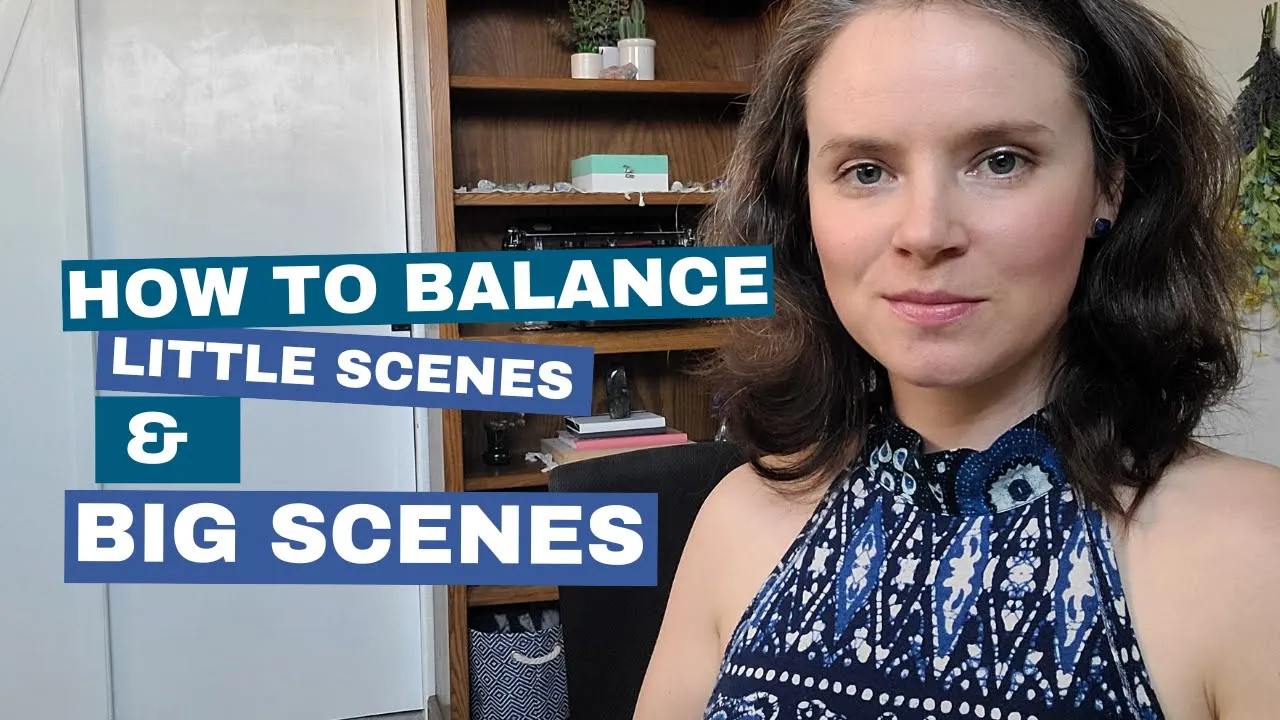
hello and welcome to this week's video my name is KM wiland and I run the writing website helping writers become authors and this week's question is from Grace clay who asks I would like more advice about transitions please in particular transitioning out of big set pieces the best books or at least my favorite books tend to follow up their massive orchestral scenes with something a little more contemplative to let the audience catch their breaths but how you make this transition is still Beyond me so as I was kind of thinking about what to call this
video one of my working title ideas was something big just happened in my story now what and this is a really good question because I think we all you know come up with these really big scene ideas they're very often the ones that Inspire the story and that they're the ones we are looking forward to writing and therefore we build our stories around them and yet it can be kind of tricky to like get into them and get out of them um so for starters one of the main things to think about is just story
structure you know like are you are these scenes you know properly being built into and properly being built out of within the entire structure so they don't just feel like they're stuck in there because the author really really liked the idea and I've written a couple of these myself so if you're doing this I can totally commiserate but more to the point as far as the actual transition um the thing to think about here is scene structure right so scene structure is literally about this this e and this flow between kind of the bigger more
dramatic moments and the softer more contemplative ones that follow as they do in life is as something big happens and we have to rest and integrate and you know think about what's happened before we can move on to the next thing and that is what scene structure um allows us to recreate in our stories so classically scene structure is often broken down into two halves which are called scene and squl um but are really just about action and reaction so the scene half aligns with action and the squel half with reaction and we can also
think of these as cause and consequence right it's it's it's the scenes where something happens and then the scene where the Fallout happens and things have there has to be Readjustment and people have the characters have to you know think about it and figure out what what went what went right and what went wrong and what are we going to do next as we continue to pursue our plot goal and the beauty of this is that when you set these up properly each one naturally just leads into the next and you end up with this
beautiful line of dominoes that I often talk about how you want each scene to be a domino in a row of dominoes so that when you you know hit that first one the whole thing just runs smoothly and the transitions almost happen of their own accord um as far as you just moving the characters from one place to another or one mindset to another within the story so um um I've talked in depth about um scene structure um often on my website and also in my book structuring your novel so you can look there for
more more information on this but just briefly so that you understand what I'm talking about when I talk about scene structure again you can break scene down into two halves scene and SQL and the scene half which is focused on action is then further broken down into a focus on the character's goal um conflict that arises or opposition that AR Rises to that goal and then the outcome of whatever happens as that goal meets that opposition and usually throughout most of the story until you get to the end that outcome is going to have some
sort of a disastrous flavor to it in the sense that either the character doesn't get what they wanted in that scene or they get what they wanted but there are unforeseen complications or Consequences right because if there isn't if they just can immediately get everything they want bing bing bing then they get to the plot goal very quickly and the story is over so it's this conflict and the complications that it creates that really is what creates plot and allows us to extend the character's problem over the course of an entire story so after they
reach the outcome of that scene part or that disaster then from there they move into the reaction half which is generally called Sequel and this is where the character reacts where they you know react to whatever just happened whether it was big or small and they kind of face the Dilemma that has emerged because they didn't completely get what they wanted right or even if they did now they have to think about what they're going to do with it and what comes next and from there out of that dilemma will arise a decision about what
they're going to do which will lead directly into the next scene's goal and so you can see how it's just this cycle where they just beautifully bump into each other and you don't have to fully um Express or dramatize every single part of the scene's structure um it will depend you know on how much emphasis you want to put on each part generally speaking you know if you're at the moment whatever is happening in your story you're focusing more on Fast pacing and and drama and you know the conflict you're going to put more emphasis
and more time into the action half of the scene whereas if you're wanting to slow it down you're wanting it to be more character driven um you know you're really wanting to be more introspective and explore the inner conflict and the inner consequences of what's happened previously then maybe you're going to want to extend that SQL half and focus more on the character's reactions it just depends really on the piecing um but generally speaking you can think just in terms of trying to balance these things so when it comes to the Big setpiece scenes like
Grace is talking about um generally speaking because these scenes are necessarily designed to create consequences right they're designed not just to create little you know scene level consequences of oh I didn't quite get what I wanted it's like big story level consequences of whoa this completely changed my life basically or completely changed my perspective of the nature of the conflict or you know my relationship to the plot goal that creates massive consequences and requires a lot of integration and some introspection from characters so you will get generally the biggest bang for your buck by balancing
these really big action scenes and again action could be like literal action as we think of like action movies with car chases and shootouts but action is whatever is the primary drama within your story so it could be relational it could be you know in certain types of story it could be your character you know out there talking to the moon or something like that so just identify whatever is the primary action within your story where the plot is moving where the character is making progress toward that plot goal and then balance that with reaction
where the consequences are created in their relationship to how they're moving forward in the world and now they have to kind of think about it and and um integrate what's happened and and how that's going to change them and their perspectives this is often a time where there is a lot of development within relationships between characters as they kind of integrate together right and they're thinking about you know maybe there's apologizing maybe there's recalibrating maybe there's um explaining you know motivations and things that there weren't necessarily time for in previous scenes these scenes are these
quieter more contemplative scenes are so important for maintaining um the realism within a story you know for proving how your characters have changed and why they've changed and kind of keeping readers up to date on that and also just for creating um a realism to how this how this evolves and plays out within a story so that it mirrors how what we experience in real life and it's also very important in affecting pacing um without these contemplative sequel parts of the scene you know you just end up with a mad cap Rome chome story that's
never quits and that's you know I'm not going to say that's fine because you always want some EB and flow but some stories are designed where the emphasis is absolutely on the action part of the scene and they don't slow up too much but very few stories can survive and be successful without some creation of this EB and flow without some balance of action and reaction cause and consequence right the most interesting thing about you know the things that happen in a story the causes are the consequences it's less about you know the action and
what the character does and more about the outcome that results from that and and having to Grapple with the complexity that often comes out of that sequel scenes are almost always my favorite to read or watch or write I think and and that's not to say I don't love the action scenes because I do but there's just something really juicy about a good reaction scene a good sequel scene so it's definitely something that you want to figure out how to execute within your story and paying attention to that EB and flow and that balance of
scene structure of action and reaction is the single best way to do that because it literally allows the transitions to build themselves right you're you're just following the characters as they move through the story um they move through the action part where they have a goal where there's consequences and then they just immediately move into addressing those consequences and dealing with them and using them to then roll over into the next part of the action where they try to do something again and the cycle kind of repeats itself but it's like this this upward spiral
where they're learning right they're learning how to be more effective in their actions and how to refine their perspectives in the character Arc and that's what allows the story to evolve and and repeat this pattern without feeling repetitive it feels like it's evolving and and deepening the story another thing to think about as you're designing particularly the Big setpiece scenes is to just keep in mind that very often these scenes are not a single scene right because of their nature and how big they are and important they are within the story they will often be
comprised of Min scenes within a larger sequence that is designed to advance you know whatever the structural bead is that you're focusing on like say the midpoint for example in the middle of the story and in this case not only will you likely have kind of a mopping up period afterwards in which there is a designated uh sequel to this entire sequence in which characters react to the final outcome of whatever happens in that sequence but a sequence is a series of scenes right so built within that you also have you know on a smaller
level action reaction and that means that you can kind of space out the character's reaction so there isn't necessarily this great big dump of ever of explaining everything that they had to react to throughout that entire period but you can you can sequence it so that there's you know the smaller action within the larger sequence and a smaller reaction to that you know as they build and evolve you know their their relationship to the overall goal for that sequence by playing out smaller seam goals within that which is also something that does help it feel
faster the pacing feels faster because of that because if you have let's just say you know like three chapters or more that is just focused on one goal and that's the entire thing one goal one obstacle they have to overcome that can actually really slow your story down the longer the long longer a section is anything within a story whether it's a sentence or a scene or a chapter or a sequence the slower the pacing gets but if you can divide that up into smaller you know scene goals and and followed with smaller reactions that
actually keeps the pacing really Snappy and if you're doing you know an intense you know section within your story whatever type of action you're dealing with that's usually something you want at the big plot points it's something that you know keeps readers turning those pages to find find out what's happening because there's constant Evolution so you can take a great big plot goal you know same as we do for the entire book but a great big plot goal that's for that specific sequence and then break it down into smaller goals that have to be accomplished
to reach it and divide those into scenes and that allows you to then sew in those those smaller contemplative moments as you go in a smaller way you know it's not necessarily where everybody's screeching the action to a stop so they can have a conversation but you're at least you know going within the character and allowing them to respond to consequences and so forth so that you can help develop and keep readers a pace with how the characters are thinking about this and why they're making the decisions they are as they they go along and
it can also help make the action feel more spontaneous right because if they have one plot goal and you know it's this slow progression toward it and then they get it the end then that can seem very manufactured sometimes whereas if you know they have a big plot goal but then something happens and they have to divided into smaller beats um and you know new plot goal new opposition and and overcoming that as they go it's a lot more like real life because usually you know if you're like me you have a master plan and
it never works out that way right like how you think it's going to happen isn't how it works out and you have to react and respond to what's happening in real life I think it was I'm going to totally paraphrase this but Dwight D Eisenhower who said something like you know battle plans are great until you get into battle right and then you have to be able to adapt and you want to recreate the sense of that for your characters in whatever they're doing that they're not in control right they're not controlling the action no
matter how good they are at achieving their plot goals because there's there's a very complex nature to the world of your story and they have to be able to respond to that as they go just recognizing that can help you move through those transitions a little simpler in realizing like it isn't just big scene and then contemplative scene um which it can be but it's also broken down into smaller integers as you go okay so let's just close out by talking a bit about the actual transition and how you might accomplish that and the first
thing I want to say is that it's important to realize that when we talk about scene breaks or chapter breaks those have nothing to do with scene structure you can certainly break at certain points within the scene structure and that can be very helpful for creating transition but you can create a scene break you know a little divider on the page or new chapter anywhere within scene structure it does not affect the scene structure so when I talk about a scene break I'm not talking about the end of a structural scene or a structural sequel
okay I'm just talking about the point on the page where the reader is told you can stop here and then you want to create a hook so that hopefully they'll pick the book back up again later on right okay so some ways that you can create smooth transitions are to pay attention to scene structure because scene structure does naturally create some really good hooks that can pull readers in as well as some natural breaks that just make sense for you know to move to stop for a bit before you move on to the next thing
because you're changing setting or or you're changing the plot goal or something like that one of my favorite places to break scenes is after the in between the scene and the SQL half so after the action half is finished and before the reaction half and that allows you to end with the scenes um outcom SL disaster which often creates a very good hook because it foreshadows consequences right and that makes readers curious like what's going to happen how are the characters going to react to this what's their response going to be and that can pull
them naturally into the into the next section and allows you to begin with that reaction phase and then build into another action sequence so that can be a very effective way to transition um your story and to use scene breaks to help you kind of emphasize your scene structure just generally you want to end your scenes you know you want to break your scene on some kind of a hook you know something that makes readers curious about what's going to happen and this doesn't have to be a big deal it doesn't have to be a
you know a jump scare or something where it's like oh my gosh I didn't see that coming you know plot twist or whatever um every single scene Break um but just something again where they're just curious how the characters are going to respond you know something big has happened and that's actually a really good place to end because that means it's something that there's going to be reactions and consequences to sort through and it's very interesting and really that's what pulls rer forward to find out how characters are going to react best way to think
of a hook in my opinion is just as a question and it doesn't have to be an explicit literal question but it's something that gets readers wondering right it's like it's it's a loose end it's like we don't know what's going to happen here we don't know how the character is going to react and that is often enough to pull readers in um and it often also promises a really good scene and readers can imagine oh this this confrontation is going to be juicy or or whatever and that too can be enough to pull them
over into the next scene I like to often think about just on a more technical level um to create an elegant kind of transition is to think about bridging techniques and this is kind of where you you choose something at the end of the previous scene break that can be mirrored in the beginning of the ne in film we often see this in like um scene transitions where maybe there's you know they focus on something that's a circle in one scene and then the scene Fades out and it's a circle in the next scene and
it's just like a visual cue that help helps switch over and obviously you can't do that in written fiction but you can focus on imagery on symbolism you know just on on things that are similar from one scene to the next and you don't want to be too on the nose about this or Draw too much attention to it when it's done right it can just kind of allow you to ease readers through that transition something kind of fun that I did with in my last work in progress that was just more fun than anything
else but I would challenge myself to when I wrote the beginning of a new scene I would challenge myself to put a word in the first line of that scene that was also in the last line of the previous scene so obviously not words liketh or stuff like that but like let's just say Cathedral like that was a word at the end of the the last um sentence of the last scene and then to try to find a way to pull that or any other word in the sentence forward into the next scene and the
idea was that it wouldn't necessarily be something readers would be conscious of but that it would kind of create that segue between scenes and again mostly it was just kind of a fun thing but that gives you an idea about bridging and how you can try to just create resonance between the closing of one scene and the beginning of of the of the next just with your language and with your words now the most important thing to know about to keep in mind when it comes to scene breaks and chapter breaks is you don't want
to lie to readers right you want to pick their curiosity you want to pull them into the next scene or chapter but you want to do so honestly um you know creating a situ where it seems like something terrible has happened or something really intriguing or exciting has happened and it pulls readers on they're like oh that's interesting and they move into the next scene only to find out like it was a joke or something like for instance they think the bad guys are attacking the base but it turns out it was just a practical
joke from the hero's buddy or whatever that's generally speaking not very effective um not only is it annoying to readers but it literally doesn't Advance the plot and unless it does I mean if there is a point to it that's different different but if it's you know something where you've just constructed this fake drama and tension to pull readers in and then oops Yeah just kidding it really wasn't like that don't do that okay so hopefully that was helpful there's a lot to Transitions in general which I didn't talk about today because I wanted to
focus on specifically how do you work with the big scenes in comparison to the small scenes so I will leave some more resources down below and um if you have any questions you can always leave those in the comments um and I will consider your questions for future videos if you'd like to leave those and if you'd like to stay in touch with my work and what I do and all of the resources that I put out um because I do a in-depth text post and podcast every week in addition to these videos you can
um keep in touch with all of that by signing up for my mailing list at helping writers author.com mailinglist you can also keep in touch with me on Instagram at author km and I will see you in the next video until then happy writing