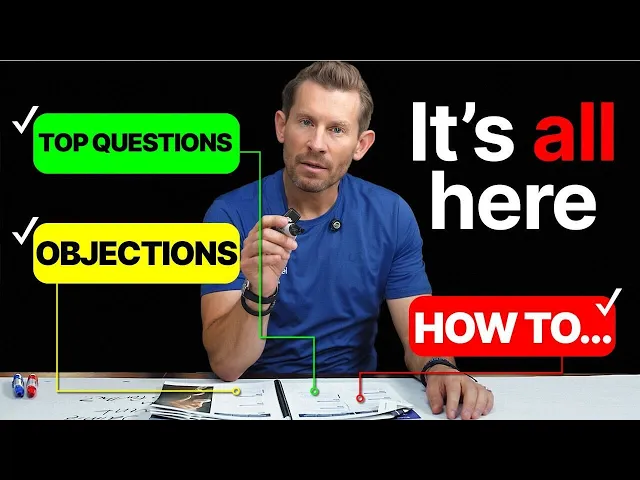
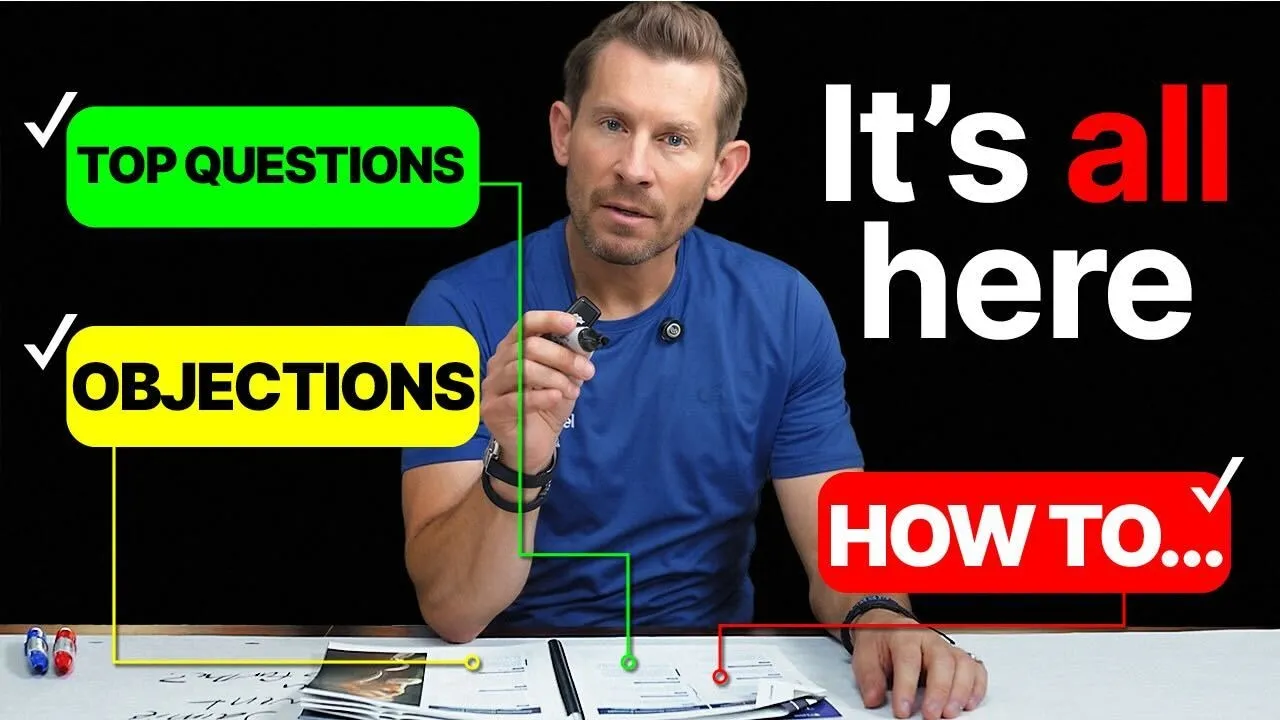
Close to 200,000 people have already bought the NDPQ block book of questions in the last two years alone. Now, in case you haven't, my friend, I'm going to give you the top questions in this book that you can use for what you sell right now. Doesn't matter if you sell on the phone, in person, B2B, B TOC, B2G, it's going to help [music] you right now.
Take a look. You're going to want to check this out. Now, the first questions we're going to dive into in this book, [music] in case you haven't had it, in case you got it, maybe you don't know, maybe you haven't really opened it up, which could be trouble for you.
you definitely want [music] to get involved, right? You're committed to mastery. The first type of questions we ask are what are called connection [music] questions.
Okay, if you're not one of our clients, uh our methodology stands for NPQ stands for neuroeotional persuasion questioning. It's a methodology I developed in my background uh in behavioral science in university becoming [music] a psychologist and I used in my 18-year sales career uh that I was in both B TOC [music] and B2B before I retired and about a year later started this company here we are now. So [music] some would say a pretty successful sales career.
So connection questions what do we [music] do with these? All right so connection questions are the first stage of this book. Now connection questions do three things.
Okay, in another video I'll go through more details, but basically I'm disarming the prospect to get their guard down. Now, why is that important? Because how many times do you start a conversation or you get in the middle of a conversation and you ask questions and you notice the prospect gives you a lot of what vague generalized surface level answers.
Now, why did that happen? Because typically in the beginning of that conversation, something you said or how you said it, your tone or questions you asked caused their guard to go up where they've kind of like stayed surface level with you, right? So, we want to get their guard down because if their guard's down, it's a lot easier to sell to them, right?
I also want to take them out of price or costbased thinking cuz what question do you have anytime a salesperson first starts talking to you? What question do you have in your mind? Probably what how much is this going to cost?
Right? You always think about now why does the brain go there? Okay, the question is if you're thinking that question yourself when you first start talking to a salesperson, what's the likelihood your prospects are thinking that question when you first start talking to them?
See what I mean? Okay, so I want to get them out of that into resultsbased thinking. So my questions need to develop that from the very beginning.
So a generic one would be something like this. Okay, I'll write this out. Uh let's say the first part of the question, exchange, presence, fees, all that kind of stuff.
And let's say that you have maybe in this example an SDR that books an appointment with what you sell. Just give me an example. Okay.
So I might simply say, "So when you talked to Jamie or my associate Jamie or whatever, what was it that excuse my spelling spell and be Nazis you went over that caused you to want to writing fast look into this further. Let's spread it. So, hey, so when you were talking with my associate Jamie, what was it that you guys kind of went over that caused you to feel like, hey, maybe maybe I need to look into this a bit further?
See, I'm just nice and relaxed, nice and disarming. Now, why does this question so important? Now, obviously, if you're knocking on doors, you're not going to ask this question right here.
There's different questions we're going to ask. But let's say this is my second or third connection question. An SDR booked the appointment.
It's an inbound appointment. Now, I'm on Zoom or in person or whatever. When this prospect starts to tell you, what was it that they talked about with this other person that caused them to want to look into this further, who are they also telling themselves?
So, you're getting information that you'll need further throughout the sale about kind of what drives them, what's going on. But they're starting to get themselves from price or costbased thinking to results based thinking by telling you why they're wanting to look into it further. They're getting into that result.
See what we're doing there. Okay. There's a lot more to that.
There's stuff before and after that. So an industry specific example uh might be something like this. Okay.
Um let's say if I sold I'm in the auto industry. That's the fourth biggest industry we train. And let's say that somebody um responds to an ad, internet ad, and you call them back.
Yeah. Uh John. Hey, it's John.
It's uh it's James. James Miller, you uh asked us to call you back. Looks like you responded to the ad on Facebook this morning about the uh 2025 red uh Audi, right?
See what I'm doing? Taking them from price or cost basing into results basing. See what I'm doing there?
You asked us to call you back. Okay. Cuz they responded to an ad.
Put a name, email, phone number. It looks like you responded to an ad on you remind their brain where they responded uh this morning about possibly notice I'm still neutral but possibly looking at that red 2025 A6 Audi. Right.
Right. So then I'm going to go right into that next connection question. I gave you the generic version a second ago.
Yeah, we just got that car and because I'm going to tie in what I sell to the question. We show you how to do that in this book. Yeah, I just got that car in a tradein that you're looking at.
I guess what what aspects of the car caused you maybe to maybe want to come in and test drive it. So see I'm saying instead of saying what did you talk about with XYZ that caused you to want to look into this further? That's generic.
Now I'm industry specific. Yeah, we just got that car in a tradein that you're looking at. Well, I guess what aspects of the car cause you to feel like, hey, maybe maybe I might come in and and test drive it or what aspects of the car cause you to maybe want to test drive it.
So I'm already getting that to end result. So when they tell me why they're looking for the car, who are they also telling themselves? So I'm starting to take them from price or cost to results based.
See how that works? Okay. Another question I might use.
Let's go to a different industry. Let's say if I'm selling an inbound lead and let's say I'm selling SAS for associations. I think SAS is the fifth or sixth biggest industry in the world we train now.
And I could be some they booked on the call and SDR put them on there. Okay. So exchange pleasant leads, all that stuff.
Okay. So it looks like you booked with us. I guess look at uh maybe getting some outside help with your awards program to really automate the process for your judges, right?
Okay. I say, "Okay, so it looks like you booked with this about uh maybe getting some help with automating the process for the company, right? Because I'm saving them time by automating their process.
" Okay. I'm taking them from price or costbased thinking to what? Resultsbased thinking.
You're starting to get this. Hey, so when you were talking with my associate Dave, what was it that you guys kind of went over that caused you to feel like, hey, maybe maybe I need to look into this further, see how that works. Okay.
All right. Let's keep moving on. I could give you a bunch of questions, but I'm just giving you some in there.
Okay. Make sure you probably want to get this book if you want all of them. Now, let's keep going.
All right. Now, the second type of questions, we call those NPQ, situation questions. Now, why are these so important to you to really master?
Because these are where you're finding out the facts of what's going on. So I'm try I'm finding out what is the prospect's real situation. Okay.
And I'm also I because I got to know, right? You got to know the real situation. But more importantly, who has to know the prospect?
These questions help the prospect understand the real situation because do your prospects just understand their entire real situation when you first start talking to them? Unlikely. Okay.
So your questions, these questions we train you allow them to understand them because if they don't understand where they're at right now, how can you build a gap to where they want to be if they don't really understand where they're at? That's really hard to build the gap. So if I can get them to understand where they're at, I can't tell them.
That just goes in one. My questions have to get them to open up. So let's say this one question in here.
Let's say I'm finding out the facts. So let's say if I sold for a marketing agency, it's like one of the top 10 in your train. So walk me through what are you what are you guys doing to generate new leads and clients now just so I understand it's just a curious tone.
So so walk me through what are you guys doing to generate new leads and and clients for the business and they start to tell you it's just a nice easy situation questions. Now there's obviously more that you're going to ask. Let's pick another industry.
A lot of indust so I give you frameworks in here that show you how to tie it into any industry and then I give you several examples from many different uh industries so you can see what it is. Okay. Uh let's see right here.
Let's say if I'm a relationship therapist or a psychologist per se because you're selling your services, right? That's a big industry we train as well. So, okay.
I was reading your application and you had mentioned that you guys are having some issues with some kind of the connection, the communication um with your husband. Can you tell me a little bit about what's going on? See, nice and easy and kind of a concerned tone there because this you're talking about marriage and relationship.
So, you're like you're concerned, you have empathy there. Okay. I was reading your application if they fill out one and you mentioned that you're having some issues around some resentment and some communication stuff with your husband.
Can you tell me a little bit more about what's going on? Boom. Right there you start getting some facts.
Okay. Now, there's going to be other questions I'm going to ask after that, of course, but those are examples of situation questions. Okay.
Let's move on to the next section. The third section we're going to talk about here in the book here. These are called NPQ problem awareness questions.
Okay, so we've got problem awareness. Now, why do I call them problem awareness? Because if we can't help them find problems, notice I didn't say problem problems.
Now, why do I want to find multiple problems? Because if I can if I only find one problem for them, how big is that gap? Not that big.
But if I can help them find two or three or four, maybe even five other problems they didn't realize they had. See how big that gap gets? And it's harder for them to feel like they can do it on their own.
They don't need me. They go with somebody else because nobody else they're talking to from other companies can build that big of a gap. So that's why they're always going to go with you because they perceive your value as far higher than anybody else that only found one problem.
Okay. So these questions are meant to do two things. The and I want to show you this.
So write this down. This is important to you. The two biggest, write this down, emotional drivers that causes a human being to want to change are what?
Pain and the fear of future pain. Okay? Even if they don't have a problem, I can get them to fear that there could be pain in the future that they have to prevent.
Life insurance for example, cyber security, many different industries. Okay? Pain can be of their current state or their past history.
Something happened in the past that was painful. Okay? And they don't want to have that pain continue or they fear that it could happen again.
You see what I'm saying here? So let's say these questions could be let's say if I sold financial services, okay? And I'm talking to an investor.
That's the third biggest industry we're train. And I might be there. So, the retirement strategies you have right now, do you 100% love the returns you've been getting?
What did I do there? See how I slowed that down? I'm pacing that question out because if I was like, so the retirement strategy has with the mayor prize, uh, do you do you love what you're what the returns you're getting?
Yeah, they're pretty good. See, if I say a question, if I ask a question too fast, I give the prospect what? no time to internalize and think deeper about what I asked.
When I slow that down and I pace that question out, it causes them it like I don't want to say force, but it causes their brain to focus on internalize what I asked. Okay? So, it takes them deeper.
That's where the emotional connection comes in there. Now, what did I do there? Notice I said 100% in love with the returns you've been getting.
Now, why did I say 100%? Why not say, "Are you in love with the returns you're getting? " Because is anybody satisfied with anything 100%.
Think about everything you've ever bought. Do you love it 100%. Unlikely.
Think about the person you're dating or married with. You loved them for the you cloud nine. The first three to four, five months, they did no wrong.
They were perfect. And then 6 months in, you found stuff that you didn't like, right? And they probably found stuff that they didn't like about you, right?
So, nobody's 100% happy with anything. That just goes against human nature. That's why I'm putting that in there.
Okay? See how that works? Uh, another example right here.
Let's say if I sold for a recruiting agency here. There's all different industry specific examples in here. So, help me understand.
You've been posting uh, you know, on these job boards the last four years. Like Indeed, I mean, what's caused you to feel like Indeed might not be getting you the best people? See what I'm doing there?
Okay. Now, that's obviously going to be a booked appointment. That's not going to be a cold call that I'm going to say that question because I'm reached out to them.
But let's say if I make that cold call, okay, and then I book them on an appointment, this question makes sense because they showed up. Okay, so help me understand. You've been using like LinkedIn and Indeed the last several years.
I mean, they're fairly decent. I mean, what's caused you to feel like they might not be getting you the best people? Well, we like them, Jeremy, but and now they start to do start to do what?
They start to tell you what they don't like rather than you saying, uh, what don't you like about what you have or do you like it? Okay, what don't you like? What would you change?
Those are predictable questions. What are two issues you're having with this? What are some problems?
Every prospect knows those questions and where they lead, right? So, I have to interrupt that pattern with these type of questions. You get me?
Okay. All right. This just warming up here.
Uh let's say if I sold if I'm real estate agent, that's the second biggest inter change. So, I mean, the home you have, it's a it's a very beautiful home. I mean, what's caused you to feel like you might want to sell it?
Well, we love it, but and now they start to tell me why they want to sell it. But more importantly, who are they telling? They're starting to tell themselves why they want to sell it.
And now they're persuading themselves. See, we're wanting to internally persuade them rather than trying to externally persuade them because we all know that doesn't work that well, right? Okay, let's keep going here.
We're going to go over to solution awareness questions now. So, solution awareness questions. Why are these important here?
Let's go purple here. Maybe let's go some seventh level. So, solution awareness questions.
Now, why are we asking these? Okay, so these are what are called solution awareness. Might even rename them future awareness.
I don't know. So, what we're doing here, you've heard of like future pacing, right? So, we're getting to to focus on what the future looks and feels like once the new found problems are solved.
Now, why is that so critical for you to master? Because even if you build a huge gap from where they are, right? You help them find all these problems.
You pull out the pain. If they can't connect what the future will look like once that pain once those problems are gone, there's probably no sale. So, I still have to get them to see and feel like what is that?
See, like they're they're viewing it. It's like they're seeing the future, what that feels like once the problems are solved or once their emotional needs are met. Okay?
You know, if I sell a $500,000 Rolls-Royce, I it's not like it solves a problem, right? They can drive a used Honda from point A to point B, but it probably does solve an emotional need. They want higher status.
They want people to view them differently. They want people to know that they're successful. So, it solves that emotional need.
They feel themselves driving in that car, what it feels like. See what I'm doing there? Okay.
So, let's see. A couple examples here might be uh let's say if I sold fitness huge industry we train as well like you help people you sell to consumers you help them lose weight keep it off okay so let's say that we come in we we get you involved in XYZ plan we help you lose the 105 lbs what would you be able to do that you feel you can't do right now or maybe you can't do your best at now I'm just reading out the script so it sounds unscripted let's do that again okay so let's say that we come in we're able to help you lose 105 pounds like we do with our other clients. What would you be able to do that maybe you can't do now or maybe you're not your best at?
Now, notice I'm I'm going down in that concerned tone, a tone that shows empathy. Now, why do you want to do that there? Because that concerned tone shows that you what?
You care. And when the prospect feels like you actually care about what happens to them or the consequences if they don't do anything, does that lower trust or does that raise your trust with them? Of course.
I mean, you're smart, right? you wouldn't be following me if you were. Of course, that raises your trust.
Okay? So, I'm getting them to see and feel what that, oh my gosh, it would I'd be able to play basketball with my sons. I'd be able to do this.
But being able to play ball with your sons again, what would it do for you? Oh my gosh, it would take so much stress off. See, I'm getting them to feel that emotion.
Remember, human beings, do they buy off logic or emotion? It's 100% emotion. Brain studies prove that.
There's no debate in on science with that. Okay? So, 100% emotion.
So, selling is not something, right? is selling something do to them or for them. Selling something to do for people to solve their problems and get where they want to be.
And if I can't master how to help them feel that pain and relive that pain, have a fear of future pain, then get them to see what that future looks like once that's gone. I offer them no value. I just wasted their freaking time.
And I know you don't want to do that, right? Cuz you're the type of person that got into sales probably to help people. You want to make money, but the more people you help, the more what?
The more money you make. The more companies you help, the more money you make. And that's the way it should be.
Okay? Follow the frameworks. So, you're going to see the frameworks when you get this book.
Okay. Uh let's say if you sold uh health insurance, a big industry we train as well. We train a big division of United Healthcare down at Southwest.
They are crushing it. Okay. So, let's suppose that we're able to get you a policy that has a nationwide network so that you can see any doctor you want and know that when something big happens that you're completely covered financially, knowing that was there.
What would that do for you guys? Now, I'm going a little bit slow because I'm reading here. I don't have all these questions memorized from thousands of industries we train.
Okay. Okay. So, let's suppose that we're able to get you the policy that has the nationwide network.
I'm going to repeat back what they want. Let's say this prospect wanted a nationwide network that has a nationwide network so that you can see any doctor you want. So, when something big happens, you're completely covered financially knowing that was there.
What would that do for you? Oh, it would do this. It would do that.
See, I'm I'm getting them to see and feel what that future looks like once the new found problems are solved. Are you getting this? Okay.
All right. Perfect. Now, let's keep going here.
All right. Let's go into these are called consequence questions. What are the consequences if they don't do anything?
That could be trouble, right? So, what are the consequences? Learned these from Brian Tracy a long, long time ago, my friend.
All right, so consequence questions. Okay, so what happens if they don't do anything? What are the ramifications?
What are the consequences if they don't change? If they don't get the problem solved? Okay, see how that works.
All right, that is really important. So I can lean and say, so okay, so let's say if I'm selling dental implants, it's another huge industry we're train if you're watching me, we're training your industry. Okay, dental implants.
So So what happens if you don't do anything about this, you keep losing the bone density in your jaw and now you can't even get implants. So with implants, if they don't do anything after a while, they literally lose the bone density and they can't get implants even if they want to. So it's a valid question.
So, what happens if you don't do anything about this, though? You keep losing the bone disc in your jaw, and now you can't even get implants. See, it's a consequence.
Now, notice how I'm starting off a little bit challenged. So, what happens if you don't do anything about this? You keep losing that bone density in your jaw, and now you can't even get implants.
Now, see how I'm starting off challenging a little bit, raise the emotion, and then I get down to that concern tone, a tone that shows empathy because it shows that I what? That I have empathy for them. if they don't do anything like the I I I'm concerned for you if you don't do this.
You with me on that? Okay. So, let's say if I sold employee benefits, big one for us as well to companies.
Okay. But on the flip side, here's another frame. On the flip side, what happens if you just keep the same plan and you keep having your top executives go over to XYZ company?
I mean, what's going to happen to the business at that point? So, let's say if I found out in the conversation that the the benefit package they had is not very good. their competitors are stealing away some of their top executives because they have better benefits.
So, I'm tying that into the consequence question because a generic consequence question for industry could be like, "What happens if this stays the same or what happens if you don't do anything about this? " Okay, these that's just generic. So, I want to tie that in to what they're actually problem so I can start.
Okay, but on so let's say if they're like, "No, I need to do something. I really need to change. " Well, on the flip side, now you're not going to ask a consequence question the first couple minutes.
This is like 75% into the conversation, right? So, when you're in our client, like when you're in our training programs like level one through level seven certification, you can always hit us up if you want to get trained so you sell more. When you see that, you're going to see when to ask these questions.
You're not going to randomly ask these questions cuz I always say this, the best question asked at the wrong time can actually be the worst question. So, you have to know when and why and how. If you don't know the when, why, and how, you're just winging it like other people out there.
And I know that you're not a winger like all those people out there for sure. Okay, so those are consequence questions. Uh I could ask anything here.
Home improvement. So what happens if you don't end up putting the pool in? The kids keep having to drive all the way down to the YMCA and you guys miss out on all those memories with them.
I'm only going to ask that if they told me the reason why they want the pool is be say the grandparents they're tired of their grandkids going to the YMCA 30 miles away and they're missing all this time in the summer with their grandkids. So, I'm tying that in. So, what happens if you don't you don't put the pull in?
Your grandkids keep driving all the way to the the YMCA and you don't have those summer memories with them because that's probably important. See, I'm pulling out what they said. I'm not making that up.
and pulling it out. That emotionally connects the dot with the prospect where they feel like they can trust you. They feel like you understand them.
They feel like you can solve their problems and get them where they want to be. And I know that's what you want to do as well. Okay, let's keep going.
Going to give you a couple of more. This is going to be fun. We're going to wrap it up, baby.
All right. Now, these Let's go here. These are called NPQ commitment questions.
Now, I don't like using closing question. I don't like closing. It sounds awkward.
Like, does anybody want to be closed? No. But do you want to buy?
Yes. Do you want to have problem solved? Yes.
Do you want to have your emotional need solved? Yes. So, this is a commitment to take the next step and purchase what you're offering.
Now, it can also ask what are called micro commitment questions. And these are just smaller commitment questions that lead to the larger step of buying whatever you sell. Okay?
So, like setting up a next step appointment. Let's say if you sell to companies and you have a 3-month sales cycle or whatever. Okay, every commitment getting them getting on the next calendar on the calendar for the next appointment, next point.
That's a micro commitment. Okay? Or I'm asking straight commitment questions where basically it's taking the next step to purchase what you're offering.
So I might lean in a generic one that you can use for any industries like do you feel like this could be the answer for you? Yeah, I do. Well, hold on.
Why do you feel like it is? Well, I you know, or they could say, "Yeah, I do, but and they're going to tell you their objection, which I want. I want to know the objection right there, which you would want to know the objection, right?
You wouldn't want to just like hope and pray that they don't have objection. I want to I want to trigger an objection to happen at the end so I know it is. I don't want to like try to like throw some dust over it and hope and pray it doesn't happen once I leave the house or the office or Zoom and they just cancel.
" You don't want to do that. Okay. Now, couple industry specific examples.
I can take that same question and lean in and let's say if I sold I don't know uh let's say if I'm a real estate agent. So do you feel like the marketing plan that we put together do you feel like do you feel like that can be the answer for you guys to sell this house pretty quickly? See I just tie it in.
So do you feel like the marketing plan we put together do you feel like that's going to sell your house a lot quicker than the last guy? I could ask that if that was the thing they had they said the last guy had a bad marketing plan. And I can tie that in.
Okay. Um, let's say if they're a buyer, do you feel like this could be the home for you and your family? Yeah, we do.
Hold on. Why do you feel like it is though? That's a probing question.
See how I could do that? I mean, I could do this for any industry. Uh, let's say if I sold uh life insurance, I could present three different plans and I could simply, this is a different type of commitment question.
If you're presenting different options, which one of those would you lean more towards? I think I'd lean more towards plan A. Hold on.
Why do you feel like plan A compared to the others? Well, plan A is because of See how I'm doing that. All right.
Hope that helped you today. Now, if you're the type of person that knows they have to sell more, your next step is here. Comment the word blackbook below.
My team will get you out a copy of this. 273 different questions and phrases you can use and frameworks where I show you how to tie it into any industry, including yours. We already train your industry.
You watch. We train every industry now. So, if you're the type of person, get the black book right now.
Comment the word blackbook. [music] Hit the subscribe button and commit to mastery. Because here's the deal, and I think you know this.
We all know people who let something [music] stop them, like something little stop them in life and they blame outside circumstances [music] and they never commit, right? You all know somebody that never commits [music] and we all know that people who don't commit are never successful in life. And that's why I'm glad that you're here and that's why I'm glad that [music] you watch me and that's why I'm glad that you're committed mastery.
So click the link below. We'll throw something in here, a link to get the blackbook. And until next time, Jeremy Miner, hope that helped you.