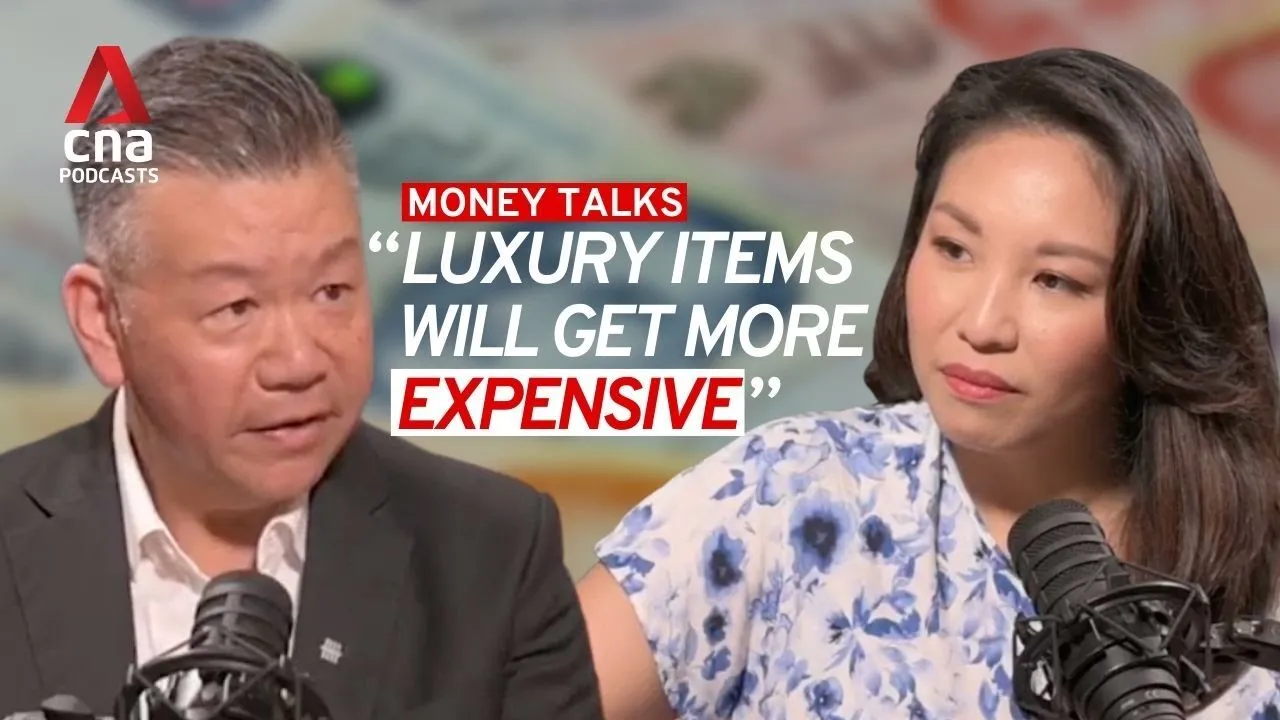
things will get more expensive the almost immediate impact is that with Trump being in power uh with us assets looking attractive dollar is going to be very strong so your average consumables luxury items if you're into that is likely to experience um bump up easily north of 10% hi I'm Andrea hang and welcome to cna's Money Talks podcast so Donald Trump Is Us president for the second time and the big headline staring Us in the face is his plan to increase tariffs now we don't know the details just yet but here is what we could be looking at as much as 20% increased tariffs on imports from all trading partners that includes us and it could also go up to as high as 60% on cargo from China but how does it affect you me and our money collectively and individually let's ask Abel Lim he's head of wealth management advisory and strategy over at UOB welcome back Abel good to have you thank you very much for having me all right so Abel here we are the Donald is coming back uh how will this second Trump presidency affect the money that's in our bank accounts in our investment portfolios make that connection for us okay here's the thing um very often we keep hearing about Trump 1. 0 and it it seems overly convenient for individuals to start thinking about Trump 1. 0 being uh the same for Trump uh 2.
0 unfortunately is actually quite different um there are similarities Trump is of course threatening but to your point uh tariffs against some of the uh major trade Partners particularly those with huge current account imbalances but at the same time he's also talking about immigration policies he's also talking about extension of personal tax relief and corporate tax cuts and even regulatory reforms in the financial and the tech technology sector so all this will have material impacts across the globe and also in Singapore yeah now what's going to happen if Trump gets his way he's very likely to have a lot of say in terms of how the united states execute some of his foreign trade policies that's right so what is going to happen tarist is actually not good it's inflationary in nature it makes the cost of imports um higher which means that and and what you've articulated 25% 60% from Chinese exporters all this will add up to the cost of Chinese goods and external Imports which means that consumers in the United States will have to pay the additional percentages which is being applied yep that introduces inflation so there in lies an an issue that's point one now the second point is that um if he's successful in the uh immigration laws um removing all the illegal immigrants MH you're going to see W cost bumping up that's right that again is also inflation nature so if you add these two together I think we are going to see um the Federal Reserve struggling to contain inflation but the higher interest also means a healthier portfolios especially if you're buying into things like bonds and treasury yields right that's a very very good point so yes yields will stay higher for longer um from from our current standpoint which is an excellent opportunity for investors who have not locked in um investment grade bond yields yet to get into market right now because our projection is that inflation will continue to Trend lower um when we don't know uh because on the back of what Trump is threatening to do um the inflation question mark is getting bigger yes but we do expect uh inflation to continue to Trend lower which also means that rates will continue to fall this is a net positive for Bond holders especially when um interest rates and bond prices has an inverse relationship right so this a great opportunity for investors who have not gotten into um fixed income particularly investment great bonds high quality issuers um to participate in this market at this current juncture okay so you talked about how we tend to make this mistaken distinction between Trump 1. 0 and Trump 2. 0 there may be some similarities there are a lot of key differences so so walk me through that financially how different will it be if we compare Trump 1.
0 to Trump 2. 0 let's get into the details of that okay the similarities first um it is going to be volatile there will be impact on on on every country every economy and in investors portfolio but here's a very interesting point you know since 2017 to to now 2024 interestingly enough whil trade United States trade with China has fallen about 15% us trade with the rest of the world has improved by 43% right so that actually represents opportunities that's right so on one hand when everyone is thinking that know it's going to be a terrible a very volatile year which I agree is going to be volatile but if you stay the cost and if you are Nimble and and and if you are reactive enough you actually can find Gams in the industries take for example um Trump's policy on deregulation we think that it's very good for the financial system and also very good for the tech sector with its PR growth stuns right so the industries in that space the ecosystem people that actually supports those Industries are likely to benefit from this Tailwind so similarly if you think about um how Trump is likely to um enforce tariffs on Chinese goods and a universal tariff across other countries is going to make us consumer a lot more um likely to consume us made produce right us made produce which is what he wants which is what he wants so that also translate to small and midcap stocks in the United States starting to look attractive particularly when rates are actually trending off so that those are some of the opportunities that that we have highlighted earlier on on this current Trend and these are some of the things that investors um should not in know considering that these are some of the known facts which president Trump is likely to to to enforce in the near future what other differences are there that we should be looking out for that could be risky one of the first um key difference is that the timing of of the the execution plan now if you see Trump 1. 0 he actually enacted his tax cuts and corporate uh rate relas um as the first STS I I believe that lasted for the first two years of his term tariffs only kicked in um probably about a year after yeah quite late yeah yeah so it's about a year after and that's when the Tit for between China started to happen and it started to see and before you know it it was the next election yeah during the tax cut period markets actually ried ried very well and once uh tarff started to the come into Force Market started to react quite negatively this time around we think that he's slightly to do both together oh so we are not going to enjoy that nice rally before the correction I think we are more likely to see a market negative Market reaction quite early in the game especially when he starts to go out there um to start pushing some of this this uh uh tariff initiative that he has however we also think that he's probably going to use this tariff as a bucking chip to go to certain countries to ask for concessions in terms of negotiator he is a very good negotiator so so in the face of that he's likely to use those to negotiate in Europe for better concession um maybe in Africa and maybe in Southeast Asia a lot of people are just talking about the oneide case about us companies the truth is Chinese companies um have been actively relocating their manufacturing capabilities outside because they actually trying to to to change their their portfolio construct they're no longer just purely interested to become the factory of the world they've actually moved up the technological space High manufacturing and they a lot of the countries lower Costas to take the low manufacturing uh sectors yeah and this is only good news for us especially those in asan companies stand to uh potentially gain a lot from these Dynamic movements in in between the two superpowers but there's also a bit of a downside for us as well isn't they able I'm talking about higher um costs of products of items of basically everything that affects us when these tariffs if and when I should say these tariffs come into Force so the thing is how much more expensive will these things cost us unfortunately at this current juncture it is quite hard for us to predict the absolute impact on what um the tariffs and and the inflationary stance is likely to impact Singapore in per say what you can say for sure is that it's likely to come things will get more expensive sa take for example the almost immediate impact is that with Trump being in power uh with us assets looking attractive dollar is going to be very strong so that makes us um produce Imports more costly good thing I have a New Year's resolution to cut back on shopping then maybe shop elsewhere yeah maybe shop elsewhere China is looking quite attractive right now because the Chinese Y is likely to have an opposite effect on when when the dollar starts to strengthen now one of the key ch is on on the back of a strong dollar you likely to see almost every import start to um go up in prices not on the raw material front but also on the shipping front because today um shipping cost is going to go up and it's priced in US dollar so everything adds up so your average consumables luxury items if you're into that is likely to experience um bump up easily north of 10% wow okay that's a number that we need to remember when we go shopping next time what's going to be the most costly expenses or items emerging from this scenario what else is the average Joe like me going to have to contend with in terms of higher prices the positive thing of this um supply chain reallocation is that it's meant to address potential cost hikes in this space so what traditionally was manufactured um in China CH for example it's now being manufactured garments for example manufactured in Vietnam Bangladesh for Cambodia as well but inevitably um it really depends on how aggressive Trump gets to apply his policies so whether they balance each other out is a big question mark So potentially you could see very basic Goods like um your everyday wear your clothes your shoes um to experience and inflation I think from Singapore's perspective as well because we import so much of our food that's certainly going to go up as well right foodwise um the good news is that I think um of Singaporean government has been actively trying to manage this uh import cost if Bush comes to shove I'm pretty sure the authorities will be looking at this actively to ensure that Singaporean CA doesn't get totally out back but then again um a lot really depends on what happens um in the next two weeks when he comes to office and the next 100 days when he actually applies some of his campaign policies and and and and Promises so how do we then buffer individually so you talked about how the authorities might look into helping us mitigate some of that impact cushioning some of that impact what can we as individual consumers do then to buffer or even cushion some of the impact I'm not saying all because it's inevitable as you said what bright spots do you see for us here so on a portfolio standpoint i' I've already kind of hinted on on the first one which is um focusing on high quality investment grade Bond issuance okay this company continues to pay very very attractive coupons continue to clip those coupons if you're in a fund you reinvest them you enjoy compounding so all this helps you buffer some of this potential threats in itself um this the oage you know um diversifying a portfolio this give you an opportunity to not only mitigate downside risk you also expose yourself to potential upsides because you are highly Diversified your Industries or sectors and even countries that actually can benefit from some of this potential uh policies threat um so on and so forth like the financial sectors we think some of the deregulation will make more efficient uh use of the capital especially when they have they are um less regulated in the sense that they are allowed to use some of their Capital to do more productive stuff um his Pro growth policies is actually very good for technology sector um so so some of these industries are likely to benefit from some some of his policies last but not least we think that gold is an attractive option gold has traditionally been a SA Haven especially when I mentioned volatility uncertainty that continues to exist and the conflict around the world hasn't ended no so so so it continues to become a very attractive safe haven for for for investors to consider in the portfolio and at the same time it's also a great inflation hedge so so typically we think that gold will continue to uh shine very brightly by the punt um and Central governments around the world will continue to stock up particularly to to to uh to buffer up some of the currency weaknesses so gold will continue to uh shine in 2025 going forward last but not least we actually think that Singapore um being one of the best run um Nation around southeast Asia uh great governance great infrastructure continues to attract a lot of um it's it's a safe haven yeah we we're likely to see fund flows coming into Singapore given the uncertainties and volatilities that that that's already in the markets yeah play to be it pays to be safe I should say does Abel thanks for coming back on the podcast this has been really informative and hopefully it'll come some nerves as well and with Trump 2.