Dance like the flame, sing like the nymph, run like hermies, move forward. The will shall guide the one who with love surrenders to the waters, unites the four corners, blends the three jewels, and stabilizes on the seventh day. The eternal now, full of nothing, composed of everything.
By learning to harvest, you will know how to plant. By planting and harvesting, you will learn to give. Give your heart, as the stork gives to its creation.
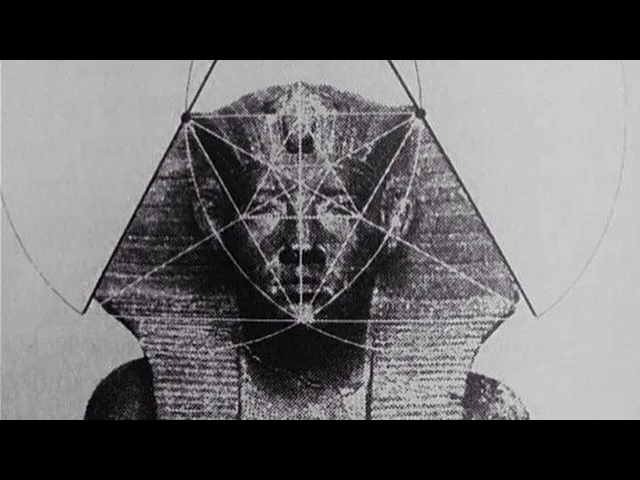
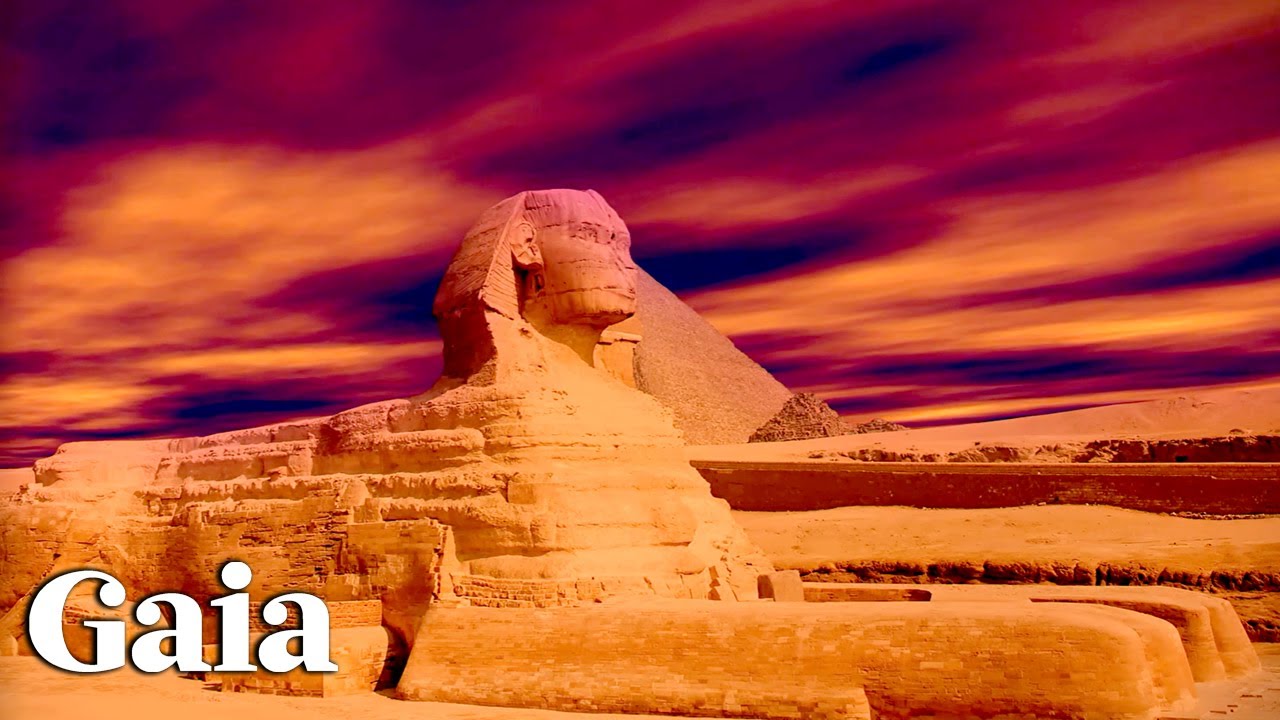
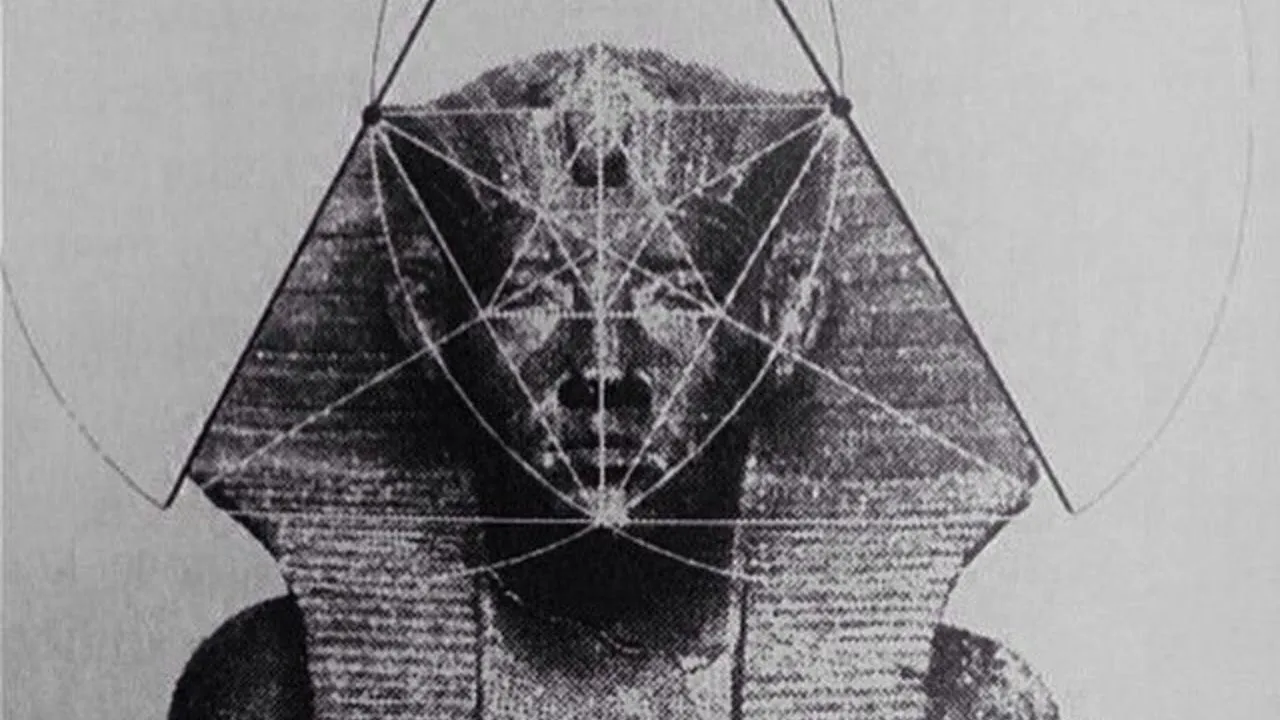
Just as the wind blows without knowing the direction, the initiate advances, guided by something that cannot be named, but burns like a sacred fire within. And herein lies the greatest of mysteries, the union of opposites, the reconciliation of paradox. The Sphinx's riddle is not solved with words, but through the experience of profound balance.
Know thyself, declared the Temple of Delphi, and this is the portal. But what does it mean to know oneself? It is not merely to contemplate one's deeds or to bask in successes.
To know oneself is to descend into the depths of one's being, where primal fears and uncontrollable impulses dwell, and to understand that they, too, are expressions of the All. The one who dares to face themselves discovers that the Sphinx is not a monster to be defeated, but a mirror to be deciphered. Its stone eyes reflect what we most deny, our essential duality.
The initiate who decifers this enigma realizes that matter and spirit are like two wings of the same bird. To fly, both must beat in harmony. Virtue lies not in renouncing the body, but in divinizing it.
It is not in denying instincts, but in sublimating them. Light does not eliminate darkness, but transfigures it, making it an ally. That is why sages say that enlightenment is a path of integration, not escape.
In the heart of the initiate, eternal virtues bloom like a sacred garden. Compassion emerges as a delicate flower, nurtured by the acceptance of others' pain. Justice grows as a sturdy oak, balancing chaos and order.
Beauty shines like a star, reminding us that the divine is present even in the simplest forms. But no virtue is greater than courage, for without it, none of the others can manifest. Courage allows us to face the Sphinx, to cross the desert of unconsciousness, and to endure the heat of transmutation.
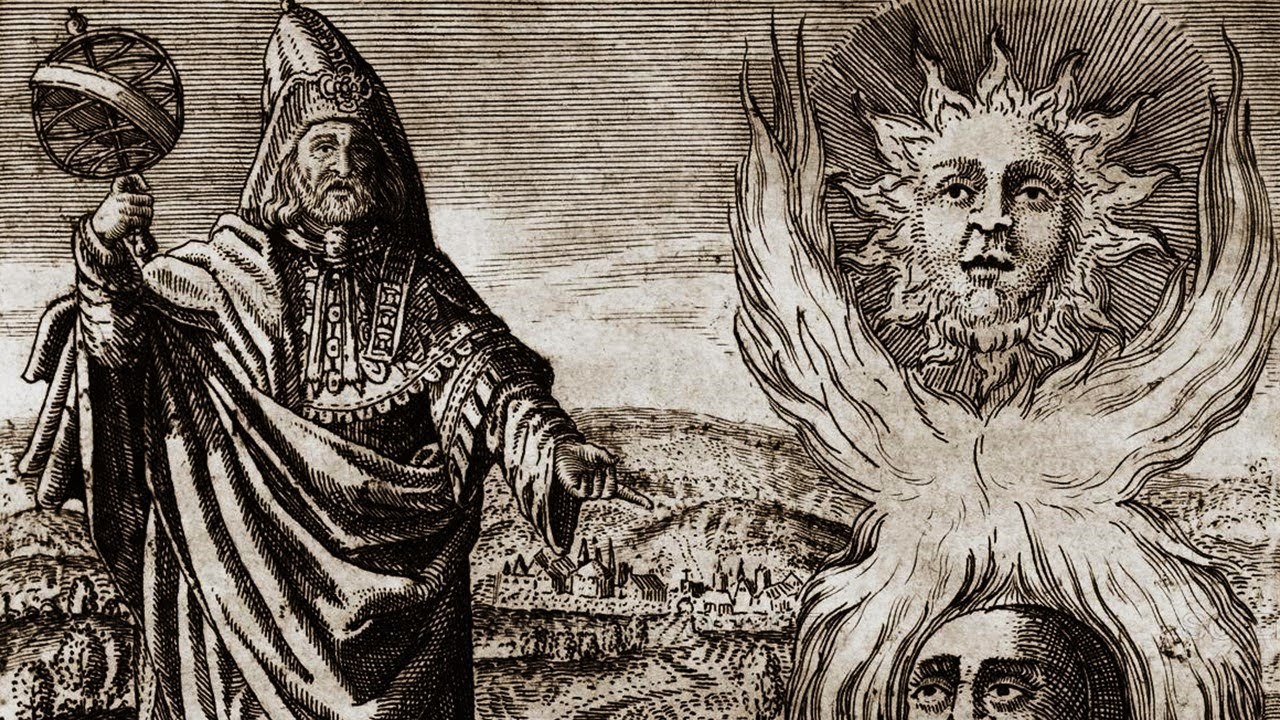
The union between spirit and matter is, ultimately, the realization of the alchemists' great work. They did not seek literal gold, but the purification of the soul through matter. Each stage of the alchemical process, from negrado, darkness, to rubedo, illumination, reflects what occurs within us.
And so, on the seventh day, when all stabilizes, the initiate understands that the eternal now is the only true temple. The past and the future dissolve into the infinity of the present, and the Sphinx's secret is revealed. You are the creator and the creation, the beginning and the end.
You are light and shadow, darkness and clarity. You are everything because you are also nothing. The initiate who reaches this point no longer seeks answers, for they become the question itself.
And like the Sphinx, they learn to smile in silence. Dance like the flame, sing like the nymph, run like hermies, move forward. This is the eternal song that guides the priest's steps along the path of mystery schools, a journey not only physical, but spiritual and eternal, traversing the temples of Egypt as one traverses the corridors of the soul, each temple a stage, each stage an initiation into the deepest secret of existence.
The priest's journey begins in Abydos, the sacred ground of Osiris, the god of resurrection. Here the initiate faces the greatest mystery of all, death. Not physical death, but the death of the ego, the illusory identity that binds them to the limitations of the material world.
Abydos is not merely a place of learning, it is a portal to a new perception of existence. In the temple of Seti the One, the priest navigates narrow corridors symbolizing passages through the soul. At the temple's heart lies the Osirian, believed to be where Osiris eternally regenerates.
Here the initiate partakes in a ritual confronting their mortality. Lying in a sarcophagus, symbolizing Earth's womb and Osiris' tomb, they hear low chants echoing like whispers from the underworld. They are guided to reflect on all they fear losing, possessions, identity, passions.
Gradually the ego crumbles and they feel the weight of what must be left behind to be reborn. Emerging from the sarcophagus, they are greeted by torchlight and the temple's inscription. From dismemberment arises unity, from chaos emerges order.
They learn that death is purification, shedding the unnecessary so the true self may emerge. At Abydos, the priest experiences nigredo, the first stage of spiritual alchemy, where all is dissolved. They leave the temple heavy-hearted, yet carrying a spark of understanding.
Death is not an end, but the beginning of transformation. During Abydos, the priest journeys to Luxor, the city of a hundred gates, where the temple of Amun-Ra stands as a beacon of wisdom. Luxor is a place of rebirth, where the initiate learns the art of the word, the creative power of speech.
Within the temple's vast courtyard, amidst towering columns connecting heaven and earth, they are taught that the word is not merely spoken, but is the thought preceding it. The intention that shapes reality. The temple's hierophants reveal the mysteries of Heka, the magic of sound and word.
Through mantras and sacred chants, the priest learns that each sound carries a specific vibration capable of harmonizing the universe. One of the most challenging lessons is the rite of silence. For seven days, the priest must remain utterly silent, observing themselves.
In silence, they confront the chaos of their thoughts, their impulses, and the unnecessary words they would have spoken. This silence is not emptiness, but preparation, a space where the power of the word begins to crystallize. At the rite's end, they are led to Amun-Ra's sacred altar, where they recite the mantra of creation for the first time.
I am the one who was, the one who is, the one who will be. By the word, I shape what I see. By the word, I become what I am.
Luxor teaches the priest that words manifest spirit. What they say shapes the world around them. What they think molds their essence.
They leave Luxor with a profound understanding of the power of communication, with others, with themselves, and with the divine. After understanding the power of the word in Luxor, the priest continues to Karnak, the largest temple complex in Egypt, dedicated to Amun-Ra, Mut, and Khonsu. Here, they enter the heart of creation, the place where the cosmos is organized through the harmony of the elements.
Karnak is not just a temple, it is a replica of the universe, carved in stone and light. The priest begins their journey through the vast open courtyards, where the wind blows incessantly, each gust seeming to whisper the secrets of the air. Here, they are initiated into the element of air, representing thought, inspiration, and the subtle movement of the mind.
They learn that air is the divine breath that gives life to the world, but also the veil that can obscure truth when stirred by the ego. Moving forward, the priest reaches the sacred lake, where they contemplate the still waters. Here, they are initiated into the element of water, symbolizing emotions and the fluidity of life.
During the nights, they meditate under the starlight reflected in the lake, learning that waters must be deep and calm to reveal truth. They are taught to flow with emotions, not repressing them but also not being swept away by their currents. In the inner courtyards of the temple, they encounter the altars dedicated to fire.
Here, they are initiated into the element of fire, the symbol of willpower, passion, and transformation. They participate in a ritual where they light a flame with their own hands, using ancient techniques. Fire consumes but also purifies, and the priest learns that their will is the force that transforms potential into reality.
Finally, they arrive at the colossal stone columns supporting the temple's roof. Here, they are initiated into the element of earth, representing the physical body, and connection to the material world. The priest must carry heavy stones over a short distance, feeling the earth's strength in their body.
They learn that the body is not a burden, but a sacred vessel for the spirit. At the end of their passage through Karnak, the priest is led to the grand hypostyle hall, where hundreds of columns rise like trees in a cosmic forest. There, they receive the final lesson.
The elements, though distinct, are one in the ether. They learn that harmony among the elements is the foundation of all creation, both internal and external. They leave Karnak with a new understanding.
The universe and the human being are reflections of one another. Internal balance creates external harmony, and internal imbalance is the root of all disorder in the world. From Karnak, the priest travels south to the temple of Horus at Edfu.
This is where the initiate learns to awaken spiritual vision, symbolized by the eye of Horus, the Ujat. Edfu is the temple of deep perception, where the inner journey reaches new levels of consciousness. In the main courtyard, they encounter a monumental statue of Horus as a falcon.
The priest is guided to meditate before the statue for hours, contemplating the meaning of the falcon's piercing gaze. They are taught that the eye of Horus is not merely a symbol of protection, but a metaphor for total vision, physical and spiritual, conscious and unconscious. The first stage at Edfu is learning to observe.
The priest is trained to notice subtle details around them, from the movement of leaves in the wind to the expressions on people's faces. They are taught that what they see in the external world is a reflection of their internal world. The second stage is introspection.
The priest enters the temple's inner chamber, where a polished mirror is strategically placed. They must gaze at their own reflection for long periods, reflecting on what they see. Here they confront their own shadows, flaws, and hidden virtues.
They are taught that true vision begins by looking within. Finally, the priest is led to the hall of the Ujat, where a hierophant initiates them into the mystery of the eye of Horus. As part of the final ritual at Edfu, they participate in a ceremony where their eyes are blindfolded for an entire night, symbolizing the darkness of ignorance.
At dawn, the blindfold is removed, and they witness the first ray of sunlight entering the temple, symbolizing spiritual awakening. The lesson at Edfu is clear. Spiritual vision is not something granted, but something cultivated.
The eye of Horus does not open without effort. It requires discipline, introspection, and the courage to see beyond appearances. The priest leaves Edfu with eyes open to the invisible, but there is no complete spiritual vision without the courage to face what lies hidden in the depths.
Thus the path leads them to Kaum Ombo, the Temple of Dualities, where Sobek, the crocodile god, and Horus, the falcon god, share the same sanctuary. Here, light and shadow coexist side by side, reminding us that the divine is as vast as it is contradictory. The priest arrives at dusk as the golden sky heralds the meeting of day and night.
The temple's columns, standing like pillars of the world, reflect on the Nile, revealing forms that dance between beauty and terror. The atmosphere seems to whisper, Embrace what you fear, for therein lies your strength. The learning in Kaum Ombo begins with confrontation.
The priest is led to a hall adorned with carvings of Sobek and Horus. They must sit in meditation, facing the crocodile statue with serene eyes, reflecting on the aspects of themselves they most fear or reject. Sobek, with sharp jaws and a voracious gaze, represents primal instincts, untamed desires, and the raw force of survival.
Horus, with open wings, symbolizes the illuminated mind, clarity that transcends fear. The priest learns that both are necessary. The crocodile holds the strength that sustains life, while the falcon shows the path to soar beyond limitations.
On the final night in Kaum Ombo, the priest is taken to a ritual by the riverbank. There, they submerge themselves in the dark waters of the Nile, a symbolic act of accepting and purifying their shadow. Emerging from the water, they understand that the shadow is not to be destroyed but integrated.
Light exists only because there is darkness, and darkness takes shape because light reveals it. As they leave Kaum Ombo, the priest feels a new strength within. They no longer fear their instincts, but have learned to transform them into allies.
Their shadow is now a pillar supporting their ascent. From Kaum Ombo, the priest travels to Philae, the temple of Isis, the great mother, guardian of the final mystery. Here they no longer confront death, the word, or the shadow.
At Philae, they are called to transcend all they have learned, surrendering to the power of love, the invisible thread that connects all beings. The temple of Philae seems to float on the waters like a living mirage. Upon arrival, the priest feels they have crossed a threshold between the visible and the invisible.
Isis awaits, not as a figure carved in stone but as a presence that envelops the heart, like the scent of flowers at twilight. The first lesson at Philae is devotion. The priest is instructed to serve at the altars of Isis, cleaning sacred objects and tending to the flowers adorning her offerings.
They learn that love begins in the simplest acts, in caring for what is sacred, and that every act of service reflects a soul bowing before the divine. The second lesson is sacrifice. The priest is taken to the temple's lake, where they must offer something that symbolizes what still binds them to the material world.
It may be an object, a memory, or even a desire. They release this into the waters, learning that true love requires not possession, but release. Finally, the priest is led to the innermost chamber of the temple, where a hierophant guides them in deep meditation.
Here, they are brought to feel the unity of all existence. This is not only the Divine Mother, but the very womb of the cosmos, the space where all is born, grows, and returns. The priest is instructed to repeat softly.
I am the child and the mother, the beginning and the end. I am everything and nothing, separate and united. At dawn on the final day, the priest witnesses the sun rising over the Nile, its rays touching the waters, as if Ra himself blesses the temple.
They understand that the journey is not about themselves, but about the all. They become an extension of Isis' love, an instrument of universal compassion. The priest's journey reaches its destination, which is none other than the point of origin.
Abydos, the cradle and tomb of Osiris, the gateway between the visible and invisible. But the one who now crosses the temple's threshold is no longer the same. Their steps, once hesitant, now resound with the certainty of one who has unraveled the mysteries of life and death.
The return is not an end, but a perfect circle, the symbol of eternity. In Abydos, the priest is crowned, not as a ruler, but as a servant of creation, one who has understood that true power lies not in domination, but in surrender. On the night before the coronation, the priest is led to the Osirian, where cold stone and darkness receive them like a cosmic womb.
There, they light a single flame, a solitary candle that dances in the wind, reflecting the essence of their journey, fragile yet indestructible. In meditation, they revisit each stage of the path. They recall the symbolic death in Abydos, the sacred word in Luxor, the dance of elements in Karnak, the gaze of Horus in Edfu, the integration of shadows in Kom Ombo, and the embrace of the Divine Mother in Philae.
Each lesson is no longer just a memory, it now lives within them. As the first ray of sunlight touches the horizon, they are taken to the Nile, where they submerge in its still waters. This immersion is their final purification, a definitive rebirth.
They emerge as one born into the light for the second time. At noon, with the sun at its zenith, the priest enters the central hall of the Osirian. There, a circle of hierophants awaits.
At the center lies the golden crown adorned with the Urius Serpent, the symbol of awakened wisdom and spiritual mastery. The chief hierophant, with a voice laden with timeless gravity, speaks, You have walked the path of the gods. In dying, you were reborn.
In separation, you found integration. You are now the child of Isis and Osiris, the bridge between heaven and earth. Through your word, the world will be shaped.
Through your shadow, light will be revealed. Through your light, love will manifest. The coronation does not mark the end of the journey, but the beginning of a new stage.
The priest is now called to live what they have learned, to be the living reflection of the divine in the material world. Before leaving Abydos, the priest offers one final prayer, not aloud, but within their soul. May I be the bridge, where there is separation.
May I be the light, where there is darkness. May I be the love, where there is fear. May the divine flow through me, so that all beings may remember they are also temples, and also eternity.