good day I'm Gary and I'm here to present ACSM a framework guide this framework provides a structured yet customizable approach that maintains core principles while allowing for adaptation to specific context let's dive in into the key components that make this framework universally applicable the ACSM advocacy communication and social mobilization is designed as a flexible tool adaptable to various Public Health and Social Development initiatives rather than being specific to any single health issue it can be customized to any reform Leed initiatives it is comprehensive in structure because it has its implementation mechanisms progress tracking monitoring monitoring
rather and evaluation it is evidence-based the content the direction and perhaps interventions are all built on best practices by well the very best practitioners or those who are in the field what are its main principles four ideas right advocacy communication and social mobilization as a framework based on this four key ideas number one a right based approach after all reform changes Development Centers on the human person therefore there should no sector no individual or group that should be adversely affected because of this advocacy because of this program number two it is evid informed empirical reference
is at the center of this advocacy of the social mobilization efforts it's not merely a case of a Whimsical preference of somebody but it is based on data it's a data driven activity inclusive participation various stakeholders have a voice stakeholders that have a relevant interest in the activity or in the project and a very important component there's country and local ownership advocacy social mation relies a lot on cultural nuances this foundational principles form the backbone of any ACSM initiative they include cultural sensitivity respecting local customs and beliefs sustainable development focusing on long-term impact and adapt
itive management allowing for flexibility based on learning having said those major principles what are the three main pillars of the framework advocacy and with this I'd like to emphasize leadership engagement which is building relationships with key stakeholders and decision makers across all levels to gain support removing barriers creating enabling environments for program success we have been talking about advocacy in our previous modules and I de this quite important because this allows for initiating the project and making it sustainable second the communication component in this particular instance message the quality and the strategy by which it
is transmitted is important development of a clear targeted messaging that resonates with specific audiences and motivates desired actions or behavior changes how do they perceive it how do they accept it how does it generate support we also have number three identify and understand different audience groups to tailor messages and approaches for maximum relevance and impact we talk about inclusivity therefore we consider the the sensibilities of everyone in that particular sector now the social social mobilization component composed of four essential Parts Community Support is needed because engagement with uh the locals would guarantee success of the
program will make it sustainable would introduce a wider Network establishing interconnected groups for action and thereby enhancing local skills and resources engagement sustainability of this engagement and introducing new groups into the ideal are important elements of social mobilization how does this happen in real life pre-implementation phase of any ACSM program or project allows for context analysis strategic planning and res assessment let us understand where we will operate let us have a clear strategy and objective of what kind of Direction what kind of development do we envision for the for for the society or for the
locality and assess how much of our resources do we have do we need pledges that can realistically come as in any program or project you know uh implementing ACSM requires three important pillars program management management rather which is overseeing the day-to-day operations of the campaign we coordinate number two with various stakeholders maintaining effective communication channels and ensuring collaborative efforts remaining aligned with program objectives and number three we have to make sure that we deliver on our promise that there's a quality assurance that the goals objectives of the program or project will be realized it is
important as we implement we monitor we evaluate so that we can introduce the necessary intervention interventions that would guarante uh a more plausible success rate we do progress tracking which is more regularly monitoring of activities against planed timelines and targets we measure outcomes assessing the immediate and intermediate results of program we assess impact we us to evaluate the longer term effects of the program on target populations and systems this is important this allows sustainability this allows greater funding and this grows uh this becomes an opportunity for further engagement from our stakeholders success essential success elements
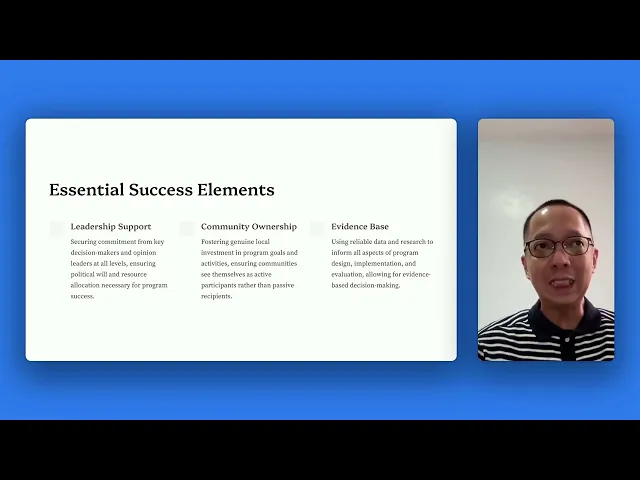
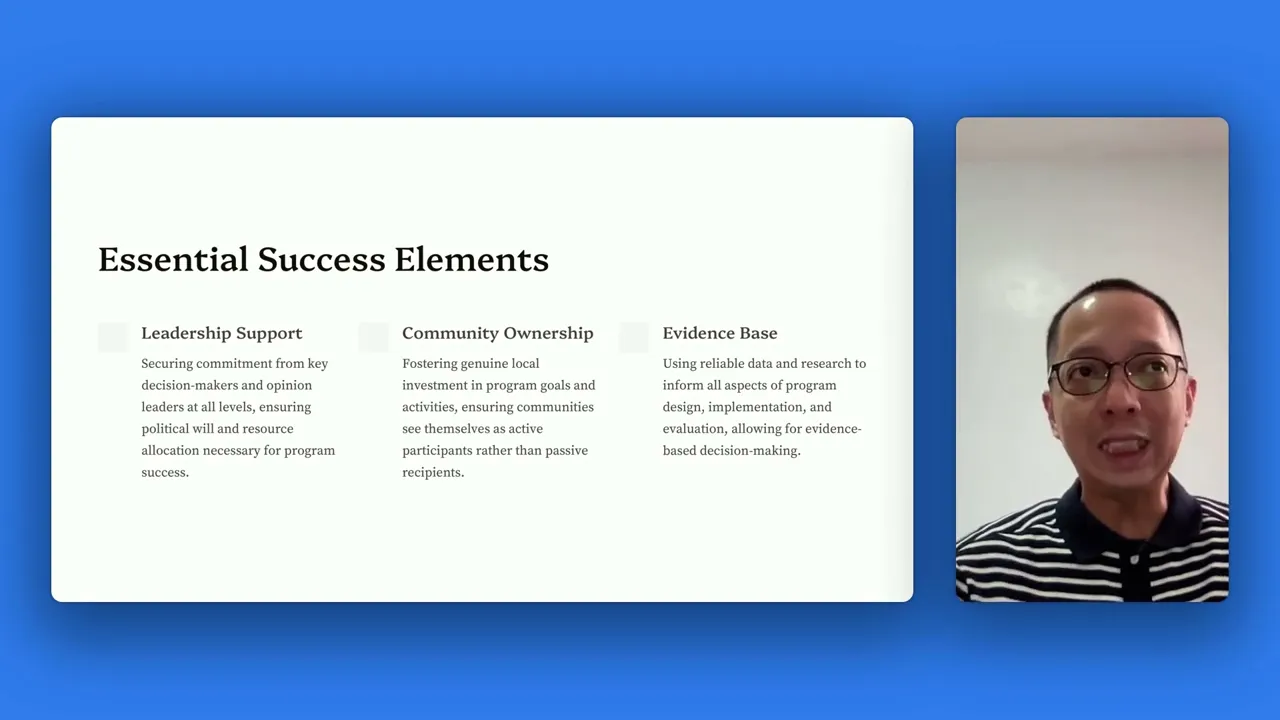
among other things are three three three ideas we have leadership support because for a program to be sustainable local decision makers should buy it should be living it Community ownership the proponents of the project May Come come and go but the community will lead the project so that the goals objectives may be sustained because we use reliable data and research to inform all aspects of the program design implementation and evaluation allows for evidence-based decision making not political not emotional or maybe not even sentimental there are certain risks when it comes to ACSM and maybe uh
a few highlights would be there's there could be political resistance especially when there are changes in leadership there could be Community skepticism in the Filipino context what we do not know is something that we are worried about and when people change there could be coordinating challenges which makes the project potentially suffer contextual flexibility resource variation local modification or important adaptability considerations when introducing any ACSM initiative I'd like to emphasize number three that the sensibility nuances cultural context of the locality should be studied carefully because we want Buy in we want support we want ownership and
that could happen only with public support we shall make ACSM sustainable if we continue to build the capacity of the locals to carry it out if institutional structures support to ongoing activities remain the same if funding uh requirements or in foreseeable future something that we can guarantee and the activities of ACSM are embedded in in in in Community Practice in community life be touch you from those ideas we have to integrate ACM with existing systems mean not to create new not to rock the vot or Not to cause any friction or conflict and you know
number two and four I think the more important alignments here that what we are doing is in line with national priorities ensure ACM activities support and enhance existing national health strategies and development plans increasing relevance and political support and we build on local expertise after all they will be the ones to uh make sure that the program continue to exist when uh initial proponents uh are already have already moved on so what are our key takeaways here that ACSM as a framework can be locally adapted in various context in various uh advocacies or initiatives it
is comprehensive in approach because like in any project it has operational takeaways it has more atory mechanisms it can be sustainable because the locals the community will take it up own it and potentially fund it themselves and because we rely on best practices decisions are are based on data are based on empirical reference so we minimize the possibility of being of the project being politicized or anything to that effect right these are the materials where we Source this ideas discussion points shall be Pro shall be posted in our prom thank you