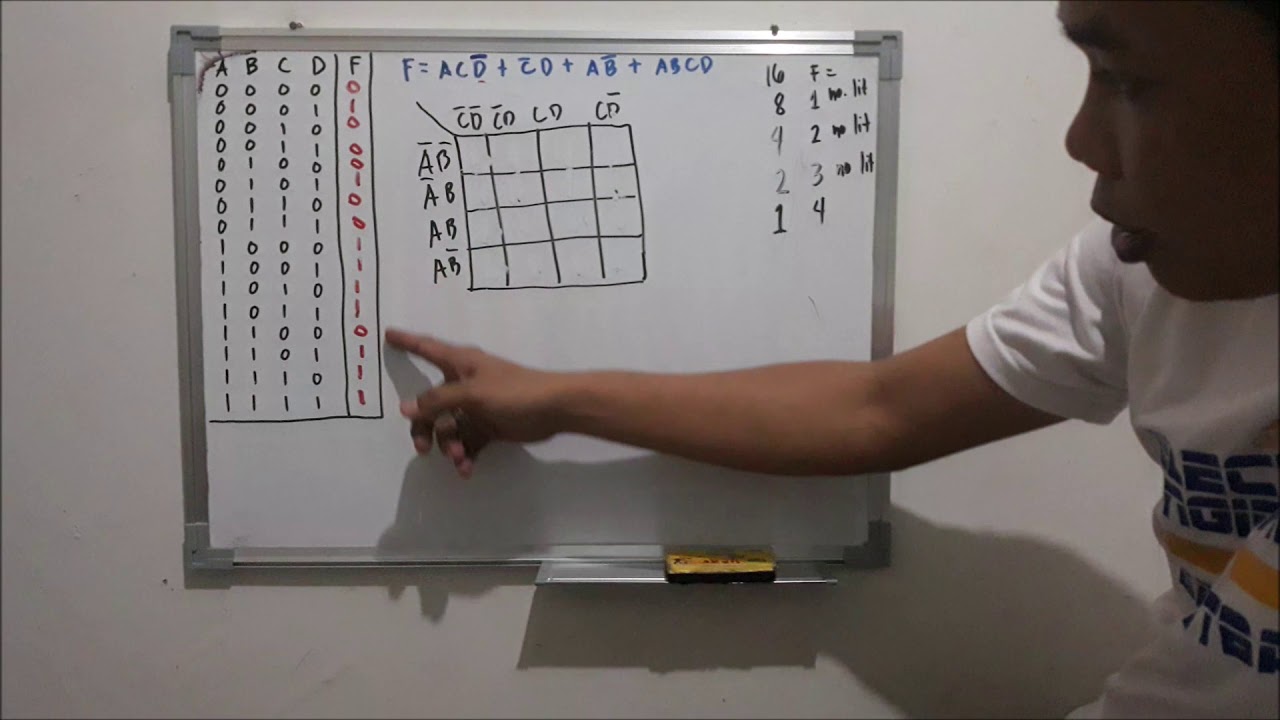
[Music] [Music] in this video lecture we will be discussing how to create a truth table so what is a true table a true table is a mathematical table which gives the breakdown of the logical function by listing all the values that the function will attain this table determine the status of the variables and corresponding result when we evaluate operators or functions the truth table is composed of rows and columns the number of rows are determined by the number of combinations of values of the variables we use the equation 2 raised to n to determine the
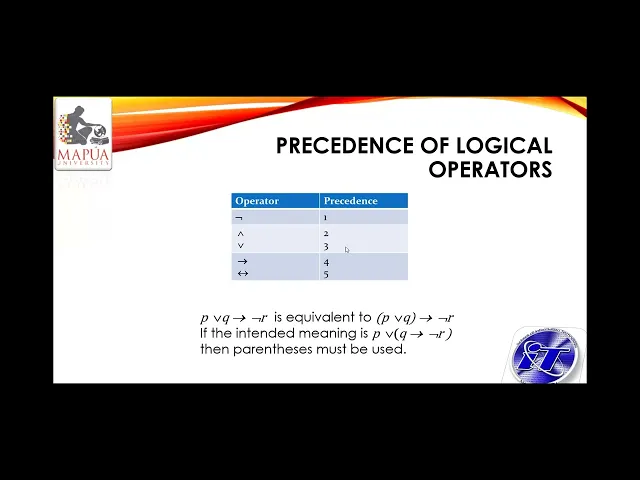
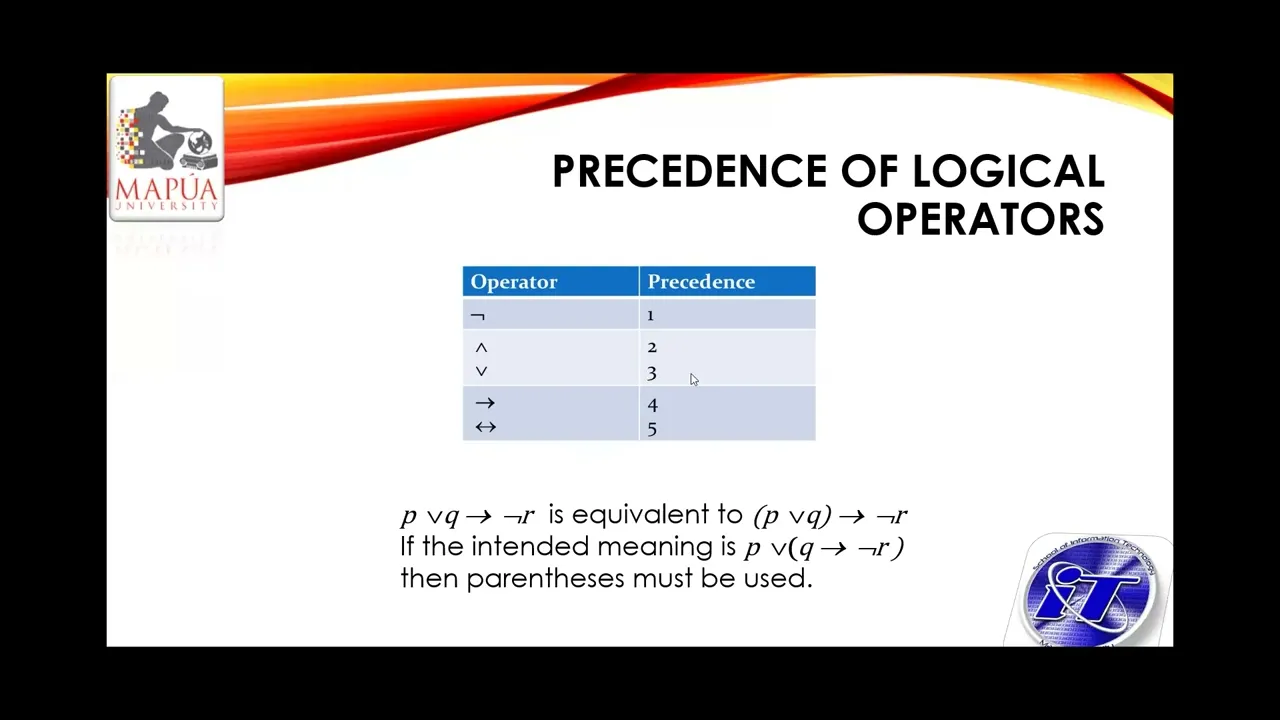
number of rows for example if we have one variable we have two rows for two variables we have four rows for three variables we have eight rows and so forth and so on while for columns it shows the result when we evaluate the variables with the operators the number of operators determine the number of columns so when we evaluate the equation we follow a certain hierarchy like in algebra we have mdas rule for the logical proposition or operators we have this hierarchy shown in this table so based on the hierarchy based on the table we
evaluate first the negation followed by and then or then implication and then the last will be by conditional so for example we have b or q implies not r so when we evaluate this statement we need to evaluate first not r based on this table so the result of not r will be the consequence of the implication okay so after that r we're going to evaluate p or q since based on this hierarchy it will be third on the high on the ranking so we need to evaluate prq and the result will be the premise
for the implication function okay so this will be the grouping so p or q one column one column for not r and then for the implication another column for our truth table but in case if we are intended uh if our intention will be um evaluate first the queue implies not r we need to include parenthesis okay so it will parenthesis is the highest on our ranking it is predefined grouping it is fine we have a predefined rupee okay so again if you are going to change the order or the rank and the hierarchy or
the precedence use a perce parenthesis okay so p or 2 q implies not r is different from p or q implied 2 not r we're going to have a different um result so parenthesis has a big impact when we evaluate a statement so be careful when we do grouping okay when we evaluate so don't forget press parentheses first then followed by these five operators okay now let's have the truth table for p or q implies not r since we have three variables p q r therefore we have eight rows so let's count one two three
four five six seven eight two raised to three is eight so we have eight rows and the first three columns are the possible values for pqr and then the evaluation of r with negation this will be your consequence later for your implication and then p or q this will be the premise of the implication and last the evaluation of the whole statement p or q as your premise implies to r consequence which is not r okay so the result will be on the last row so this is the possible value or outcome when we evaluate
p or implies not r based on the values of pqr okay so this is how we create a truth table we the rows based on the number of columns we define the columns based on the number of operators okay additional columns based on the based on the number of operators okay so that's it for this video lecture so see you on the next video lecture thank you for listening [Music] foreign