foreign London is in the grip of an addiction chin it's dirt cheap and is turning the capital into a nest of vice and destruction out of this chaos the legendary Bow Street Runners Britain's first professional police force were born this one of the most significant social reforms in British history was only part of the radical reforming agenda of its founder Henry Fielding a magistrate at the same time Fielding was doing something else which would have huge social consequences published a novel Tom Jones is one of the greatest novels of all time behind the comic story
of its hero is a blistering critique of British Society a moral Call to Arms Henry Fielding was a genius the novel was a new emergent art form Fielding saw in the novel the potential to challenge and renovate everything that was wrong with society and all under the guise of entertainment while fiction today may seem a rather cozy business back then it was a dangerous and subversive Enterprise Fielding was one of a handful of Trailblazers using the novel to challenge the Norms of British Society in just 80 years writers including Daniel Defoe Jonathan Swift Lawrence Stern
and Fanny Bernie would lay down the basic templates for the novel establishing all the literary genres we recognize today from horror and Chiclet to the political thriller for me these early novels Remain the Bedrock of British fiction unsurpassed in brilliance and ambition I want to uncover the dynamic and radical personalities of their authors and the places that inspired them to find out why they still exert the power and influence they do it's a journey that takes us under the skin of 18th century Britain as we move from the homes of the good and the great
to the the North Yorkshire Moors and from Britain's lowliest prisons to its outposts overseas most of all I want to show how the birth of the British novel was a revolution not just for literature but also for society [Music] the novel as we know it emerged in Britain in the early 18th century the nation at that time was in the flush of economic Prosperity literacy was on the rise thanks to an explosion of print culture newspapers pamphlets and magazines new laws surrounding censorship and copyright gave authors greater freedom and Commercial opportunity than before the ground
was set for something remarkable to happen but it would take a Maverick Misfit to make the Breakthrough and it happened in an unlikely place the East End of London this is the birthplace of the British novel and the person who brings it into being is a man who has a long record as a business practitioner he's been a horse dealer he's been assault buyer he's turned his hand to many other things tobacco tiles hosiery get lights on the novel as an extension of his varied career in business that man is Daniel Defoe and the novel
he wrote was Robinson Crusoe in 1719 Robinson Crusoe is the account of a Castaway marooned on a desert island Crusoe survives Against All Odds for 28 years by drawing deep on his own resources marking each passing day on his makeshift calendar a wooden cross what's so brilliant and original about Defoe is the way he pairs Pros back to its bare essential there's nothing florid here there's no poetry what matters to him is one thing and one thing only and that's that we believe in this made-up story of his and to accomplish this he feasts on
the minute particulars of Caruso's existence there's nothing too mundane nothing too small he absolutely Delights in the tiny details of his everyday existence like this I saved the skins of all the creatures that I killed I mean four-footed ones and I had hung them up stretched out with sticks in the Sun the first thing I made of these was a great cap for my head with the hair on the outside to shoot off the rain and this side performed so well that after this I made me a suit of clothes wholly of these skins and
after this I spent a great deal of time in pains to make me an umbrella misery breakthrough came towards the end of a long and colorful life we're not hustling for money he had taken part in a failed Rebellion spent time in the stocks and debtors prison and worked as a journalist and even as a government spy I like to think of Defoe as a Visionary he detected a new spirit emerging on the Streets of London and saw that Commerce could challenge the established social order [Music] take away the desert island setting and we're left
with a manual for self-sufficiency and personal gain one that chimed with the burgeoning merciless economic values of 18th century Britain and it hit a nerve [Music] Robinson Crusoe is the first work of fiction that answers our modern description of a novel it's also the first bestseller within four months it had gone through four editions and within a year it had been translated into French German and Dutch discovering a winning formula Defoe didn't stop there he wrote another novel exploring new avenues of self-sufficiency it's a story set much closer to home mole Flanders published in 1722
is the tale of a harlot on the make her motto with money in the pocket one is at home anywhere she dies a rich woman in mole Flanders Defoe drags us into a world which propriety usually prevents most of us from entering [Music] Robinson Crusoe who uses his Central character to confront the key moral and intellectual issues of the age tafoe is a pre-enlightenment figure and whereas by the end of the 18th century people subscribe to Russo's view that man is born pure and is then bespirched with sin by life tefo believes that we're born
in a state of Filth and he depicts this in his novel more Flanders mole is born in Newgate Prison the debt is prison with which Devoe himself was painfully familiar and Maul's life is one of inexorable degeneration she ends up again after her career as a thief in Newgate Prison she's actually applauded there as a master criminal and it's here that she experiences something remarkable Redemption spiritual regeneration this is something new that Depot is bringing to the novel whereas previously piety has been instilled through devotional tracks here we get this Grassroots depiction of moral regeneration
and it's something that would have made 18th century readers believe that salvation was possible for them too everybody Defoe had chanced upon the novelist and money spinner in doing so he created a radical new art form it was a test bed for provocative social and political ideas and could give a voice to societies Outsiders I'm struck too by the way it delivered its arguments with a real punch and for one of defoe's contemporaries the novel was just that fighting talk Dublin in the early 18th century not technically a colony but a sort of Imperial Backwater
and the next of our pioneering novelists was less than thrilled to be though Jonathan Swift had been a key figure in the Inner Circle of the Tory Government after their fall in 1714 he scuttled off as if in Exile to Dublin this was the city of Swift's birth yet poignantly he described his existence here as like that of a rat in a hole bitter and frustrated at the collapse of his political career he channeled his Venom into a stinging rebuttal of what he saw as the blind optimism of Robinson Crusoe ironically his pessimism would result
in one of the best love novels of all time Gulliver's Travels Swift would have been familiar with this handsome library in Trinity College Dublin where a bust now stands in his honor this bus presents an idealized image of what Swift was like I don't think it does Justice to the complexity of his being but Swift was a person who was extraordinarily conflicted there were lots of different things going on within him he was a misanthrope but also a moralist he was a satirist but also a man of tremendous charity one of my favorite stories about
Swift is that he would always carry coins of every available denomination about his person so that he would always have exactly the right amount to give to any beggar that he ran into on the streets of Dublin I love how all the contradictions inherent and Swift's personality are expressed in Gulliver's Travels on the surface it's a series of Lost at Sea adventures with Gulliver as both a giant and a [ __ ] Adventures which have delighted children and adults alike but beneath the surface is a pungently satirical illustration of man's limitations and of the brutality
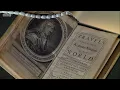
of absolute power in the miniature land of Lilliput Gulliver calmly extinguishes a fire at the palace by urinating on it Gulliver reports that in three minutes the fire was wholly extinguished and the rest of that Noble pile which had cost so many ages in erecting preserved from destruction pretty provocative visceral imagery to fling in the face of the ruling Elite I'm looking at a first edition a first London edition of Gulliver's Travels it's a real Goosebumps moment because this is such a landmark publication it's an incredibly important and influential book it's wielded huge cultural influence
Swift wrote the book between 1721 and 1725 and he knew that it had the potential to be hugely provocative so when it came to publishing it he devised an elaborate ruse for doing so and he did this in collaboration with his friends Alexander Pope and John gay with whom he'd previously worked on other satirical projects they'd be known as the scribblerians what they actually did was they presented the book as the work of Lemuel Gulliver himself this was presented to the publisher Benjamin Mott and he bought this Hook Line and Sinker and he was so
excited about the book that he used five different Printers in order to bring it to the public as rapidly as possible what this also did was it eliminated the risk of piracy Mont cleaned the text up Swift obviously wasn't consulted Mott was afraid of being prosecuted because of the salacious elements because of some of the satirical elements so he made alterations he changed things in the text when we come here to the Dublin Edition also 1726 this actually has those bits of the text restored so this is an unexpigated version of the novel it's the
novel as Swift intended to set it before the public and it's an important feature of publishing at this time that Publishers were very wary of the reaction that books might get and sometimes felt that they had to cut things down in order not to get themselves into really quite deep trouble this really underscores the idea that the novel is still something new and upstart and dangerous and those who are involved in setting it before the public were exposing themselves to a tremendous danger it was something that laid everyone involved in the Enterprise open to all
kinds of very serious charges [Music] Gulliver's Travels sold out in a week it remains one of the most reproduced printed works in the history of literature [Music] have only to visit one of the nation's quirky miniature villages to be strikingly reminded of the power Swift's book has over our imaginations [Music] for me the most significant of Gulliver's journals is the most neglected Gulliver visits the lands of the winonyms a breed of rational horse who at first appear to be ideal Noble creatures Superior to man they exist alongside the yahoos base and deformed people who seem
to represent Humanity at its very worst [Music] appears to be asking us to choose between the winning numbers and the yahoos but the truth is that both the kinds of existence that they represent are in some ways deeply flawed Swift was absolutely consumed by moral indignation by repulsion at Humanity in its most shocking colors and we see this really coming to the fore the book ends with Gulliver finally returning home deranged by his travels unable to Bear the proximity of his family finding Comfort only in the company of horses [Music] Swift used satire to attack
flaws in society providing inspiration to successive generations of writers what do you think of the sort of personal attributes that somebody has that make him or her a satirist I think the satrist gets up in the morning and thinks why cars why huts with wheels on the corner why do we go about in this why do people why do men wear trousers why do we have sex lying down I think what Swift brings very very strongly to satire which hadn't been done before and in a way is still incredibly unsettling for people is what you
might call the anthropological or even Martian viewpoint on human society and so when you come to Gulliver's Travels everybody who read it at the time of publication would have absolutely recognized exactly what was being satirized at every point of course it's part of his genius that we still recognize what he said Swift was as great in terms of satire as Shakespeare was in terms of tragedy he is the kind of archimendrite of alienation in that way so you know his real fruit you know his real kind of little ears therefore don't emerge until you have
a real period of comparable alienation from the social process so you have to look to late 19th and 20th Century all of those writers from Edward Bellamy to H.G Wells to uh coming into the 20th century to Orwell to Huxley they're all uh channeling Swift in in one way or another he's that powerful a writer who who isn't indebted to Swift ended his days as dean of Saint Patrick's Cathedral in Dublin embracing the city he once spurned misanthropic yet Humane a depressive with an astounding wit to me appears an almost unfathomable character [Music] he wrote
his own Epitaph in Latin on this Memorial plaque [Music] when we look at the inscription to Swift we see these words Savage indignation this was how he was characterized and we read that in the moment of his death he's finally going off to somewhere where that Savage indignation can no longer lacerate his heart it's an image of extraordinary violence to be left with at the end of Swift's life but Swift's life had had violence inscribed all the way through it and it's that violence which is absolutely Central to his incredibly original Creative Vision [Music] today
women are the majority consumers of novels and it was no different back in the 1740s for a growing readership of middle-class women with time on their hands the novel allowed entry into other people's worlds the novel was intrinsically an intimate genre and the potential for exploiting that intimacy for penetrating human consciousness deeply was about to be exploited Samuel Richardson used the novel as a moral mechanism to glorify female virtue and denounce sexual Temptation he was a prig but also a virtueso in his novels he explored the tiniest nuances of his character's thoughts and behavior it's
fiction would lay bare the workings of the human mind a full 150 years before Freud [Music] but this master of psychology began his career as a humble printer part of the stationers company in London [Music] thank you Richardson is a printer before he's a novelist and indeed he's becoming a novelist is an extension of his activities as a printer he's a central figure in the print culture of this age and we see here the documentary evidence of his career as a printer so here he's being bound as an apprentice and then here seven years later
he's being freed from his apprenticeship and then we see him taking the Livery of the company before finally in 1754 ascending to be the master of the company and that completes a remarkable Passage through the ranks to reach the very top of the stationer's company and of print culture of the age Richardson's first novel Pamela or virtue rewarded was published anonymously in 1740. it's a series of letters concerning the attempted seduction of a young maid by her aristocratic master she resists he falls in love Pamela's unflinching virtue netzer the man and the country estate Richardson
championed the epistillary form to draw us deep into the minds of his characters as they agonize over their own motivations and desires woman who writes six letters on her wedding day one at eight o'clock in the morning at 3 30. it is ridiculous on the other hand it is also quite close to the moment and people appreciated that foreign Richardson became a celebrity surrounded by admiring cultivated ladies so he wrote a follow-up using the same storyline except this time as though tiring of Relentless virtue Richardson allowed the villain to have his way Clarissa published in
1748 charts the pursuit rape and Ultimate Death of its heroine Who falls thanks to being drugged by The Libertine Loveless here we have Loveless writing to his friend Belford about Clarissa the devil indeed as soon as my angel made her appearance crept out of my heart but he had left the door open and was no further off than my elbow night midnight is necessary Belford surprise Terror must be necessary to the ultimate trial of this charming creature when I first tackled Clarissa it overwhelmed me a monster of a novel its narrative plays out over eight
volumes it is still one of the longest novels ever written a million words and fabulously labyrinthine it covers a period of a mere 11 months [Music] Clarissa unlike Pamela has been greatly admired as an example of the tragic novel I don't find it tragic I find it um verbose cruel vindictive sadistic there is Clarissa the innocent Clarissa who is tormented all the way through the book and is finally raped and dies at inordinate length in a very religious mode which at preparing her dying dress instead of her wedding dress I I now find it more
offensive than I did when young I can now hardly lift it up partly because it's very heavy and my hands grow weak but I actually physically find it repulsive now what do you think Richardson's really great achievement is in terms of taking the novel forwards in Richardson you have the extreme development of a form of psychological novel which of course continued I mean Henry James you could say is a director to Richardson this in Eternal kind of going over most of going over little movements of the spirit and the body foreign Ty was of a
starchy black and white sword at odds with the true conditions of his Society outside on the streets it was a very different story [Music] 18th century London is a roiling mass of contradictions it's a city where on the one hand you've got people attending cockfights and freak shows there's this whole culture of the coffee house and the tavern and yet on the other hand there were tremendous philanthropic Works going on there's a great sense of scientific endeavor it's a city where you can get dead drunk for tuppence you can buy a dozen French lessons for
a pound so there's this wonderful blend of the high and the low there was one writer who passionately believed that if the novel was going to have a moral message it must reflect the startling contrasts to me it's impressive that he saw the imperfections of humanity as something not to shy away from but to salute this was Henry Fielding Justice of the Peace founder of the Bow Street Runners a man devoted to social reform he also recognized the role of Art and entertainment in getting his message across to the populace he wrote satirical plays but
after succumbing to censorship he turns to the novel in all this he was steered by his close friend and Mentor the painter William Hogarth [Music] Jenny we've got a couple of fantastic Hogarth prints here can you tell me a little bit about them yes they're connected with fielding and hogarth's friendship with Henry Fielding this is Jin Lane this is 1751 and this is when both Hogarth and Fielding how does it work grown up they no longer Wanderers around Covent Garden and putting on exciting place there there are serious men her Garth was working with Fielding
at this point to develop a particular campaign Fielding was a Justice of the Peace he was a very compassionate JP and he felt that much of the crime in the islamas of London was due to the sale of this adulterated gin and so with her God's help he mounted a campaign against the ginac to actually get Gin licensed so this is a very didactic print and it's much sharper much clearer less effusive so that people would see it and immediately see its message so is there a sense that this is a kind of golden moment
in British history where art and literature are almost in a kind of symbiotic relationship that's a lovely idea and it's absolutely right in the 1730s when her got the building both their young men that they want to overturn the cultural establishment they don't have a Manifesto but they really really have a program and they're very concerned about the future as well if you think of fogos Works they're full of children like the child falling just being dropped by her drunken mother into the abyss in Jen Lane and of course Tom Jones is the foundling they
criticized the powers that be they criticize the Hypocrites in society so that it will be a place where people can grow up in a different way it was hogarth's collaboration in one of the great charitable Enterprises of the age that inspired Henry Felding to write Tom Jones the foundling hospital created in 1739 provided shelter for Orphans leading artists rallied to the cause raising awareness of the plight of Britain's abandoned children [Music] this is her God's contribution to this space it's a painting of Moses the original foundling being presented to Pharaoh's daughter and Hogarth is using
art here he's appealing to the refined sensibilities of his audience and he's getting them to overcome their existing perceptions of the foundling the foundling is associated with sin and shame Hogarth is using art to reverse social prejudice Fielding decided to do his bit by making an orphan the hero of his greatest novel originally called the history of Tom Jones a foundling it was published in 1749 in the story The low-born but lovable Tom pursues Sophia the unattainable woman of his dreams leaping into bed with a fair few others on the way behind all this there's
a resonant message Tom may be a foundling but he is more generous and Humane than the Highborn characters who surround him I love these illustrations which capture its romping Spirit complete with slapstick comic misunderstandings and bedroom fast the word of mouth buzz in the coffee houses was so strong that the first edition of 2000 coppers sold out in advance it was sumptuously new and entertaining with one of the most elaborate plots ever conceived whenever a new product comes on the market you have to tell people how to use it the Fielding does this emphatically in
Tom Jones using prefaces and guidelines to steer the reader's attention he's very involved he's very intrusive there's a reason for this something that we don't necessarily think of Fielding had probably read fewer novels than we have the novel was still something new something provisional you have to explain to people how to win their way through it you have to provide them with a kind of helping hand the contrast with Richardson's Clarissa published just the year before couldn't be greater I think fueling is is unquestionably the central novelist of the 80th Century um Richardson is a
is a horrible expressions in my view I mean uh Pious and lecherers and rotting with fantasies about drugs and rape and ravishment whereas there's something marvelously saying about Fielding he gives us a sort of a humor that has lasted and you know we're still doing it which is essentially the mock epic that um he describes low life in a high style and and this has been Dickens does it too and it's been a tremendously fertile vein in the English the distance isn't there at this time that being a novelist is dangerous and precarious Fielding crossed
the border into taboo territory you know he had a what we would call Healthy interesting sex uh no one had the courage or the freedom to look at it squarely and it was two and a half centuries before those inhibitions were made to evaporate Fielding is beautifully relaxed about it and can be read with unaffected pleasure you know centuries on the first 200 pages of Tom Jones are an ideal for the writer and for the reader and for the characters in just four decades the novel had evolved to combine both juicy entertainment and complex riffs
on contemporary philosophy and morality [Music] but where else could it Go the desire to test its limits would result in what I consider the most wonderfully demented Masterpiece of the century and one of the most original novels ever written [Music] swallowed in North Yorkshire it was home to Lawrence Stern the author of Tristram Shandy published in 1759 I find Tristram Shandy pretty much impossible to describe on the surface it's about a group of eccentric characters who live at Shandy Hall it's also a carnivalesque philosophical romp stuffed with references to its own creation [Music] the word
Shandy was in Stern's time Yorkshire slang for a crack-brained individual as these contemporary prints of scenes from the book suggest one of its crack brained obsessions was sex Stern's book positively throbs with innuendo and sexual imagery this is a first edition of Lawrence Stern's the life and opinions of trust from Shandy this is a landmark book it's incredibly Innovative and influential that influence endures to this day so peculiar was his vision for the novel that he ended up having to publish the first two volumes himself it was a vanity project but it was important for
him to do things exactly in this way he had this very definite vision of what he wanted to do the book is called the life and opinions of Tristram Shandy we don't get terribly much of either the life or his opinions he isn't even born until the Fourth of these nine volumes in the first volume one of the most extraordinary things is when a character dies there's actually a black page to reflect that this is something which when you read the novel for the first time really kind of makes you sit up and you realize
if you haven't already realized by Page 73 that you're in the presence of an extraordinarily audacious and really quite puckish authorial sensibility he actually has a marbled page in it which is a very strange thing to find in any novel and certainly an 18th century one and when you just chance upon it it really knocks you sideways another thing Stern does is he actually produces bizarre squiggles at one point he uses those squiggles to try and suggest something of his narrative method this incredibly self-reflexive refractory strange digressive bumpy narrative Journey that he takes the reader
on their jokes but at the same time they're rather intriguing attempts to provide a pictorial representation of what it means to be going on the journey of telling a story so the reader is being asked to make this huge imaginative investment interest from Shandy this is exactly the kind of thing that Stern is bringing to the novel The Very idea of expectation of what a reader might expect to find between the covers of a book is thrown into disarray as the book was published anonymously the public had no idea that this raunchy and outrageous novel
was in fact the work of a man of the cloth when the Vicar's stern was identified as the author that was outcry but that didn't stop him from continuing to either write or preach [Music] in terms of the character of stern the man I mean this is someone who who was a clergyman wasn't this a big problem for him well it was a bit of a problem for the church because he wasn't exactly a jewel in the Episcopal Crown he was sort of he was he's an angular conclusionman who is writing a book which is
stuffed with body admittedly the body is there for you to interpret so he has the excuse of saying at any time that if that's the interpretation you as a reader wish to put on then that's entirely up to you so he's he's to some extent he's affecting his position but his sermons were so good I think that he exonerates himself when the first two volumes were written he was painted by Reynolds which certainly altered his perception within society and as a result of that he became fashionable he said that he he writes not to be
fed but to be famous so Fame was what was driving him what do you like most about him well the fact that he's entertaining and that he's that he's funny and that he has the ability to be able to switch from something which is deeply moving and poetic to something which is completely flip and that I think requires a great deal of skill [Music] Tristram Shandy may have seemed a playful literary Frolic yet it also explored the ideas of one of the key enlightenment philosophers John Locke who defined the self not as a fixed entity
but is a mere collection of fleeting memories and impressions [Music] it's just this Evanescence quality of experience which Tristram Shandy aims to capture and which makes it I believe one of the most daring and fascinating books ever written it's still the ultimate experimental British novel the experience of reading Tristan Shandy is beautifully frustrating right I mean he never gets to the point he's continually interrupting himself and digressing and digressing from the digression but what's really interesting is that this doesn't result in some kind of chaos it's actually a very very carefully constructed book in a
way it kind of anticipates almost three centuries early what Joyce will do with with Ulysses um in its ellipses and blank pages it anticipates lots of what Beckett will do kind of with his attempts to make language finally disappear um in its incredibly kind of um for its time understanding of of our psychic activities which is just way off off the map of anything that had been proposed then this is the mark of a really really good novel it's one of those books to which the theory doesn't yet exist to explain it does that feed
into your idea of what a novel should be yes what is a novel laughs a novel is something that contains its own negation right so a novel is not a novel without an anti-novel lodged in it it's like an oyster isn't interesting unless it's got a bit of grit in it as well that not oyster bit that kind of produces the Pearl interest from Shandy this is precisely the drama this is the central drama of that book is its own undermining and I think in a way this is what every book should be in one
way or another [Music] Shandy pushed the boundaries of the novel as far as they would go boundaries which have yet to be breached I'm rather seduced by the argument that it's the archetypal novel a new literary era would surface in its wake with the narrative possibilities of the novel established it becomes possible for the novel to Branch out and move in New Directions and this is when we get genre fiction the first genre fiction is the gothic novel and the inventor of the gothic novel is Horus Walpole Walpole is the son of the first British
Prime Minister Sir Robert Walpole he is socially an Insider but creatively an outsider foreign expected to follow in his Father's Footsteps Walpole didn't quite have the political Charisma needed for the 18th Century House of Commons instead he created an extraordinary Shrine to his own imagination here at Strawberry Hill in Twickenham modeled in part on medieval castles this house was also the inspiration for walpole's book the castle of atranto the novel tracks the attempts of Manfred the Sinister Lord of atranto to make off with his sickly son's bride to me it's poor on plot but suffused
with a hallucinogenic atmosphere Walpole was establishing the ominous idiom of horror fiction this was his summer Villa and he created here a kind of Gothic dream what he called the castle I am building of my ancestors it was gloomy and Gothic and in fact Walpole for this building created a new word which was gloomf which was the quality he was trying to bring to this Gothic Revival building which actually pioneered the Gothic Revival that we know today so the house actually inspired the novel The Castle of atrante yes it was here at Strawberry Hill that
Walpole had a dream in which he dreamed of a gigantic fist in armor on the uppermost banister of a great staircase which of course is this a banister here and where he had the dream was actually his bedroom which is that door up there on the left so that in fact this is the birthplace at the literally the birthplace of the gothic novel and if you read the castle of atranto carefully you will in fact find a number of instances of exact references to the house [Music] the book is crammed with diabolical pacts Sinister apparitions
and Supernatural forces [Music] here's a taste [Music] manfred's eyes were fixed on the gigantic sword but his attention was soon diverted by a tempest of wind that Rose behind him he turned and beheld the plumes of the enchanted helmet agitated in the same extraordinary manner as before foreign this was the great greatest room in his State apartment here at Strawberry Hill this room plays a central role in the story of the castle of atranto because it's in this room that the evil ruler of the castle of Otranto Manfred actually proposes to his recently widowed daughter-in-law
Isabella she is of course utterly horrified and we know it's set in this room because Walpole writes that they are sitting down on a bench which Walpole had against the wall here and that above them was a picture of manfred's grandfather at that instant Walpole writes the portrait of his grandfather which hung over the bench where they had been sitting uttered a deep sigh and and heaved its breast while they're sitting on the bench manfred's grandfather steps out of the picture this is the first time this happens in fiction and the grandfather steps out as
a dreadful warning to Manfred of what's going to happen which of course does happen later in the novel and the Dreadful figure of the grandfather walks across the gallery floor and then exits through a door on the right of the gallery as Walpole says in the book which of course is still existing here today Manfred finally gets his comeuppance he accidentally stabs and kills his own daughter and is forced to gorge on miserable repentance Strawberry Hill was the great project of walpole's Life the castle of atranto was only a small part of it yet it's
the novel that's endured it's the novel that has exerted a massive influence it spawned a huge number of other books in this Gothic tradition the key writers in that included Anne Radcliffe William Godwin and Mary Shelley [Music] Walpole was an aristocratic dilettante writing from a position of wealth and privilege it was precisely this world that would be unmasked and lampooned in the work of Fanny Bernie [Music] sort of musician Charles Bernie a child of the emerging middle classes Fanny grew up with an excruciating awareness of her precarious position in a society preoccupied with status at
the age of just 26 she published Evelina the story of a naive country debutant who must navigate Cosmopolitan Society before securing her reward an advantageous marriage Bernie wrote the novel in secret drawing on the world in which she moved the action shuttles between the pleasure Gardens and theaters of London and Spa Resorts such as bath [Music] here we are in the pump room at bath which is an incredibly important 18th century location bath was where fashionable people particularly fashionable London people went when they wanted to get away from it all except they didn't get away
from it all baths was even more pretentious than London was even more steeped in fashion and in Evelina Fanny Bernie takes us right inside that world she gives us an outsider's perspective on it Evelina isn't born to this world she views it skeptically she'd use it doubtfully and yet there's a tremendous perceptiveness the perceptiveness is evelina's but it's also Bernie's Bernie is a hugely influential figure in terms of creating the comedy of manners The Comedy of social behavior which is something that ultimately leads to Jane Austen but Bernie does it exquisitely observing the foibles the
pretensions the affectations a polite Society Evelina made a deep impression on Jane Austen and Bernie's work is celebrated along with that of other early women writers at chorton house Library once the property of Jane Austen's brother Edward Francis Bernie often known as Fanny is one of a great array of women writers particularly female novelists in the period from around the 1780s onto the 1810s were dominant they outnumbered the male fiction writers and they earned more because she worked didn't she as her father's copyist and this posed some problems for her when it came to getting
Evelina published yes that's right she wanted to preserve her anonymity with this fictional work she had to write the whole thing in a feigned hand then she conducted the negotiations with the Bookseller Thomas lands anonymously eventually when the manuscript was delivered to him it was delivered by her brother Charles in Disguise so he wouldn't be known so it's all very cloaking dagger stuff really evelino was a prodigious success and played a role in securing Bernie a job at court as a keeper of the Queen's robes but writing first love in 1796 she published her third
novel Camilla Now by this stage her Circumstances had entirely changed because she was married she needed the money in order to set up a household with her husband who is a penniless Aristocrat fleeing from the French Revolution and Emma Gray and so this time she wanted to do things properly so she would get more of the profit and less of it would go to the booksellers and so she the way to do that was to publish the work by subscription and thanks to the position that she'd held for a while at court she was able
to get some very impressive names here on the subscription list I was going to say there are one or two rather eye-catching names I noticed one just here absolutely yes this is such an interesting document because here we see the concrete evidence that Jane Austen was a fan of of Francis Bernie we know that from her writings anyway but it's lovely to have her here among this list of 300 subscribers so clearly she felt that she wanted to be part of this group of people who were showing their public support for Bernie as a writer
as an important writer of the period the work is also dedicated to the queen so by this stage her writing celebrity had brought her immense same really I mean she had a standing that no other novelist did at the time it's really quite remarkable Bernie wrote four novels in total but her debut Remains the best what I love about Evelina is it has this really modern Dimension to it it's a book which contains some really shocking physical comedy there's a real violence in it there are some extraordinary incidents there's one for example where evelina's grandmother
is toppled into a ditch as a practical joke and loses her wig in the process and then towards the end of the novel a character is being compared with a monkey and he gets bitten on the air by the monkey and he's left with blood cascading down the side of his face but both these episodes parallel to insignificance compared with the occasion when two old ladies are obliged to have a foot race so that other people can bet on the outcome people sometimes say that if you love Jane Austen you should read Bernie because she
provides the same kind of humor the same kind of irony but with Bernie there's an extra level of expressiveness of horror of violence and that was what made her exciting at the time and it's certainly part of her endearing appeal as the 18th century Drew to a close storm clouds were gathering the world's Fanny Bernie so elegantly mopped was being menaced by a stark new threat the French Revolution of 1789 and images of the ensuing Terror transfixed Britain's ruling class could this Butchery come to bloody these Shores too reacting in fear the government clamped down
on intellectual freedoms Rebel voices were swiftly put on trial for treason this was the backdrop for the creation of the first political thriller and what seems to me the last groundbreaking novel of the era it was the work of a revolutionary philosopher William Godwin in 1793 Godwin's essay an inquiry concerning political Justice introduced the idea of anarchism the following year he published a novel Caleb Williams Godwin takes the ideas that he sets out in political Justice and articulates them in a different form in his novel Caleb Williams He Embraces the idea that the novel enables
him to package his ideas in a more accessible fashion in the preface to that novel he says that the spirit of government intrudes itself into every rank of society this is one of the big ideas of both political Justice and Caleb Williams the government gets everywhere and that that is tyranny in the story Caleb the low-born clerk on Squire falkland's country estate discovers his master's terrible secret he is a murderer Caleb's curiosity will have appalling consequences the book opens mid-action delivering a narrative hook an essential ingredient of all Thrillers to come my life has for
several years been a theater of calamity I have been a mark for the vigilance of tyranny and I could not Escape [Music] William Godwin's Caleb Williams depicts the changing nature of society the increasing polarization of the Aristocrat and the Democrats the Democrat of the novel is represented by Caleb the servant the Aristocrat by his master Ferdinando Falkland he really represents the squiraki what's interesting is that Caleb is a product of the Enlightenment he's someone who believes in the pursuit of truth but he battles incredibly hard to try and persuade others to embrace this truth and
we see here one of the fundamental problems of the Enlightenment that it's incredibly difficult to persuade the people who possess power the existing hierarchy to embrace the new knowledge that's become available when Falkland realizes that Caleb has uncovered his secret he turns all his dark power upon him it can only end in one place [Music] this is an intact authentic 18th century prison cell William Godwin's novel Caleb Williams is an extraordinarily powerful picture of incarceration being in prison is one of the things that actually happens to Caleb but in a broader sense the whole novel
is like a prison it's a novel of persecution and paranoia it's a novel about the walls closing in on you it's a novel about the oppressive nature of the social hierarchy when we see these graffiti on the wall perhaps that car saw Minds back to Robinson Crusoe perhaps we can imagine the Castaway inscribing similar things but over the course of our journey there's been a transition the novel has evolved Robinson Crusoe is optimistic with Caleb Williams there's a sense of Darkness of gathering storm clouds of a society which is increasingly complex and dangerous and in
a sense this is a mark of the novel's confidence over a period of approximately 80 years it's made this transition to a point where it can really embrace the full spectrum of social and political color of the age [Music] thank you as the 18th century Drew to its end the whole character of Britain underwent a sea change [Music] the long grueling Napoleonic Wars ushered in an age of austerity one in which a Maverick freewheeling sensibility was no longer welcome the Golden Age of the British novel had come to a close we've been on a long
journey and yet in the 19th century the novel goes further we think of Jane Austen but then there are others who take it further still there's more social comments more political comments and more psychological complexity and yet there's a sense that in the 18th century the novel has an extraordinary dynamism which has never really been recreated there's a sense of the templates being laid down of a very very exciting time when everything's there to play for when everything's up for grabs and that Vitality is inscribed on every single page foreign foreign