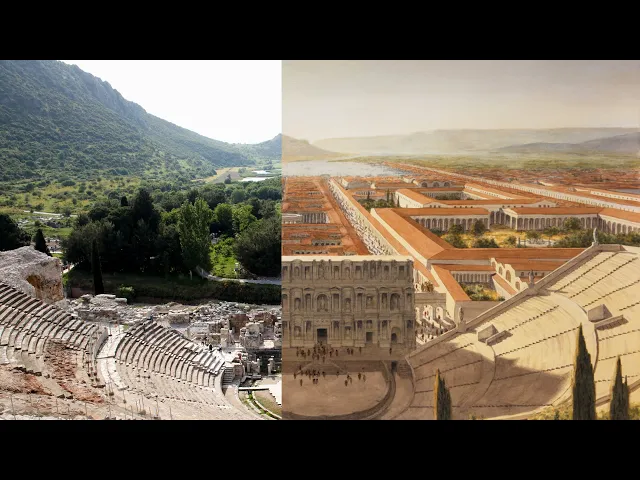
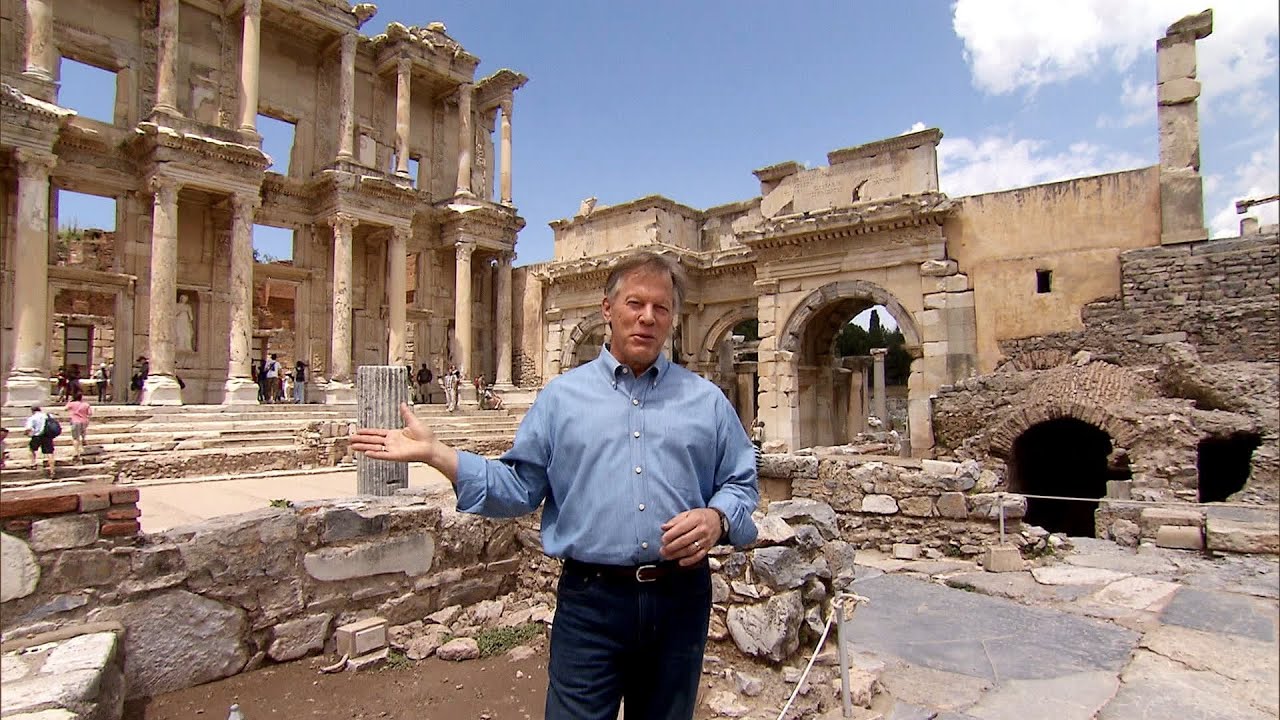
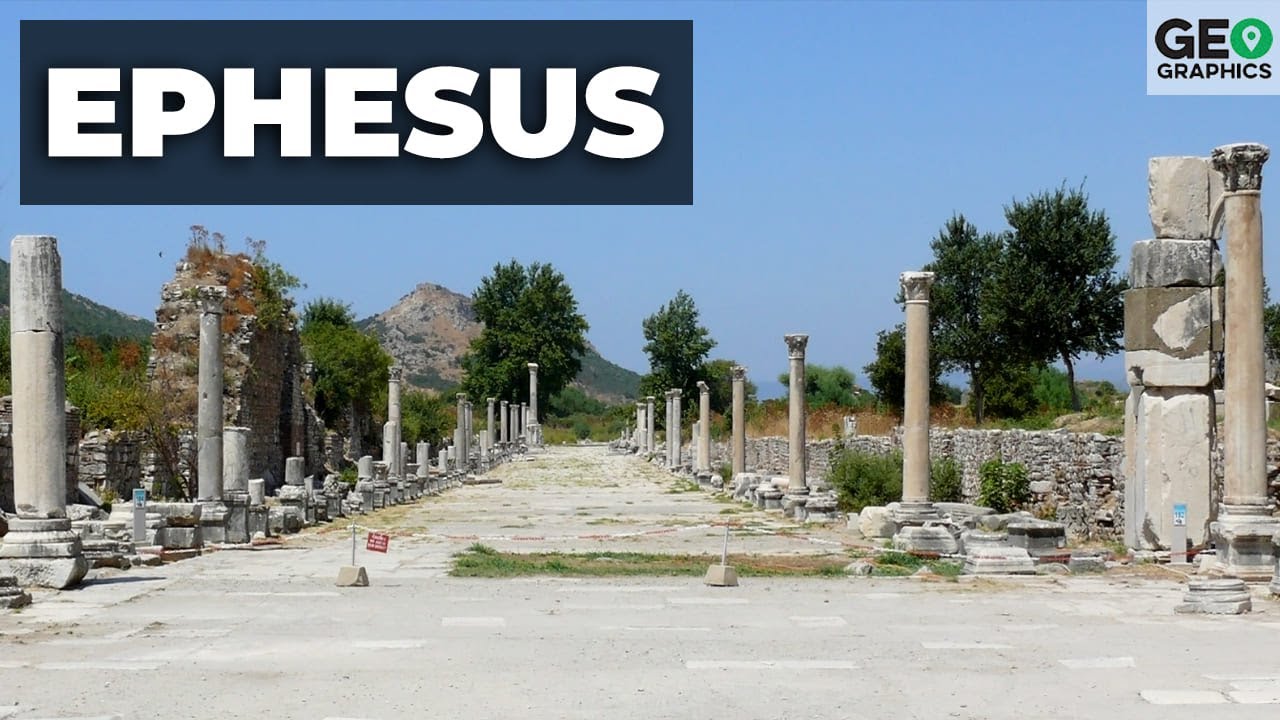
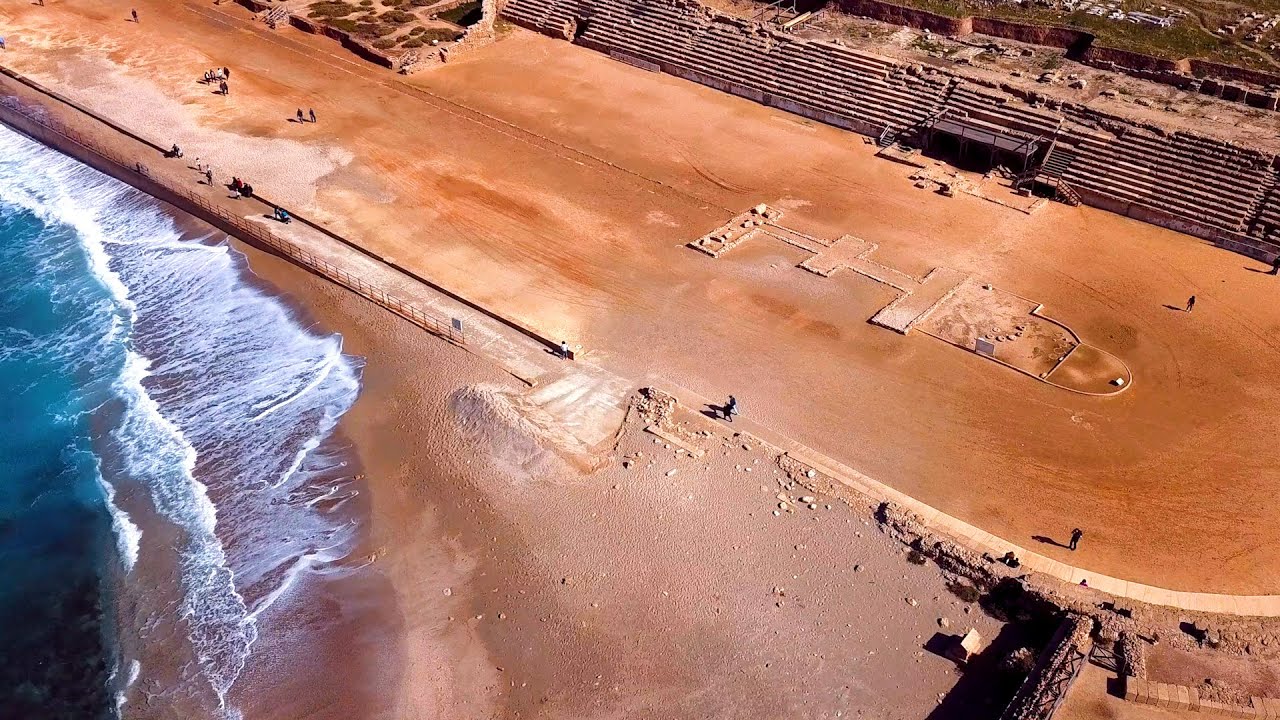
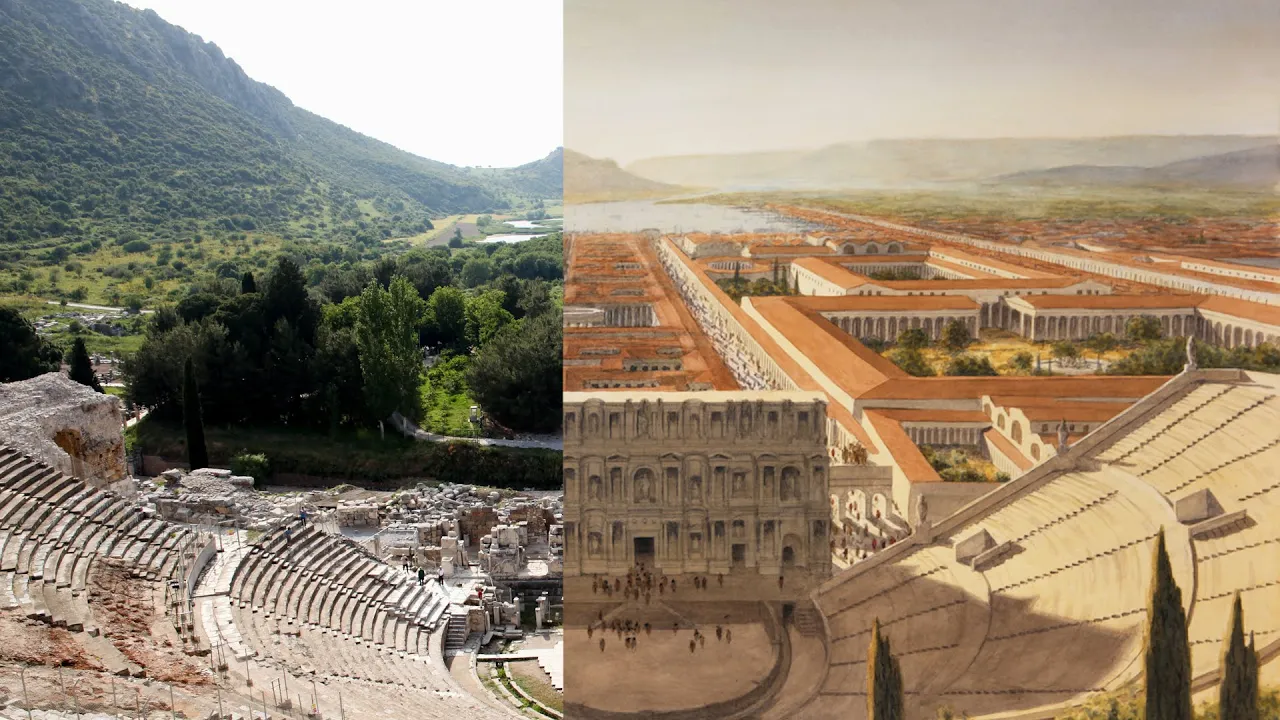
Ephesus was one of the biggest cities in the Roman Empire. It had imperial scale monuments and infrastructure, like its artificial harbor a world class library bustling shopping streets a hippodrome and its Great Theater. But the city’s glory didn’t last, and today it’s only a ruin.
Unlike other big Roman cities which continued to be inhabited, and even became massive modern metropolises, Ephesus was abandoned. So what happened to it? And what were the causes of its decline?
And eventual death. Ephesus was located in this fertile valley in Western Turkey. But this valley was once a bay, filled with Mediterranean sea water.
I’ll explain all that in a bit. First let’s take a closer look at the area The Roman ruin is here. Here we have the modern town of Selcuk.
The original ancient Greek city was around the Ayasuluk Hill. If we had Google Earth 2000 years ago, the area would have looked something like this. And here was the site of the Temple of Artemis, which was one of the 7 wonders of the ancient world.
If we stand here on this mountain top and look in this general direction, the view would have looked like this. It was a very large Roman city, with an estimated population of up to 250,000. I made an entire video on the Roman city, which I’ll link at the end.
The original Greek city was over there. Zooming in, we see that it was clustered around the Temple of Artemis. Already by Roman times, the Cult of Artemis had existed for a thousand years.
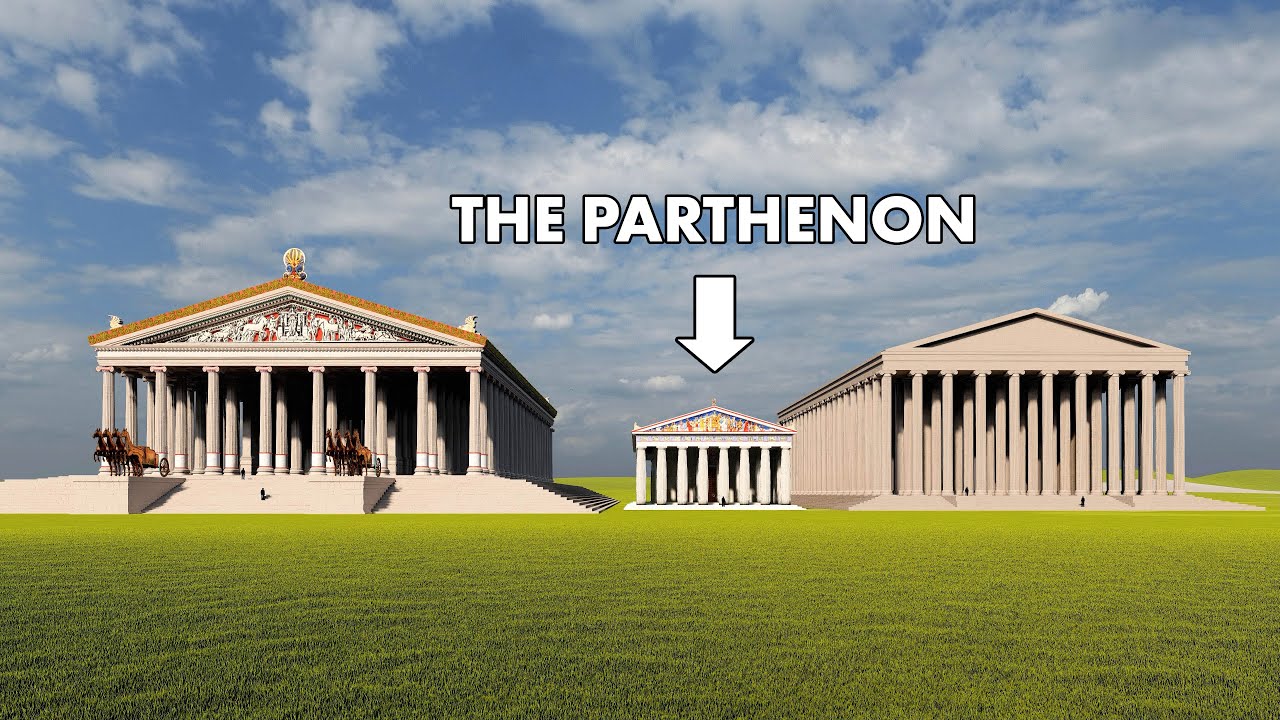
and there had been a temple on this site from at least the early Archaic period, if not earlier. It got destroyed and rebuilt several times, and this version was the last and biggest one. the one that made it to the list of the 7 wonders.
This last version stood for over 500 years and was the pride of its people, until disaster struck. In 262 AD, the Goths attacked Ephesus. They pillaged the temple and set the wooden support on fire.
The Gothic invasions menaced the Roman Empire throughout late antiquity. The Library of Celsus in the heart of the city, was also burned down in the same year, as archaeological evidence suggests, and the cause is attributed to the Gothic invasion. There was also an earthquake that same year that destroyed much of the city.
And in the 4th century there were more earthquakes. All these calamities weakened the city. However, Ephesus not only rebounded, but even thrived once again as a Byzantine city.
And in the 4th century, it was becoming more and more Christian. Ephesus was blessed with a rich Christian such as Mary spending her last years in a secluded house nearby, Saint John writing his Gospel here, and Saint Paul also living here. There was also the legend of The Seven Sleepers, about 7 young men who hid in a cave near Ephesus, in order to escape persecution by the pagans, and woke up a couple hundred years later, only to discover that the city had become fully Christian.
This legend reflects history, because Ephesus became one of the most important Christian cities, and a destination for pilgrims who came to visit its holy sites, which brought an economic revival to the city. And although it lost the glory it once had in antiquity, Ephesus continued to be a sizable and rich city in the Byzantine period. However, there was one silent enemy that was killing it slowly.
As I mentioned, this fertile valley today was once a bay. Over the centuries, the river pushed silt into the bay, which sank to the bottom, and slowly filled it up with sediment. This created a marshy, swampy landscape, and the coastline slowly shifted farther and farther to the west.
Judging by this map that archeologists have made, around 600 BC, before the Roman city existed, the original Greek city was on the waterfront. 300 years later, in the Hellenistic period they built a new Ephesus over here, because the harbor of the old Greek city was filling up with silt, and becoming marshy, which also brought malaria. This new Hellenistic Ephesus got away from the malaria, and gave the city a harbor again.
But maybe they didn’t understand that it would happen again in a few generations. In 129 BC, the Romans gained control over Ephesus, and a century later, in 27 BC, Augustus made it the new capital of the Roman province of Asia, which gave the city a renewed importance, and it grew in size. By this point, the silt had also enveloped the natural harbor around the Roman city, but with their engineering skills, they were able to maintain a portion of it, and turned it into an artificial harbor.
Eventually they had to dig a canal in order to maintain the connection with the sea. And it would only get worse. As the coastline kept inching farther and farther away, they had to keep making the canal longer and longer.
It would eventually merge with the river too. Not only that, both the harbor and canal were continuously plugging up with silt, so the Romans had to constantly maintain the depth by dredging them, which means scooping up silt from the bottom, and removing it. So the Romans were aware of the process of silting.
But it would be interesting to know if they had the awareness that this is a centuries-long process, and that a few hundred years earlier, the coastline looked very different. But having to constantly dredge the harbor system in order to keep it operational was a never ending battle for them, and a battle they couldn’t win with their swords. Eventually Mother Nature won, and this fight was no longer sustainable, so they gave up.
What’s really interesting is that you can still see its footprint on the modern terrain. The harbor kept its shape, and part of the canal too, which today is just a marshy swamp. This field right here was once part of the canal.
And it would have connected with the river right here. The harbor was the city’s biggest asset. It’s what allowed Ephesus to become such a large city and bustling trading hub in the Roman age.
But without a functioning harbor, its economic importance declined, and so did its population. And today it lies 5 km from the coast. So the death of the harbor, meant the death of the city.
The centralized and powerful Roman state had vast capital and resources, and it could procure a lot of high quality stone for their monuments. They also had the slave labor to do all the quarrying and building. But commanding such manpower and resources was not as available to people living in late antiquity and the Middle Ages.
In these later centuries, when people needed to build something, instead of quarrying the stone and starting from scratch, they often just took what was already there, and repurposed it. This was especially true when building large buildings like churches and fortifications. The decaying and depopulated cities of the Roman Empire, such as Ephesus, were full of large monuments that were good sources of high quality stone, and they often just became quarries themselves.
This process is called Spoliation. When you take stone from existing monuments, and use it to build other buildings, and the architectural pieces themselves are called “Spolia”. So when you visit medieval churches in Rome, and you see marble columns and capitals, that are clearly ancient, and not medieval, you’re looking at Spolia taken from older buildings.
Spoliation took place all over Europe and the Mediterranean during Late Antiquity and the Middle Ages. This illustration depicts the dismantling of the Theater of Balbus in Rome in the 8th century. They would strip the marble off the brick walls, and either use it as building blocks, or burn it in high temperature furnaces to produce lime, which was also used in construction.
Rome itself was also very depopulated in the early Middle Ages. Its inhabitants were living among the decaying ghosts of once great monuments, which were fair game for Spoliation. At Ephesus too, many structures would have been lying in ruin, either damaged by the earthquakes and never repaired, or simply left in disuse due to population decline.
If that was the case, then why not use them for their high quality stone. which otherwise would be left sitting there, doing nothing. It’s only in the modern era that we developed and appreciation or architectural heritage.
Ancient people didn’t see it this way. They were pragmatic, and if it was cheaper and easier to take what was already there, then they might as well take it. Of course not the entire city was spoliated, as we still have a lot left today.
But much of it was. The Hippodrome, or stadium at Ephesus, was a particular victim, and was almost completely dismantled. On a hill 2 km away, called the Ayasuluk Hill, they built a massive church in the 6th century.
The Basilica of Saint John. This was the site where they believed John the Apostle was buried. The marble seats of the Hippodrome were stripped away and repurposed to build that church.
So this gigantic structure, disappeared into thin air. Most of the stone seats are gone. But you can still see some of them over here.
If we look at this aerial photo, The Hippodrome is right here. and the church is over there, 2 km away. It was one of the largest and holiest churches of its time.
This is what its ruin looks like today. But if we go closer, we can see a clear distinction between 2 types of material. The red bricks are probably from the period the church was built in the 6th century.
Whereas the beautiful white marble blocks are Spolia taken from Roman Ephesus, from the Hippodrome and other structures. The small marble columns also seem to come from the Roman city, from its many porticoes and stoas, but the capitals are definitely from the e The challenge with Spolia, is that it’s often very difficult, if not impossible to identify which piece, came from what original building, because none of it was documented at the time. Sometime archaeologists can tell by carefully studying the pieces, but a lot of it is educated guesswork.
To make things even more interesting, some of the stone may have come from the Temple of Artemis. Just 400 meters from the basilica, is the location where the Temple of Artemis used to stand. You can see that both monuments are within sight of each other.
Today only a single column remains, reconstructed from random column drums found on site. But back when it was a complete temple, it was the largest temple in the ancient world. a massive structure that contained an untold amount of stone.
For much of late antiquity, Paganism and Christianity lived side by side in Ephesus But in the 4th century, Christianity started overtaking Paganism. Once the Christians were the dominant majority, they started persecuting the pagans. and this often came from the very top.
The Christian emperor Theodosius, ruling out of Constantinople in the late 4th century, started a systematic and institutionalized persecution of pagans. He forbade people from visiting temples, banned pagan rituals, defunded pagan institutions, and shut down ancient festivals like the Artemisia, which was a festival to Artemis that had been running for over a thousand years. He was also the emperor who shut down the Olympic Games for good in 393 AD, also a festival that had been running for over a millenium.
All over the empire, pagan temples were destroyed, dismantled for their stone, or converted to churches. Theodosius killed the Cult of Artemis! And in 391, he shut down the temple for good.
A decade later, a Christian mob in a zealous fervor, destroyed the temple once and for all. After its destruction, it must have lain i its fallen stones just sitting there, waiting to be taken. I have heard and read that its stone was used in constructing the Basilica of Saint John, but haven’t found any literature that’s 100% certain about it, so all I can say is that it’s possible.
Probably nobody really knows what happened to it. But what we do know is that it had to go somewhere, because this massive temple contained thousands of tons of marble. And today all of it is gone!
Apart from a few left over pieces, and a lonely column. It was stripped all the way down to its foundations. This systematic dismantling of the temple was probably not a coincidence.
The Christians probably had an extra incentive to make it disappear. Because it represented the old world view that they were trying to replace. They wanted to delete her from the collective memory.
And for the most part, they were successful. Because not many people know about this place today. Without her temple, she faded away from consciousness.
A slap in the face, for the ancient Goddess. Ephesus also slowly faded from memory. As the river continued silting up the bay and plugging the port, its population kept decreasing.
This was a slow process, so it’s hard to mark a definitive time period, but a turning point was in the 7th century when the Arabs started raiding the coast, so the local population started shifting inland to the safety of the Ayasuluk Hill. Archaeological evidence also indicates a sharp population decline in the Roman city during the 7th century. The ancient harbor could still accommodate some traffic, but only small boats could enter through the canal, which was now a lot shallower.
It was all just too silted up to let big s By the time the Seljuk Turks conquered the area in 1090, the main settlement was ont the Ayasuluk Hill. around the Basilica of Saint John. The Roman city was mostly abandoned by then.
The 2nd Crusade also passed through Ephesus in 1147. Apparently they expected to find a large and bustling port city. Instead.
. they found a derelict old ruin. Its reputation as a glorious port city, outlasted the city itself.
Whatever was left of the Roman monuments, slowly began to get covered up with dust, as the centuries passed. until Ephesus was mostly buried underground. Its location was never completely forgotten, as some monuments still stuck out above the surface.
As we can see on these engravings from the 19th century. So the locals probably knew it as the location of a once great city. But it was only properly identified in 1863 by a British architect, ho started excavating it for the British Museum.
The Austrian Archeological Institute then took over. and has been excavating it ever since. And as big as the archeological site is to they estimate that 90% of the ancient city is still buried.
That’s how big it was! But its misfortune and demise can be seen as a blessing for us moderns, because its slow path to irrelevance, led to its abandonment. Which preserved it as a Roman city.
One that we can enjoy today, as we walk down its streets, and try to imagine what it looked like. Or as we sit in the great theater, and try to capture the echos of the plays that were once performed here, a long time ago. .
. .