- [Narrator] The toughest warrior in the Bible: Benaiah. There are multiple men in the Bible named Benaiah. However, one of them is particularly noteworthy.
This Benaiah is a son of the chief priest Jehoiada. Benaiah is a popular Hebrew name that means "the Lord has built. " He served as a mighty warrior during the time of King David and King Solomon.
The Bible describes Benaiah as a fearless warrior noted for his heroic exploits. Like Samson and David, he is one of the only men to defeat a lion. Benaiah was from the southern Judean city of Kabzeel.
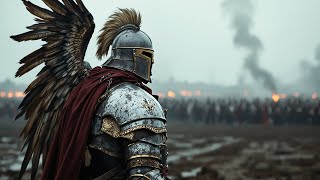
Before David became king, Benaiah was making a name for himself through numerous daring military achievements. Benaiah was famous for his bravery in slaying a lion in a pit during a snowy day, as well as for killing a strong Egyptian man using the man's own spear. Additionally, he held the position of leader among David's bodyguards.
1 Chronicles 11:22-24. "Benaiah the son of Jehoiada, "the son of a courageous man of Kabzeel "who had done great things, "killed the two sons of Ariel of Moab. "Also, he went down and killed a lion in a pit "on a snowy day.
"He killed an Egyptian, also. "A man of great stature, five cubits tall. "In the Egyptian's hand was a spear like a weaver's beam, "and Benaiah went down to him with only a staff, rod, "and grabbed the spear from the Egyptian's hand "and killed them with his own spear.
"Benaiah the son of Jehoiada did these things, "and had a name as well as the three mighty men. " 2 Samuel 23:8-39 and 1 Chronicles 11:10-47 list a group of people known as mighty men of David, or David's mighty men. They're also referred to as the 30 chiefs and simply the 30.
We read of the mighty men of David, when David, the man after God's own heart, was on the run, not for any crimes he has committed. In fact, he has never been accused of a crime. David was on the run because of the insane jealousy of King Saul.
Saul was Israel's king, but he had already disqualified himself and been rejected by God. By God had already anointed David and infused him with the Holy Spirit, and he was being groomed to be Israel's future king. At this time, David is on the verge of collapsing, and he was terrified.
David can flee Gath's prison and traveled to Adullam's cave thanks to a miracle. This was David's lowest point to date, and if you wanted to know how he truly felt, read Psalm 142, the song he wrote about it. He had nothing.
No security, no food, no one to talk to, no promise to hold onto, and no hope that anything would ever change. He was trapped in a dark cave, cut off from everything and everyone he cared about. Everybody except God.
Yet in the thick of all this, David has not lost sight of God. He cries out for the Lord to rescue him. David has arrived at a point where God can begin to mold and use him.
And I have a hunch that this caved-dweller, David, didn't want anyone around at that time in his life because if he didn't think he was worth anything to himself, he didn't think he was worth anything to anyone else. David didn't want his family, but they came. He didn't want them there, but God insisted on bringing them.
With him, they crawled inside the cave. But have a look! They weren't the only ones.
"And everyone that was in distress, "and everyone that was in debt, "and everyone that was discontented, "gathered themselves unto him, "and he became a captain over them, "and they were with them about 400 men. " 1 Samuel 22:2. What a group!
Everyone who is in need showed up. Second, everyone who was in debt flocked to the location. Hebrew here, nashah, means to lend on interest, to have a number of creditors.
As a result, they were people who couldn't afford to pay their bills. Finally, there was everyone who was discontented. The Hebrew here, maar nephesh, means to be in bitterness of soul, to have been wronged and mistreated.
That group came too. So what does it all mean? Well, the land was aching under Saul's authority at the time.
He put the people under too much strain. He had treated them terribly. He was a madman who suffered from severe depression, and they were paying the price.
Some could no longer take it. As a result, David ended up with a cave full of disgruntled people. Can you believe it?
It's awful enough that you're alone in there, feeling like a worm, but having almost 400 more worms crawl in with you is a disaster. However, God is at work in this situation. He is rerouting David's life.
The man is in the cave. He does, after all, believe he is worthless. He believes he is useless.
He believes he has been treated unfairly. He feels misunderstood. That's why he's hiding out in the cave.
And before he can spit, his brothers come. A lot of people only remember his brothers for the tough remarks. However, his entire family comes to him at this low point.
As a matter of fact, strangers of all kinds begin to pour in before he can find them a seat. I'm not sure how word got around, but he soon had 400 other caved dwellers looking to him as their leader. That cave was no longer David's escape hatch.
This place, the stinky dark cave was used as a training ground for individuals who would later become known as David's mighty men of valor. That's right, this motley bunch would become his mighty warriors in combat, and when he got office, they'd become his cabinet. He changed their lives by instilling order, discipline, character, and direction in them.
David had been beaten to the point where he couldn't see anything but up. And when he glanced up, God was there, gradually introducing this group of strangers to him until they proved to themselves to be the most powerful men in Israel. This was the cave that the mighty men trained.
Who'd have believed the next king of Israel would be training his men in a dark cave where no one could see them and no one cared? What an unusual thing for God to do. The rough Judean wilderness, with its rocks, caverns, and deep wadis was his Sherwood Forest.
Because God wanted him to be a maverick king, he commanded a bunch of mavericks there. There would never be another king like David in Israel. Later on, we discovered that David's warriors mastered the sword as well as the bow and arrow.
Obviously, they had some sort of training regimen in place. They figure out how to put on a show in battle. In the ranks, they built discipline.
They may have started out as rebels, but they're on their way to becoming skilled hunters and brave combatants. From a cave of discontent, David and his outcasts develop themselves into the mighty men of David. The term "cave of Adullam" has been used by political commentators to refer to any small group removed from power but planning to return.
These mighty men of David were a group of David's toughest military warriors credited with heroic feats, including Joshua-Basshebeth, who killed 800 men in one battle with a spear. Additional notable actions listed include Abishai, the leader of the mighty men, who killed 300 men with a spear. Despite being referred to as "the 30," the group actually consisted of 37 men.
This implies that not all members were part of the team for the entire duration. Sadly, some of them, such as Uriah, lost their lives during battles during David's reign. When David fled from King Saul, he placed Benaiah in command of the 30.
1 Chronicles 27:6. "This is the Benaiah who was the mighty man of the 30 "and was in charge of the 30; "and Ammizabad, his son, was over his division. " Later, when Joab was made commander-in-chief, Benaiah was appointed to a high place in David's armed forces as commander of the Cherethites and Pelethites, an elite mercenary company in David's bodyguard from Crete and Philistia.
2 Samuel 20:23. "Now Joab was commander over the entire army of Israel. "Benaiah the son of Jehoiada "was commander over the Cherethites and Pelethites, "the king's bodyguards.
" "Bennet's loyalty to King David "earned him the rank of third army commander, "with 24,000 men in his division. "This troop served as part of the army rotation system "established by King David. " 1 Chronicles 27:1-6.
Benaiah remained devoted to David during Absalom's rebellion. Absalom was the third son of King David, by his wife, Maacah. The first recorded event defining Absalom's life also involved his sister, Tamar, and half-brother, Amnon.
Tamar was beautiful, and Amnon lusted after her. When Tamar rebuffed Amnon's advances, he arranged, through subterfuge, to have her come to his house, where he ravished her. After the rape, Amnon put Tamar out of his house in disgrace.
Absalom took his sister in to live with him when he heard what happened. For the next two years, Absalom nursed a hatred of his half-brother. Then, using some subterfuge of his own, Absalom invited Amon to his house for a party.
During the festivities, in the presence of David's other sons, Absalom had his servants kill Amnon in cold blood. Out of fear of his father, Absalom ran away to Geshur, where he stayed for three years. Finally, the two men get back together, and there is a small measure of reconciliation.
Unfortunately, this peace did not last. Possibly resenting his father's hesitancy to bring him home, Absalom stealthily undermined David's rule. At this point, David needed men he could trust, and Benaiah was trustworthy.
Absalom asked to go to Hebron, where he had secretly arranged to have himself proclaimed king. The conspiracy strengthened, and the number of Absalom's followers grew steadily, such that David began to fear for his own life. David gathered his servants and fled Jerusalem.
Upon entering Jerusalem as king, Absalom sought to solidify his position. First, by taking over David's house and sleeping with his concubines, considered an unforgivable act. Then he laid plans to pursue and attack David's forces immediately, but the idea was abandoned owing to the advice of Hushai.
This delay allowed David to muster his troops at Mahanaim and mount a counterattack to retake the kingdom. David himself did not take part in the counterattack, having been persuaded by his generals to remain behind. He did explicitly instruct the generals to deal gently with Absalom, despite his treason.
The Bible points out that all the troops heard David's orders concerning Absalom. However, the orders were disobeyed. As Absalom was riding under some trees, his long hair became entangled in the branches, and he was unhorsed.
Joab found Absalom suspended in midair and killed him there. Thus, the rebellion was quelled, and David returned to Jerusalem as king. Benaiah remained devoted to David during Absalom's rebellion and also when Adonijah attempted to take control of David's throne.
1 Kings 1:8. "But Zadok the priest, Benaiah the son of Jehoiada, "Nathan the prophet, Shimei, Rei, "and David's most formidable warriors "did not side with Adonijah in his desire to become king. " Adonijah was the fourth son of King David.
Adonijah's mother was Haggith, one of David's wives. Adonijah is best known for his failed attempts to usurp the throne of Israel after his father's death. When David was old and on his deathbed, Adonijah, like his brother, Absalom, before him, gathered an army and put himself forward as king, even though David's chosen successor was Solomon.
Some influential men supported Adonijah's move. Joab, the captain of the army who had stood with David, supported Adonijah. However, Benaiah was loyal to the right king.
As Solomon's supreme army commander and chief bodyguard, Benaiah was responsible for executing those who opposed the new king, including Adonijah. 1 Kings 2:25. "So King Solomon sent Benaiah the son of Jehoiada, "and he struck Adonijah and he died.
" Benaiah also executed Joab and Shimei. 1 Kings 2:34. "So Benaiah the son of Jehoiada, went up to the tabernacle "and struck and killed Joab, "and he was buried at his own house "in the wilderness of Judah.
" Benaiah was instrumental in safeguarding the passing of the royal succession to Solomon after David's death and thus gained the honor of assisting in Solomon's coordination at Gihon. 1 Kings 2:46. "So the king commanded Benaiah the son of Jehoiada, "and he went out and struck down Shimei, and he died.
"So the kingdom was established in the hands of Solomon. "The kingdom was now established in Solomon's hands. " This Benaiah was commander of 24,000 troops as well.
Another Benaiah was one of the musicians and priests who blew the trumpet as the Ark of God was brought into Jerusalem by King David. At least eight other Benaiahs appear briefly in the Old Testament. But none of these distinguish themselves like David's elite warrior, the Benaiah, who single-handedly executed Moab's top soldiers, jumped into a pit in a snowstorm to wrestle and kill a lion, and outmaneuvered an Egyptian giant, slaying him with his own spear.