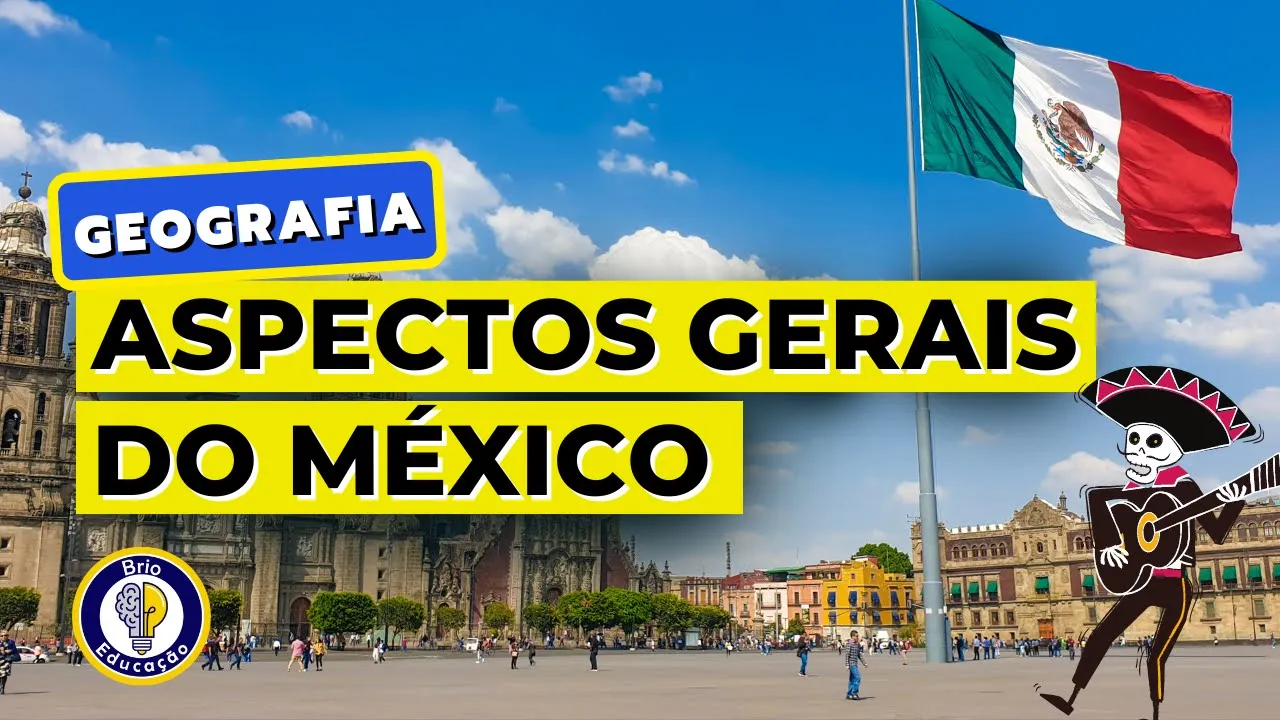
[Music] Hey guys, how are you in this class, let's talk about the general aspects of Mexico So the national territory of Mexico has one million 959 thousand and 247 square kilometers. The Mexican population is distributed irregularly, but about 75 % of the inhabitants live in the Plateau of Mexico, which has fertile soils of volcanic origin and climates that favor human occupation. to the west it ends Madre Oriental to the east the cold climate in the higher stretches ends up keeping human occupation away and in the northwest of the country the presence of deserts also ends up reducing the population density in that region for the same reason because it ends up making it very difficult for human beings to occupy these regions but now talking a little about the capital, Mexico City which is the capital of the country It has more than 22 million inhabitants and Mexico City has some problems typical of large urban concentrations in poor countries such as areas of extreme poverty.
infrastructure high levels of air pollution traffic very chaotic traffic among several other problems at the same time There are some regions with good quality of life and that have adequate infrastructure for the population and also the economy now that we talk about these more general issues let's talk about the population of the country with about 130 million inhabitants the mexican population It is predominantly formed by miscegenation that is by the mixture between peoples between the amerindians and descendants of the spanish colonizers one is very important is about the migratory process so very attracted by the economist of the lidense between the 1980s and 1990s the impoverished Mexican population caused the rate of emigration from Mexico to the United States both legal and illegal to rise dramatically so today Mexican immigrants make up 27 percent of the migrant population of the United States and these remittances to relatives in Mexico reach 16 billion dollars a year, that is, this is the amount that Mexicans in the United States send to their relatives in Mexico. strong surveillance at the border and developed a series of strategies including the construction of a wall to try to stop the entry of illegal immigrants there and from 2010 the Mexican migratory flow decreased and reached its lowest level of 1950 several factors contributed to this decline, such as the economic crises in the United States, which ended up reducing the job opportunities of the population that lives in the country, both Americans and the foreign population .