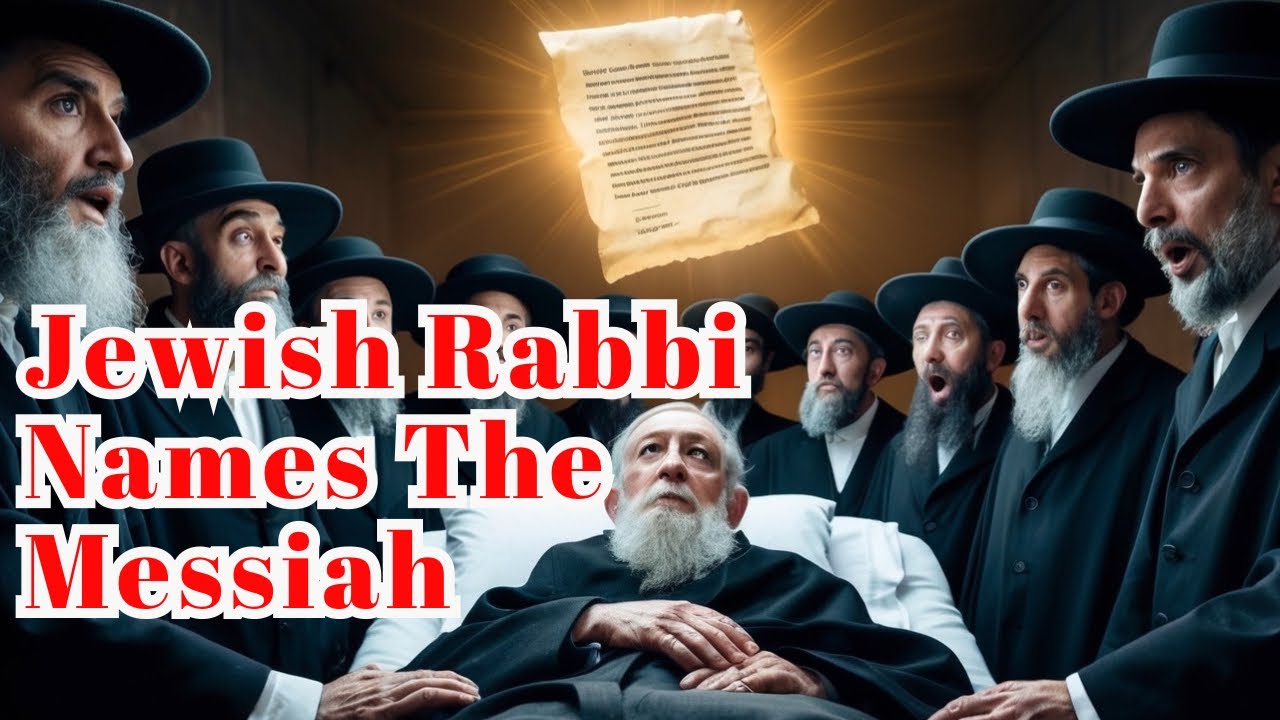
Moments before Shabbad, respected Rabbi David Cohen collapsed in his home. His heart stopped. Medics fought to revive him. Unaware his soul had already crossed into another realm. What he saw shattered everything he thought he knew. A devout Jewish scholar, David had rejected Jesus his entire life until he met him face to face beyond death. This isn't just a near-death experience. It's a radical revelation that turned a rabbi's world upside down. My name is David Cohen. I was born into an Orthodox Jewish family in Brooklyn, New York. From the time I could walk, I was raised
in the rhythm of tradition, morning prayers with my father, Hebrew school in the afternoons, Shabbat dinners that stretched into the night with discussions about Torah and Talmud around the table. Faith wasn't just something we believed. It was who we were. It shaped every moment, every decision, every breath. By my early 20s, I knew I wanted to become a rabbi. Not for prestige, not for power, but because the Torah had captured my soul. It was more than scripture to me. It was divine architecture. Every letter, every pause, every law was infused with purpose. I believe the
Torah was God's direct revelation to the Jewish people. And I had made it my mission to understand it as deeply as possible and to teach it to others with accuracy and reverence. I spent years in yeshiva studying day and night, memorizing not only the Torah, but the Mishna, the Talmud, and the writings of our sages. My teachers were men of great discipline and insight, and I did everything I could to follow in their footsteps. Eventually, I was ordained and took a position as a congregational rabbi. My days were filled with study, teaching, pastoral care, and
leading our community in prayer and practice. I loved my people. I loved our traditions. I loved the responsibility that came with guiding others in the ways of our ancestors. I never took it lightly. I believed in the covenant, the one given to Abraham, reaffirmed through Moses. That covenant defined who we were, a chosen people bound by law, tradition, and identity. As for Christianity, it was never something I hated or mocked. In fact, I had Christian friends growing up, and I admired their commitment to family and prayer, but I viewed their faith as misaligned. Sincere perhaps,
but built on theological errors. Jesus, to me, was a Jewish teacher who became the center of a religion that veered off course. The Messiah was supposed to bring lasting peace, rebuild the temple, restore the exiles, not die on a Roman cross. That didn't make sense to me. When Christians would try to speak to me about Jesus, I would listen politely, but always decline further conversation. Sometimes I'd offer a respectful counterpoint from the Torah just to clarify our position, but never with anger or contempt. I wasn't anti-Christian. I simply believed they were wrong. I saw Jesus
as a historical figure, not the Messiah, not divine. I believed in one God, indivisible and eternal, and in a faith built on mitzvah, commandments, not on grace or atonement through a man. I felt confident in that belief. Grounded. My certainty wasn't arrogance. It came from decades of study, prayer, and spiritual wrestling. I had built a life on truth, or so I thought. I was a man of discipline, conviction, and integrity. My heart was sincere. My devotion was real. And I never once imagined that anything could shake it until the day everything changed. My life followed
a steady rhythm, a sacred pattern etched into time by generations before me. I would wake before sunrise, wrapped fillin around my arm and forehead, and whispered the morning prayers with intention. Each word of the Shima, each blessing from the Amida was spoken not from routine, but from devotion. After prayer, I'd join a small group of men at our synagogue for Torah study before breakfast. We'd argue in love, debating interpretations, wrestling with commentaries from Rashi, Ram, and the sages of old. These sessions were the lifeblood of my mind. They sharpened my thinking and deepened my awe
for God's wisdom. Most of my mornings were spent preparing lessons. I taught in our synagogues by midrash, guiding young men through complex passages in the Talmud, always emphasizing kavana, intentionality in their learning. I pushed them not just to recite but to understand, to challenge, to absorb the heartbeat of the law. Afternoons were for counseling. Congregants would come in with questions, sometimes practical, sometimes existential. I'd help a young couple navigate the rules of Tahar at Hamish Patcha, family purity, sit with a grieving widow reciting dhilm or mediate disputes with care and fairness. These moments grounded me.
I wasn't just a scholar. I was a shepherd. At home, life was warm but modest. My wife Miriam was my anchor, steadfast, wise, and deeply spiritual. She lit Shabbat candles with tears in her eyes every Friday evening. We raised three children together in observance and love. They went to Jewish schools, learned Hebrew from an early age, and never once ate outside our kosher kitchen. Friday afternoons were always special. The whole house transformed, clean, quiet, filled with the smells of hala and roasted chicken. We'd gather at the table, bless the wine and bread, and sing Zroat
before diving into lively Torah discussions. It wasn't just tradition. It was life. It was joy. To me, God's presence was not distant. It was embedded in every detail. The law was not a burden. It was a gift. Every commandment, every helacic detail was a way to draw nearer to the divine. My worldview was deeply covenantal. We were a people with a mission, chosen not because we were better, but because God entrusted us with his word. I didn't need proof of God's existence. I saw him in the birth of a child, in the rhythms of the
calendar, and the survival of our people. I didn't question the truth of Torah. I lived it. Even when confronted with theological questions about other faiths, particularly Christianity, I stood firm. I believe they had misread our scriptures, misunderstood our prophecies. Jesus was not the Messiah. The Messiah would bring universal peace, rebuild the temple, and usher in the age of redemption. That hadn't happened. My heart was at peace in my convictions. I wasn't looking for anything more. I didn't feel lacking. I believed I was walking in truth. It was a Thursday afternoon in early spring. I had
just finished counseling a young couple preparing for marriage. We discussed Kuba language and family expectations. I was heading home to prepare my Shabbat sermon, one I'd been particularly excited about, focusing on perishad vitra and the meaning of sacrifice. As I walked through the synagogue lobby, I felt a sudden tightness in my chest. At first, I thought it was indigestion or maybe a pulled muscle. I brushed it off. There was always stress before Shabbat. So much to prepare. So many people to care for. But the tightness didn't go away. It spread slowly, then quickly up into
my shoulders, down my left arm. My breathing turned shallow. I stopped trying to steady myself on the wall. My vision blurred slightly. Still, I told myself it was nothing. I couldn't be having a heart attack. I was only 52. I ate well. I walked every day. I had no family history. Miriam had been waiting for me at home. When I walked in the door, I tried to smile. She immediately noticed something was wrong. "You're pale," she said, walking over. "What's wrong?" "Just a little pressure." "It'll pass," I muttered, waving her off. She didn't bite it.
"Sit. I'm calling the doctor." No, no, just give me a moment. I tried to stand up straighter, but the pain surged like a wave crashing through my chest. My knees buckled. I collapsed into the dining room chair, clutching my chest. Miriam's face changed from concerned to panic. She grabbed her phone and called emergency services. Her voice trembled, but stayed composed as she gave our address. The next few minutes were chaos. My breathing turned labored. Sweat poured down my face. I felt like my entire body was folding in on itself. The pain wasn't sharp. It was
crushing like an iron weight pressing me down. I wanted to pray, but I couldn't form the words. I wanted to tell Miriam I was sorry, that I loved her, but even that was beyond me. Paramedics burst into the house and began working quickly. I could hear them talking, but it felt like they were far away. Their voices were muffled, their faces distorted. One of them asked if I could hear him. I tried to nod, but my body wouldn't respond. As they lifted me onto the stretcher, I caught one last glimpse of Miriam. She stood frozen
near the doorway, her hand over her mouth, tears streaming down her cheeks. And then everything faded. The pain, the noise, the light, just silence, and then nothing. The next thing I remember was weightlessness. No pain, no sound, no panic, just stillness. At first, I thought I had blacked out. But then I noticed something strange. I was aware, not just vaguely conscious, but fully aware, more than I'd ever been before. My senses were sharp, heightened. Yet, I couldn't feel my body. I wasn't lying down. I wasn't standing. I wasn't anywhere. And then I saw it. Below
me, yes, below was a scene I should never have been able to witness. Two paramedics hovering over a man on a stretcher in my dining room. One was pressing rhythmically on his chest, the other shouting numbers and instructions, preparing defibrillator pads. It took only a moment to realize the man on the stretcher was me. My first reaction wasn't fear. It was confusion. Deep disorienting confusion. How was I seeing myself from above? How was I hearing the paramedic's voices clear but distant like I was submerged underwater? I saw Miriam crouched in the hallway praying with her
face buried in her hands. I wanted to scream her name to tell her I was okay or at least here, but when I tried, nothing came out. No voice, no sound. I didn't even feel breath. I tried to move closer to reach out, but there was no arm to extend. My presence just hovered like a thought that couldn't land. The scene felt both immediate and far away. I was watching it unfold, but it no longer felt like mine. I saw my own body pale, limp, lifeless, and I felt a strange mix of detachment and grief.
It wasn't horror. It was sorrow. Not for myself, but for the people still caught in that moment. Miriam, the paramedics, my children who didn't yet know what was happening. I began to grasp what was happening. I was outside of my body. Not metaphorically, literally. I don't know how long I remained there. Time seemed irrelevant, like I was existing outside of it. I kept watching the paramedics now using paddles. I saw my body jolt from the shock. One of them cursed under his breath. Another checked for a pulse, shook his head, and began compressions again. We're
losing him, someone said. But I'm right here, I thought. I'm not gone. I'm right here. Still, I couldn't make them hear me. I couldn't even make me move. A strange calm began to settle over me. Not comfort, just quiet. I wasn't panicking anymore. I wasn't trying to fight it. I just watched, detached. And in that stillness, something began to change. The room around me grew dimmer. Not darker, just less real. The urgency of the scene faded into the background like a TV slowly being muted. I felt myself pulling away, not dragged, but gently drawn. And
I knew somehow deep inside that I was crossing a threshold. Whatever came next, I was no longer tethered to the world I had known. As I drifted further from the scene below, the edges of my awareness began to dissolve. The walls of my home, the flashing lights of the ambulance, the frantic movements of the paramedics, all of it faded like mist under the sun. What replaced it wasn't darkness. It was something else entirely. Light, but not light like we know it. This light wasn't from a lamp or the sun. It didn't shine on things. It
was the space. It didn't cast shadows. It didn't have a source. It surrounded me, filled me, invited me. It was alive. That's the only way I can describe it. The light had presence. It wasn't just brightness. It was intelligence, warm, aware, welcoming. It pulsed gently like it breathed. And with every pulse, I felt something deeper settle into me. Peace, clarity, and love in its purest form. The warmth of it was overwhelming. Not like heat, but like being known and still embraced. It reached into every part of me. Even the places I didn't know were there.
My fear began to melt away. The sorrow I felt floating above my body was still there. But now it was wrapped in comfort, like a parent holding a crying child. There was no sound in the traditional sense, but the space itself spoke, not in words, but in knowing. I felt it like a quiet message etched into the air around me. Come closer. That simple invitation stirred something in me. A pull not forceful but irresistible. I hesitated, not from fear exactly, but from uncertainty. I had spent my entire life studying what comes after death. And yet
I never imagined this. This wasn't gone Eden the way I had envisioned it. This wasn't the soul's rest or a heavenly courtroom. It was more. I had never doubted the existence of God. But I had always pictured him as beyond reach, wrapped in mystery and holiness so great we could never draw too near. This light, this presence was holy, yes, but not distant. It was near, intimate. It knew me, and that terrified me. Not because it was harsh, but because it was real. I could feel it examining me, not with judgment, but with total clarity.
It knew who I was, not just what I had done, but who I had become over the years. And yet, I felt no condemnation, only invitation. Still, I resisted. A small voice inside me, the one trained by years of Torah study, by careful lines and hackic texts, by lectures and books and boundaries, whispered that this didn't fit, that something was off, that I had no framework for what I was seeing. But another voice, deeper and more honest, spoke, too. This is truth. This is what you've been longing for. I couldn't deny that the light didn't
contradict the God I had worshiped. It felt like his fullness. as though the veils I had always looked through were being gently pulled back. And within that light, I sensed another presence. Not separate, but distinct. Someone. I didn't see a face yet, but I knew someone was there, watching, waiting. Not with impatience, but with the calm of someone who had always known this moment would come. The feeling grew stronger as I moved closer to the light. I felt like I was being drawn towards something, not just a place, but a person, someone who had always
known me, even before I knew myself. And I realized in that moment that I wasn't just being welcomed, I was being called. As I moved deeper into the light, the presence I had sensed began to take form. At first, it was just an impression, like a silhouette behind a curtain of radiance. But slowly the figure stepped forward, not as if approaching from a distance, but as if the veil itself was lifting. He stood in front of me, majestic, but not imposing, radiant, yet not blinding. There was a purity in him that words can hold, a
light that didn't shine on him, but seemed to shine from him. His robe flowed like soft wind, glowing with a soft white fire. His face, I struggle even now to describe it. There was no flaw, no harshness. His features were strong yet gentle, timeless yet human. But it was his eyes that undid me. They were the eyes of someone who had known me forever. They looked right through me, past everything I'd built up, past my learning, my confidence, my questions, and reached something deeper. Not in violation, but with a kind of kindness that breaks you
open. I wanted to look away, but I couldn't. I knew who he was even though I didn't want to. I had studied about him from a distance, dismissed him, refuted the claims of those who followed him. But now, standing in front of me, I couldn't deny him. There was no room for debate, no need for theological arguments. The truth of his identity wasn't told to me. It was felt undeniably entirely. This was Jesus. The name thundered inside me without a sound. I recoiled slightly, not out of anger, but because everything in me started to break.
No, it can't be. My knees gave way. I collapsed, not from force, but from the weight of what I now understood. I had spent my life searching for truth. I thought I had found it in the Torah, and to some extent I had. But standing before him, I knew I had only ever seen a portion, a shadow of something greater. He stepped closer. He didn't look down on me. He knelt. David, he said, "My name," spoken in a tone I had never heard before. Not just with love, but with authority. Like he wasn't just calling
me, but something in me. You have sought God your entire life. He said, "You have loved him, served him, taught his word with devotion." Tears spilled down my face. I wanted to speak, to explain, to defend what I believed. But no words came. You have been faithful, he said. But you have not understood the fullness of his plan. The words pierced me, not with pain, but with truth. I felt exposed. I felt loved. All my learning, all my certainty, all my confidence, none of it prepared me for this. He wasn't angry. He wasn't here to
shame me. He was here to reveal. You know the scriptures, he continued. You have walked the path of obedience. But the Torah was never the destination. It was the signpost. His voice carried both sorrow and hope. You honored the covenant, he said. But the covenant pointed to me. My heart broke. Not because I felt betrayed, but because I realized I had missed him. All those years, all those verses, all the prayers. And yet, he didn't reject me. He welcomed me. He saw everything I was, everything I wasn't, and still drew me in. I wept, not
because I was condemned, but because I was being offered something greater than I had ever known. truth, wholeness, fulfillment. And still a small part of me resisted. Why? I asked him in my heart. Why now? Why me? He looked at me, eyes burning with compassion. Because I love you, he said. And because you are ready to see. As I knelt before him, still trembling from the weight of his presence, the light around us shifted. It didn't fade. It deepened, grew richer. I felt something change, not outside of me, but within. Jesus reached out, not physically,
but with something greater. And suddenly, I wasn't just standing in that light. I was inside something, a vision. I found myself on a mountaintop. Wind swept through my hair. I knew this place immediately, Mount Mariah. I saw Abraham, aged and steady, his face set with resolve. Beside him walked Isaac, young and unaware, carrying the wood for his own sacrifice. I had taught this passage hundreds of times, the test of faith, the ultimate obedience. But now I was seeing it unfold, not as a story, but alive. I felt the tension in Abraham's heart. I heard Isaac's
quiet trust. I saw the knife rise, and just before it fell, the angel cried out. Abraham stopped. A ram appeared caught in the thicket. But then the scene changed. Another hill, another sun. This time there was no ram. I saw Jesus carrying a cross, blood on his brow, body broken. But unlike Isaac, he wasn't unaware. He knew. And still he walked forward willingly. I gasped. The story of Isaac wasn't just a test. It was a foreshadowing. Abraham's son was spared, but God's own son wasn't. Before I could process it, another scene emerged. The wilderness. The
Israelites were sick, dying from venomous snake bites. Moses stood holding a bronze serpent high on a pole, commanding the people to look upon it and live. It was an odd story in the Torah, one I had never fully understood. Why would God ask them to look at the image of the very thing that harmed them? And then overlaid on the scene, I saw Jesus on the cross, arms stretched wide. I remembered a verse from the New Testament I had once read and ignored. Just as Moses lifted up the serpent in the wilderness, so must the
Son of Man be lifted up. My mouth went dry, my chest tightened. These weren't coincidences. They weren't clever Christian reinterpretations. The connections were exact, precise, divine. Then came the prophets. I was shown a man beaten, bloodied, despised. His appearance so disfigured he was barely human. Isaiah 53. He was despised and rejected by men, a man of sorrows. He was pierced for our transgressions, crushed for our iniquities. By his wounds, we are healed. I saw it not symbolically, literally. Then Zechariah, they will look on me, the one they have pierced and mourn for him as one
mourns for an only son. That verse had always confused me. Who was this me? How could God be pierced? But now I understood. It was him, Jesus. And then Psalm 22, I heard the words echo. They have pierced my hands and my feet. They divide my garments among them and cast lots for my clothing. Every verse, every image was being pulled into focus. All the shadows I had spent my life studying now had substance. I had believed in the Torah, the prophets, the writings. I had taught them, cherished them, defended them. But I had missed
the thread that tied them all together. Him. Jesus wasn't contradicting the scriptures. He was fulfilling them perfectly. I turned to him shaken. "How? How could I not have seen it?" His gaze held no accusation, only compassion. "Because you searched the scriptures," he said. "But you did not know the one they testified about." "My knees gave out again. I was undone. He had been there all along, hidden in plain sight. And somehow I had missed him. The light around us shifted again, not dimming but expanding, like the veil of reality itself was being peeled back. I
felt Jesus beside me, though he didn't speak. Instead, I knew what was happening. I was being shown something few ever see, heaven. The moment I entered, I knew I wasn't in a place as we understand it. It wasn't geography. It was presence. Everything was saturated with love. Not the love we talk about on earth, not affection or emotion, but something purer, more consuming. It wasn't just around me, it was me. It was in every thought, every movement, every breath. The piece was unlike anything I had ever known. Not silence, but a stillness that sang. A
kind of music that didn't come from instruments, but from existence itself. A harmony woven into the very structure of reality. I looked around and saw people, not bodies as we know them, but beings of light and joy. They moved effortlessly, not constrained by time or gravity. There was no sadness in their eyes, no regret on their faces. They radiated a calm joy, like they were finally home, and they were known. That's what struck me most. Each one was fully known and fully loved. There was no pretense, no fear, no shame. They were whole. I saw
relationships, people reunited, laughing, embracing without words. I felt their unity, not uniformity, but oneness of purpose of spirit. There was no competition, no ego, no need to prove anything. They were in perfect connection with each other and with the source of all things. And I felt him. God wasn't hidden here. He was here. His presence was everywhere. like a warm wind you couldn't see but felt in every fiber of your being. I turned to Jesus. His face was illuminated in a way that made even this radiant realm seem brighter. This, he said, is not a
prize. It is the fulfillment of love, a relationship brought to completion. He looked out across the expanse where the people rejoiced in quiet harmony. They are here not because they followed rules, he said, but because they knew me, because they received what was freely given. I stood silent, overwhelmed. My entire life had been centered on obedience, on discipline, on striving. And here I was, seeing a joy I had never imagined, not earned by effort, but born out of relationship. "They didn't earn this?" I asked. "No," Jesus said gently. they received it. He wasn't diminishing the
law or the beauty of Torah. He was showing me its destination. The law was always pointing here, not as a ladder to climb, but as a signpost to follow. I didn't want to leave. A part of me already achd with the thought. But I knew there was more I had to see. Just as the light and joy of heaven settled into my soul, everything shifted. The warmth faded, not suddenly, but slowly, like a fire burning down to embers. The music ceased. The harmony vanished. And then came the cold. It wasn't physical cold. It was absence.
The absence of peace, of presence, of love. The air or whatever this place was made of felt heavy, thick with sorrow. I was no longer standing in radiance. I was in darkness. Not blackness, but a kind of suffocating shadow that seemed to press in from all sides. It wasn't simply the absence of light. It was the rejection of it. I could barely see at first, but as my eyes adjusted, I began to make out figures. They moved slowly, if at all. Some were curled in on themselves. Others wandered in circles, grasping at things that weren't
there. Their forms looked human but dimmed, faded, like the outlines of who they once were and their faces. What I saw in them was not torment from some external force. It was inward grief, regret, a sorrow so deep it couldn't be expressed in words. These souls weren't being punished by fire or chained in anguish. They were suffering from a separation they knew could have been avoided. They were longing, longing for the light, for the presence I had just left. And somehow they knew they had rejected it. Not because they were unaware, but because they had
chosen something else. Jesus was beside me again. "I could feel his presence, though it now felt distant, like a gentle whisper in a thunderstorm." "This is the reality of separation," he said, his voice heavy with sorrow. "Not punishment, David. consequence. I didn't speak. I couldn't. They were loved. He continued each one just like you. But love cannot force. It invites. And love rejected becomes separation. I wanted to look away. I wanted to unsee what I was witnessing, but I couldn't. A woman stood near the edge of a great void, her eyes locked on something far
beyond it. maybe the light I had seen. Tears streamed silently down her face. She reached forward again and again, as if trying to touch what she once knew. Others walked aimlessly, as if repeating the same choices over and over. Still others sat motionless, numb, lost. I felt a cry rise up inside me, not out of fear for myself, but for them. How long? I asked Jesus. How long are they here? He didn't answer directly. Instead, he said, "Truth must be chosen. They would not receive it there and they will not receive it here." I broke.
My heart felt like it was splitting in two. I had spent my life believing in justice in consequences. But this this was unbearable. Not because it was unfair, but because it was final. The pain wasn't in flames or chains. It was in knowing what they had missed and still choosing to remain apart. Jesus turned to me, his eyes full of both compassion and grief. This is why I came, he said quietly, not to condemn, but to save. And in that moment, I understood. He wasn't angry at them. He wasn't condemning them. He had wept for
them and still did. After the darkness, the light returned, not suddenly, but like a dawn breaking over deep night. The warmth of his presence filled me again, and I wept, not from fear this time, but from the ache of what I had seen. Jesus stood beside me, silent at first, allowing the weight of it all to settle. Then, without a word, we were moving, not walking, but passing through something unseen, until we stood before what looked like an open scroll. But this scroll wasn't made of parchment. It was alive. Words lifted from its surface, glowing
and shifting as if etched in eternal fire. The covenant, he said. You have loved it, guarded it, lived by it. I nodded, still trembling. And you were right to honor it. He continued, "Because it is holy, but you were never meant to carry it alone." The scroll opened wider. I saw the Torah again. Genesis, Exodus, Leviticus, then the prophets, the Psalms, the writings. And as I looked, something happened. Passages began to connect like threads being pulled tight. Genesis 22, Abraham and Isaac. Exodus 12, the blood of the lamb over the doorposts. Numbers 21, the bronze
serpent lifted up. Psalm 22, they pierce my hands and my feet. Isaiah 53. He was crushed for our iniquities. Zechariah 12. They will look on me, the one they have pierced. Each verse, each event, each prophecy lit up with new meaning. These weren't random texts. They were pieces of a divine puzzle. One I had studied all my life without seeing the full image. I did not come to abolish the law or the prophets. Jesus said, his voice steady and clear, but to fulfill them. The words pierced me, not in condemnation, but like a sword cutting
away blindness. I had always taught that the covenant with Israel was eternal, that God's promises to Abraham, Isaac, and Jacob were unbreakable, and I still believe that. But now I saw what I had never understood. The covenant was not complete in itself. It was a beginning, a foundation, a path that pointed beyond itself. To him, every sacrifice, he said, every festival, every law, it all pointed forward, not to erase what came before, but to bring it to fullness. I struggled to breathe under the weight of the revelation. All those years, I whispered, I thought we
were still waiting. You were, he said gently, and I came. But many did not recognize me because they were looking for power, not love, a throne, not a cross. I thought of the prayers I had led on Passover. Next year in Jerusalem, the cries for redemption, the longing for Messiah, and now I saw he had come, and I hadn't known him. My heart felt torn in two, love and sorrow wrestling inside me. I taught them to wait, I said quietly. I told them he had not yet come. Jesus stepped closer, his eyes locking with mine.
And now I am showing you that he has. He said, "The covenant is not broken. It is fulfilled. The promises are not forgotten. They are complete. And you, David, you are loved. Your devotion was not in vain. It led you here. I covered my face and wept, not out of shame, but out of all. I had spent a lifetime defending what I believed was the whole truth. But now I saw it was only a part, a beautiful part, but not the end. And here he stood, the living Torah, the fulfillment of the law, the embodiment
of everything I had ever hoped for. And I knew I could not return the same. I stood before him, undone by everything I had seen. Heaven and hell, light and darkness, the scriptures coming alive in ways I'd never imagined. My heart was raw but open. For the first time in my life, I wasn't clinging to my knowledge. I was simply listening. Jesus looked at me and though no lightning flashed, no thunder roared, I knew something monumental was about to be spoken. You have been faithful, he said, his voice both strong and tender. You have loved
God with all your heart, all your soul, and all your strength. You have taught his word with sincerity and devotion. I felt the weight of those words. He wasn't erasing my past. He was honoring it. But now, he continued, "You are being called to more. I didn't speak. I couldn't. You are to be a bridge," he said. between what was and what is, between the covenant you have lived and the fulfillment you have now seen. He paused, letting the weight settle. There are others like you, he said. Others who love God deeply, but do not
yet see the fullness of his plan. You are to go to them, not to condemn, but to reveal, to show them what you now know. The enormity of it sank in. me, a rabbi who once dismissed him entirely, now tasked with bearing witness to the truth I had once rejected. But why me? I whispered. His eyes met mine. Because your heart is sincere. Because you searched for God not with pride but with love. And because those who trust you will listen when you speak. I fell to my knees. I am not worthy. I said, "No
one is," he replied. "But all are loved, and now you are sent." His words didn't erase my fear, but they gave me strength. I understood now that this wasn't a calling born out of guilt. It was one born out of love. Love for God, love for his people, love for the truth that had always been waiting. And I said yes. The moment I agreed, truly deeply, the atmosphere shifted. The piece of the light remained, but there was movement now. A pull, not away from him, but backward back toward the world I had left behind. It
is time. Jesus said, "What you've seen is not just for you. It must be shared." I didn't want to go. Every part of me longed to stay in that perfect presence. But I knew he was right. With one last look, he placed something in me. Not physically, but spiritually, a clarity, a knowing, a fire that I knew would not burn out. Then came the rush. I felt myself falling, not downward, but inward, like being pulled through layers of existence. The light faded. The warmth dimmed. The stillness was replaced by noise. Suddenly, pain, sharp, crippling. My
chest felt like it was being crushed. I gasped, choking on air. My body convulsed. A blinding light above me, fluorescent, not holy. I heard machines beeping, voices shouting, "He's back. Stay with us, Rabbi. Stay with us." Hands pressed on me, needles in my arms, cold pads on my skin. I was back. Back in the hospital, back in the shell I had once left behind. The pain was overwhelming, not just physical, but emotional. The contrast between where I had been and where I was now made it unbearable. And yet I breathed. Each breath was ragged, shallow,
but it was breath. I turned my head slightly. Miriam stood by my side, her hand gripping mine, her eyes swollen with tears. She whispered my name like a prayer. I wanted to speak to tell her everything. But my throat was dry, my body too weak. All I could do was look at her. And in that look, I hoped she saw it, that I was alive, and that everything had changed. 13. Struggled to speak. Word count. 599. The days that followed were quiet on the outside, but inside me a storm raged. I lay in that hospital
bed surrounded by machines and the hum of life continuing while my soul tried to make sense of what I had experienced. I knew what I had seen. I knew who I had met. There was no denying it. And yet, I couldn't bring myself to speak. Not yet. Fear gripped me. Not fear of death. I had already crossed that line, but fear of what would come if I told the truth. What would my wife think? my children, my students, my congregation. Would they call me mad, a traitor, a heretic? Every fiber of my identity had been
built on my role as a rabbi, a teacher of Torah, a leader in our community. And now I had encountered the very one I had spent my life dismissing. What was I supposed to do with that? The guilt came in waves. Guilt for not having seen the truth sooner and guilt for staying silent now. But the fear was louder. If I spoke, I might lose everything. On the third night, I couldn't sleep. My body still achd, but my heart achd more. I sat up slowly, painfully, and reached for the small wooden drawer beside my hospital
bed. Inside was a book I had never opened. Not really, the New Testament. It had been given to me years ago by a well-meaning Christian acquaintance. Out of politeness, I had kept it. Out of pride, I had never touched it. Until now, my hands trembled as I opened the first page. The book of the genealogy of Jesus Christ, the son of David, the son of Abraham. I kept reading, slowly, carefully, and there he was. Not just the Jesus I had met in the light, but the Jesus I had read about in the prophets now walking
the earth speaking, healing, teaching. I came to the sermon on the mount and read his words. Do not think that I have come to abolish the law or the prophets. I have not come to abolish them, but to fulfill them. It hit me like a wave. This wasn't a different religion. This was the continuation, the fulfillment of everything I had taught. The shadows were becoming substance and I knew I couldn't stay silent much longer. When I returned home, everything looked the same. Our dining table, the shelves of Torah commentaries, the muza on the door. But
I wasn't the same. I moved through the house like a stranger in familiar skin. I knew what I had to do, but dread sat in my chest like stone. It started with my family. We gathered in the living room one evening. Miriam, seated across from me, held a cup of tea she barely touched. My three children, now grown, sat quietly, worried, respectful, but expectant. They had been patient with me since I came home from the hospital, but they could sense something was coming. I need to tell you what happened, I said. And then I told
them everything. the light, the presence, the encounter with Jesus, the visions from the Torah, heaven, hell, the words he spoke to me. As I spoke, I watched their faces shift. Confusion, disbelief, then something deeper. My middle son, always the most vocal, leaned forward. You're saying, "You believe in Jesus?" I paused, then nodded. "Yes, I met him. I didn't just hear about him. I saw him and I finally understood. He is the fulfillment of everything we've believed. Miriam's eyes welled with tears. She didn't speak. She just looked at me like she was trying to recognize the
man she had known for decades. My daughter broke the silence. But what about the Torah? What about everything you taught us? It's still true, I said. But now I see the full picture. He didn't erase it. He completed it. It wasn't easy. There were tears, questions, long silences, but they stayed. They listened. And somehow they didn't walk away. The harder part came next, telling the congregation. I stood before them one Shabbat morning, heart pounding in my chest. I looked out at the faces I had taught for years, people who trusted me, who had grown under
my leadership, and I knew my words would change everything. I need to speak to you, not as your rabbi, but as a man who almost died and came back changed. I told them with as much honesty and humility as I could about my near-death experience. I described the light, the presence, the visions, and then I spoke the words I knew would divide the room. I met Jesus, and I now believe he is the Messiah our scriptures have pointed to all along. Gasps, silence, a few murmurss, some shook their heads, some wept, some stood up and
walked out, but others stayed, their eyes locked on mine, not with anger, but with searching. One man in the back, a skeptic I had sparred with in study, had tears on his face. I didn't try to convince them. I didn't argue. I just told them the truth. I told them I still loved the Torah. That my Jewish identity hadn't died. It had expanded. That I hadn't left the covenant. I had seen its fulfillment. It was the hardest thing I'd ever done. But it was also the most honest. And in that honesty, something began to shift.
Not quickly, not neatly, but genuinely. It was only the beginning. Life after that moment of truth didn't get easier. It got clearer. I no longer see the Torah and the Gospel as separate stories. They are one. The law I once saw as the path to righteousness. I now see as the map that pointed to the only one who could fulfill it. Every time I open the scriptures now, both the Hebrew Bible and the New Testament, I read with new eyes. Where I once saw commandments, I now see promises. Where I once saw shadows, I now
see the substance, Messiah. My study hasn't stopped. If anything, it's become deeper. The words I memorized years ago now carry weight I never imagined. Isaiah 53 brings me to tears. Psalm 22 speaks with eerie precision. Even the rituals, Passover, Yam Kipper, the sacrifices in Leviticus, take on new life when seen through the lens of Jesus. He didn't cancel what came before. He completed it and he changed me. I began to speak out first in small groups, then at interfaith events. I shared my story, not to argue, but to invite. I didn't come to debate theology.
I came to talk about a person when I had met, when I could no longer deny. Some welcomed me with open arms. Others not so much. There was backlash. Former colleagues cut ties. Some in the Jewish community called me a traitor, a sellout, a false teacher. I don't hold it against them. I understand their pain, their confusion. I was once in their shoes. It took a literal encounter with death for me to see what I had been blind to. But with every door that closed, another opened. I've met countless others, Jews, Christians, seekers of all
kinds, who feel caught between two worlds. To them, I say, there is no contradiction between loving the God of Israel and following his Messiah. Jesus is not the abandonment of Judaism. He is its fulfillment. My wife Miriam, who once sat in stunned silence as I spoke of that heavenly light, now prays with me as we read the New Testament together. My children, once skeptical, are beginning to ask deeper questions. We don't rush the journey. Truth isn't forced. It's revealed. And that's what I feel called to do now. Not to push, not to persuade, but to
reveal. to be a bridge, a bridge between the Torah and the Gospel, between the law and grace, between people and their Messiah. I've learned to live with the tension, with the questions, with the cost. Truth is rarely convenient. It doesn't always fit into our boxes or traditions. But it frees us. It heals. It completes. There are still moments I feel the weight of what I lost. community, status, certainty. But those are shadows compared to the light I've seen. I wouldn't trade that encounter with Jesus for anything. He changed everything. And so I speak as often
and as clearly as I can to churches, synagogues, online forums, small living rooms. I share not because I need to be believed, but because I owe it to the one who met me when I should have died. the one who gave me a second chance. Not just at life, but at truth. If you're reading this, if you've made it this far, I want to leave you with this. Seek truth even when it threatens everything you thought you knew. Even when it costs you comfort, reputation, or community because truth is worth it. And when you find
it, not just an idea, but a person, everything will change just like it did for me. I used to read the Torah like a man staring at a map, committed to every line, confident in the direction, convinced I understood the terrain. But now, after everything I've seen, I realized the map was pointing to a destination I hadn't yet reached. Since my encounter with Jesus, the scriptures haven't become less, they've become more. Every verse I had taught, every law I had upheld now carries layers of meaning I never imagined. The sacrifices in Leviticus, shadows of a
greater sacrifice. The feasts and festivals, appointments that pointed to a fulfillment in him. When I open the tanic now, I don't feel like I'm losing anything. I feel like I'm seeing it in color for the first time. The Torah isn't erased. It's illuminated. The promises made to Abraham, to Moses, to David, they aren't replaced. They're completed. I've been speaking at interfaith gatherings, small groups, and community events, sometimes quietly, sometimes publicly, depending on the space. I share my story not as a preacher, not with rehearsed doctrine, but as a man who once thought he had all
the answers until he met the one who was the answer. And when I say I met him, I don't mean metaphorically. I mean I died and I saw him. I stood before the one I had dismissed. I looked into his eyes and he called me by name. That changes you. Some welcome my message. They listen with open hearts, take notes, ask questions. Others are less kind. I've lost friendships. A few rabbis I once studied with won't return my calls. Some have called me confused or worse, a traitor. I get it. This message costs something. It
cost me everything I thought I knew. But it gave me something far greater. Peace, clarity, purpose. It's not easy walking between two worlds. I still keep Shabbat. I still fast on Yam Kipper. I still read the Talmud. But I do it now with the awareness that the story didn't end in the Torah. It kept going right into the Gospels, right to the cross, and right out of the empty tomb. I've learned not to fight for acceptance. My mission isn't to be approved. It's to be honest. If a single person hears my story and begins to
wonder if Jesus might be who he claimed to be, then the risk is worth it. My wife Miriam stands with me quietly, steadily. Our faith conversations are different now. We pray together in a way we never did before. It's not just about tradition anymore. It's about relationship. Our children ask hard questions. I welcome them. They don't need rehearsed answers. They need truth. The same truth that pulled me out of darkness and into light. To those who listen to my story and wrestle with it, I don't blame you. I did the same. For decades, I closed
that door. And then in a moment I never saw coming, Jesus opened it. And what I found wasn't betrayal. It was the completion of everything I had ever believed. So I'll leave you with this. Seek truth. Not comfort, not tradition, not consensus. Truth. It might cost you something. It might shake the ground beneath your feet. But I promise you, if you find the one I found, you'll never walk in darkness again.