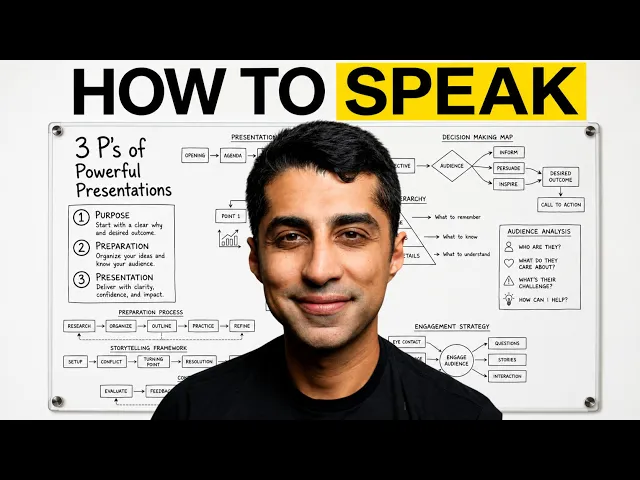
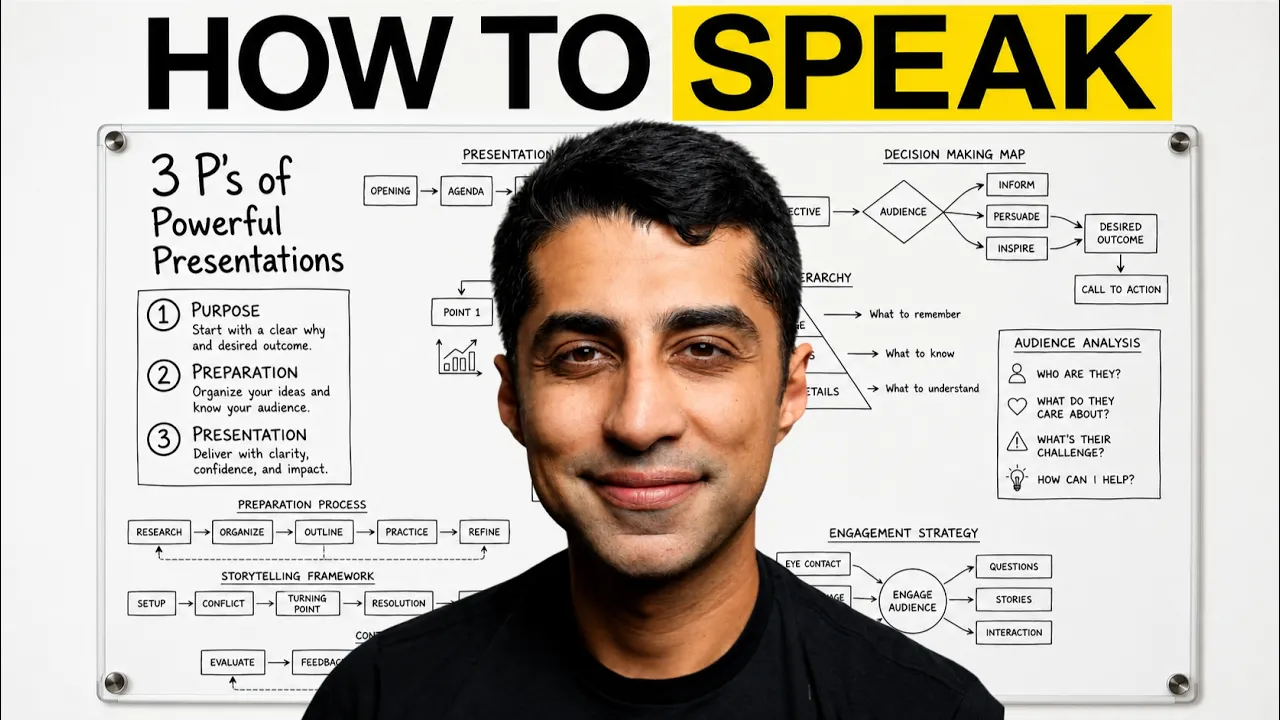
You are about to learn the three Ps of powerful presenters. Meaning when you learn these three simple techniques, you will become one of the top 1% communicators in the world. So imagine you deliver a presentation, you speak on stage, even in a meeting.
When you implement these techniques, the response you will get will be something like this. [applause] [applause] Yes, sir. You legit, bro.
Crushed. That was a great like wow. That whole section when I was at like that was you killed it.
It was very impactful. Like I was taking notes and I'm like, "Oh my god, that makes sense. " The napkin one, I was crying like that.
You killed it. A lot of people I smoke with, you were the favorite session today. So, this is a type of reaction you can expect when you use these techniques.
I'm showing you this so you have some reason to believe me because at this point, you might not have any idea who I am. I want this presentation to be entirely focused on you. But let me put something else out there.
When I show you these techniques, the last thing I want you to think is, well, good for these people. They can do it. Or Yaser, good for you.
You're a great speaker. I can't do this. I'm an introvert or I'm shy.
I can't do it. Just so you know a little bit about me. My entire life, I've struggled with crippling social anxiety.
Meaning just going and meeting new people, I would wonder, what do I do with my hands? Where do I look? What do I say to fit in fit in with these people?
That's the kind of conversation that was happening in my brain. And I had such a lack of confidence that in in my wildest imagination, I never thought public speaking is what I would do with my career, let alone do it at the highest level. So, how did I go from being such a shy person to now being on stage and having been invited on the TEDex stage not once but twice?
I've also been an instructor at the University of Toronto teaching public speaking there. I've also had the privilege now of being on the same stage as people like Bill Gates and Steve Wnjak, the co-founder of Apple. You might recognize the brand Rayban.
Well, the owner of the company Solar Exotica, he's one of the people that I have trained other highlevel executives from the government of Saudi Arabia, ministers from all over the country, and leaders and executives from all of these companies. So the question is, how did I go from where I started with crippling social anxiety and now to become the number one CEO speech coach in the world? That is what you're about to learn in this training.
So what you're going to learn are three essential techniques, three techniques I call the three Ps to becoming a powerful presenter. The three Ps to becoming a powerful presenter. And I'd rather teach you the things that you actually remember instead of going into 45 different techniques that you will never remember.
I'd rather just teach you the three that you will actually use. So let's get into it right away. If you have some notes that you can write down, that will be helpful because I'll need you to remember what we're talking about.
So let us get into the first P. What is the first P? I want to ask you a quick question and that is what is the biggest mistake most speakers make?
Reflect on that in your mind. What do you think is the biggest mistake most speakers make? A lot of people say, "Well, they're not interesting.
They're boring. " There's one thing that stands above the rest. And for me to demonstrate this to you, I'm going to show you an image.
Right now, you're going to see a black screen. Okay, let me make this full screen for you. I'm going to show you an image and I'm going to take the image away in just a few seconds.
So you I want you to really pay attention to what you're about to see. All right? So get prepared.
I'm going to show it to you in five 4 3 2 1. Okay, that's all I needed to show you. Really think about the image.
Really think about what you just saw. Now tell me, how many circles were there? How many circles were there?
If you are a regular human being, you might notice that you're having a little bit of difficulty. You're thinking, "Wait, there were circles? I had no idea.
" Or maybe you're just guessing and you're not entirely sure. Right? Let's try something one more time.
I'm going to show you one more image. Right now, you'll see a black image, but I'm going to show you the image for a fraction of a second. The last image I showed to you for about 5 to 6 seconds.
This one I'll show to you for about less than a second. Okay? So, here we go.
Pay close attention. 5 4 3 2 1. That's it.
That's all you get to see. Now tell me how many circles were there? How many circles were there?
I'm willing to bet you can tell me how many circles you saw. So this is the image that you just saw and there are four [snorts] circles. But this is the exact same image as the last one that I showed you.
It's the exact same image. But why is it that when I showed you this one, you were not able to guess, but when I showed you this one, you were able to guess? Why?
And that is the biggest mistake most speaker speakers make. They give too much information. Too much information.
They think, hey, if I just overload the audience, give them more and more and more, it's going to make a better presentation. No. People will forget most of the things that you say.
That's just how the brain works. So, here's what I want you to write down. It's not what you say, it's what they remember.
It's not what you say, it's what they remember. Because you can say all the most amazing things in the world. You can have all of this information in the slides, but if people don't remember what you say, does it even matter?
And this is the problem with most presentations. The way people prepare presentations is I have a presentation tomorrow. I'm going to take all this information, cram it into the slides, and throw it at the audience.
Good luck. Have fun. I'm out of here.
That's how most presentations are put together. Instead, this is what you want to do. And this is the first P.
You want to highlight the main point. The main point of your presentation. What is the main point?
Because it's not what you say, it's what they remember. What is the main point? I want you to think about it like this.
If someone attended your presentation, they walked out the room and then someone who missed the presentation came to them and said, "Hey, what was that presentation about? " you are immediately able to remember the main point and tell them oh this presentation was about XYZ this is what I remembered most presentations they end and you have no idea what is important about that presentation so it has to be sharable when you listen to it you should be able to tell other people about it so let's look at a tactical example how can you engineer this in your presentations so it's easy for people to share and talk about and so it's memorable and you're about to see one of the most memorable presentations of all time which is Steve Jobs but specifically him unveiling the MacBook Air for the first time. I want you to watch this and I want you to dissect what do you think he was aiming for here.
Why did he present the MacBook Air this way? And then we're going to unpack that. Let's have a look.
It's so thin, it even fits inside one of these envelopes that we've all seen floating around the office. And so, let me go ahead and show it to you now. [applause] This is it.
[applause] Let me take it out here. This is the new MacBook Air. And you can get a feel for how thin it is.
Yeah, there it is. [cheering] [applause] Now, you and I both know that Steve Jobs is a master presenter. He loves building anticipation.
He likes adding a little bit of drama. But I want you to think about what was his main point here. What was he trying to tell the audience?
This is important. This is the main point. Remember this.
What do you think it was? He highlighted the thinness of the laptop. He went so far as to have a slide that had the picture of the envelope and then the laptop came out of the envelope.
So the main point was the thinness and how thin the laptop is because he knew that he wanted to insert this language. So that's what people talk about. So after the presentation, he talked about many things in that whole presentation.
What did the news choose to focus on? Let's have a look. Thinnest laptop fits into a Manila envelope.
Apple introduces the MacBook Air world's thinnest lap notebook. Apple announces MacBook Air world's thinnest notebook is so slim that it can fit inside an envelope. Apple unveils its latest innovation, the laptop that fits inside an envelope.
This was engineered. This wasn't by chance. He knew what the main point was from his presentation.
That's why he talked about and emphasized the thinness so you don't get lost in the details. He could have talked about it has this much RAM, this much storage, this steep CPU. He didn't get bogged down.
He just focus on what's important. And when you look at some of the best presenters in the world, this is exactly what they do. So when you think about Simon Synynic, if you are familiar with Simon Synynic, he might have talked about a lot of things, but you might not remember all of them.
But what you might remember is start with why. That's the phrase that he is most known for. Or if you think of Martin Luther King, you might remember his speech.
What was the one main phrase that he is known for? I have a dream. Now most people, they can't tell you a single word from the rest of the entire speech.
Why? Because this is how our brain works. It remembers short phrases.
It's one small point. When you think of Nike, what do you think? Just do it.
Apple, think different. So, when your audience is paying attention to your presentation, I want you to think about they're not going to remember 99% of the information when I share it. They're only going to remember one, two, or three things.
So doesn't it make sense to emphasize those three things that one point instead of adding more and more and more and more information. So when you learn to do this and you finish a presentation this is the kind of reaction that you can expect. For example here I finished a keynote and this is what the audience member said.
I lost track of how many times I heard people at the event say like Yaser said we need to do X Y Z. So the way you craft your presentation I want you to change it from how can I take all the information cram it and throw it at the audience. You might feel good that you have touched on all of these things but what does it matter if no one remembers what you said?
So instead, I'd like you to think about what are the one, two, and three things that I want the audience to remember and hammer those home. So that's the first P is hammer your main point. Make sure you emphasize the point because it's not what you say, it's what they remember.
It's not what you say, it's what they remember. Now, reflecting on just how I presented this point, it's one word. It's easy to remember.
It's not what you say, it's what they remember. That is my main message of this presentation. And you will see I will say it again and again because I want to make sure I've implanted that in your brain.
So that is the first P out of the three that we are going to talk about that will teach you to be a powerful presenter. Now, in part one, you learn to emphasize the point because it's not what you say, it's what they remember. Now, let's get to the second P, which teaches you how to get the audience to pay attention.
How do you get the audience to pay attention? I want you to think back to the most boring presentation you have attended. Typically what happens is the presenter shows up, there is a slide deck or maybe they're holding a script, there's an audience in front of them.
They'll show up and they will just read from the slide. And what does this tell you? It tells you that they're more concerned about reading than interacting with me.
My attention is not necessary here. Even if I got up and walked out of the room, they would just continue to read the slides. So you don't feel like they're really there with you.
How many times have you seen a presentation that looks like this? This is not public speaking. In my opinion, this is public reading.
And the thing that bothers me is most of the time I can read faster than them. So the moment it's on the slide, I read it in half a second. And now I'm waiting for the speaker to read it themselves out loud.
And then I just think this is boring. I don't want to continue listening to it. So, how does a masterful presenter do this?
Instead of just showing up and reading from the slides immediately losing 90% of the audience, I want to show you a real example of a real CEO of a really big company and how they get attention and then I'm going to make a quick point about what you can do here. So, you're about to see the CEO of Nvidia start his presentation at CES. And I want you to notice what he does.
Does he show up and start reading from a slide? What does he do? Let's have a look.
Welcome to CES. [cheering] Are you excited to be in Las Vegas? Do you like my jacket?
I'm in Las Vegas after all. If this doesn't work out, if all of you object, well, just get used to it. I think I really think you have to let this sink in.
In another hour or so, you're going to feel good about it. For $15. 99, you bring it home to your $10,000 PC entertainment command center.
Isn't that right? Don't tell me that's not true. Don't be ashamed.
It's liquid cooled. Fancy lights all over it. You lock it when you leave.
It's It's the modern home theater. He is present in the moment with the audience. He's there with you.
He's having a conversation. He's not there reading from the slides. you feel like, oh, this person is there with me talking to me.
Just like in a real conversation, when someone is talking to you, you don't pull your phone out and start scrolling, right? Because you're engaged. They're present in the moment.
You are present in the moment. But when people present, they're not present with the audience. They're there just to read from the slides or regurgitate what they have memorized.
And when they do this, immediately it signals the audience, oh, my attention is not needed. I can do something else. So you have to be present.
That is the second P. Specifically, you have to engage them before you inform them. Engage them before you inform them.
What do I mean by this? If I just showed up today and said, "Hey, thank you for joining this free course. Today you're going to learn about public speaking.
Tip number one, tip number two, tip number three. Thank you very much. I've given you all the information, but I haven't engaged you.
you have no reason to listen to what I'm saying. So, how do you do this? How do you stay present?
Well, first of all, the thing you don't want to do is read from the slides or memorize everything because when you read, you're literally not looking at the audience. You're looking at the slides. And when you memorize, you're so concerned about seeing the thing you memorize and not blanking out that you're not reading facial expressions.
You're not bouncing off of the reactions. They don't feel pulled into your presentation. So, when you're in front of an audience and they feel like you don't respect them enough to be there with them, you're so concerned about your performance that you don't even care about connecting with them, they're not going to feel like you earn their attention.
Now, something that I like to do, I learn from Tony Robbins, I learned from Jensen Hong, I like to train my audience right from the first word of my presentation so that they know that this is the type of presentation where they can't just sit back and relax. I expect them to participate. So, here's a clip and you will see how I use audience engagement to build trust and then use that as a segue into my presentation.
So, here's a quick clip. Let's [applause] just give me a quick raise of hand if you've ever met someone and in the first 10 seconds you regretted meeting them. Okay, hopefully it wasn't the last 10 seconds.
Now, just shout out some words at me. What do they do or say that make you feel that way? What do you think it is?
Yes. Their features. Their features.
Do you like my suit? Hopefully, this is a good one. Okay.
So, if I do this, why is that bad? No. You have a problem with my face in general, don't you?
[laughter] I just don't like this guy's face. Just don't touch your face. But I see what you're saying.
Yes. Why is that bad? So, everything you're saying is correct.
Let's lump it into something you can remember. There's a rule with body language. Are you expressing yourself or are you suppressing yourself?
When I was on stage, what was I doing? Expressing or suppressing? What do we do when we hide?
Close off. Can you see how interactive the audience is? And once again, I'm in a new country here.
I'm in Saudi Arabia. People don't know me here. I have to build trust with them.
But can you see how quickly we were able to go from interaction to laughter to engagement? This is what everyone wants in a presentation. How many times have you heard ah there was a a lack of engagement.
People weren't really paying attention. And often times presenters blame it on the audience. Oh, the audience was boring.
They didn't participate. But really, it's actually on the speaker to make it engaging. So be present in the moment and you cannot be present in the moment.
If once again you're reading from the slides, you've memorized every single word. That is not the way to be present. People will instantly tune out.
So you'll notice some of the best moments in presentations actually come from the parts that are organic that you can't really plan. So I'll I'll show you a segment from where I was teaching public speaking. I demonstrated a technique and I was asking the audience and I want you I want you to just see what a great moment this turned out to be even though it's such a small part of the entire presentation.
Watch this about my behavior, the way I was acting, the way I was speaking. What was I doing and saying too desperate? Thank you so much.
My girlfriend says the same thing. I was able to say that phrase in the moment. It was a real unscripted moment in the presentation and you can see with the audience's laugh immediately.
I've earned trust with them. There's more likability. They will pay more attention as opposed to what is the one thing that you thought I was doing.
Yes. Thank you. The one thing that I was I'm too attached to my script.
And I will tell you time and time again whenever I've had the chance to speak at a conference, the one thing I get told over and over again, Yaser, the thing that made you stand apart is that the audience, their eyes were glued on you. They felt like they were a part of the presentation. And that's what you want the audience to feel.
You don't want them to feel like they were just there while you happened to be presenting where they could have gotten up, gone for a coffee break, come back and you would still be presenting and nothing would change because there was no connection to them. So this is what one of the event organizers said about my speech. He said, "We have heard from about 50 plus amazing speakers over the years, but the amount of positive feedback we received from Yaser Khan was truly record-breaking.
You are totally enthralled and focused by what he is teaching. " They walked away totally immersed and the only thing I did was I was present in the moment and I had a conversation. I want them to feel like their voice is heard.
So, for example, if you're delivering a pitch and it's just one-way traffic, people just can't say anything. They're not involved and it's a very passive experience. They don't feel very involved.
So, that's the second thing that will make you a powerful presenter. the second P which is you have to be present in the moment. You have to engage them before you inform them.
Because if you inform them right away, if you inform them before you've earned their trust, before they're ready to be informed, they're not going to listen. So you first have to engage them, make it a conversation, and then you begin to inform. So, so far you have learned the importance of having one main point.
It's not what you say, it's what they remember. And then you have to stay present in the moment with the audience instead of regurgitating memorized passages. Instead of reading from the slides, engage them before you inform them.
Now, we have one more point left, and this one specifically is one that I have not seen talked about very often, and it's something that I use all the time. And this will allow you to have that kind of effect on the audience that will completely hypnotize them. They can't take their eyes off of your presentation.
So, let's talk about that next. Now, let's talk about the last P. You've learned the point.
You've learned to be present in the moment with the audience. What is the last one? and it will teach you how to hypnotize.
When I mean hypnotize, I want you to imagine. Imagine a cat and you have a a laser pointer and you just use the laser pointer on the ground. What does the cat do immediately?
It can't think about anything other than that laser and just starts chasing it around. Or I want you to imagine a magic trick. When someone's doing a magic trick, you can't help but hm where is this going?
how did they do this? You're so enthralled by it and you want to be involved. That is the kind of hypnotic effect you can have on your presentation.
So, let me give you a couple of different examples of how you can do this from speakers in different environments. So, the first example you're going to look at is Simon Synynic. And this is how he opened up the keynote.
And I want you to keep in the back of your mind how does he structure the presentation in a way where the audience feels hm I need to watch this to see how this turns out. It's very subtle but let's see if you can point it out. Let's have So I'm embarrassed that I have a career.
I talk about things like trust and cooperation and there should be no demand for my work. But the fact of the matter is is there is demand for my work which means that there's an opportunity. It means that trust and cooperation are not yet standard in our organizations and yet they should be and we know that which is why we're looking for ways to bring those things to our organizations.
So I thought I would do something a little different today. You know, when you're speaking to tens of thousands of people and you have the opportunity to share a message, of course, most rational people would say, "Let's go with something I've talked about lots of times and I'm really good at. " But I'm not normal, so I'm going to do something completely new, and I hope this works out.
Now, if you think about it, why did he choose to include this in the presentation? If you're getting paid hundreds of thousands of dollars to speak for an hour, every single word is meticulously curated. So why did he include this in there?
He wanted the audience to feel one that they're getting something no one else is getting. I've never done this talk before. This is entirely new.
So they feel special in the moment. But also he said, "Let's just see how this turns out. Fingers crossed.
" So, in the back of the audience's mind, it's almost like a challenge. It's almost like they're there with him. Oh, let's see how this turns out.
I want to see if he delivers well. How does it go? It creates anticipation.
It's so simple, but now the audience is engaged because they want to see what happens at the end. Let me give you another example, and this is even shorter. This is Esther Prell and she begins her TED talk.
And we're only going to watch the first few seconds. And I want you to think again. Is the audience thinking, "Hey, I want to figure this out.
I I want to be in there and and find out where this ends up. " Why? Why do we cheat?
And why do happy people cheat? That's it. Why do people cheat?
Why do happy people cheat? What does that do? Hm.
Why do people cheat? And why do people cheat even if they're happy? Now, it's creating suspense.
So, let's talk about the third P to becoming a powerful presenter and that is to introduce a puzzle in the mind of the audience. What does it mean to introduce a puzzle? It means you want the audience to think, I want to know what happens next.
I want to know what happens next. When you see a magician do a magic trick, what are you thinking? Hm.
Where is this going? Is this person going to find their card? Where will the card end up?
They made the card disappear. Will it change? I want to know.
And I also want to figure out how they're doing it. And there are many ways to do it. So, the way you can hypnotize your audience is they can't take their eyes off of what's happening because it's such a spectacle.
So, there there are many subtle ways to do this. And let me show you an extremely subtle way, very, very subtle. You're about to see Chris Voss step on stage and deliver a presentation.
And I just want you to notice what he does once he comes onto the stage after his introduction. Watch this. Chris, why don't you join us on stage?
Um, and everyone, why don't you join me in welcoming Chris uh to the stage. [applause] Awesome. Yeah.
So, I'm going to hand it over to him. Thank you. Well, with that [clears throat] kind of an introduction, I'm kind of curious to see what I have to say myself.
Let me start with this. Both carrying on a verb. Now, this is so subtle that unless I point it out, you might even miss it.
What did he do here? One, he engaged the audience with that one simple sentence. I was looking forward to what I had to say myself.
It made them laugh. And then immediately without any context, okay, let's start with this. And he starts playing a video.
What is the audience thinking? Oh, what is this video? What is it about?
How does it fit into the present? creates curiosity, gets them thinking, I want to know what happens next. I want to know what is going on.
Can you see all of these elements coming together? Can you see all of the things you can do? Now, you might be thinking, well, Yaser, I teach a complicated subject or I talk about something technical.
I can't do it. Every single person can do this. The problem is most people never even give it any thought.
the night before they put a presentation together and they just show up and they call it a day and there's little to no effort pulled in. So, let me give you an example of someone who's put in a lot of effort and they do such a wonderful job of engaging the audience but also puzzling the audience how is this going to turn out? What is going to happen?
Watch this and you will see how this university professor uses the same exact technique. If I hold it like this and I let it go, what will happen? It will Drp.
Drp. Why? Gravity boring.
We start spinning it. Ready? I drop it.
And let's face. No. What?
What's happening? What's happening? It's a gyroscope now.
It is spinning and it is precessing like our planet Earth. First of all, don't you just love her energy? She's so good at engaging the audience.
You can't help but pay attention. You're hypnotized. You want to see what is happening?
Where is this going? You want to know this is the type of effect you want to create with the audience, but they just can't look away. So, I learned from all these techniques, and I want to show you that I didn't always know how to do this, too.
I learn from these people and I learn to implement it in my speeches because before I would just show up, run through my slides and that's it. I would never have a main point. I would never be present with the audience and I would never really go out of my way to puzzle the audience because when you puzzle them, a lot like a quiz, it's a challenge where the audience feels like, "Oh, I I I I want to be involved in this.
I want to figure this out. I want to be a part of this presentation. " So let me show you how I learned these same techniques and how I implemented these.
When I'm typically speaking at a corporate event, the number one thing they say is Yaser, we have hundreds if not thousands of people. In the example you'll see is there were about a thousand people and it's difficult to engage an audience that big. I don't know how you can do that.
But can you engage the audience? So watch how I use the technique of staying present but also puzzling them to earn their attention. Watch this.
And I'm gonna need an extremely boring topic and I'm gonna attempt to do an improvised motivational speech on that boring topic. Throw out some boring topics. What's the most boring thing you can think of?
Of course, you want me to get in trouble, don't you? Okay. Mortgage.
What's more boring than mortgage? Undertaker. Tariffs.
Undertakers. Sir, you have a morbid imagination. Okay.
I think Undertaker is number one right now. What else? Insurance.
Insurance. Okay. All industries that I will never get clients from again.
Yes. Knitting. Knitting.
You know what? Let's go with knitting. Three, two, one.
[cheering] Be honest. Do you want to know how that motivational speech went? [laughter] Are you a little upset that I'm not going to show you how that turned out?
But at the same time, did you see how many people there were in the room? Did you see how I was getting reactions from every single part of the room? Why were people so vocal?
Because typically when you're in a large auditorium, people don't want to speak up. They don't want to be visible. They don't want to be a part of something.
They want to be reserved. And why? Because I gave them a puzzle.
I want them I wanted them to be present in my presentation. I said, "Hey, give me a word. Give me the most boring word possible.
It was a challenge. " And now undertaker, insurance, mortgage, all of these words start coming up. And then I said, "Okay, I'm going to put pick that word.
I'm going to go and speak about that. " What are they thinking? Oh, I want to see how this goes.
I want to see how he goes into a motivational speech. It's a puzzle. and they see how the puzzle comes together.
Puzzle. You must puzzle the audience so they feel like they want to figure it out. How was this done?
I want to see how this ends up. Can you see how when you just create a little bit of suspense, have them wondering where this is going, it just hypnotizes the audience. So, let's bring everything that you have learned together.
So far you have learned. First emphasize the point. It's not what you say, it's what they remember.
Then you learn to be present in the moment with the audience. Engage them before you inform them. And lastly, you want to puzzle the audience.
You want them thinking what is going to happen next. And all three of these themes, they come back to my main message, which is it's not what you say, it's what they remember. It's not what you say, it's what they remember.
The reason I've included only three points for this entire presentation is because you might forget all the specific examples I've given you, but you might remember this one single phrase. You might remember three Ps. Point, present, puzzle.
Point, present, puzzle. Three words to remember. I hope that makes it easy for you.
Now, to show you that the power of this, one of the main concerns I always get from people is, "Yaser, this is all great, but I don't think I'm cut out for this. I don't think I have the type of personality. I don't think I can do it.
" And I completely understand this because, again, as someone with crippling social anxiety, when I grew up, the last thing I thought I could do with my life is public speaking, let alone teach public speaking. that wasn't even in the in in the furthest areas of my mind that that was possible. So when I started doing this, when I started learning about public speaking, this was actually me in an empty apartment.
All I would do is read books, watch videos, read books, watch videos. And in my speaking career, whenever I was asked to speak, I was ma making a whopping 0 per speech. Why?
The reason is because I wasn't really that good. I wasn't using any of these techniques. I was hiding behind these labels.
Yaser, you are an introvert. Yaser, you are shy. Yaser, you have social anxiety.
I used it as a shield. Oh, I have social anxiety. I'm a terrible speaker.
But when I look back, I never really learned. I never really went out there and got the information that you're getting right now. and I never really implemented any of that.
So after taking all of the advice that you have received today and spent about $25,000 $50,000 just a year to learn public speaking, now I've gone from earning nothing for my speeches to now earning about $36,000 for a 45minute presentation. I get flown out in first class, which I'm the first person in my family to never fly economy. And I get to fly around the world to teach leaders how to speak with confidence, clarity, and credibility.
And again, I never thought I could do this. I never thought I had the type of personality where I could change the way people people perceive me when I speak. But now I want to show you what's possible.
You can go from someone who was a boring presenter or a forgettable presenter. You can speak and people can say things like this. Excellent.
It really was excellent. Actually, I was going to attend Bill Gate session. No, I don't want to because I want to attend.
It was so powerful what you said and I'm sorry. So, what you said I was like so yeah gravitated like I want you to come do it at my job for everybody. That's amazing.
Let's do it with my CEO. Yeah. Just make it happen.
Just want to say amazing speech. Thank you. Thank you.
I appreciate Can you see what these types of reactions can do to your career? If you are presenting in a board meeting, if you're presenting at a conference, if you're presenting in front of your team, your boss sees you present, your senior manager see you present. It takes one person to see you in your element doing well to recommend you.
Oh, I think they would be a great fit for this role because I've seen them communicate well. I think they would be great to take to meet this client. Now it creates new opportunities for you just because you have learned to become a powerful presenter because people will remember your competence based on what they saw on stage.
It's not what you say, it's what they remember. What do you want people to remember about you? If you're in a leadership role and you struggle to speak up in meetings and presentations and be perceived as a leader, this is for you.
Now, there's only so much you can learn watching a video. But if you are serious about transforming the way you speak, you should consider my online speaking classes. My team and I have coached more than 30,000 people at companies like JP Morgan, NASA, Google, Apple, you name it.
and we help them speak with the confidence, clarity, and credibility of a CEO. Now, whether you struggle with rambling when you're speaking on the spot, or you freeze in front of a room, or you feel like you sound boring and people stop listening to you, these classes can transform the way you speak, because knowing is not the same as doing. So, if you are at all interested in changing the way you speak in a matter of days, click the link down below and check out my online classes.