[Music] Welcome to the Business Development Podcast brought to you by the Global Business Development Association. Delivering the strategies and tactics to boost your career and corporate growth. [Music] Hello BD pros and welcome to the Global Business Development Association's podcast called What is Business Development?
So, let me ask you, you know, crushing your numbers shouldn't mean crushing your life, right? You're smart, driven, hungry for more, but stuck in a system that rewards burnout, not brilliance. You're hitting quota, yet the promotions don't come.
The stress never stops, and every win feels like it costs way too much. What if you could scale your sales and build that career without trading your time, health, and most importantly, your family to accomplish that? Wouldn't it be great?
Yeah, I bet you're thinking what I'm thinking. That would be great. And hey, before we jump into how to really solve that, why don't you take a chance to boost your career with the business development professional certification.
Get your copy of the business development body of knowledge on Amazon. That is the core document about everything business development and the things you need to know in order to get your business development professional certification and launch your career and take it to the next level within the business development profession. All right, let's welcome to the show the author of the book Sales Life: How to Accelerate Your Sales Career Without Sacrificing Your Personal Life.
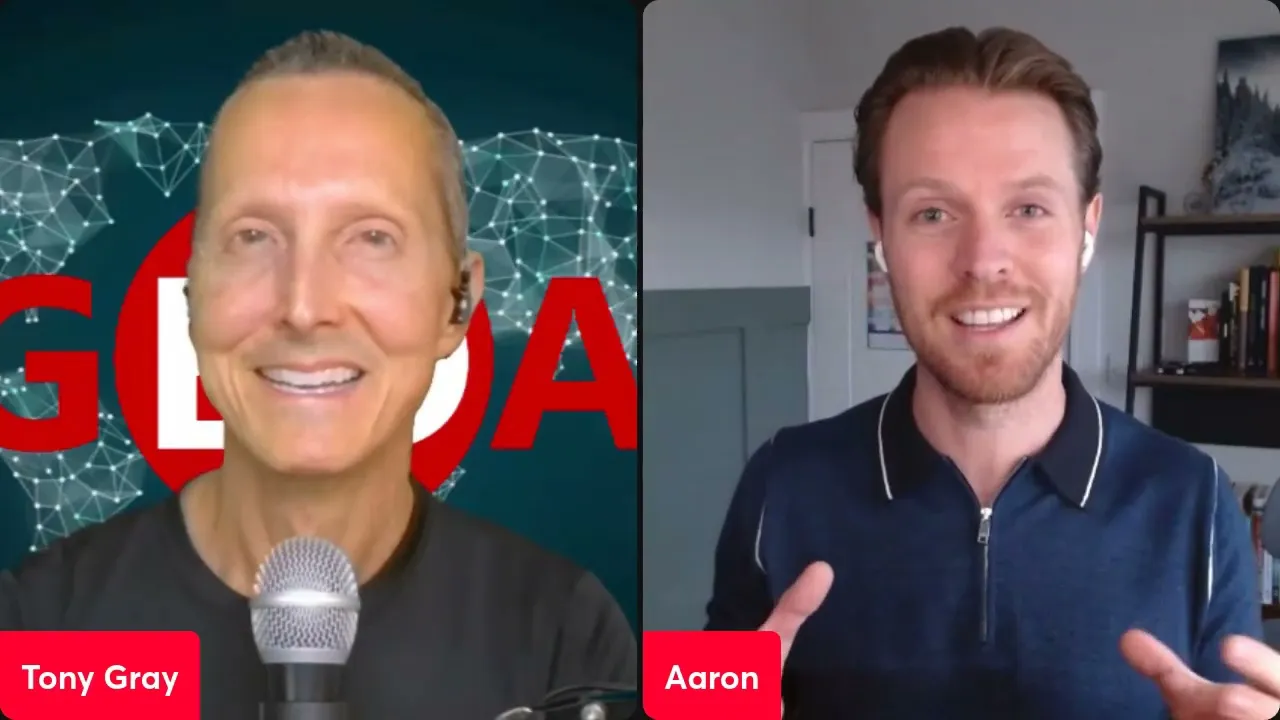
The author is Aaron Norris. And Aaron has 15 plus years in the B2B tech industry, leading six, seven, and even eight figure wins, including work at Amazon. You probably heard of that company.
Yeah, because I just mentioned it. It's where to get your fantastic books of the business development body of knowledge and Aaron's new book, Sales Life. And look, let's face it, um, complex sales, the difference makers, it's it's always about product and process.
But the shift from selling to thinking like a founder and advising like a partner and leading like a CEO, that's what Aaron Norris teaches his members. And that's what brings those top sellers, leaders, and founders across the UK, the US, Middle East, and APAC to Aaron to really accomplish the success that they seek and land those seven figure logos, secure dream roles, and build teams that win. Erin Norris, welcome to the show.
Good evening. I think I need to hire you to just do that intro for me every single time I meet with a prospect, every single time that I'm in a coaching call. That was just Yeah, perfectly delivered.
Thank you. Well, thank you, Erin. I'll give you a uh video clip of that intro and then you can just play that as B-roll every time you talk to somebody.
You can put you can put it on your voicemail, too. Every day I wake up in the morning, I'll play it to the kids. There we go.
There we go. That might new might be a new business line for me. I can just uh record intros for people.
They're daily they're daily motivational. All right. Well, let's get everybody motivated here, Erin, because I really uh like your book.
And you know, it's the first author I brought to the show that talks about the holistic perspective of being great in sales and business development at large because you you kind of cover not just the fundamentals of being great in the business development, you know, profession. And we we we know about those things, you know, it's the cold calls, it's the engagements, it's the networking, it's all those things we know about. you read about in the business development body of knowledge.
Um, but it's also the holistic part. And I often tell people business development is a brain and a body game. And you go into the fitness and and not just the physical fitness, but also the mental fitness um of family and that entire support network that you need that that domestic sales team, if you will, that domestic business development team that will carry you through and boost you over the finish line.
And that's why I really like this book, folks. Grab your copy of it on Amazon. It's five star rated.
And Erin, I'm I'm so eager to hear how did you get into the profession um because so many people enter this profession from different directions and of course you know the fact that you worked at Amazon, everybody knows that company that's pretty impressive. So and you have an impressive lineup of other big logos that you worked at. So how did it all start for you?
I wasn't actually meant to work in sales. If you'd have asked my parents, what will Aaron do? I think that would be so far down on the list.
I was the kid that at school if I knew the answer, I didn't want to put my hand up. I would just even even if I knew it was right, I'd go crimson red. And you know, through university growing up, I always associated sales with you have to be that super extroverted guy or girl.
You have to be able to speak to anyone. You have to be able to, you know, Jordan Belelffort just sell that pen. I actually have an incredible story of when I was you finishing university and going through the the process of trying to figure out where do I where do I take this business degree.
That was one of the questions, one of the challenges I was handed in one of the very first kind of assessment centers that that I went through. And let's just say I think of 20, you know, young kids that were there trying to get their first job, my effort was just the reason I can remember it, right, is because it's so painful and so embarrassing. That was just that was never me.
But then I realized as I went into the corporate world, into the technology industry, I actually started off in a junior project management role. And the reason for going into project management was I like projects. I like keeping it fresh.
I want to work with lots of different organizations. So let's go into project management. You know, work with one company, change their world, make everything better, and then move on to the next piece.
But I found myself clockwatching in that space. And that's when over a couple of coffees in the office, I started to realize like who are these people that have got the nice suits, the nice cars, the nice watches. Who who are they?
Because they look different to everybody else in this tech industry. And I write about this in the book, but I had a conversation with who's now a good friend of mine, former colleague, and I'd just come out the back of my appraisal where it was positive. My resource manager said to me, "If you keep going in this direction, by the time you're 40, you'll earn a h 100red grand.
" You know, and I was thinking, "That's pretty good from where I am right now. " And then I I relayed this story to who was an account manager at the time, a pretty young account manager, and he just said to me, "Aaron, you've got this all wrong. " Like, if if money is one of the drivers, and it was at the time, I was I was young.
that was important to me. He said, "You'll do that by the time you're 23. " Like, why wait until you're 40?
And I was just like, poof, there's this different world. There's this world of running a business within a business, relationship managing and selling into all these different organizations. They in a sense they are projects.
That is that is variety. that is you know you start the sale you you end the sale you expand the sale you build the relationship so that's what turned my head towards a career where I never would have placed myself and you know the rest ultimately brings us up to present day I love that story and there are so many common themes between your story myself and other business developers first off as a fellow introvert uh I I I know the pain that you felt as a kid growing up that way and you certainly came out of your shell. I can say uh fantastic.
I think I'm somewhere in the middle ground now. I wouldn't I'm definitely not an extrovert. I'm not a massive introvert.
I'm somewhere in the I'm somewhere in the middle depending on the day, right? Yeah. The safe the safe middle.
And and I I argue I actually posted about this a few weeks ago on LinkedIn that I think introverts actually perform better in business development at least or at least at the same level. And the reason is because we have a tendency to um introspectively think deeper about what people are saying and not have a tendency to interrupt them and kind of analyze where the discussion is actually going. And I would say questions are our safe word.
We love to ask questions I think as introverts because it's not us having to describe ourselves or present anything. It's more asking those deep engaging questions which ultimately is the key to success in a lot of business development interactions. I also like the fact that your background is former project manager just like myself and I've run the numbers on this.
It's a relatively small sample size, so I don't know if it's statistically significant, but um a a majority well I have to say a significant number the the the the profession where folks come from and enter into business development is project management. And I think a key reason for that is because success in business development is a large part understanding how to run projects, but also as a project manager, you have that operational understanding of the business. You're engaging with the customers day in day out.
You're you're executing on delivery of solutions to the customers. So you really get that sense of what not only not just the extrinsic requirements of what's trying to be achieved but the intrinsic those deep gut feelings that the customer is feeling. You just get them.
And so when you roll into business development, you understand their perspective. You know what it takes to deliver. And I think you have a tendency to be more successful.
So really interesting background and I'd love to jump into why did you write the book? I wrote the book for the same reasons that I transitioned out of the world of corporate sales into becoming a coach into becoming an advisor a a consultant because in the early days of my sales career things were going well. I was winning big deals, working at a strategic and enterprise level, earning good money.
But what I saw across the industry was either people that were absolutely killing it at the job, but then maybe they were sacrificing their health, you know, that waistlines expanding or they are, you know, on a one-way train to to burnout or maybe, you know, they're they're away from home every single day and, you know, potentially relationships are coming under stress or you see the people that walk around the office looking like Arnold Schwarzenegger and you're thinking, you know, can you just do your job? Like, you know, you're being paid pretty well here. If you just focused on the day job, then, you know, you'd probably get some great outputs from it.
But when I looked around, there was no role model that had it all. So, I decided I had to become my own role model. I couldn't just follow the status quo.
until now since I've, you know, discovered people like Brandon Flu Harty out in the industry with his whole purposeful performer and there's various other people that have more of a holistic you look after yourself as well as looking after your customers and looking after your your team. But back then I didn't see it. So I had to create it.
I had to switch from, you know, like that hustle hustle hustle mode through to how do I build in and prioritize looking after my body, eating well, even if I'm on the road, even if I'm, you know, flying internationally, even if I'm just in in the office, how do I build that in and make that a priority? How do I as I become a father ensure that I'm always present? You know, I'm lucky enough.
I've got two boys. They are, you know, one is seven, one is three. The seven-year-old now is obsessed with all different sports, especially golf at the moment.
The Rder Cup is happening this weekend, and he's just every 30 seconds doing his golf swings, no matter where we are. It could be in the supermarket. And it sounds cliche, but when I became a father for the first time, it was just shortly after the world went into lockdown as a result of COVID.
And I firmly believe that that was a silver lining of a, you know, a terrible time for for everybody and impacted many people, you know, severely impacted and all the negative things that came from that. There was one positive for me that if I hadn't have had that lockdown situation, I would have taken a couple of weeks off like everyone does when my my youngest was born and then I'd have gone straight back into doing what I'd always done to make me successful. And I live in the north of the UK, so the heartbeat of technology, the economy in the UK is in London.
So that means you got to be down there, you got to be you got to be away. But I had this pretty much 12 months of seeing my boy every morning, every lunch, every evening. And I realized like I can never ever walk away from that.
So even once the world started to open up, I had to put family first, put my health first in order to create the version of Aaron that walks into the office that walks into the virtual room, sales room, internal meeting room, whatever it is with the highest of energy and motivation. And I talk about this in the book about developing your drive. For me, everything is is for them.
And what that also kind of gave me was this purpose of if I can do it, I want to help other people do it. Which is why even before I became a coach, I would I loved to mentor people. I'd been given so many chances and had so many supporters in my career that I felt obligated but also inspired by people that also had that drive to do it and do it in the right way, you know, without that wave of destruction potentially behind them.
Wow. That's uh so tremendous to have that driving purpose. And it's easy to get burned out in business development.
It's high stress. There are a lot of pressures on you, a lot of requirements on you and it comes from multiple angles. And I often tell people business development is not a sprint and it's not a marathon either.
It's actually a triathlon. There are three key components I like it to a balanced life and business development. And Aaron, I know your book is starts off with three components, the three primary components of a successful strategy to avoid that burnout and be a big success in business development.
So, let's jump into those top three components of your strategy. Can we? Yeah, absolutely.
If you visualize this as a as a ven diagram, I believe I love the analogy of triathlon. I've I've I've participated in a few triathlons and as you say, three very different disciplines, need different mindsets, different strengths. You have to think about them all.
You know, if you kick the legs too hard in the swim, then you're going to be terrible on the bike and then you'll probably just cramp up and not even finish. You know, you won't close the deal if you go too hard in other areas of of the role. But for me, it's all about mastering yourself, mastering your customers, serving your customers.
But then importantly, to build a fastpace, thriving career, you have to be able to master the internal organization. And what I mean by that is creating those those champions and those advocates so that when you're not in the room, they're talking about Tony as he's the guy to lead this campaign or who is my successor? I'm the VP of sales.
Who is my successor? It's Tony. Tony doesn't know that's happening.
But all the inputs, all the things that you've controlled in terms of not just it's not playing a game. It's through serving your leadership, serving the company, and then giving back to those people around you as the next generation that puts you in that frame of this guy or girl isn't just brilliant with their customer and the job that they're in today, they are the future of this company. Yeah, I like that.
I like that. So, let's let's kick off with mastering yourself. And let's talk about that a little bit if we can.
And I'll just quote um one section from your book that I thought was very profound to really get to the bottom of all of this, mastering yourself and your family. It says, "20 years from now, the only people who will remember that you worked late are your kids. " So, that's uh that's that's a fantastic quote.
Um, so let let's talk about what do you mean by mastering yourself? What do you what what do you mean there? Mastering yourself is there's many things I could have written.
Well, there's many books on mastering yourself, isn't there? The irony of this conversation is now I can hear my kids, my youngest crying in the background, but the beauty of it is the second we finish this podcast, I'll be down there taking them to rugby. And you know, that's the balance.
That's the the harmony. But mastering yourself, it all starts with really understanding where you are going. Where do you want to be?
Before I decided to launch my own business, go solo, step out of the corporate sales world, which is a great place. I was on a pathway. But what I realized was I was on a pathway that other people were designing for me.
other people with the best intentions for both themselves, the company, for me in terms of my progress. That was the track that they were laying out for me. And I was all for it.
You know, I was driving down that that track. One day I will become a VP. One day I'll become a CRO.
One day I'll lead this company. That was my mindset. And that drove me so far.
But what then I realized was that was what other people want for me. What I want is something different. And what I encourage all of my clients when we work together and the exercise is actually in the book.
Right at the end of the book, there's a QR code. It's a real simple tool and it's actually adapted from how Amazon create new products, but actually how Amazon creates new businesses. It's an adaptation of something that Amazon calls working backwards.
What that means is working backwards from the customer. What's their problem? What experience do they want?
Why is this the most important thing to them? And that's how Amazon has built everything from the e-commerce platform to Prime Video to Alexa, everything that is part of our daily lives now. And I've adapted this way of thinking to creating almost a working backwards from your future self in the form of an email.
And to break it down, it's all about when it's all said and done at the end of this, let's say 10year period, what are the milestones that you really want to have achieved? But importantly, how do you want to have done it? And who for?
Because for me, it's all about your family, your friends, but even in your career and your clients and your colleagues. What impact do you want to have had on them? I don't just want to sell someone a piece of software or some cloud technology or some hardware and then find out two years later we didn't use it, it didn't work.
That would that would really hurt me. I want to ensure that we're doing the right thing. We're having an impact and that customer has been promoted as a result of it or it's the proudest moment in in their career.
And what this tool does, what this process does is helps you get really, really clear on what this means to you, like what would those people say about you in 10 years time. And when you pull this together, it always starts off everyone's starts off very generic. I want to do the big deals.
I want to earn loads of money. I want to do this. I want to do that.
And then we go through this process and we really get deep and explore what they really want. Then we really find out who they are, what they are amazing at, what they want to bring into this this world, and who they're doing it for. And once they've painted that picture, then the thought of this triathlon, this really tough, complex world of sales, it becomes so much easier to get up in the morning and do the prospecting.
so much easier to go and have that really high stakes conversation with the chief commercial officer or the CEO or the director of engineering. It becomes much easier and to push yourself to make bolder moves than you've ever made before. And that's what I see with people that go through this exercise and we work with them one- on- one is they really gain clarity on what it is that they're looking for and ultimately that goal becomes about mastering themselves.
Really the the other two just feed into that as part of their process. And what I found fascinating is most of the people that do this sales and the corporate world is very rarely the endgame. there's something bigger I can't share this very private from all of my clients but there's been some incredible stories from you wanting to follow similar footsteps to to me into more of a coaching world outside of tech more life coaching but then people that have a reason to start their own charitable foundation that will give back to people that have been impacted in a way that they've been impacted or their families and that's why they want the 500k commission check for the next three years.
It isn't just to brag and go to President's Club. Those things come as a result, but there's such a bigger purpose. I think if you if you look at that ven diagram in the book, that top one, if you get that bit right, if you double down and invest in that piece, everything else you can work through.
Everything else is a tactic, a learned skill, you know, a development of the mind as a muscle or, you know, even physically looking after yourself so that you can go again day after day. That's where it all starts and ends in my opinion. I may be wrong.
Oh, you're not wrong. It's actually proven by neuroscience. Humans are powered by purpose because purpose is what triggers dopamine.
And if you accomplish your purpose a little bit at a day, those people have a tendency to be a lot happier in their lives. And so this is this is wonderful what you're doing. I I really like what you talk about in the first section, which is, you know, mastering yourself, mastering what drives you every day and what are you trying to accomplish?
What's your purpose in life? That's the probably if you ask philosophers, that's the probably the most prominent question all humans ask is what am I on this planet for? Right.
And you're getting right into that that that purpose-driven life. And then okay, so let's jump into the next key component here, which is mastering your customers. What do you mean by that?
You're not trying to manipulate your customer. You're trying to master them. And I think that's a a subtle difference.
This is a phrase that I learned through the coaching community, but I think it's such a valuable principle that all sellers can take into their the way they sell, the way that they engage with customers is rather than thinking about selling because nobody wants to be sold sold, right? We go into the shop, we go into the shop to buy a jacket, we need a jacket, and then that sales assistant walks over and says, "Hey, do you need help? " And we're like, "No, no, no.
Just browse it. Just browse it. " Yeah.
And then they walk away and we're struggling. We're trying to find Especially the introverts. Especially the introverts.
No, no, don't talk to me. Exactly. Leave me alone.
Leave me alone. Even though I actually need to be sold to well, I want to be sold to well, but I will still push back and repel. So, what I like and the the idea and the concept from the coaching world is rather than selling, you're serving.
And as you say, depending on where you are in that process, in the customer's buying process, you have to change hats. At some point, maybe you are, you know, you are the advisor, not just a trusted advisor as we hear people talk about where they pretend. I'm going to give you an insight and then I'm going to tell you why we can solve it and why you should buy our technology.
But genuinely giving the advice to your customer if you were them you were desperate for. And that advice might be you aren't ready for this technology. Your data isn't in a state where you can leverage our technology.
What you have to do first is go and talk to this company and these partners and I will make the introduction. and you sort all of that out, you get to this point and then give me a call. You know, the level of trust that you can build there, your CRO, your sales director is going to hate me saying this.
But if you do that, if you are sincerely serving as opposed to selling, you will very quickly filter out the deals that were never going to happen, and you will find the people that are really ready with that problem to change, to invest, to collaborate on building out that solution, building out that business case with you, and ultimately entering into a partnership with you. Yeah. Wow.
Folks, if you're listening, you're probably hearing things that resonate with the first few pages of the business development body of knowledge. It starts with purpose. And then we talk about empathy.
And and that's what I think you're talking about, Erin, here is having empathy for your prospects, your customers, understanding what their fundamental needs are, and then giving them what they need and making sure that you're in alignment with purpose. And then the final thing that you mentioned is truth and the truth the the tough truth that you just said what you know you're not ready for this Mr or Mr. Prospect and I'm just being honest.
I'm being candid. That truth is so hard as a business developer to say. Uh but it's necessary and my experience is when you do tell your prospects that they actually value you even more.
Um because you want that you want to meet quota, you want that deal, but if they're not the right fit, if you can't help them accomplish their purpose, then have the empathy and the truth to step away and say it's not it's not the right solution. Let me point you in the right direction. I'm happy to do that.
That's what I'm here for. I'm here to help you. And so I I really like you know and when you read through the business development body of knowledge it's this is all about building trust.
Trust is and this is proven by neuroscience. It consists of purpose, empathy and truth and those trigger dopamine, oxytocin, serotonin, endorphins, the whole dose dose uh brain chemistry. So this is so powerful what you're talking about Aaron.
Um okay so we have a few more minutes left in the show. I could talk to you for hours about this. We are so we'll do it again.
I'm sure we will do it again. Yeah. Well, um, okay.
So, let's jump into the final component here that is master your company. What do you mean by that? I'll just pick one element because I think we could we could talk all about developing executive champions internally, uh, building supporters and lifting up your your own manager.
And then the the giving back piece. I think I've touched on the the giving back piece and I've also talked about developing those advocates when you're not in the room to help accelerate your career. But one thing that I think people miss, but it was fundamentally a gamecher for me and this is proven many times over with my clients is part of your responsibility is you're a team player.
You're a team player in your campaign team. So you might work with, you know, an executive sponsor, an SE, a customer solutions manager, a sales engineer to win the deal. And your customer is part of your team as well.
But what about your sales team who's led by your first line sales manager or even your skip level manager? Everybody's trying to work towards a common goal. And what if you could just make your sales manager's life that little bit easier?
What if you could contribute and take something off their hands that you would be better placed to own that would free them up, which would then build trust and a relationship between you so that when that next big opportunity comes up, not you haven't just built a friendship and it's like, hey, like Eron's my best pal. Let's give them let's give them the role. It is you've delivered on your number.
You've done your day job. You're winning the deals which is contributing towards their goal. But equally they've got some broader objectives as a leader.
You've stepped up, contributed towards those objectives, but equally then demonstrated as a role model to the broader team, hey, we should all be doing this because we know how hard it is as a leader for someone to just stand up and say, hey, you guys should all do this. We always need those people in the team. It's the same with sports, right?
All the players go out on the field, but if there's no leaders, and I can talk about this at great length because I'm a Manchester United fan and we've missed leaders for the last 15 years. If you don't have leaders, doesn't matter how much talent you have, the team won't come together. The team won't perform.
So therefore, your leader will not achieve their t their outcomes, their goals, their KPIs if you're not able to help raise your your manager up. And it can be small things such as any insights you gain as part of your prospecting or your big deal when you're building out your point of view. Share those things with your manager, but encourage your teammates to do the same so that when your manager is going into their QBRS and you know talking to the the leadership, they're armed with a complete perspective of the industry.
Let's say they're leading a sales sector specific industry specific team. How powerful is that for them to not have to sit there, you know, do all that research themselves? But this is anecdotal and databacked from real conversations with all of our strategic clients.
That puts them in a real position of strength. And not only does that build that credibility of you as a leader, that trust that's so important, but it elevates the team. That team will therefore get more investment, potentially more headcount.
That will be the growing team. And growth means opportunity. So when I talk about mastering the company, it's definitely not playing a game.
It's that whole kind of, you know, all boats will rise with a rising t. I've just ruined that quote. Please find the actual quote.
That's my northern British version of uh of that quotation. But everyone understands the principle. Everyone's heard it.
But you will always be more successful if you are in a thriving team, just like you will be more successful if you're in a thriving, growing organization. And I just think that's the bit that is quite often missed is that whole mastering the company and people forget about their manager. They think they're there to check up on them.
They can be the most important person in your sales career if you invest in them. Wow. Well, you know, everybody loves growth.
I think folks automatically think it's growth of their book of business. But what you're talking about is these three fundamental components of growth of yourself by mastering yourself, mastering your purpose, understanding what your life's mission is and how you want to get there and what does it feel like when you get there. The second is mastering your customer from a position of giving.
And you give to grow. Uh that's a famous quote from Mo Bunnell. I like to quote his work in the business development profession.
And then the final is mastering your company and it's being that valued team player that's helping everyone grow because a rising tide rises all boats. I could say that as a sailor. You nailed it, Aaron.
Um and folks, if you want to nail your numbers, get in touch with Aaron. Erin, how can folks follow your work, get in touch with you? LinkedIn.
LinkedIn is the place to find me. You'll find some serious content. You'll find some some fun content.
That's the place to find me. Drp me a connection request. Drp me a DM and say hi.
That's where I hang out most of the time. If I'm not coaching, I'll probably be on LinkedIn if I'm not with my family, if I'm not with my boys, if I'm not looking after myself in, you know, in the gym or or going on a run. So, that is just the simplest way I teach my clients how to spend less time in email and less time on on Slack.
So, you can email me, but preference is ping me on ping me on the DMs in LinkedIn. we can have more of a real live conversation and if it makes sense, you know, maybe we'll hop on a a Zoom or a Teams. And folks, you could also get a copy of Aaron's book, Sales Life: How to Accelerate Your Sales Career Without Sacrificing Your Personal Life.
It's on Amazon. Again, five-star reviews. A wonderful book.
I really like how you set up the book with the intro, three chapters that talk about those three fundamental components, but then the rest of the book is jam-packed with tactics and takeaways that you can implement immediately. And folks, I can't say uh enough about this great book. So, take a look at it and very accessible on Amazon Kindle and in paperback format.
And of course, reach out to Aaron as well. Aaron Norris, sir, thank you so much for joining us on the podcast today and enlightening our entire profession about the fact that BD is a brain and a body business. You have to take care of the entire three legs of that triathlon in order to make it over the finish line and achieve your purpose in life.
Thank you for joining us, Aaron. Thank you very much. I'm definitely stealing that analogy.
I love it. Thank you. Yeah, my pleasure, Erin.
And we can't wait to have you back again sometime soon. Been a pleasure. Thank you.
Thank you for listening to the Business Development Podcast. Join our free community of corporate partners and business development professionals advancing the art, science, and ethics of the business development profession at gbdassociation. org.