in this video i'm going to talk about data analysis methods for design research and then i'm going to go into a bit more about sample size so when you're thinking about data analysis and say how you're going to analyze data you've got to be quite specific about the kind of tests you're going to use and then secondly the procedure and software so let's dive into this qualitative is where you're thinking about meaning for people and the kind of themes they're saying the standard approach for this is thematic analysis as a design student you've probably run
affinity mapping before and this is great for simple areas but it's not very rigorous so thematic analysis is um something's much more in depth i'll put some resources um on how to conduct them analysis in the descriptions video and with his posting so that's been good it's good to reach out to your supervisor and ask about this find someone in the school who's got that and of course i'm going to be doing a course on this very shortly so that is coming very soon so we're going we will be covering how to run thematic analysis
um but just bear in mind that it is like authentic mapping but with a lot more depth looking at between groups themes and if you use software such as nvivo you can really cut through the analysis and do some really wonderful data if you haven't done thematic analysis before it's okay to say you're going to do it and learn it in the time when you're doing data collection there's not very much to learn it is very achievable but it's something that you've got a plan for now quantitative analysis um i'm gonna just focus on three
things about scale data categorical data and then bar charts so let's take our classic kind of quante data scale data this is things like the time it takes to do something or on a scale of one to a hundred what's your satisfaction or how many errors did you make that kind of data remember this you're typically doing between groups comparisons which is group a versus group b which would be like a t-test um you could do before and after analysis but probably in some research you're just doing campaign group one group two um you can
do that in excel um you can do it on websites which have online stats calculators you can use software such as spss but there's no real need for most master students to use spss spss is perfect for phd but can be a bit complicated so just using online calculators can be completely fine the important thing is you have the right sample size we'll talk about in a second generally you need large samples around 200 people but i've published quantitative research with the smaller 60 so it really does depend on what test you're running in my
book sample size for design research i go into how to choose your write kind of test so there's many ways you can do this now the other kind of data you might have is categorical data which is did you pass it did you fail um or have you designed a shopping app did you make a purchase yes or no these are very clear distinctions and i'm using just yes and no two categorical you can go into three four or five um one thing i published recently was what kind of body shape someone is they've got
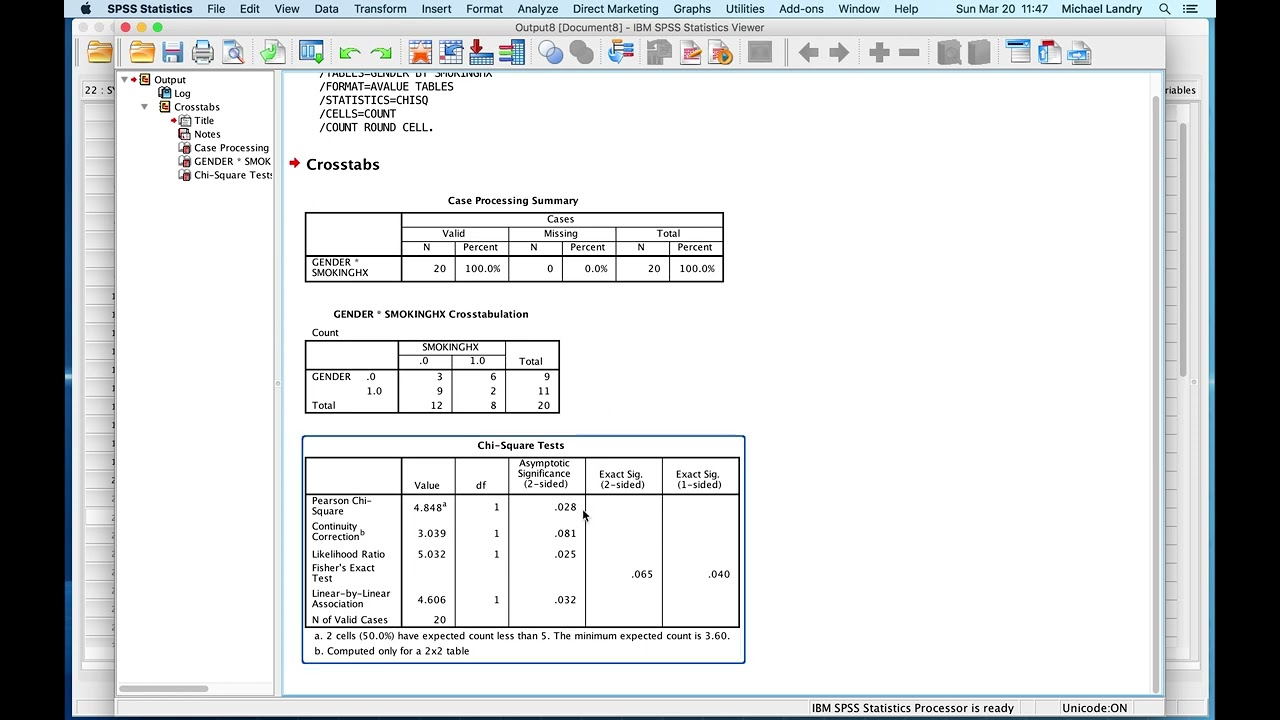
five different kinds of body shapes and do different methods of predicting body shape agree with each other so the kind of test you can do is chi-square and chi-square is saying does the distribution of data match what you'd expect there's no significance so for example um is difference between men and women smoking well obviously you've got one categorical data which is male female and you've got another categorical data which is smoke don't smoke so that's very clear um and you can say well are men significantly more smokers than women with a cap with a chi
square the other one would be cap measure of agreement which is do classification systems work the same so if you were to have one expert categorizing something do they have similar to a different expert um such as would a junior doctor diagnose cancer the same yes no in the same way that a seasoned professional doctor so they're all professional doctors um maybe a doctor with 20's experience would they categorize cancer no cancer at the same rate that's cap measure agreements and there's more so it's very important that you understand what kind dates you got for
scale data or categorical data and then you choose the right kind of test work with your supervisor work with people in your school don't just sit there waiting reach out to us we are there to help you um so yeah choose the right kind of thing and choose right sample your categorical date might just need 30 or 50 people which is much smaller than your scale data now you can convert liquor scales into categorical data using top bottom but that's something we could talk about different day if you're trying to look at scale and you've
only got 50 people um comment or reach out to me we can talk about converting liquid into categorical a third kind of thing to think about is bar charts bar charts are great at visualizing data but they are really a qualitative tool so if you were to make a bar chart of the themes in an interview with each bar up setting how many times people said them that's completely fine it's a great way to visualize the numbers in the qualitative interviews what it doesn't do is tell you if that difference is by chance that's what
the statistics is for once again you don't need to do statistics for design research you can do qualitative bar charts can be part of qualitative but just bear in mind if you want to do statistics you've got to do it properly and that is quite rigorous it's worth it it's achievable something to do so let's talk about setting a sample as something which actually related to data analysis so you know what data collection you're going to do you know what um [Music] method you're going to do for analyzing so you know you can think about
how many people do you need um and this really depends on what method analysis you're doing so if you're doing statistics you really need to recruit a large enough sample to run your data so my book here sample cypher design research does go into this on how many people you need for quantitative and qualitative studies so that's a great place to start existing journals can be a good way as well if you say well it does a comparable study use the same sample that could be okay but generally you want to use my book there
because that's based on power calculations and just to find the right sample size now once you know how big your sample is going to be you might go well i need 200 people i can't get 200 people let's go back and say well could i use a different kind of analysis rather than using ratio scale data can i use categorical data that makes my sample size smaller i need 50 people okay that's the best way i can do that i'm now doing chi-squared rather than t-test okay right so you can go back and forth on
that once you know how many people you need you can start to think about how will we recruit them no and really describe in your methodology how you will get them it's not i'll go and get them it's i'll put facebook adverts posters etc but the first thing you'll think about is who they are so go back to your research problem who has the research problem and what's it about if you got a company or industries overall talking about young people not shopping on high street then doing a design project around high street shopping excellent
if you then went out and recruited people who are over 40 they're not really young people anymore so their views don't generalize to people that you have problem with you want to recruit young people university students could be a good load of people to interview so focus on the people that your question relates to make sure you're sampling the right people also think about you're not sampling so you might want to exclude people who um don't regularly shop for clothes you might want to exclude people who um don't enjoy what you're talking about or whatever
you might have reason not to include someone that's important to talk about also think about ethics you know who do you not want to include so someone with a severe learning disability is probably not going to be included or someone with a general new university such as dyslexia probably is completely fine um and yeah think about sample size the way you recruit people again look at journal papers how have they done it if you don't know just go and read some um in developing research questions you will have done extensive reading so you should have
a good idea but general methods putting posters up sending out emails using facebook ad putting up flyers which is basically a poster anyway so not sure it's on twice or just walk up to someone in the street you know if there's local markets go up to approach someone say hi i'm a university student doing design project do you have 10 minutes to chat you know or giving out um leaflets to people saying please be part of this there's a lot of ways you can go on this um you can go on if you're looking for
remote research such as surveys you can go on forums say hey everyone here's my survey please take it now one thing i'm going to point on here is facebook adverts you can get good results so you could say i want to get people who are 18 to 25 in loughborough to see my advert that does work i've done it before it's expensive so you can get a big enough sample without paying for facebook adverts just bears in mind um incentives something really worth thinking about as well incentive is saying if you participate i'll give you
10 pounds or 30 pounds or whatever it is i would not encourage you to give incentives do not give incentives because firstly it's expensive and you probably don't have the money second people start doing your research to get the money instead of to help you out so that's something to think about and if you want to know more about any references i've talked about in series here are some excellent books that i'd recommend you're looking at i hope this has helped with understanding design research for design for making methods and any questions please let me
know i can't wait to answer your comments and work with you on this