so i want to try to sell you on an idea i'm always looking to buy ideas to sell it i don't know if you have to buy this but okay so even so think of this so medkin is all about people who are looking for the optimal way to extend their health span and lifespan to ensure that they optimize the number of years that they are able to live long healthy and active lives live well for life that's their slogan and what if the idea is that you could actually fight aging itself that aging is
a disease that you could potentially cure that i've never thought of it that way i mean doesn't that mean you could technically live forever i don't know about forever but hear me out here so essentially we have all this money in research and time being invested in therapies for individual diseases so cardiovascular disease or cancer or diabetes or alzheimer's disease you are more likely to to get those diseases the older you get totally yeah your risk factor goes up like by orders of magnitude at the age of 75 relative to your risk at 25 or
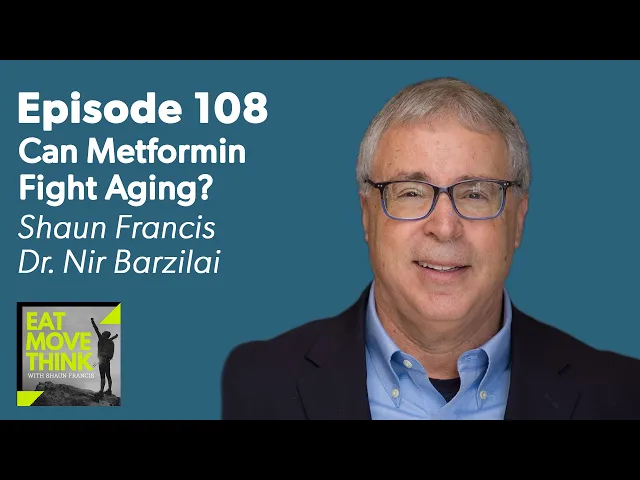
even 15. yep what if aging the effect of time on our cells is a condition that we could treat the same way we treat you know numerous other diseases and so is there research being done on this concept or are you the first person selling it well there's actually a pill that some people believe could be a treatment for aging that's what our host sean francis ceo of medcan is going to explore in this episode hey i'm christopher shulkin executive producer i'm jasmine ratch i'm managing producer and in this episode our host medkan ceo sean
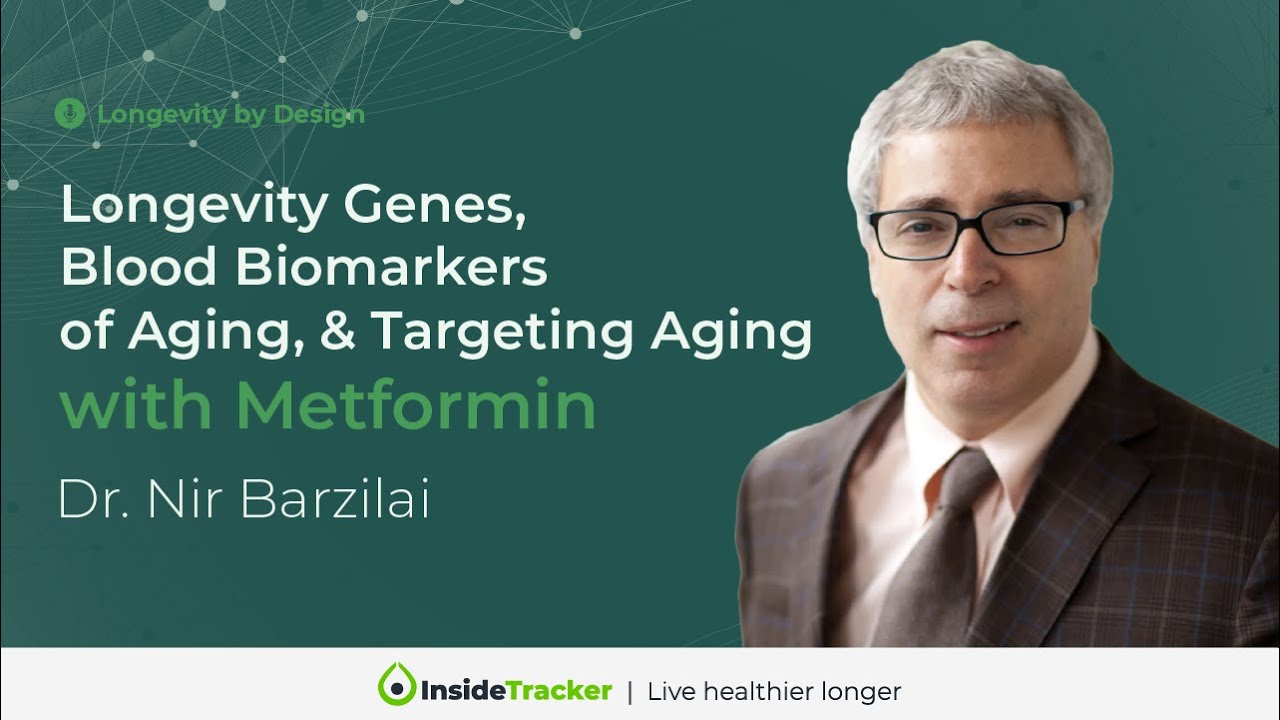
francis talks to dr nearer barzillai he's a gero scientist and the founding director of the institute for aging research at the albert einstein college of medicine in new york city and he's also the world expert in the diabetes drug metformin which some scientific research suggests could be a pill that fights aging itself amazing let's do it here's our host john francis in conversation with dr near barzilla dr barzillai i'm delighted to have you on the e-move think podcast and keen interest of both medcan and myself is longevity and i know that you're a prolific writer
and scientist in the field and you know maybe if you could just for our listeners give us a bit of your background and how how did you become more interested this idea of health span and longevity well you know it was kind of interesting our kids they don't see themselves becoming like their grandparents right they're like how did they get there you know who are they we're not going to be like that this process of aging when you're born and just seeing the generation is not something that occupies you and it did for me when
i was young i was walking with my grandfather the year he eventually died and he would told me about his stories and his wars and everything else and i was like something is wrong here this guy was kind of fat and slow and bold he couldn't have done all those things and even as i went i went and i was a medic in the israeli army i was in medical school i went to third world to treat people who were hurt by wounds or by by diseases and it was always a question that was bigger
than anything else you know even when i became a doctor i couldn't say who has a high glucose or high cholesterol or hypertension but i could see who's old and who's not and i knew that the old people have all those diseases so it was natural for me to say this is the biggest issue except that people didn't think that aging is something that can be targeted which is something that thanks god we discovered we proved and we're ready for more action so is aging itself a disease like how do you describe it clinically for
me aging is the mother of all diseases in other words if you're born and you have an apoe4 genotype which is a genotype that means that you most probably will be alzheimer you don't get it when you're born when you're one year or 10 year it takes decades to come out you need the biology of aging for things to come out so aging is the major risk factor and the major mechanism of why we started getting diseases with aging so it is the mother of disease which is different than saying that i want to call
aging a disease this is very problematic and it's even more problematic after covet because what did we do with the elderly we isolated them right we put them in islands the elderly don't want to be called sick the american federation of aging researchers the gerontological society of america don't want to call aging a disease the fda doesn't want to call aging a disease so we we shouldn't go to a war where we're trying to help the people who are now against us right so while i think that aging accelerates all those diseases i would shy
away by calling age disease and in fact practically we can avoid it because when i'm discussing with the fda study to show them that we can prevent aging then the outcomes i don't need to call it aging i can call it by i'm just moving several diseases away you know you will you will not get it or you'll delay that and i think it's good enough and so in your research i mean what causes aging is it the natural sort of genetic process yeah aging happens to all species and it ends in death no matter
who you are but you know when when we try to understand diseases we think of the evolutionary forces that got us to where we are and what went wrong with them but aging is all post-reproduction right when we had our kids if we die the next day or we leave 40 or 100 years more is not part of evolution because we gave our genes away anyhow so aging is post reproduction which means it's kind of accidental and the major thing that happens in physiology is when you go into reproduction you have to have a lot
of growth you have to have everything grow and be strong but now you go into aging and you're starting to have a breakdown and you have to shift the energy between growth to repair the breakdown and this is kind of where we are at understanding aging and trying to eventually stop this breakdown and so you're saying you go to this reproductive and then growth stage and at some point it works against you because your cells start to break down you know you said it absolutely right and it actually has a term it says antagonistic pleotrophy
antagonistic lithography means that there are some things that are good for you when you're young and they turn against you when you're old for example we need cholesterol to build the cells for the brain for the ovaries for the testes right we need a lot of cholesterol but when we age we get into trouble so there is an antagonistic pleotrophy it's the same with growth you need to shift from growth to protecting of breakdown which is kind of what happens when you get over reproduction decades over reproduction and age how do you you know can
you prevent aging or how do you if you are ensure a higher quality of life right so first of all the second part high quality of life we are really talking about health span the mechanism to increase health spin are linked to the mechanism that increase lifespan okay so we can choose what we want to talk about but it's the same thing we're talking about health span and longevity really and this is really what we're trying to do we showed that in many experiments all over the world that we can do it we can extend
the health spin and lifespan of many many animals by targeting several of the hallmarks of aging and getting really great results some of those tools that we used are actually in human use so we can start thinking about it and implementing it pretty rapidly you know there's the lifestyle part of it i know and then there's the medical intervention side of it too which i want to discuss but you know what do we know like if you were to prioritize those things that you think might have the most benefit where would you start right right
and it's right to start with that because the lifestyle has a lot to do with aging and in fact we can change a lot our prospect of aging by doing several simple things well it's not simple for individuals but we can recommend to do several things that will most likely get you a longer health spin and i would say the first is exercise and it depends the age of the person but it's moving if you can move if you can exercise it has unbelievable effects on every organ in your body your health span and your
longevity this is a major thing the second is diet so during covid if you were 80 years old your chances of dying from covid was 200 times than if you were 20 years old okay aging was a major risk factor at the same studies obesity was a risk factor of eight okay a huge risk factor but nothing like aging but obesity really accelerates aging so not being obese is very important but for me it's only part of the answer in fact there are several part of the answer of what to do with nutrition but the
main lessons for me from the lab is the following early on and through my career we used to take animals whether it was mice and rats and caloric restrict them give them 30 40 less food and what will happen is they would live healthier and longer by 40 okay it's really a huge intervention that influences maximal lifespan in animals and this was taken as saying have less for breakfast less for lunch and less for dinner but that's not what we've done we brought all the food to those animals in the morning they were hungry and
they would eat all the food within 20 minutes and then they would be fasting for more than 23 hours so it was fasting that we did it's not only caloric restriction in fact when we gave them the food throughout the day they were thinner but they didn't live much longer so fasting is a major way to improve our ability to age better there are several ways to do it every day basically it's 99 of the days fasting after dinner for 16 hours at least if i have to pick then one thing about the nutrition is
to do that there's also advantage i think i've never dieted in my life but my feeling was if you'd give me a diet for three months i could break any day but if i have an hour two hours to go and then i can eat whatever i want i'm not going to break so i think it's diet that most people can find very helpful and easy to do and will feel much better with that so clearly not being obese would be one major risk factor but you're also saying that fasting it's in effect a separate
thing to being the obese side of it so that age eat less and more healthy so i'm not obese but in addition fasting can contribute you know i've read guys like dr etia's fasting for days so there are several form of this fasting and the truth is we don't know i'm doing a study in my institute where we're just doing this time course we're taking young and old people and fasting them for 24 hours and we're checking their biology we're taking biopsies and sales and we're trying to find where is the switch that is important
for aging and maybe it's in 12 hours so you do 12 hours between meals and maybe it's 16 hours and maybe 16 hours is not enough we'll say you know 18 hours is necessary so we're kind of guessing it's probably kind of individual also and you know the truth will come up there's lots of data that suggests that there are major benefits to doing it if in 16 hours and is that in effect having one i guess major meal a day no it's not the same look i'm usually having lunch and then i'm having dinner
but within eight hours okay am i eating less i'm probably eating less i mean i was never it's very helpful i wasn't a breakfast person but i could have eaten a snack at 10 o'clock or something so i'm skipping that anyhow i'm drinking black coffee but the eight hours i'm if i'm hungry i'm eating does it matter what you're eating so yeah that's the other thing it probably matters what you're eating and if i have to pick one thing is carbohydrate we should have less carbohydrates it's interesting the diet field i feel bad for this
field because it started by let's assume that we need three meals a day it's already a long assumption i mean the caveman didn't start with corn flakes they probably woke up started chasing a deer and getting it at night and having one barbecue meal probably so three times a day is already a lot and then they decided 65 carbohydrates now carbohydrates and their availability is relatively new you know it's a marian to annette the populized cakes so this is a late advantage and we were never supposed to have 65 carbohydrates and then every year the
diet association have started changing because it all started by fat is the most dangerous thing so it happens that fat is not so dangerous in particular when we all have statins and it's easier to control the cholesterol than it is to deal with carbohydrates so now it's much more fat and much less carbohydrate and to tell you that that's the end it's probably not the end but if you could have less carbohydrate you know again i think fasting for aging is the major thing but less carbohydrates is also very important and so because you know
you read a lot of course on the mediterranean diet or eat more green versus you know meat so would you agree with that yeah i think the mediterranean diet there were several studies there were a lot of discussion around the studies at the mediterranean countries it's already a different culture but i think it's compelling evidence that if you have lots of olive oil and if you have fish and nuts you're doing better than you know with steaks and potatoes right but do you think meat in itself i mean if you go back to your more
caveman and deer example do you think you need to really cut it out and become a vegetarian or or is there a healthy amount look no matter what you'll tell me there'll be trade-offs and not only trade-offs it's going to be personalized maybe the way i want to phrase it is there's a difference between science and advocacy okay people were saying no meat or people were vegans i think there are trade-offs for that and it's true that maybe it's better than having steaks every day and being obese etc but they're trade-offs you know i'm trying
to eat more fish if meat i'm trying to have chicken but i i think beef has lots of b6 and b12 or you know whatever and i think you have to somehow balance that and i'm not sure that we'll get the true answer you know the truth answer means that you do a clinical trial right you take people you supply them the meals basically for five years to look at outcomes it's never going to happen so you just have to try and understand what's the science behind it and what's the trade-off and i'm never in
favor of taking something away totally because i think lots of the things that we take in our mouth have some dangers and some values and we have to balance talk to me about the molecule side of it because a lot of people are hoping for the you know silver bullet the anti-aging medication i know that there's a lot of discussion about various ones but no accepted molecule yet can you just talk about that what is the field right now so first of all i'm a gero scientist and what i'd like to do is have gera
therapeutics and gerald protectors we talked about gerald protectors exercise and diet but gera therapeutics is something that we'll eventually need and i can tell you why we need gyro therapeutics even if we're doing gyro protectors or environmental and i'm saying that because anti-aging is not who we are there's a tension between the people who call themselves anti-aging and between the people who are generous scientists we want to come from science and we want to do our clinical studies in a way that somebody will know that it's placebo control and so there's a proof rather than
a hope and it's usually hope it's even not promised with lots of the products out there what helps us is that we general scientists have what we call hallmarks of aging the hallmarks of aging are something that change with aging and if you fix it your animals live healthier and longer that's how you become a hallmark and those hallmarks are interconnected to each other in a sense that you can target one but have effects on the others if you take an old cell or old organ or old body and make it younger you get improvement
in lots of things so you capture those hallmarks and the drugs that are actually gera therapeutics are going to do the same they're going to change a lot of the hallmarks and if they don't i would be suspicious that they're not really gero therapeutics you know statins is good for heart but if you give statin to animals they don't live healthier and longer and it doesn't really touch any of the other hallmarks of aging so statins are good for prevention of cardiovascular disease but we should prevent cardiovascular disease by preventing aging mostly so those hallmarks
are generally sites of intervention in their biotechs increasing number of biotechs 12 billion dollar investments in biotech four and a half billion of that only last year that are choosing hallmark and targeting this hallmark and trying to find an indication for disease and eventually for aging itself so this is what allowed us to proceed and to start in developing drugs that are truly general therapeutics and are there any today that are well there's one drug that is certainly a gero therapeutics it's called metformin it's a drug that's used for diabetes it's a drug that was
used 78 years ago to prevent flu malaria inflammation and then it was discovered that it lowers glucose in people as well and so it was hijacked for diabetes it can prevent diabetes by the way so it's been out there and we learned many things about it we learned that in clinical trial that's controlled trials okay where half of the people getting in half are not it prevents diabetes it prevents cardiovascular disease it prevents cognitive decline and their association studies a lot of them that shows that there's less cancer all kinds of cancers are decreased there's
less alzheimer and there's even less mortality people on metformin not only have the half half of the mortality of other diabetics but they even have less mortality than non-diabetic patients and i'm sorry i should have started but if you give it to animals they live longer and healthier so there's no doubt that this drug is there but this drug needs a prescription and the fda hasn't approved it to prevent aging and that's a trial that i'm leading that we're going to start soon a trial where we've been working with fdn and we want to show
them that we can prevent aging what do you mean by preventing aging it's not a disease but we're going to delay a cluster of diseases and if we're successful then we'll ask the fda to approve it for a use of prevention of aging and what's the knock on metformin like given your confidence as a scientist in it you know are there other scientists who would say well good for you to go do another clinical trial but you know we don't think it's going to work are the critics of metformin i don't think there are critics
in that metformin among the gero scientists and in fact the team is important because a lot of the investment in the biotech to target hallmarks that's one important thing the other important thing is that they know that there's an fda effort to get aging as if it was a disease or a preventable condition so it's the opposite people are very supporting team with a huge coalition and there are people who are not scientists or not doctors that will tell you i took midfirming i had diarrhea it's a terrible drug and it's true it's happened to
several people but it's the safest drug i don't know that there is a safer drug than metformin ever there have been billion years of use we know everything we want to know about metformin and nobody dies with metformin in fact they live longer so that's the downside okay the side effect of metformin is you live longer maybe you cannot afford it you're obviously a believer there are some side effects but in your opinion pale against obviously a longer life most people don't know that they're on a drug okay most people some people have side effects
when they start the first week of use and it's usually they feel bloated they might have diarrhea and only three to six percent something like that will have persistent diarrhea after a week and will stop the drug the rest will not have any side effects is this something that you would take daily then yeah yeah i'm taking a day you know for the trial which i described the tame trial the targeting aging with metformin we had this argument of their elderly give them less you know let's let's be safe and some who said you want
to prevent aging give them more okay and what we've decided most of the clinical studies were in a dose of 1500 milligrams and we decided that's our dose if you get to 1500 okay if you get less it's okay what is it targeting that you think generates its success i already alluded to the fact that at the end metformin corrects all the hallmarks of aging that doesn't mean where does it work first it has to get into the cell and it usually binds to the oxidative complex of the mitochondria and they do two things one
is metabolic they improve metabolism and one is they decrease oxidative stress and some other things but that's kind of what's going on but other effects of metformin that happen either because we fixed aging or before there or because they're not related to the mitochondria or some other things so we don't precisely know how it might be working but well we know how it works for diabetes yes and we know that it works with aging by improving the hallmarks but what in this process is most important what comes first and what is a result we will
argue about that and are there other drugs molecules out there that might have similar benefit as metformin you know probably from our knowledge the most important thing that we noticed this year in the last couple of years is several companies are doing this drug that is this sglt2 inhibitor it's used for diabetes and investigators have noticed that people who get this drug not only their diabetes improve but their heart condition and kidney condition is improved when you give this drug to animals they live longer and healthier you know we're talking about repurposing drugs that are
in use and the third drug is called rapamycin rapamycin is increasing the health spin and lifespan of animals the most of any other drug that doesn't mean that it's going to be as effective in humans but it's a promising drug and there's an effort to have some rapalopes those are derivative of rapamycin in clinical trial to show their effect on variety of diseases in aging so for example you're using metformin yourself would you consider rapamycin or sorry the sglt2 are those prime time enough that you would even personally consider them well no i'm not considering
it personally but i hope that there will be trials with them in order to again show in one study that we improve many diseases of aging i'm not recommending to anyone to take those drugs because we don't want to hurt anyone and we certainly don't want to kill anyone on on the way to success and without doing the trial it's all about promise it's not realized yet so i'm not the one who's telling you in order to go to the doctor and get those i'm just telling you what they've been showing and why we think
they're gerry therapeutics and why i hope that they'll be soon available in a pharmacy next to you and that's why you're more confident in metformin if i were to headline this because we have so much evidence certainly we know it's a safe drug right versus the these two other ones where we simply don't have the data right i would say the only reason i'm interested in the tame trial is it's a tool to get an fda indication okay let healthcare providers start giving it let pharmaceuticals come in and develop better drugs and combination of drugs
another thing is there is a question whether the combination of drugs is good or antagonistic it could be additive it could be synergistic and it could be antagonistic so i wouldn't tell people just take more drugs we know from animals the longest living animals are those that are treated with the combination of ropamycin and metformin so i think there's indication that it's additive we'll see if it holds in humans so where we are now of what's out there and obviously you're looking at metformin that seems to have the most promise and in fact closest to
market with respect to potentially fda confirmation of it as something indicated for aging right i think this is the most mature has chances of succeeding and have chances for the fda to start thinking maybe we can prevent aging this concept is not something that is inherited you know there's conservatism and it takes lots of talks and persuasion but we ask them if we do this study we don't want to do the study and you'll tell us hey we wanted you to do something else tell us what to do now and we kind of agreed of
what we're going to do when will the trial be concluded well the study has to start you know we had the delay with funding issues so we'll start it when we can i hope in the next few months if it is successful i mean could we be in a world where everybody is on metformin like it seems like statins too are more and more recommended yeah it will be like that look even in diabetes metformin works in 70 80 percent okay what metformin is doing is public enough it will work on the population it will
not work on everyone and probably not everybody will tolerate a metformin so it's going to be one drug out of several options and several combinations what's your guess of how much health span might that buy you like where are we going over the next 30 years yeah i think that that's very important so we hope that with this study will show that we increase health spin by a year or two okay that's in a clinical trial that translates to huge economical effects if we're healthier a year or two the cost of the last two years
of life will be decreased significantly we call it the longevity dividend but it's more than that an economist from london school of economy andrew scott a friend published a paper in nature aging where he said just a minute you're totally underestimating because it's not only the medical costs in fact in his paper he took my data on tame on the metformin trial and he basically showed that you know we have 3 000 people on the trial half of them are metformin so it's 1500 people on metformin the economical value if it'll work the way we
said if we'll delay diseases by a year or two in this four or five year period we will add an economical value of 150 million dollars when the study itself is more like 50 million dollars so we're making 100 million dollar for the economy but the point is if you target aging and prevent heart disease and cancer and alzheimer's and all that then you're adding a lot of value to life and this is economical value forget the fact that people want to be healthy anyhow right i mean that's clear everybody wants to be healthy so
that's the thing but you know i have another study of i have 750 families of centenarians and it's not only that they live long they are healthier for 20 30 years longer and they have a compression of morbidity in other words they are sick for very little time at the end of their life so we have example okay we as a species can do it we can live healthy for longer and die okay yeah that's what i was getting at if you buy two more years does that mean you still have a long agonizing death
or you get more health span and it's short and quick at the end right the data that we have suggests that we are contracting morbidity and not only extending health spending that's extremely interesting where is life expectancy going to over the next i mean obviously subtract out wars and accidents but if people are living in prosperous economies will they be living north of 100 in 100 years so our maximal lifespan as a specie is 115 years somebody lived to be 122 but statistically it kind of plateaus at 115 years first of all it doesn't mean
that in the future this has to be the limit okay in fact we should already work as if that's not necessarily so but we die before the age of 80. so we have 35 years to realize that we should start doing right now and improving it and it's it's both with medicine and with the environment and we need it not only because we have elderly but we have people who survive treatment for cancer that are getting sick and old really early on there are kids who survive cancer and have heart disease when they're 35 years
old people with hiv have diseases 10 years before they appear in their cohort poor people debilitated people disabled people and certainly if we want to go to mars we have to deal with aging first because we're not going to get there without getting cancer or heart disease and we'll never make it back so it's important for many reasons to start and target aging and we have the tools to accelerate it right now it's fascinating and here that was amazing yeah thank you for touching on all these points and have a wonderful rest of your day
me too that was our host sean francis ceo and chair of medcan in conversation with dr near barzillai the world's foremost expert on metformin as a therapy for aging and the founding director of the institute for aging research at the albert einstein college of medicine we'll post links to that clinical trial targeting aging with metformin at our website at eatmovethinkpodcast.com say hello or send us a tip or suggestion by emailing us at info eatmovethinkpodcast.com eatmovethink is produced by ghost bureau senior producer is russell gregg jasmine ratch is managing producer social media and strategy support is
from chantal goethe and andrew imex christopher shulgin is executive producer remember to rate and subscribe to e-move think on your favorite podcast platform follow our host sean francis on twitter and instagram at seanc francis that's sean with the u and medkin at medkin livewell we'll be back soon with a new episode examining the latest in health and wellness [Music] you