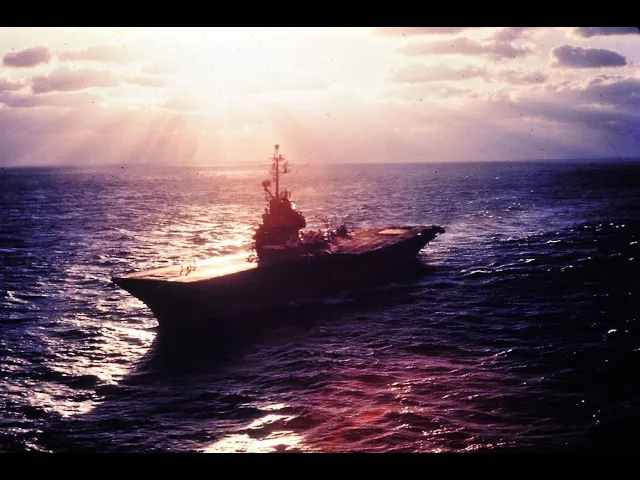
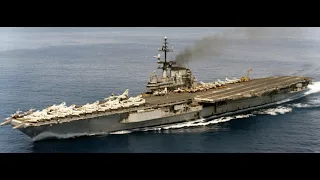
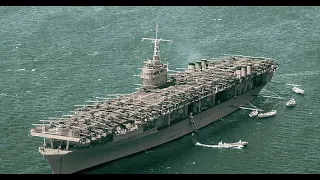
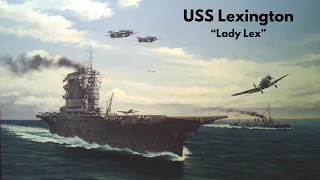
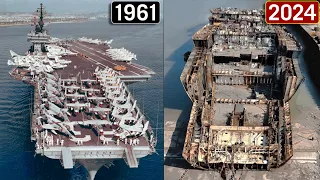
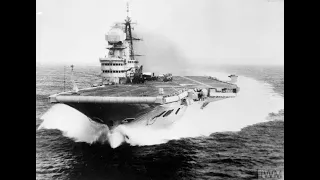
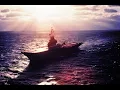
the second aircraft carrier to Bear the name Lexington cv16 almost served under an entirely different name as was the case with any of the Essex class and entered service with the name of a sun carrier she was originally laid down under a different name which she had been as famous with that name that's something we can obviously never know though if her service history was anything like it was as Lexington it's safe to say the name really wouldn't have mattered whatever the case may be Lexington remains one of the most well-known of the Essex class she served longer than any other and indeed she Remains the oldest preserved aircraft carrier in the world beginning Service as The Cutting Edge of carrier technology and ending service decades later as an Old Reliable training ship over those decades she would see many different Pilots take off and land from her decks she would see the end of the propeller age and the start of the jet age she would serve in fact right up to the first stirrings of the stealth fighter age though she would obviously never operate those not a bad run for any ship really this career sprang up from Humble roofs however cv16 was laid down on July 15 1941 under the name USS Cabot at this point she was but one of many Essex class carriers all being laid down in Rapid succession to build out to the later swarm of fast carriers where Cabot differed was that she was laid down in the Four River Shipyard of Quincy Massachusetts this Shipyard had some 20 years earlier built CV2 the previous USS Lexington this is relevant because when CV2 was sunk in the battle of the Coral Sea and more importantly when the Navy owned up to her being sunk the workers at the shipyard more or less begged the Navy to let them rename a carrier to Lexington in order to honor the sunken conversion then Secretary of the Navy Frank Knox allowed for that as a result cv16 USS Cabot became cv16 USS Lexington on June 16 1942. under her new name USS Lexington will be launched on September 23rd of the same year and commissioned on February 17 1943. and this she would already be exceeding expectations to some extent in spite of her High number cv16 she would actually be the second of the Essex class to enter service behind only cv9 herself in this Lexington would surpass the other surviving members of her class in terms of time and service in spite of all of them having lower numbers than her before we can get to that though we have to cover her service in World War II this would prove to be a hectic time for the ship even by the standards of American aircraft carriers of the time for all that Lexington entered service in a time where the Japanese carrier forces had pretty much shot their Bolt the turkey shoot aside she would see quite a lot of combat thrown right into the thick of it soon after entering service by raiding Japanese Islands up and down the Central Pacific first she would hit Tarawa in Wake Islands the latter under Japanese Occupation since the start of the war after a short refit in Pearl Harbor Lexington would be right back out supporting the invasion of the Gilbert Islands that is making in Tarawa again most famously Lexington however was primarily occupied with raiding the Marshall Islands to keep the Japanese busy more than operating in direct support of the landing operations doing what her namesake had failed to do actually interesting how that turned out when her tasks and the marshals and Gilberts were done Lexington would set off to raid kwajaleinator on December 4th this was successful insofar as her pilot sunk a cargo ship and damaged a couple of Cruisers along with the usual Damage Done to enemy air power the problem becomes that later that night the Japanese showed they weren't completely beaten yet a massed airstrike hit the carrier lit up by flares dropped via parachute Lexington acquitted herself well here only taking a single torpedo hit during the attack this hit was however a fairly heavy one her steering gear was wrecked and flooding was fairly severe after circling for a bit the crew managed to rig up a hack job of a hand steering device and got her under control the damage wasn't critical by any means but it was severe enough that Lexington returned to Pearl Harbor arriving on December 9th for emergency repairs when those were completed she set off for the West Coast spending a couple months in Bremerton for proper repairs she came out of those repairs on February 20th 1944.
this entire Escapade would incidentally be the first time the Japanese claimed over propaganda broadcast in OS that they had sunk the Lexington it would not be the last for after rejoining the fleet by now reinforced with more of her sister ships Lexington will be part of a strike on truck on April 28th while calling truck impregnable or invulnerable is a bit of an overstatement it was heavily defended at one point this Lagoon was for all intents and purposes the Japanese equivalent to Pearl Harbor and being a forward base for their Fleet it was also largely abandoned by this point at least by Naval forces after the previous Operation Hailstone attacks earlier that year still the Japanese had enough left to attack Lexington pretty heavily between truck and the earlier operations off New Guinea heavy enough that Japanese propaganda would for the second time claimed they had sunk the ship except once again they failed and this time they didn't even do any damage to her following this her next major operation would be the turkey shoot mentioned previously more formally the battle of the Philippine Sea there were some strikes on the Marianas before the barrel properly started though one of which involved on June 16th Lexington fighting off another strike by torpedo bombers once again she was undamaged once again now on their third swing at it the Japanese claimed they sunk the Lexington you would think at this point they would just start claiming other carriers instead of basically saying yeah we failed to sink this ship three times but we got her this time but I'm not a World War II Japanese propagandist so what do I know on the subject of propaganda actually it was one of Lexington's pilots who coined the term turkey shoot for this operation one could say that's probably rubbing salt in Japan's wounds at that point in any event after this things calmed down and entered back into a familiar cycle time spent raiding Japanese bases and bombing up and down the Pacific Taiwan then known as swarmosa Okinawa the Philippines Guam if there was a Japanese base outside of the home Islands osworth that Lexington would pay a visit at some point between the turkey shoot and the Battle of Leyte Gulf and as for late golf well her planes would help sink the massive Musashi along with damaging a couple Cruisers and when Halsey decided to charge off against the decoy Force Lexington's planes would help sink a couple japanese-like carriers along with Sinking The Heavy Cruiser nachi a few days later all well and good here but the real claim to fame is that one specific ship was sunk by Lexington a carrier that she claims to have sunk with quite a career of her own zooikaku the last survivor of the keto bow tie the last of the Pearl Harbor carriers Lexington's planes clean credit for sinking that lucky carrier one could say this is in some way Poetic Justice zui Kaku had alongside her sister been the carrier to sink the old CV2 Lexington all the way back at the Coral Sea that it was the second carrier to where the name Lexington that sank her in turn there's something about history and rhyming here I'm sure however after sinking nachi Lexington would be head in turn by a kamikaze This Plane slammed into her Island dealing pretty hefty damage to her superstructure but not much else her fires were quickly under control and she could resume albeit slowed air operations in Fairly short order it was enough damage that she pulled out for repairs though during the process of which she would be claimed for a fourth time at this point to be sunk by the Japanese who apparently getting tired of claiming the same ship had decided to call her The Blue Ghost via Tokyo Rose that name has stuck to this day and to be fair if your enemy is going to nickname your ship Blue Ghost is kind of a nice one to take up the rest of the war was about as boring as active wartime service gets though the Japanese Navy was practically a non-in city at this point Yamato's Doom sortie aside as such Lexington would spend the remainder of the second world war returning to bombing up and down Japan's Holdings including the home islands for that matter that being said when the end of the war inevitably came so too came the cuts of the Truman White House with so many carriers in service Lexington would decommission into the reserve Fleet on April 23 1947. she did so with an admittedly impressive wartime Hull of nearly 400 planes in the air nearly 500 more on the ground and 300 000 tons of enemy shipping not counting a potential 600 000 tons of damage shipping as well she earned 11 balstars for the service along with the presidential unit citation even for an American Carrier during World War II that's not too shabby her service wasn't done however after a few years in reserve she was pulled back out in refit to a more Modern Standard with an angled flight deck and the other facilities needed to operate the new jet aircraft at the time coming out of this in 1955 Lexington would remain in service refits aside for the next 36 years that being said her combat service was over while some of the Essex class would serve off Vietnam at various points Lexington would only see the Pacific a handful of times after she came back into service she would keep a watchful eye out when the odd crisis kicked off such as in Laos or the Taiwan Strait issues but she saw no actual combat in these and would eventually return to the Atlantic where she would remain a short stint during the Cuban Missile Crisis would Sidetrack plans to convert her to a training role but not for long in 1963 she replaced her sister Antietam becoming a training carrier operating out of Florida so seriously did the Navy take this role that she was reclassified as first cvt-16 and then later avt 16. it was this role that Lexington spent the vast majority of her active service in training countless generations of Pilots to send off to other more capable flat tops she would train many of the men who served in Vietnam and other conflicts in later years sailing from Florida out into the Gulf of Mexico don't get me wrong here this was incredibly important and valuable Service as it gave American Naval aviators practice operating off an actual flight deck if admittedly a small one so important was this service that as every other Essex class carrier was pulled out of service including ships much newer than herself Lexington remained puttering about in the Gulf training Pilots right up until 1991.