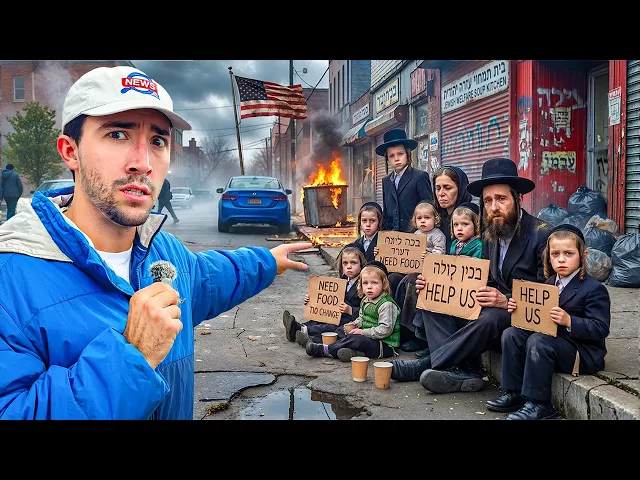
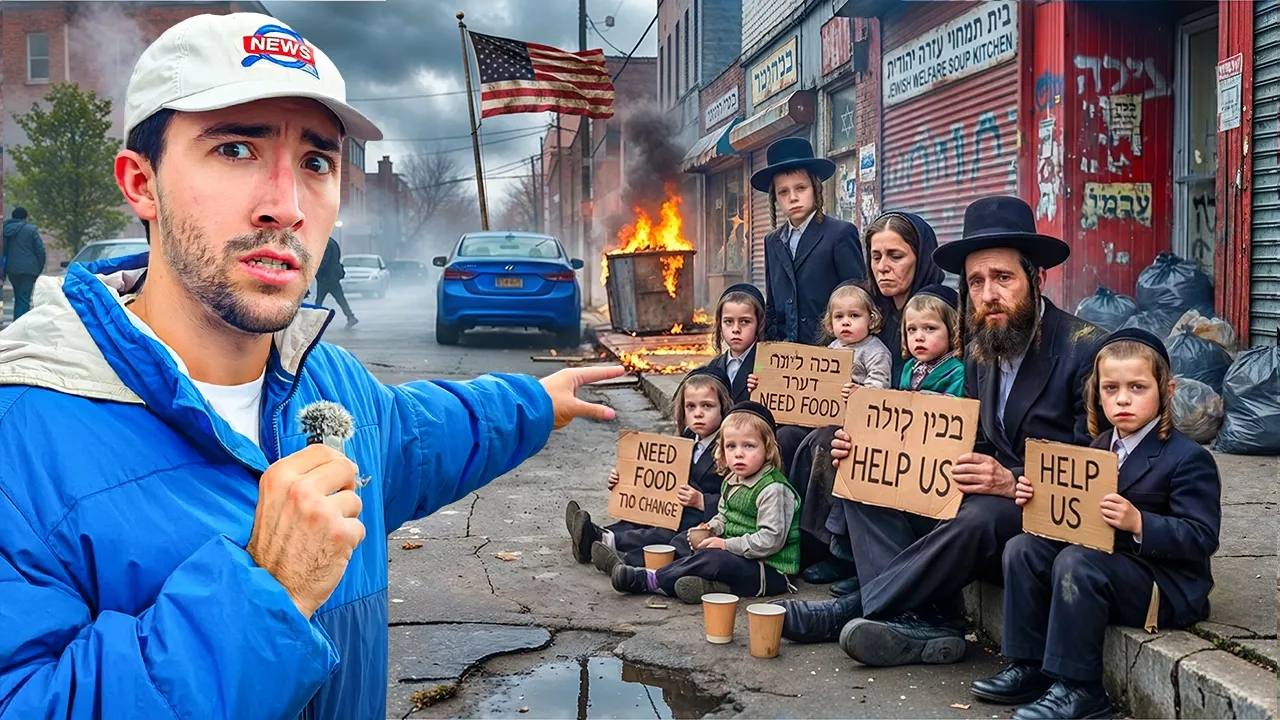
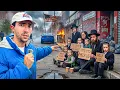
You work for Hamas. >> I don't want my kids should uh play in the house of a secular guy. >> This is Curious Joel. >> You're a village of 44,000 hassidic Jews in upstate New York that primarily speak Yiddish, have an average of seven kids per family. How many kids do most people have out here? >> 171 18. >> How do they afford 17 18 kids? It's one of the poorest towns in America with 40% living beneath the federal poverty line. Many men here are religiously studying the Torah full-time and heavily rely on public assistance
and welfare in the form of Medicaid, housing vouchers, food stamps, and cash aid to support their giant families that God commanded them to have. And the village enforces strict gender roles, modest dress codes, and sends their kids to private religious schools. And why is it okay for Jewish people to live together in a homogeneous Jew only community, but it's illegal when white people try to build their own? I pulled up to Curious Joel myself to see what's going on. Welcome to Curious Joel, a traditional community of modesty and values. In keeping with our traditions and
religious customs, we kindly ask that you dress and behave in a modest way while visiting our community. This includes wearing long skirts or pants, covered necklines, sleeves past the elbow, use appropriate language, maintain gender separation in all public areas. Thank you for respecting our values. Let's pop in here and say shalom. Lots of people praying. Hi. Shalom. Okay, so it says entrance for members only. Not sure what it takes to be a member. What does it take to be a member? >> Do I have to be Jewish to enter? Okay, I'm not sure. >> I'm
not sure the schedule exactly, but 9:00 sharp. They're not at work. Okay. So, I guess everyone's praying right now. So, you got to wonder what these people do for employment. You'll notice the Mexicans out here are doing the hard labor and the Jewish people, I'm not sure what they do. Maybe we can ask this guy. Excuse me. Um, what do most people do for work out here? You don't know? All right. Cold shoulder. Question for you, sir. How long do people pray per day? One more maybe one more hour. >> Okay. What do people do
for work? >> I not I am not a news report. You have to >> Okay. What do you do for work? >> I don't know. >> Okay. You don't want to talk? >> Um how many hours a day do they pray? >> 3 hours a day. >> Do people have 9 to5s? >> Yes. >> Like what industries are they involved in here? >> Construction. All other type of industries. >> And what do you do? >> I'm a student and also I'm doing home care. >> What are you studying? >> I studying tora. >> Torah. Yes.
Uh, >> how old are you? >> Our holy Torah. >> Um, and who pays for education? >> I try to work on overtime. >> Overtime? Yes. Uh, where do you work overtime? >> I work home care. >> Home care, right? Yes. >> Is it like Do you have kids? >> I have kids. Yes. >> How many kids? >> Three. >> Uh, how do you afford to raise three kids while being a student? >> Because I work very hard. I want to study the Torah. I'm very proud. >> How do you afford to study the Torah,
though? >> God help me. >> Does the American taxpayer help you, too? >> Oh, so yes. >> Yep. Uh, how many people out here are on like uh welfare in the form of like housing assistance or section 8 or EBT, SNAP, Medicare? >> Yes. Yes. Yes. >> And that allows you to study the Torah? >> Yes. >> And raise your kids? >> Yes. >> Yes. Thank you. >> And how many kids do most people have out here? >> Um 17 18. >> How do they afford 17 18 kids? >> They they are proud to to
do what the Torah says that you need to multip be multiple and fruitful. >> Wow. And do you think there is welfare abuse in the community out here? No. No. Because they actually have the kids. >> Yes, >> they have the kids. Do they get tax credits for the kids? >> Um, what they get, they get, but uh they are all all doing to to keep our Torah. Yes. >> Keep the Torah. >> Yes. >> What are your thoughts on people out there who can barely afford to have one kid? >> If they want, they
can have one. But uh if God's given them more, it's very it's very proud. >> Okay. Shout out God. >> Yes. >> Okay. >> One thing, we are very against the the state of Israel. It's a very big problem for us. >> Yeah. So you guys don't approve of uh a state of Israel before the Messiah comes, right? >> Yes. Yes. Zanism is not Jew Judaism. It's a very a very other thing. >> Question for you, sir. What do you do for work out here? >> Are you on the phone or are you listening to
the radio? Um, okay. Damn, it's tough to get some answers out of folks. What do you do for work? >> Nothing. >> How do you make uh money? >> My wife. >> Your wife. Um, what does she do for work? What is this? >> Uh, interview. Good to meet you for a YouTube. >> Um, so your wife works and do you study the Torah? >> Have a good day. >> How many kids do you have? >> Have a good day. >> How many children do you have? >> Okay. Thank you. Well, that was fascinating. Excuse
me. Do you study Torah? >> Study. >> Torah? >> No. No. >> Um, what do you do for work? >> Uh, do you have a job? >> Does your wife work? Are you a student of the Torah? >> Yes. >> Um, do you work a job for money? >> I >> Yeah. >> No. >> Does your wife? >> Yes, >> she does. Does your wife go to work to make money and you study Torah? >> Where are you? >> Um, Tyler, good to meet you. I'm just doing a YouTube video about this place. I find
it fascinating. >> Have time. I have to. >> But where are you going if you don't work? >> I study. >> To study. And does your wife work? >> What industry does she work in? Teaching, education, children. And how do you afford the kids if you don't work? my wife. >> Your wife. Okay, thank you. Sounds like a great setup. Damn, I might have to get in on that. Excuse me. What do women work at here? What jobs do women work in here? Is it mostly child care? Okay. Cold shoulder. Um, do you work a
job as well as uh raise the kids? Do the women raise the kids in Okay. Tough tough to talk to the women out here. How do how do people afford to have families? >> So, like as you raise baby, do you also go to work at some point? What do you do for work? >> Do you study the Torah for a living? Uh, do you study the Torah? Do you work a job? No. Does your wife work a job? Are you student? >> Uh, do you work are are are you a student? Man, I can't
do this anymore. Question for you. Do you study Torah? >> Do you study the Torah? Um, excuse me, sir. Do you study uh the Torah? Excuse me. Hey, >> he doesn't want to give an interview. >> Oh, you speak on his behalf? >> How do you know that? >> Get on out of here. He said he doesn't want to give an interview. How would he know? Do they communicate telepathically via hive mind? O >> Tyler. Yes. >> Wow. >> How are you, my friend? >> How are you doing? >> Good. Hello. >> Yes. Wow. >>
How are you? Say hi. >> Independent journalist. >> Yes. >> You want to say hi? >> No. >> Okay. How are you doing? >> [ __ ] This office. Do you want to tell me a little bit about this place? >> Sure. We grow up here. >> Okay. >> It's a very nice place. >> Yeah. And it's mostly acidic juice. >> Yes. It's only acidic juice. >> And it's one of the most biggest growing towns, right? >> It's the biggest in the big families, too. >> Big families, right? >> How do people afford to have
such big families out here? >> It's say anything. >> What do you mean? >> How do they have so such big families? >> You believe in God that God created that. Okay. >> Hey, thanks for saying hi, my friend. >> I don't know who you are. >> My name is Tyler Olivera. >> I don't talk to suspicious persons. >> How am I suspicious? >> I don't know who you are. >> Damn. Ouch. That hurt my feelings. Do you study Torah or do you uh work a job or own business? >> Works a job. >> Well,
that's not true. That's what's up. >> They have Torah and they work. >> That's not true. That's a lie. That's not true. >> Suspicious person. >> That's not true. I've talked to people. They said some of them just study the Torah. They told me themselves. Well, some >> So, who's the liar? >> I understand that. That's what I'm trying to figure out. >> I don't know who you are. >> I'm just asking questions. How many children do you have? >> You work for Hamas? >> What? I'm I'm journalist. I'm just exploring. >> I don't know.
>> YouTube vlogger. I don't work for Hamas. He said, "Do you work for Hamas?" >> What? Um, okay. So, this is the most beautiful $10 million synagogue right here. It is quite nice. See if anyone wants to talk. Hello. Are most people here rabbis? >> Rabbis? Rabbis? Are you guys rabbis? >> No. Right now. >> Okay. >> Do most of them work as Yes. Hello. >> I'm asking men um what they do for a living out here. Are most people here? >> What? What number? >> Oh, just my name Tyler. I'm just asking uh acidic
Jews out here cuz I know it's >> No, not for >> What do you mean? >> People are not going to answer you. >> What What do most men do here for work? Is it they study the Torah? >> No. Most people are working in Amazon like you >> CNN. No, I just have a YouTube channel. >> The mere presence of a Goyam was sufficient to raise suspicion. Question for you. What do most men do for work here? Are they rabbis? This This is working. >> No. No. >> What do they do? Cuz I'm I'm
trying to talk to people. Just figure out what the main industry is. >> A lot of a lot of things. >> Can you give me some ideas? >> Oh, go outside. >> Okay. Thank you. I'm trying to talk to folks like you. How you make your money and afford to raise your families. Ross. >> What? >> 54 Ross. >> But then I finally met this guy who gave me some wisdom. Everything people do. >> What do you do for a living? >> Billboards. >> Uh, how long does the prayer last and when do people go
to work? >> People go from 9:00 in the morning from from 6:00 in the morning until the night. >> So, how do they pay their bills? >> How do they pay the bills? By working. >> When do they work? If they're praying all day, >> they're not praying all day. So, you have a lot of people coming in in the morning and going into work, then coming back to pray. You have a lot of people coming in in the morning to pray. They have people just waking up late. I see. Okay. >> Having a big
community. >> So, you own a billboard company? >> Yes. >> How do people afford to have like 10 kids out here? >> The community is based on this. So, >> okay. So, is it wealthy members of the community give charity? >> Yes, mostly. That's the way. >> Do most are most people on Medicaid, SNAP, EBT? To be honest, >> I don't know. I don't know. I can't speak for other people. >> What about you? >> I'm not going to tell about myself. >> Okay. Okay. >> A lot of these folks have business here. Not all
of them. Some of them, >> but there's a lot of you guys, right? >> Some of them get are being supported by community members. >> What's the big industry for women out here? Is it child care? Cuz I noticed Mexicans seem to work like retail, construction. Many men will tell me, "My wife works, but I do not." >> That's not true. >> That's what they told me though. They themselves. >> First two years of their the first two years after they get married. >> Okay. >> Only the first two years, then they go work. Most
men. >> Okay. All right. How many kids do you have? >> I'm going to guess you have 13. >> They all vote unanimously in favor for it. Look at this. There's a carson every 5 seconds. Some of the driving out here is horrendous. It's uh truly terrible. Um, what do the Jewish people here do for work from what you've seen? >> Do they just pray or? >> No. >> No. So, yes, they they they pray every single day and they walk every single day after this matter. >> After Okay. After they pray, they go to
work. >> Yeah. They drive in a school bus and a transit bus. >> Excuse me, gentlemen. Um, what do you guys do for work here? Do you guys have like businesses? Like work a job? Do you guys study Torah? >> I have a job. >> Uh, what do you do? Handoom sales. >> Are you lying to me? Just the way you looked at them. I'm just like, what is it just in what what do you do? >> Handoom sales. >> Uh, what do you sell? >> Food. >> Why do you keep looking at them? Okay.
Uh, what do you what food do you sell? >> Chocolate. >> What? I feel like I'm getting bamboozled right here. I don't understand the look back there. Do uh most women raise their households and then they work afterwards? >> Some. Not most. >> Some. Okay. Like what percentage? Half >> maybe. Maybe half. >> Maybe half. Um, usually when they study, they do just that. >> Okay. >> But the ones who work study in the morning and late afternoon and the evening. >> To be fair, I have seen people who work bus drivers. Some people doing
something in the shop, sort of managing the shop. The construction and hard labor seems to be exclusively executed by the Mexicans. Excuse me, miss. Um, do women uh work and raise the kids out here? >> Sometimes. >> Do the men work or do they study the Torah? >> The sheer density of minivans out here is a phenomenon in and of itself. Excuse me. Um, what do you do for a living? >> Okay. What do you do for work? Um, what do you do for a living, sir? Ah, tough scene. Excuse me. What do you do
for a living? Excuse me. What do you do for work? >> A student. >> You're student. You're old though. >> I follow you on YouTube. >> There we go. So, you got to answer this puzzle for me then. What do people do for work out here? >> We do construction. We do everything. Do people spend hours praying in the synagogue and then they work afterwards? Do the women raise the kids and that's all they do or do they work as well? >> They work as well. The men also raise their kids. >> We just don't
bother nobody. Whatever normal people is doing, we're doing. But we're doing it most mostly in the in the kosher way. Instead of selling to general supermarkets, I for example, I sell I'm in the kosher food. I sell for for kosher supermarkets. >> What I'm hearing is they'll gladly take money out of the American tax base to support their lifestyle. And if they do start a business, it'll most likely accommodate and service Jews. >> We don't bother nobody. We don't kill. >> This is true. No violence out here. >> No violence. >> No drugs. >> No
drugs. No stealing. Nothing. Nothing. >> I've only seen bad drivers though. >> You know why? Because that we have so much. We have like 10 children. We're all too busy. That's why we were upset by driving. We're getting nervous. That's the biggest violent you'll find by us. Uh one day a year it's called Purum that we that party. We dance, people getting drunk, and the biggest good thing about that that we're giving donations for other people. That's right. >> Do you know how much money goes out in this village? >> I'm gonna guess millions. >>
Millions. And that's without being so polite, keeping open the doors. That's a thing on. >> Yeah. Right. No, not gentile. It's a You're not Go. >> I'm Goyam. >> No, you're not Goyam. You're a ye going back. You're a >> Okay. >> Are you a >> I'm Goyam. >> Can you show me your license? >> Show me your license. I know that you guys don't support Zionism or you guys don't support the Jewish state until the Messiah is here. Right. >> Exactly. They are not the Jewish people. They are not us and we are not
them. They are not Jewish at all. The state of Israel is a secular state. Same as Japanese, but they call themselves Jewish people. They don't obey no laws. They're taking out kids from the yeshiva, sending them to draft to army to fight Hamas, which they create the problem. If if they would listen to the Torah, the whole war wouldn't be. How do people afford to have so many kids here? >> We don't. They don't afford. We help each other. We open two groceries called Mive. We're giving them 15% discount. Just giving you one example. >>
Yeah, I could get a discount too. >> Yes, because the store is officially made for everybody. >> The one thing I am curious about though is the welfare use. >> Both the federal or whatever the state, they all they're both spending equals money for other people. The only difference is over here the money is being spent for us in our mouth to eat and in Bronx it's being spent for the NYPD to find to fight. >> Are you on welfare? >> No. >> Do you know anyone on welfare here? >> I I won't comment on
that question. >> How should I answer? >> Are you on a shop? You own a you own a a supermarket basically so you wouldn't know. Give me a rough estimate if you can. >> No. No. I'm not I'm not I'm not going to comment. >> Why have to go? >> Why is that the stickler? >> Because I can't answer you a simple >> You can give me a rough estimate though. Just ballpark. >> What do you think? And I'll I'll >> I'm going to guess 33%. >> Yes. >> Okay. >> Yes. >> And that's probably
about on average throughout the US. >> That's not terrible. >> Exactly. >> I'm just trying to figure out how people afford to raise 10 plus kids on sometimes single income households. >> We don't spend so much money for each kid. >> Humble living. Like how many kids per family? >> 10, 12, 14, 15. >> That's huge. And how do people afford to have such big families out here? Um >> working like what do people do for work out here? >> What do brokerage and >> brokerage? >> Construction. >> Okay. >> Teaching and school. >> Okay.
Teaching, school, construction. What percentage of people do you think are on like um like uh welfare, Medicaid? >> Um >> a lot. A lot. Big people. >> Okay. Okay. Uh what do they do? >> What I do? >> Uh yeah. What do you do for work? >> Uh I I uh I'm a student. >> Student. Okay. How old are you? >> Very late to me. >> Ah, I see. I see. Thank you. Would you like to be interviewed? >> But I know you can professionally English. So >> you speak English? Any English? No. Okay. Tough
to find someone that speaks English out here. It's tough to find anyone besides the Mexicans out here at work. These guys are looking at their phones half the time, too. I'm a little bit confused. And why is everyone on the smart on the flip phone? >> Are they actually speaking to someone? Like are you actually on the phone with someone? Oh, you are. Okay. Some people I hear on the radios. >> Could be. >> Okay. Um, uh, Jews >> solo. >> Yeah, it's only the Jews >> and personas. Hispanic construction. >> Jews in construction. No,
>> only the Hispanics. >> Hispanics. Okay. Thank you, my friend. Okay. So, this is sort of a well-known fact, but it's good to hear from him that um the Hispanics are working the construction out here and the Jews are living here. You work in the medical industry. >> Yes. >> And you help uh someone who's elderly or >> Well, it's for pediatrics. >> Pediatrics. >> It's a private office for Dr. >> Okay. I've noticed that seemingly only Hispanics are out here working. >> Yes. >> And I have not seen many of the Jewish people here
working. >> Yeah. >> Do you know what's going on there? I that I don't know but we do have a few co-workers also there too. Um but um I have noticed that also. >> I'm trying to figure out how you guys afford to have so many kids though. >> I mean >> I see all these Mexican workers too. >> Yeah. >> I'm I'm struggling. >> You're struggling? >> Yeah. >> It's not easy. Most people I know are struggling. Are most people who have this amount of kids on forms of welfare like SNAP, uh, Medicaid, housing
assistance, that sort of thing? >> A lot of people. I'm not I can't I can't talk to others and I don't do >> have have because I mean for sure they are eligible for >> like tax credits for the kids, right? >> Yeah. And they're eligible more for um whatever for low income, whatever you want. >> Yeah. because you have that many kids >> like section 8 waiverss for stuff like this >> something like that. >> Yeah. >> So, do most people work jobs out here >> or is it kind of just raising their kids?
>> As far as I know, yes. I mean, the the women will raise their kids and the most the men will work >> and the women raise the kids full-time. >> Most of most of them there are some women who work part-time or and more less woman full time. because it's very hard to work when you have to kids, >> right? >> Um, could I move here as a non-hasidic Jew? >> Would I be able to, though? That's my real question because I've heard it's practically impossible. >> It's It's not true. >> It's not true.
>> No, there's no Nobody can stop you. You You're not going to be comfortable. >> I I get that. But would someone actually rent or sell me a house out here as a non-hidic Jew? Unlikely, right? >> It's not unlike I mean unlikely. Maybe. I I >> Okay. I don't I don't own a house to rent you to to ask you this question. >> But the point is that everybody lives wherever they want to. >> Sure. >> The same as I live here. Nobody told me, hey, you have to live here. I live here because
I want to live here. >> Correct. >> Yeah, that makes sense. >> You're going to if a secular guy is going to move here, it's going to be uncomfortable. I don't want my kids should uh play in the house of a secular guy because the reason why I want to live here because I want to be religious. I see. >> I want my kids to be religious. Sure, that makes sense. Um, >> I don't hate them. I love >> No, that's reasonable. >> Yeah. Have you heard of the all-white community in the Ozarks? >> I
know. Yeah. >> Would you agree with them doing that? >> I don't know. I don't want to live there. The point is not this. >> But you you think they should be allowed to do so, though, right? >> I don't I have a lot of a lot of opinions. As I told, as I told you, you have to sit down with >> Oh, man. All right. You're a complicated guy. Could I buy a house there? Would they let me? >> Legally, I think you >> legally I could, but they wouldn't, right? It's a good question.
>> Um, why is everyone so busy? >> Back to the video. >> No speak English. >> None. No. >> As I was going around, my drone captured the most dangerous people in the city. Bad drivers. But real quick, the sponsor of this video pulled out once they learned what the topic was. So, if you want to support the channel, get access to these videos early, and watch never-before-seen content I can't upload on YouTube, go subscribe to my Patreon at patreon.com/tylera for five bucks a month. Back to the video. >> $500. You want, I can give
you. >> Hi, sir. He said that he gave me $500. >> Go check it out. >> You can call the police that will make a police report. >> He doesn't pay >> $500 for that. Come on, man. >> I need you giving me $2,000. I don't have >> to give you a change. >> I don't have $2,000. >> If it were me, I would just call the police, get the police report, and handle it through his insurance. >> Okay. So, >> that's some damage right there. Two $3,000 worth is my guess. And just for context,
do you live here? >> I'm not here. >> You work here? >> Okay. >> Wow. Look at this. Another accident. Oh my god. >> Just hiting drive out here. There's a car accident here. They're trying to go outside of insurance. Uh, it's a phenomenal style of driving out here that leads to quite a few car accidents. It seems like >> she's concerned that the police might have a really good relationship with the people here. >> Oh, valid. They probably do. That's why we're going to hold them accountable with the camera. What happened? >> I came
down over here and she was over here and I was waiting and she started to back me up. I was turning and that's >> I see. The rest is history. >> I need license and registration. >> Oh yeah. He said he going to give me $2,000 to send me quick pay. >> He said he's going to give her $2,000 now. What she was originally asking so we don't, you know, use the resources and all that. >> Okay. I got to ask you a question. How many kids do you have? >> Seven. How do you afford
to feed seven kids out here? >> I work 24 hours. >> 24 hours on the bus. Wow. Okay. Big families, hard workers. >> God bless your trip. >> Thank you. >> 23° frozen streets. The school bus doesn't give up. >> No one caning drive out here. We got the buses on our ass right now. What is this? This What is this? What? Bro, this [ __ ] driving is insane, >> bro. What is this? This [ __ ] idiot in the school bus. Bro, what the [ __ ] >> What is this driving? >> Said
I have a >> What is this driving? >> The way you're driving. >> You're trying to kill us out here. >> You were driving below this. >> No, we weren't. >> You need to learn how to drive. You're going to get your kids killed here. >> You're going to get these kids killed. Aning irresponsible school bus driver. >> And if you walk through the neighborhood, you'll begin to see the presence of kids everywhere as women give birth to about seven children on average. Massive families. 7 8 9 10 plus kids per family out here. All
of these strollers and little kid bikes. Another one. Tons of kids. And then a school bus for those kids. New construction over there. More houses being built. foundation being laid. Some of these houses are quite nice. I imagine there are massive families inside them. 1 2 3 4 5 6 7 8 9 10 11 12 13 14 wheeled toys for the kids. Um, can I ask you how large is your family? >> And do most families have many kids do they have? Most families >> 510. >> 510. How do they pay for that many kids?
>> I don't know. >> You don't know? What is your job? >> The Bible. >> You read the Bible? It's very late for me. >> Uh for the kids. Um what is your job like? What do you do to make money? >> My wife is working. >> Okay. Your wife works? >> Yeah. I have a lot of time. >> What do you do for work? >> Okay. All right. Busy man. Thank you. >> Um I'm family of six. >> Okay. Nice. >> And I do handy work. >> Okay. Do most people out here work? >>
As far as I know. Yeah. >> Okay. What percentage of this whole town is children? Maybe like half. >> No, more than half. >> More than half. >> Yeah. If you can have like 15 children in a family, automatically it's much more than half. >> And last question for you. Are most families out here on any form of welfare like section 8, SNAP, Medicaid, housing assistance? >> Most families I wouldn't say so. Not as far as I know. >> Are you? >> I I have Medicaid, but okay. >> I have my own business and I
make my money. >> Respect. Okay. We got the st crown sterling right here. Hello. Can I interview as a local business owner? I'm trying to ask people uh about their business out here and how life is in curious yol. >> Which kind of stores do you think? >> I just want to interview anyone who owns a store out here. >> Where is it going? >> Uh on YouTube. >> It's working club. >> Yeah. >> Excuse me. >> No. Okay. Oh man. Okay. So, you don't want to be interviewed? >> Delete this file. >> I cannot
delete it, but I will walk away. Are you sure you don't want to be interviewed? >> I can't sue you. >> You can sue me? What? You went from this to this? You went nuclear. What? He's going to sue me. Come on now. Look at this driving. My god. This driving, this terrible driving skill is a testament to the dense population. My god, it's a fascinating way of life. But despite 40% of the population living beneath the poverty line, I did not have to worry about getting shot or mugged out here by gangster drug dealers
on the corner of every block. In terms of random violence, I think this is the safest place I have ever filmed at. We got the Is this a flip phone uh vending machine? Flip phone vending machine. Wow. Instead of liquor stores, they had kosher phone vending machines and public safety security force. Is this um funded by the taxpayers? This uh public safety all these trucks and whatnot? >> Yes. >> Yes. >> Okay. So, this is tax. >> I have no time to spit on the phone now. >> Oh, you're busy, are you? >> Yeah. >>
Okay. Of course. Of course you are. Thanks. And volunteer firefighters and EMS. Can you show me what's going on in here? Tell me what you guys do. >> Basically, we provide coverage for the fire service for the village of Kir and the town of Palm Tree. >> Okay. Are you a volunteer firefighter? >> This is all volunteer fire. >> All volunteer work. >> Fire department. >> And how fast can you guys respond to emergencies given how tiny the town is? >> We have a 90 second response. >> Seconds. >> Yes. >> Okay, cool. So, anyone,
even non-Jewish people, you guys will arrive. >> Absolutely. Yeah. >> Okay. Just for the whole community. >> Yeah. >> Okay. Nice man. Some volunteer work. There's some lessons we could learn. Communal living, helping each other out, looking out for each other. They even had their own kosher AAA. >> So, we got this Chevy Suburban. We got a pickup truck. And let me show you the >> This is like Jewish AAA or what? >> Basically, >> but it's community funded, right? >> Yes. >> Who Who pays for the trucks? >> We have a couple of uh
sponsorships. This collision on the go is one of our >> sponsor local company here in the area. So for instance, I do not have to have a AAA membership if I live in Curious Show. >> No, you can have our number. We got everything. All the equipments, everything what we need. >> Even for the Gentiles, >> whatever you need. You call us, we going, we coming out. >> You guys are helping anyone who calls. >> You call us, we go out. >> Okay. We're hopping on a call right now. Let's see how this works. >>
Thanks for having me. Hey, what's the call? >> Was a flat tire. Yeah, >> just a community member. >> Yeah, just someone called. >> Okay, we go. >> There it is. Okay, so he's already on the job. He got here faster than us. Young volunteer, quick to the work. >> It would be pretty convenient to get a flat tire, call up the city, and they just help you out. Imagine that world. When you when you live the same, you look the same, you pray the same. You can do coolit like that. At the Curious Show,
volunteer EMS, you got to give respect to all these guys doing volunteer work for the community. Can I pop in? Sure. >> And here you go. Here's the food packages. Everybody gets a package for that. Some little chips inside. >> This is beautiful. uh community unification here and uh altruism. I like it. >> And we got to take notes, man. We got to do that for ourselves, for everyone else in America. Take notes. This is beautiful. But it requires some selflessness. It requires some additional work. You're missing hours with the family and loved ones and
kids to help other people. They have a bigger picture approach here. When they look at the community as a whole, how many school buses are here? >> The town over 100. >> Over 100. Don't want them here. >> Wait, but isn't it public property? >> No, it's 500. Oh, this is a privately owned lot with publicly funded buses. >> Privately owned buses. >> Oh, it's privately owned buses, too. >> And you guys just purchased the buses yourselves? >> Yeah. >> Like who who individually? Is it the rabbi? >> No. The rabbi. >> Okay. The rabbi
buys the bus. >> Am I stupid? Then who buys theing buses then? If it's a stupid question. >> Company. The boss. >> Well, who's the boss of the town of of what? >> This is the private own company. >> Sure. I see. I see. I see. Is it mostly private schools out here? Is it a mix of private and public schools? >> 99% >> 99% private. And of course, kosher supermarkets maintained by an army of Mexican laborers all over town. Just keep in mind everything's kosher. Excuse me. Do you guys take EBT? >> We do.
>> Like, do most people come in here and use EBT? >> Yeah. Okay. What percentage of people would you say use EBT for their groceries here? >> 100%. >> 100%. >> Wow. He said 100%. Huh? Oh, how what percentage would you say? What would be your estimate? >> Well, not 100 >> cuz 100's too much, right? What percentage of people here use EBT for their groceries? >> 35%. >> A little bit difficult to conclude what to take away from that. The question is, are a lot of these big families dependent on the welfare state to
survive? And then the secondary question is, do they work? >> Yes, I work here. >> I know. But do the people that live here work here? >> My work is for a lot of people that live here. >> Okay. So, that's what I've heard. A lot of business owners. Heard some people do study the Torah for a couple years. >> If they do that many times, their wives, >> their wives are working. That's what I've learned. >> And a synagogue around every street's corner so the men could study the Torah while their wives went out
and worked. Uh people are studying, praying. Oh, beautiful. Wow. Okay, I think I finally made it. >> Synagogue. >> Synagogue. Okay, let's just say hi. It's a synagogue. Can I see it? >> Um, how do people afford to have such big families out here? >> What What >> people struggle? >> What do What do people do for jobs? cuz I've noticed a ton of the Mexicans are working in the retail stores. >> Yeah. >> Um what do the Jewish people do for work? >> They own the business. >> How do they get to own the
businesses? >> I have no idea. We can take >> um people work by themselves. >> Okay. >> They work hard. They drive bosses. They are teachers. They employees by companies. And people build up companies by themselves. And people build up their businesses by their own. You work from 9 to 5. A lot of people work more. You work hard. You make money. >> Okay. I see. It's 2:59. Um, why aren't people at work? >> A lot of people are at work. >> But you guys aren't at work. >> I'm living here. >> Yeah. >> These
are all teenagers. >> I see. Okay. These are young kids. >> Young kids. >> How old are you? >> I'm 21. >> Okay. So, do you work? >> I'm in college. >> Okay. Where do you go to college? >> Here. >> Oh, here. Okay. In town? >> Yeah. >> Just have your own college. Do all the adults go to work? >> Most. I will say 90%. >> Okay. Do people here survive off of welfare? >> Not true. >> It's not true. >> No. Everyone have to work, you have to get money. But when you have
a lot of kids, like you have eight kids, you can also get benefits like >> I see like the official number for like Medicaid and it was like 93%. That number is not real. >> You can look it up. It's not 93%. >> Well, it'll say 93%. >> Yeah, check it out now. >> But I've already looked it up. I know what it'll say. Yeah. Yeah, it'll say 93%. >> Where where does it say >> on Google? I don't know if that's real though. That's why I'm asking. Yeah. >> I don't know because I know
a lot of people most who have a lot of kids and even if they work, >> they're qualified. >> They qualify. Yeah. Yeah. Okay. We got some knowledge just now. He says there's some misconceptions about the place. Is this where you make the iconic fur hats? Let's see it. Can I try it on? >> Okay. Thank you. Wo. It's heavy on it. Spins, too. For 1,500 USD at the cheapest price. Thank you guys for showing me. >> 8K. 8,000 bucks. >> Yes. >> My god. As I was interviewing people, this dude tried to revoke my
cameraman's First Amendment right to film him on a public sidewalk. It is a struggle getting B-roll out here. >> Hey, it's illegal. >> It isn't. >> What? >> It isn't. >> Hello. >> Howdy. >> What are the pictures about? >> Just feel like filming. >> Filming what? >> Just everything. >> What do you mean everything? >> Why are you recording here? >> Cuz I feel like it. >> Why? >> Cuz I feel like it. >> For who am you recording it? >> Cuz I feel like it. And where will you post it? >> I don't
know. Wherever my heart desires. >> You took pictures of me personally. >> I'm happy. >> And I want to know. I want to know where you're going to post it. >> Everywhere >> cuz I don't want to be >> I'm sorry. You walked into my shot. So, >> no, no, no. I was before across the street and you camera on me. >> It's not a big deal. You're in public. >> And then we began debating as to whether or not curious Joelle took out more money from the system than it gave back. >> Why do
you think that most people have your uh welfare? The more kids you have, the more money you'd get if you're in those programs. >> It's not because people are defrauding. When you have larger families, you you're automatically you can qualify in a bigger percentage. >> Take out statistic and say, "Oh, this person has six kids. Look how much grants they receive from the government." But if you you look at their expenses, then you see it's a different ball game. It just gives you uh helps you to survive. It pushes through how much money Kis Joel
Community saves for the state and the federal government by the fact that we have private schools. We have big business people that pay taxes and they contribute a lot. We have a lot of charity that's helping out people and also the fact that we study Torah which a big part includes you should be honest and stay away from crime. So thank God that the crime rate is very low. So that also saves a lot of money from police enforcement and from jails. >> And I noticed you guys have that private security which is taxpayer funded,
right? >> But that's paid from our taxes. It's a village. >> Assuming you pay taxes though, right? >> Do you think someone here doesn't pay property tax? >> Yeah, for sure. Renters. I'm a renter. >> You're a renter? >> Yes. And my landlord one year incurs me the rent because the tax went up. How can he afford it? Because I pay him rent. >> Well, yeah. You're arguing the cost is indirectly turned over to you as the renter. >> Directly. It's directly. >> Let's say I had 10 kids and I made between 60 to 90K
a year as a household. Then I could get almost $13,000 in cash benefits and pay no state income tax and no federal tax. So I would get $13,000 in cash which I could then pay to let's say a landlord. Let's call it 2 grand. That's half the year paid. don't get the tax credit per child. You get you do though >> tax credit but once you have three or four children you don't get more if you have more children. >> That's not true. The tax credit is multiplied by how many children you have and there's
no limit to the children you can have. >> It's a formula and you take in account that someone has 13 kids and they pay to they pay grocery. They feed their children and they have uh >> I'm arguing a lot of the taxpayers are paying for their children in the form of SNAP EBT and healthcare in the form of Medicaid. I got it and I want to answer you. >> Now you make this budget how figure out how much this cost and now you say that you claim call a cash benefit a tax return of
benefit of $13,000. This doesn't cover uh uh 10 children. It's just a help. >> Well, when you supplement that with the healthcare is covered via Medicaid. You have SNAP and EBT that helps cover groceries if not the full amount for the groceries. >> Have SNAP the SNAP maybe would give $1,000 a month for the family. But you go in the grocery, you check the prices, you can't afford, you can't feed 10 people plus uh uh father, mother, 12 uh uh people from $1,000 a month. So, it's just a push like it's a health. It's not
covering. That's true. >> So, and also me personally, I told you I'm working in the healthcare industry. I I don't have Medicaid. I have insurance by my employer. If you take all business people, successful business people, just some kid Joel, they their taxes covers everything that we take back. There's someone uh uh Kea Klein, he's a big developer, a big I'm sure he pays a lot of taxes. You see over there, Appstone, they're compensating with their tax payments and then they're compensating with they have charity that they help out a lot of people here. The
Jewish people that you claim, they're employing like over thousand people. They have a big building in Manhattan. They pay a lot of property tax. They have warehouses in New Jersey. And they're very fair company. They're honest. And even though they are the job providers, >> you say overall the hassidic Jewish community is a financial positive >> contributing to the to the state. He was basically arguing that the minority of extremely wealthy Jewish businessmen that employ a ton of people elsewhere easily compensates for the amount of money residents here took out of the system in various
forms of welfare. How you doing? >> Good, man. How you doing? >> Doing well. It's a little cold. >> Yeah, I know. What's going on? >> Nothing much. >> How can I help you? >> I just called to talk to you. So, people are a little nervous that you're recording with the mask and stuff. So, >> it's cold. Mask stays on. Yeah. >> I get it. You know what I mean? I just got called here, so I got to come by and for sure >> do my due diligence. You know what I mean? >> 100%,
sir. >> Okay. So, what are you recording for? >> Just personal stuff. >> I got you. It's public, so I know you can. >> If you never been to a community like this, right? >> You're unknown. >> Unusual activity. suspicious for you to have a camera at people's faces wherever they go. >> You're going to be upset that they're here, right? And you guys are going to call us over here. Just don't engage. You know what I mean? If that's what you got. >> Yeah. No one's forced to get some people are going to get
upset. Well, welcome to the United States of America. >> We don't want to get >> this is the United States of America. Then just walk away. Just walk away. Jesus Christ. >> This is some [ __ ] You know it. You don't get extra privileges. >> No. No. No. No. This is [ __ ] You know it. >> Yeah. They're going to be upset and calling about you guys and you guys don't want us harassing you. Well, why would you harass us if we're exercising our first amendment? Right. >> Because you follow people. >> Exactly.
It's a rhetorical question. There's no there's no means to harass us since we're doing nothing. >> No, no. There was a terrorist attack in Australia. You come in front of synagogue covered face. People had I get the face. I'm answering his question, but he didn't ask you the question, right? He was he was talking to me right now. Okay. What I told you too was if you guys are in a call about each other and have these kind of interactions, >> right? No, we had a fine conversation. Just leave each other alone. >> All right.
This is excessive. Obviously, we can talk to anyone who wants to talk. So this is the equivalent of a doctor. Come in here, get yourself checked out. >> Is this a hospital or like a doctor? >> It's a medical facility. So there's lots of like doctor's office. >> Is this mostly for the Jewish community? Do I have to be Jewish to get healthcare? >> I do not have >> Okay. Are are most people here on like Medicaid? >> A lot of patients are. >> Okay, cool. Thank you. >> Okay. >> She said a lot of
patients are on Medicaid, which is is in conflict with what they're telling me in the synagogue. And they're having so many kids. Curious Joelle's population doubled from 2010 to 2024. How many kids per on on average does each family have out here? >> Between two and really um unpredictable >> like 2 to 10. >> Yeah. >> How many do you have? >> Three. >> Three. Okay. That's pretty small for out here, right? >> Still in the younger age. >> How old are you? >> Uh 27. >> Okay. Young man. What do people do for work
out here? >> There's all kind of work. There's a lot of educated people everything. Anyways, I got to go work. I think it's >> What do you do for work? By the way, >> I'm doing few things. I'm driving buses. I'm working in a mechanic shop. I'm working a lot on the office. >> That's a lot of jobs. >> Yes. >> So, if you want to talk about people living in a theocratic ethnic enclave, then look no further. Curious Joelle is an example of that and then some. When people are talking about Dearbornne Michigan this,
Dearbornne Michigan that, this is an example of only Jews living here and a lot of them are tapping into welfare benefits.