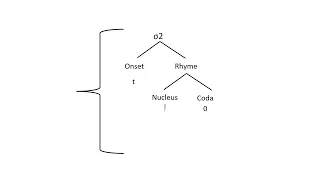
hi everybody today we're going to learn about syllabic consonants what is a syllabic consonant well it's a consonant that has the quality of a vowel that's why they also sometimes called vocalic consonants a syllabic consonant can therefore form a syllable on its own without the need of another real vowel sound let's do a quick revision of the three part structure of syllables in English remember a syllable always consists of a nucleus and that is a vowel sound it can have an onset made up of one or more consonant sounds and it could also have a
coder after the nucleus sometimes called the tail again this consists of one or more consonant sounds so usually the nucleus the peak of a syllable is a vowel sound a syllable cannot contain more than one vowel sound it's exactly one this is one of the rules if there's another vowel sound that's a new syllable it cannot consist of only consonant sounds so you have to have one vowel sound in there but sometimes the nucleus is a syllabic consonant so this is a new thing now so instead of a vowel we have a very special consonant
called a syllabic consonant now it's usually replacing the schwa sound and if you know anything about the schwa you know they only occur in unstressed syllables so a syllabic consonant replaces the schwa in an unstressed syllable now in that case the new syllabic consonant becomes the nucleus of the syllable in English syllabic consonants are either nasals or liquids only no other sounds really now we have three nasals in English and um now through the video you might not hear the difference between the last two but we'll go over them later and the liquids that can
form syllabic consonants let's have a look at some examples first of all syllabic um so here we have our first word Rhythm and I've given you the spelling on the left as well as the transcription from the IPA okay so you've got the phonemic transcription and this would be of standard British English here rhythm Rhythm can see two syllables and the last syllable has a schwa and the um one of our nasals now what happens sometimes when we say this word fast written um becomes Rhythm rhythm the schwa is really swallowed as I would call
it you can't really hear it anymore and the um has become a syllabic consonant and you can see this now in the transcription because the um has this little Dash underneath the sound symbol and that means this is a syllabic consonant I added an error just to make sure that you can see it because I know it's very small so we had Rhythm rhythm and here is another example a word bottom again ends in um there's a schwa and an um in the final syllable and if the schwa is dropped bottom can become button button
and again we have a syllabic consonant in the final syllable and the schwa has disappeared let's have a look at examples for syllabic and here we have the word button and if you think wait didn't we just have this wood no no that was the word bottom now we have the word button now but they sound very similar have a different meaning different spelling slightly different pronunciation so button again final syllable schwa and the nasal um but when we say it fast often it's realized as button button and the um is a syllabic consonant one
more example for example a word frighten again frightened we have a schwa and but said fast in fact I think I just said it this way already it can become a syllabic consonant so frighten frighten frighten it's really just one sound in the final syllable here is an example for syllabic now this is the same sound that we would have in the word sing anytime you have a spelling n g o n k in English it's not the same as um as in November but um formed at the back of the throat so syllabic for
example in the word broken so we have bro can but when we say it fast sometimes the can becomes broken so we have K and um right next to one another so you can see the um the nasal um as a November has changed into the um as an NG spelling and it's right next to the cut and the schwa has disappeared so broken becomes broken broken now this is a rare syllabic consonant it is maybe also more likely to occur if the following word starts with a k or a girl sound but it is
possible it doesn't always form but it could form yeah let's have a look at one of our liquids now so this is syllabic uh here we have another word bottle and again you can see the second syllable has the schwa and a lateral bottle but said quickly it is often realized as bottle bottle and it's really just a um a syllabic oh so here we have a syllabic consonant as well or another word bagel nice for breakfast or a snack in between so here we have Bay and then girl with a schwa but it's stressed
on the first syllable bagel and when we say it fast bagel bagel and last but not least a syllabic now this is important this one usually only occurs in rotate accents so that means mostly in American accents but not usually in British English accents here is an example for one of the words perhaps remember that means maybe so two syllables perhaps and the second syllable is stressed it was a bit unusual because all other examples so far we had the syllabic consonant at the end but sometimes you could have it at the beginning here in
the first syllable so per is not stressed contains a schwa perhaps can become props perhaps I know it sounds strange when you say it on its own you probably think I don't think that's how you pronounce it well it does sound like this when you hear it within a sentence and people are in conversation and they speak fast perhaps can become perhaps props if you don't believe me put this word into you glitch select American English and see all the examples you get and I bet you get quite a few where perhaps is realized in
this way and we have a syllabic sound now you might ask yourself can one word contain several syllabic consonants and the answer is yes here are just two examples but you can find many words where that is the case so for example we've got the word national again I've given you sort of the standard pronunciation so Nash and a national and if you say it fast the schwas in the last two syllables disappear in National becomes National National [Music] and again second example veteran here if we say it fast the two schwas are dropped again
and it's just veteran veteran okay I hope this has helped you to learn more about syllabic consonants can you think of some more examples with words that contain more than one syllabic consonant you can put them in the chat and of course if you've got any questions just leave them in the comments below and I'll get back to you