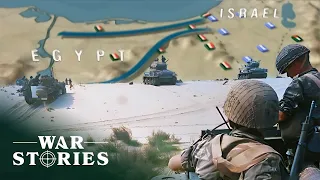
on May 14th 1948 the state of Israel declared its independence the following day a coalition of five neighboring Arab Nations invaded it they had every Advantage more soldiers more weapons and greater resources it should have been a Swift and decisive victory for the Arabs but Israel survived the attack and even expanded its territory the Arabs were unable to leverage their advantages on the battlefield this also happened in the early 1980s when Libya equipped with tanks aircraft and modern Weaponry invaded Chad an extremely poor Nation defended by little more than desert Nomads and Toyota pickup trucks
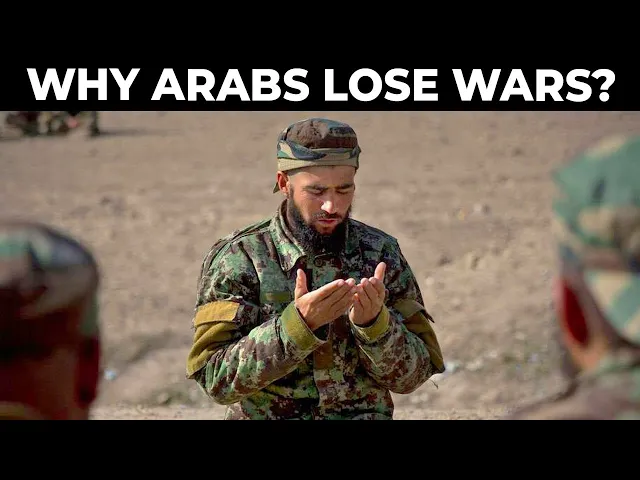
on paper Chad should have been no match for Arab military power yet after 10 years of fighting Gaddafi's forces were humiliated and expelled you may be wondering how a newborn State like Israel surrounded by enemies managed to defeat a coalition with enormous military resources and our regional power like Libya could fail so catastrophically against a country as impoverished and underresourced as Chad in today's video we'll explain why Arab armed forces are so ineffective in Warfare since the end of World War II Arab armed forces have consistently underperformed compared to their potential they have lost nearly
every major conflict even when traditional factors suggested they should have won and when they did win their achievements were modest despite having significant advantages in numbers technology surprise and Firepower Arab forces repeat the same patterns in war after War their soldiers do not understand how to operate or maintain their Weaponry their generals are incompetent and lack Direction and Junior officers are passive inflexible and unable to respond to rapid changes on the battlefield understanding why this happens is not simple as these issues stem from multiple causes however the first thing you need to know about the
Arab world is that these countries never truly industrialized this is critical because the wars of the 20th and early 21st centuries were industrial era Wars when we think about military power and wonder which forces are the strongest we focus on their weapons the quantity variety and quality of Weaponry ultimately determine military strength thus one of the critical elements of military Effectiveness during industrial era Wars was how well soldiers manage their weapons since indust rization never occurred in these countries there are many soldiers who lack the familiarity with Machinery that soldiers from other countries possess especially
with Advanced weapons but beyond the lack of industrialization there is a cultural factor that prevents Arabs from being competent in operating and maintaining their Weaponry this factor is the minimal technical education provided in the military educational institutions of Arab countries in an era where technology plays a crucial role in milit Ary power the lack of programs promoting technical learning limit soldiers ability to operate and maintain Advanced Equipment a clear example is the Iraqi forces during the Gulf War Between 1990 and 1991 these forces had modern Weaponry such as t72 tanks and scud missile systems but
they frequently face failures due to maintenance problems logistical issues and misuse of equipment all stemming from inadequate Technical Training while Western armies invest in specialized Technical Training Arab armies rely on foreign Personnel or contractors to maintain their equipment this creates chronic dependence and limits their ability to operate independently a second factor that partly explains the problems of Arab Armed Forces is the constant conflict between autocratic governments and Military leadership this politicization of their Armed Forces has had a massive impact on the poor performance of strategic leadership and the organization of Arab armies Arab Kings and
dictate often meddle too much in military Affairs political considerations frequently outweigh military ones and the challenges faced by Arab generals are almost always a product of politics to understand this you must know that the Arab world is dominated by autocracies deeply afraid of being overthrown by their military forces and with good reason many of these autocrats are themselves generals who overthrew their predecessors as a result these autocracies tend to view their Armed Forces with great distrust and take measures that weaken them one example is the selection of generals where loyalty is often prioritized over competence
the truth is that many Arab armed forces are designed to defend regimes not Nations military generals are often close relatives friends or schoolmates of the top political leaders this of course makes Arab officers completely inev they are not the best they are simply the most trusted as if that weren't enough these autograph s tend to micromanage their military forces to ensure they do nothing that the regime does not approve of this creates bizarre and complex command and control structures that make it difficult for these forces to overthrow their leaders but also makes it difficult to
fight and for generals to do their jobs effectively one clear example of this is Syria before the yam Kapur War Syria massively expanded his military and had enough brigades to fill about 10 divisions however although president Haz all Assad needed 10 divisions he could only find five people he trusted to command a division as a result he entered the yam Kapur war with only five divisional commanders but assigned all these brigades under them this made each division far too large creating all kinds of problems for these divisional commanders as they tried to manage forces that
were too big for their systems to handle this politicization of Arab armies is ultimately a cultural issue to understand this we must remember that Arabs have historically organized organized themselves around highly hierarchal closed family Clans led by a patriarch in these Clans everyone from women to adult sons owes obedience and deference to the patriarch in Arab military structures the senior Commander acts as a patriarch his decisions are not to be questioned and loyalty is valued more than competence in other words Arab culture is ultimately the primary factor explaining the performance of their armies this is
not exclusive to Arabs all Armed Forces fight in ways that reflect how their societies function Israelis fight using advanced technology and always with the concern that their population may suffer too many casualties against Arab adversaries who have much larger populations Americans fight using high technology too but decentralizing decision-making and combining powerful Logistics with their superiority the Russians for their parts fight by accepting their technological inferiority and compensating with massive amounts of Weaponry troops and artillery but what about the Arabs how do the Arabs fight how does Arab culture shape the way these armies conduct Warfare
we have already covered some issues low industrialization reinforced by poor technical education rooted in their culture causes Arab soldiers to struggle with operating and maintaining their Weaponry a patriarchal culture leads political leaders to prefer loyal generals over competent ones and to micromanage every aspect of warfare but the most important point we have yet to explore is how Arab culture explains the poor performance of Junior officers this is the key reason why Arab armed forces are so weak in every war against every enemy and no matter how much effort was made to improve it Arab Junior
officers and non-commissioned officers or ncos showed little to no ability to innovate they failed to take the initiative act aggressively respond to Battlefield chaos or seize fleeting opportunities this problem ultimately boils down to hierarchy and structure every society has hierarchies and structures they are Hallmarks of civilization but the problem Arabs face is that industrial era Warfare requires an ascending hierarchal organization from the bottom up officers must issue Mission oriented orders such as move in this direction or take that hill and then allow their subordinates junior officers and ncos to figure out how to execute those
orders to win industrial era Wars you must Excel from the bottom up your Junior officers and ncos must be formidable they must be flexible capable of assuming responsibilities and able to make decisions on the battlefield but Arab armies operate under a culture that Demands a hierarchy where all orders flow from the top down those at the bottom are not expected to think for themselves or make decisions they wait for orders from above and if those orders do not come they remain idle taking no initiative while Arab Junior officers may be well trained in the technical
aspects of of their weapons and tactical knowledge they are not trained in leadership they are not prepared to take the initiative or to offer original Concepts or new ideas and this is the worst way to combat Modern Warfare Arab armies are structured around a sharply stratified class hierarchy bordering on a cast system where most Arab officers have little to no respect for their soldiers moreover in general there is no functional NCO core to bridge the gap between officers and soldiers and mitigate these differences with few exceptions ncos and Arab militaries are treated with disdain by
officers so without the cohesion provided by ncos and with soldiers distrusting their officers it's easy to understand why Arab military units tend to disintegrate under the stress of combat this lack of internal cohesion is further exacerbated by tribal religious and National divisions that destroy the ability of Arab Armed Forces to operate as effective units Arab societies are deeply shaped by tribal and Clan structures that often overlap with the formal structures of the state this translates into primary loyalty to the family Clan or tribe rather than the military unit furthermore religious diversity within the Arab world
also contributes to a lack of cohesion tensions between sunnis Shiites and other religious groups often create internal conflicts that undermine integration and morale within the Armed Forces these internal divisions hinder coordination Foster mistrust between units and weaken soldiers morale leading to desertions and an inability to carry out joint operations effectively man Forman a Jordanian Soldier can be as capable as an Israeli one but an Israeli Battalion is vastly superior to a Jordanian Battalion because it has the coordination necessary to conduct complex operations a good example is the six- day war in June 1967 Jordanian Egyptian
Iraqi and Syrian forces operated in complete disar allowing Israeli forces despite being outnumbered to achieve a decisive victory in just a few days additionally we must remember that Islam omnipresent in all Arab countries has reinforced the cultural framework that shapes the Arab world it has done so through a fundamental concept tradition what is good and legitimate is tradition this makes it harder than in other armies to adopt foreign and innovative ideas and to be flexible on the battlefield foreign Arab offic drawing attention to oneself as someone Innovative or prone to making unilateral decisions is a
recipe for trouble it is preferable to take the safe route of being identified as hardworking and loyal and above all compliant moreover in many predominant interpretations of Islam in the Arab world there is a strong belief in predestination this fatalistic Outlook can foster an attitude of resignation in combat defeats or failures are often perceived as pre-ordained rather than as results of tactical or strategic errors in other words many believe that whether they win or lose is entirely due to all's will this perspective contrasts with the Western mindset which emphasizes control over circumstances through planning and
Innovation another important aspect of Arab culture is that its educational system is based on a Model that prioritizes rope memorization over critical thinking or problem solving skills this is reflected in a rigid approach to teaching where students are trained to accept what they are talking without questioning it while this method can effectively transmit basic knowledge it lacks the flexibility needed to Foster skills such as Innovation adaptability and autonomy skills essential in both civilian life and Modern Combat Arab officers often have a phenomenal ability to memorize large amounts of knowledge but this type of education reduces
their capacity for reasoning or conducting analysis based on general principles the consequence of this cultural framework is that every Arab sergeant D Colonel occupies a position of near absolute authority to which subordinates must submit without question just as they would submit to the patriarch of their family these subordinates will not refuse to follow orders from their Superior and will resign themselves to waiting for instructions this is why Arab Junior officers are passive and always need their Superior officers to tell them exactly what to do while this might not seem particularly problematic it has disastrous consequences
in battle because they are in capable of taking the initiative or seizing opportunities that present themselves a junior officer might see a tactical opportunity but if Communications with their Superior are unavailable they will not act on it furthermore each level of the hierarchy being all powerful within its domain tends to hoard information and use it to gain Prestige with its superiors for example if I know I'm a skilled maintenance officer I will avoid sharing my knowledge or training subordinates in maintenance to ensure my Superior remains dependent on me this of course reinforces the maintenance problems
with Weaponry that we described at the beginning of the video as military equipment maintenance relies on repairs at the lowest levels which require delegation of authority and knowledge these structures and hierarchies within Arab Armed Forces become a double-edged sword senior commanders encourage subordinates to create monopolies on information and key skills which are not shared with others ultimately this weakens the structure of the Armed Forces additionally there's very little cross trining between different roles within units for example in a tank crew the Gunners loaders and drivers may be highly competent in their specific tasks but are
not trained to cover for one another in case of a casualty they do not understand each other's roles which undermines the unit's performance this hierarchal rigidity in Arab armies also leads to situations where realities are either exaggerated or downplayed in other words commanders are not given real information but are told what is convenient senior leadership often receives false information created through exaggerations or minimizations for instance during the yam kaper war in 1973 the Egyptians were preparing to launch an assault on Israel but the Egyptian general staff knew their troops were fabricating reports to obtain reliable
information they intercepted Israeli Communications which were broadcasting their reports openly using this intelligence they organized an operation that surprised and defeated the Israeli Army during the crossing of the Suz Canal this demonstrated that Arabs could execute limited operations meticulously rehearsed with clear and rigid orders the problem came afterward when after the successful Crossing they did not know what to do next due to their inflexibility allowing Israel to seize the initiative and defeat them as a result you might think Israel prevailed because it had more economic and technological resources but there are many more examples between
1978 and 1987 a war po pitted Chad a desperately poor country that is essentially a vast desert against Libya at the time Libya led by muamar Gaddafi had oil vast amounts of money and modern Weaponry a true Regional power back then Libya fought by relying on a series of bases or fortified points using tanks to advance chadians who initially lacked anti-tank Weaponry face this as a result the libyans easily penetrated deep into Chad so what do we know about the Arab way of fighting they lack initiative are inflexible and have excessive respect for hierarchy and
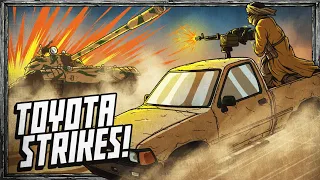
the chain of command all of this led to situations where chadians repeatedly defeated the libyans eventually forcing them to sign peace and withdraw entirely from northern Chad the truth is chadians also fight in line with their culture much like their nomadic ancestors fought equipped with camels a century ago they fight with large Columns of vehicles loaded with supplies to survive in the desert aiming to surprise the enemy by concentrating attacks on a single Target to confront Libya the chadians would gather large groups of Toyota pickup trucks in one Desert location in advance on Libyan fortified
bases bombarding them with cannons and machine guns even when these bases were defended by Libyan tanks the chadians managed to defeat an army with far more money and weaponry through Superior tactical flexibility and exploiting the excessive rigidity of the libyans they humiliated Gaddafi's Army within a decade another good example is Morocco in the 1980s Morocco was forced to construct a 2700 km long wall and invest a significant portion of its GDP in defense to counter the swiis desert Nomads armed with little more than vehicles and a few tanks the large military Columns of the swiis
and the vast expanse of the western Sahara desert clashed with Morocco's rigid military tactics Morocco had to adopt a strategy that suited its culture constructing a massive defensive line with hundreds of thousands of soldiers minefields and radar systems the famous Moroccan Western Sahara wall stands as a monument to the Tactical inflexibility of Arab forces at the same time it highlights one of the traits that in some cases makes Arabs formidable adversaries Arabs generally demonstrate an extraordinary determination to Prevail this willpower the Relentless drive to defeat the enemy achieve objectives restart the war and endure heavy
casualties is significant makes them opponents willing to re-enter the fight even after multiple defeats this determination explains why certain exceptions exist among Arab combatants those who deviate from strict cultural norms and Military contexts can become effective Fighters This is why non-state actors or Insurgent groups like Hezbollah and Isis have performed better than traditional Arab armed forces in recent conflicts these groups operate with a cellular command structure that requires independent and flexible tactical Commanders it's important to note that these same set of issues that have hampered the performance of Arab Armed Forces has also stifled their
Economic Development when you look at non-military organizations in the Arab world you see the same problems over and over again this reflects the way Arab societies have historically organized themselves it's not that there aren't people in the Arab world who can think for themselves that's not true there are many brilliant intelligent and Innovative individuals but often these people are not in in the right positions to leverage their abilities they are not promoted to the most critical roles however the Arab world is slowly changing it is adapting as circumstances evolve a good example is education where
more and more people demand critical thinking different curricula and more flexible and Innovative methods of learning many Arabs are sending their children abroad to study in hopes of achieving this some Arab countries are even starting to import teachers from other regions to change their teaching methods for 70 years there has been a significant mismatch between the skills produced by Arab society and culture and the skills required for industrial era Warfare and this has been the root problem for the armies of the Arab world but we don't know what the future holds we may see a
different Arab Society emerge and with it a different kind of War One based on knowledge rather than industrialization this different Arab Society might produce new skills that are better suited to the knowledge-based wars of the future but what do you think will Arab Armed Forces continue to underperform or will cultural and technological changes transform them into Victors in the wars of the future we'd love to hear your thoughts so leave your comments below and if you enjoyed this video be sure to watch the next one