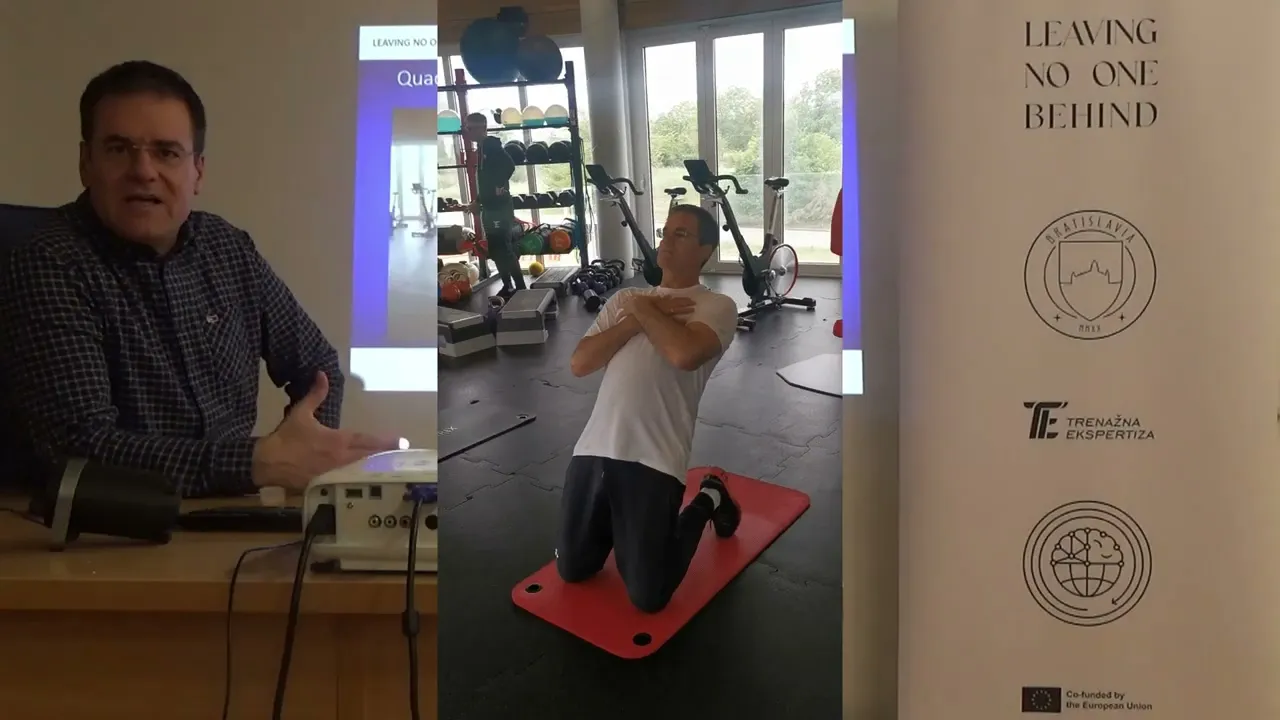
hi nice to see you again we have another another lecture considering uh um some new trends in warm up procedures and today today lecture is very um I think interesting and let's say it's a Hot Topic in in in modern training Theory and training practices and today today lecture is called isometric warmup uh tendon health and Beyond you remember maybe that last couple of times we were speaking of different um ways of uh dealing with warm-up procedures and this is one of the most interesting thing nowadays when we consider when we consider warmup so so
let's start in 10 to 15 minutes I will try to explain some some interesting details considering considering these new new trends first first of all let's just uh in short not notice explain what the isometric means famous Nobel Prize winner archal Vivian Hill did some research 120 years ago and based on This research we we now know about his well famous force velocity Hill curve and while studying um muscle contractions archal vilian Hills St stated that uh active musculature often often maintains a constant muscle length during everyday's activities so even he 120 years ago stated
that that in many cases during everyday activities we we have specific kind of muscle contraction that is called isometric muscle contractions and by the definition isometric contraction is a muscle contraction in which there is no change in the angle of the joint involved in the muscle contraction so in another words in other words the length of the muscle does not change during this these contractions and those initial experiments that were done by Aral VI and Hill mostly were dealing with isometric or isotronic muscle contractions so let's fast forward a little bit for a couple of
decades when when we uh read a little bit about uh some new trends in 50s just after the second World War World War we could see that isometric Contra contractions were very popular at the time uh the the the main reason why isometric contractions were very popular were because some of the seminal studies published in mid-50s were stated stated uh as a results of those studies they stated that isometric contractions are very effective in increasing in increasing muscle strength for example this semal studies said that once a day 6 seconds of isometric contractions with 2/3
of Maximum uh of one repetition maximum increases maximum strength by 5% per week let's be honest those those studies were were dealing with relatively untrained subjects but either way imagine just 6 seconds of 2/3 of Maximum contractions per muscle group per day could increase the muscle strength for 5% per week so those phenomenal results were presented in those articles and based of those findings in in the years to come those isometric strength training uh became very very famous and very well known and and considered as a gold standard of of strength training at a time
so a strong isometric contraction is the stimulus which makes a muscle increase its mass and strength those were the findings of those couple of researches and it was so popular that even some of the well famous actors or or or but also athletes at the time let's say Bruce Lee was a regular training uh regular training procedure in training practice for example uh Bruce Lea himself trained almost exclusively isometric training isometric Str training at the time he had some seven or eight isometric drills that he uh himself practices every day and that was his daily
routine and he was very famous at the time for phenomenal physique so Bruce Lee is one of the main of the philosophers at the time there are many of his very famous quotes personally I like two of them the successful Warrior is the average man with laser like Focus this is something that I regular told to my athletes or athletes to come I think that is very important uh uh this attitude this mental mental attitude and and his second very famous quote is as as as um as as part as I can tell is be
happy but never satisfied so so at during the 50s what I wanted to tell you that during the 50s those isometric training was very very popular but something happened in in in years to come after the 50s as as the number of researches uh began to grow uh uh um the the researches that that were later published and were dealing with isometric trainings of course revealed uh some not so beautiful things let's say like this about about isometric so a few not so great features of isometric training have caused that that uh this isometric training
Fall Into Obscurity for example the one of the wellknown drawbacks of isometric training and we'll discuss a little bit later about this is angle specific adaptation so when you train isometric isometrically the the the gains that you gain considering strength increases and and and muscle mass the the muscle strength increases are mainly in the angle that you trained so so if you train 90° for example like bicep curl the gains that you you gain during couple of weeks are mainly in this specific angles and few degrees plus and minus and as you go further uh
those those gains decreased or or are negligible so that is one of the main drawbacks of isometric training so the effectiveness of isometric training in fast or dynamic movement is significantly less or significantly weaker than in concentric training again and that was it and and soon after the 50s in the mid-60s when we look at the history of sport training the the there were fewer and fewer um um people that contined to train isometric training and then for several decade nothing happens nothing happens but then suddenly in the second decade of 21st century we had
something like Return of the Jedi then this is why I put this pi on the slide because suddenly we have we have um new trend uh isometric training uh rise from the Deb let's say like this and and suddenly when you look at the Google and you read the articles and you read the practic what everyday practices uh is consisted of suddenly there is uh uh there is again isometric training as a as a some hot Hot Topic why so generally we can say that there is a rebirth of isometric training and how come well
most mostly because of injury prevention in in two specific domains we have isometric training nowadays core stability and this is as as soon as the turn of the 21st century core stability becomes the become the Hot Topic in sports training generally and it is consisted basically mainly of isometrically training core musculature we will not discuss in details about this because I think that the second topic is the second reason why isometric uh training is so popular again now dayss as it was 50s in the 20th century is the tendon health issue basically basically uh we
can um do something with isometric training to improve the tendon health and when you consider nowadays injuries in all colle team sports and particularly in football many uh there is a high percentage of tendon injuries um and and the incidence of tendon injuries is increasing so so the health issue becomes uh more and more important and this is where isometric training has has its particular uh particular use so we will not discuss now we will not discuss today uh core stability but only uh tendon health and when we consider tendinopathies we can say that isometric
training is a very very powerful tool tool in in several different ways first of all in several seminal studies uh in the past 10 to 15 years said that isometric training can significantly reduce tendon pain accurately so some of the some of the studies I presented here but generally this is maybe the most famous study by Eon and and Associate this Lor mer mosle is also an excellent guy he's dealing with the with the neurom matrixes of pain it's the it is the subject of his research but this particular study found that when you when
you are conducting five times 45 seconds with high intensity at least 70% of Maximum voluntary uh contraction it seems that this specific uh uh training pattern of 5 times 45 seconds with 70% of Maximum voluntary inte uh um voluntary contraction reduces the feeling of pain in all subject presented in this study so and moreover the effect lasts for at least 45 minutes so this and couple of other studied studies found very important thing if you have some some tendon issue if you have some tendinopathy and you have a problem problem uh training regularly it seems
that short isometric uh load during the warm up or in preactivation can significantly reduce pain and and enable uh this specific atlet to train to train regularly so what can be said uh generally what can be said when you read all of those articles we can say that isometric during the warmup could be considered as some kind of non-steroid anti-inflammatory drug so so it's like taking eoin or like taking volaran Dien or something like this so when we can say something like isometrics are dienic for for uh for pain also also several other studies found
that isometric training per se can improve tendon Health significantly so uh how how this happened what is the mechanisms of of isometric training improving tum tth well basically it increases the stiffness of the tenton but also changes the collagen structure of the tenton and those are brilliant articles published by Keith bar and and Associates and several other research groups we will not mention all of them uh now but basically what can what these findings told us that short amount of training session not more than 10 minutes not more than 10 minutes and uh those training
session could be repeated every 6 hours if you if you load the tendon in in less than 10 minutes with high intensity and we will see the the the training regim and that they recommended and the protocol is like this five times 5 seconds to change the quality of the good collagen or 5 times 30 seconds to change bad collagen so if if you have tendinopathy if you have tendinopathy you can do five times 30 seconds with 2 minutes rest or even less rest with high intensity the load must be over 80% it and it
produces through this Scholastic property of the tendon it produces one magnificent effect it can change it can change the bad collagen structure if you don't have tendonopathy if you don't have tendon problems but you want to improve the tendon Health you can do even shorter period uh uh shorter exercise five times 5 seconds but above 90% of of maximally vol voluntary uh contraction and you can change in in couple of weeks of course not in one training session but me but in couple of weeks you can significantly improve the collagen the collagen health and the
tendal health per se so the only the only mandatory thing is to have at least 80% of Maximum maximum voluntary contraction and on this slide you can see I will not explain in details the the mechanisms but it's it's great it's it's called hysteresis or or or or uh as the time with high load of the T tendon increases there is one effect that you that uh good tendon collagen decreases decreases its stiffness and the force starts to be uh conducted through bad collagen region and when the force is conducted through bad collagen region in
the tenton then this is pro signaling for protein synthesis of new collagen in the bed structure of the T tendinopathies it's it's one marvelous mechanisms but we will not go further into details also not just considering tendon Health isometric seems to be very important per se for improving performance most likely you know about cats or I don't know how to pronounce it in in in in in his original language but take home messages you know about three phasic training every movement in in every athlete in the world is consisted of three uh three three phases
eccentric phases short isometric phase and uh relatively short concentric phase and for every athlete it is very important to have high level of isometric uh strength in this specific joint angle because increasing the level of isometric strength will increase the power production in concentric in concentric phase so the net effect of the concentric phase depends a lot of The Eccentric and particularly on isometric strength level in this specific joint angle so increasing the isometric strength will increase overall performance in every movement that consisted of eccentric isometric and concentric part of movement and basically those are
almost all of the movements that all of the athletes produces conducted all of the time so uh increases in isometric strength leads to several important things it increased it will increase activation of water units it will increase the discharge frequency of motor neurons and generally the consequence is that greater that atlete will possess greater absorption of eccentric energy and transformation into concentric part of the energy and generally greater power power output so so what can we say there are some also additional benefits of Ecentric training it enables maximum activation of motor neurons for example which
is good for preactivation isometric training is very good isometric uh load is very good if you want to induce post activation potentiation effect or to induce the higher power input uh outputs for the for the um Dynamic movement patterns just after after isometric training so it is very good for the development of power parameters and significant significantly increases time under tension so generally isometric training is very potent stimulus for power for strength development overall what is uh why it is interesting uh to us this isometric training well it has a great benefit for overall muscle
strength muscle power production and it is not energy demanding so so significantly more economical than damic mode of operation so in the period of congested uh of congested gains you you have great opportunity to to preserve strength level with without doing dynamic regular strength training but producing uh conductor just isometric just isometric strength or during warmup it is a simple and effective way to improve tendon health and ACC accurately and chronically increase power performance so isometric training is let's say a spice in the warm-up procedures that can increase both health of the athletes and both
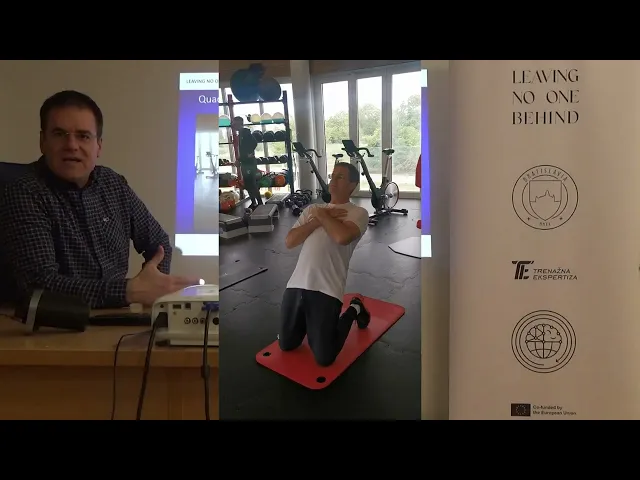
performance of the athletes so I will present you just a few few drills for the specific muscle groups let's say for the quad this is the first drill reverse Nordic you can produce it 5 Time 5 seconds or 5 time 30 seconds this is the first drill or you can do well-known wall seit drill you see isometric it's very potent stimulus or another quad D split sad with also gastrous involvement just a couple of minutes one of those drills will improve quad strength heavily hamstring drills long lever hamstring drills if you practice with a long
lever then the effects effects are are much higher or single leg deadlift but isometrically loading the hamstrings and aductor drills this is the mistake those are aductor drills you see harly squeeze the ball or Copenhagen drill or some variation of Copenhagen drill very good for aductor health so just a few minutes one one of the drills for each muscle group will significantly improve performance but also significantly decrease the risk of having having tendonopathy problems in top level athletes or recreational athletes so Embrace isometric and you most likely you will increase the chance to become the
Jedi thank you very much I hope it was interesting and hope to see you soon with the next with the next lecture