>>What would the world look like if everyone were aware of the stereotypes that they have and the biases that they have? When we talk about unconscious bias we're basically saying our worldview can exert an influence beyond our conscious awareness and it creates ambiguity. >>You go to an engineer who's built something extremely innovative and you say, Who do you think your user is?
This is where I have the most fun. My name is T. V.
Ramen. I led our work on Android accessability for 3 years. Write down everything that you think you know about your user with respect to abilities, inabilities, special abilities, disabilities.
Almost every assumption that you write down about this is the user I think I'm building for is questionable, because our various unconscious biases define the boundaries you're unwilling to expand. >>These biases, they're the shortcuts that our brain has created so that we can deal with the information that we process every single day. >>Right when we see anyone, whether we think about it or not we are implicitly, automatically making judgements about how warm and competant that person or thing is.
>>All humans need to make decisions. We fill in the blanks because our brains are wired to do that and we fill in the things we don't know with past experience. Oh, you pattern map to someone I think I should hire so I'm going to hire you versus this person because they didn't map, because I can't fill in the blank, because they don't look like me or they're not from my same background so I can't see how they're going to make the jump.
>>Every single person is great at things you may not expect but it's really hard for us to see that when we're so powerfully guided by things we expect to be true in the world. >>I grew up surrounded with this conversation about what you can't do and what you won't be able to do. My name's Enrico and I'm an autistic software engineer.
The first time I went through the performance review process I was asked for 5 strengths. It was the first time that I had ever been prompted to think in that way about myself and it was a life changing moment for me. >>When we are working in our day to day jobs we are still making judgements about the people around us, about the resumes we see, about the employess that we're trying to decide whether to put them on teams or not.
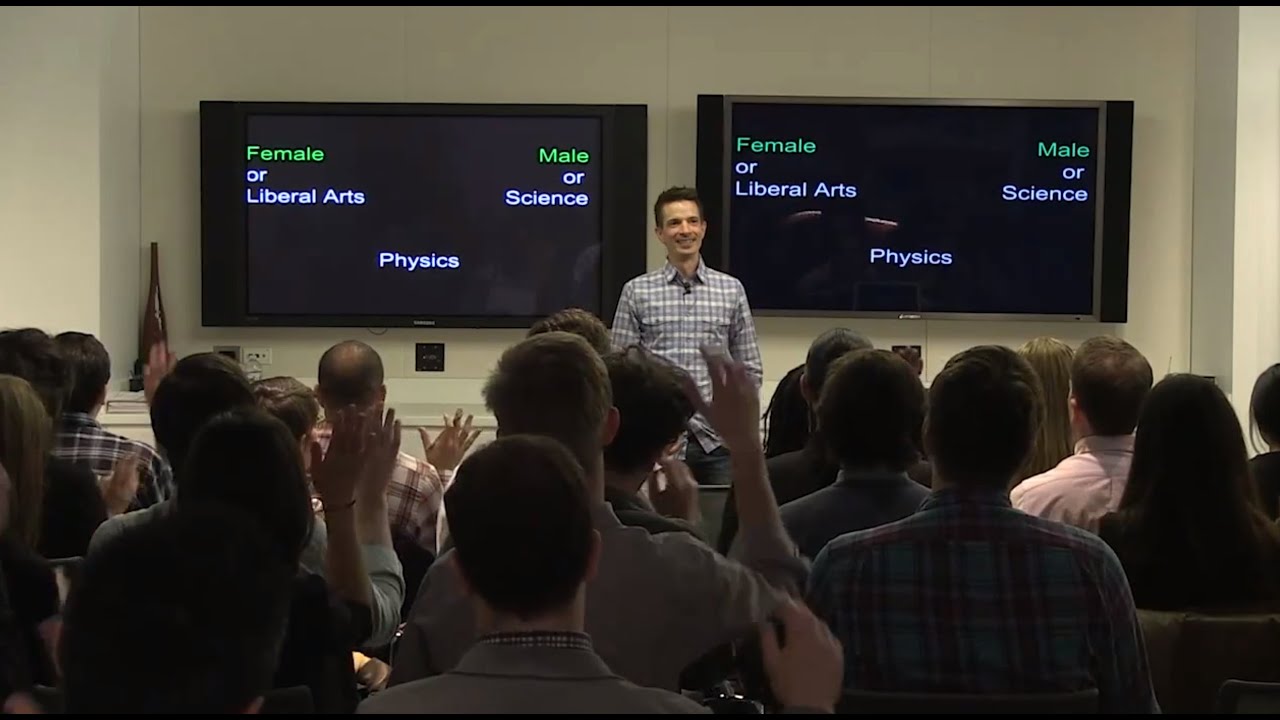
>>People are very wedded to the idea that that they can percieve something objectively and statistically they're wrong, but it's hard. You become attached to this idea that you can assess something by looking at it. >>These subtle assumptions we make about people can have lasting effects on who we're promoting, who we're hiring, who we're putting in leadership positions.
We have the responsibility to understand the assumptions that we make and understand the errors that we make. >>But it's not just for the collective good. If you take the time to understand more about this, There are things that you can implement for yourself that will help you develop as a leader and to do your job even better.
>>It made me realize how often I have a very strong belief that is simply incorrect. When I look at one of these evaluation situations I ask, How can I eliminate the sources of potential bias and leave just the data so that we can make better decisions. >>If you're not conscious of the biases that you have, you're just not contributing at the level that you could, and you're not innovating at the level that you could, and so your products won't be as good.
Your results won't be as good. >>When you think outside the box with respect to the assumptions you made about how someone will use this wonderful thing you've built and when you broaden that perspective as to who you change the world for you build something even bigger.