It's all about being intentional with your money, intentional with your expenses, intentional with knowing what's going on, intentional with helping other people, intentional with putting your money, employing your money, putting your money to work for you. Hey guys, it's Friday. It's payday.
What are you going to be doing today with your paycheck? What's the first thing that you do every single time you get paid? Let me know in the comments below.
Now, on this video, I'm going to share what I think you should be doing with your money every single time you get paid. And I'm going just tell you what I do every single time I get paid. My real payday routine.
Yes, I have a job. And yes, I get paid every 2 weeks, just like everybody else. This routine is the same payday routine I've been doing since I started my financial journey.
It's the same routine that I've done since I was broke that I do now. Look, the principles of it really don't change. So, what do I do?
Let's jump right into it. The first thing I do every single time I get paid is I make sure I know what I'm getting. Make sure I know exactly the amount that I'm supposed to be receiving.
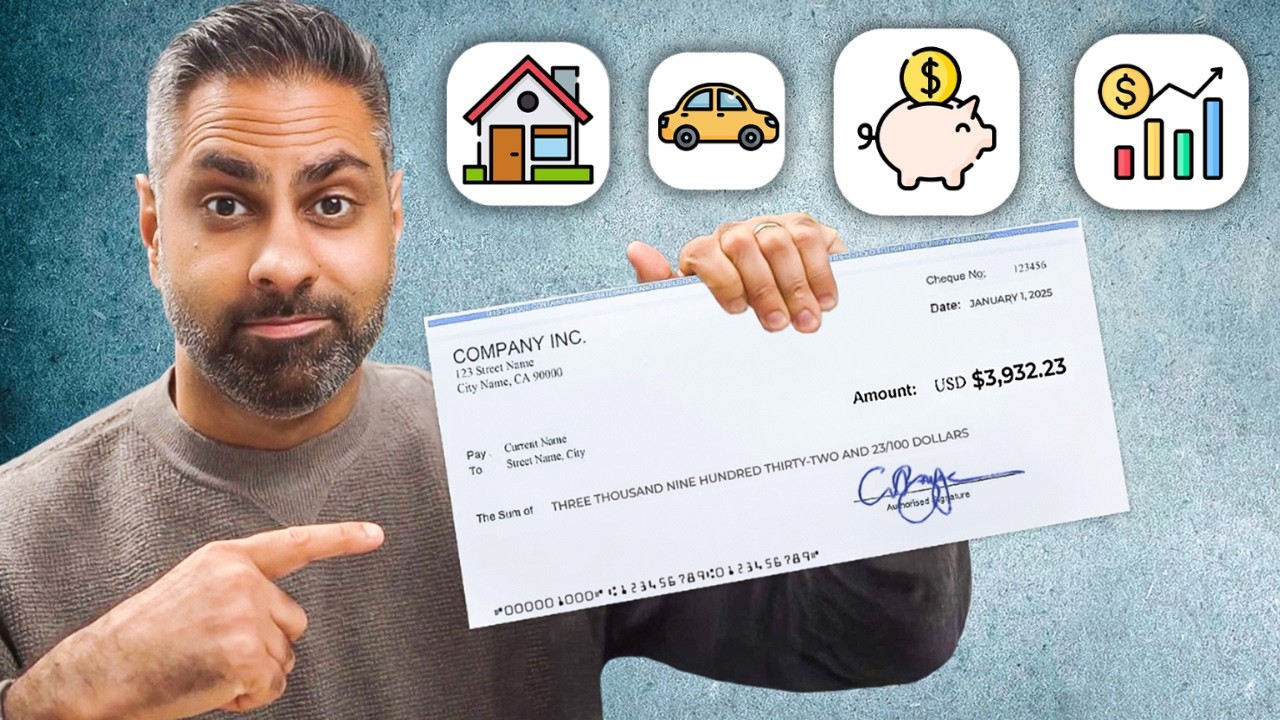
Guys, if you knew how much payroll really messed up a lot of paychecks, you'd be surprised. So whether you get a payub physically or you just check it online, which most of us do nowadays, you need to go over exactly what you're supposed to be paid every time you get paid and make sure you're being paid the right amount, right? Because on your paycheck or payub, they're going to tell you where everything is going to, where all your money is going to.
You want to know all that stuff. You want to know what are the federal taxes that you're paying, the state taxes, the city taxes, how much is going towards social security, how much is going towards Medicare, right? Like you need to know what that amount is and it's right there on your payub for you to know.
So I make it a point to know what that is and check it every single time I get paid. So to start, you got to get familiar with where your money is going to. And most people really don't have a clue about that, right?
Do you know your gross income? And do you know your net income every time you get paid? Like there's a lot of people that don't know that.
Now, the second thing I do every time I get paid is I refer to my budget, my written monthly zerobased budget that I have on a spreadsheet. I refer to it and I plug in my income, my net income into my budget. And it's a zerobased budget, which means pretty much all the money is spent on paper.
Now, what I like to do personally, I like to leave a little $25 cushion every time I get paid. Why? Because I like a little bitty cushion in case my calculations are off or wrong.
But for the most part, it's all spent on paper on the budget first. I take the income, net income from the payub, and I just plug it right into my budget. And that's on the income side of my budget.
Right? This is all about being organized and holding yourself accountable, right? And in terms of budgeting, I've done 390 straight monthly budgets in a row since about August of 1992.
It's kept me on track for the last 33 years. So, so I always recommend a budget. Now, you're going to find people on the internet and other places that say, you know, budget, you don't have to do a budget.
Nah, don't do a budget. Budgeting doesn't work. Listen, when you hear that, run the other direction from those people or from those gurus.
Look, if you don't track your expenses and manage the money that you have coming in, you're not going to be able to grow your money effectively and efficiently. So, that's the second thing I do. I plug in my net income, the amount I take home into my budget.
Now, the third thing that I do every time I get paid as a part of my payday or paycheck routine is I make sure that I've paid or I'm paying myself first from that money. Now, sometimes if you put money automatically towards a 401k, a 403b, or some thrift savings plan from your job, sometimes it'll come out automatically and your net pay will be a result after you've already put money towards paying yourself first. So, if that's the case, you just want to check your stub to make sure that you're paying yourself first.
But if that's not the case, you want to make sure as soon as you get some money, you put some money aside for the future you. That's straight off the top, straight off the rip, right? I don't want to play around about my future, my children's future, my grandchildren's future.
So, I always put something for that every time I get paid a check from anywhere. Now, the fourth thing I do in terms of my payday routine or paycheck routine is make sure all my needs are taken care of for two weeks, right? So, I do a what's called a like a split method budget.
I have income at the top and then I have two columns for expenses. one column of expenses for the first two weeks of the month and then another column for expenses for the second two weeks of the month. So, I make sure every time I get paid that the needs for the first two weeks or whatever two weeks we're dealing with is taken care of.
And then later on at the bottom of the list for the first two weeks and the bottom of the list for the second two weeks is wants and other things, miscellaneous stuff, but needs are at the top and they get paid first. whether that's rent, mortgage, utilities, food, all those things are towards the top of my expenses on my budget. So I make sure those things are covered, right?
So I arrange my budget in terms of wants first and needs second. So the fourth thing I do is handle those needs, the things I need to survive, to live. And by the way, since we're on the topic of budgets, I don't use a budgeting app.
I don't use a budgeting uh software or any type of budgeting templates, right? I make my own templates. I do a very, very simple budget in a Google spreadsheet.
It's my own template. Nothing fancy. I'm a regular dude.
I have a regular budget on a regular Google spreadsheet. No emojis. It's not colorcoded.
There's no stickers. There's no hearts. It's just really, really simple and plain, right?
So, people always ask, you know, what app do you use to budget? And I just don't use an app. I'm old school.
In my opinion, it doesn't take all that. You don't have to be fancy with a budget. just do it.
Now, the fifth thing I do every single time I get paid my paycheck routine is I make sure that I put near the top, right near the needs, I put I put some giving and some helping. Whether it's tithe, whether it's just helping out other people, but I put in some giving and some helping other people with money near the top of the budget. It's just the principle that I've been following and doing for the last about 24 or 25 years, right?
I learned a long time ago that you're not going to go broke by giving and helping other people with your money. You just don't go broke. Now, you got to be reasonable about that, right?
You can't take care of everybody else but not take care of home first. But at the same time, you budget in helping other people. You budget in giving some money.
And that way, it's not anything odd or different. And it doesn't matter how much you choose. But for me, that's what I've been doing for a long time.
And during that time, I've been on a financial journey to wealth. And guess what? Although I give tens of thousands of dollars away every single year, it hasn't hurt me.
I still eat and I still grow my wealth on top of it, right? The more you give in this world, the more you're going to get. So, it's just a habit and a practice that I activate in my life.
So, every single paycheck, there's some giving involved. Now, I'm not telling you what to do. I'm just telling you what I do.
Guys, if you're getting any value from this video, do me a favor. Smash the like button and most of all, share this video with someone who you know could use this valuable information. Also, feel free to drop me a comment below and let me know your thoughts.
Now, let's get back to the video. Now, the sixth thing I do every single time I get paid is I check the cushion that's left over after my needs on my budget. After all my needs are taken care of and I've done my budget, what is the amount that's left over from my income after I paid all my expenses?
Now, this is a very, very important amount of money because this is the money that you can do a lot of other things with, but you got to have that cushion. So for me, I take that extra little cushion that's left over and use that extra to make sure that I'm saving a little bit of money that goes above and beyond the investing that I did in terms of paying myself first. So if you don't have a fully funded emergency fund, you should be taking that cushion to build up your emergency fund or replenish it if you have to use some of your emergency fund or you take that extra cushion of money and you pay off any bad debt with it.
Now, for me, we don't really have any debt. We paid off our last debt really a couple of years ago, which was student loans. But if you have any of that bad debt laying around, you should be paying that off with that cushion of money or putting it towards your emergency fund.
Or you can put your money towards syncing funds if you don't already put your syncing funds into your budget. And when I say syncing funds, I mean things that you know are reoccurring every single year, every few months or every single year, like maybe your car insurance or maybe your homeowner association fees or Christmas gifts, whatever. Whatever you think you need to be putting your money towards because it's going to occur and happen every single year.
Maybe you can start putting that cushion towards it. Or some people like to take those things and put them in their budget and pay on a monthly. Totally up to you.
So what I do with my number six, because I don't have any bad debt, I have all my emergency fund fully funded. I have all of my syncing funds taken care of. So what I do with number six here is I put number six towards growing my money.
I do even more investing of the money, right? So I take my money and I put it to use and to work to go make more money. So, I'm investing extra money into my rental properties or extra money into ETFs, index funds, or individual stocks, or if there's a big ticket item coming up that I want, I save and put towards that.
But I do all that after I take care of the needs on the budget. That's with the cushion money that's left over. Notice it's all about being intentional with your money, intentional with your expenses, intentional with knowing what's going on, intentional with helping other people, intentional with putting your money, employing your money, putting your money to work for you, and being knowledgeable, having the information, knowing what's going on, being informed, being aware, being focused, and just being on point with the management of your personal finances.
Right? I don't care if your paycheck is $500 or $5,000. The better you manage that paycheck and that money, the more you'll ultimately have.
So, do things on purpose with money. It's a big part of it, right? I stopped letting the money bully me and push me around and I started pushing and bullying my money around.
Right? I believe in the power of tracking expenses and the power of controlling your spending. So, hey, that's what I do with my paycheck every single time I get paid.
This is my real payday routine. If you got value out of this quick video, do me a favor. Smash that like button below.
And share this video with somebody else who you think could use it. And drop me a comment below. I want to hear from you.
What do you do every single time you get paid? It's Friday. What are you doing with your paycheck?
Hey, the best person who's going to take care of that old you is the young you. Take care of people, but also take care of yourself because you're people, too.