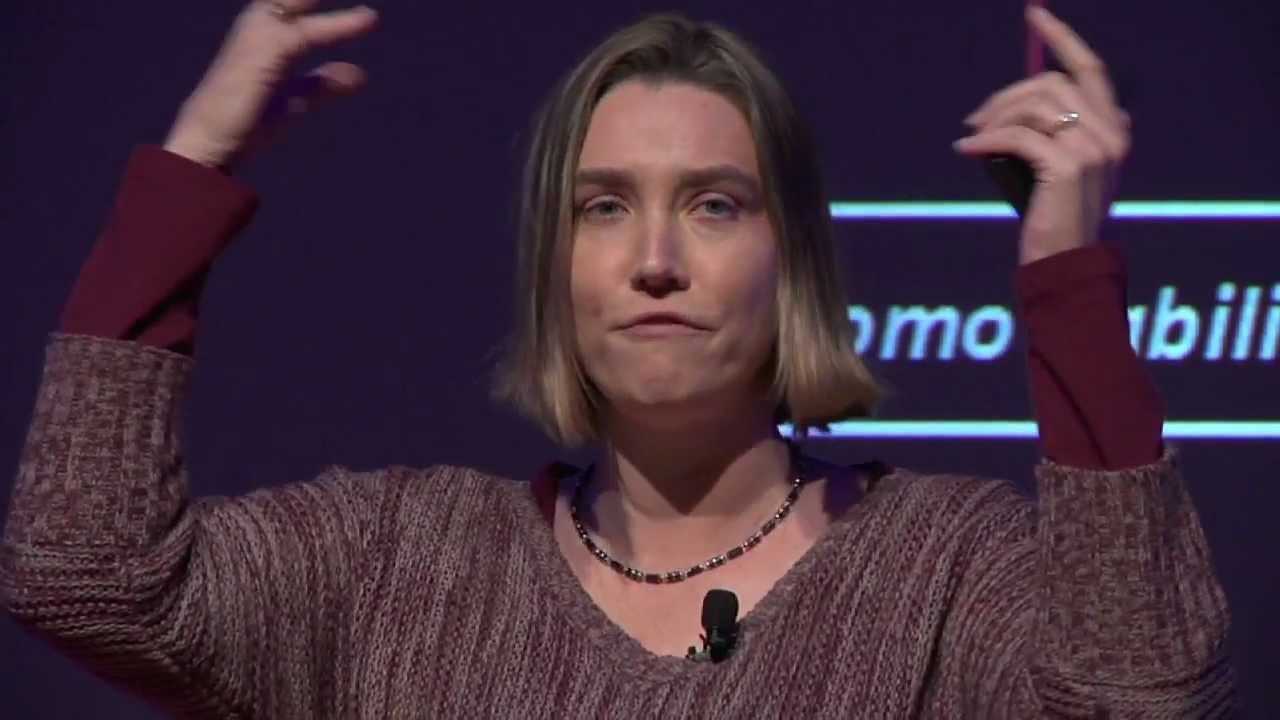
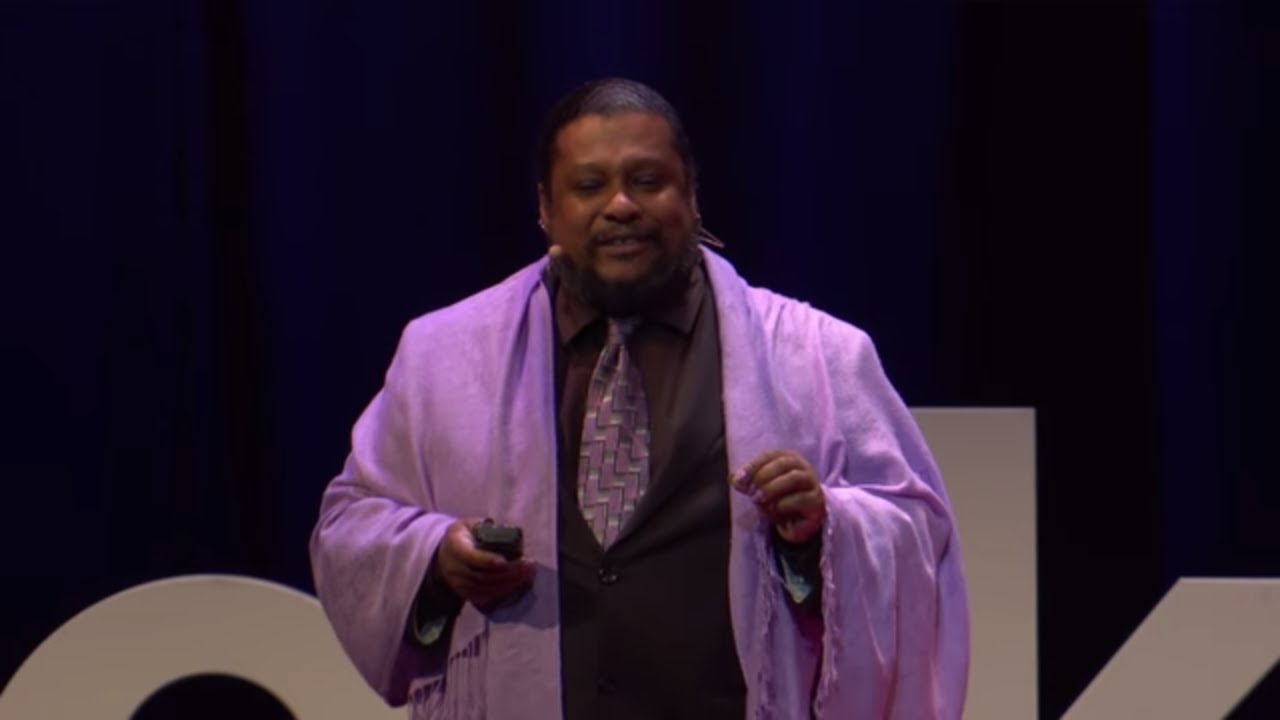
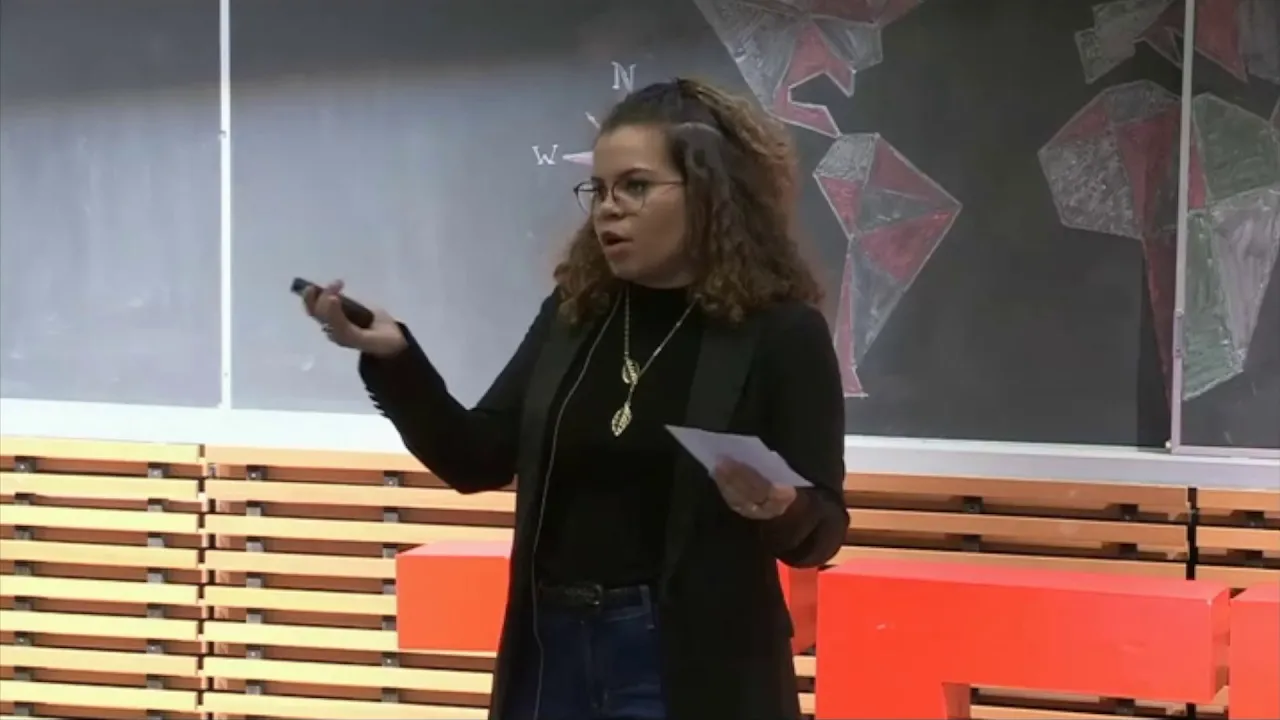
[Music] hey everyone so the room looks a lot bigger from the front so bear with me I'm a little bit nervous but um so my name is Ali Danna 'loudened and I'm a fourth year international student in the Faculty of land and food systems and I'm here to talk to you about climate justice so climate justice is the intersection between social justice and climate change and how the most marginalized communities all over the world both on a local and global level will be disproportionately impacted by a climate change so I'm a member of an organization
called love intersections so we're a group of queer hopeful Millennials who are also people of color who believe that storytelling is a powerful agent of change and we want to talk about these really sticky and difficult social justice issues through a lens of personal connection so I'm going to tell you a story so I'm from Honduras in the coast of Central America from a city called La Ceiba now a lot of people don't know where that is so I got you and I grew up on the coast of the Caribbean so a total caravan yeah
and it was like absolutely awesome growing up here I had the beach I had the mountains I was like a tropical Vancouver but on dudas is in a hurricane prone part of the world so I have definitely felt the impacts of climate change in my home country in 1999 Hurricane Mitch hit the coast of Honduras I was only about 4 or 5 years old at that point so I don't remember much but the first memory I ever had was fear because I didn't understand the severity of the situation I was only four so I didn't
know what a hurricane was or what the impacts of a hurricane would have on my home country and on my community I remember that my whole family was preparing for this hurricane we all went to go get groceries we want to go we got food water a bunch of batteries to make it through the hurricane and we all went to my grandmother's house because she had the biggest unsturdy estas so we were super prepared for this hurricane and my parent might found me especially my parents they kept telling me oh the eye of the hurricane
is coming soon the eye of the hurricane we need to be ready I had no idea what that meant so that night I had a dream that the eye of the hurricane was like this tornado instead of a hurricane because that's what I had imagined as a four year olds and the eye of the hurricane had like this snake eye and it had decided to personally torment my family and I so I imagined that the hurricane was just like out to get us so that's how I imagined the hurricane but here are some of the
impacts so this is an image of a fallen bridge there were about a hundred and sixty fallen bridges all over the country and two of those bridges fell in my home city in La Ceiba a fallen bridge isn't just a matter of faulty infrastructure its disconnecting communities at a time like this so imagine that your family that you're in the middle of this hurricane and your family is on one end of the city and you're in the other it's nineteen ninety-eight so there's not that much internet and you can't call people because the calls are
down so you can't go to the other side of the city and see if your family is okay to see if they're even alive at that point another impact was there was a lot of severe flooding so this is an image of the flooding in a rural area and one of the unforeseen consequences with this was disease so there was a spread of malaria and dengue and cholera and all of these illnesses can actually be fatal for children under the age of five altogether there were about 10,000 to 15,000 people who died from Hurricane Mitch
this makes hurricane Mitch the deadliest hurricane in the last 200 years and about 1 million people were displaced during this time as well this is a newspaper article that came out after the hurricane it says disaster and LeSabre and that's my home so there was about five billion dollars in infrastructure loss and just overall damage in the region and our president at that time Carlos Flores he reached out to the international community for aid and he said what took fifty years to build was destroyed in 72 hours it only took three days to devastate an
entire entry an entire region 60% of our population is under the poverty line so and most of these people are depend on agriculture for survival and as you can see in the period in the image before there was a lot of devastation due to flooding in rural areas and that's why we can't talk about the impacts of climate change without talking about privilege and at this point I'd also like to acknowledge my own privilege in the situation because my family was privileged enough to get food to get water and to have a house that wouldn't
fall down during the hurricane so it's super important to keep that in mind and the people who are mostly impacted by Hurricane Mitch or black communities indigenous communities and impoverished communities and that general rule applies everywhere in the world including countries like Canada the indigenous people all in Canada are disproportionately impacted by climate change and they are fighting back the idle no more movement is a movement for indigenous people to fight for their sovereignty to fight for their land and water rights they are at the forefront of the environmental protection movement and we have so
much to learn from them when it comes to living sustainably and in harmony with our with our environment they are fighting against major projects like the Kinder Morgan pipeline the Kidd the proposed Kinder Morgan pipeline route actually goes through indigenous territories and they are fighting super hard against the Kinder Morgan pipeline and we have so much to learn from them this is an image of the Atlantic of the 2017 Atlantic hurricane season and this is to keep in mind that this is happening all over the world the latest example of this was Puerto Rico and
they some parts of Puerto Rico still don't have electricity so let's keep in mind how big the scope of the problem is my story is just one of millions and my story is also one of privilege but the impacts of climate change are also being felt in our own backyard so this is the 2017 BC forest fires and they had devastating impacts all over the region especially in indigenous communities so it displaced about 65,000 people and it burned about 1.2 million hectares of land so it had a severe impact so how exactly are climate change
and social justice related so climate change will accentuate existing stressors in marginalized communities it'll deepen the struggle of those who are already struggling with issues like poverty and food and security who already have insecure housing and it's not to say that all of the world's problems are caused because of climate change but instead how these pre-existing conditions of inequality will interact with the severe impacts of climate change on these marginalized communities now let's take it back to Honduras as an example like I said about sixty percent of our population was under the poverty line Napa
at that time and many of these people were farmers in rural areas many of them lost their crop yield for the year because of all the flooding they didn't have enough to feed their families anymore and it caused a lot of displacement about 1 million people in the region and many of these people moved from rural areas to urban areas for survival so that they could make ends meet so they could have enough food to feed their families and enough safe drinking water but unfortunately a lot of urban areas were unable to accommodate for these
for this migration because there was already this existing poverty all over the country and because of the loss in infrastructure because of the hurricane so it was very difficult for urban areas to accommodate as well so imagine that you are a rural farmer in non-buddhist at this time and you're already struggling to make ends meet and then BAM you have a hurricane and then now suddenly you lost your crop yields one of your kids may have malaria and the hospital is flooded so you can't go there and you can't eat anymore so you have to
move migration is the only option so migration so climate change and social justice have a bit of a mutually reinforcing relationship so you already have these these pre-existing conditions that make you vulnerable to impacts like climate change and then when you have a hurricane for example that makes you even more vulnerable than you were to begin with so it accentuates the existing conditions you had before and this can also be seen on a global level so these are the top 10 per capita emitters for greenhouse gases as you can see Canada and the US are
at the top now this mark depicts the climate change vulnerability index for 2012 so it's a little outdated still but still applicable and you can see that the countries who are at who have the light green area are the ones who are at lowest risk for climate change vulnerability and the ones who are in dark blue are the ones who are at extreme risk for climate change vulnerability and now I have put the top 5 emitters for per capita emissions and greenhouse gases and it's not a perfect relationship but you can definitely see the trend
and I think that it's a bit of a cruel reality to realize that the countries who are at lowest risk for climate change vulnerability full nerve ulnar ability and who have actually benefited from fossil fuel extraction are the ones who are at least vulnerable to the impacts of climate change and the countries who are least responsible for climate change are the ones who bear the heavy burden a lot of parts of the world will actually become uninhabitable for human beings especially in consideration with the existing conditions the social social economic conditions that they're already suffering
from in combination with the impacts of climate change which heightens their vulnerability so they will have no choice often but to leave if you think of things like the certification or sea level rise or increases in temperature which make it much harder for farmers to farm and like maintain their families so sort of the only form of survival and the only form of adaptation to climate change for some people is migration which brings me to climate migrants so climate migration and internally displaced peoples will be an increasingly important topic in the future there's going to
be more and more people moving around the world moving around our countries even in order to adapt to climate change to this changing environment six for you since 2008 about twenty six point four million people per year have been displaced by natural disasters if you do the math that's a little bit less than one person per second and if I finish my TED talk in exactly 15 minutes that's about 900 people that will have been displaced by natural disasters at that time and currently there is a policy vacuum in the international community to address the
issues regarding climate migration at the moment there is no international agreement on what to will be done regarding climate migration and we need to do something about this because clearly the issue is important and it's happening right now so what now so this can be a really depressing issue to think about because it's not just climate change and it's not just social justice issues like poverty both of these issues are super complex to deal with in and of themselves but when you combine the two it's super overwhelming and super depressing but there is definitely hope
we definitely have to keep that positivity so there are a lot of awesome indigenous organizations in Canada that are working to fight climate change one of them for example is Raven and they're focused on being an indigenous legal defense fund so they're the ones who are supporting indigenous communities in court fighting against kinder the Kinder Morgan pipeline there is the indigenous climate action movement and they are focused on centering indigenous voices in the climate action movement and the creation of climate policy this is super important to do because we need to Center the voices of
the marginalized communities who are suffering from climate change and even on a UVC level there's so many awesome initiatives you can get involved there's so many things you can do and so many great clubs and individuals that are working towards this I'm a part of an organized of a group called the UBC sustainably collective so we are focused on advocating for bold climate action and making sure that UBC stays accountable for the things that they said they would do the most important thing to do is to get involved as much as you can one of
the quick and easy things you can do is to engage in terms of your civic engagement because we need to keep our politicians and our governments accountable for the promises they made and ensure that we push further for more action because we are not doing enough as is so it's important to get involved at whatever level you can get involved it's essential for our generation to take action and to take action now if we want to create a sustainable just and livable planet for all people thank you [Applause] and just a quick shameless pitch we're
actually hosting an event the sustainability collective we're hosting the events though sustainably Town Hall so it's going to be next Tuesday if I'm not mistaken it's on yeah on the March 6 from 3 to 7 at the nest so come through if you want to know more about this thank you