The age of metals is an intermediate time period between the Neolithic and the story itself. Metallurgy emerged quite early in some towns of Mesopotamia, but it took quite a while to the rest of the world. And what is Mesopotamia to be so cool?
It is a territory with a crescent shape located between two rivers: the Tigris and Euphrates. These rivers turned this area of the Middle East in a helluva place for cultivation. Hence it may be called the Fertile Crescent.
Among the earliest Neolithic cultures of this area still we found the Halaf village culture. Noted for its pottery and figurines representing the Venus of fertility, and hassuna culture, famous Timon and Pumbaa through. The houses went from being a simple stay to have several rooms and courtyards.
Even baked bread and domesticated cattle, pigs and wild asses. Soon after came the culture El Obeid, which began to expand into the Middle East and would be the first stage of the Sumerian civilization. It emphasizes the construction of the first temple, built in honor of the mother goddess Inanna, also known as Ishtar in the Assyrian period.
Figures highlight some of clay and others and copper. But what more they attract attention because they are snakehead, but rather they seem . .
. This culture introduced irrigation and plowing, and productivity increased, What also it made that would increase the population of the region. And this region south of Mesopotamia was known as Sumer, and with it they came the Persian-Elam, and Semitic Akkad.
And in northern Mesopotamia he was called Subartu. Copper, a typical metal Mediterranean was already known since long before, however around 4000 BC, they discovered that before working metal based hammering, It was better then melt it and shape it. And after that, also they used other metals such as gold and silver, copper family.
Although only decoratively, because they were not too tough. The fact is that surplus food production and the demand for such trade favored metals. For example they had relations with peoples of Anatolia, now Turkey, where metals abound.
O peoples of the Zagros mountains between Iraq and Iran today. They even to the mountains of the Hindu Kush in Afghanistan, Where the famous stone lapis lazuli were. Believed contained the spirits of the gods.
They were used until the Renaissance as a blue tint for paintings and stained glass. One thing that was rare in Sumeria were trees, hence they built their houses with earth and straw. Trade spread to regions such as Amurru or Canaan, more or less by Lebanon, where cedars abound.
Their beliefs also changed with the discovery of metallurgy, They stopped believing both mother goddesses typical Neolithic, and they changed for more demiurgical deities, modifying matter. They imagined the world as a dome with the sky, surrounded by a primordial sea, He floated the disk that formed the Earth. Under this there was another reverse dome called Underworld.
According to mythology, the gods created humans to serve them, but they were released when they began to be many. During this age of copper, there was a city that stood out in the region of Sumer, and already mentioned in the previous episode. Uruk, on the Euphrates, which spread a common culture for many peoples of the Middle East.
Not much is known about their society, but it is believed it was an egalitarian society, classless and shit like that. There was still king, but an administrator or governor, whom they called in or Ensi, or Patesi in some places. State born as a form of political organization.
( 'Aaaah, políticaaa ! ! !
) It was here came the first form of writing: pictographic. They were basically symbols that everyone could understand, written on clay tablets. It emerged as a form of accounting and administration mostly.
There was also stamps with people marked things in plan: This is mine, PAM, seal. Born private property, a still somewhat primitive way. This Stamp evolve to the cylinder seal, to easily make decorative motifs.
Here is an example of contract signing. These people already had boats and sailing, but the most important of this period was as simple as the invention of the wheel Wheel allowed trade between different cities in the region of Sumer. They created cars and began to domesticate horses, and camels.
About 3500 BC, some genius came up mixing the copper with another metal called tin. The resulting alloy was a thing called bronze, more resistant and suitable for making nails, swords and cutting heads objects in general. The Jemdet Nasr period is a transition period between Uruk and Dynastic-archaic period, or proto-dynastic.
At this time it was producing a gap between the northern and southern Mesopotamia, which until then they had shared a common culture. It seems that immigration from different parts of Arabia or the Zagros Mountains He was doing these most eclectic cities. This is where you can talk about the first city-state.
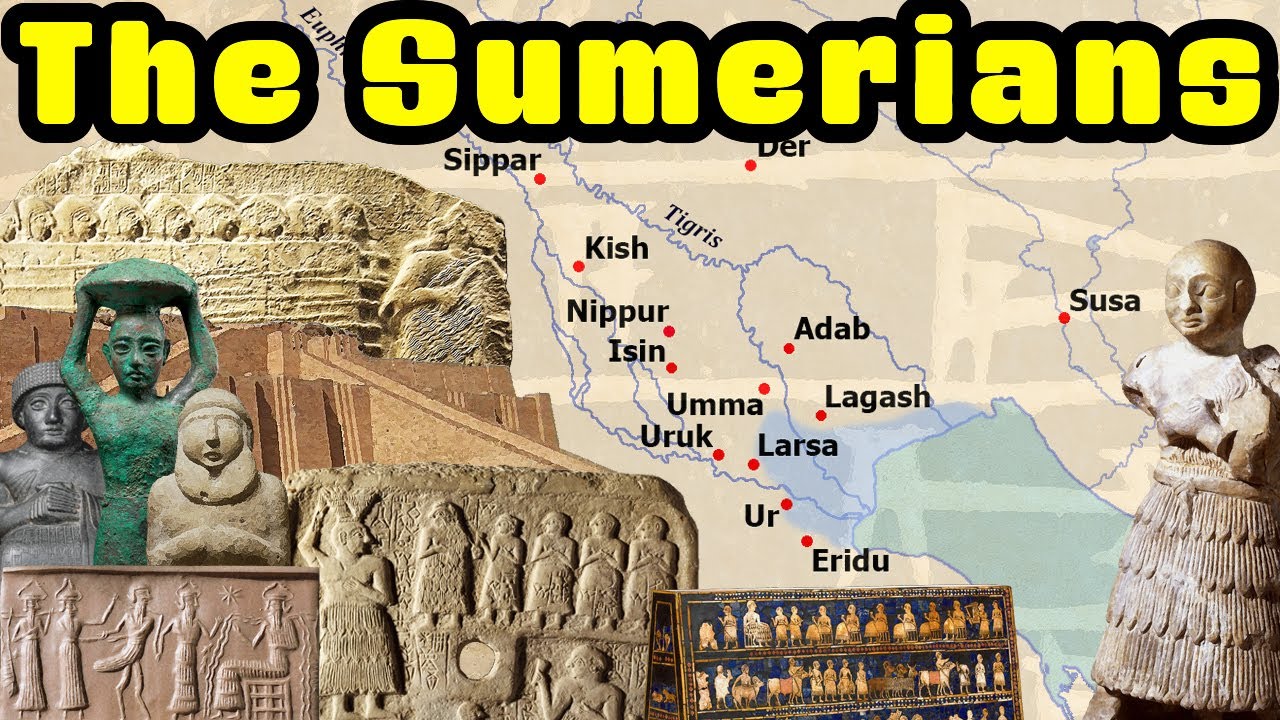
Each city was autonomous and functioned as a small country. They begin to have their own king, temple and gods. They stand Ur, Eridu, Larsa, Uruk, Umma, Isin, Nippur, Kish, or Babylon.
By 3300 BC, writing evolved from simple pictograms to more advanced characters. These pictograms were not suitable for writing abstract concepts, verbs or times. So they began using certain symbols with phonetic-syllabic value.
Cuneiform born. This is the origin of written Sumerian language, which would be part of the Sumerian culture and other come. You could say that here we leave prehistory and into the story itself.
But the writing was not as influential in society as another invention of beer. (The beer, which is good! ) In the year 2900 BC in Mesopotamia was a flood of the host who say it can be what He gave rise to the myth of the universal deluge, and the famous Noah's ark.
(Links to the ark and fucking, links the ark). During this period that lasts more than 600 years and is known very little, born the first civilization urban, Sumerian civilization. It was a group of about 30 city-states, with the same language but with different kings, gods or growing areas.
Cities located along the banks of rivers grades were growing in population. Flood returned to those most fertile areas and inland towns people went moving to those areas. Sumerian writing still has a more administrative role, but also used for other things like: moved religious, historical events or even mythological texts.
There's even a clay tablet found in Nippur that could be considered the first textbook of medicine in history. were also some cracks in mathematics, not only knew the circle 360, but also they developed a system sexagesimal calculation based on multiples of 60, because of their way of telling things, not with fingers but with phalanges. Even today we use this system to measure things like hour, 60 minutes, or years, of 12 months.
These guys even controlled astronomy. They knew that there were 5 planets, the only ones that can be seen with the naked eye. Were the first to have a heliocentric view of the solar system, that is, that the earth revolved around the sun.
Something that in the West would take a few centuries to be discovered. (Here's . .
. there level). In an inscription of 2600 BC, the word "Lugal" which in Sumerian means king or ruler appears for the first time.
It is believed that while the Ensi administered the city, the Lugal gained ground in terms of the military, and even as to what priesthood. But not only in a particular city but on a regional level. And with Lugales they appeared palaces, which together with the temple, organize the life of the Mesopotamian society.
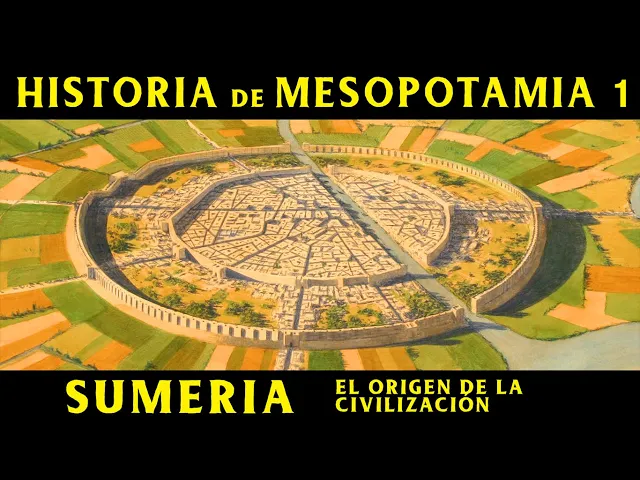
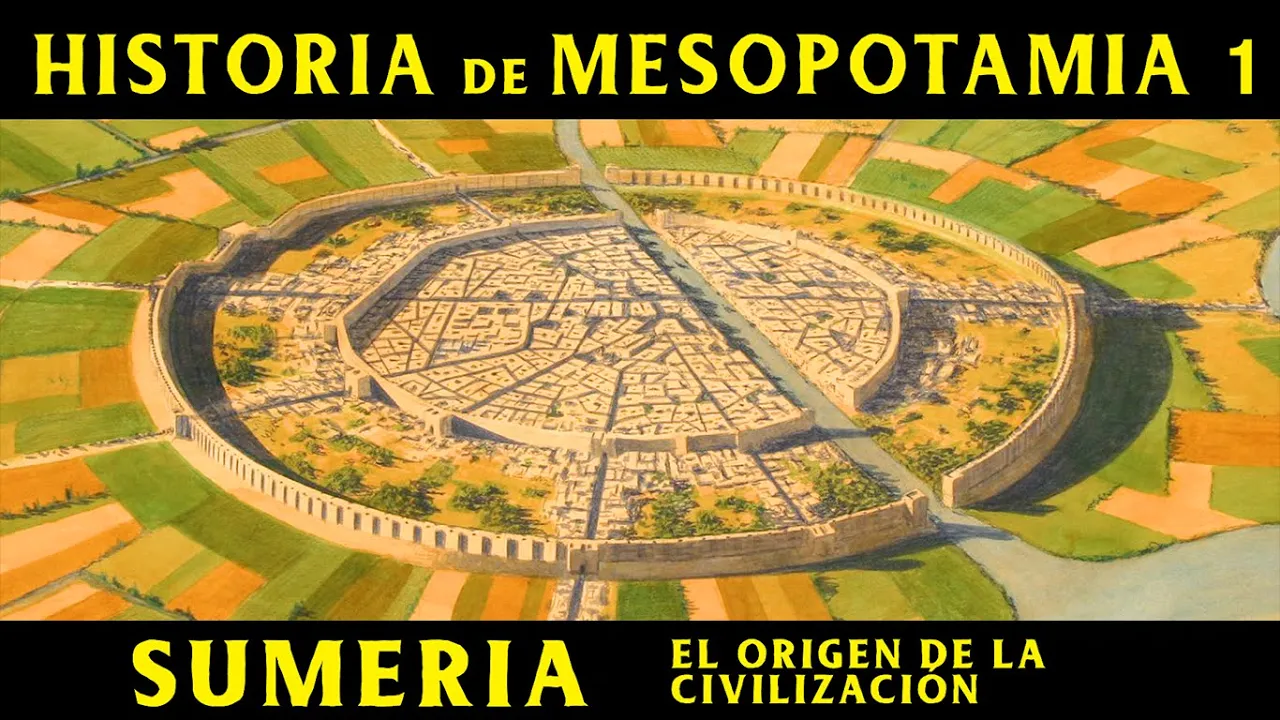
These city-states were organized rings, the first was walled, and was where most of the population lived, organized around a temple, or also around ziggurats emerging: the abode of the gods, they were not as high as this. There are ancient ziggurats like Sialk, in Elam, the White Temple of Uruk, or Khafaje Oval. But nothing to do with what later would be built.
There were markets where people exchanged goods by barter. The next ring was farmland abroad, and then there were the boundaries between different cities, whose control was quite disputed. Citizens built their houses with adobe bricks, mortar, and plaster.
Good views had not even had windows. All were quite similar among them, the door leading to an inner courtyard where they were different rooms for each family. Although they had their rooms, they preferred to sleep on the roof, where it was cooler.
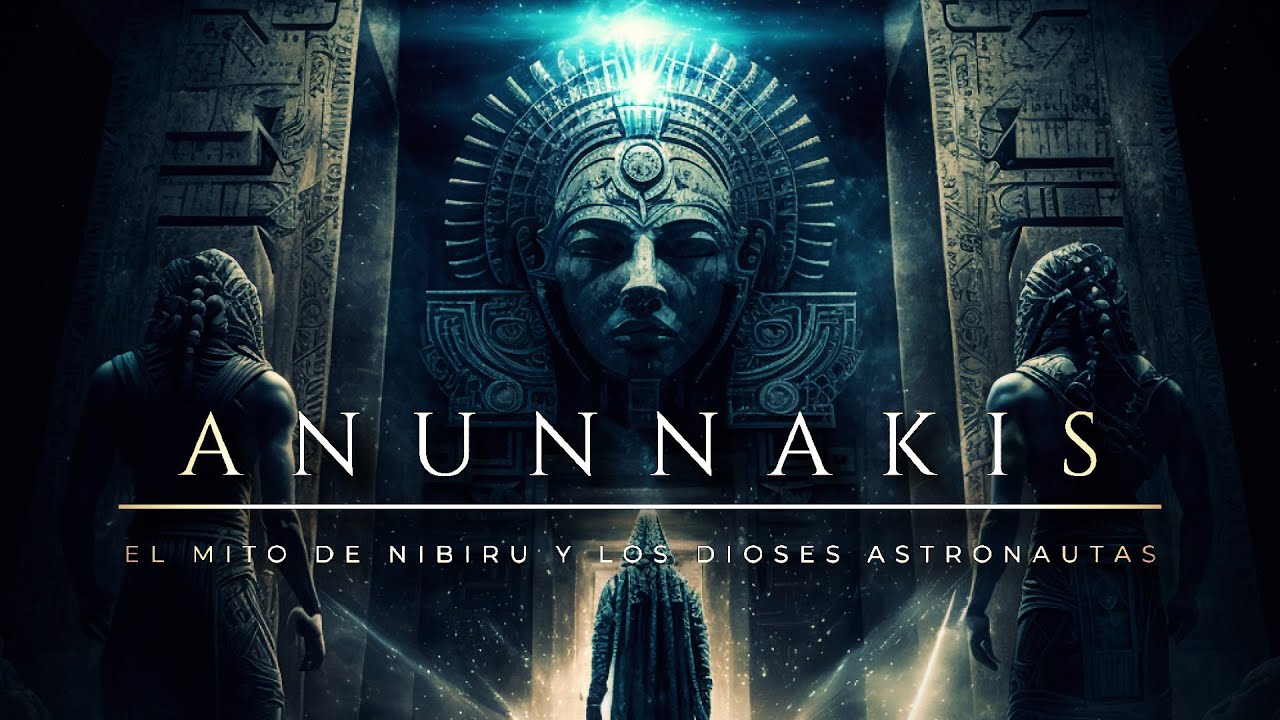
Each city was identified with a god, so there were thousands. For example, the aforementioned Innana, Ki, goddess of the earth, Enlil, lord of storms, or Anu, god of the sky, that hence the name of the Anunnaki. In the "Myths and Legends" section we discover more about Sumerian mythology about these curious beings and space.
And speaking of myths and legends, this time an epic poem on one of the kings of the first dynasty of Uruk appears: Gilgamesh. In his journey in search of immortality account, and gets into trouble with the gods, who send Enkidu to kill him, but eventually become friends. This king is credited with building the oldest walls of Sumeria, the Uruk.
It is also said that this king lived more than 100 years, myth or not, the fact is that this poem is the oldest known literary work. And then there is the Royal Game of Ur probably the second oldest game in history table. It seems that the first could be the "Senet" Egyptian.
There were many rivalries between different city-states, and Uruk stopped being hegemonic. Not much is known about this period, but the only certainty is that hosts like breads were given. Hence they began to build the first walls to protect themselves.
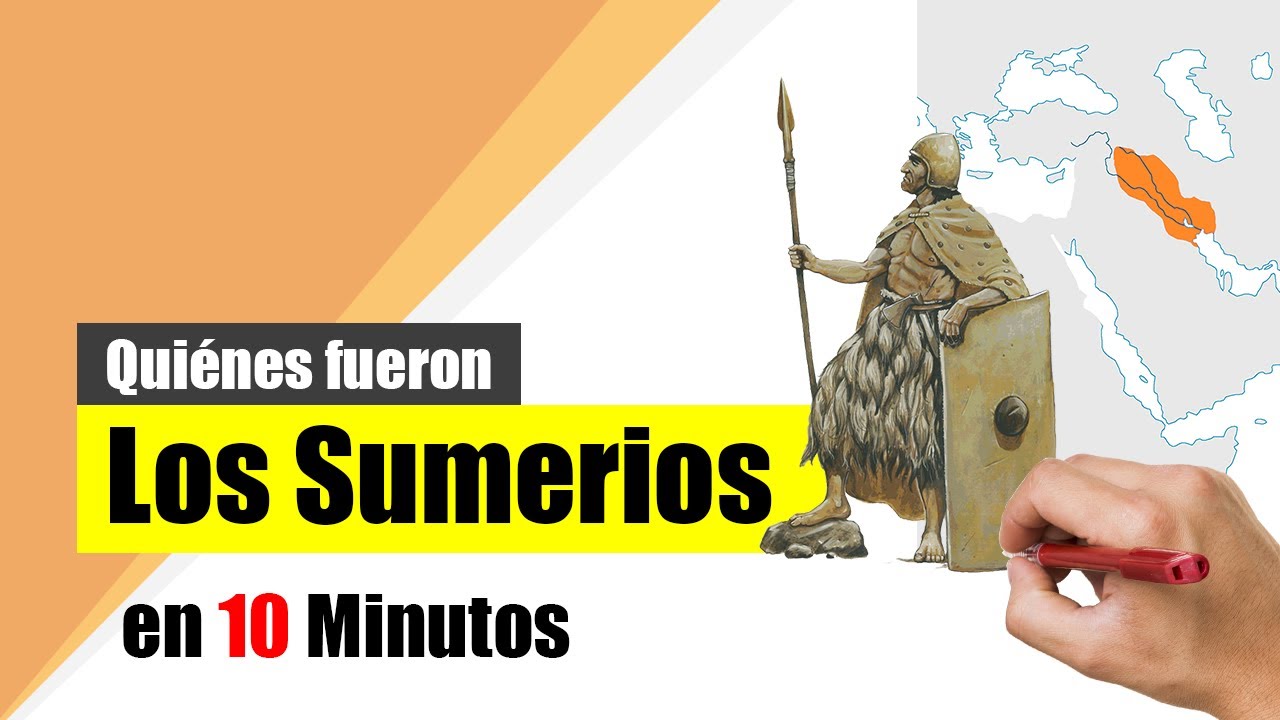
Among the documents of the time highlights the Stele of Vultures, which tells a small war between the cities of Lagash and Umma, around 2525 BC, probably the first war on record. Lagash, ruled by King Eannatum won, and it seems that became the largest city of the time. Thanks to this tablet we know things from the Sumerians armies, they carried spears and copper helmets and leather armor.
Around 2300 BC, the king of Lagash was Urukagina, famous for reforms and lower taxes for people and fewer privileges for monarchs. But then came Lugalzagesi king of Uma, and again the hosts whirlwind began. The Lugalzagesi this split his face to Urukagina and took control of all Sumer.
In addition, he moved the capital to Uruk, not content with that, he went to more cities like Kis and Sin, or Mari. (Marichocho! ) However, its hegemony would not last long.
In the year 2350 BC, a usurper seized power in the northern city of Kis. It was Sargon of Akkad region. It is said that Sargon was a cupbearer, which serves drinks, come on.
In the court of King of Kis, Urzababa. One day he got angry, he sent to hell and gave a coup. (Freeze everyone!
) Sargon of Akkad spoke Akkadian therefore follows that it was Semite. Semites had been settled in Mesopotamia, especially in the north, from 3000 BC, coming possibly from Arabia. According to the Bible, the Semites were descendants of the first son of Noah, Shem.
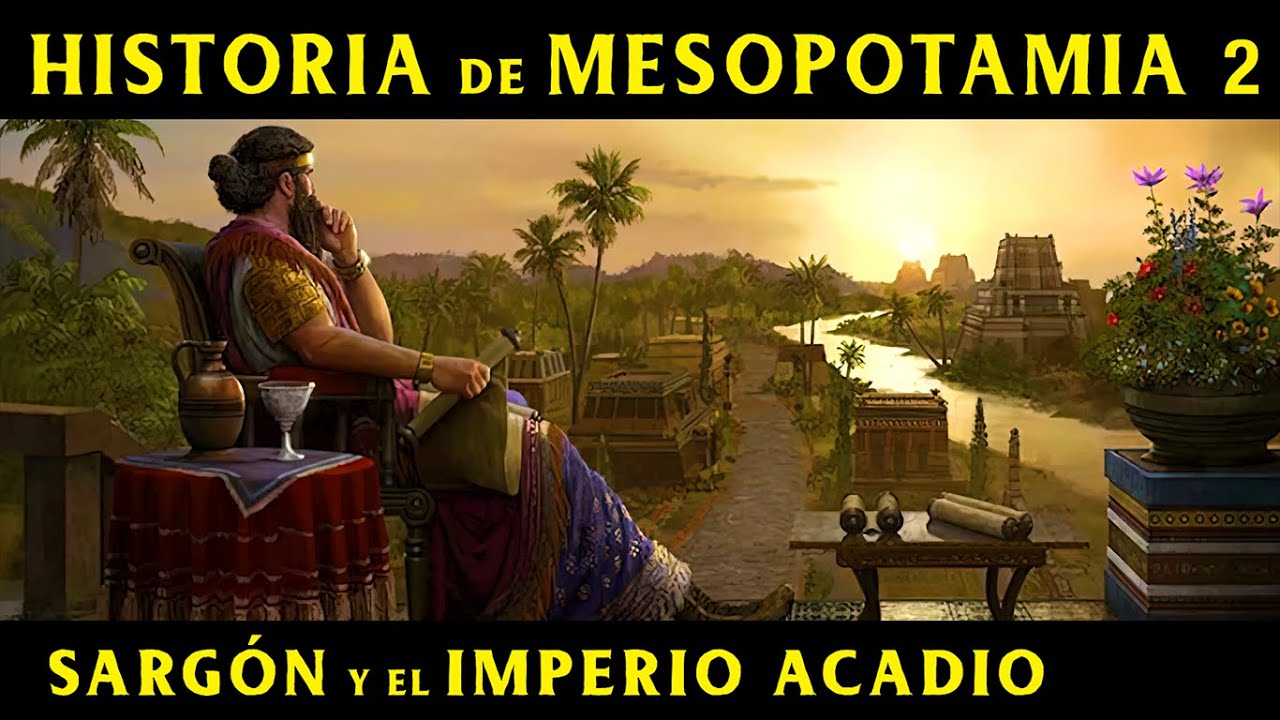
And speaking of the Bible, Sargon was believed to have a home like Moses, being abandoned in a basket by the river. Anyway he founded a new capital called Agadé in the year 2340 BC It is unclear where he was, but from there set out to conquer not only Sumeria but also the neighboring Elam, reaching its capital, Susa. And it also came to Ebla in Syria, a small kingdom north of Canaan.
Sargon entered Uruk, and beat Lugalzagesi, which humiliated him paseándole as a puppy through the desert to the temple Nil in Nippur, where he tied him to the top of a pole for all to spit. Following this, Sargon succeeded in unifying the whole basin of Mesopotamia under one term in 2334 BC Time later he was known as Sargon the Great. Akkadian Empire begins.