Imagine you're going down to the bottom of the Mariana Trench in a full militaryra diving suit. You might think all you'd see are some tiny creatures or just straight darkness. But what would actually happen is your lungs would implode before you even reach the bottom.
You're cooked. The pressure in the Mariana Trench is the highest in the entire world. More than a thousand times the pressure at the surface.
And even the most advanced militarygrade diving suit would have zero chance of saving you from collapsing in on yourself. And so only logically, there should be essentially nothing capable of surviving here, right? Well, if you know anything about the horrors of the deep ocean, you'd already know this isn't what happens.
In fact, most of the deep ocean doesn't just have life. It has some of the most gigantic life on Earth. You have massive sharks that have been alive at the same time Isaac Newton was squids bigger than buses and all the other real life gigantism horrors you could imagine.
But the Mariana Trench isn't just the deep ocean. It's the deepest point on the entire Earth. So what actually exists all the way down there?
To understand the Mariana Trench, we first have to take a look at where it even starts. The Mariana Trench is around 10,984 m deep, but this is measured from the ocean's surface. The actual trench starts about 5,000 m below sea level, which is the upper rim of the trench.
Everything above the Mariana Trench is actually super normal, which would make sense since it's just the open ocean above. In fact, anything floating there, whether it's a fish or a human, wouldn't even know they're above the deepest spot in the entire world. The trench is so deep that if you took Mount Everest and plunged it upside down into the middle of the ocean, its tip would still fall about 7,000 ft short of the trench's bottom called the Challenger Deep.
And this place is so impossibly remote that only 22 people in all of human history have ever reached it, which to put in comparison, even more people have flown to the moon. So what would it take to get to the bottom? Well, to get there, you'd have to pass through every layer of the ocean.
Unfortunately, the Apipelagic zone is the first layer and the only zone you could even make it into. It's about 200 m and you could survive the top part of it since that extends towards the surface. But even getting to the bottom of the zone is close to impossible.
After about 200 m, you'd reach the Mesopelagic Zone, the same depth where the deepest free dive record ever was set at 214 m with a wet suit. This is only the top of the meopilagic zone, though, and no human free diving would ever be capable of reaching the bottom of the zone, which goes to around 1,000 m. The pressure here is around 100 times heavier than at the surface, and you'd probably die instantly.
Kind of scary since this is only the second zone, but I guess that's a deep ocean for you. Below that is the baopalagic zone, starting around 1,000 m and stretching down to about 4,000. Ignoring the pressure that would have crushed you long ago, if you were somehow alive down here, you'd be completely blind since effectively zero light can reach and you'd also probably freeze to death and the pressure is enough to crush steel.
So, you're probably wondering, how can this get even worse? Well, as I mentioned before, the Mariana Trench only actually starts at about 5,000 m below sea level. We haven't even reached it yet.
Past the Ba'athopalagic zone is the Abyssopelagic Zone, which spans from about 4,000 to 6,000 m deep. This is actually my favorite zone in the whole ocean, not only because the abyss sounds really cool, but also because it has some of the freakiest animals possible. This zone should actually be the bottom of the ocean because for almost all of the ocean, this is the bottom.
But unfortunately for those afraid of the deep sea, this zone is only where the trench begins. At this point, the pressure is over 600 times what it was at the surface. Not that that really makes any difference to you since you've already been crushed thousands of meters ago.
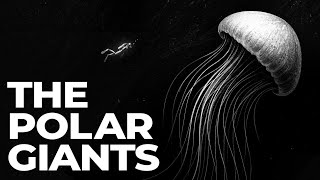
At the top of this zone, you might find the Stigo Medusa Gigantia, which if you couldn't tell by the name, is Giganti. Ah, this is a massive species of jellyfish, specifically created by deep sea gigantism. It's over 10 m across, including its strange tentacles that look like ribbons.
There's only been about a 100 sightings in the past 100 years of this giant phantom jelly. And because of that, we don't know much about their average weights or upper limits, but it's estimated to be around 150 lb. They're definitely large, but as most jellyfish go, they're not too heavy, at least compared to other giant creatures.
Oddly enough, they don't sting either. They use the ribbon tentacles to slowly trap prey for small things that swim by. It's kind of like fly tape, but just the deep sea gigantism version of it.
But at the very bottom of the abyssal zone is one of the largest squids in the world. And while you probably think I'm talking about the famous giant squid that I know I usually can't shut up about, you actually won't see them at all here. The abyssal zone is oddly enough too deep for the giant squid and they can only reach up to midopolgic waters.
And while you might also think of the colossal squid, which do actually live in the upper abyssal zone, they wouldn't be in the Mariana Trench since they stick to the Antarctic waters only. But what you would find here is something even stranger, the magma pinner, also known as the big fin squid. If you saw our video on the creepiest squids, you'd know that, at least in my opinion, this is by far the creepiest squid in the world.
Well, that we currently know of. While it's unlikely to be as dangerous as an actual tank like a colossal squid, it's just plain unsettling to look at. I'm not fully sure why its tentacles are stretched like that, why it sometimes just hovers.
And honestly, most marine biologists don't really know either. They're usually so deep and unbelievably rare that we can't even study them. Most of what we know is usually from juveniles.
They stretch about 25 ft long with those weird elbowed arms that just hang. The most likely reason is that they're used to catching smaller things passing by. But we've never actually caught a live adult specimen.
These squids live so deep that sometimes they even reach the upper had zone, which is so deep that it's usually too deadly for even most normal squids. And yes, this creature is another example of the deep sea gigantism [music] effect. It doesn't just have to turn big things bigger, though.
It can also affect smaller things like isopods. The giant isopod is the same family as normal pill bugs, but instead of being a few millimeters, they're closer to 20 in across. Smaller than people, [music] sure, but massive for isopods.
They're usually near the upper abyssal, though. And while you might think it could be possible for them to go deeper into the Haddle Zone, it's not super likely. Plus, it wouldn't benefit them either, because the Haddle Zone is probably the worst place you could live on Earth.
This place is so remote that it doesn't even exist in most parts of the ocean and only in deep ocean trenches. And of course, that includes the Mariana Trench. It stretches from 6,000 m all the way down to 11,000.
And the only reason it doesn't stretch more is because the Challenger Deep is already the deepest part of the ocean. The pressure is so deep that it's over a,000 times the pressure at sea level. And I'd usually give some wacky comparison, but I don't really think you could actually imagine what it's like to have the entire weight of an adult African elephant standing on every single square in of your body.
Interestingly, you might expect there to be some of the craziest giants you've ever seen there. But that's not really the case. The handle zone is so unbelievably hard to survive in that deep sea gigantism actually starts to reach its limit.
Things get bigger and bigger until they don't. The more body you have, the more pressure there is crushing every square inch of it. A small organism can handle that better because it has less surface area for the force to act on and fewer internal parts that can collapse or malfunction.
As well as probably the more important issue, there's barely anything even here. Food is so limited that you literally can't even get enough at some point. It's strange to think, and most channels don't usually cover this because they like to play up the deep sea gigantism effect, but the Haddle Zone is basically the end of deep sea gigantism and effectively where the deepest sea shrinking starts.
Animals don't just get infinitely bigger. And while there may be some undiscovered squid bigger than a giant squid elsewhere in the ocean, it's extremely unlikely that it lives in the deeper Haddle Zone. It's just simply too deep.
So, what actually lives here? One of the most well-known is the Mariana snail fish. The deepest living fish ever discovered.
And no, it's not a snail. It's a fish. It's small, almost translucent with no scales and a body so soft it would collapse under normal pressure at the surface.
But down here, that jelly-ike body is perfect. It bends instead of breaking, letting it survive more than 8,000 m deep. They're still about a foot long, too.
There are amphopods, too, which are shrimp-like crustations that can survive all the way down to the Challenger Deep. Some of them have special proteins that stop their cell membranes from collapsing under pressure. Others even eat bits of plastic that have somehow made it this far down.
There are also xeno fires, which are giant single-sellled organisms that live right on the trench floor. They can grow up to 4 in wide, making them some of the largest single cells on Earth. Strangely, xeno fires might actually be important for life down there.
They create little microhabits out of sand and minerals, providing shelter for other small organisms in an otherwise barren wasteland. So, even though they're single-sellled, they kind of act like ecosystem builders for the deep trenches. Not really as epic as giant squids, but you don't get much better this deep.
Besides that, there are worms, microbes, and other tiny scavengers that feed on marine snow, flakes of dead plankton, feces, [music] and organic dust falling from above. Life in the Haddle Zone isn't really some cool zone of giant monsters battling each other beneath the water. It's basically just you die or you barely survive.
And that's why the Abyssal Zone is my favorite. More cool monsters are there. But where else does the Haddle Zone exist besides the Mariana Trench?
Well, the had zone is usually created when the abyssal plane cracks open due to immense tectonic activities and forms ocean trenches just like the Mariana Trench. [music] There are about 20 major ocean trenches around the world, mostly found in the Pacific Ocean. The most famous ones are the Tonga Trench, the Philippine Trench, and of course, the Mariana Trench.
But if it's basically a death sentence to even exist there, how do we know anything that's down there? Well, the short answer is we barely do. The only reason we know anything about the Haddle Zone is because of a few extremely rare and insanely difficult missions.
Missions with the most advanced submarines and people with the most advanced guts to actually get in one. Most submarines can't even come close to reaching the bottom of the Mariana Trench. Even advanced military subs like nuclear attack submarines max at 600 m.
You're not making it to 6,000, yet alone 11,000. Submarines here are designed basically to be a pressure-proof capsule and not much else. The first humans to ever make it all the way down were Jackie's Picard and Don Walsh in 1960 inside a submersible called the Treel.
Imagine being in a steel ball barely big enough for two people lowered almost 11 km into total darkness. Not even sure if the hole would hold because it's 1960s tech. At around 10,900 m deep, one of their outer windows cracked under the pressure, which personally would have made me pee myself, but somehow they made it.
They stayed at the bottom for about 20 minutes before beginning the long silent rise back to the surface, probably staring at that crack the entire time. After that, no one went back for more than 50 years, because who would honestly want to even go down there? The next major descent didn't happen until 2012 when James Cameron, the same dude who directed Titanic and Avatar, piloted a one-man sub called the Deep Sea Challenger.
Not the most unique name, I guess, but he did become the first person to reach the Challenger Deep Solo. His vessel was shaped like a tornado covered in bright green plating and specifically designed to just go deep. He described the bottom as a completely alien world, flat, desolate, and with fine sediment that looked like gray powder and no sign of big animals anywhere, which would line up with the end of deep sea gigantism that I just mentioned.
In 2019 though, a guy named Victor Vesco broke the depth record again with his subDSV limiting factor, reaching nearly 10,928 m, which granted is only about 20 m deeper than James Cameron did, but I guess he really wanted that record. Unlike earlier dives, his mission wasn't just to go down and come back up. It was to explore and probably also to beat James Cameron's record, but he didn't say that.
He spent hours mapping the seafloor and filming some of the most extreme creatures ever caught on camera. He again found plastic waste at the very bottom. Most of what we know today doesn't actually come from humans going down there, though.
It comes from ROVs and landers. Scientists drop them into the trench and they slowly sink for hours before finally reaching the bottom. These machines carry cameras, sensors, and bait traps, and sometimes even robotic arms that can collect samples.
The pressure resistant casings on these cameras are made from titanium and thick glass. And if they fail, they implode instantly. And even with all that tech, the success rate is low.
The trenches are pitch black, [music] freezing cold, and full of fine sediment that clouds up instantly when disturbed. Most of the footage we get is shaky, grainy, and lasts only minutes, but it's enough to reveal that the Haddle Zone isn't completely dead. Most new missions end up revealing something new because it's just so hard to find things when you're down there.
But so far, we haven't encountered any super giants down in the Haddle Zone. And sorry for any lovers of sea monsters, probably never will. Trenches like the Mariana Trench aren't really meant to be the deep ocean.
They're the deepest parts of the ocean. Places so inhospitable that they're only created by tectonics in the Earth. They weren't even designed to store the monsters of the abyss.
They just store anything that can endure. Thank you guys for watching.