We always say like we think Bitcoin was made for us, not for you guys. Because when you guys talk about Bitcoin, you talk about Bitcoin in a way that we don't fully comprehend. We don't understand what your issues are.
You guys are number go up, number go down. You're worried about the price. We like, have you forgotten what this thing is?
It's immutable. It's decentralized. It gives me power that I've never had before.
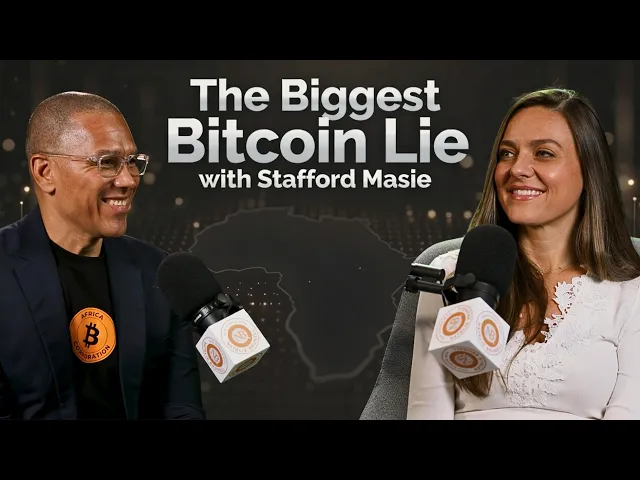
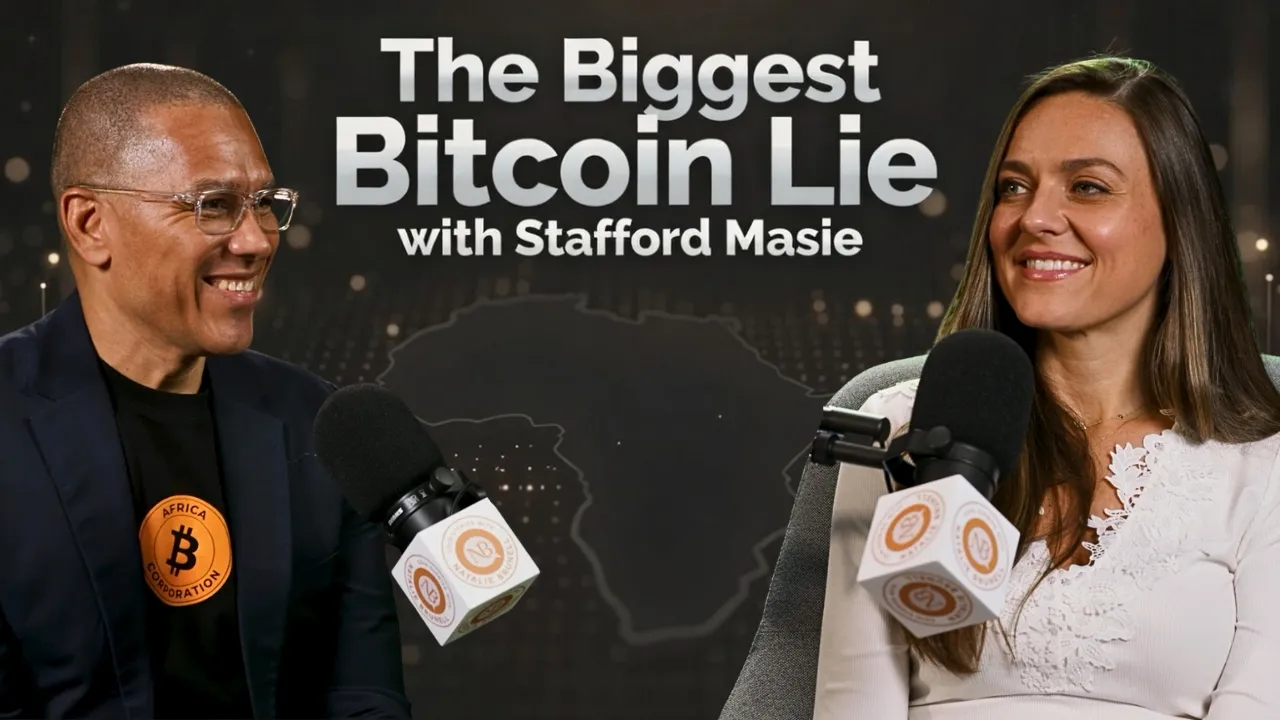
So, if you go back to Africa, I think you go back to what Bitcoin was made for. Hey everyone, welcome back to the show. Joining me this week is Stafford Massie.
He is the executive chairman and director of Bitcoin strategy at the Africa Bitcoin Corporation, ABC. Stafford, thanks so much for joining me here in New York. >> Finally, fine.
So, finally Africa's here. >> Yeah. You just joined me from what?
South Africa is where you're based. >> Yeah, South Africa where we flew in and New York's freezing. Um, but what a privilege.
Uh, you we are huge fans and I think the impact that you've had >> in South Africa and Africa is is significant. you've orange pulled a lot of us and so it's surreal to sit across you and and to speak to you and thank you. >> That means the world to me.
I can't wait to talk to you because I feel like so much is happening on your continent. You actually have the youngest population, right? A lot of people getting into Bitcoin.
So, first just share your backstory for those who aren't familiar with who you are, what you do. Um share with us your backstory, how you got into Bitcoin and what ABC is. >> So, my backtory is uh I've been in Bitcoin since 2014.
I got in when I was building a little device that plugged into a phone that converted the phone into a card acceptance machine. It was more or less the same time Jack Dorsey was doing it. >> Uh but when Square was doing it, he was plugging a little white dongle into the phone and he had an easy job because you guys in the United States were doing only mag swipes.
>> Uh where we were, we had adopted EMV. So I had the chip and pin. So I had to actually do a secure card across a nonsecure device into a banking fabric.
So when Bitcoin came along, I was very deep in building banking fabric and actually energizing a chip on a card to go through a phone into a PCIDSS data center. And then the whole acquiring and issuing and switching and someone came along and said, "This thing allows you to convey or transmit value, >> no intermediary, more securely than we've ever been that's than it's ever been done in the history of humanity. " And I looked at it, I went, "This is absolute rubbish.
" And it took me some time to get to it, but you we all approach it in the skuomorphic way. Um, and I looked through kind of the traditional banking lens, but when it finally dropped, it dropped. And I've been a Bitcoin maxi ever since.
And I joined the board of um, ABC before it was called ABC. It was Alfest Capital. And the reason I love the business, it's Warren Wheatly founded it.
That's our CEO. It's a business that was a private capital business, a private credit business that deploys capital into SMMES in Africa. And it's had a huge impact story and what he wanted to do with it.
And I saw the evidence of it. And what I loved about it, it was skewed towards African females. So if you're an African female and you apply for private credit loan, um, you actually get biased in a positive way.
So it's cheaper. And I love that story and I thought, let me be a part of it. I became the chairman of the board and with a lot of board changes, etc.
And then I tried to do the Bitcoin maxi thing with him for a while. It took him a little bit, but then he got it. And when he got it, we sat down and said, "How could we take a private credit, traditional private credit business and shove a Bitcoin nuclear weapon into its engine and do kind of what Sailor did, what Sailor's done with digital credit.
We thought, why can't we do it with private credit in Africa? " And that model works better for us over there because our market's completely different from your market. Your markets are, you know, you got you guys have low yield, high high capital, like lots of capital, low yield, so you yield starved.
I'm the exact opposite of that. I have huge yields, but I'm capital staffed. >> So, what are we doing with the Bitcoin is not generating yield.
I don't have to generate yield. I take Bitcoin and I I harvest yield, right? So, I've got a I've got a lightsaber.
I have the capability to take a private traditional credit engine that gets money from fixed income allocators like pension funds and its weighted average cost of capital is about 12 to 15%. So we lend out at 18 to 25%. And that's cheap.
That's really really cheap compared to any of our competitors. When you go into Zimbabwe, you make a loan as anme in Zimbabwe, you pay 20% per month. >> What's anme?
>> A small and medium enterprise. >> Okay. >> Yeah.
So you pay 20%, you know, interest on your loan. >> That's crazy. >> So it's high yields, right?
So if imagine we could take Bitcoin, put it on our balance sheet, lower the cost of capital, so actually lend it. So, for the first time, we have a piece of collateral that someone anywhere in the world will accept and we can lend against it. We've never had that in Africa.
>> Wow. >> I can't take my Cape Town apartment that's worth a lot of money, right? And fly to Switzerland and lend against it.
No one will do anything. I can't take gold. Gold doesn't work for us because what I'm going to put on a ship and then send it's doesn't it's not practical.
Bitcoin's come along and we have this pristine perfect money that we can go anywhere in the world and we can lend and we can we can do an LTV of 30% on it and get a loan at less than 5%. That drops my weighted ass average cost of capital by 10%. >> That's fascinating.
Is it are the yields higher because there's essentially more risk? >> Yeah, that's risk. It's a risky environment.
That's how bonsai >> Coin Stories is proudly brought to you by Gemini. Start your Bitcoin savings account today. Plus, investing in Bitcoin has never been easier thanks to Gemini's Orange Bitcoin credit card.
I've got mine right here. Earn up to 4% back in Bitcoin on everyday purchases like gas, dining, groceries, and more. No annual fee, no foreign transaction fees, and no exchange fees on your rewards.
Head to gemini. com/natalie. Make sure to get your copy of my new Bitcoin 101 book, Bitcoin is for Everyone.
It explains why life has become so unaffordable and how Bitcoin can help you build lasting wealth and freedom. It makes the perfect gift for those new to Bitcoin. Just visit the link in my show notes.
Coin Stories is also brought to you by Letin. Need cash but don't want to sell your Bitcoin? Letin is the global leader in Bitcoin backed loans, issuing over $9 billion in loans since 2018.
And they were the first to offer proof of reserves. With Ledin, you get custody loans, no monthly payments, and more. Visit leadin.
io/natalie io/natalie to learn more and get a quarter percentage point off your first loan. I'll be sharing my Letin Bitcoin loan journey soon, so stay tuned. Want to accept Bitcoin and Stablecoin payments?
Speed makes it simple. Customers can pay via QR codes in app, online, or POS. Speed helped stake and shake accept Bitcoin nationwide.
As COO Dan Edwards says, >> customers choose to pay in Bitcoin instead of credit cards, we uh are saving about 50% in our processing fees. This led to more support from Bitcoin users and a 10% revenue boost. Getting started is easy.
Sign up at triespeed. com or integrate the API in hours. Start accepting Bitcoin today.
Download Speed at speed. app/coinstories or the QR code on the screen and use code coinstories 10 for 5,000 free sats. Let's maybe step back a second because I feel like when we say Africa, I mean >> Africa is a massive continent with so many countries, different languages, different currencies in there.
Um, >> you're talking about specifically the stock market or the credit market. Are you zooming in on South Africa or is this a continental stock market and how big is this? Like I mean, give us the full picture of what we're what we're looking at.
So what makes this different underlying the substrate is you know it's high yield low capital. Um you live in a market where the median age is very high. Where I live it's the average age is 19.
>> Wow. >> Yeah. More than 25% of the continent is below the age of uh 20.
>> It's wild. >> It's wild. And you know what's really cool?
AI is unlocking so much latent human potential. So when SMMES sit in front of us, these small and medium enterprises, the ideas, the the the the collateral that they have to securitize their loans, it's extraordinary. So people always think about small and medium enterprises in in Africa as it's like shack and chickens and no, these are businesses that come from an informal economy that's extraordinary and young people that are unlocking all the natural resources in Africa, utilizing AI and they love Bitcoin.
So Bitcoin where I come from, Bitcoin is money. You guys talk about Bitcoin when we come here we laugh and we're like >> the store of value >> the store of value and we're like huh it's money it's money it's in some places where I come from there circular economies where it's a unit of account they won't accept dollars they'll accept Satoshi's they don't want your dollars they want satoshi's and when we bring Americans or Europeans to South Africa and they look at this it's very fascinating because you'll see European tourists coming and we have this little black kid teaching this European tourist about a Bitcoin wallet and it's like this is how it works so we leaprogging just like we did with mobile where we had nothing and we went to mobile. So we going from broken money >> debasement.
When you guys talk about debasement, you talk about 4% and 5% annually. We talk about four 5% an afternoon. That's the world where we come from.
So when you give us pristine capital, >> it becomes a substrate, not a store of value. It becomes a capital substrate. It's something that we can you can build off this thing.
You can live off this thing. And when you guys see them, you know, it's it's is it going to go to 40k? is going to go to 50k.
>> Mhm. >> Yeah. That's a very like westernized world problem.
>> Wait, so okay, when we hear you know the the different asset bubbles, how much they're worth? We see equities and they're worth like I think now it's $135 trillion. So of that like what is African equities?
What's that worth? >> It's massive. I mean the unlocked capital in in the equities is extraordinary.
We see dry just dry money in corporations across Africa. We it's pegged at about a hundred trillion dollars. um hundred billion dollars.
Um SMME unlock is about $350 billion. Wow. Our play is Panaffrican.
So we listed on the Jesusburg Stock Exchange. >> And what makes us different as a treasury company is not the fact that we just listed and we representing a country like uh you know we got Metaplanet in Japan. You got Strategy USA.
You got Smarter Web UK. Um Africa Bitcoin Corporation is Africa. It's continental.
So our JSC is the most mature stock exchange and we represent the entire continent when we represent it to investors and that's the opportunity. So 1. 5 billion people we're going to be 2 billion people by 2030 youngest population fastest growing in the world natural resources unmatched.
Uh our SME base is dying for capital and they can't gain access to that capital and that's that's a tam for us. >> Well and your continent is so rich with resources. >> Yes.
And I think that people underestimate um how much development is going to happen there especially over the coming decades with this young population growing up with tools like Bitcoin. Can you maybe um explain a little bit more about how it's being used as money especially for those who again here in the west we see it as this store of value and I think a lot of people are like no it can't be money because it's too volatile. How could you you know you earn Bitcoin and then tomorrow it's worth half of what it was.
That's even worse than the inflation rates in some of these currencies. What do you say to that? >> So, first of all, if you take a look at our informal economies, you know, if you look at Jesse Meers's breakdown, which you referred to earlier, which is like equities, cash and you know, you got collectibles, etc.
In Africa, our informal economies are cash economies. >> They're massive. They're big.
In South Africa, the cash in we call it informal. And when we say informal, I think it's unfair because it almost makes them less than the formal economy, but it's massive. I grew up in an informal economy.
um you know I saw money broken you know when when payments don't work in Africa people die and we don't really comprehend that and and so when when you take a look at what we do with money in the informal economy first of all the size of that arguably in South Africa alone is 30 times the GDP of South Africa but it's unmeasured we don't know how big it is we think it's about 30 times the size but when I grew up cash was very well structured very sophisticated Um, an ATM to me when I grew up was a was a a black lady that lived a couple of streets from our block. I knocked at a window at 11:00 at night and I told her, "I need 100 rand. " And she'd give me 100 rand.
And she'd say, "Remember, tell your dad, I want my 110 rand back on Wednesday. " And when I looked over her shoulder, money was laying piled up on her kitchen. I could get a bar of soap.
I could get a beer. I could get the money and I could walk away at 11:00 at night. It's extraordinary.
No one would touch that money. She's protected. Everyone knows her history.
She knows everyone else. That's extreme sophistication. >> That's really extraordinary.
>> Yeah, that's extraordinary. So, if you take a look at that, you and you look at the banking world, the banking world's inconvenient, but you take a look at how the informal economy has emerged around cash. It's extraordinary.
We also see people that have built they have so much. We havememes, small and medium enterprises that approach us for loans. Banks won't look at them.
Banks just won't touchmemes in Africa because the yields are so big in just government bonds. So, they won't touch them. VCs won't go anywhere near them.
But when we take our analysts and we actually sit down with them, it's extraordinary what we see coming back. I mean, people have there's a lady that came to us and she wanted a loan and we said, "Okay, how do you securitize this loan? " And she showed us that she had built houses and put money into the houses.
She had houses with money inside of it cuz she didn't put the money into the bank. >> Gosh, that's that's so crazy. So do you feel like there's a lot of just untapped potential with um entrepreneurs and builders in Africa who just are not able to secure capital because of how high the interest rates are and Bitcoin could be used as a solution?
>> Totally. That's exactly that's our model. Right.
So it's already being utilized by the young folks but the the untapped latent human potential in Africa. We've always said Africa's rising and people have beencome skeptical of that like when is it going to rise? When is this going to happen?
And I think we've been waiting for two things. I think we've been waiting for perfect money and it's here. We in Africa, we know that the age before 2008 and the age after 2008, right?
It's like after the Bitcoin white paper and before the Bitcoin white paper, our lives changed cuz suddenly we had something that couldn't be debased. It was immutable um decentralized, can't be confiscated. I mean that to an African is life or death.
>> It's not convenience. It's life or death for us. So perfect money, but at the same time now we've got artificial cognitions.
So we have access off a mobile phone to you know so many disparate species of cognitions that give us the ability to pick up soil take a picture and tell us how we should fertilize it what we should do with it etc. So we've got thousands of PhDs that we can throw at a little farmer and he can do something different and now he can generate wealth and store that wealth but also collateralize that wealth. So when he comes to me and sit down sits down with me I have the ability to deploy capital at a lower much much lower interest rate than ever before.
And you know the traditional capital allocators in Africa, their weighted average cost of capital is biased. They're sitting with family office money that's expecting a certain return. We raise Bitcoin through equity.
We take that Bitcoin. We loan against that Bitcoin and we take the lent money and we put it into our private credit engine >> and we deploy it into our private credit engine and the profits and proceeds from that feeds back into our treasury. Wow.
So that that flywheel I believe right now in treasury world is probably the only company that's a bitcoin treasury company that has an accretive flywheel that works so beautifully um across a a continent and that's what's exciting about our company. We actually have a flywheel. We have a core business that makes sense relative to our Bitcoin treasury play.
>> If you've been listening for a while, you've probably heard us talk about BitKey. Big Key is a private multi-IG wallet that removes the biggest point of failure in traditional self-custody, the seed phrase. Things get lost, phones get replaced, life happens, right?
Bit key is designed so your Bitcoin stays secure and recoverable without demanding constant attention or expertise. And for February only, Coin Stories listeners can get BitKey for $99 using code stories9 at bit. orld.
Up next, the Bitcoin way. There's only one way to protect your Bitcoin from government, politicians, and third-party risk, and that is 100% self-custody. My friends at the Bitcoin Way will train you how to do this the right way, the first time, no compromises.
Go to the bitcoinway. com/natalie to speak with the experts about making sure your Bitcoin is secure and private. I hope to see all of you in Las Vegas for Bitcoin 2026.
We'll be celebrating 5 years of Women of Bitcoin with a special evening bash. and I'll be signing copies of Bitcoin is for Everyone at the Bitcoin Bazaar. Use code hodddle for discounted passes and I will see you this April.
Finally, Bitcoin IRA. With Bitcoin IRA, you can invest in Bitcoin 24/7 inside a tax advantaged IRA. Choose a traditional IRA to defer taxes or a Roth IRA for tax-free withdrawals when you retire.
Take control of your future with Bitcoin IRA. Head to bitcoinirra. comnnatalie for up to a $1,000 funding bonus.
>> So, help me understand something. I will attend a Bitcoin conference and there will be a speaker on talking about progress of Bitcoin adoption in Africa and it'll be all these like positive stories and gridless and mining and businesses and loans. And then I go to another conference and someone brings up Africa and it's like the adoption rate's actually so low.
It's here and there. um people don't have connectivity. It's not true that the adoption rate is as high.
And I'm like, I don't know what to believe. Like I I don't know. I I haven't been yet.
I want to go. But like, can you can you tell us how is adoption really? Cuz again, this is a vast huge continent with many different cultures and languages and currencies.
Is it growing as as much as some people are saying or or are there some real challenges? >> It's growing. It's growing.
It's just it's growing in places where it's it's there are no journalists there. There no eyes that can see it. But if you understand the communities where it is growing, it's growing exponentially.
We've got when you land in Cape Town, we can take you along the garden route, which is not just informal economies. We now have the upper LSM, the the more formal economies that have switched completely to Bitcoin, right? And you can we can take you and you can see how people are using it as money.
So yes, it is absolutely growing. Um, >> so it's not isolated because sometimes like I've been to El Salvador and it felt very isolated too. Bitcoin's used as a circular econom economy in Elante, but then you go to San Salvador and it's a mixed bag.
Some people are like, I don't like it and some people are using it and familiar. >> I think it's the same. And I think what's you know, Bitcoin at the moment on a macro basis, we've lost two macro narratives.
I think stable coins have taken off in Africa and that's paused Bitcoin adoption to a certain extent in certain communities. >> Oh, really? >> Yeah.
That's what we have seen because just the utility of a of a USDT or USDC is extraordinary. The ability to send it anywhere in the world across African borders, remittances, USDT makes a lot of sense. So we've seen the flows of of stable coins across Africa.
The adoption is extraordinary. So in terms of movement of money, um we can argue that you know, Bitcoin becomes kind of your savings account and your USDT is your checking account. >> It it's evolving.
So that's one part of the narrative that I have seen affect Bitcoin in Africa where we thought the adoption would be higher but people are moving towards stable coins and but that will play out in time. Um >> you think it'll eventually converge into >> what the nice thing is when they get a USDT >> they kind of understand the rails they understand what to do with it and inevitably >> it's easier one step away. >> Yeah that's that's what happens.
Yeah. >> What about on a government level? Um, is there a lot of resistance?
Because it seems like I've heard some countries very much their their leadership is very against Bitcoin >> and that's our opportunity too. I mean it's a massive continent. You can fit the United States, China, all of Europe except like when you look at the Macado map, Africa from a scale perspective, it's a lie.
What you was shown at school is a lie. Africa is much much bigger than that. It's a massive continent.
And when you go there, you take a look at it, it's it's extraordinary. So, so yeah, um we we see governments slowly coming around. South Africa very advanced when it comes to legislation.
I mean they they've allowed us we are publicly traded company for the last 3 years. We didn't just adopt a Bitcoin strategy. Look at what we did.
I think we're one of the few if maybe the only Bitcoin treasury company that has Bitcoin in our name, >> right? Africa Bitcoin Corporation. Cuz we believe so much in the asset that we wanted it in our name.
We didn't want some separate name. I think that's a huge >> You have Safety as an adviser now, right? >> Yeah, that's I was going to peek on that.
>> Oh, sorry. >> Yeah. No, totally.
He came on board and I think uh that but from a legislative perspective, yes. Um I've in my individual capacity, I've had to work with the South African Reserve Bank with we have a working group that looks at crypto. Um there's still some challenges.
I think the biggest challenge in Africa is one of two things. One, when legislation is passed, it's normally crypto legislation versus Bitcoin legislation. And that's still a big struggle making them understand there's a digital commodity, there's an asset without our niche and then there's all these other things that happen around you know blockchain world.
So that's still a chance but yes you're absolutely right. The rails we need to build in Africa to onboard corporations into Bitcoin land. They don't and when you go to we listed in Namibia there are no crypto exchanges in Namibia.
You can't buy there's no legislation. So it's not illegal not legal. It's purgatory.
There's no up and down for Bitcoin um because you can't buy it anywhere. So when we listed on the Namibia Stock Exchange, that was an opportunity to buy our equity to get exposure to the asset. We offered people with Bitcoin in the country to send their Bitcoin to us and we convert it into equity.
>> Wow. >> You know, or any other coin we'd convert it into equity. So that's you go to Botswana, you know, they sort of frown on it.
Zimbabwe, nothing. And as you go further north in Africa, it becomes illegal to deadly if you own Bitcoin because generals don't like the fact that they can't control the money, >> right? They can't oversee things.
So it can become deadly owning it, but then it also becomes life-saving because when the general does come around and you have Bitcoin, you can escape. You can send your money somewhere. Yeah.
>> One of the most impactful narratives and angles for me in understanding Bitcoin and appreciating it was Alex Gladstein's work on check your financial privilege and highlighting the voices of people like Farida Narma who I featured in Bitcoin is for everyone. Um, can you maybe speak to that for the audience members that aren't aware of how um, how much control there has been over the money by nations that are outside of Africa entirely, sometimes literally destroying the purchasing power, inflating and doubling the money supply and destroying the value of what people work so hard for overnight and how there's sometimes these kind of like military um, leaderships in place where they will not allow you to flee and they have all sort sorts of controls and they they've resorted to violence for people who are dissident. >> Yeah, totally.
I mean, we live broken money every day. I mean, debasement, broken money. Um, what's interesting is is you you can't take Salana, Kadano, and put it into an African village, right?
No, there is no shitcoin circle economy in the whole of Africa, right? People adopt Bitcoin. And the reason they adopt it for exactly this reason, right?
People die. Um, migration. Uh, you know what's very very interesting?
I spoke to uh the founder of Machura. Now Machankura is an application that allows you to buy and send Bitcoin via SMS. So you don't need a smartphone.
You can do it just over SMS. And I said to him, "What's the number one thing that you picked up when people adopt this? What's the number one thing?
" He told me this, and we kept on chiseling at this question, but he said, he says, "The number one thing I've noticed is that young people don't leave their villages anymore when they adopt Bitcoin. They go deep into their culture because now they've got capital that doesn't get debased. They've got complete ownership over it.
There's no fear anymore. Their time preference goes down and it just changes their behavior pattern. So we landed on if people have pristine money, then it solves immigration.
>> Broken money leads to Africans wanting to leave where they are for a better place. >> That's really interesting to think about. I mean, my parents would have probably chosen to stay in Poland if they had the freedom and the economic empowerment, but they felt like they had to go.
They had to leave. they had to risk everything because it wasn't possible where they were in. But they adopt, you know, they they adopted American values and culture as much as they could, but a lot of it, you know, they still cook Polish, they speak Polish, they talk to Polish people, and it's it's you want to stay with the people that you maybe are with and come from.
>> And these kids are going deep into their culture. So, they're going back into like what the musical instruments were and why is it important to their culture, why they wear clothing that they do, and that's enriching the village, the culture, and it's creating a whole brand new economy. When you take a look at Bitcoin, >> you talk to some of the folks like Heramman over there.
I asked him the same question. What do you notice? And he said, you know what's extraordinary is when when you see a circular economy emerging, the first thing that you notice is waste drops.
>> Yeah. >> Because people don't buy timu and sheen stuff anymore. Because when you got perfect money, when you have money that's valuable, when you need to buy something with that money, you become a whole lot more introspective.
>> Like it slows you down. It makes the merchant improve his services because he can't just sell you rubbish. The quality of everything goes up.
>> Totally. >> Um it's extraordinary. So um even the surfer kids >> down there and you know I have a prediction that I think the first black professional surfer will emerge from South Africa and that surfer watches what will be on his surfboard with Bitcoin.
>> Bitcoin >> Satoshiana. Why? Because those kids um used to earn rans, but they couldn't surf and truly live out their dream and their talent because they had to go wash cars etc.
because the money would be debased. They couldn't pay for the competitions. Now that they're getting money in Satoshi's, they can spend more time on their boards.
And guess what? They can pay for the ticket that the Australian and American kid can pay in the competitions finally. And this is changing their lives.
>> Wow. Yeah. I actually am fascinated by that story because Aubrey Strobel did a fantastic documentary about those kids and I loved it.
Um, what do you think is the biggest misperception about Africa when it comes to Westerners? >> I think the risk. I think they see Africa as risk from an investor perspective.
They see Africa as risk. And what we trying to project is that a it's I think it's a significant opportunity from a pure capitalistic perspective. >> But I think it's it's also the misnomer around what the continent is.
you always see, you know, babies that are starved with flies flying around their mouths. But when you go to Africa, Africa is very sophisticated. Yes, we've got the poor, but we've got big cities.
We've got massive infrastructure. And I think there is a renaissance that's occurring. And I think that's one of the reasons that Sephodine Amoose joined us as a Bitcoin strategic adviser because I think he's seen a lot of what he wrote in the Bitcoin stand and the fiat standard actually playing out and he sees ABC as a company that's taking Bitcoin, you know, breaking fiat by bringing it down to its knees like literally lending at a rate below 5% and then deploying that capital into high impact SMEs and then seeing the returns feeding back in again.
That model is such a beautiful model. That's what Bitcoin was made for. So, we always say like, you know, we think Bitcoin was made for us, not for you guys.
It's ours. Because when you guys talk about Bitcoin, you talk about Bitcoin in a way that we don't fully comprehend. We don't understand what your issues are.
You just, you guys are number go up, number go down. You're worried about the price. We like, >> have you forgotten what this thing is?
It's immutable. It's decentralized. It's it it gives me power that I've never had before.
So, if you go back to Africa, I think you go back to what Bitcoin was made for. you go back to what Bitcoin is supposed to be doing for us and that's when you get like we have this measuring like a little on our on our little dashboard that's our real-time analytics we show MNAV and we you know we show BTC yield but there's a number that sits right in the middle which it's called um human yield so we've back of a matchbook math but we've shown where if we raise one bitcoin it results in five African jobs >> wow >> so every bitcoin raised in on in our Bitcoin treasury results in direct five African jobs and that's our human yield figure and that's when so when we went to you know Amsterdam last year we went to Bitcoin Mina we listen to all the Bitcoin treasury companies and we're like guys where's the humanity where's the thing why are we building this stuff is it just so we can build a hoorde and and replicate what strategy is doing or get on a leaderboard of amount of Bitcoin that we have that's not what Bitcoin was made for and I think this is the narrative that we've 've also lost on a macro level. We're losing the narrative.
We we we we've forgotten where we've come from. And hopefully companies like ABC, Africa Booker Corporation will show the way again. And I think that's what Africa is going to do.
So yes, you will misinterpret us. You will um underestimate us. And I think watch what happens over the next 12 to 36 months.
I think we're going to demonstrate how do you take pristine money, perfect money, and you have real human heal, real human impact, and you change real human lives. That's our drive at ABC. That's why Warren and I are doing what we're doing.
We're not trying to, you know, we're trying to catch up to sailor 700,000 Bitcoin. You know, that man's in spaceship. He's in there's no gravity where he lives anymore.
So I think the big question for treasury companies now is not mocking them not asking but I think we need to ask the question what what are you doing with your bitcoin you just sitting on the balance sheet s waiting for it to go up and then what you going to build preferred on top of it and then what I think there needs to be a deeper story I think there needs to be a flywheel there needs to be something that speaks to humanity and that's what we bringing forward as ABC saying hey let's go back to basics again I think that's why say it resonated with him that here's his book actually playing itself out and it's not because we good or ABC is special. I think it's because Africa, you know, when people come to Africa and we've invited you and I hope you're going to take us up on that invite. You'll see this is where like this is the origin of humanity.
This is where like you feel the earth when you touch it and you smell it when the rain falls on a dry African soil. When you watch the elephant walk past you like there's something genetically DNA based where you really connect with it. And I think Bitcoin in our place, in our where we come from, that's what we're doing.
We're making Bitcoin real again. We're talking about human yield before we talk about BTC yield. We're talking about one Bitcoin having an impact on a on an SME in a in a transformative way.
And then we can talk about BTC yield. That's second. >> What a powerful and compelling place to end this conversation.
I absolutely love that message. I think it's an important one to hear, especially when everyone's freaking out about the short-term price volatility. Um because your message really does strike to the heart of why Bitcoin is so important for humanity.
Really Stafford, this has been really great. Um where do you want to send people for more information? >> Well, they can go to Africa Bitcoin Corporation.
Uh we're a typical Bitcoin Treasury company. You can go take a look at our dashboard. You can take a look at our investment.
We publicly traded. Um yeah, we're excited. We we love what we're doing.
We're patient. Um and just take a look at what we're saying. Take a look at the collateral.
And I think what you'll find is that you know we we more real because we forced to be real. We have to build a business on the basis of a conviction. You can't build a basis on the business on the basis of some innovation or financial instrumentation.
And I think we need to go back to basics again. And that's where we want to draw everyone back. Bitcoin is a beautiful thing.
It's an incredible thing and we need to build real human stories around it to grab our narrative back. >> Back to the basics. ABC's ABC Africa Bitcoin Corporation.
Thanks so much. Thank you so much for checking out this episode of Coin Stories. Make sure you're subscribed to the show so you don't miss any new episodes.
If you can, turn on those notifications and leave us a positive review. They really help the show grow organically with new listeners. We have a free weekly newsletter.
You can sign up at the newsblock. substack. com.
This show is for educational and entertainment purposes only. Nothing should constitute as financial investment advice, and you should always do your own research. I'm always open to feedback and guest suggestions.
So, please feel free to reach my team at info@talking bitcoin. com.