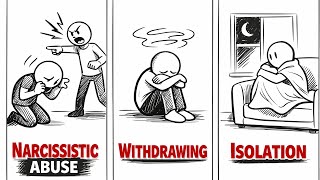
There's a breaking point that happens inside every empath. Not the dramatic kind you see coming, but the quiet one. The one that changes everything about who you are.
Today, we're breaking down the eight internal shifts that happen when an empath gets hurt over and over again. Number one, the energy system starts shutting down. Your ability to feel emotions isn't just psychological.
There's actual biological activity happening in your nervous system when you connect with someone else's feelings. Your mirror neurons fire up, your vagus nerve activates, and your brain processes their emotional state like it's your own. When you get hurt repeatedly, something interesting happens.
Your system starts treating emotional openness like a threat. Your amygdala, the part of your brain that handles fear responses, begins associating emotional connection with danger. Every time you open up and get hurt, it's like touching a hot stove.
Eventually, your brain doesn't wait for the burn anymore. It pulls you back the moment you get close. This isn't a choice you make consciously.
Your body is making it for you. The same nervous system that once lit up when connecting with others now floods you with cortisol and adrenaline when emotional vulnerability appears. You might notice your heart racing when someone tries to get close or feel exhausted after conversations that used to energize you.
That's your system protecting itself the only way it knows how. Number two, your emotional filtering system breaks. Empaths naturally absorb emotional information from their environment.
But there's supposed to be a filter, a way to distinguish between what's yours and what belongs to someone else. When you're hurt repeatedly, this filter stops working correctly. You start carrying emotional weight that isn't yours without even realizing it.
Someone's anger becomes your anxiety. Their sadness becomes your depression. Their stress becomes your insomnia.
The boundary between your emotional experience and everyone else's becomes so thin it might as well not exist. What makes this particularly difficult is that you can't just turn it off. Your brain has been wired through experience to stay hypervigilant to emotional threats.
You're constantly scanning for danger in other people's moods, trying to predict the next hurt before it happens. This takes up massive amounts of mental energy, leaving you feeling drained even when nothing particularly stressful has happened. Number three, trust becomes a physical impossibility.
People talk about trust issues like they're just thoughts you can change. But when an empath has been hurt repeatedly, trust becomes a physical response your body won't allow. You might want to trust someone.
You might logically know they're safe, but your body refuses to relax. This happens because your nervous system has been conditioned through repeated experiences. Each time you trusted and got hurt, your body logged that data.
Now it's using that information to protect you. When someone asks you to trust them, your system remembers every time those same words came before pain. You'll notice this in small ways.
The tension in your shoulders when someone compliments you. The knot in your stomach when someone wants to make plans. the way you hold your breath when someone says they care about you.
Your body is bracing for impact because it's learned that openness leads to injury. Number four, your sense of self starts disappearing. Empaths often develop their identity around being helpful, understanding, and emotionally available.
When this gets exploited repeatedly, you start losing track of who you are outside of what you do for others. Your sense of self becomes so tangled up in other people's needs that you can't separate your own thoughts and feelings anymore. This creates a strange emptiness.
You can read a room perfectly, know exactly what everyone needs, feel every shift in emotional energy around you. But if someone asks what you want, what you need, what you feel, there's just blank space. You've spent so much time tuning into everyone else that your own signal has gone quiet.
The scary part is how gradual this happens. You don't wake up one day without a sense of self. It erodess slowly, decision by decision, boundary by boundary, until one day you realize you don't know what your favorite food is because you always just eat what makes others happy.
You don't know what you enjoy because you've spent years doing what keeps the peace. You don't know what you believe because you've been too busy validating everyone else's beliefs. Number five, guilt becomes your default setting.
Something shifts in your internal dialogue when you've been hurt repeatedly. You start believing you're responsible for other people's behavior toward you. If they hurt you, you must have caused it.
If they're upset, you must have done something wrong. If a relationship fails, it must be because you weren't enough. This guilt operates on a level deeper than logic.
You can know intellectually that you're not responsible for how others treat you, but the feeling persists anyway. It shows up when you try to set boundaries and immediately feel bad for having needs. It appears when you think about putting yourself first and feel selfish for even considering it.
Your empathy, which should be a gift, becomes a weapon you use against yourself. You can feel how your boundaries might inconvenience someone, so you don't set them. You can sense how your needs might burden someone, so you don't express them.
You can imagine how your absence might affect someone so you stay in situations that harm you. The same ability that helps you understand others becomes the reason you can't protect yourself. Number six, your body keeps the score in ways you can't ignore.
Emotional pain doesn't stay emotional when it's chronic. Your body starts expressing what your mind tries to suppress. Empaths who've been hurt repeatedly often develop physical symptoms that have no clear medical cause.
chronic fatigue, digestive issues, headaches, muscle tension, sleep problems. This isn't psychosmatic in the dismissive way that word gets used. This is your nervous system operating in survival mode for so long that it's affecting your physical health.
When you're constantly flooded with stress hormones because you're always on alert for emotional danger, your body starts breaking down under the load. You might notice you get sick more often. Your immune system is compromised because chronic stress suppresses immune function.
You might have pain that moves around your body or symptoms that doctors can't quite explain. That's trauma living in your tissues, expressing itself the only way it can when you won't let it out emotionally. Number seven, you develop a split reality.
One of the strangest internal experiences is developing two separate versions of reality. There's the version where you tell yourself you're fine, you're strong, you can handle anything. And there's the version where you know something is deeply wrong, but you can't quite let yourself acknowledge it fully.
You become excellent at functioning while falling apart. You can smile and help others while internally screaming. You can give advice about self-care while ignoring every sign your body gives you that you need rest.
You can advocate for others to set boundaries while having none of your own. This split is an adaptation, a way to survive in situations where you couldn't afford to fall apart. But it comes with a cost.
You lose the ability to be authentic, even with yourself. You stop knowing what's real because you've gotten so good at performing, okay? That you can't tell the difference between the performance and the truth anymore.
Number eight, connection becomes painful instead of nourishing. This is perhaps the deepest shift that happens. The very thing that once brought you joy, connecting deeply with others, now brings anxiety and pain.
Your gift becomes your burden. The trait that made you special becomes the thing you wish you could turn off. You start avoiding the depth you once craved.
Surface level interactions feel safer because there's less to lose. You might find yourself preferring to be alone, not because you've become antisocial, but because being around others requires putting up walls that exhaust you. The energy exchange that used to happen naturally now feels like a transaction where you always end up depleted.
What breaks something inside an empath isn't one big betrayal. It's the accumulation of small cuts. The repeated experience of opening your heart and having it treated carelessly.
It's loving people who mistake your depth for weakness. It's being told you're too sensitive when you're simply feeling what's actually there. It's having your gift be convenient when it serves others.
and inconvenient when it asks them to meet you with the same care you give them. But here's what you need to understand. These internal shifts, as painful as they are, are your system trying to protect you.
They're not failures. They're adaptations. The fact that you're still here, still trying to understand yourself, still looking for answers means something inside you hasn't given up on the possibility of connection that doesn't hurt.
[clears throat] Healing doesn't mean going back to who you were before. It means integrating what happened and building something new. It means learning that boundaries don't make you less empathetic, that protecting your energy doesn't make you selfish, that choosing yourself isn't betrayal.
If this resonated with you, hit that subscribe button. We need more people talking honestly about what really happens inside us when we're hurt. And drop a comment telling me which number hit hardest for you.
Was it the trust issues? The disappearing sense of self? Let's talk about it because you're not alone in this experience.
Thanks for being here.