(smooth music) - What's up guys? Michael here to talk about "South Park", wait what was that? Sure.
Sorry, we're actually talking about war. The past few weeks, the media's been saturated with the latest upsetting updates about Russia's attack on Ukraine. And because we have beating hearts, the whole situation has had us pretty disturbed.
It's not that we're strangers to hearing about armed conflict in the news. Between civil wars, long-term violent unrest over territory, and the occasional undeclared American war that lasts a goddamn lifetime, it can start to feel like state sanctioned violence is perpetual, contractable, and somewhat ubiquitous. But as we watch the most surprising and depressing events of 2022 play out we've been wondering, what is the point of war?
Why do human beings always seem to be waging it? Is it natural? And yes of course, what is it good for?
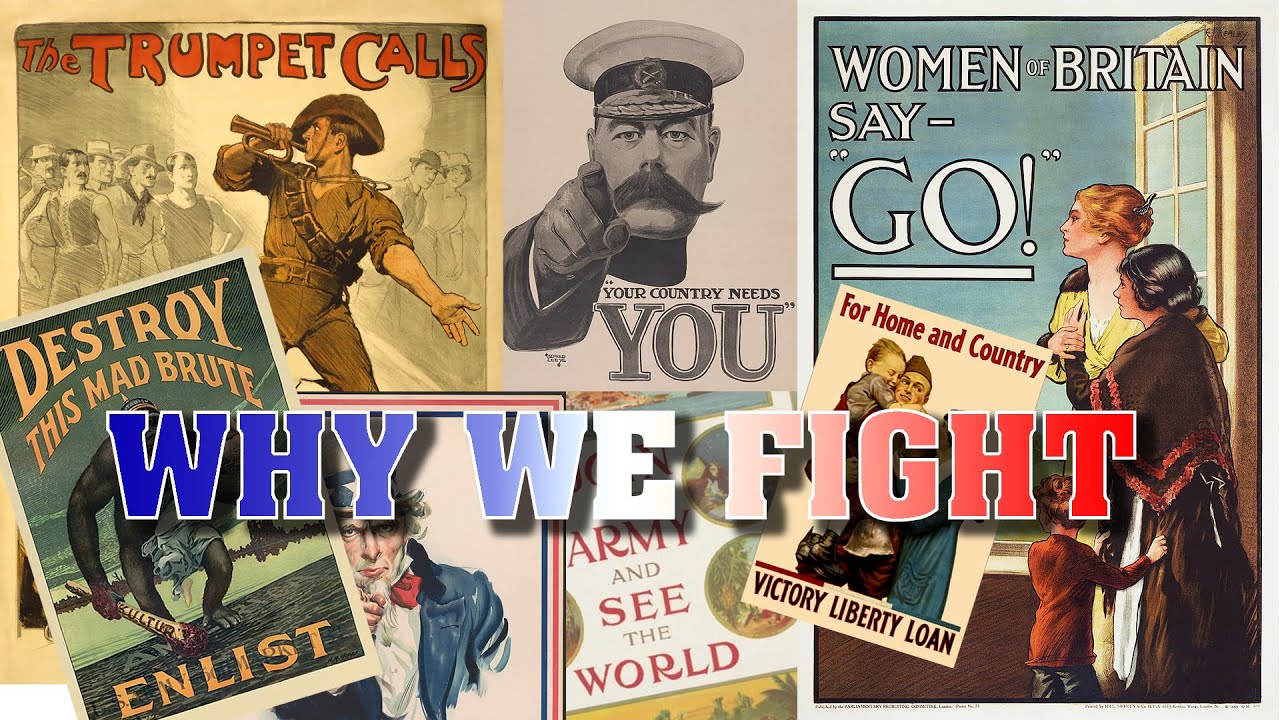
("War" by Edwin Star plays) ♪ Absolutely nothin' ♪ So join us on this very lighthearted journey into the deeply violent depths of mankind in this Wisecrack Edition on war. Why? The answer to the question why war might at first seem pretty obvious.
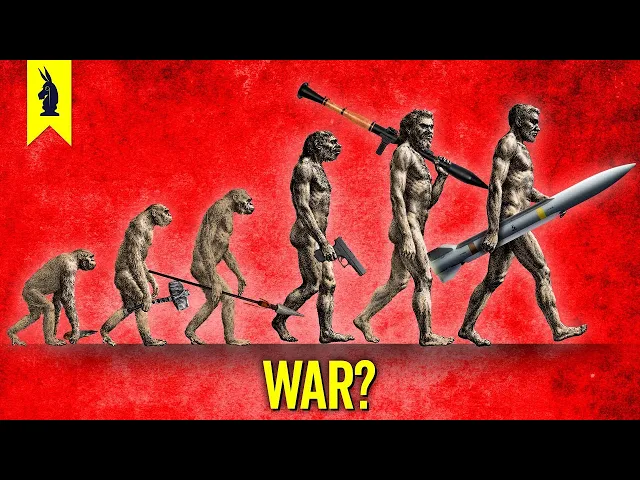
The way most people explain humanities propensity for war is that it's inevitable, it's natural, it just kind of is. In fact if we had the production budget to man on the street to question is war natural, we're pretty sure that one we'd overwhelmingly hear yes, and two I'd probably get beaten up on Hollywood Boulevard. Anyway that gut reaction has some scientific and philosophical credence.
Most obviously there's the classic philosophical screen from one Thomas Hobbes who argued that life is nasty, brutish, and short, and he didn't mean nasty in a good way. Or as the poet Nas once said. ("Life's a Bitch" by Nas playing) ♪ Life's a (beep) and then you die ♪ Other proponents of this view that violence amongst mankind just kinda happens would include the likes of William James and Sigmund Freud.
And plenty of anthropological scholarship bolsters this belief, with fossilized human bodies showing evidence of man on man violence. Since the 1960's anthropologists have used the savanna savanna as a surrogate for early humans and found that they appear to really like hitting each other. Famously a study of the Yanomamö people, one of the last few remaining truly hunter-gatherer tribes conducted by controversial anthropologist Napoleon Chagnon, found that men who committed multiple murders had more reproductive success, I-E acquired more wives than those who didn't.
He used these findings to argue that violence is a desirable evolutionary trait in male humans, which yeah that tracks with every James Bond movie I've seen. However many scholars push back on this idea altogether. Take the Yanomamö example.
For starters, it's been alleged that much of the violence Chagnon observed amongst the Yanomamö was actually caused by Chagnon who handed out machetes and axes to encourage the tribe members to participate in his study. What's more, anthropologist Douglas Fry's analysis of Chagnon's data finds that the men who committed murders were on average 10 full years older than the peaceful ones, giving them way more opportunity to land a few wives. This is obviously an isolated example, but it speaks to a much bigger epistemological problem, that is a problem with the way we acquire knowledge.
According to Fry, western scholars studying ancient hunter-gatherer cultures tend to suffer from a sort of confirmation bias. Because we live in a world torn up by war where violence is just part of the landscape, it's easy for folks studying ancient humans to find evidence of war everywhere. Skeletons of cavemen that show damage to the skull for instance were typically interpreted to be evidence that one guy clubbed the other guy to death, thus humans are naturally violent.
But Fry argues that upon closer inspection some cases like these have been found to merely indicate that the ancient human was attacked by animals, or that their skeleton had gone through run of the mill archeological decay. Or take the 9,000 year old walls of Jericho, commonly thought of as the first archeological evidence of war, which have also caused some serious scholarly disagreement. Some experts now believe that the walls were built to protect the city against flooding rather than against hostile neighbors.
In his book "Beyond War" Fry makes a compelling case that for the majority of our existence war has actually been extremely rare. He notes that although the violence of homicide, feud, and war grab our attention, an examination of cross-cultural data reveals that people usually deal with conflicts without using any violence at all. While violence between individuals, usually male, seems to have always been around, Fry argues that the unmitigated killing between two or more groups that is necessary to constitute capital W war is remarkably absent from most of human history.
Scholar John Gowdy adds that judging from historical accounts of hunter-gatherers for most of the time humans have been on the planet we have lived in relative harmony with the natural world and with each other. Our minds and cultures evolved under these conditions. Evidence suggests that war emerged only when human social order became more complex, adopting among other things hierarchy's and horses.
What's more, large scale war appears to have only existed for less than 2,000 years. A mere drop in the bucket for homosapiens. Fry even argues that human beings have successfully evolved precisely because evolution favors restraint and limited interpersonal aggression.
In fact, it's one of our strengths. Human beings are creative and adaptive enough to find non-violent solutions to problems, such as soliciting a friendly mediator, talking things out, or my favorite tactic, simply running the (beep) away from the angry guy holding the club. Now the idea that human beings are naturally prone towards peace is of course contested.
But at the very least, fry's account throws a serious shade of doubt on the assumption that cavemen were prone to group violence, and that human beings are basically chimpanzees with less facial hair. And many scholars agree with Fry's contention that most human societies existed largely in a state of peace and abundance. You may be wondering why we're talking about ancient hunter-gatherers in our purported attempt to understand modern war, but it's really important that we not take the reality of warfare for granted.
That's because assuming that humanity is naturally war happy necessarily changes the way we react to and think about war. As Fry explains, naturalizing war creates an unfortunate self fulfilling prophecy. If war is natural, then there is little point in trying to prevent, reduce, or abolish it.
It's like the macro version of the depressing statistic that people with a gun in their house are more likely to die of homicide. And we'd argue that the assumption that war amongst humans is natural underpins a lot of the narratives we tell ourselves about ourselves. These days it's easy to feel like war is inevitable.
Scholar James Hillman writes, during the 5,600 years of written history 14,600 wars have been recorded, two or three wars each year of human history. That's pretty (beep) staggering. But if you, like us, have a strong distaste for organized human violence, it's worth looking to peaceful societies no matter how differently they might be structured from our own.
What makes indiscriminate violence between two or more groups of people so rare until relatively recently? Arguably the lack of fixed group identity plays a pretty big role. See in ancient hunter-gatherer societies if you belonged to one band of people and got in a big fight with your bunk mate, you would often simply leave that band and join a different one.
And because lineage was frequently tracked both matrilineally and patriarch-ally you would have kin in multiple tribes, so you had friendly options. What's more, the overlapping flux of the state of group membership made violence between groups less likely overall. As Fry explains about the Aboriginal people of Australia, band membership was neither closed nor static.
Individuals and families shifted band residence over both the short-term and the long-term. Virtually every person had relatives and contacts in other groups. These overlapping social and kinship networks that spanned the flexible bands served to damp inter group hostility.
The idea of floating between a network of groups at first blush might be hard for us to relate to. Most of us forge our identity largely based on the groups we permanently belong to, like bald dudes with hearts of gold and slightly raised cholesterol. And often we identify primarily by our country of origin.
As scholar Benedict Anderson wrote back in 1873, nation-ness is the most universally legitimate value in the political life of our time. But it's important to note that the idea of national identity is a relatively new one if you take the grand span of human history into account. Some scholars note that medieval elites may have had a national consciousness thanks in part to the influence of the church, this didn't really reach the masses and become modern nationalism until the eighteenth century when thanks to enlightenment and romantic thinking, nationalism became what scholar John Hutchinson calls a surrogate religion.
Whereas previously borders have been porous, the concept of a unified nation carried a greater sense of solidarity when it emerged in Europe around this time. Anderson attributes the rise of European nationalism in the late 1700's to three things. First the fall of Latin as Europe's universal religious language, accompanied by the rise of national dialects.
Second the death of the divine monarch in the cultural imagination, which (woman screams) required now precariously positioned rulers to seek out other forms of legitimacy. And lastly the emergence of the mass produced newspaper, which united countrymen in a shared experience in worldview. These factors coalesce to start building more robust national identities.
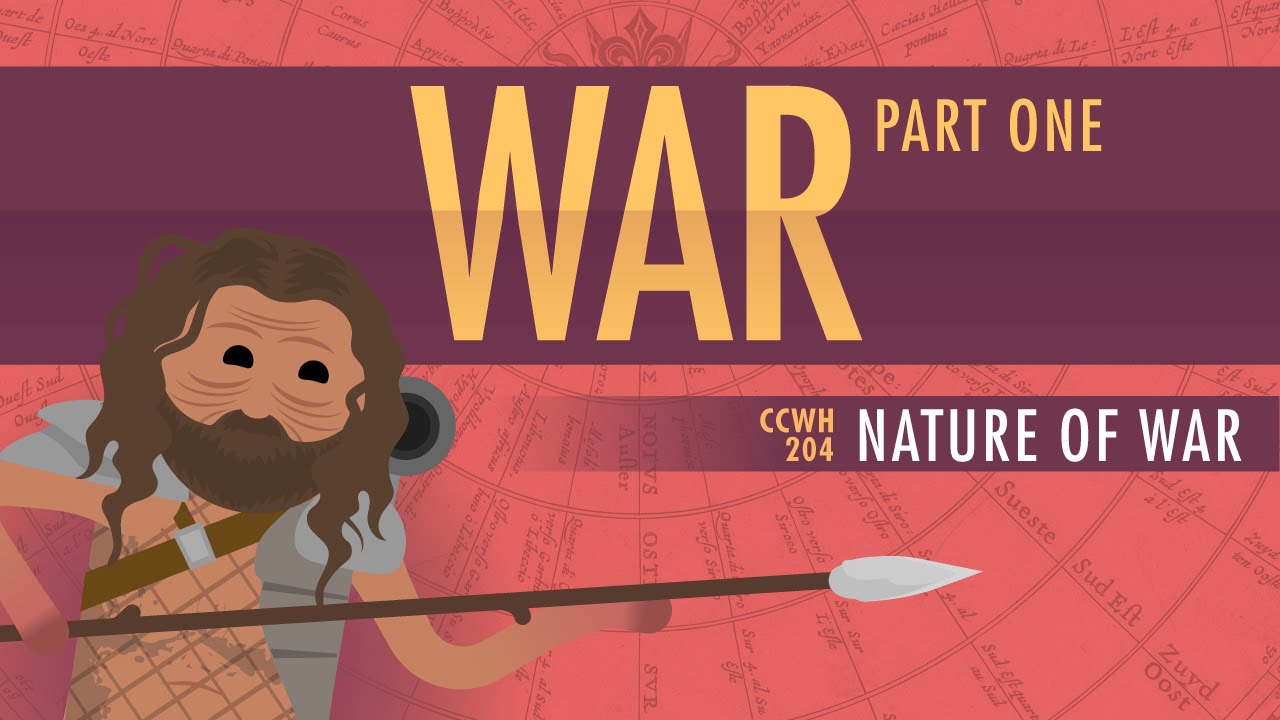
Now of course there was war before there were modern nations. Ancient empires didn't form out of pure fondness for their leaders. And there were outliers of large scale long-term warfare long before the eighteenth century, such as the hundred years war which ended in 1453.
See England and France used it to figure out who gets to own and be France. Obviously a young Chicago woman named Emily Cooper who is in Paris, 'cause we're talking about "Emily in Paris". But if anything, this was a precursor of things to come.
The people involved were starting to be attuned to large collective identities that would solidify and strengthen in future centuries. Anderson refers to a nation as an imagined political community, because a person in any given country could never possibly know all of their fellow community members. Creating a nation Anderson explains, also forges a deep horizontal comrade-ship that is shared amongst its people.
But according to him, this sense of camaraderie is not without potential consequence. He contends that ultimately it is this fraternity that makes it possible over the past two centuries, for so many millions of people, not so much to kill, as willingly to die for such limited imaginings. That is perhaps to say that without our deep national allegiances it wouldn't be possible to convince so many people to go to war in the first place.
To be clear, Anderson's views are not unopposed. And some scholars think the connection between nationalism and war can be overstated. But interestingly enough others argue that there's also a reciprocal relationship between war and nationalism.
Scholar John Hutchinson argues that wars and their aftermath only further bolster national identities. That is to say, our nations might bring us to war but war also brings us closer to our nations. Or as scholar Charles Tilly says, war made the state and the state made war.
Now obviously there's nothing wrong with being proud of your country of origin or with having your identity deeply tied to it. But Fry's research does substantiate Anderson's argument. He found pretty conclusively that as society trended away from loose hierarchy free collectives and towards governed organized nation states, war became far more likely across the board.
That's not exactly surprising. You can't assemble an army out of a small band of loosely connected people, but you can destroy the one ring to rule them all. Militarism necessarily relies on butt loads of folks willing to risk their lives for something bigger, and that something is very often a nation.
And that deeply ingrained sense of national pride facilitates the kinds of wars our ancient ancestors never would've thought to wage in the first place. Of course you need more than just a complex society to wage a war, and not all complex societies do. Fry determined back in 2006 that 20 countries in recent history have gone at least 100 years without a war.
You need one more all important thing and it's not a literal enemy. As Hillman writes in his book, "A Terrible Love of War", all along we are speaking of the idea of an enemy, a phantom enemy. It is not the enemy that is essential to war and that forces war upon us, but the imagination.
Imagination is the driving force. The way we imagine our enemies then rather than any reality based rage or hatred, is often the true instigator of war. We don't talk a lot about the nature of war today, which shows the organized battle fields of say the Civil War where reporters could safely observe from the sidelines, but targeted air strikes that typically dig into civilian territory.
And specifically we don't often discuss how war is actually more dangerous for regular folks than ever before. As reporter Caroline Nordstrom notes, approximately 90 percent of casualties in modern warfare are civilians. The enemy is no longer enlisted soldiers fulfilling duties in the trenches as we've seen all too glaringly in the coverage of Ukraine, as well as in decades of American air strikes in the middle East, just to name a few.
Today it's hard to imagine a war that doesn't involve civilian casualties. And this can feel pretty depressing when you're someone with functionally no control over geopolitics. Fry is ever the optimist.
He notes that humans have survived for so long precisely because we're highly inventive and adaptive. After all, we largely went from living in tiny bands of foragers to industrialized cities in the evolutionary blink of an eye. And he argues that with enough political will we could use that adaptiveness to construct a world without wars.
And while that may sound a bit sentimental we thought we owed you at least one uplifting thought. So what do you guys think? Is war just the inevitable result of modern civilization?
Would we be better off if society had never come up with alternatives to hunting and gathering? Let us know in the comments. Huge thanks to our patrons for all your support.
Be sure to check out our new Patreon page, we're dropping some new exclusive content. Tap that subscribe button gently like the peaceful homosapien you are. And don't forget to ring that bell.
And as always, thanks for watching. Later.