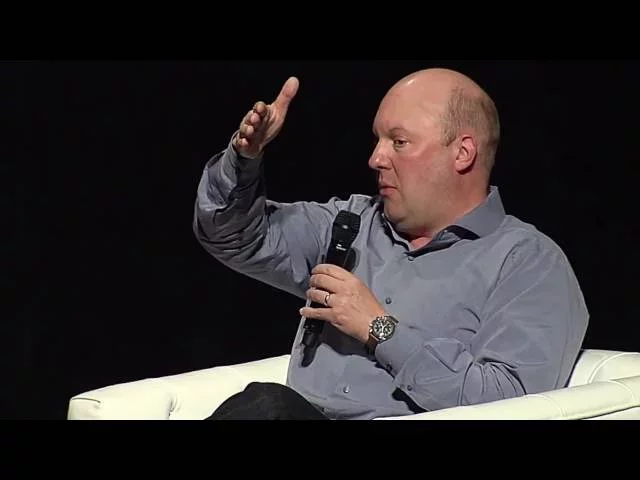
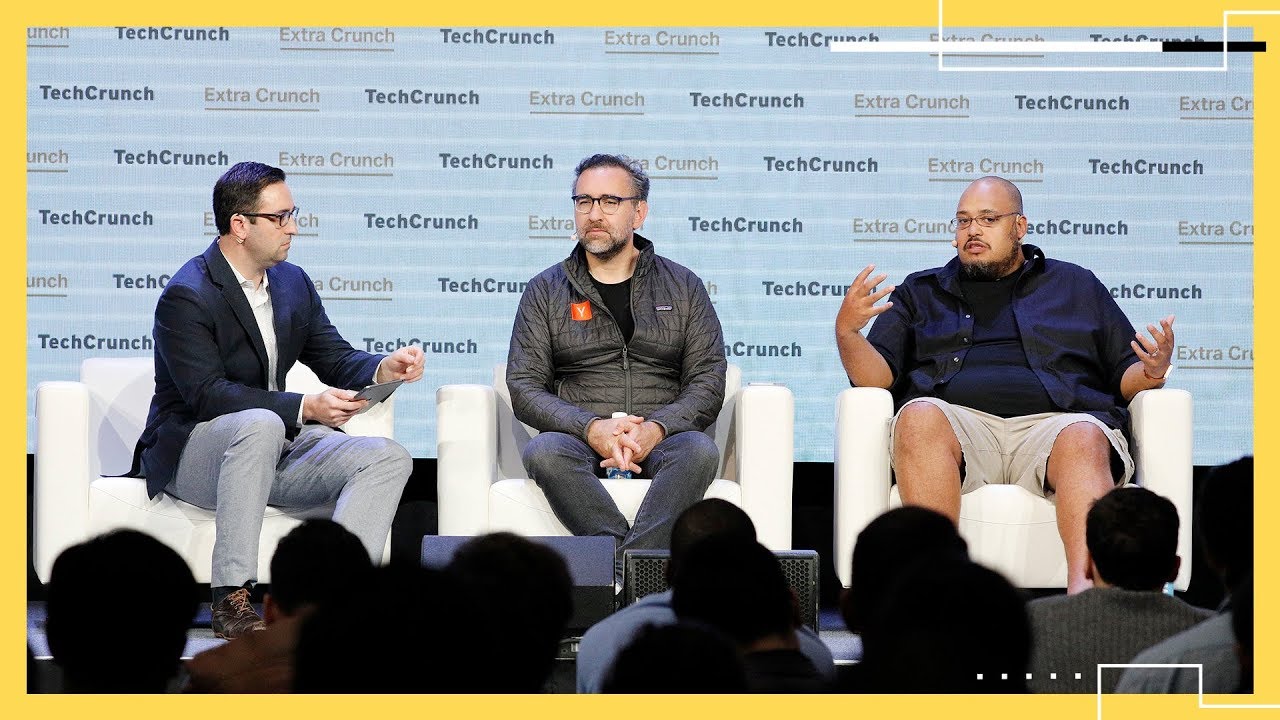
okay so uh up next we have a fireside chat with uh Mark andreon uh come on out Mark I think he's right back [Applause] there they know who you are no introductions needed so uh thanks for coming back this is uh your third startup school and I think maybe you're the only person who's been on stage both as a founder and now as an investor so uh I won't go through through your history but what I what I'd like you to kind of talk us through is how you came to the decision after starting a
bunch of tech companies to become an investor uh there are a lot of venture funds that exist so why and and how is a16z different yeah so the big thing we we came up Ben and I came up in the 90s uh in the industry and at that point um Venture the good news is Venture Capital had professionalized and so you had these great Venture firms cler Perkinson Benchmark and SEO and others that had gotten really good at what they did part of the professionalization was they had tilted very strongly away from founder CEOs and
towards professional CEOs um and uh there were good reasons for that that that we can discuss um but our view of the industry is that not all but many of the best companies of the industry are run by their Founders for a long period of time so IBM run by the Watson two Watsons actually uh Father and Son hulet Packard run by uh hillet and Packard for 50 years many other you know many other examples Microsoft Oracle uh uh many others um and so the the model had just kind of drifted away from that and
the kind of default move became bring in the professional CEO what do you mean by a professional CEO professional CEO so um the the the basic thing is well there was what they would there's what they would say which is what they said to us at one point which is um oh so when are you guys going to hire a real CEO um and so you know there sort of the the the general version of that answer um the the specific thing um when they say professional CEO generally they talk about somebody with a lot
of business and a particular sales experience uh so somebody who's very comfortable with taking something you know taking something that somebody has built Engineers have built in the lab and then taking it out into the world and so it's everything raising money Marketing sales Finance um you know all organization management all the things involved in building the business and the company uh around the product um and so we we just had you know we had this idea that if we sort of want to tilt things back a little bit now we're not religious about the
founder CEO and there are a lot of Founders who don't actually want to be the CEO or want to partner with a great CEO and then there are also Founders who can't be the CEO and so you know there's sort of no was like to say there's no concept to CEO tenure right CEO is not a guaranteed position like you do have to perform and if you don't perform by the way it's not the VCS that are your problem is that your company collapses and so you know it is important to perform but we we
did believe in the generalized model um that Founders are really important and that the founder CEO is is a good model when you can have it and so and just what we observed was there was not at that point a venture capital firm that really had a had developed an operating model around how to do that and so we we decided to start our firm and then we decided to really Bear Down on two things just been our big areas of focus for the last seven years so one is all of our general Partners um
have built and run companies before um and so um we like to talk about the importance of having people on your board who have been through the struggle um Ben in his book uh the hard thing about hard things he talks about the struggle just all the stuff that goes wrong when you're trying to accomplish something big um I call it the he's more polite than I am um but it's just all the stuff that happens and you know we could talk for hour hours about that but to have somebody in your board who's really
been through it um and so all of our all of our GPS by def definition uh fit that criteria the other thing that we did and this is a huge part of the firm for us today is we built a whole operating model around basically we call it giving the founders superpowers basically the equivalent capability give a Founder who's not operated in business before the ability to operate like a professional CEO would be able to if they just walked in the door and a lot of that has to do with network um and so the
network of all the customers that you're going to sell to the network of all the later on investors you're going to raise money from the network of all the Big Industry companies that you have to work with the network of all the reporters uh that you want you know to get your story out the network of all the engineers that you need to recruit the network of all the executives uh that you need to recruit the network of all the regulators and policy makers that you need to deal with in a lot of these businesses
and so we now have 85 full-time professional in The Firm that build and run these very large networks on behalf of the portfolio and so a Founder works with us uh Jeff uh Jeff woo the founder neutr box described it as you plug into the Matrix you you just kind of instantaneously get this upgrade as a new CEO or even a even an experienced CEO you just get this big upgrade where all of a sudden you're plugged into the world uh at scale um and and that and that's working pretty well did did you think
about this back in 2006 2007 before the firm started did that evolve as you as you kind of built out the firm yeah so that's all evolved and we've we've had you know a whole bunch of people join the firm that have helped us figure this out um and and that run all these run all these all these uh all these teams and networks for us um that have really helped us helped us Advance our thinking but the the core idea was there you know yeah sort of a16z was a startup um and you know
having done startups before we were we were big fans of thinking it through and having a differentiated strategy and so we spent about a year and a half planning this out before we started the firm and and these ideas were at the core of it so uh a lot of first-time Founders in the audience and kind of Ra money as we just did kind of pitch practice here uh is a little bit of a black box what is the just very precise way that you know what's a process that you use to work with companies
how do they get a hold of you and what actually happens after the first email yeah so I would really separate uh fundraising and this has gotten a lot more complicated in the last few years in in good ways um I would separate fundraising of fundraising from um Angels seed investors um uh accelerators um uh you know sort of accelerator rounds preed rounds seed rounds seed extension rounds post-seed rounds um I put all those in one bucket um and and there and that's a you know that's a process that the the the the YC YC
plugs you into and demo day is organized around that um and uh and your you know your friends who have had a startup will will have been through that and so there's there's there's a whole art to that and that's that's a lot of what what gets talked about um then there comes a time when you engage in a different kind of fund raise um and and what I would call an Institutional fund raise um and I think that starts with a formal series a um or anything equivalent to a formal series a uh it
also applies by the way if you're going to go try to raise money from you know a corporate invest or whatever it's an Institutional process you're dealing with somebody who's running a highly professionalized firm you know with real fiduciary responsibility back to their LPS you know the their firm you know a lot of venture firms have been in business for 30 40 50 years there's a there's a way of doing things and things just get more formal um and so I I think that that's the first really important thing uh to think about and you
know when we and we're actually schizophrenic on this because we do a lot at the seed at the seed level and when we invest at the seed level it's a lot like dealing with any other seed investor it's you know are you smart do you have a really good idea do you have a great deck you and let's see how it goes um but when it's a five or 10 or $5 million a round or B round then things get more serious and so when you mean serious so uh let's say I am raising that
$10 million a round uh and I get to give you an email and say hey and then I come in and what happens is it is it just a series of meetings and then diligence and then you have a big check like in those game shows yeah exactly exactly exactly it show up at your house when you're least respecting it um so um really really impressed the spouses um so um uh so the first thing is how do you actually get get in and so there's there's this there's actually an argument that kind of plays
out on on this topic in the valley which is the importance of what are called warm referrals or warm introductions and so the way that most of the top inventure Capital firms work is basically they'll take you seriously if you come in introduced by somebody they've worked with before and they won't take you seriously if you you don't and there's an argument that plays out in the valley which is that that's sort of unfair and unreasonable and you know what about all these you know you you guys talk about all these Founders all over the
world and like why can't they have access the way the people who are already connected can um the argument in favor of the warm referral is that it's the it's the first test um and it's the first test of the ability to basically Network your way to the investor and basically the way the investor thinks about it is if you can't figure out a way to network your way to a VC firm which is of course in the business of meeting Founders then you're unlikely to be able to network your way into hiring right a
great team or network your way into selling your product to customers um and so actually I think I think that the role of the warm referral is is is is misinterpreted I think you just see it as like it's the first test and so I think it's a test that you just want to pass you don't want to take any chances on that the good news is if if you're connected to YC if you're connected into the valley Angel seed ecosystem um that that's a very easy test to pass if you're not connected into YC
then you know the thing to do is to get to the valley right or get into the network and get you know get into YC good luck if you're not to connect it to YC yeah like y YC YC has been a huge like YC has really widened the aperture for Founders to be able to plug into this process and I think in in a very healthy way um and so that that that works really well so that's the first is the warm referral um then there's two theories one is going high the other is
going low um and uh you know so one theory is and you'll hear this sometimes is you know only ever talk to senior Partners at the firms and don't waste any time with the the the more Junior Partners the younger people in The Firm because they can't make the decision pull the trigger um the counterargument is that the senior Partners at these firms um make very little very few decisions from scratch the senior Partners only get to invest in a few companies a year each and and they make very few of those decisions if they're
going to make a decision on their own without any work done by the junior people in The Firm it's probably going to be somebody they've already worked with before so it's actually really hard from a sort of standing start to get just a straight yes from a senior partner so the thing that works better and the thing that I would do if I were you know 22 25 again um I think there's a huge advantage to coming in with with the with the junior people and get networked into the firm and spend a lot of
time with the junior people understanding number one just like pre-flighting like how how is this coming across like how is this going to be received because they you know they can read the minds of the senior Partners they can tell you how these things are going to get received and they can help you um and then also you know we frankly the senior Partners at a firm like ours look to the younger people a lot of like okay like what's interesting and we count on the younger people to stay very connected especially to the the
first-time Founders um and so I really encourage people to actually take take the younger people in these firms seriously um so from that usually the process is a first meeting with one of one of one of those folks which might then lead to a second meeting with a broader group of those folks maybe with one or two general Partners so you kind of have this kind of wind up kind of period and you're you're kind of working through it and are we're talking about days weeks months you know it depends um in a hot environment
um it's you know days to weeks because you as a VC you assume that deals go down relatively quickly um like in in the you know for the last several years I think days to weeks has been the expectation I will tell you in the cold environments you know in 2003 you know we're talking 6 months 9 months 12 months right VC said nothing but time um because uh you know it was so hard for anybody to raise money for anything you could just let these these these things play out for a long time these
days it's it's days to weeks we we try to move in days to a small number of weeks um then the the the big event is to then progress through you know one or two or three meetings and then and then the the way you really know you're making progress is if you get invited to present to the full partnership and that's usually at most firms a Monday uh Monday meeting and that's a formal like that's a full-on formal and that's like all the general Partners at the firm Are there like the whole firm is
there we'll we'll have like sometimes we'll have 40 people in the room for that and people come in it's like presented to the Army but like we we get everybody and the founder actually just presents their company yeah yeah and it's a it's a presentation and and so then this gets into another debate which is like okay you know you smart guys like you go on and on about like creativity and all this stuff why do you want the founder to stand up there like you know like an idiot for you know 50 minutes reading
off of PowerPoint slides you know like why don't we just like why don't we have a conversation why don't we do things casual why don't we like you know why didn't you do more research up front like why do we do this formal presid presentation and again I think again I think that's misinterpreted I think the formal presentation is another test which is as a Founder if you're not good enough at your job as a CEO to get up and present to an Institutional Investor for 60 minutes and sell them on your thing like we're
easy like this is the thing I think Mr about VC VC firms exist to give up money like like we're like we're in the bit like we love when somebody walks in and has a compelling pitch and we can give them a check like that's a successful day for us in contrast every other pitch you're ever going to make is going to be to somebody who's going to be much worse than us right like so customers right are going to be like you know no I'm not going to give you any money like is their
default position right you know Engineers you're going to try to recruit engineers and they've got 20 other job offers right and so why is your pitch going to be so much better than the other 20 startups right um and so again I just I view that as like that's the second big test which is can you successfully execute uh a formal pitch um and then if that goes well then generally you go into um you know there's there if it's like super super smoking hot you could you could move to term sheet very quickly after
that usually it's a week or two of additional work to kind of have some more discussions uh you various people follow up you kind of get into the process of you know the the fir The Venture firm really trying to make sure they understand what you do um you start to negotiate the term sheet um and then at some point you have the term sheet discussion and how many checks do you write a year so we see uh 2,000 startups a year that are warm referrals um and we can say yes uh for at the
institutional level for A's or B's uh we can say yes to about 20 um and we're a pretty highs scale firm we you know we're eight nine General Partners um and so we're and we're up you know large fund size and so we we operate at scale there are other topend firms that will say yes three or four or five times a year um and so and by the way like on the one hand that's very daunting which is like well you know like that's 1% right it's 1% of warm referrals basically um and so
that seems very daunting um I can just tell you on the other hand um it goes back to this concept of the tests like it's not that hard to get good at this part like and so I just I think it's worth the time to really understand and get good at how to how to how to get networked in and how to make that pitch because if you're good at that then like I said when it comes time to go sell your product to a customer when it comes time to go hire somebody those same
skills uh reapply in the exact same way and I think people people should just people should just Founders should just get good at that so uh there's a pretty big you know gap between kind of an average engineer and a really great engineer and and there's ways to test that uh H how do you know an investor is actually good if you're a founder and you're raising money for the first time or you know you haven't raised much money yeah so I think I have uh I think there's five key ways that a Founder can
know whether an investor is good um and they are references references references references and references what was the third one the references yeah references are really important um so um The Good the good news with the valy is the super networked um as a consequence of that you know word people know um so so I'm a founder and I uh you know I'm I'm going to seed fund B what does it mean to do a reference yeah like do I just find people they've invested before or yeah I mean so there's sort of two different
kinds of references there's so-called front door references which is you just you ask me like you know who should I talk to and I'll give you a list of people who I hopefully know will say good things about me um sometimes I'm wrong um uh then there's those the backd door references right which which is which is which is usually where the the value is which is people who have worked with the investor before other entrepreneurs or people who have been at companies that that investor has funded or by the way for that matter other
investors right you can you can reference like the way lot of VCS get reference chees with the you know the Angels um and so your angel investors your seed investors if you're in YC the YC Partners other YC Founders um the internet um Twitter um uh you know these discussions take place uh you know all over the place now so um so I I think you you just you try to it's just like anything else when you're evaluating people is you just try to get to other people who have worked with them in the past
again I think that's a general skill I think that's a good thing to know how to do because if you can reference check an investor it also means you can reference check a candidate yeah right which which is really critically important and I will just tell you like in the valley like in the valley like there is a way to hire great people and it involves references references references um you you just everybody who's good at hiring what should one listen let's say I'm doing first reference check what should I listen to that is like
the double talk of this is not a good investor this is not a good oh yeah yeah yeah so it's all in the it's all in the little tells right so it's all in the like if somebody's good they're like enthusiastic they're going to be pting the table like this this ver is great you should take their money like if you can get them on their board you know your board you're lucky if you get anything other than that right that's like uh-uh like trouble right and it's it's like the silences like you know so
what's a person like in board meetings and then there's like the silence and then there's like the breath like you know and it's like okay they're great trouble you know here we here we come um or you know the other thing is that you know a lot of people don't want to say bad things about people even even when nobody else is listening and so they'll say these lukewarm I mean my favorite is like well they're very punctual right um sharp socks it's always on time right very well dressed um you know always brought Donuts
um yeah and so you just you you got to look even for the back door with the front door references that's what you listen for but but the back door references even still that's what you listen for and even when it's people who you know really well they still may not actually tell you the full thing um and so you you just you just want to test really carefully I just think it's a it's an incredibly useful skill if you learn how to do it you can basically test this out on investors and then and
then when you when it and it does matter for investors but then what it also really matters is when you're hiring especially Executives later on so uh I want to step back a little bit uh lots of Founders investors look up to you and and your ideas who who do you look up to and how do you make sure your ideas are actually like continue to be good yeah so um so I'm a big fan of History so there's a sort of a classic cliche in the valley which is like we don't respect history very
much and a lot of people who visit the valley for the first time that's their impression because they I people may have had this I had this experience I first the valley it's like I want to okay I want to see Silicon Valley I want to drive around to see Silicon Valley and it's like good luck with that right like okay there's a freeway there's a strip mall there's there's an office Park there's a security guard who won't let me in the office Park like there's no physical history here right really um and then and
then in the conversations I mean we're all about the future like we're building the future and so I think there's this natural tendency to assume that the past isn't very relevant and I I actually think I actually criticize a little bit you know there's sort of the Elon school of thought now which is very strong in the valley which is sort of think everything through from first principles which has its huge strengths for sure um but it does kind of dismiss the idea that people who came before us had anything to teach us um and
my general view is the people who came before us um had a harder time doing what they did than we do because the world was in a more immature State like they didn't have all the they didn't necessarily you know startups started before 50 years ago they didn't have Venture Capital right they didn't have there's a lot of things startups before 20 years ago didn't have the internet things were harder in the past and so the people who were successful in the past I think were often better uh than we are because they had to
be uh because it was harder and so I like going in the in the past um in the tech industry um and I'll just I'll recommend a few books so I think the orig the origin stories of companies IBM there's a fantastic book about Thomas Watson Senor who built IBM by Kevin man um and if you think that Steve Jobs is rough was rough on people um he had nothing on Thomas Watson Senor there's uh the book is the book has transcripts of the executive staff meetings at IBM in the 1930s and 1940s and um
let's just say he was an absolute Terror um and built an extraordinary company and so he's a real role model um not the terror part as much be careful how this is all interpreted um Bill huet and Dave Packard Michael Malone wrote a great book called Bill and Dave talks about how HP got built over the course of 30 or 40 years U by Bill and Dave um and then I like going back further so I like Edison I like what was called The Second Industrial Revolution a lot where like you got electricity and you
got cars so there's a great Edison book called The Wizard of Meno Park um it's really good there's a great Ford book called I invented the modern age um and if you go back and read the history of cars 100 years ago Detroit 100 years ago was a lot like was a lot more like Silicon Valley today than I think people people even understand in fact Henry Henry Ford like Ford Motor Company was not his first company right so there's there's there's all these very interesting Back stories and then I think you can go back
even further I like going back um and and this is not to compare you know us to to this but just as inspiration and Role Models um Florence uh you know at the time of the mediche um Leonardo da Vinci I just got this great book called Da Vinci's robots um and it turns out Da Vinci while he was doing everything else that he did in life he was also designing robots and in his you know sketchbooks there are fully-fledged designs for like everything mechanical you know all the Boston Dynamics he was like trying to
invent all that stuff 500 years ago um didn't quite have the you know didn't quite have the technology to be able to pull it off couldn't quite you know go to couldn't go to TI and get the microcontroller um so he had some issues but you know he's an inspiration um there's another great book called The Lunar men about something called the lunar society which was in England about 250 years ago like James Watt invented the steam engine and all these other guys who were doing this kind of thing back then uh all work together
it's kind of they had kind of a weissy thing going back then um and so and it's all basically it's just you know what it is you're trying to look for okay the world is you know the points in time the world is the way it is everybody takes it for granted and then there's a person or some set of usually a set of people who think no no there's a better and you know different and better way to do things um and then just all the Practical challenges involved and causing that kind of change
to happen and trying to build you know whether it's a new company or trying to build a new movement of some kind or a new kind of art um and I think there's all kinds of lessons to be drawn from all that and and do you extract ideas from those those people or because there is I think one of the one of the problems of being in a in the valley is there's just such an echo chamber of opinions for every opinion there is a counter opinion as is just as lot loudly and and and
aggressively uh uh drummed how do you how do you separate what is actually good advice and what is not good advice as a Founder yeah well you just you go back and is right I guess what I dra from history is like it's always hard um and so you just like Henry Ford is an example like there was nothing easy about building Ford Motor Company um or Thomas Edison there was nothing easy about electricity like electricity I mean talk about like you would think that that would be a relatively easy thing to get people to
want um and it turns out there was actually a lot of effort and work involved in getting people to think that was a good idea um and so um uh it's just it's it's it's so it's that goes back to Ben's idea of the struggle it's just there is so much work and effort involved there are so many false starts there are so many things that can go wrong um and I think you draw on all the different lessons and theories from then and now when you kind of view them as a mental toolkit to
draw on but I guess I would say one of our beliefs the Ben also talks about his book is there's there's no Silver Bullet like there's the Temptation when you get kind of in in the is always like there's got to be a way out of this and it's got to be one thing there's got to be some idea or to your point some piece of advice right or some way to reframe you know if I could just reframe the pitch this way or if I could just hire this person or just get this customer
um or something you know it's going to fix everything and we always like to say there are no silver bullets there are only lead bullets um and so you just have to kind of do all the work um and most of the work is just a grinding it's just you know grinding labor and there's just no substitute for it um and I think that frankly I think that comes out of the history as well so um what do you think is you know we're kind of heading in the tail end of 2016 what what's in
store in the next couple two years two and a half years for the startup ecosystem and um because there's been a lot of talk and a lot of different opinions about both in verticals and where verticals are going in just the the larger community and ecosystem right yeah so I guess you know maybe two two two schools of thought so um as you're all probably well aware um experts um have been declaring an imminent bubble and crash continuously since 2004 um so we're now in year 13 um next year will be year 14 of Declarations
of an imminent uh.com crash Redux all over again um they are uh these uh the people who predict this are getting increasingly frustrated that it hasn't happened um and increasingly irate that we're all still here um uh you know uh maybe they're right um and we've just you know completely reinflated you know com bubble 2.0 and we're just it's just a now we're just delaying until the inevitable crash it's possible um you know I mean you seem skep I'm skeptical well because the other the other the other Theory right so the other theory is we've
we've entered a phase of the industry where you know some things are just working now um and in particular right the internet the internet is working now which if you were here 20 years ago that was not necessarily uh a certain thing and like the internet works you know mobile uh Works uh the smartphone works um uh you know God willing the new Apple headphones will work um you know some stuff is just starting to work um and so you've got these marvelous you know you've got this you giant installed base now people all over
the world on the internet you've got a you know this massive growing consumer acceptance of e-commerce you've got these giant new social platforms you've got these you know all these new these new playbooks for how to build these companies um uh you got the rise you know developer adoption of Enterprise technology is like a whole thing that's working now um and so these things are working at very big scale and and each of these things that the big things that work are all platforms to build on top of right they're they kind of opportunities for
more things to then get built that right on top and so I I just think a lot of those things are working really well so which isn't to say that everything's working right and so I think the the valley and startups will always be characterized by you know there will always be you know called a power law curve where you'll always have some big successes and then you'll have a long tale of things that don't work and you'll have a bunch of stuff in the middle and so you always get this kind of distribution of
success um but you have enough things that are working um at scale that are serious um and so you know I think the things that are working are working really really well what what do you think in terms of uh or do you believe in this kind of thematic of these three or four markets or these three or four spaces in the next couple of years are are really going to be most likely the places where some of these outlying returns are going to sit or do you are you more agnostic yeah we're totally schizophrenic
on that point um so um anybody in the field can't resist talking about this all the time and by the way there is substance to it right it's like there there was there was a point at which you know there was a point between you know when the iPhone came out to probably 2012 was like there's this point where all the mobile killer apps that were going to be on the home screen of the iPhone were going to get built and by the way got built um there was a point where you know early earlier
there was a point when the PC came out that all the PC killer apps are going to get built so there are these things that happen these new platforms get established and then and then there's this period of time where things get built on top there's a bunch of candidates for that today that are very exciting so broadly I'll give a few examples AI machine learning deep learning as one cluster of things um very um you know tons of activity happening there intersection of uh biology Healthcare um and computer science uh big cluster of things
happening there transp a right autonomous ground Vehicles air vehicles actually now C vehicles of different kinds uh different sizes shapes descriptions uses um are really starting to click um and you know we could probably name another another half dozen so you know and and we you know part of our job is to track track those those fields and try to try to figure out the best new startups how do you guys actually track those fields oh just it's just a constant it's just kind of the action of the firm the flow of the firm so
it's just constantly trying to review try trying to you know trying to map the landscape trying to understand all the companies um uh trying to meet all the founders um so that's the one hand I would just say on the other hand on the other hand um I would say that I don't think any VC really does that good a job predicting these things um in the sense of you first of all it's so the the big successes are so dependent on the specifics they're contingent on the specifics and so it's the right founder with
the right idea with the right team with the right breakthrough at the right time and the right market with the right you know pricing model it's all these things have to come together and you just you never my experience is you just never know when that when that company is going to crystallize um and it often happens 5 or 10 years after you think it should um and then it can often be the case that you get these companies that are breakthrough companies in fields that people thought were dead so we just an example we
have this company tanium people written about now which is a it's a it's a security company um and um it it's in a field where I think a lot of VCS thought that the opportunity to build big franchises was over and like this company is is growing like unbelievably Fast Very but very specific uh uh set of people who really understand the problem and you know became available at a certain point to go after it they're going after you know VMware um is another great example virtualization VMware popularized virtualization virtualization was a 30-y old Mainframe
technology it goes back to the 1960s um and Diane Green and mendal Rosen Bloom uh out of Stanford um mendal out of Stanford and Diane out of sun started VMware in 1999 at a time when everybody knew that like Enterprise software was on its way out and it turned into one of the big breakthroughs Google highlights like like Google was like the 35th search engine right it was like 34 other search engines had come along and like we all knew for a fact that number one search didn't work like it would gave you crappy results
and number two there was no way to make money on it like those two things we knew for sure how how do you know as a Founder that you're not too early because you know we we talk to a lot of Founders and and how do you know that you're you know 35th rather than maybe first or second that your timing is right so my experience is the great Founders almost always feel like they're you almost always feel like you're too late and you're almost always too early um and you almost always feel like you're
too late the reason is cuz for you it's become obvious like for all of you you know everybody listening to this like you've got some idea in your head and like as far as you're concerned the world should already work this way which is why you're pursuing it and so to you it's a little bit inexplicable as to why it hasn't happened yet and there must be 80 other people going after the same idea and it must be just about to happen and I must be too late which is by the way which is actually
how I felt with that that's gap I was like we're too late um in retrospect we weren't um uh the reality is you're almost always too early um uh we almost never see a qualified founder fail cuz they're too too late to Market it's almost always because they're too early to Market and I think by the way and I don't say that critically I think we make when we screw up Investments I think that's often the reason as well I think we're in the exact same boat as the founder in that in that degree which
is we believe it's going to happen therefore we invest and it just turn it just turns out the way the history gets written is the world just wasn't ready yet so I always like to point out like the the iPad was like this breakthrough product in 2009 and you know Apple oh my God they invent all these things well there was this thing called the Newton um 20 years earlier uh in 1989 if you haven't heard of it look at up on Wikipedia it was the iPad 20 years earlier and it was like virtually the
same thing um and the world just wasn't ready yet the Technologies weren't in place you didn't have mobile broadband you didn't have the high resolution screens you didn't have the Battery Technology and you just they they brought the thing to Market and it crashed and burned and it convinced people for 20 years that tablet Computing would never work and then they did it again in at the iPad and it worked um and so I I think that in a lot of ways that's the biggest risk the biggest conceptual risk we all deal with is just
that I think that's the permanent curse of the entrepreneur yeah remember you uh you gave a talk at YC one time and you said uh you know if you the one way to figure out if you're not too late is if what you're working on was being hotly covered three four years ago you're probably right on time because now the infrastructure and consumer behavior is now caught up to what was you know exciting in 2012 2013 um last question you know through through whatever fate or whatever you lose everything and at the end of the
day today you're 22 years old again um what do you start what's what's the company you would start so if 22 again um I think what I do is I go try to find the best um uh the the the hottest company the the company in the valley that's growing the fastest um and that has a really good culture and a really good foundation um for training um and so and an example of that would be an Airbnb um but there you know there are many others even by the way still Facebook um I would
go try to I go to plant myself at a company where I can really learn um okay fast forward now you're 25 you've got you've got your three years at Airbnb in what do you start now well so I I spend that time so one is I work my butt off to establish a good reputation so that when people reference check me right I reference check well um but the other is I I spend that time thinking and I really critically I spend that time building my network and the people who I know that I
want to work with you know down the road um and then um and then I either yeah I either come up with an idea or I don't but I I would focus much I think it's very hard to I'm deliberately avoiding your question because I think it's very hard to to to to to answer in the abstract let me answer it a different way if I were 18 and I were going to college um I would do I would really I would do computer science again in a heartbeat um um and then I would either
focus on uh cryptocurrency uh distributed systems and the broad uh domain of cryptocurrency um number one number two AI machine learning deep learning or number three um U intersection of Bio uh biology and CS so genomics and synthetic biology I would personally I would do those one of those three areas and the hard part for me would be picking between them because I think they're all they're all to me it just seems like all three of those are going to have transformative work in the next 20 years it's going to change a lot of how
the world Works awesome thank you for your time good thanks [Applause] everybody all right next up is a quick bathroom break if you lost your car keys head to the registration to find them um and we'll see you back here at 4:30