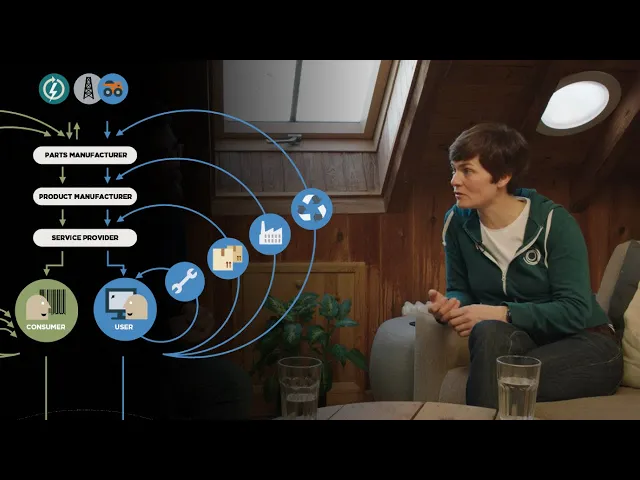
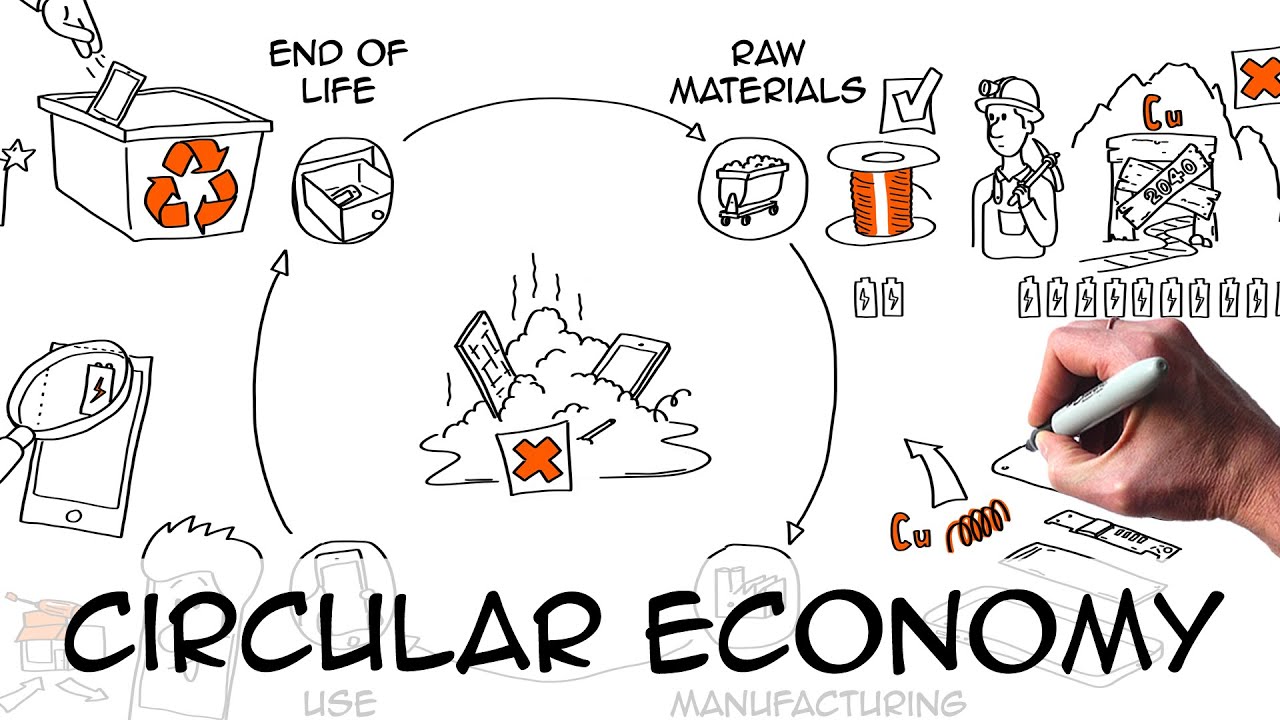
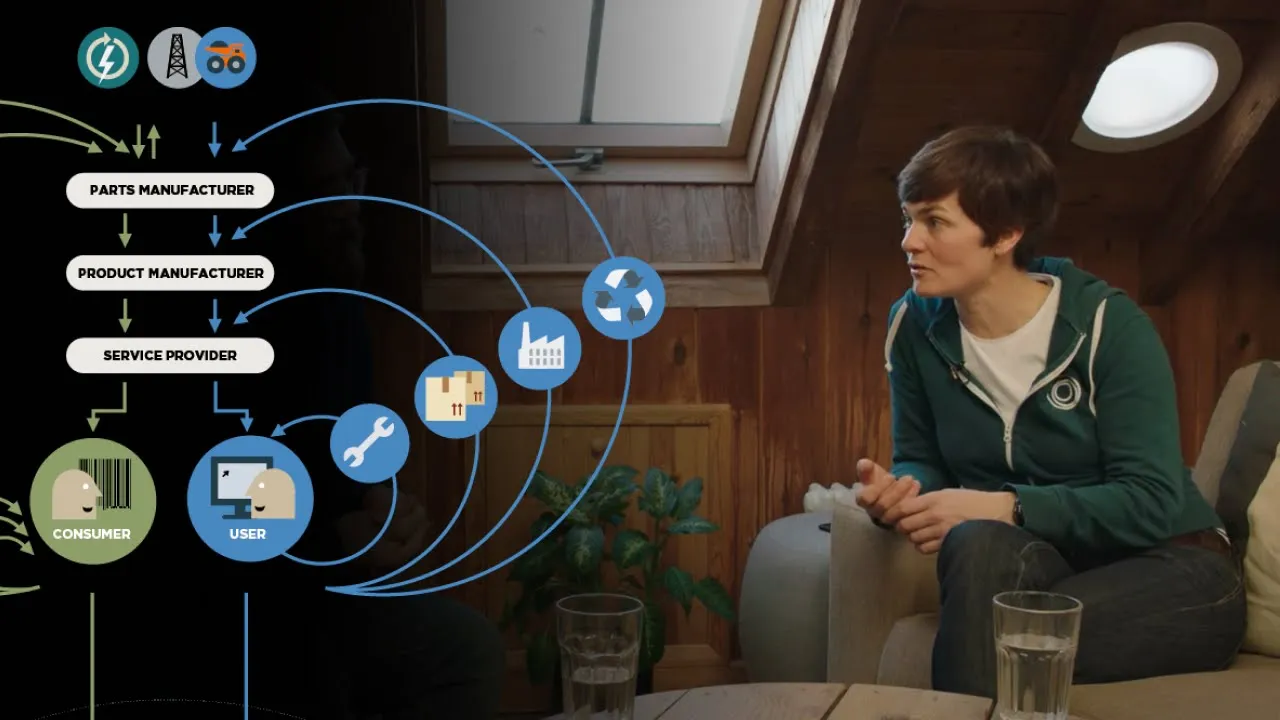
when we talk about the linear to circular from a straight line to a circle we make this circular economy idea sound really simple and one of the things that appeals to me is that in essence it is the first things that I learned about circular economy is this idea of it being made of two different types of material technical and biological so firstly technical what is the technical cycle technical cycle is is basically anything that doesn't by degrade so it would be metals rare-earth metals most plastics polymers things that you would want to recover within
a circular economy and feedback into the system it could be through recycling that could be chemical recycling it could be physical recycling anything that doesn't biodegrade and that the biological cycle is the side of the circular economy that would biodegrade now you could think of that as being in a food or or wood but it's it's very very broad it could be cotton you know it could be a form of wood which is chipboard it could be anything that if it's designed correctly which is also very important would physically by degrade and return to the
to the soil and it's very important to distinguish between the two because the technical materials you want to recover and feed back into the economy you can't let those lie on the ground and disappear because because they won't apart from perhaps some metals will eventually rust away but they're very valuable at the biological cycle is valuable in a different way because it's biological material which for billions of years has been returning to the earth and regenerating soil and actually we've kind of broken that cycle with with timber with cotton with food with food waste with
human waste no we're not returning that to the soil and regenerating cycle so you think of those two technical and biological cycles and today we often one of the problems is we mix those things up by the time we combine biological materials with technical materials in ways that they can't be separated clothing would be a great example with a poly cotton and we can't recover those two different fibers get all woven together you met your assay clink how is it part of circular economy well recycling really yes you want to do it absolutely of course
we want to get the materials and feed them back into the system but it's almost the loop of last resort most of the value in a phone for example is the phone of course the components have value and of course the materials have value and you want to recover them at the end of the life of that phone but actually the phone itself has the most value so yes we want to recycle and packaging would be a an example of a very high volume low value material that you would want to design to be 100%
recyclable if it were plastic for example but then you also have these other products that that sit in a different space where you want to keep them as the product for as long as possible so in essence if you have to make something again that surely is takes more money energy absolutely and I think a great example of that is remanufactured engines well if you think about making an engine for example that engine is a phenomenal piece of equipment that's had you know millions of hours of R&D put into it and it works most remanufactured
engines today have actually broken they come into a factory having been broken they get completely stripped down ultrasonically cleaned and then the majority of the parts get reassembled into a new engine about 80% of the original parts are in the new engine the remanufactured engine 20% will be replacement parts but that engine then has 80 percent less energy than 80 percent less material and it compared to a new one so you're saving so much money and resource through keeping it in the system now that's a broken engine if you can predict when it engines about
to break and then remanufacture it before it breaks you'll be changing much much much smaller parts and if you design it for that then it'll be a much cleverer system when you look at cars today they're parked the majority of the time in over 90 percent of the cut at the time the car is just parked not being used and then when it is used the majority of the time it's got one or two people in it so within a circular economy of course you would design the car so you can remanufacture it so you
can disassemble it so you could recover the materials but we probably wouldn't own it we've probably have access to it somehow either leasing it or you would pay per mile or you know like Zipcar or streetcar there are so many examples now particularly in cities where more and more people are living whereby you have access to this car and once the car isn't yours and you don't physically buy it then almost the manufacturers incentivized to build a slightly different car because they don't want to build it as cheaply as possible to sell because they only
make money when they sell another car they want to make a car that's actually that works that's remanufacture all that they can recover the materials from because they're probably leasing that into a system they will get that back they will want to be able to get as much value out of that for the second cycle or the third cycle as possible okay from remanufacturing what about things like repair and maintenance are they the next level up well repair our maintenance keep things in use at their highest level if you can catch something before it breaks
that would clearly be the right thing to do before you have a catastrophic failure that needs a remanufacture of that engine for example so yes repair is absolutely part of a circular economy that could be a phone it could be a car it could be clothing how can you keep that thing that's been made with the energy and materials in it in use for as long as possible it's definitely growing industry now several times I've repaired my phone taking it apart follow the instructions it takes a couple of hours but actually by the time you've
gone off and taken the phone somewhere and paid someone else to do it and gone back and collected it and not had your phone for a while it's actually quite inconvenient and I think there are people who would love to fix it themselves there are other people who absolutely don't want to do that so there are different options but it's great to see the space growing then lastly on this technical cycle sharing as part of the part of the picture and it could be related to some of the other loops that we just mentioned but
we're seeing more people share the products are there well if you think about a power drill you know most people have one in the home but most people hardly ever use it and it's generally not a very high quality drill and it will probably break when you used it just a few times because it's bottom end of the market and you can take that to the next level with China with white closet you know you've effectively leased your clothes you sharing your clothes with other people but you don't think of it like that you're leasing
them you're having this phenomenal box of great clothes delivered to your home and then off it goes and so sharing doesn't just have to be between you and your neighbor or you and someone down the road you can actually be done in a much more sophisticated manner so that's the technical cycle things like repair remanufacturing recycling what about the biological cycle because the roots are going to be quite different if we want to make use of those all the materials and value within that cycle you can't rent or repair a sandwich not really but if
actually if you think of the principles they're very similar so technical products keep them in use for as long as possible you know think about this building this is timber this has been in use since the 1500s this is being kept at a very high quality because it's doing a very important job that could have been burnt in the 1500s and then it would have been very low quality very quickly albeit doing a useful job so if you think about applying that to today's economy a piece of timber could be burnt which we do in
many countries all that piece of timber could be made into a table at the end of the life of that table the table could be broken down and turned into particleboard at the end of life is that particle board it could be broken down and it could turn into compost if it was intelligently designed so think about what we call cascading how can you use the item you have for as long as possible it could be said for cotton you could make a t-shirt that t-shirt could become wording or stuffing or padding or sound insulation
then eventually if it's you know non-toxic organic and biodegradable it could feed back into that biological system so it's not just the biodegradable things we think of it you know like food waste or human waste or leaves from trees it's also the bigger things you know these things and the fibers how can we keep those in use for as long as possible how can we keep them at the highest value so many loops so many innovations and a different way of thinking you know if you put a toxic ink on a piece of paper when
you print it then actually you can't really recycle that paper and turn it into you know cereal box for example so think about how you design think about what system you're designing for and on the biological cycle people often talk about things being regenerative more regenerating natural systems what do we mean by regenerative and why is it's so such an important part of that biological story I see a regeneration is an opportunity we've been so extractive and so consumptive for so many years you know we talk about in a 60 harvests left before topsoil degradation
means we can't really grow anything in the way we do today I mean that's quite critical but if you can collect all the biological material the human waste the food waste of food production waste and feed that back into the system you have the ability to regenerate it in today's world is a phenomenal opportunity now we're so used to thinking let's just make this last a bit longer let's eat out what we've got a bit longer but this is a completely different way of thinking let's actually make it better let's regenerate it let's make it
richer let's make it hold more water let's make it better land is that flipped perception from how can we just minimize the negative impacts too how can we build something better to have a positive impact with with all the different activities that are going on in the economy every day absolutely it's completely different mindset [Music]