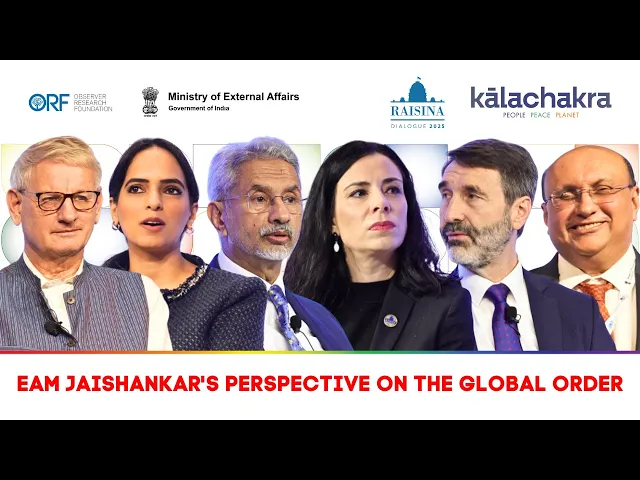
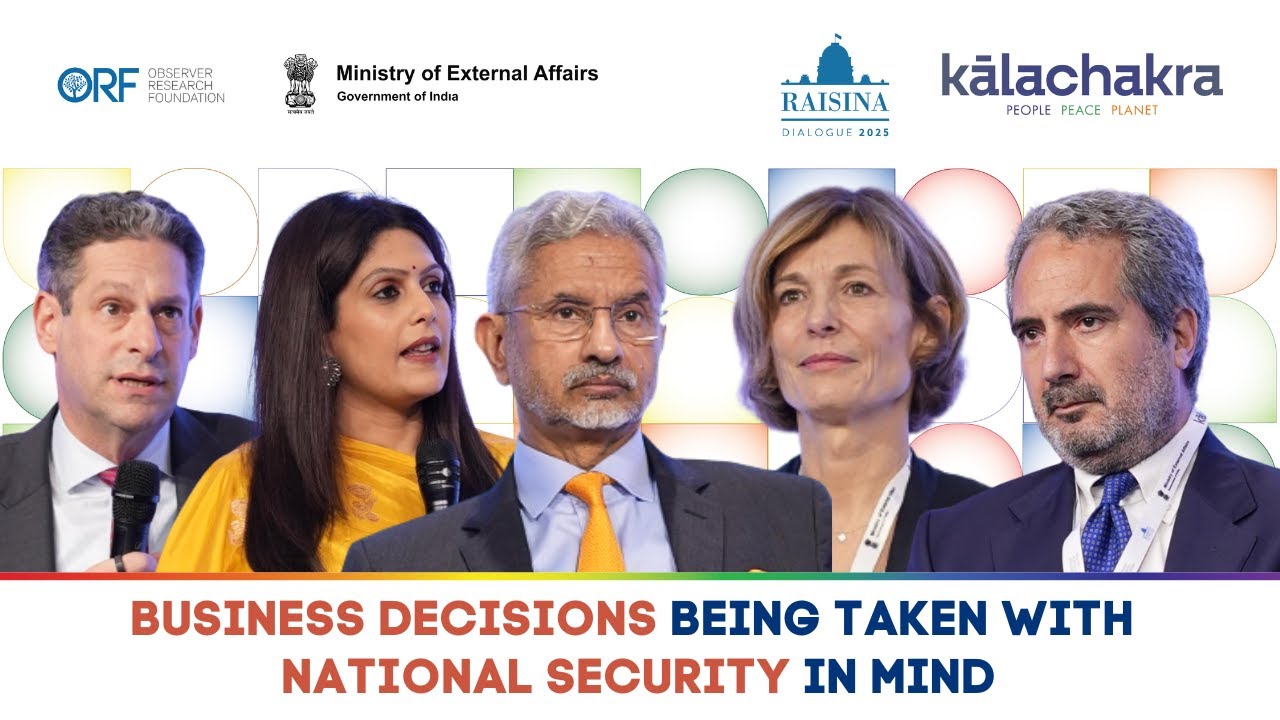
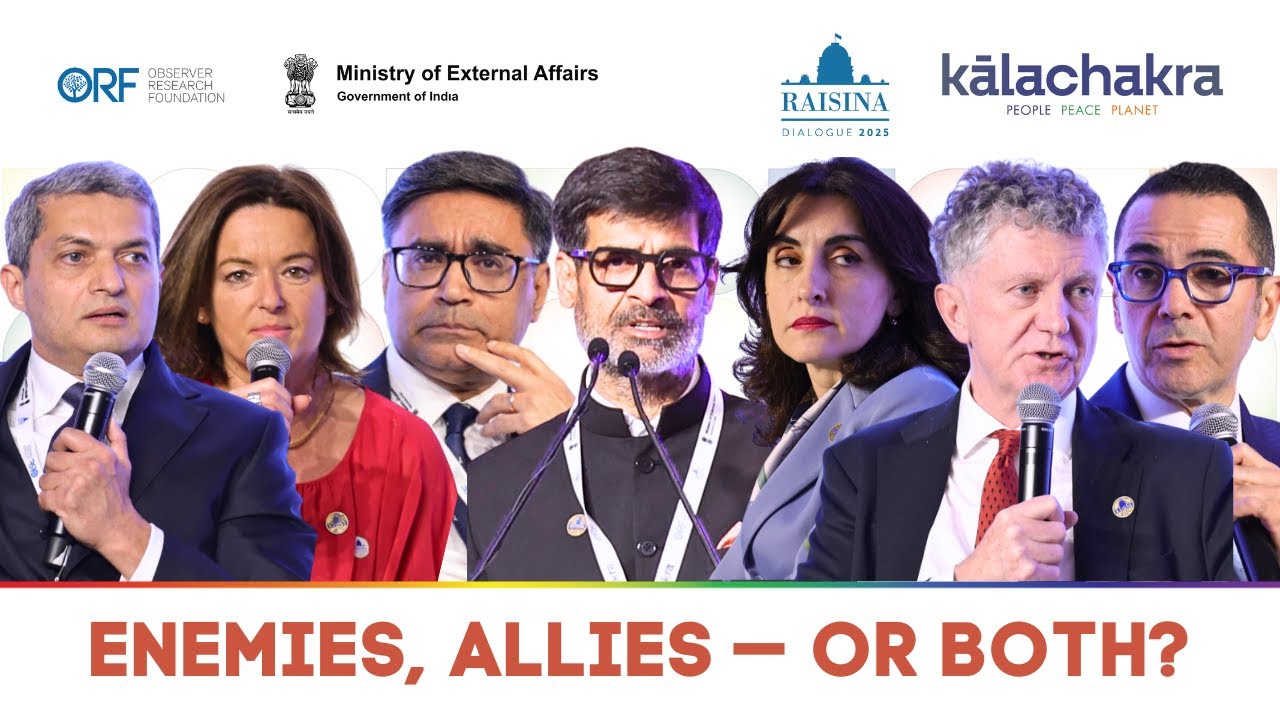
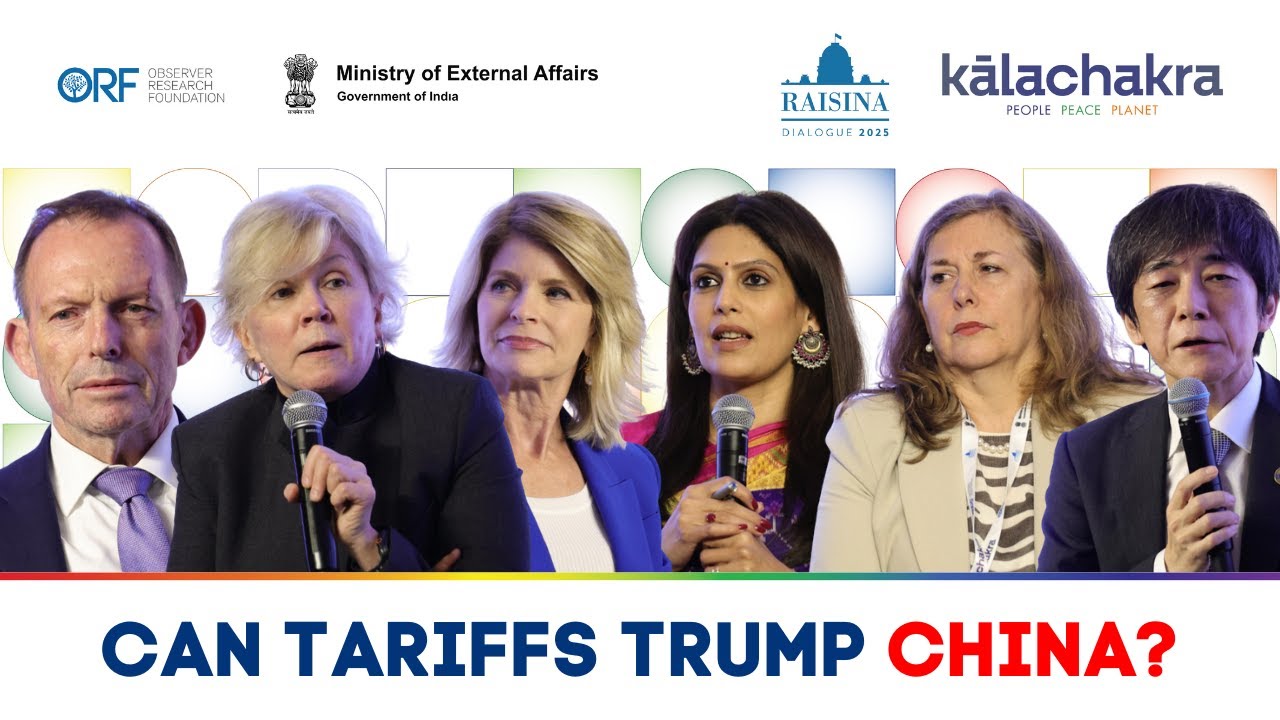
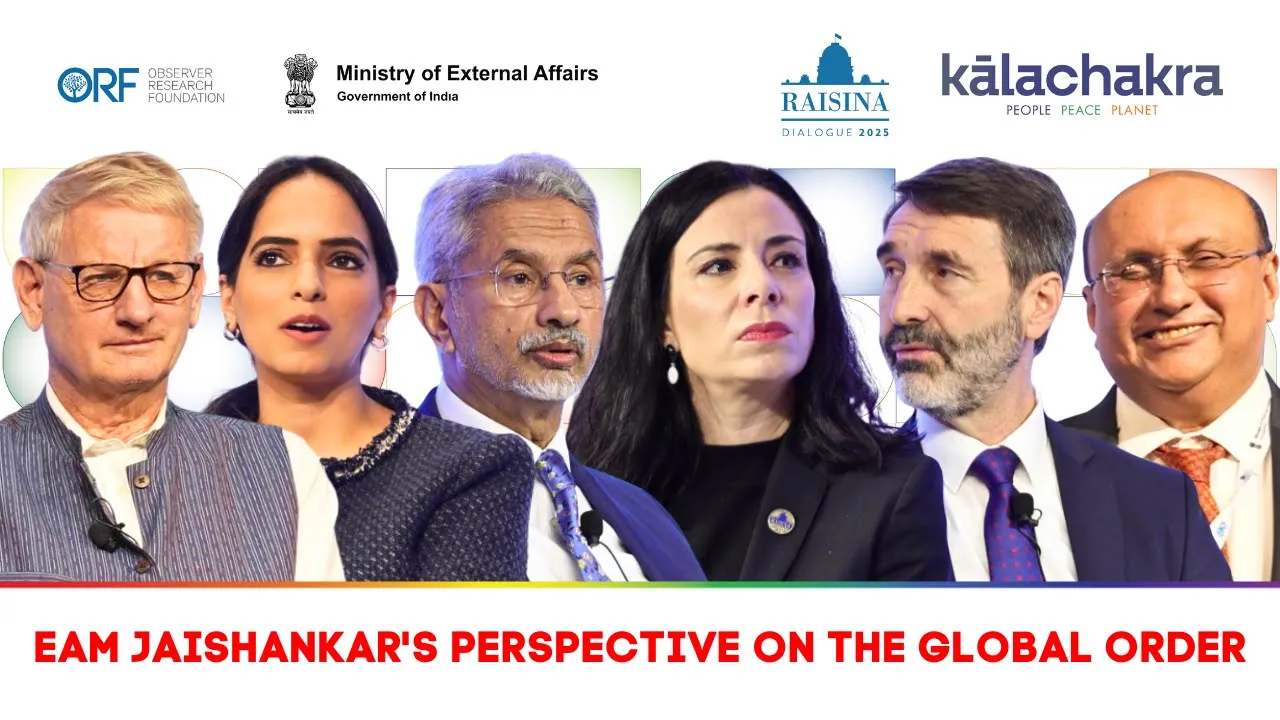
as the sort of business end of the rer dialogue begins we have a a blockbuster panel four ministers and former ministers uh one leading scholar from the Middle East let me begin with Carl built the person to my far right Carl in 2023 at this time Europeans were berating the global South for not upholding European values in Ukraine in 202 before at this time uh the global South was berating Europe for not upholding European values in Gaza this year you have the American vice president berating Europe for not upholding European values in Europe what's going
on yeah that's a bloody good question [Music] um particular related to the last part uh don't ask me to uh explain what the US vice president said in Munich about the freedom of speech because that was to be incomprehensible but but we have free speech in Europe so he's prepare he's welcome to come back and say the same thing and see if we can understand anything of what he means but the first two questions are or part of the question somewhat more relevant um Ukraine you mention that as a question of European values I would
say it's not a question of European values uh the Ukraine aggression is question of the fundamentals of international law indeed if you go back to say the nuray trial they defined aggression as the Supreme International crime above everything else and they did it for the very reason that the International System is built on States it's not the United Nations really it is the United States that we have and respect for the sovereignity and territorial Integrity of states is the absolute foundation stone of International Security everything flows from that so the Russian aggression was uh a
fundamental breach of that in much the same way as of Saddam Hussein against great and we have a couple of other cases not too many and the International Community has always reacted very strongly against them and we had that in this particular case as well we had 141 members of the United Nations voting to condemn it I'm not going to mention I'm sometimes diplomatic I'm not going to mention who abstained in that particular vote but anyhow um so I think that's a fairly fundamental thing GSA um painful uh as is the entire conflict in the
Middle East but slightly different of course because Israel did have the right to respond to the terrorist attack no question about that but at the same time it had the duty to respond within the respect for international humanitarian law did it do that in my opinion not and the European Union said so as well there were strong reactions from Europe because the way in which at the end of the day the Israelis handled it from the humanitarian law point of view it was not a quest of aggression but it was a question of great of
international humanitarian law and then of course we have been fairly strong in uh trying to Advocate a resolution of that particular conflict based on international law two-state solution respect for un resolutions and all of that if you see that in the last few weeks where the European Union has been very strong in expressing support for what's been said by the by egyp by Saudi Arabia by the Arab League on Gaza thing where there have been some fairly stra you might have noticed some fairly strange proposal circulated international debate and Europe has been very strong in
say no intern national law applies so the word is a complicated place I think we Europeans um see if we agree on this uh try to base our position yes on values no doubt but also the fundamental interest that we have in something called International order Which is far from perfect but which we want to work as much as possible and I think our strong reaction to the Russian aggression against Ukraine comes into that but also the position that we've taken on the resolution of the conflict in the Middle East whenever and then I diplomatically
leave the US vice president to side thank you I'm sure others will have a lot to say on that Dominique H you have spoken in the past and with some eloquence and determination about big Power vtos in the security Council negating the sense of the general assembly is the solution a more democratic less elitist I would say multilateral formulation and how would that work in practice so first of all thank you very much for having me today it's a great honor to be here um perhaps I start with the beginning where isenstein located in the
heart of Europe and for us uh the United Nations and the international rules based order is part of our DNA we are 40 th000 inhabitants living in the same borders since 300 years without Armed Forces so if there wouldn't be an international rules-based order if we wouldn't have a strong un my country wouldn't exist anymore in a few minutes so if you ask me about the wio and why lonstein is engage engaging so much also in the general assembly it is because of that we do believe in multilateralism we do need a strong un and
a strong un is only functioning when we are orientating each other uh at at the framework framework which we gave us and I think it is clear that there is a right to a Vito but it's also clearly defined in the charter then we we we should use the the weo and the problem is really uh that uh it's often not used that way how it is described and how it could be used and we as lakstein with our VTO initiative we try just to bring in we want to not NE uh negating uh the
sense of Vito but we just want to say if there is a we to up and the Security Council is not uh working and functioning because of that in is blocked then we want to hand over the responsibility to the general assembly um and this is why we brought in the wio initiative it is also because we always said that we if we want to have a strong un we have to reform the UN and that was a first step it won't be the last one but I think if um the Security Council is not
able to act it is an important step at least uh on that was shared by consensus from all United Nations members um that at least then the we Leo is not the right the last world that's also about diplomacy that at least then we have the general assembly acting well I expect your words will resonate with many in the room Ur Plana this is a global debate we're having here but intrinsically at its heart it's actually a very European debate is the stress test of sovereignity and integrity in some senses an argument about the European
project uh about how Brussels if I me implicates Brisa thank you thank you very much for kind invitation to attend this uh event again it's my second time I am here and it's confir confirming of import Slovakia attaches to the relation with India and this region and I think you have chosen very topical issue for our discussion while it may sound theoretical it goes to the core of many of problems in today's International effort but when it comes to the question you raised you know yes absolutely but this is nothing new in the history of
European Union which is about the sharing the sovereignity in between the member states and uh it descends with the uh uh with and through the member of member states of European union and the common EU institutions big or small members uh equal share their respective sovereignity in the name of European project the EU is uh going to be is not going to be United State of Europe for number reason but especially the diversity of the political system of the of its members since in the area of vital National interest but especially in the foreign policy
and the trade decision are taken by the consensus all members equally have a possibly to so shape and block any discussion that could harm their uh interest if necessary the key element of the European project is uh constructive solidarity and this is I think very important to understand meaning states are in agreement to seek solution and to support each other and let me give you one example we have the rotation of EU presidencies are held by each country for 6 months and if there is no AG agent and some big country is just the presidency
so it has very much uh uh to put efforts to come to any agreement with a low country which is uh not very favorable with some issue which is raised so it's normal and I think it's very good that's why is uh uh so called uh European Union about the sharing and no giving up the sovereignity L similar to entering multilateral treaties it is up to the each state to decide what to accept or not Slovakia is a mediumsized European nation with open export oriented economy 85% of GDP is generated by it thus for us
this is the better alternative uh to function in within the European Union and I think this is very important to underline so at the same time for my country it is important to keep the VTO right inside the European Union especially on the issue related to national identity the current balance between the national and Euro competencies is U defined by the existing treaty framework particularly the Lisbon treaty uh of 2009 we fully respect that and we see uh no reason to uh reopen the treaty now so I think this is whole picture about how we
are behave within the European Union and I would like to add something to our fellow uh panelist that adherence on international law is the fundamental key for such a size company a country like Slovakia is or Sweden or others and lonstein because R if this erosion of international law Contin so there will be disorder and we have to come uh uh back and to start debate serious debate about the reform of un and Security Council as well thank you thank you I'll pick up on that word disorder my next question as J Shanker a few
days ago you give an interview to the financial times where you said and I quote if we don't have an order then you are looking at a very anarchic World very Hobs but you also said and this was the headline of the article in fact the virtues of the old order of the Old World Order are exaggerated why are they exaggerated well uh first of all good to be with all of you and with all of you too uh look I think uh we do need an international order uh just like we need a domestic
order uh so if you you know you need a society in a country you need an international version of that and it's not just big countries who will benefit if there is no other I would argue that any country which will take risks which will have extreme positions which would you know test the system will actually use disorder to its Advantage I mean we've seen in our own neighborhood you don't have to be a big country to be a risky country I have some smaller smaller neighbors who who have done a pretty good job at
that so first of all I I think we should all uh you know understand the importance of an order you know now the old order uh it has I mean it was an order uh it was a product of its times but why I felt that its virtues were exaggerated was I think the rule maker and the rule taker had some more different perspectives because I also said in the same interview if you were at the receiving end of some of those rules or the application of those rules we had issues and let me give
you two or three practical examples you know if you if you capriciously you know if it suits your interest somebody is good not good well I'll make up my mind how they're going to do and you apply that order to the same country on the same issues differently uh take Afghanistan okay so the same Afghanistan the same Taliban which was an outlier was welcomed in the Doha process was welcomed in Oso apparently at that time people were okay with it today again we going back saying you know Taliban is doing all these uh not so
good things now if they were doing all of that what was discussed in Oso and Doha you know you had uh uh a British general who described them at that time as you know well they are country boys with their own honor quote now so when it suits you to deal with the Taliban they're okay when it is not they're not okay you are a extremist today you wear a suit and tie you are okay you know I I think I have a problem with that all let's take give you a second example um we
all speak of sovereignty and territorial Integrity all of us agree uh it's a vital principle it's a Bedrock of global rules after the second world war the longest standing illegal uh uh I would say presence uh occupation of a territory by another country pertains to India what we saw in Kashmir now we went to the UN what was an invasion was made into a dispute so the attacker and the victim were put on power who are the culpable parties UK Canada Belgium Australia USA so pardon me I have some question marks on that old order
now I can give you many more we speak today of political interference when the West goes out into other countries it's apparently in pursuance of democratic freedoms when other countries come into the West it seems to have a very malign intention so I think we need if to have an order there must be fairness I agree with you Dominic we need a strong un but a strong un requires a fair un a strong you know a global order must have some you know some basic con consistency of Standards you know we have military CPS to
our East in Myanmar they are no no we have them even more regularly to the West you know where they seem to be okay so I I would I think it's important to audit the working of the world for the last eight decades and be honest about it and to understand today that uh you know the the balances the shareholdings in the world have changed we need a different conversation uh we need uh frankly in that sense a different order uh I move now to Dubai Abul hul the order disorder dialectic is perhaps historically most
keenly felt or pronounced in in your part of the world the Middle East you represent an Arab Voice or West Asian voice on the panle 100 years ago uh Western pars began building peace double quotes in the Middle East they failed spectacularly they're still failing now we have the Paradox of an Arab country hosting and brokering peace between two Waring European nations how can we and I purposefully use we here do it better first of all it's a pleasure to be um with you all here today and I have to say hearing the sentence 100
years ago um Western Powers sought to bring piece to the Middle East sounds eerily similar to what we're hearing today in the news um so um but the difference is I would say 100 years ago what western Powers actually did in the region was was not bring peace it was um enforcing Colonial um imposition arbitrary borders and governance models that were frankly parachuted into the region they were not built by the region and so what we see today is um is the result of it being not peace but for fragility um and it's a legacy
of externally dictated Arrangements that often ignored the political social and perhaps more importantly um um economic realities um of the region but the Paradox uh you mentioned is is indeed striking um in Arab country and the gulf country today is um in fact attempting to broker peace between more Waring European War Waring European nation but this reversal um I believe underscores a very fundamental shift that's happening in our part of the world that's not getting enough attention um and it is that Arab Gulf countries um in particular will no longer just be passive subjects of
of a new international order they're actually quite active Shapers of it and this this changes Dynamic and way that I think um requires us to to approach the question of how can we and I think we here I can broadly say Arab states but also um Global South South South cooperation more broadly how we can do it um better is as follows one um sustainable uh peace cannot be imposed um it has to be facilitated and I think that's the key thing that would be um a difference from traditionally Western imposed peace building processes is
there's no Legacy of sort of neoc colonial um objectives there's no sense of trying to have a one-sized fits all model on how peace should and should not look like and there's a certain legitimacy in credibility to that because we've we've actually lived um lived how wrong uh that that went um and secondly I think we must prioritize economic interdependence as part of Peace building processes and the gulf is perfectly situated to put forth um um such an arrangement the formula I think that is yet to be cracked is how can we make war too
costly and how can we make cooperation too beneficial um uh to move away from and thirdly um we must Embrace multi-alignment as um as a strategy rather than a liability and I think India does this uh br ly um and what makes the global South I think the future of Peace building um and peace processes today is that it's going to approach um with a bigger capacity for genuine non ideological non-alignment um and that is something that has been uh particularly absent when we've conflated the term Western with global when it comes to values but
also political processes more broadly thank you uh Carl BS let me ask you a provocative question the last one was proactive enough since the end of the Cold War there has been a widespread belief in Europe and elsewhere that the era of mapmaking and political cartography is behind us it's over after January 20th is a new era of mapmaking and territorial change upon us when the world order changes do our Maps change well if you talk about a new era of of mapmaking I hope you're wrong because a new era of mapmaking would be a
new era of war and that's the we we we Europeans tend to be we're not alone we tend to be fairly fundamentalist or respecting borders and that's based on the bitter historical experience that all of these you can call them as the US president did the other day on the US Canadian border artificial lines drawn on the map they are artificial lines all of them but theyve all been drawn by Blood rivers of blood through history and if you start to mess with borders the only thing that is certain is that blood will start to
flow again you can do peaceful changes Czechoslovakia was divided into the Slovak Republic and the Czech Republic in perfect peaceful harmonious divorce those things happen but the historical lesson is otherwise fairly clear and that is why going back to Ukraine again uh but going back to Saddam hsein great going back to annexations in the Middle East these are dangerous things both in themselves and because they could send that message as imply that it's a new area of mapmaking and if it's a new year of map making then some are strong and some are weak and
the strong will Jo the borders in the way they want 1962 might be remembered in this part of the world as another exercise in map making that was dangerous and I you can see the strong reaction that we have on these issues and as said artificial lines you can always go back in history and say things were like that before thousand years ago we had that particular land accordingly we have the right to land now um the US president to take him again because he happens to be fairly active in this particular debate I've noticed
um he said that the one way or the other they will get Greenland well Greenland has been part of Denmark longer than California has been part of the United States yeah well even Texas I think um I don't want to give any idea to the Mexicans here but I mean you see when when you start to play with borders you play with blood um and that is why we are then there are it has to be said there are some difficult cases sometimes uh we did manage we and we it was managed a peace overall
a peaceful breakup of the Soviet Union overall there were exceptions the breakup of Yugoslavia did not man was not managed in a peaceful way as as we know and there was a borderline case which is still complicated from the point of international law and that is that was Kosovo because much the same way as with Soviet Union Yugoslavia the independent republics had the right to Independence Kosovo wasn't a republic but is nearly a republic it had been deprived of some of the rights of Republic status so C he didn't have the automatic right to Independence
that Bosnia or Slovenia or Serbia or Catia had Macedonia North Macedonia these days and and that created an ambiguous situation that has been somewhat painful from the point of international law and resulted in other War as we know so that's why we are and that's why we are due to rather bitter historical experience rather fundamentalist on respecting borders fair enough sobering words Dominic Hustler a pro provocative question for you as well you represent a small but extremely prosperous and successful country a financial center with very high per capita GDP don't countries such as yours inevitably
compromise sovereignity to become so successful why and when is that a problem so thank you very much for this provocative question and I would allow myself to give a provocative answer I would say it's the complete opposite we in lonstein always regarded cooperation and integration as a safeguard and a means of shaping our sovereignty and it was never isolationism and it was never building up walls and if you look back to our history I said it before 300 years same borders surrounded by War but uh we we have never been affected of course first point
it helped us that we had good neighbors for whom which we are very thankful but in 1970 even though we have good neighbors our Prince his Serene Highness Prince Adam II he hold a very very symbolic and a very Visionary speech to the population he sat back then and he choosed the symbol of backpack even though we are as Lin surrounded by good neighbors we shouldn't depend on the Backpackers of other we should stand up for our own sovereignty and that was the first step also to go uh into the process to be part of
international bodies first we joined the Council of Europe it wasn't easy at all because we really had to prove that back then those 30,000 inhabitants are able to be a state and to act like a state and afterwards in 1990 when he had experience with International bodies we could join the UN so it was was always cooperation and integration and if you are asking me about the economical success also there lonstein is part of the EA we are not member of the U but we are part of the internal Market we implemented 10,000 of EU
acts one could say if you implement foreign uh acts that could uh perhaps influence your sovereignty but in my country it was always we are highly industrialized not only uh a financial sector it was always the case that these legal Frameworks gave us also sovereignty and I think it's the same with international law we gave us this framework also at the un uh and sometimes in those times I have the feeling that you could believe that un only serves smaller countries of course a small country like mine always know from morning until night and from
night until morning 24 hours that we are dependent on the uh uh international law but my colleague from India he spoke of of my heart when he says the serves for everybody whether you are small or big and I think that is multilateralism there is sitting on a panel a country with 40,000 inhabitants versus a country with 1.4 six billions inhabitants and we do say the same we need a strong multilateralism we need a well functioning un and I think that is a symbol of that it is worth to fight for urri blana your two
previous colleagues have spoken with some passion about European institutional architecture and integrity quite honestly for eight decades the United States has underwritten Europe European sovereignity Mr Trump has new ideas from here on how will Europe secure its territorial integrity and its sense of sovereignity thank you for this question I think you are right what is right now happening is that us Administration is asking Europe to take care of our own defense and security and as you mentioned with celebrate the 80th anniversary of the end of the second world war so it is about the right
time to do something right now and just like a bit uh happened in India we Europeans are now trying to become more independent uh and more autonomous in the field of different defense and security it does not mean losing strategic tithe with the US of course and Canada uh quite to the contrary it is about coming more equal security Partners within the our NATO's allies across the Atlantic the war in Ukraine uh rewinded NATO's uh Collective defense Reliance two new members Sweden and Finland joined the alliance and now many countries of the eu2 three are
at the same time a member of NATO so now Mr Trump uh is asking us to spend more on the defense and uh our own security it is what uh every US president since the Cold War started uh has been calling for for us Slovakia in Slovakia with the uh very low budget two things are important in this respect so this investment should respect also benefit defense to the public which can be done through the Dual use of project like Bridges Railways and infrastructure overall and hospital and since the Slovakia is uh in a euro
Zone member is also very important to adjust the fiscal rule for for compliance with the European Central Bank and so on so Slovakia is meeting our defense spending commitments we have spent the required 2% of GDP on defense out of which 20% is spent for modernization so we spent more than 35% and in the condition about the met we are ready to commit uh to even more but of course there is a debate are is Europe is going to be alone without the the US no we have to cooperate within the NATO and try to
introduce a new strategy how the Europeans will be managing uh own defense uh and security system that's very clear and I think Slovakia is ready to contribute into this debate thank you s j Shanker we've heard three different but equally honest expositions of the of the European idea when it comes to India it's uh it's often said that or sometimes said that India can see all three sides of a bipolar debate now this is a tribute to our dexterity yes but is it also a failing we seem to strad many votes G7 as well as
the global South quad as well as bricks uh we don't take a clear position one way or the other on the Ukraine Russia war in all this what is the authentic Indian position if I could put it so as a fellow citizen who are we um who are we I would say uh maybe the three four dimensions which are important to understand India first of all uh you know the global South the decolonization because uh it is it is impossible to appreciate India's Global positions without being cognizant of the colonial history because when you have
lost your Independence and struggled to recover it there is a whole mindset which which comes with it so I would say very definitely global South is one two Democratic our choice in the 19 4S to become a modern democratic poity I will I argue we draw on our own traditions in that regard uh to be a democratic poity to be a market economy to be a society which respects Fates I think this is also a very important part of our DNA uh and you know uh sometimes even we in India take it a bit for
granted but many of our positions take this into account third I would argue that uh in a way we have navigated adapted to a world uh which has not always been kind to us which has not always been accommodating at us but we have in that sense uh developed a certain skill of which you make some reference uh but a way of really you know I I would call it both a tactical skill but a Long View that we have a not you know a 5e 10 year necessarily Horizon and understanding of ourselves and for
today as the most populous country in the world as the fifth largest economy of the World perhaps third by the end of this decade in various other domains you can see I mean we are doing more we are contributing more I think the idea of a multipolar world and where India itself is concerned to think uh of how to become a leading power at some point of time I think these are the the uh you know the global South character the Democratic character the adapting Long View aspect and a multi-polar world towards which we are
working I think if you keep these in mind uh a lot of what we do in different situations would make sense now you put your question in a certain way I understand why you want to elicit a certain reply from me but where you know I want you to think back because you began by saying 23 24 25 how has it changed I would argue many of the positions we took in 23 and 24 on this very platform which at that time were not necessarily liked today have stood the test of time true true Dubai
Abul I'd like to take that same point about taking the Long View uh to your part of the world sitting at conferences like this one discussing sovereignity territorial Integrity agency of domestic decision making all of this sounds almost theoretical if you consider Syria or Lebanon the best antidote and I guess India is one example of this is State formation robust State formation shouldn't the Arab world also look inwards I think frankly from a distance um it might look like territorial integrity and sovereignty seem like theoretical um um debates when it comes to States like Syria
and Lebanon but we cannot brush over the fact that state institutions in many parts of the Middle East have been hollowed out and they've been hollowed out by War by Conflict by Foreign um foreign interference and yes I think a core solution will have to be empowering um stronger State Authority but I would argue what's more important than that is having the Arab world look inwards to decide what does Arab agency and legitimacy look like going forward so looking inward um yes is important but that shouldn't be an exercise of further isolating the region away
from um its wider its wider neighborhood and I think on the debate of what does agency look like for the Arab world and Arab states today two things are very important and two things um um um have to be more honestly open to debate and one of them is regional instit institutionalization what does Arab multilateralism look like today we need to have an inward exercise of saying okay if we're talking about how the International Community has failed us how multilateralism is broken how can we build our own multilateral Arrangements that can work for the region
and by the region and that does not just include perhaps expanding the Mandate of the Arab League or the GCC these are kind of easy wins I would say or or a more of a clear pathway forward but we also have to look at thematic multilateralism in the region in sectors like water uh but also Ai and food security and so there needs to be a instead of waiting for the world to rearrange itself um to to sort of suit our needs we have to build our own multilateral Frameworks that work for for our region
and secondly um is technology and defense capabilities there has to be a decades long investment in in domestic capacity building when it comes to these two sectors because it's it's not sustainable for for the region I think much of of the world to be in panic every four years whenever there's a new white house and how that directly impacts um um domestic uh security and and defense capabilities so I think yes we've spoken a lot about how the world has failed us but we need to take matters I think as a region in our own
hands in a way that fits what we need in 2025 and Beyond that's a good way to move to audience questions we have less than five minutes so we'll have time for maybe one or two questions and then the panel will will close with quick closing remarks I'll move first to the young fellows if anyone has a question there identify yourself with your name and institutional affiliation and ask a simple focused question please yes go ahead hello good morning uh this is Mina from Malaysia uh Minister J Shankar you mentioned uh India's role in the
global South do you think India has any appetite to be a normative power in the region thank you normative we'll take a couple of more questions uh if there are mics on both sides if you can just if you can walk to the mic anyone else from The Young fellows who has a question look you need to walk to the mic just don't have your hands up just go to the mic yes go ahead thank you your excellencies my name is Andreas I'm from Australia my question relates to artificial intelligence and the apparent acceleration track
that it's on so my question to you is do you see on balance AI being a net negative or a net positive for defending national sovereignty if you see opportunity how do we capitalize on them if you see risks how do we manage them thank you that's to the entire panel or any one person whoever may wish answer who have missed and one more question someone there yes go ahead the lady good morning everybody uh so so my questions to honorable Janka um I'd like to draw your attention uh to the quad where the leadership
changes have been very of food we've seen Australia transition between Scott to Anthony Japan from Shinzo to kishida and us from Biden to Trump and of course in India the Prime Minister Modi has you know provided a sense of continuity am the global shuffle your question please yeah so as India assumes the presidency of the Quad this year how do you envision of India leading the way and setting the tone for the critical grouping and now coming back to a related note how can just one question thank you anyone else from that side for the
final question what was the second question about the go ahead artificial no one can I yeah go ahead go ahead hi Jan Kayer from MTA I have to stand a bit taller since this so high good morning everyone thank you for for the very question um discussion I wanted to ask upon cyber so my colleague mentioned AI which is relevant but also the role that you see when it comes to cyber and how we should also um discuss this on a multilateral aspect because it's a known geopolitical weapon that is being already used and it's
critical that we look into this aspect too thank you so we have two questions for Mr janker in particular normative power and quad and general questions on AI cyber security which i' request a restent panel to also take in the closing remarks can I ask no sir we answer we're done sir please uh we don't we out of time so I'll go quickly with starting with you Mr J Shanker okay uh you know the characteristics when I spoke about India Global South Democratic market economy uh the Long View I think in a way that I
don't want to call it a normative power but I think we are very representative in many ways and as the biggest country in the world I guess our successes or shortcomings will have an impact on everybody else especially in the global sou on AI I would of course consider it obviously a clear net plus on quad uh look the first uh meeting diplomatic engagement of the incoming Trump Administration on January 21 was quat so I think that tells you what they think of quad and what all of us uh think of quad and on Cyber
I would say the more digital we get obviously the more important cyber gets and like anything in life today obviously it can be weaponized and because it can be weaponized it needs to be safeguarded thank you duai any one is you want to pick up and comment on as cling comments I yeah I wanted to just um um highlight the idea of alternative multilateralism we've spoken at length about un reform but that conversation cannot just be within the halls of Thea every September there needs to be um a greater investment in alternative new mechanisms including
bricks um um and others because we cannot just wait for the UN to reform itself great you you want to respond to any of the questions so about the AI I think it is our responsibility as elected leaders to make sure that our society is are resilient to external manipulation and interference so that means first of all we need to make sure that our Norms laws and procedures up to are up to date to the most recent technologically advance and hybrid tactics so we have to be ready for this and to prepare ourselves thank you
Dominic nothing K you have the last word yes just bely on AI I agree net positive but in what in this word of term that we're living at the moment we should recognize that there are three areas where we irrespective of everything else need to work together one is global Health second is climate change and the third is AI we need God raes we need some principles that unites everyone and we now have a we have a process inside the un uh we have a D20 roshima process we have a series of AI security summits
we have a bilateral us China dialogue at least we had one I don't know if it's still ongoing and we need to bring all of this together at some point in time into some sort of guard rail framework that applies to all of us in order to be able to use all of the net positive that's got to be there thank you thank you to our panelist thank you for the audience