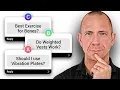
all right so welcome back to the Dr Doug show I have a great live interview which is so rare for our show but we're actually recording content today for our new exercise program that we're building out and I wanted to put some of this on video so that we can answer some of the common questions that we get and some of the strategy that we have put behind this new programming so I want to introduce you to Our Guest so I've got Dr Nick Troy who if you are a patient or if you've been part
of osto collective you've seen his work You' probably talked to him as many of our patients have and we also have Lauren Kramer who if you again are a patient you know Lauren um she is very instrumental in working with our patient she's answering a lot of questions and so I think the three of us together can really come up with some great information for people that are a looking to build out an exercise program especially if they need exercise definitely um through the lens of Health span and bone health um to answer questions that
we get all the time that maybe you probably already have because we get the same question over and over again we want to bring those forward um and then three I want to talk about the strategies behind how to build out a program um for someone who is really never exercised before someone who is looking at this from a bone health health span getting muscle as an older individual perspective so that's actually a lot to bite off but we can do it let's do it okay cool um so I guess I did enough introduction let's
just jump right into probably gosh let's start with give me the basis of why we're training people the way we're training people so little background here uh Nick and I have been chatting about this type of work for really years at this point um because training when we initially started the bone health program how to help people to train virtually was something I really couldn't wrap my mind around and so we really really encourage people to use and still do personal trainers locally at home so they can touch f look at formance ET so we
can do it safely because what we don't want to do obviously is fracture we don't want to have an injury that's going to set us back on our journey but at the same time we can't be afraid to train MH resistance training is part of what we do impact training is part of what we do so we had to come up with a way like gosh how do we help people to do this so Nick came up with the original program the TR be training progr as it's known so why don't you walk us through
when you looked at this population you said okay it's possible so walk us through kind of how you built that absolutely yeah I mean if you're using it now hopefully you're having success with it but realistically it's knowing that it's going to be all virtual and like you know Dr Doug mentioned if you can get to a place where you can get some touch points as far as understanding technique for some of the bigger movements um really just diving into even more so the fundamentals in the basics of a lot of the big movements that
we Aspire a lot of our people to use like our bigger hip hinging deadlift exercises or our squatting or you know any kind of lift more style movement um you really have to go back and master a lot of those fundamentals so if you are currently or have done phase one of the tribute training it really digs back into that um and you really kind of reconnect with your body almost because you understand how to engage certain movements we're in a very fixed body position where we understand how to protect the things of our spine
and our hip that we're may or may not be really worried about and at the same time which I think is the most fun and hidden part of it is you build confidence that you can like oh I can start to exercise like this and I can get stronger and then not have the fear of a setback because that's the ultimate fear right absolutely so yeah I think it's done a great job of that we kind of built and changed it as we've kind of played with this that we're recording currently um but I think
if you can play the patience game of saying I'm willing to really take that time and really remaster some of these basic things from my perspective I've seen people really have a much better launching Point yeah way more success and you know if it's only a couple months of just being patient to get to that point yeah well and so Laur I want to ask you this because when when people join our program we hear so frequently I've never lifted weights right like I have no idea how to get started and again early on we
were like well we're going to help you with all the the supplements and the meds and the labs we're going to do all those but like you need to find somebody locally cuz I just don't know how to do it but now obviously we have more resources we're building on a new program we have a trainer who's you know specializing in this so it is possible but can you help us to understand some of that fear some of those patient questions like what do you hear when you're talking to patients so a lot of it
is where do I start um what weight do I use what is the best movements for you know loading spine and hips which is uh you know areas of Interest with the AO process and a lot of it just to build on what Nick said is just having patience coming in knowing like this is a long game you're not going to you know you need to have that mindset and first rules don't get hurt so if you can have someone in your community that can be with you maybe just for a month to like touch
on your form to make sure that those those bigger movements are safe and build off that you're going to go a lot further um and I think that alleviates a lot of fear because a lot of our patients have fear fracture so they like can I even do this and the answer is yes you just need to have a good plan and and um sort of path moving forward yeah and I think understanding the starting point yeah you know if the starting point is I've never lifted weights I've never touched a weight in my life
maybe maybe done some cardio I like to walk my dog it's a really common starting point you have to start at the like the fundamentals you can't just walk in and pick up a barbell it's not going to go well um and everybody's been told if they if they've had a diagnosis of osteoporosis they go to their doctor their doctor will likely have said don't lift you know more than 5 lbs or 10 whatever arbitrary number they decided to pick up so we we have to meet them where they are work on the fundamentals and
build them up and use the the term progressively overload which we you know pull out of the bodybuilding literature do you want to explain what that means Nick I use it a lot in my videos when I'm talking to people and I think probably a lot of our audience doesn't really know what that means absolutely yeah and if you are starting from that you know Bare Bones early on position I think you're probably at the best place because you have nothing compare it to right it's like this is all brand new I can really learn
the process and kind of fall in love with that um but yeah Progressive overloading to keep it simple is our physiology is so efficient that we accommodate to whatever stressors that we do and if we continue to do the same thing we'll reach to a certain point where we no longer get the benefit of whatever stressor that is so you could approach it different ways if you know the easiest way that's promoted the most is hey I can do 10 pounds on this exercise I get to the point where I can do 13 14 15
reps really well probably a good time for me to go up in resistance and going to start back again at the 8 n 10 repetition range right you going to approach it that way um you can really build with any way in which you want to mix and match that but you're really just continuing to stress whatever the goal is further as you see yourself accommodate to what you doing before yeah and and I like to remind people too that it's not it's more than even reps and weight like that's the the way that I
think about it as well traditionally yeah but we can ALS Al look at like the complexity of the exercise absolutely right or like speed at which you're doing something if that's something that you're capable of doing like how quickly or slowly exactly there's so many ways to change and exercise I I think one of the things and I'd love your input on this Lauren one of the things I hear a lot is that people people say well I'm I'm bored of my workout you know and in our our program as it's as it stands right
now has three we kind of have this like this the secret four secret four yeah but but we have three phas and it's the same exercises and people say well I've done them like I need a new workout M but it even with those same exercises you can change the way that you do them in so many different ways so can you give us a sense Lauren like when people are using let's say the just the tri training for example since it's what our patients are are aware of like how are they how how do
you sense that they're dealing with this type of repetitive type of exercising so I think that comes from sort of a a long time of thinking about exercise in a traditional way of what the Dogma has been for years which is more cardio like the more you do the faster you do the better and with the resistance training that's not necessarily the case so we don't want you to like go through the movements as fast as you can and be like well that was easy why do I I'm too I'm too good for that I
I need more something more um Advanced when really it's more about like Nick said just getting in contact with that muscle knowing your own body I mean we all get into bad habits over you know with with sitting that we do so much or you know if you are are injured and you're compensating a certain way and you can get a a symmetrical muscle so it's really important to get those basics down um in order to um progress and even though it seems boring you got to keep your goal in mind your goal is you're
build wanting to build muscle make your Bowman stronger and there's certain exercises that are better than others for and I think too it's it's better to be a little bored than to learn a new exercise and maybe not be able to do it right I think when we nail you know nail these simple things and do them over go over again in progressively overloading different ways you know reps or weight or speed or like these different variations of the same thing you're comfortable with that thing so I I prefer people to be a little bit
bored with their workout so that we can actually like progressively overload rather than worrying about you know am I doing this right yeah you know what is this for yeah cuz if you're using a new movement even if it's a small variation you're kind of taking a step back if loading is the goal right to where if you're comfortable with a movement and you can lock into okay I have to have a really difficult High intense effort I need to really know this movement like I need to be almost a master at it right yeah
so not that you know when you really think about it and break it down there's only really six maybe seven main movements that you do squatting hinging stepping pushing pulling carrying something yeah right so I mean we can think of endless variations of that but realistically you need to be phenomenal at the main one of each of those and be able to tax that if we're talking bone specific it needs to be heavy enough to create a stimulus for to see a change in bone yeah right right so yeah no I think that's really helpful
so then what about you know you mentioned limore earlier and I wanted to end that because we get we get questions about limore all the time so I'll give the I'll give the quick background for those that haven't read the study um but the limore trials or famous trials is like three I think it's three uh separate Publications looking at it in different ways but it's essentially three resistance training exercises plus a specific type of impact and those were studied over the course of believe the original one was 10 months and they showed an increase
in vul Mineral density in the population so it's a great study single clear intervention and uh you good outcome metrics of Bal density they measured other things too but that's what people want to see um and then in a very clear population of Interest so people that have osteoporosis and osteopenia um I think they were all post a pusle lemon I have to recheck that but this is the population of people that are watching this video who are saying you know how do I do this you know and and so people ask about LIF more
all the time but if you look at the exercises they are the deadlift the back squat and an overhead press all barbell all with barbells yeah right so if you I I interviewed Belinda back and um we can show where that video is to watch that that interview you know and she chose those exercises very specifically because they are loading the hips in the spine in specific way so it's again very welld designed but those are only three exercises and so I see a lot of people who want to do those things and that's fine
because Belinda has continued to show if you do these things and um she's you know built an entire program on this called onero um if you do these things if you train people to do these things they can improve their bual density and strength and and reduce fall risk and fractures and that's that's awesome but my concern with just focusing on those three things is that you know I look at this through the lens of Health span so from a strategy's perspective what are the other things that we need to do so I know when
when you and I initially talked about this neck it was soort a weird conversation to be like well I don't want to just train people to do these three things so then when we built out the different phases like what was your perspective on you know are we building people up to this or are we building around it like how did you take that into consideration yeah great question and you know I think this started off I think the lift more trials are fantastic I think they the Simplicity of it is the beauty of it
the approachability of it is not great right unless you have a big interest in doing barbell specific work but I've worked with people on this population where I wouldn't have them under a barbell for maybe a year of training right right just because the demands physiologically and technique and the loading is so much different compared to other free weights but um realistically I've built the first three phases to get someone to a point that they can you know graduate from each phase and be confident and comfortable on their technique of these movements they could easily
walk into a gym hire a trainer and say I think I'm ready at a lower intensity than limore might do but I feel like I'm ready to do these bigger movements under a barbell right maybe it's not five sets of five at 85% over at Max but you can build there right right but I think technique wise understanding your body understanding the breathing the bracing I think you're at a really great point after the first three phases to start to approach some of those Li Mor style movements yeah yeah yeah and I like too the
idea of looking at you know other other strategies around fall preventions you know you if you think about like from a functionality perspective like what are the things you need to do you need to be able to get up and get something off a shelf like stand up on a chair walk up and downstairs you know even for some people like getting up and down off the toilet right like we'll talk about functional things and how some of the the core the basic stuff can help you to get there yeah yeah picking up your groceries
picking up your groceries picking up your babies like we Grand bab as the kids yeah so then let's talk a little bit about cardio cuz you you mentioned it earlier uh we get a lot of questions around cardio and again in our our patient population a lot of times they come into us having really only ever done cardio and I think that is a multi-generational mindset that has existed especially in women we see it in men too from my perspective you know cardio is valuable from a health fan perspective but from a bone perspective it's
not giving us what most people think cuz it's not impact it's not you people say like I'm going to do weightbearing exercise like well everything is weightbearing exercise if you're standing on your feet so where does cardio come in in this that's a great question I think it's obviously an important part of our overall health just relating into whatever risk factor you want to look at the higher Your Capacity to handle a cardiovascular workload the usually the better health you are overall right um but again if we focus too much on cardiovascular work it doesn't
necessarily line with maybe certain macronutrients we're trying to achieve in our diet and also it's not really building towards gaining strength in or muscle mass which then can hopefully influence how much we can load and then bone comes into play right so from my perspective I you know it's it's easy to over um prescribe cardio because it's just easy to prescribe it right but realistically it might just be the intensity of a of a brisk walk could be what gets you to a spot where you are healthy and fit enough to start putting in more
you know resistance ring type movements and be fit on that yeah yeah it's important to move um but you know where you know how does that how does that fit in and then from a Time perspective too like how how much time do we have to do all these things yes so so Lauren you were a highlevel runner uh so you are a cardio Queen by Design so what are you what are you then telling patients when they ask about cardio because this is near and dear to your heart yeah no I think I think
it's important but I also think building muscle is more important especially in this population who maybe have neglected that for several years or decades maybe and I think that if you're doing too much cardio um or those high-intensity workout classes you're sending your body the wrong wrong signals because you're telling it like oh we need to pair down our muscle because we need to do these workouts when really we want to give the opposite message so I think it's good like getting your steps in doing a step count every day and have a goal is
really good way like a short incline walk maybe after a resistance training um workout but again the majority of your focus should be you you know your resistance training sessions and that feels different than cardio and it feels different than a hit you know high intensity class because there you're like dripping sweat you feel oh I just feel like I got a really great workout in and you don't necessarily don't feel that with a resistance training like you may not even sweat and that's okay because you have to keep in mind the long game um
and what are you what's your main goal and and have nutrition and stuff like that yeah I one of the things I I hear a lot too because we you know we do this the BS of Health span we have lots of people who are interested in like longevity and you know lifespan um and so they'll asking about V2 Max because if you're listening to people like Peter Tia longevity expert they talk about V2 Max is a strong indicator of lifespan and so what I like to remind people is that if you look at training
for v2 m Max it's pretty short in duration you know usually it's you know high intensity short in duration and you can measure BO2 Max it is not you know running zone 4 for 40 to 60 Minutes four times a week like that doesn't right that doesn't help actually with a V2 backs very much at all depending on your starting point and so you could add those things in depending on what your goals are but for the most part because our patients are so focused on bone health and muscle mass they're only with us for
12 months MH we say you know what like let's not worry about this right now like we have time to add this in later yeah yeah and you can do like a high intensity workout like one day a week and it could be like Sprints like five or 10 sets of 30 seconds with 10 2 minutes or a minute rest and that's enough and really when you look at the actual work in there that's like 5 minutes 2 and a half minutes of actual sprinting that that is enough to sort of get you the longevity
two backs yeah and so you don't need these long sort of grueling workouts that we've been trained to believe that we need yeah all right so the next thing I want to talk about is a very popular movement and the minute paa phas which is the way best so if you are on my Instagram page uh Instagram thinks that I'm a 60-year-old woman and um I get ads for weighted vests I see every influencer that I can think of talk about weight invests and so I'm going to get your I'm want to hear your thoughts
first yeah Nick because I know people are asking you this so what do you think about weight invest that's a great question and I definitely get this almost every time um first I look at it from the perspective of do I have a time where I can directly spinal load for talking osteoporosis osteopenia it provides a time where I can get a direct spinal load on my body that's you're you're checking a box right um you also have to approach it just like we talked about with Progressive overload in that if we buy a vest
that's only a fixed resistance you're going to accommodate to that in a month right so you have to buy something that is you can add weight to it or if you want to think about the progressive overload part of it you can do that um I think it's been promoted so much with walking in in that kind of format I've been speaking much more to um just knowing who I'm working with in that when we start to load the bigger movements like our squatting let's say we're doing a goblet squat or a weighted step up
or farmer carries like the ones that do have a ton of value in indirect loading are spine I found that most people are limited in those exercises by upper body strength or grip strength to do the resist to do the workout when their legs are still stronger to do more resistance so I've started to to Really incorporate do what you can with your upper body strength on the exercise and then let's add on the way to vest to get an additional load to take us to that next level so I think I've kind of geared
away from hey let's use it walking and and do X Y and Z I mean that's great if you want to do that but I think there's more value to using it on those upright torso movements so we can get a direct spal load on yeah n that's cool what are your what do you get from a question perspective um definitely uh how much weight and I think that the the vast majority of patients sort of overshoot and think you know more weight the better and when really for the for ma when you reach your
max weight it should be like 7 to 10% of your body weight um and but I would recommend starting lower than the and starting with short bursts when you're you know short burst of time of wearing the vests because you don't want to be in a in a compromising pos position or again having a symm or something where you're then hurting or um compounding an injury or something like that um so we I always tell patients start low and go slow but you want to only sort of go up to seven 10% of your value
yeah adjust because we've heard patients who have gotten injuries for using a weighted vest right and it's you know I I have weighted vests I have a couple different versions have done videos on them and even at you know like 10% of body weight for me is almost 20 lb mhm put 20 lbs on your body and then get into an award position like if you know if I'm like reaching down to help my kids with something like it can feel really weird and you can get sort of offb balance you could fall so I
I do have concerns around weighted vest for some people um I also have concerns around sort of the claims around weighted vest so when I I've done one video I've got another one pending when I look at the literature you see people say like weighted vest will help you build bum if not what literature shows weight ADV vest will slow down Bond loss so you will not lose bone as quickly as somebody who's not wearing a weighted vest According to some of these bigger studies here so I'm not saying there's not value but my concern
is is that people are thinking well I don't need to do you know resistance training or impact training right I could I only need to do this weighted vest and I'm good and I don't think that's true um but I'm not opposed to them I just I want people to understand like we need to design it we need to design a plan and then retest and make sure that that plan is working and if if it is working then awesome but if it's not working then we need to go a little bit harder yeah wearing
a weighted vest when you're cleaning or emptying the dishwasher does not replace resistance training and I worry that those things can cause more harm because again you're in these compromised positions um and it's just one part of the whole sort of Fitness puzzle it's it can't be replacing other yeah I also worry about um you know joint pain right so we know that when for if people that are carrying a littleit of extra weight if they lose even you know 5% of your body weight definitely 10% of your body weight joints feel better MH right
they're able to walk further you know they sleep better uh and there's a lot of reasons for that but I do worry about if you're wearing it all the time it's like it gaining 10% of your body weight you know so for me itd be like gaining 20 pounds I know what that feels like does not feel good I F with no muscle that's right yeah of just weight you know so yeah again I think there's value but I don't I I don't want people to overdo it no no again it's just one piece one
tool it's not magic yeah I think can be persued that way so then let's talk about equipment because a lot of people when they are you know they're getting into the bone health Journey they're like okay I'm going to I'm going to do this but then they look at you know all the different equipment options and fitness is a crazy space there's so much equipment out there you know and I think I I'm I'm guilty right like my gym is pretty well built out I have a lot of stuff that I like to use so
when people look at my videos they're like oh my gosh you know like this isn't achievable for me so if we were to sort of divide out like you know good better best from an equipment perspective like what's a good starting point for someone who has who has nothing hasn't really done any training like what do they need MH great question uh I always go to I think adjustable dumbbells because you can you can be dangerous in a good way with that you can and and you can grow with it too right um and you
there's some really affordable options out there um I've got a client who's even in Manhattan small space adjustable dumbbells right um as I've also found some level or variety of resistance bands because you can do tons of stuff you can either buy you can buy cheap anchors to your wall to do pulling pushing exercises you can do a lot with that too um and then some kind of either bench or adjustable step I think you can really use that to your vage for a lot of stuff so realistically those kind of three things for me
can get you a good six months of really good training and then if you want to Ranch off to a gym you want to add another piece of equipment to that um I think you can really launch with those with those few things yeah yeah I totally agree with that what do you think yeah I mean I think that was a really good starting point and I think what I hear a lot from patients is like you know how much weight do I use with X you know with this workout and you know I have
like some some like pink 5B weights is that good and it's hard because I think every um body part and muscle and exercise that you do is going require different weight so the ustal weights are really um are going to come in handy yeah yeah I agree yeah let's let's double dip on the resistance band side because I I resistance fans can be inexpensive there are expensive versions too they can be inexpensive you know there the whole principle behind like variable resistance um if somebody just has resistance fans is that enough um I think it
depends on how they're entering if they have no background with resistance training I think you could probably do a lot of improvement with resistance stands um at some point you know from my perspective unless you have like an X3 bar which you can still do a lot of traditional movements with and you can use I mean what does that go up to 300 lb plus oh yeah oh it's it's more than you need yeah I mean depending on your equipment you can go there if you like the feel of that veryable resistance with resistance fans
but um realistically I think you can get to a certain point of strength and then just from my perspective I think your toolbox opens more when you start adding in some more free weight kind of equipment um but realistically I mean either one you can tax the muscle in the body very similarly yeah I think it's a cool starting point and I for those that aren't familiar with X3 bar so John J Bush who uh was the original designer of the the equipment behind biodensity and osto um he from there created this thing called the
X3 bar which uses variable resistance very specific bands but through a a very specific bar with attachment points that goes under a foot plate so very different than just any old bands and you know using them with your hands this is a way to to really put a lot of force through some equipment and it's it's it's a cool system um so I have one of those I travel with it if we're driving and they spray um but I like to train with free weights personally same yeah same yeah yeah cool all right so then
let's say somebody starts there we start to maybe build up with some variable weights probably have some bands if you were going to if somebody was like I have a space if and I want to invest some money what's the one piece of like equipment whether it be like you know a rack a you know cable pulley system like if they were going to buy one thing what would it be for me it's a some version of variety of a squat rack rig because there's so many amazing attachments you can get now yeah that you
can do barbell stuff and you can for really inexpensive you can get full on pulley and cable things that attach to it so you really have a whole gym in your house now if you have a really nice nice rack um because the accessories are are so good so that would be my direction of like hey you got 1,000 or 1,500 bucks and you really want to put in something cool in your house you can do really well with that yeah what your thoughts no I agree I mean I was going to say you can
do a lot with the cable system too but if you can buy a catch to put on that then you sure have have a full gym the dumbbells yeah I I would agree so I I have both and I will say I I really like to use the both I think there are some things with a employ system it's just easier it's smoother you know adjustable height is it's not as easy to do on a rack you definitely can sure but there's a lot of I think it's it's almost kind of a good guy thing
too like it's you like a lot of just mechanical Parts M off putting pins in and out of place and it's it can be super intimidating for some people to you know to have this like big just metal yeah metal looking thing uh whereas a cable system like I actually bought it for my wife that's what she wanted as her you know piece of equipment but I love it I mean you can do a lot with you can do a lot with it yeah yeah yeah cool so then the last thing I want to talk
about and we'll wrap this up the last thing I want to talk about is impact okay now we know with with the lift more trial a lot of people I hear them saying like it proved that resistance training can build bone and I would counter that to say well not really because it was high intensity resistance training in Impact or high rate high intensity resistance in Impact training to say it right yeah so impact was in there now how much did the impact have to do with it versus the resistance training you'd have to split
them out and test them to to know there are some other studies that with different types of resistance which was not much resistance and other types of impact that also showed increas in bone marrow density so my thought is it's the impact and that's why we like when when we talk about building a program we're always talking about some kind of impact but the type of impact they were doing in the liore trial is hard to teach in potentially dangerous if you're not doing it right sure so how do we deal with that where do
we start question I think impact is super important realistically for anybody um regardless of of what your goal is um I think you have to approach it kind of conservative um I know Dr dub and likely everybody in the program talks a lot about the heel drop it's kind of the Gateway exercise the Gateway imp the Gateway impact exercise to get into it only because it's it's minimal technique it's not ultra high intensity and you can build a lot of repetitions and volume over time and really see based on the research for saying it could
go in a really good direction um but you have to think about impact almost as like petric training and that you're either jumping and Landing or Landing specific and even from like an athletic perspective when I train divisional athletes you have to be careful with how many contact points they get per training session and that means every time their feet hit the ground that's a contact point and if you're a beginner you don't really want to go above 80 contact points in a training session so that's not very many Landings yeah when you think about
either po jumps are really you know small or lower intensity things those add up really quick so having some patience understanding that I'm going to start and get really good build some volume with my heel drops it's a great place to start you're not wasting your time it's a very simple exercise you might think this is stupid I'm not doing anything but you I think it's a I think I think you are you got to just kind of recondition your brain a little bit um but from there maybe it's two months for some people maybe
it's six months maybe it's a couple weeks you can start to introduce more moderate or higher intensity impact whether it's you know jumping off and Landing or maybe even more specific with a hanging drop like in the lift more study but really it's like you're just taking that conservative approach of let me build some time and understand what it's a whole different stress on your physiology that Landing component yeah um so giving yourself some Grace and some time um but I think it's a must in the program yeah what are you car for patients on
the impact side um I think for heel jobs I think most patients get on board with that for reasons that Nick just said it's so easy they can do it like they're washing dishes or you know waiting for their kid to get off the bus they can just um do the heel drops pretty easily and um but I don't see a lot of people doing the LI more impact just you know droing from the bar right because for obvious reasons and I'm a happy about yeah they don't have the bar they don't know how to
do it and or they've tried it once they're like o you know that we do have some patience to do it um and you know that's then that's great I'm happy that they know how to do it but they are actually pretty highly trained athletes that are like oh I can do that yeah and I think that's important to point out too about resistance training it's a skill it's not just well I'm going to lift something like there's a skill to it and you have to learn the skill so give yourself Grace and time to
do that so do it correctly yeah I I'm I'm pretty vocal about this you know I've I've been lifting weights my entire adult life and I'm still learning how to do a deadlift you know like I still I record myself I watch it back and I'm like terrible you know like I I do it and I'm like well like why are my scapula so far forward like I you know just there's so many things to think about when you're doing these complex lifts and it is it's a skill and it takes repetition and it just
takes practice yeah and I always say those compound movements give you the most pain for your buck just in general because you have to really activate your whole chain like anterior posterior depending on the move to do it correctly and so if that is like the top of the lifting sort of if we're thinking about this is like difficulty then you need to start with like just narrates and just form um so yeah you know it's fine so I'm actually training my my 12-year-old is starting to train with me on a regular basis which is
super fun so I'm teaching him how to do a deadlift and we were talking about this earlier he's at this age where you know he's got like these long LMS and not a lot of muscle mass and he's just just like you know like a baby giraffe kind of look right and um but it's amazing you know ask you know he's actually a pretty high level athlete in in the 12-y old body and you know ask him to do a deadlift and it's just terrible like it is just not a natural movement and so like
we are like we're back at the basics you know the absolute Basics he wants to he wants to add weight he's like oh yeah can I try that I'm like no no way man like you know a back injury would wreck you would wreck an entire season let's not do that yeah um but it is it's just you know people you need to give yourself some Grace to understand like these are complex movements and this is hard yeah and as uh you know our patients is was coming in with expectation of like this is hard
and it's a long game you need to have patience and you know do a prol and and start with phase one even though with a try training if you feel like oh these are easy you need to really listen and do those correctly because those are the foundation yeah yeah awesome what if any last um comments about this and the only thing that comes to mind is the last question we can of get a lot is how heavy do I lift yeah how heavy is heavy yeah yeah what's heavy um that's a great question right
um if you're Consulting lift more it's it's 85% One Max on those movements right um I look at it from and I promote rating of perceive exertion a lot RP it's a scale from 1 to 10 um I kind of think if you're trying to get better and I still use this approach a lot is somewhere between 8 and 12 repetitions we're still kind of on the verge of strength but still on the verge of like building some capacity through these movements but if you can dial in to where you're like it you know eight
or nine out of 10 effort it's starts off moderately difficult maybe I'm doing 10 reps on a shoulder press by the time I get to five to six I'm like this is getting pretty hard you know then I get to 10 I'm like I can maybe get one or two more if I had to right I think having that mentality you can really grow with and you can also dial into because we don't feel the same every day right sometimes 40 pounds for shoulder press feels easy sometimes it's like that's not happening in day yeah
right so you can really lock into I'm chasing this feeling of how hard I want to work the number what I'm lifting doesn't matter right so just trying to find that happy medium of maybe you want to try 8 to 10 Reps for that workout can I get to the point where with good technique I'm confident in that I can get to those numbers in maybe one or two more than I think you're lifting heavy yeah yeah it's so easy to get wrapped up in the numbers and I you know I've been that guy with
a spreadsheet and like tracking and saying like well you know like last week I did this watch and like right now I put that on the bar I look at it I'm thinking there's no way no way no way at once you're like like W word you know my gosh so yeah it's there there's there's an interesting balance there um the other thing about W rap Max too is that it's going to change day to day and you like it's a little dangerous to find out your W rap Max right maybe unnecessary it's not something
that you want to do on your own and I honestly I don't know what by one rep max is on any of these I could tell you one of those yeah yeah yeah and you know I don't I think that's sort of like getting away from the goal I don't think you need you know sort of get um distracted with that is just focus on the foundational stuff and then grow with it but you know your starting point is different than everyone's starting point is different so you can't say you can't say one way you
should be doing X for X left different yeah and realistically a one rep max from a training perspective like whether I'm training an athlete or anybody else really is only used for me to C to figure out a certain percentage of of maximal intensity that's really the only reason you don't ever really need I don't want anybody doing at Max like I don't want them to trade to do that that's not what they're asking them to do either but they're saying well you know do it high intensity it's a percentage of this thing sure yeah
I I wanted to ask actually one more thing so we get a lot of people asking about vibration plates whole body vibration uh we talk a lot about power plate um you know I have a power plate I've started doing more and more exercises on power plate you what's been your experience with people we have some patients that have them some patients that don't and want them or don't want them whatever uh what's your experience with people who are using these devices um I think it's they have a lot of questions of like what is
the protocol and how long should I be doing it and I think more often than not it's just this trend of just going hot out of the gate doing it too long or too many times a day or you know I did it one day and the next day I decided to do like squats and you know balancing on one leg and then sort of not getting injured but just feeling it a little bit more and having this take take too much yeah so I you know we always say put it on the lowest setting
do 10 minutes total but you know if you can do that if you can tolerate 10 minutes total and great but if not feel free to do a minute and take a minute off do a minute or do 30 seconds or whatever you can whatever you can do yeah and so from a trading perspective I know the people that have them want to use them right I invested money in this this cool modality yeah Dr try what do I do how what do I do with this thing great question if you look at the research
all the benefits are just from standing right from a bom bone perspective yeah um I look at it as I think you can totally do almost any movement you want on there to a certain extent because once I start thinking about loading heavier relative to my my ceiling capacity probably can't stand on it and do it right yeah so I think if you're say maybe it's a lighter day or something where you can do dumbbell kettle bell movements comfortably on it then I say try it maybe you like it maybe you don't I'm I'm not
convinced that you have to exercise on it right I think it's interesting we actually had um I forget his name but we had somebody from power plate in our Osteo Collective community and they did a talk when I was unavailable um and they talked a lot about the different exercises and if you go on their website like they have they have bone health programs specifically with exercises on the power plate and I I talked to their their research team about this and you know the the evidence like you said the evidence for bone is standing
on the plate you know in the position they recommend you stand they doing nothing else for 10 minutes a day um so that's the that's the bare minimum I will say the the research that I've read Around The increased muscle activation by doing exercises on the plate versus without I'm intrigued by that because I think you could potentially do things you know like let's say like a a kettle bell squat right like if you're going to get you know whatever the number is 50% 100% more muscle activation with a lower weight it's kind of compelling
that this could be a good strategy for preserving joints people that have you know arthritis so I'm I'm definitely interested in it I personally haven't done it enough to say that I'm going to see the benefits that I would that you know by other than lifting heavier but I'm definitely intrigued especially for people that are struggling to increase weight as they're progressively over liting this is like maybe potentially a cool device same thing with bfr Blood Flow Restriction right like another way to to push through some boundaries and Progressive overloading so I think there's all
of these really cool modalities but we start getting pretty expensive too dropping a lot of money on on equipment which is fun if you have it but you don't need it right right and and if you want to just start with the basics of of the true R trining and you haven't really worked out STW resistance training as a foundation and then grow from there yeah yeah impact and resistance yeah you know master the basics yeah cool awesome well thanks so much guys this was great thanks for having it I'm super excited about the this
new program that we're creating we got some great content these guys were working their butts off all day today recording content we've got tomorrow as well so we're going to have this whole new thing rolled out here in the next couple months yeah awesome thanks thanks DK you awesome